

PART 4
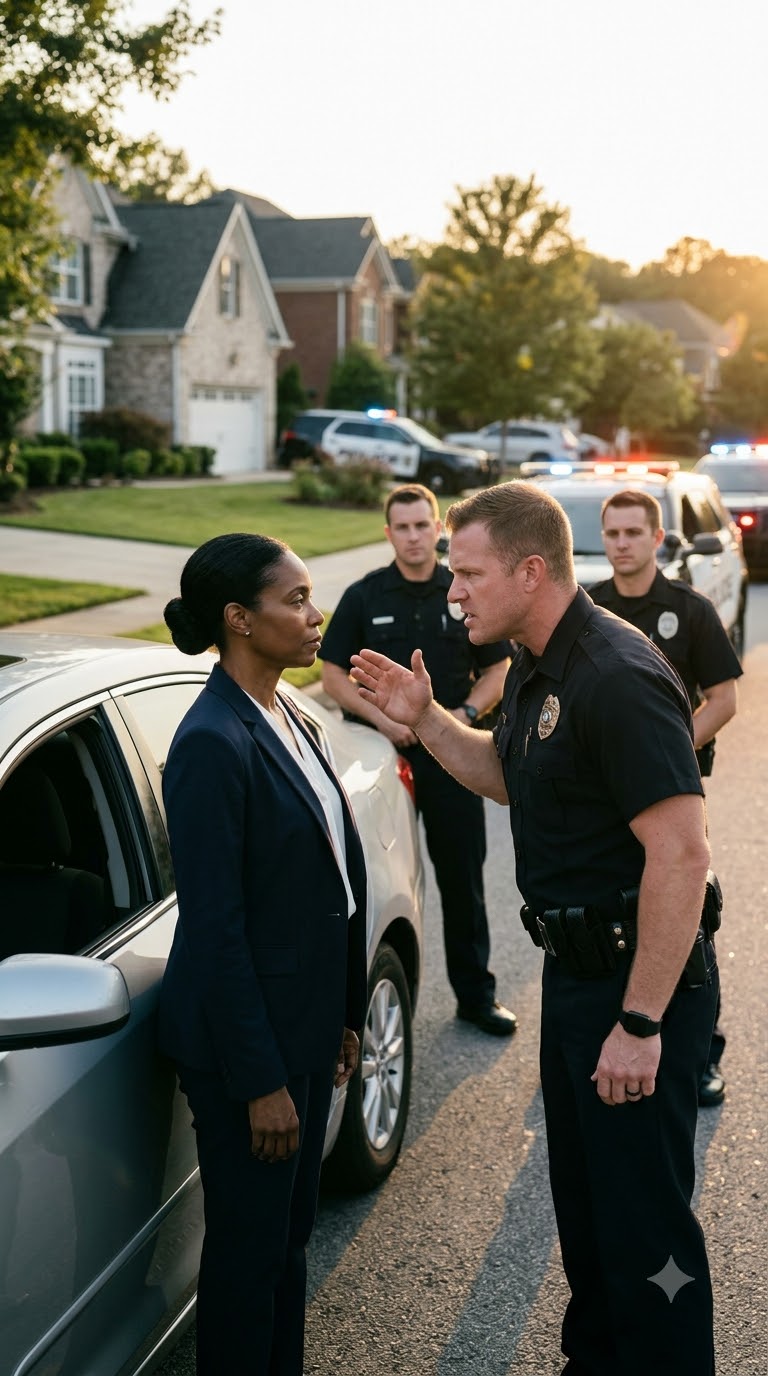
Camille returned to her vehicle.
Before driving away, she looked once more at the road.
She thought about how different that evening could have ended.
A frightened woman.
Four officers.
A dark street.
An unchecked assumption.
One wrong decision could have changed everything.
But the truth had survived.
And eventually, the truth had walked through the front doors of the Ridgerest Police Department wearing four stars.
—
That night, Camille returned to her office.
The station was quiet.
Most of the lights had been dimmed.
She sat at her desk and opened the same manila folder she had carried in the rental car that evening.
Her original appointment letter was still inside.
She ran her fingers across the paper.
Six months earlier, it had represented a dream.
Now it represented something else.
Responsibility.
She looked through the glass wall toward the officers working the night shift.
Some were young.
Some were veterans.
All of them were watching.
Camille knew she could never erase what happened on Maplewood Drive.
But she could make sure it meant something.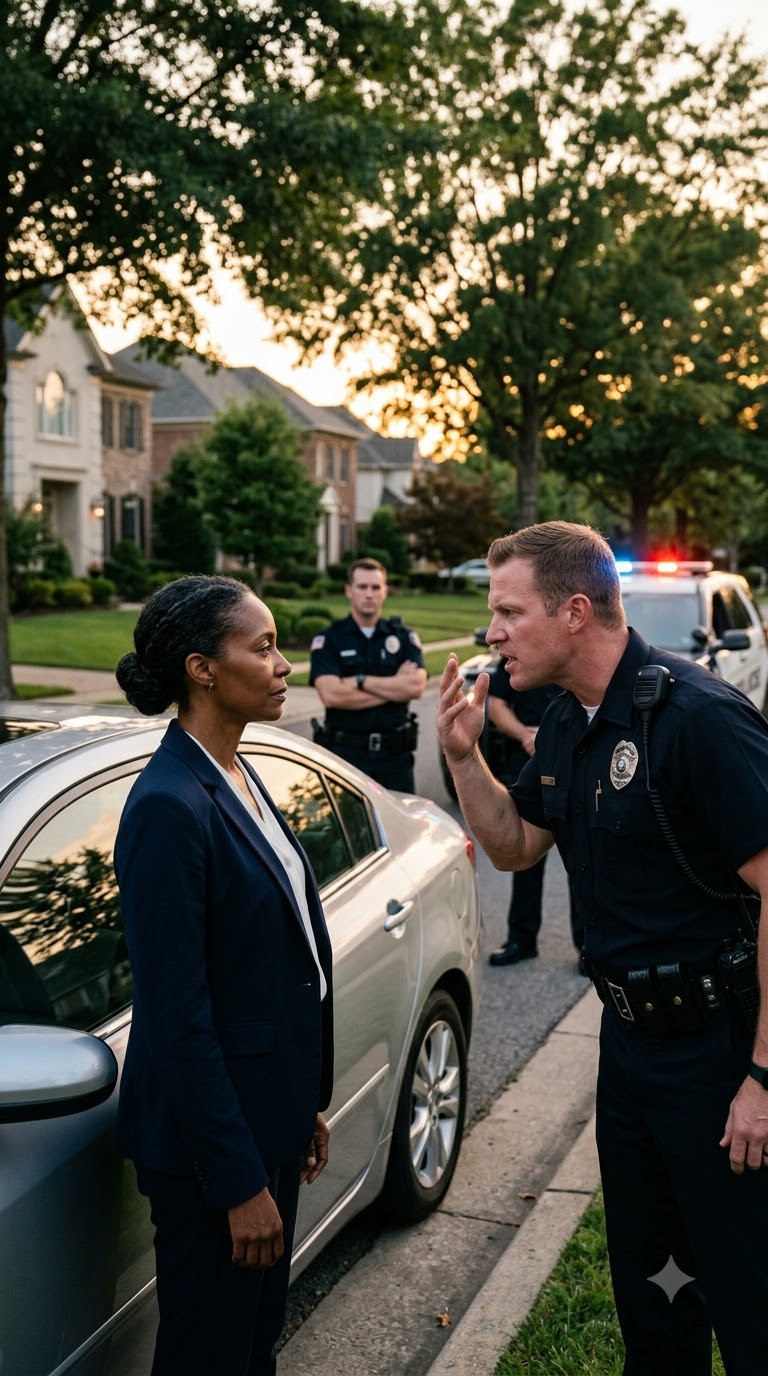
She could make sure the next person stopped on a dark street was treated with dignity.
She could make sure an officer who saw misconduct knew that speaking up was not betrayal.
She could make sure complaints were investigated rather than buried.
And she could make sure nobody in her department ever confused power with permission.
Camille closed the folder.
Then she turned off the desk lamp.
As she stood, her eyes caught the reflection of the gold lettering on her office door.
CHIEF CAMILLE BROOKS.
The same woman Taylor had accused of not belonging.
The same woman he had handcuffed.
The same woman he had slapped.
Now she was responsible for leading the department.
But Camille never considered that the ultimate victory.
The real victory was something much simpler.
A department where the badge did not decide who mattered.
A department where the law applied equally.
A department where an officer’s first instinct was not suspicion based on appearance, but professionalism based on facts.
Because Camille had learned long before Maplewood Drive that justice was not about getting even.
It was about making sure the next person did not have to survive the same injustice.
And that was why, when people later asked her about the night four officers put her in handcuffs, she never focused on the humiliation.
She focused on what came afterward.
She would say that the night taught her something she already knew but had seen firsthand:
A badge can give someone authority.
A uniform can give someone power.
A rank can give someone influence.
But none of those things can make a person right.
Only the truth can do that.
And sometimes, the person you believe has no power at all is the very person who will one day be standing at the top of the room, asking everyone else to answer for what they did.
Camille Brooks had never needed to prove that she belonged.
She had already earned her place.
The street simply had not known it yet.
