

PART 1 — THE WOMAN HE NEVER BOTHERED TO KNOW
Just three days after our divorce was finalized, my former husband clamped his hand around my wrist inside an upscale shopping center and shouted, “Security! Somebody get this woman out of here!”
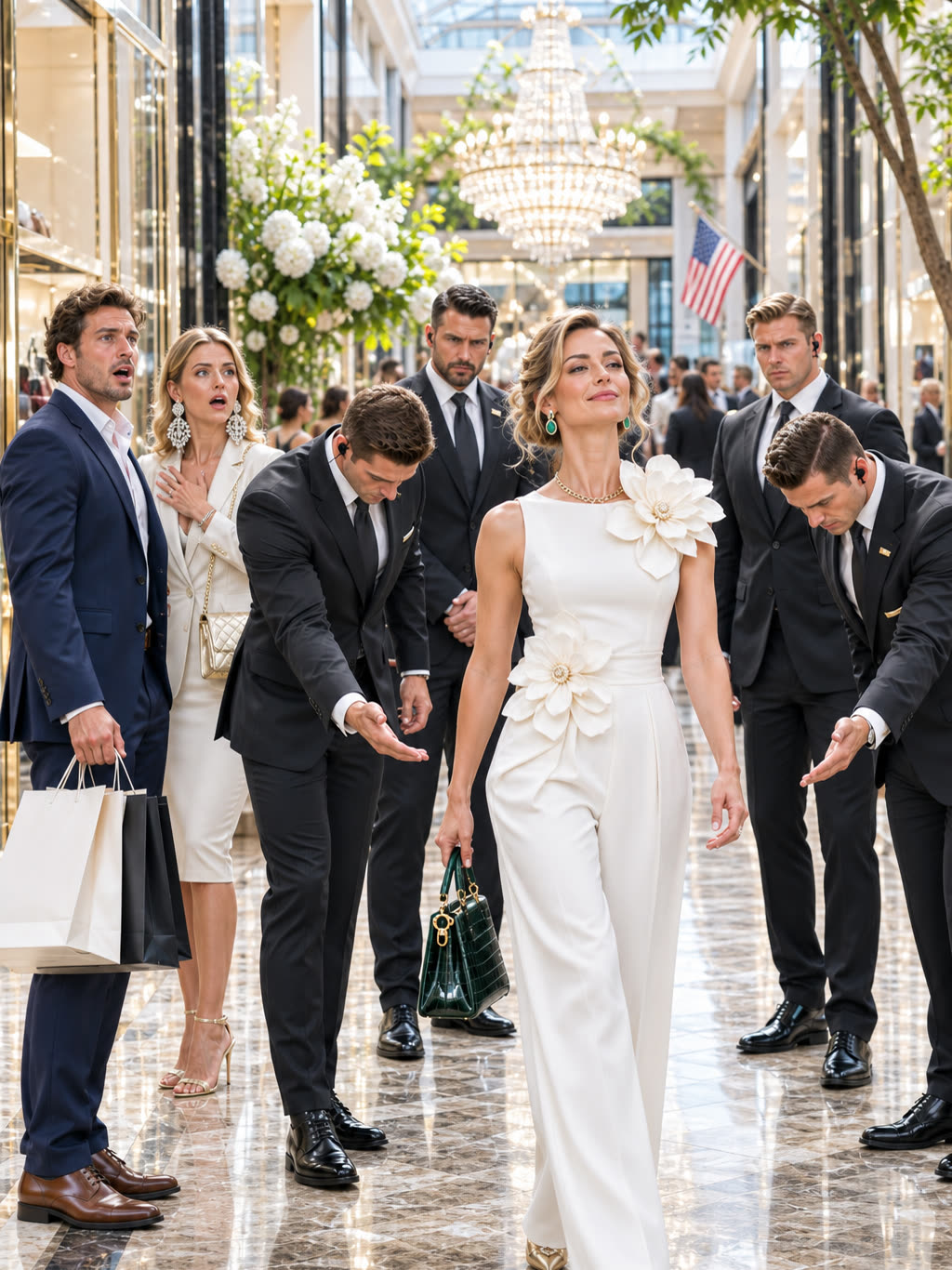
His girlfriend laughed beside him. Thirty seconds later, four men in black suits were striding in our direction.
Graham was sure they had come to throw me out, and he grinned. But the four men halted in front of me, lowered their heads in respect, and said, “Good morning, Ms. Whitcomb. We’ve been expecting you.”
The smug look slid right off his face.
My name is Laurel Whitcomb. I’m thirty-seven, and only seventy-two hours earlier my twelve-year marriage to Graham Ellison had come to an end.
For twelve years I had washed his shirts, kept track of his calendar, cheered every promotion, and sat through introductions that painted me as a woman who had never accomplished anything of note.
Now I stood in the grand atrium of Meridian Galleria in Charlotte, North Carolina, while he carried shopping bags that cost more than my first car and the woman he had cheated with held onto his arm. Brielle Sloane was dressed in a cream designer outfit and enormous diamond earrings, wearing the triumphant smile of someone certain she had won.
“Oh, this is embarrassing,” she announced, loud enough for strangers to hear. “Laurel, are you seriously following us?” “I have an appointment,” I replied.
Graham chuckled. “An appointment? Here?” He waved a hand across the polished marble, the gleaming storefronts, and the elegant restaurants circling the atrium. “Sweetheart, this isn’t the discount outlet where you buy scraps for those little purse projects.” A shopper near the escalator turned to look. The old sting of being shamed in public came rushing back, but something was different this time. For the first time in twelve years, I felt no obligation to defend myself. “Move aside, Graham.” He stepped deliberately into my path. “Not until you explain why you’re here.” “Because I was invited.” Brielle burst out laughing. “By who? The cleaning staff?” Graham smiled smugly. “Be careful, Brielle. She might start telling everyone she’s a fashion designer.” They laughed together. The expensive watch on his wrist, my tenth-anniversary present, reminded me how he had brushed off my work as a pitiful pastime. “You’re blocking my way,” I said. His face hardened. “You don’t get to talk to me like that.”
He grabbed my wrist. He didn’t hurt me, but his grip showed how accustomed he was to controlling every exchange. “Let go.” “Don’t make a scene.” “You’re the one shouting.” His fingers tightened. That was when I raised my voice. “Take your hand off me. Now.” Nearby shoppers stopped in their tracks. Brielle’s smile died. He released me, and his humiliation turned into fury at once. “Unbelievable. I spent twelve years supporting you, and this is how you behave?” I stared at him in disbelief. “Supporting me?” “Yes. Paying the bills. Giving you a comfortable life. You wouldn’t last six months without me.” I almost laughed. He had no idea how much had been happening beyond his notice.
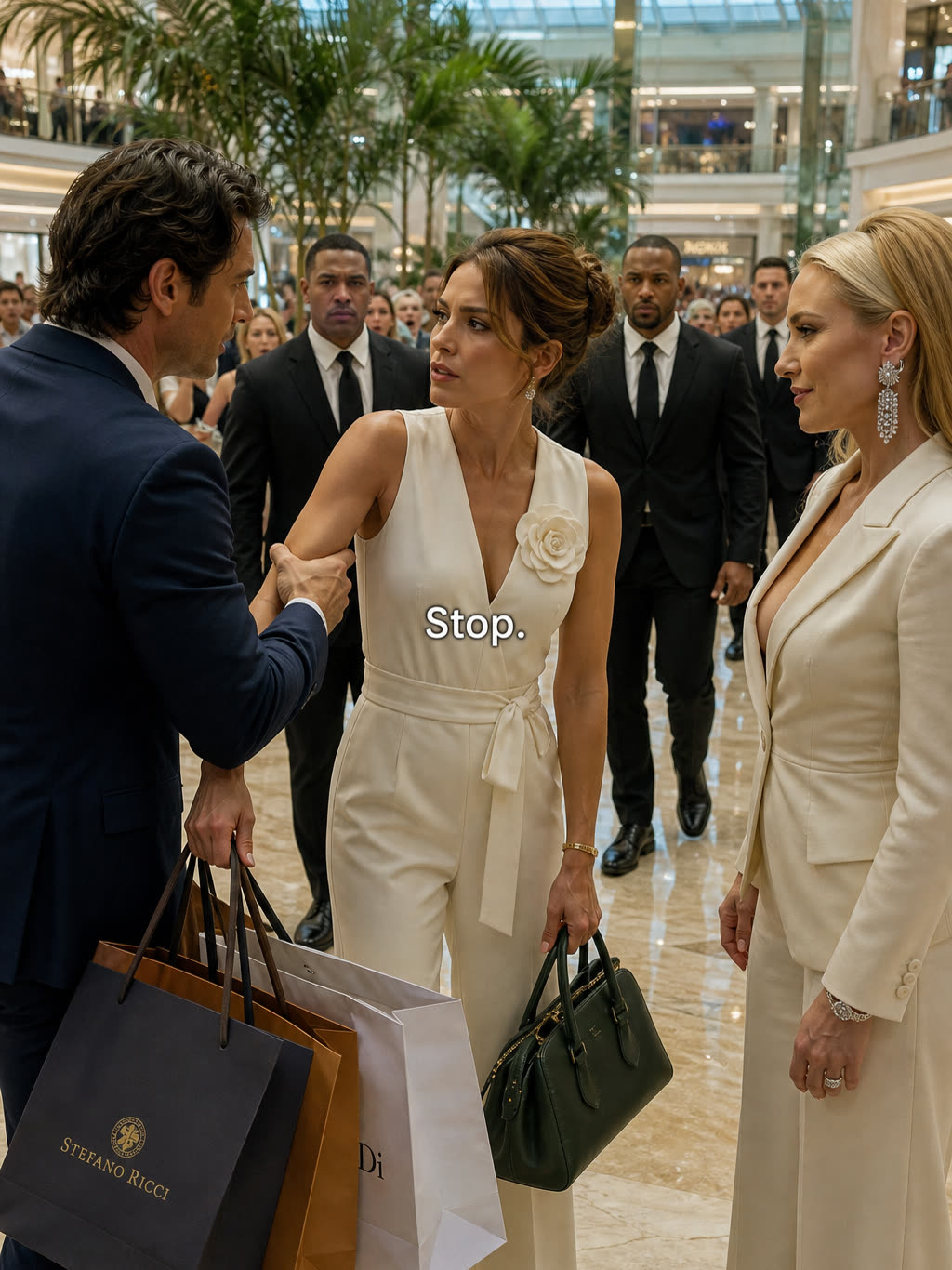
Four guards posted by the private exhibition entrance had seen the confrontation. Their tall supervisor, Marcus Bell, spoke into his earpiece, and then he and three colleagues crossed the atrium toward us. Graham spotted them. “There,” he said triumphantly. “Finally.” He pointed at me. “This woman is causing a disturbance. She has no business being here.” The guards paid him no attention. They stopped in front of me and, in perfect unison, dipped their heads in professional courtesy. “Ms. Whitcomb,” Marcus said, “I apologize for the interruption. Our team has been waiting at the entrance.”
Graham’s mouth fell open. Brielle blinked. “Wait,” she cut in. “You know her?” Marcus turned slightly toward her. “Yes, ma’am.” “Why?” “Ms. Whitcomb is our principal guest for this morning’s presentation.” Graham let out a disbelieving laugh. “There must be some mistake. That’s my ex-wife.” Marcus kept his composure. “I’m aware of who Ms. Whitcomb is, sir.” Those words cut deeper than any insult. Graham looked at me, then at the four guards, and finally his eyes landed on the private exhibition entrance. “What presentation?”
Before anyone could answer, a woman in a fitted ivory pantsuit hurried over. I had met Evelyn Ashford six months earlier, while my personal life was quietly coming apart. She led the upscale retail partnership that had transformed my business, and now she looked genuinely worried. “Laurel! Are you all right?” “I’m fine, Evelyn.” Her gaze moved to Graham. “Did someone interfere with your arrival?” Graham straightened immediately. He knew exactly who she was. Of course he did. For years he had complained that executives of her rank were impossible to reach, since her firm managed prized retail properties in several states. He had even spent an entire weekend on a proposal that never made it to her office. Yet there she stood beside me, using my first name and treating Graham like an unwelcome stranger.
“Evelyn Ashford?” he asked. She gave a courteous nod. “Have we met?” “No, but I’m Graham Ellison. I manage commercial accounts at Ellison & Price Furnishings.” “I see.” He gestured uncertainly at me. “That’s my ex-wife.” Evelyn looked to me for direction. I shook my head slightly. “We can go inside.” “Of course,” she said, and Marcus stepped aside to clear a path. As I walked ahead, Graham called out, “Laurel!” I paused for a moment. “What exactly are you doing here?” In all our years together, he had never asked me that out of real interest. Now his voice shook. I turned back to him. “Working, Graham.” His jaw clenched. “Working for whom?”
I looked past him. Behind us stood a twenty-foot exhibit, its ivory-silk cover just pulled away by a worker. Elegant bronze letters spelled a name across the towering backdrop: MORROW LEATHERWORKS. Beneath it hung a picture of a handmade leather bag with a recognizable antique-brass closure. Graham studied the image, and his expression changed. He knew that clasp. He had once thrown its first prototype onto our dinner table and told me to stop wasting money on rubbish.
A more painful memory was waiting for him. At our final divorce meeting three days earlier, he had signed disclosures listing Morrow Leatherworks as my individually owned business. He had mocked the name. He had told his lawyer to spend no more time on my “little craft operation.” Now, beyond the exhibition doors, buyers from leading American retail chains were waiting for its founder. Me.
Graham turned warily toward Evelyn. “Who owns that company?” She seemed startled. “Mr. Ellison, Laurel founded Morrow Leatherworks. She’s the reason we’re all here.” Brielle let her shopping bags drop. Graham stood frozen. Then Evelyn added a detail that turned his bewilderment into horror. “And today we’re announcing the largest retail partnership the company has ever secured.” Only now, after twelve years, did Graham care what I had built. Sadly for him, its history reached back long before he decided I had no value, and soon the reason for his ignorance would be impossible to deny.
A year and a half before the Meridian Galleria launch, Graham came home early and found three leather swatches spread across our dining table. He picked up a little bag, flipped it over, and frowned. “What is this supposed to be?” “A prototype,” I replied. “I’m testing a new closure.” He tugged at the old-fashioned brass fastening. “Looks cheap.” “Please be careful. That mechanism took weeks to develop.” He let the bag drop onto my designs. “Laurel, you’re thirty-six years old. When are you going to grow out of playing store?”
I can still picture myself staring at it. It wasn’t the damage that hurt. The night before, I had celebrated a purchase order from a specialty shop, hoping to share the news with him at the right moment. Instead, he glanced at his watch. “Did you pick up my dry cleaning?” That single question summed up our marriage.
Graham hadn’t always treated me badly. When we first met, he was a junior salesman driving an old pickup, unable to afford fancy dinners. He brought me takeout during my late shifts in Mom’s workshop and proudly called me the most gifted woman he knew. I was twenty-five when we married, and I believed we were building a life together as equals. But as he climbed professionally, his idea of success narrowed. He wanted a bigger house, expensive cars, elite friends, and a wife who polished his image without sharing the spotlight. I only wanted to make beautiful things.
My mother, June Whitcomb, had been restoring leather goods since before I was born. She could mend a torn saddle, reline a pricey briefcase, or bring a tired handbag back to life. She taught me that craftsmanship mattered more than cost. It meant taking pride in careful work even when nobody was watching. After Dad died, his old worktable became mine. I set it up in the spare room and designed accessories after finishing my daily chores.
My first online customer bought a simple leather wallet. A belt came next, then a purse. Within two years, repeat customers were placing new orders and independent boutiques were reaching out. I brought on two independent studios able to meet my production standards. My best friend, Piper Keene, joined me to manage orders, vendors, and accounts. We formally set up Morrow Leatherworks as an LLC, leased a compact studio, kept separate business accounts, and put nearly every dollar back into the company.
Graham knew the company existed. He just never asked what we were achieving. Deliveries brought complaints about the mess. Late nights brought accusations that I neglected our home. Every new customer I mentioned earned a reminder that his clients mattered more.
One night Piper called while I was cooking. “Laurel, sit down.” “What’s wrong?” “Nothing’s wrong. We just got the order.” I switched off the burner. “What order?” “The Willow Creek account. Four hundred units for the spring collection.” My hand flew to my mouth. We had spent months persuading that retailer to trust us, and it had finally placed our largest wholesale order yet. “Piper, are you serious?” She laughed. “We actually did it!”
I was still smiling when Graham walked in. “What’s so funny?” I turned to him, thrilled. “We just secured a major retail order.” He pulled open the fridge. “That’s nice.” “Graham, this could change everything.” He took out a sparkling water. “Are you making enough to buy yourself a new car?” “That’s not how we’re measuring growth.” “Then don’t get carried away.” He closed the fridge. “By the way, I invited some people over Friday. Make sure the house looks presentable.”
I still remember the silence after he left. Piper was still on the line, and she had heard everything. “Laurel,” she said quietly, “you deserve better than that.” I blamed his stress. I pointed to his heavy workload. I repeated excuses until they sounded true.
On Friday, Graham entertained six coworkers. I cooked, arranged flowers, and put on the deep-green dress he once said flattered my eyes. Midway through dinner, Rebecca asked about my job. Before I could answer, Graham chuckled. “Laurel has a cute little hobby making handbags.” Every face turned toward me. “Actually,” I began, “I run a leather accessories company.” Graham waved me off. “She means she sells things online.” A colleague gave a small laugh, but Rebecca stayed serious. “That sounds interesting,” she said. “Do you manufacture locally?” “We work with several independent workshops.” “Really? My sister owns a boutique. What’s your company called?” I tried to reply, and Graham cut in again. “Rebecca, trust me. You don’t want to spend dinner talking about purse straps.”
The table went quiet. Heat crept across my cheeks, and I barely spoke for the rest of the meal. After the guests left, I confronted him. “You embarrassed me.” He tugged his tie loose. “Oh, here we go.” “You could have let me answer one question.” “Those people manage real businesses, Laurel.” “So do I.” He laughed. “Your little operation wouldn’t survive without my salary.” I looked at him. “Have you ever asked what Morrow earns?” He furrowed his brow. “What?” “My company. Have you ever asked about its revenue, expenses, or customers?” “Why would I need to?” His answer stung worse than his laughter.
The next morning I went to see Mom. She sat at her workbench sewing a handle onto an antique purse. I told her about the dinner, and she listened without a word. Then she handed me an aged brass fastener, scratched and tarnished, older than I was. “Your grandmother used this on the first handbag she ever made,” Mom said. I rolled it across my palm. “She wasn’t rich. She wasn’t famous. But she made something that lasted.” My throat tightened. “Why are you giving it to me?” “Because I want you to remember that your work has value before somebody important decides to notice it.”
I carried the clasp home. Over the following months, it became the model for the distinctive fastening on our next line.
Meanwhile, Graham became fascinated with Brielle Sloane. She consulted on public relations for his firm’s marketing team, and to him she seemed polished, driven, and well-connected. At first I suspected nothing. Then his work calls moved out to the balcony. He changed his phone passcode. He bought expensive shirts. One Thursday, while I was reviewing manufacturing costs, I overheard a quiet laugh during one of his calls. “Don’t worry,” he said. “She doesn’t understand our world.” There was a brief silence. Then he added, “Soon, Brielle. I promise.”
I froze outside our bedroom. When he saw me, he ended the call. “Who was that?” I asked. “A client.” “At eleven-thirty?” His expression darkened. “Are you interrogating me now?” Part of me wanted to trust him. Instead, I watched him walk out.
Five minutes later my phone buzzed. Piper had sent a message with a picture from a professional networking event. In it, Graham stood with Brielle, his arm around her waist. Brielle had written the caption beneath it: Some partnerships are worth waiting for. I stared at the image until the screen dimmed.
My marriage was falling apart. And the business he ridiculed was about to receive an invitation that would change both our lives.
PART 2 — THE DIVORCE PAPERS HE LAUGHED AT
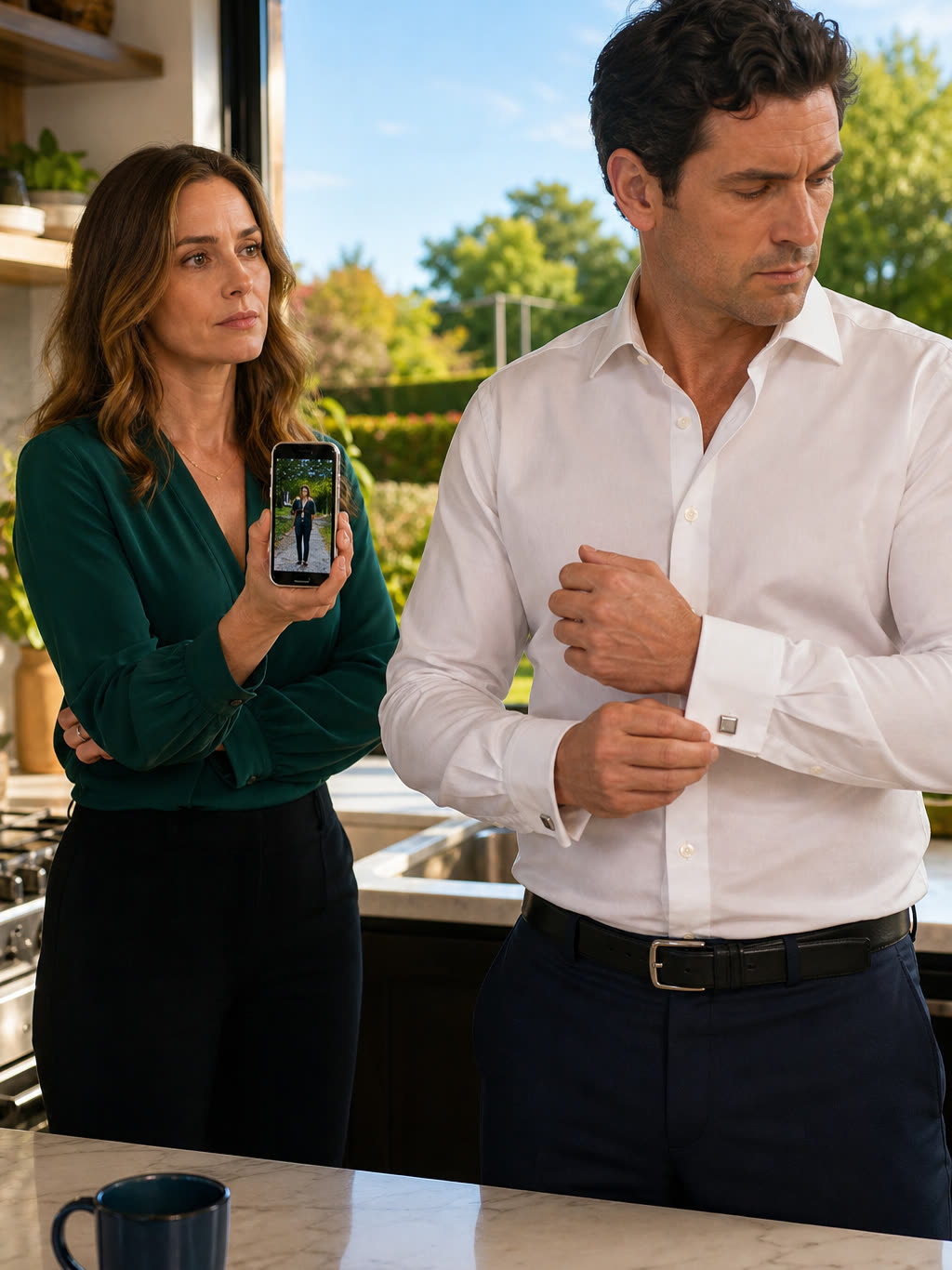
The next day I confronted Graham with the photograph. He was standing in the kitchen fastening the cufflinks I had given him at Christmas.
“Is there something going on between you and Brielle?”
He barely looked startled. He just sighed. “Are we really doing this before work?”
“Answer the question.”
“She’s a colleague.”
I held up my phone. “Then explain this.”
He glanced at the picture. “That’s from a networking dinner.”
“Your arm is around her.”
“People take pictures, Laurel.”
“And what does she mean by ‘partnerships worth waiting for’?”
He set his coffee mug in the sink. “You’ve spent so much time alone with those ridiculous bags that you’ve forgotten how normal adults socialize.” A cold certainty settled over me. “Stop using my work to avoid the question.” He snatched up his keys. “I don’t have time for your insecurity.” Then he was gone.
Two weeks later, he said he would be at a conference in Atlanta for three days. I packed the blue shirt he liked best. I reminded him about his medicine. I kissed him goodbye. The following evening, a local hotel event manager I knew called me. She apologized before sending a photo. It showed Graham and Brielle sharing a meal in a private dining room. In Charlotte. At the very hour he claimed to be at a conference hundreds of miles away. His hand rested on hers in the picture. There was no explaining this one away.
I waited for him in the living room when he got back. I laid the photo on the coffee table. He looked at it, and for several seconds neither of us spoke. Then he said, “I never wanted you to find out like this.” I had imagined myself screaming. Instead, I felt hollow. “How long?” He looked away. “It’s complicated.” “How long, Graham?” “About six months.”
I nodded slowly. Six months. Six months of fake meetings, secret calls, and dinners I cooked for a husband who never showed up. “Do you love her?” He rubbed his forehead. “She understands me.” His answer was so predictable I almost smiled. “And I don’t?” He glanced around our comfortable living room. “You’re a good person, Laurel. But you’ve stopped growing. Brielle has ambition. She knows people. She understands what it takes to succeed.”
I stared at him in disbelief. He was condemning my ambition inside a home where I had spent years building the business he ignored. “I built a business while helping you build your career,” I said. His patience visibly wore thin. “Selling handbags isn’t the same as running a serious company.” Something shifted inside me. It wasn’t rage. It was clarity. “Then I think we’re done.” He looked astonished. “You’re not even going to fight for us?” “I have been fighting for us alone.” For once, he had no answer.
In the weeks that followed, Graham moved into an upscale apartment, and Brielle joined him almost immediately. He paraded her through restaurants and business events while I met with lawyers, accountants, and manufacturing partners.
A premarital agreement governed our marriage. Expecting an inheritance from his family’s company, Graham had demanded it before the wedding, and I had accepted without protest. With proper disclosures and legal conditions, it kept each spouse’s business and future commercial interests separate. In the divorce, that seemingly ordinary clause became crucial. I had formed Morrow Leatherworks in my own name, funded it with traceable personal money, and kept separate accounts. Throughout the proceedings, both of us provided the required financial disclosures.
My lawyer, Dana Pritchard, went over every record. “Graham knows this company exists?” she asked one afternoon. “He knows I make bags.” Dana looked at me over her glasses. “That isn’t quite what I asked.” I handed her the disclosure schedules. His attorney had received schedules identifying Morrow’s shareholders, sales, assets, and debts. My firm was no pretend hobby. It employed workers, paid vendors, and ran successful wholesale accounts, and its financial performance had risen substantially over the previous year.
Dana studied the paperwork. “He has access to all of this.” “Will he question the valuation?” “He can. That’s why we’re documenting everything. But if he chooses not to review it, that’s a decision he should make with his own counsel.” That was exactly what Graham did.
In one settlement session, his lawyer raised my company. “Mr. Ellison, I’d recommend we review the business schedules carefully.” Graham skimmed the records. “Morrow Leatherworks?” “Yes.” He laughed. “That’s her purse hobby.” His lawyer didn’t smile. “There are financial statements attached.” “I don’t care about her little company.” I stayed silent across the table. He pushed the documents away. “Let’s focus on the house and investment accounts. I don’t need her craft business.” His counsel reminded him that the agreement still required honest disclosure and thorough review. Graham impatiently handed the task to the lawyer.
Over the following months, the lawyers settled the division of shared property while confirming our separate ownership. The agreement did not make Graham give up any company of his own. Morrow had never belonged to him. He had repeatedly brushed aside the very information put in front of him for review.
Meanwhile, Piper and I were negotiating the most important business opportunity we had ever faced. A specialist buyer had introduced our products to Evelyn Ashford, who asked for samples. After months of inspections, financial talks, and meetings, her group offered us a major debut at Meridian Galleria. If we met the final terms, we could secure a large opening order and distribution through select premium stores. Years of effort had earned us that chance.
I almost wanted to tell Graham. I even reached for my phone. Then I remembered how he had mocked our first wholesale success, and I left it untouched. I called Mom instead. “Mom, they chose us.” She gasped. “Oh, honey.” “They’re giving us the main exhibition space.” The line went quiet for a moment. Then she whispered, “Your grandmother would have been so proud.” For the first time that day, I cried. Not because I longed for Graham, but because someone finally understood why this mattered.
Three months later, the divorce became final. Graham came to our last appointment in an expensive suit, checking the time again and again. Brielle waited outside the room. As we were leaving, he walked over. “I hope you find something meaningful to do with your life.” I looked at him. “I already have.” He gave me a patronizing smile. “Sure, Laurel.” Then he walked away.
Our Meridian Galleria launch was scheduled for three days later, and Graham had no idea. On the second evening after the divorce, Evelyn called to confirm everything. The exhibit had passed inspection. Our merchandise was ready. The buyers were confirmed. The partnership would be unveiled at the presentation. “Laurel,” she said warmly, “tomorrow, people are finally going to see what you’ve created.” I thanked her. Then I looked at the antique brass clasp on my desk. For years Graham had insisted I couldn’t succeed without him. Tomorrow I would walk into the biggest event of my career alone.
What I didn’t know was that he and Brielle would be waiting at the entrance, determined to embarrass me once again.
Only after I stepped into the private exhibit did my hands begin to tremble. Piper noticed instantly. “What happened?” I tried to smile. “Graham and Brielle are here.” Her expression changed. “Are you kidding me?” “He grabbed my wrist outside. Marcus intervened.” Piper looked toward the doors. “Do you want them removed?” “No. I want to finish what we came here to do.” She searched my face. “You sure?” I nodded. “I’m not giving him another important day of my life.”
The exhibit space was beyond anything I had imagined. Pale ivory partitions framed the glass cases. Portraits of craftspeople lined the walls. Warm lights shone on the collection we had spent nearly two years refining. At the center stood a burgundy leather purse closed with antique brass, a clasp inspired by Grandma’s, redesigned and improved, polished through countless samples. Behind the centerpiece, an enlarged photograph showed Mom cutting leather at her longtime bench. The sight of her magnified hands almost overwhelmed me. Mom had spent her life making beautiful things for people who often never knew her name. Today our origins would be visible to everyone.
“Laurel!” I turned toward the voice. Mom came toward me in a simple navy dress. She had bought a new outfit for the event even though I had assured her that her own clothes were lovely. Tears filled her eyes as she took in the displays. “Oh, sweetheart.” She stopped in front of the photograph. “Those are my hands.” I laughed while crying. “They are.” “You put me on the wall?” “You taught me everything that matters.” She pressed a hand to her mouth, then hugged me so fiercely she nearly knocked the notes from my hands.
Across the room, Evelyn was greeting industry executives, reporters, and buyers. This debut was no exclusive social gathering to admire overpriced purses. It was a serious commercial presentation with real business decisions at stake. Prospective partners examined merchandise, asked about our production capacity, and discussed upcoming lines. Graham had always claimed I lacked the skills for such conversations. Now people who truly understood the market were seeking my professional judgment.
At eleven, Evelyn stepped onto the modest platform. “Thank you all for joining us. Today we’re introducing a brand that brings traditional American leather craftsmanship into contemporary design.” The chatter faded. “Morrow Leatherworks was built by a founder who understands something increasingly rare in our industry: beautiful products mean nothing if the people making them aren’t respected.” I swallowed. “Please welcome Laurel Whitcomb.” The audience applauded, and I stepped forward.
Through the glass doors to the shopping concourse, I saw Graham. He was standing beside Brielle, transfixed by the stage. I had never seen that look on him before. No contempt. No smugness. Only astonishment.
I raised the microphone. “When I started Morrow Leatherworks, my first workbench was an old kitchen table.” Several people smiled. “My mother taught me to work with leather when I was a child. She taught me to repair what could be repaired, improve what wasn’t good enough, and never apologize for caring about details other people might overlook.” I glanced at Mom. She was in tears. “Our company began with simple accessories sold through small online orders. Over time, customers trusted us with larger projects. Independent workshops trusted us with their time and skills. Every relationship mattered.” I paused briefly. “Today isn’t about pretending we’ve suddenly become successful overnight. It’s about recognizing the years of work that brought us here.” People were applauding before I finished.
Evelyn took over and announced an initial purchasing contract with Morrow Leatherworks, with gradual expansion into more stores the following year. That first order exceeded everything we had earned in our earliest years combined. My heart raced, and Piper squeezed my hand. Every term of our agreement had been negotiated with care. Success wasn’t guaranteed, and fulfilling the contract would demand careful production planning. Still, it opened a legitimate path to growth. Beyond the doors, Graham looked breathless.
Later I learned he had picked up a printed program. The cover showed our signature collection. Inside was my career profile: Founder. Creative director. Majority owner. He read those titles over and over. Then he pulled up the divorce financial disclosures he had ignored, still available from his lawyer. The business had the same name. Morrow Leatherworks. There had been no deliberate secret to uncover in those statements. Only a husband too uninterested to ask.
Brielle, however, refused to accept it. She marched to the exhibition entrance demanding an organizer. Marcus politely stepped in her way. “Ma’am, this section requires an invitation.” “I know the founder personally.” “Do you have an invitation?” “Her ex-husband is standing right there!” Marcus held his ground. “That doesn’t grant access.” Color flooded Brielle’s cheeks, and her voice rose. “Does everyone here know her husband paid for that company?” Several guests turned to look.
The accusation reached me inside the hall. Piper closed her eyes. “Oh, you’ve got to be kidding me.” I faced the doors. Brielle was now speaking loudly enough for everyone to hear. “She spent years living off Graham’s money, and now she’s pretending she built some luxury empire all by herself!” Evelyn’s expression sharpened, and she headed for the entrance. I followed. I didn’t want a public confrontation, but unable to celebrate my success, Brielle had chosen to undermine it.
Evelyn reached her first. “Ma’am, I’m Evelyn Ashford. Is there a problem?” Recognizing her, Brielle stiffened. “I just think people should know the truth about this woman.” Evelyn folded her hands. “And what truth would that be?” “That her ex-husband financed everything.” I felt Graham tense. Despite all his arrogance, he knew the claim was false. Evelyn looked at me, but I answered first. “My business has independent financial records, legitimate suppliers, and documented commercial operations. Its history has been reviewed as part of our partnership.” Brielle rolled her eyes. “Please. You were a housewife.”
The word hung in the air. I met her gaze. “Being a housewife wouldn’t make my work worthless. Neither does having been married to Graham.” Evelyn nodded in agreement. “Quite right.” Then she turned to Graham. “Mr. Ellison, are you alleging that you own or financed this business?” Every eye swung to him. Brielle smiled, sure he would back her up.
He looked at me. Then he faced Evelyn. Then his gaze drifted to the label he had mocked for years. His lips parted, but nothing came out. At last he gave an answer Brielle had not expected. “No.” Her smile faded. Graham swallowed hard. “I didn’t finance Morrow Leatherworks.” A total hush fell. Then, in a barely audible voice, he added, “Laurel built it herself.”
It was the first time he had ever publicly acknowledged and supported the work I did. He had arrived twelve years too late.
As Evelyn went back toward the exhibit, a buyer approached me with a question that would show Graham my growth was only beginning. “Ms. Whitcomb,” the woman asked, “would you consider developing an exclusive collection for our flagship stores?”
PART 3 — WHEN HE FINALLY UNDERSTOOD WHAT HE LOST
The woman who had approached me was Caroline Mercer, head of purchasing for a nationwide luxury department-store chain. For years I had studied the brands her company stocked, and now she wanted to talk about an exclusive Morrow Leatherworks line.
“I’d love to discuss the possibility,” I replied. Caroline smiled. “We’re considering a substantial order. Our customers are responding extremely well to your designs.”
My pulse quickened. “How substantial?”
The volume she named nearly left me speechless. It was more than three times our current quarterly output. Beside me, Piper immediately understood my concern. An order like that could revolutionize our business. It could just as easily ruin us if we committed beyond what our workshops could handle.
“I appreciate your interest,” I told Caroline. “Before making any commitment, I’d need to review our production capacity and discuss the proposed schedule with our team.”
She nodded approvingly. “That’s exactly the kind of answer I wanted to hear.” We exchanged contact details and arranged to talk again the following week.
Graham had been watching our conversation from behind. He had more than ten years in commercial sales, and he understood what an exclusive line for a major retailer meant. He also saw that I refused to overpromise. That was exactly the judgment he had said I didn’t have.
When Caroline walked away, Graham came toward me. “Laurel.”
I turned. A furious Brielle stood a few feet away. “Can we talk?” Graham asked. I glanced at Piper. She raised her eyebrows in question, and I nodded. “Five minutes.”
Graham walked with me to a quiet passage beside the hall. For several seconds he said nothing. He looked through the doors at the merchandise. “That’s really your company?” “Yes.” “All of it?” “I founded it. Piper has an ownership stake, and we have a team that makes everything possible.” He rubbed his forehead. “How long has it been this successful?” I stared at him. It was the same pattern again. He didn’t ask how long I had worked so hard. He didn’t ask why he had ignored me. His only concern was when it had become successful, successful enough to deserve his attention.
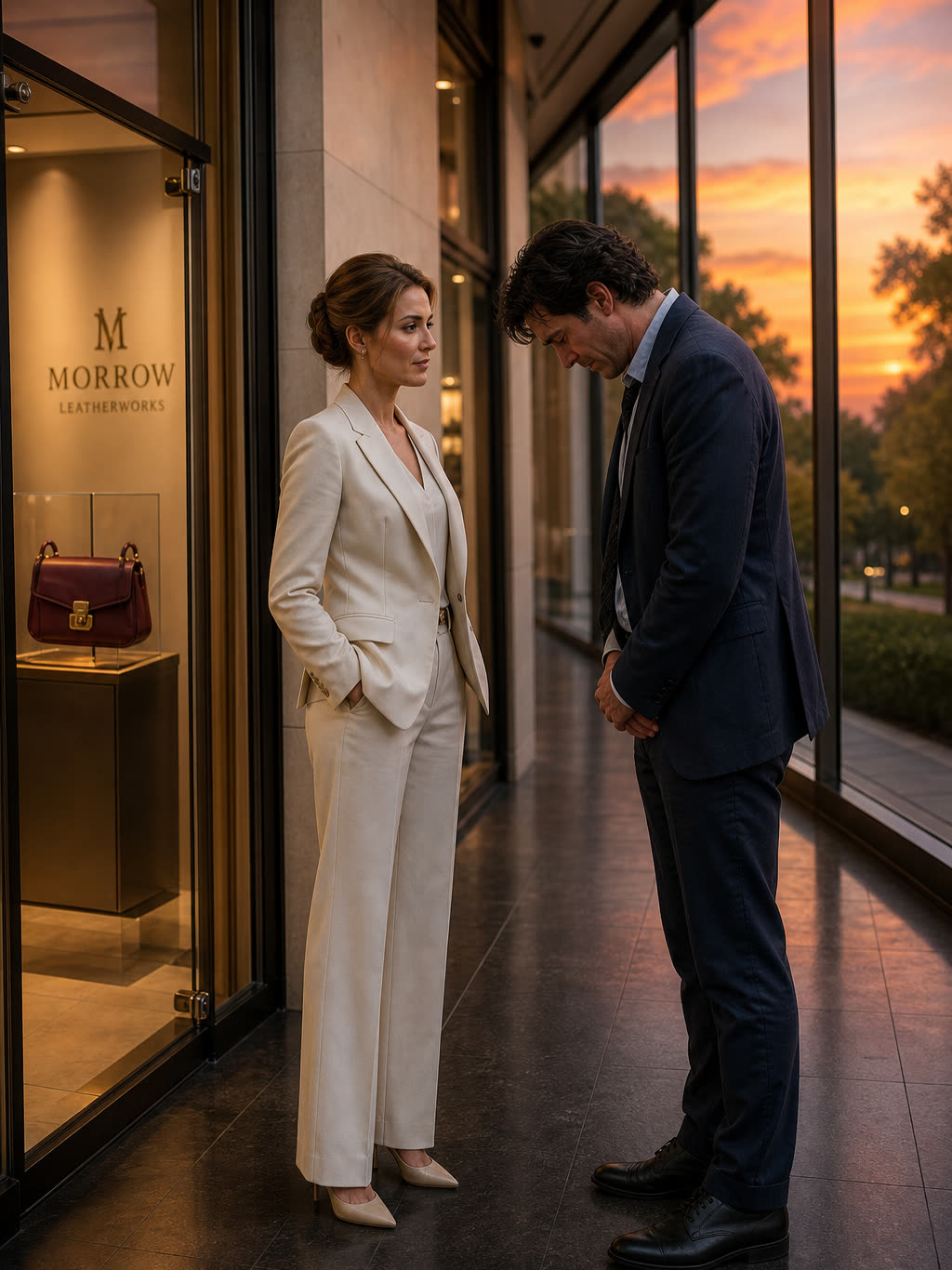
“Graham, what do you want?” He looked embarrassed. “I just don’t understand why you never told me.” An old pain stirred. “I did.” He shook his head. “Not like this.” “I showed you the first designs. I told you about our early customers. I tried to celebrate our wholesale orders with you. I explained why I needed more workspace.” He looked away. “You never said it was becoming a major company.” “Whenever I mentioned a milestone, you told me to stop pretending I had a real job.” He swallowed. “I thought you were just making things at home.” “You thought that because you never listened.”
I said it quietly, and the softness made it sting more than shouting would have. Graham stared at the floor. “I remember that clasp.” My eyes went to the display. “My grandmother’s clasp?” “The one you showed me at dinner.” “Yes.” He shut his eyes. “I threw it down.” “You did.” “I thought it was junk.” “You made that very clear.” He pressed his lips together. For once, he seemed to remember our marriage without his self-serving version.
He recalled the dinners I cooked after late shifts. The way he interrupted my phone calls. The parties where I was his punch line. The evenings he complained about parcels by the front door without asking what was inside. He had watched my company grow. Again and again, he had chosen not to see what was in front of him.
“I owe you an apology,” he whispered. I studied his face. “An apology for what?” He hesitated. “For making you feel small.” “And?” “For embarrassing you.” “And?” He closed his eyes again. “For lying. For Brielle. For treating your work like it didn’t matter.” I nodded. Once, I had longed for exactly those words. Hearing them now could not undo the years that were already gone.
“You do owe me an apology,” I said. “But I don’t owe you another marriage.” Tears gathered in his eyes. “I wasn’t asking—” He broke off. Perhaps that had been his intention all along. Perhaps he hoped an admission would turn me back into the forgiving wife who always welcomed him home. “I spent years trying to become someone you would respect,” I went on. “And the entire time, I was already someone worthy of respect.” He looked toward the exhibition. “I know that now.” “I needed you to know it when nobody else was watching.” For a moment, he was speechless.
Then Brielle arrived. “Graham, are you seriously apologizing to her?” He turned to her. “Not now.” She let out a bitter laugh. “So this is what happens? She gets a fancy display and suddenly she’s better than everyone?” “Brielle, stop.” “No. You spent months telling me she had no ambition. That she was dependent on you. That she couldn’t survive on her own.” Graham flushed. “I was wrong.” She stared at him. “Excuse me?” “I was wrong about Laurel.”
Brielle looked from him to me. She laughed again, but the old certainty was gone from it. “You’re telling me you spent twelve years married to this woman and didn’t even know what she did?” Graham gave no reply. The question hit too close to home. Brielle shook her head. “Unbelievable.” She spun around and walked away. Graham followed her with his eyes until the crowd swallowed her.
I almost felt sorry for him. Almost. Then I remembered that every decision that had led him here was his own. “I have to get back,” I said. He nodded faintly. “Laurel?” I paused. “Congratulations.” For once, the word sounded genuine. “Thank you, Graham.” I turned and walked away.
When the event ended that afternoon, Piper and I reviewed the results with Evelyn. Several buyers had asked for further conversations. Our first retail agreement had stirred more interest than we expected. But the hard daily work of sustaining that growth still lay ahead. We had to protect our standards, manage our finances, hire responsibly, and keep our promises.
Evelyn leaned back slightly. “You made quite an impression today.” I gave a tired smile. “Not exactly the entrance I’d planned.” She chuckled. “I wasn’t talking about your ex-husband.” She slid a folder across the table. Inside was an early-stage expansion plan, outlining new sales locations, manufacturing goals, and access to fresh customers. There were no guarantees, but it was a real and concrete opportunity to grow. Piper read through the proposal. “Laurel, do you realize what this means?” I looked at Mom, who was proudly chatting with two makers beside the exhibit, then at pictures of our first studio. “Yes,” I said. “It means we might finally be able to give the people who helped build this company the stability they’ve always deserved.” Evelyn beamed. “That’s why we chose you.”
That evening I went home to my modest apartment, exhausted. I slipped off my shoes, set my purse on the table, and went through Piper’s photographs. One showed Mom beside the exhibit. Another captured smiling makers holding their creations. In one, Piper held our first retail contract. The last showed me beneath the Morrow Leatherworks sign. I studied my expression. My smile wasn’t victorious. My eyes weren’t searching for Graham. I looked at peace. I had always assumed proving him wrong would feel like revenge. Instead, I felt strongest knowing his approval no longer mattered.
But the story wasn’t over. Two weeks later, Graham brought a forgotten belonging to Mom’s door, and it would force him to face the man he had been before our divorce.
On a rainy Thursday afternoon, Mom called. “Sweetheart, Graham came by.” My fingers stopped typing. “Why?” “He found something of yours while clearing out the last boxes from the old house.” I closed my laptop. “What did he bring?” “A notebook.” My stomach knotted. “Was it dark blue? With a torn corner?” “Yes.” That notebook had been missing for almost three years. It held Morrow’s earliest drawings and notes from the days when I still hoped Graham would become my biggest supporter. “Did he leave it with you?” “Yes. He asked me to tell you he’s sorry.” I stared out the window. “For the notebook?” Mom paused. “I think for a good deal more than that.”
The next morning I went to her house. She set the notebook on her kitchen table. Its frayed pages were marked with coffee stains and sketches of bags I had nearly forgotten. I leafed through it carefully. There were drawings from my first experiments. Vendor notes. Measurements and dimensions. Recorded mistakes. Old hopes. Then I found an entry from six years earlier. At the top, I had written: One day, I want to open a real studio. I want Mom to see her designs displayed in a beautiful store. And when I finally sign my first big retail contract, I want Graham standing beside me, proud of what we’ve built together.
I studied my own old words. Mom sat across from me. “You were happy when you wrote that,” she said. “I was hopeful.” “There’s nothing wrong with that.” I closed the notebook. For years I had believed my greatest failure was my inability to win Graham’s respect. Now I saw it differently. His refusal to value me had never measured my worth. It exposed a choice he had made.
A week later, he sent a short email. He explained that he had found the notebook among our remaining things and admitted he had read several pages before realizing how personal they were. He said he was sorry. Not only for reading it, but for his entire conduct. He remembered the evening I had shown him one of my first designs, and how he had dismissed it as pointless. He remembered mocking me. Now he understood that I had been offering to share something precious, and he had treated it like a nuisance. He asked for no reconciliation. He requested no second chance. He simply apologized for making my ambitions seem insignificant.
I read his email twice. Then I replied: I appreciate your apology, Graham. I hope you learn to value people before you lose them. I wish you well, but I’m moving forward with my life. Nothing more needed to be said.
Months passed. Graham and Brielle split up. A mutual acquaintance mentioned it, and I asked no questions. Apparently the trouble started after the showcase. Brielle had expected the glamorous future he had promised her, while Graham was questioning the beliefs his identity rested on. He had always measured success by wealth, status, and the admiration of outsiders. Now he was learning that none of it could repair damaged relationships. Their breakup gave me no pleasure. It no longer had anything to do with my plans.
My own future was becoming busier than I had expected. Morrow Leatherworks grew steadily. We renegotiated Caroline Mercer’s proposal into manageable batches with achievable delivery dates. We added employees. We bought better equipment. We created skill-building opportunities for artisans. And we held onto the quality our earliest customers valued.
Of course, not every business decision turned out as we hoped. One collection sold more slowly than projected. A vendor missed a crucial deadline. We postponed a launch because the leather failed inspection. Each setback became a lesson. I could finally make mistakes without anyone treating them as proof of incompetence.
One afternoon, Piper suggested a new direction for the company. “What if we offered apprenticeships?” I looked up. “For leatherworking?” “For women who want to learn a trade. People returning to work. People who have skills but never had opportunities.” I thought of Mom at once. For decades she had learned her techniques through practice and mistakes, and she had passed that knowledge on to me.
We began modestly. We leased a small studio and recruited seasoned artisans to teach. Mom volunteered to lead the first session, though she felt anxious. “What if they don’t listen to an old woman like me?” I laughed. “Mom, you taught me.” “That’s different.” “Exactly. You had a very difficult student.” She smiled warmly.
On the first workshop morning, twelve women gathered around a table covered with leather, tools, and thread. Several had factory experience. Others were former homemakers. Some simply hoped to learn a skill. A woman of about fifty raised her hand. “I haven’t had a real job in twenty years,” she admitted. “I’m worried I’m too old to start over.” Mom walked over and set a leather sample in front of her. “Do you know what happens when you make the wrong stitch?” The woman shook her head. “You take it out, learn what went wrong, and try again.” The room went quiet. Mom gave her an encouraging smile. “Your hands don’t stop being valuable because somebody stopped paying attention to them.” I looked away to hide my tears.
Eight months after Meridian Galleria, we celebrated our first apprenticeship graduates. There were no celebrities. No security detail. No expensive champagne. Only artisans, their families, and meaningful work filled the room. One apprentice had landed a paid position at a nearby workshop. Another had started selling handmade accessories online. Others planned to practice longer before choosing careers in the craft. I watched them show their creations to the people they loved, and I remembered how badly I had once wanted Graham to admire one of my designs.
A young participant came up to me holding a little leather wallet. “Ms. Whitcomb?” “Yes?” “I wanted to thank you.” “For what?” “For giving me a chance. I didn’t think I could make anything good enough for someone to buy.” I examined her wallet. The seams were neat. The edges were carefully sealed. It had imperfections, but it was lovely. “You made this?” I asked. She nodded hesitantly. I smiled. “You should be proud of yourself.” Her face lit up. In that moment, I recovered a lesson I had nearly lost during my twelve-year marriage. Achievement was never about impressing powerful strangers. It meant creating worthwhile work and helping others discover what they could do.
After the gathering, Mom and I lingered by the workshop window. She straightened my collar the way she had since I was a child. “You look happy,” she said. “I am.” “Do you ever think about Graham?” I considered her question. “Sometimes.” “Do you miss him?” I looked around the studio, at the workbenches, the finished pieces, the team portraits, the future taking shape. “I miss the man I thought he was,” I replied. “But I don’t miss the life I had to live to keep him happy.” Mom squeezed my hand.
Evening lights shimmered across the studio glass. Somewhere else, Graham was facing the consequences of choices he could never undo. I was exploring the possibilities opened by my own hard-won decisions.
Three days after the divorce, four guards had bowed to me while Graham stared. Onlookers assumed that scene proved my value. They were mistaken. Four respectful bows never determined my worth. Neither did a premium store, an expensive purse, or a commercial deal. My worth had always existed. Through long nights. Through discarded prototypes. Within ambitions I refused to surrender. For twelve years, Graham had looked down on me. By the time he finally lifted his eyes, I had already stopped waiting.
Disclaimer: This story is a work of fiction inspired by real-life themes. Names, characters, places and events are fictionalized, and any resemblance to real persons is purely coincidental. Images are for illustration purposes only.
