

PART 1
My name is Dante Moretti. At forty-three I headed Moretti Global Holdings, a man who had initialed deals worth hundreds of millions without the slightest tremor in his fingers.
That evening the pen would not stay still.
My attorney had prepared the file with surgical precision. Yellow tabs marked every signature line. The settlement awarded Alina the Evanston townhouse we both loved, a twenty-million-dollar trust, her personal investments, and absolute insulation from the press. Generous, equitable, and engineered to keep the story off every front page in Chicago. I told myself I was being decent.
Our marriage had never begun with affection. Three years earlier her family’s manufacturing firm had been drowning. My capital was the only rope that kept them from bankruptcy. At the same time my board wanted visible stability from a forty-year-old billionaire who had neither wife nor heir. The arrangement solved both problems. Love had never been written into the contract. Or so I had forced myself to believe.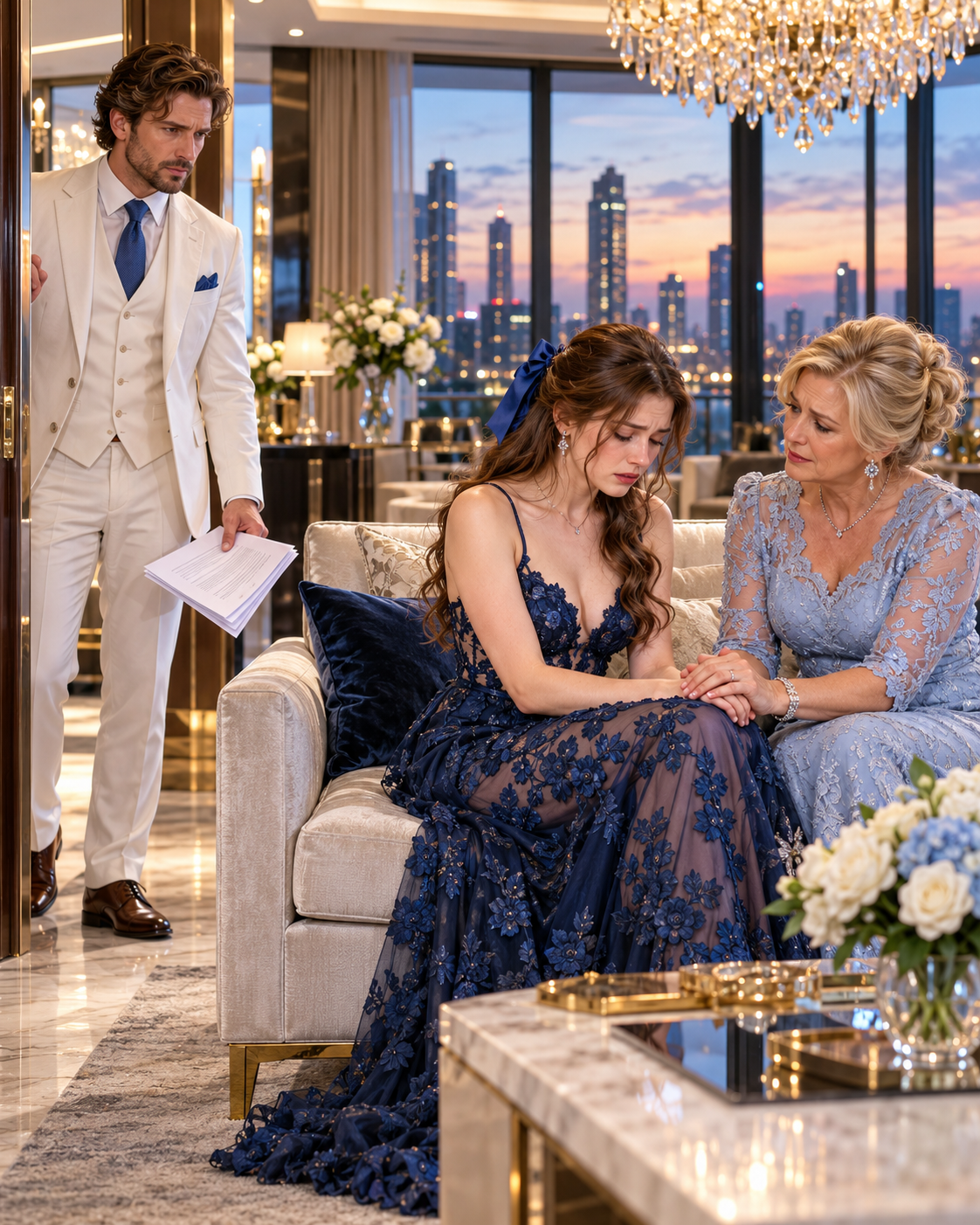
Alina never asked for jewelry, never booked the five-star holidays, never opened my private accounts. She never interrogated the late meetings or the flights to London and Dubai, never dropped the Moretti name to impress a room. What she did was remember. She knew I took coffee black every morning except Sundays, when I wanted half a teaspoon of brown sugar. When she learned that lilies smelled like funeral homes to me, she quietly replaced every arrangement in the house with white roses. After the worst board sessions she never demanded a debrief. She simply sat beside me. Sometimes her silence was the only quiet I found in an entire day.
Six months in, I was buried in projections when she entered the study with tea. She set the cup beside the laptop, rested her hand on my shoulder, and asked whether I had eaten. The gesture was ordinary. I remember wishing her hand would never leave. I owned hotels and towers on three continents, yet that single touch outweighed every asset I had ever purchased. Somewhere in those three years I had fallen completely in love with my wife, and I was too proud—and too afraid—to say so.
She never asked if I loved her. I mistook the restraint for indifference. I decided her kindness was gratitude, her loyalty obligation, her gentleness duty. So I resolved to set her free. A clean, lavish divorce would give her the chance to choose someone she actually wanted instead of the man who had rescued her family.
Then, the night before I was meant to sign, I passed the sitting room and heard her voice.
“I can’t keep doing this, Mom.”
I stopped. The tremor in her words was unmistakable.
“I love him too much to let him stay with me out of pity.”
My pulse slammed against my ribs. I gripped the doorframe. Alina loved me. We had lived under the same roof for three years, each certain the other was merely enduring.
Her mother answered. The first words made my blood run cold.
“Then you have to tell him about the scans before he signs those papers, Alina. The oncologist said the window for the aggressive protocol closes in six weeks. If you let him walk away now, you will face this alone, and I will not watch my daughter die of pride.”
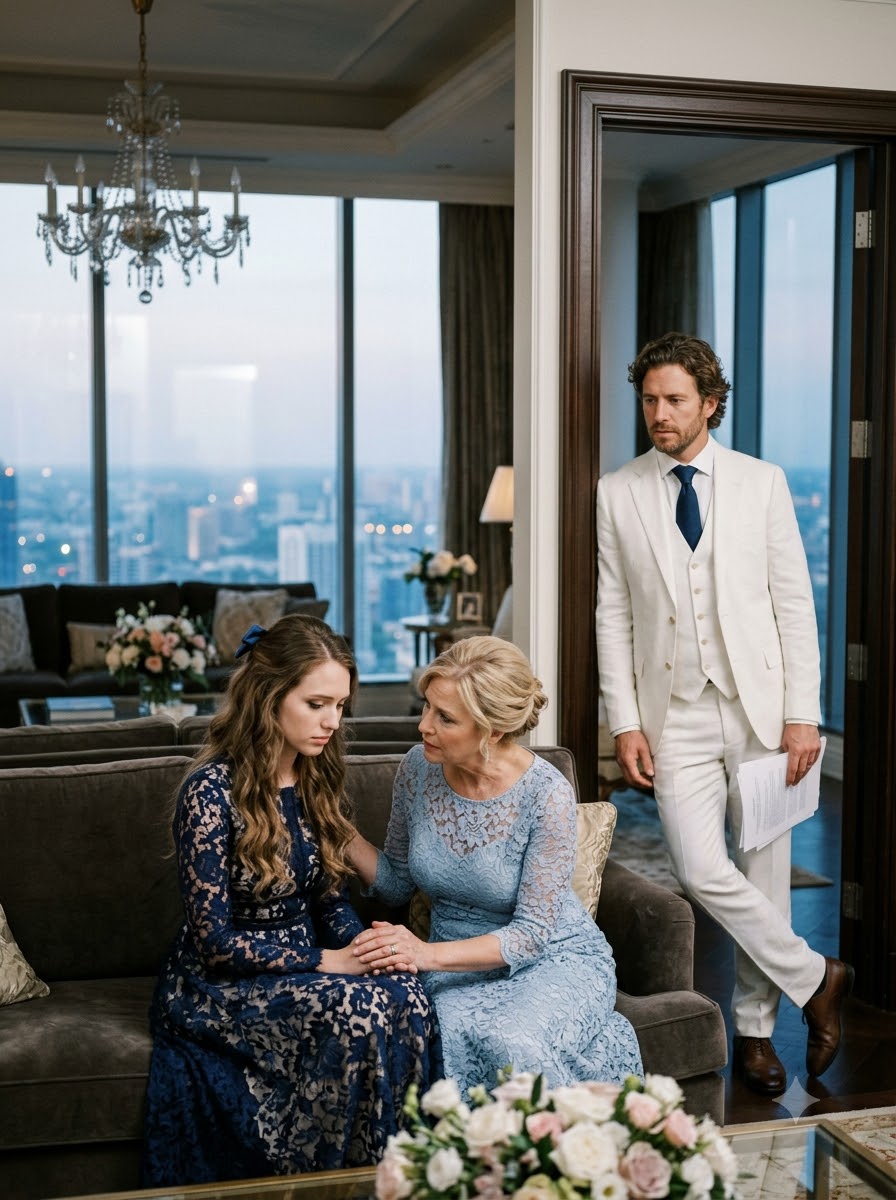
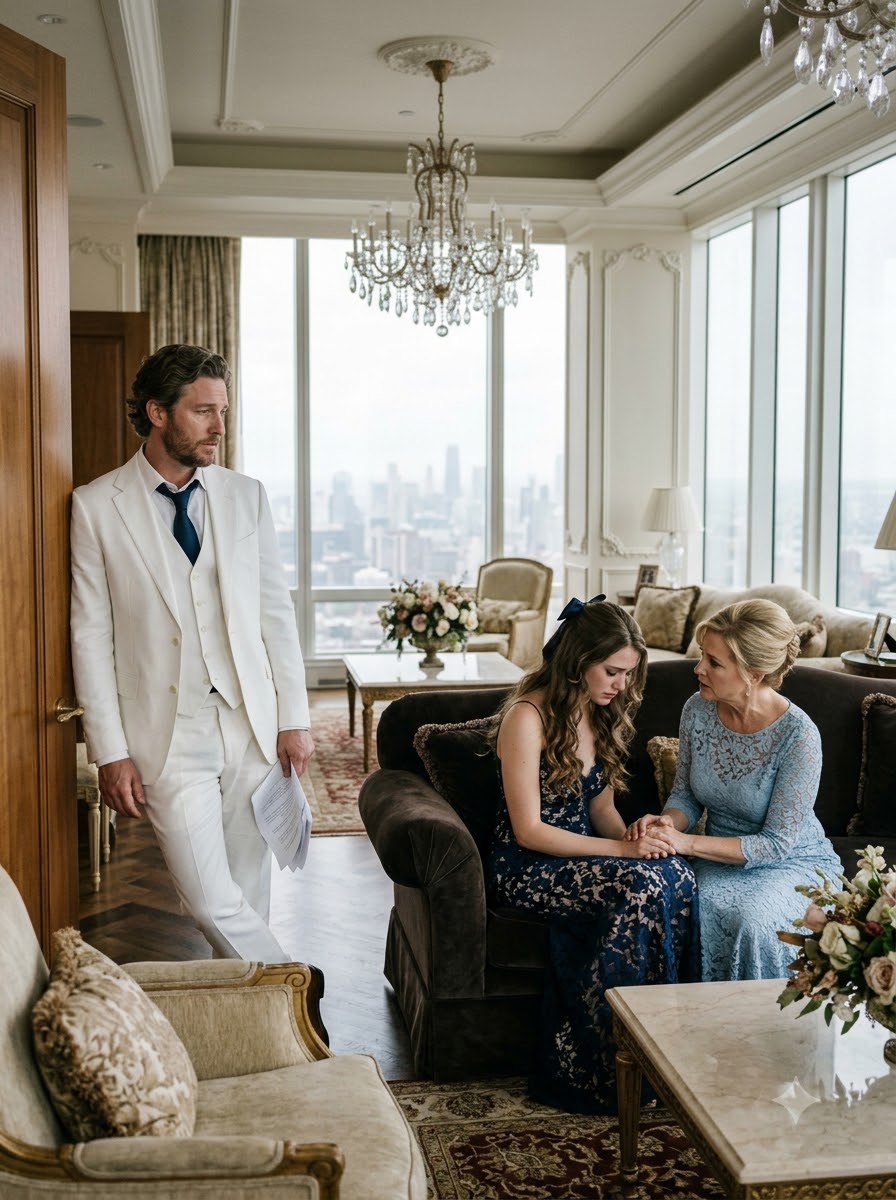
The folder slipped from my fingers. Twenty-seven pages scattered across the marble. I pushed the door open.
Alina sat on the edge of the sofa, shoulders curled inward, her mother’s hand on her knee. Both women looked up. Alina’s eyes were red-rimmed; the tissue in her fist was shredded. For a second no one moved.
“Dante.” Her voice cracked on the single syllable.
I crossed the room, knelt, and gathered the papers without looking at them. “How long?”
She closed her eyes. “Eight weeks. Stage two. They found it during the routine bloodwork my mother insisted on after I kept losing weight. I told her not to tell you.”
Her mother—Elena—stood. She was a small, sharp woman who had once run the factory floor herself. “She made me swear. She said if you knew, you would stay because you felt responsible, the same way you stayed for the company. She would rather the divorce go through than watch you marry pity.”
I set the papers on the coffee table, still kneeling. “Look at me.”
Alina did. The fear in her face was naked.
“I was going to sign those papers tomorrow because I thought you did not want me,” I said. “I have loved you since the night you replaced the lilies. I never said it because I was convinced the feeling was one-sided. If you send me away now, it will not be because I pity you. It will be because you refuse to let me love you while you are ill.”
Elena exhaled a sound that was half relief, half exhaustion. “I will leave you two. The appointment is Thursday at nine. Northwestern. I already put it on her calendar under ‘personal.’” She touched Alina’s hair once, then walked out and closed the door.
The silence that followed was different from the silences we had shared before. This one had edges.
Alina spoke first. “I never wanted the marriage to be a transaction. When my father died and the creditors started calling, I went to the bank myself. The loan officer told me the only reason they would extend more credit was if someone with your name guaranteed it. I sat in the parking lot for an hour. Then I drove to your office and asked for the meeting. I told myself it was only business. By the second week I already knew I was lying.”
I sat beside her. The sofa was the same one she had chosen three years ago because the leather was soft enough for reading. “You never said.”
“You never asked. You came home late, ate whatever I left in the oven, and went to your study. I started keeping track of the nights you fell asleep at the desk. I would turn off the lamp and put a blanket over your shoulders. You never woke. I thought if I stayed quiet and useful, you might eventually notice I was still there. When the papers arrived last month, I understood you had noticed something else entirely.”
I took her hand. Her fingers were cold. “I noticed everything. The coffee. The roses. The way you wait until I finish a call before you speak. I told myself those were the habits of a woman who was grateful, not a woman who was in love. I have spent three years translating your care into obligation because I was afraid the translation might be wrong.”
She turned her palm upward so our fingers locked. “And now?”
“Now I am not signing anything. Tomorrow I will call the attorney and instruct him to withdraw the filing. Thursday we will sit in that office together and hear the plan. After that we will decide what the next six months look like. Not as a rescue. As a marriage.”
Alina’s breath hitched. “The protocol is aggressive. They want to start before the next imaging cycle. Side effects are… significant. I may not be able to keep the house the way you are used to. I may not be able to sit through dinners with the board wives. I may—”
“Stop.” I lifted her hand and pressed my mouth to her knuckles. “I do not care about the house or the dinners. I care that you are still the person who remembers how I take my coffee on Sundays. Everything else is negotiable.”
We stayed on the sofa until the city lights outside the windows thinned. At some point Elena returned with tea neither of us drank. Alina fell asleep against my shoulder sometime after one. I carried her upstairs, the way I had never allowed myself to do before, and laid her on our bed. When I came back down, Elena was still in the kitchen, staring at the scattered divorce papers.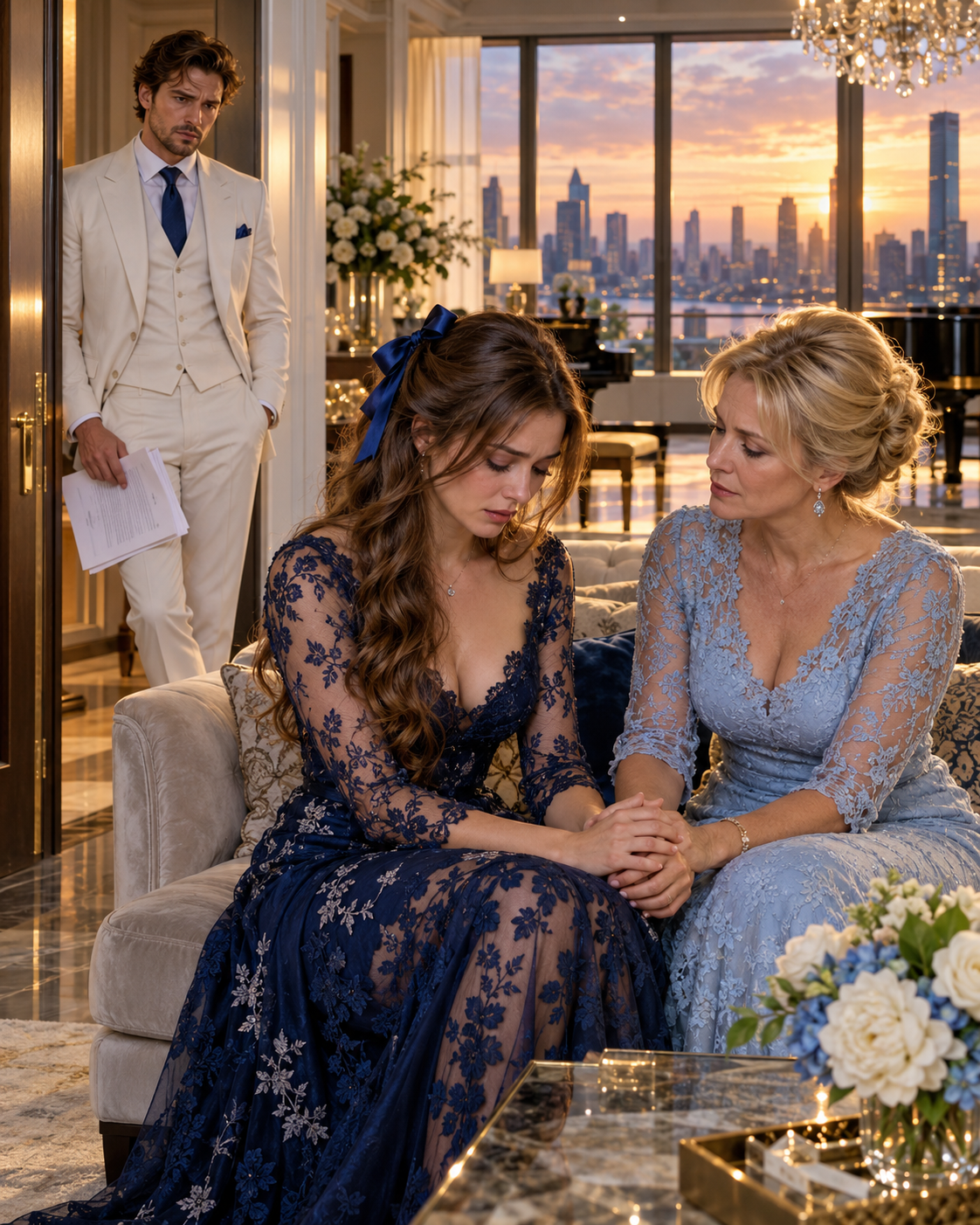
“She has been terrified you would find out and stay for the wrong reason,” she said. “I told her a man who notices the sugar on Sunday is not a man who stays out of duty. She would not believe me.”
“I almost signed them,” I said.
“You didn’t.” Elena looked at the papers, then at me. “That is the only fact that matters tonight.”
The next morning I canceled the courier, called the attorney, and spent forty minutes on the phone with Northwestern’s oncology scheduler so that my name would be on the visitor list. Alina woke to the sound of me making coffee—black for me, the half-teaspoon of brown sugar measured into hers. She stood in the doorway in one of my shirts and watched the spoon.
“You remembered,” she said.
“I have always remembered.”
We drove to the hospital on Thursday in silence that was no longer careful. The oncologist, a woman named Dr. Shah with silver at her temples, walked us through the scans. The tumor was contained. The protocol was six cycles of chemotherapy followed by surgery if the response was strong. Survival odds at five years, with treatment, sat in the high seventies. Without it, the number dropped sharply. Alina asked precise questions about nausea, about hair, about whether she could still drive. I asked about second opinions and clinical trials. Dr. Shah answered both of us without condescension.
In the parking garage afterward, Alina rested her forehead against the steering wheel of her own car—she had insisted on driving. “I keep waiting for you to change your mind.”
“I will not.”
“You could still file. The settlement is already drafted. No one would blame you.”
I reached across the console and turned her face toward me. “I spent three years believing you were enduring me. I will not spend the next three believing you are enduring treatment alone. If the papers come back, I will tear them up in front of the attorney. That is not a speech. It is the only plan I have.”
She kissed me then, the first time in months that the kiss was not polite. When we pulled apart, her eyes were wet again, but the fear had shifted into something closer to resolve.
The first cycle began ten days later. I cleared my calendar for the infusion days and ignored three board calls while we sat in the treatment room. Alina brought a book she did not open. I brought work I did not touch. We watched the drip and talked about ordinary things: the new security system at the Evanston house, whether Elena should stay in the guest suite, the fact that the white roses in the foyer needed water. Halfway through the second bag she reached for my hand and held it until the line beeped.
Side effects arrived on schedule. The nausea was manageable with the prescriptions. The fatigue was not. On the worst afternoons she slept on the sofa while I answered emails from the floor beside her, laptop balanced on my knees. Elena cooked. I learned which soups Alina could keep down and which ones she only pretended to eat. At night I checked the temperature of her forehead the way I had once checked closing prices, out of habit and fear.
One evening in the third week she found me in the study, staring at a term sheet I had already approved. “You are allowed to go to the office,” she said. “The company will not collapse if you are not here for every hour.”
“I know.”
“Then why are you still here?”
I closed the laptop. “Because three years ago I decided the most important thing I could do was stay out of your way. I was wrong. I am correcting the record.”
She crossed the room and sat on the arm of my chair. “I used to stand in this doorway and watch you work. I would count the minutes until you looked up. Most nights you never did. I told myself that was fine. A man who builds what you have built does not have extra minutes. Now you look up every time I enter a room. I am still getting used to it.”
“Get used to it,” I said. “I intend to keep doing it.”
The second cycle was harder. Alina lost most of her hair in a single weekend. She sat on the bathroom floor with a towel around her shoulders while I ran the clippers she had asked me to buy. Neither of us spoke until the job was finished. When I set the clippers down, she touched the short stubble and laughed once, startled by the sound.
PART 2
“I look like I belong on a runway in Milan,” she said.
“You look like my wife.”
She leaned into me, forehead against my chest. “Promise me something.”
“Anything.”
“If the scans after cycle four are worse instead of better, you will still let me decide what happens next. You will not override me because you are afraid.”
I rested my chin on the top of her head. “I will not override you. I will also not pretend I am not afraid. Both things can be true.”
Elena moved into the guest suite permanently after that weekend. She and I developed a wordless rotation: she handled mornings and medications, I handled evenings and the nights Alina could not sleep. The board was told I was traveling. Only my chief of staff knew the real itinerary. He rerouted every nonessential meeting and stopped asking questions after the second week.
Between cycles we drove to the lake house I had bought the year before we married and had never used. Alina walked the shoreline in a wool coat that swallowed her, collecting smooth stones she later arranged on the kitchen windowsill. One afternoon she stood at the end of the dock and said, “If this works, I want to renew the vows. Not a party. Just the two of us and a judge who will not put it in the paper.”
“It will work,” I said.
“You do not know that.”
“I know I will still be here either way.”
She turned. The wind lifted the edges of the scarf she wore. “That is the part I am still learning how to believe.”
Cycle four arrived with better numbers. The tumor had shrunk by nearly half. Dr. Shah allowed herself a small, professional smile and moved the surgery discussion from “possible” to “probable.” Alina cried in the car on the way home, the good kind of tears that left her laughing at herself. That night she cooked—nothing complicated, just pasta and the sauce Elena had taught her years ago. I set the table. We ate at the kitchen island instead of the dining room. Halfway through the meal she reached across and straightened the cuff of my shirt the way she used to do before galas.
“I missed doing that,” she said.
“I missed letting you.”
The surgery was scheduled for the first week of December. I took the entire month off. The morning of the procedure I sat with her in pre-op while a nurse checked vitals. Alina’s hand stayed in mine until they wheeled her through the doors. Elena and I waited in a room that smelled like antiseptic and old coffee. Six hours later Dr. Shah came out and said the margins were clear.
Alina woke in recovery with her voice hoarse and her first coherent sentence a request for water. I held the cup. She drank, winced, and looked at me.
“Still here,” she whispered.
“Still here.”
Recovery was slow and ordinary in the way serious recoveries are. Physical therapy. Follow-up scans. A gradual return to food that tasted like food. By February she was strong enough to walk the length of the Evanston block without stopping. By March she was back in the garden, arguing with the landscaper about the placement of the new rose bushes. I started going into the office three days a week. On the other two I worked from the study while she read on the sofa, the same sofa where I had overheard her three seasons earlier.
One evening in April I found the original divorce papers in a drawer in my study. I had never thrown them away. I carried them downstairs. Alina was at the kitchen table with seed catalogs. I set the folder in front of her.
“I want these gone,” I said.
She opened the folder, flipped to the signature pages, and looked at the yellow tabs. Then she closed it again. “We could frame them.”
“Or we could burn them.”
She smiled. “The fireplace is gas.”
“Then the shredder.”
We fed the pages through together, twenty-seven sheets reduced to confetti. When the machine stopped, Alina brushed the last scraps into the bin and turned to me.
“I love you,” she said. The words were simple and unadorned. “I have loved you since the parking lot outside the bank. I am sorry it took a hospital and a set of clippers for me to say it out loud.”
“I love you,” I answered. “I have loved you since the lilies. I am sorry it took the same hospital for me to stop being afraid of the sentence.”
She stepped into my arms. Outside, the white roses she had planted the week before were just beginning to bud. Inside, the house was quiet in the way it had been quiet on the best nights of our marriage—before either of us knew how to name what we were protecting.
We never held a formal renewal. On a Thursday in May we drove to the county building, signed a short affidavit in front of a clerk who did not recognize either of us, and walked back to the car holding the stamped copy. Alina tucked it into the glove compartment beside the registration.
“That is the only paperwork I want in this marriage,” she said.
“Agreed.”
Elena met us at the house with champagne neither of us finished. She hugged her daughter, then hugged me with the same brisk efficiency she used on the factory floor. “About time,” she said, and went inside to start dinner.
That night Alina and I sat on the back steps long after the dishes were done. The air still carried the last edge of spring. She rested her head on my shoulder.
“Do you ever think about what would have happened if you had signed the papers that night?” she asked.
“Every day,” I said. “Then I remember I did not.”
She was quiet for a moment. “The scans next month will tell us more. Dr. Shah says the odds keep improving. I am trying not to live inside the percentages.”
“Then we will not.” I turned my head and kissed her temple. “We will live inside the house, and the garden, and whatever comes after the percentages. That is the only plan I have left.”
Alina’s hand found mine in the dark. Her fingers were warm. Somewhere in the city a siren rose and fell. We stayed on the steps until the cold finally drove us inside, the stamped affidavit waiting in the glove compartment and the shredded remains of the old agreement already gone with the recycling. The marriage that had begun as a rescue had become, at last, a choice both of us had made with open eyes. Whatever the next set of scans showed, we would read them together. That was the only certainty either of us required.
