

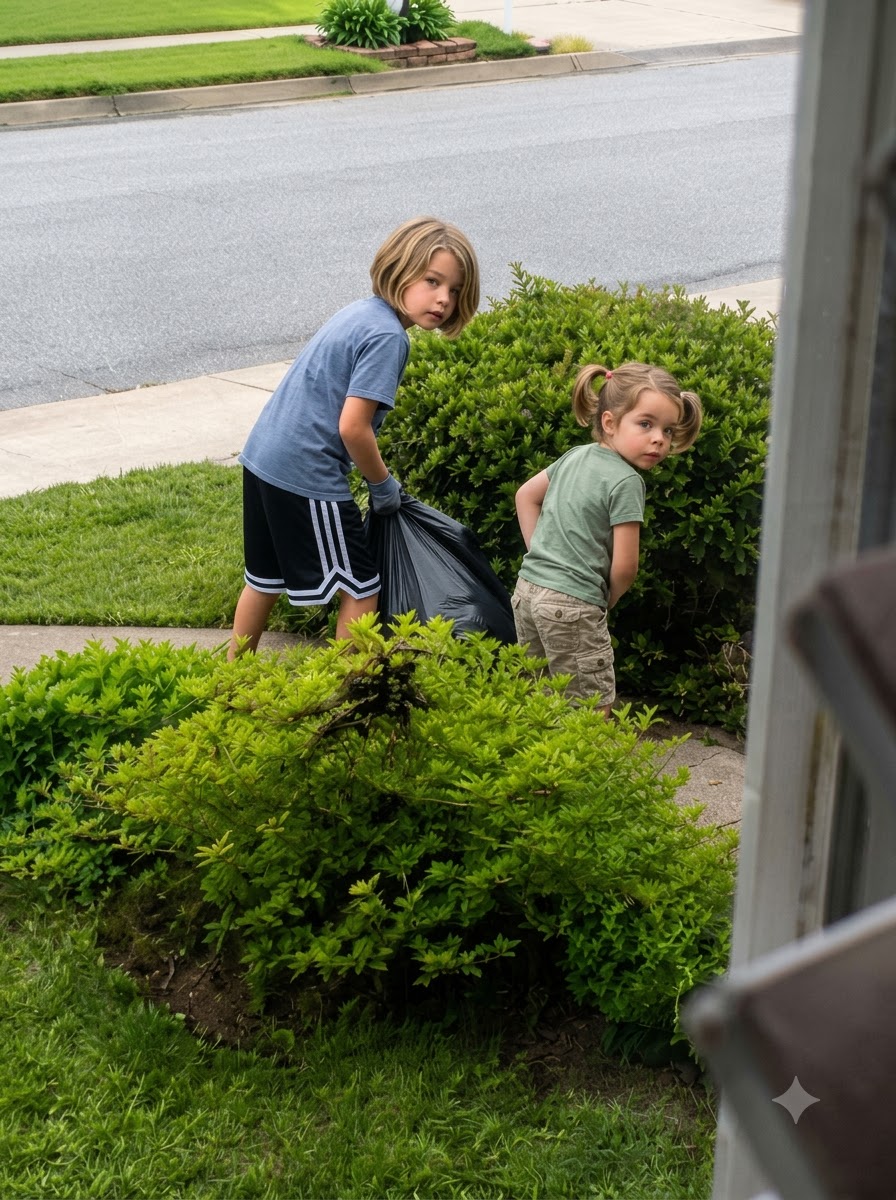
Every Sunday, the two children next door walked down our street carrying a single black trash bag. Everyone assumed they were collecting litter.
Then one afternoon, I saw nine-year-old Ben crouching beneath the bushes outside my window and burying something in the dirt.
After he walked away, I stepped outside.
Beneath the leaves, I found a plastic bag holding a silver flash drive and a folded note.
My name was written across the front. MRS. CARTER.
I opened it.
If our mom disappears, give this to the police.
Do not give it to Rick.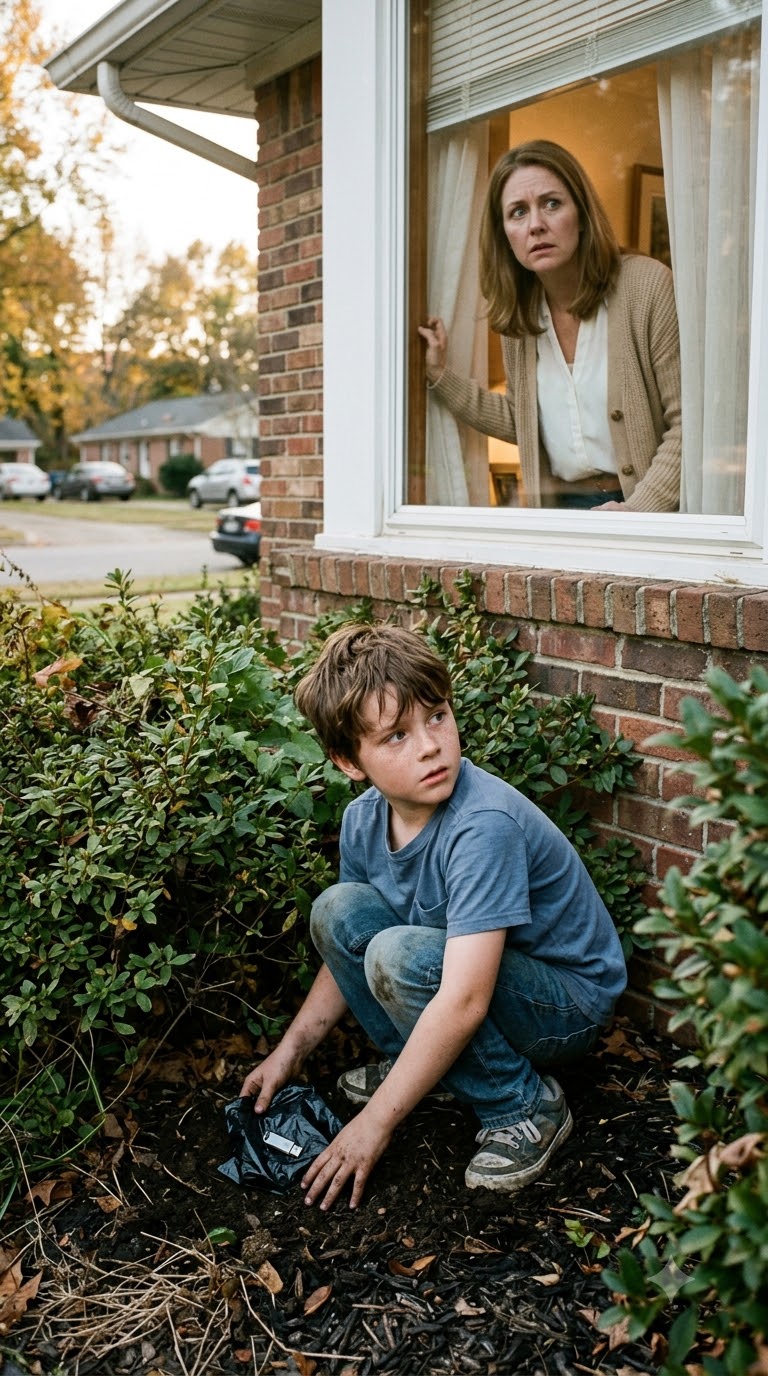
Do not tell him we left it here.
That was when I understood those children had never been cleaning our street.
They had been leaving evidence.
PART 1 — THE FLASH DRIVE
The children were Mia, twelve, and Ben, nine.
Their mother, Laura, had moved into the house next door with her husband, Rick, two years earlier.
Rick wasn’t their biological father, but everyone in the neighborhood regarded him as a friendly, successful family man. He installed home-security systems.
Cameras.
Alarms.
Smart locks.
He knew police officers and business owners throughout the county. He smiled at block parties.
Helped with school fundraisers.
Whenever Laura spoke, he often rested a hand against the back of her neck.
I used to think it seemed strangely possessive.
I never imagined how accurate that feeling was.
After discovering the note, I brought the flash drive inside and connected it to an old laptop.
Seven folders appeared.
PHOTOS.
RECORDINGS.
MONEY.
RICK’S TRUCK.
MOM’S PHONE.
DATES.
READ FIRST.
I opened the final folder.
Mia appeared on the screen, sitting inside what looked like her closet.
Ben was beside her.
“If you’re watching this,” she whispered, “either Rick found out or Mom didn’t come home.”
My stomach tightened.
Then she explained.
Rick controlled Laura’s bank cards.
He had taken her passport.
He checked her phone every night.
Laura had tried to leave once before, but Rick found her at her sister’s house and brought them back.
Mia said he had threatened that if Laura ever tried again, no one would find her.
Then Ben mentioned a cabin.
Mia reluctantly explained that Rick had once taken them to a wooded property belonging to his family.
Behind it was a deep hole.
Rick had made Ben stand near it while telling Laura that “accidents happen when people don’t listen.”
I immediately opened the audio recordings.
There were twenty-three.
In one, Rick laughed while saying:
“You think anyone will believe you instead of me?”
In another, he threatened that if Laura left again, the children would lose both parents.
The photos were even worse.
They showed visible injuries.
A bedroom door with a lock installed on the outside.
A handgun beneath the driver’s seat of Rick’s truck.
Rope, a shovel, and fuel containers in storage.
Then I found screenshots from Laura’s phone containing threatening messages.
The final photograph showed four names written on a sheet of paper.
Laura.
Mia.
Ben.
Rachel—Laura’s sister.
A date was written beside each one.
I called 911.
Police arrived quietly. Detective Vasquez watched Mia’s video once and immediately called for a protective response.
Officers headed next door.
No one answered.
Laura’s phone went directly to voicemail.
Then we heard a faint sound of knocking from the back of the house.
Three knocks.
Pause.
Three more.
An officer sprinted around the side.
Minutes later, they found Laura locked inside the laundry room.
Her wrist had been secured to a pipe with a bicycle lock.
Rick had the key.
But the children were missing.
Laura’s expression changed when she heard that.
“He found out.”
“Found out what?” Detective Vasquez asked.
“The copies.”
Then Laura told us something none of us had anticipated.
Mia and Ben hadn’t made just one flash drive.
They had made twelve.
PART 2 — THE CHILDREN’S PLAN
For nearly three months, Mia and Ben had secretly hidden one flash drive every Sunday.
One beneath my bush.
Another behind Mrs. Alvarez’s mailbox.
One inside the stone wall near Mr. Patel’s garage.
The others were distributed throughout the block.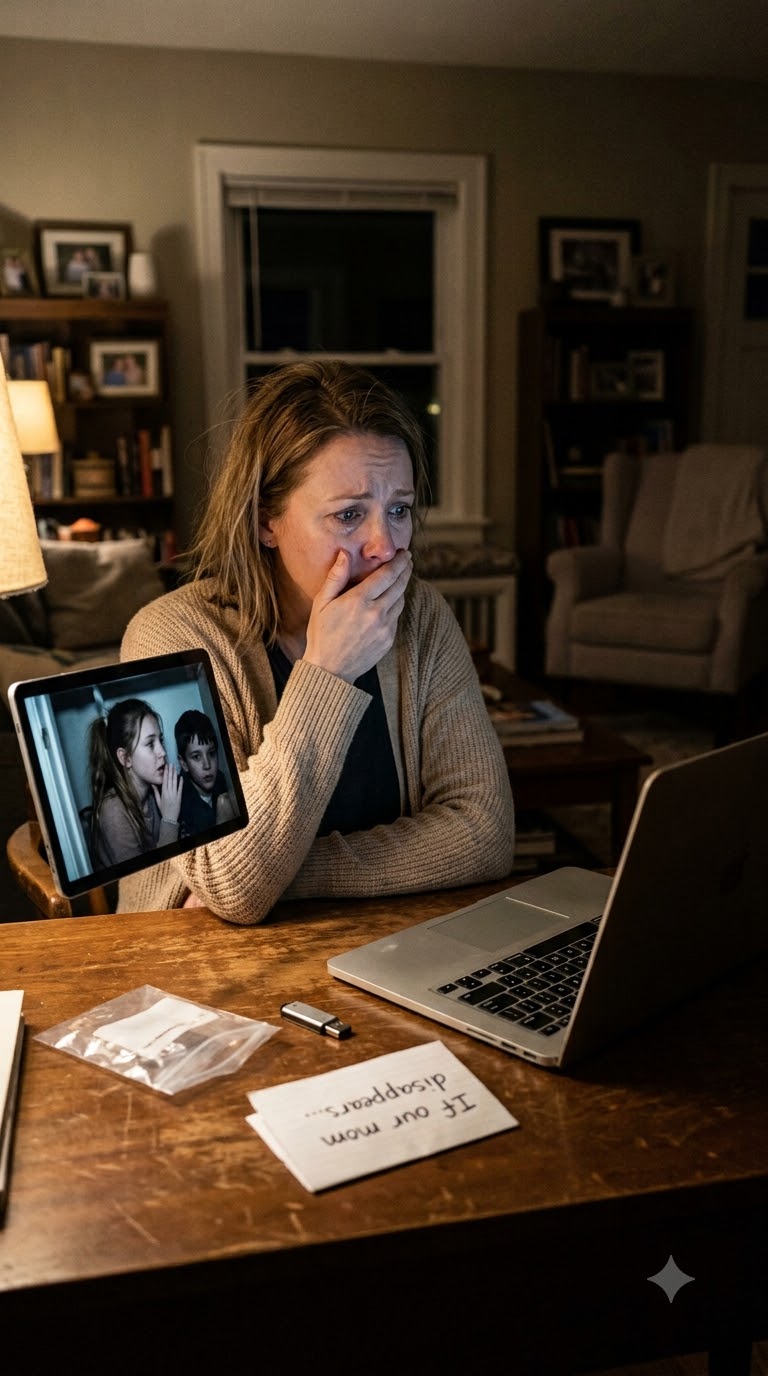
Packaging
The black trash bag was their disguise.
They collected enough garbage to make their routine appear ordinary, then quietly left evidence at houses they believed were safe.
“Why twelve?” I asked Laura.
“Because Rick always finds things.”
Laura admitted that she had helped make the first recording after the threat at the cabin.
But she never wanted the children involved.
Mia refused to stop.
“If he controls your phone and everything inside the house,” she had told Laura, “we need to put the truth somewhere he doesn’t know to look.”
The children selected neighbors who had always treated them kindly.
People who waved.
People who brought cookies.
People with visible doorbell cameras.
Then Detective Vasquez asked the question that mattered most.
“Where is Rick?”
Laura looked toward the street.
“He said he was taking Mia and Ben to breakfast.”
Within minutes, police issued an alert.
Law Enforcement
A toll camera caught Rick’s truck forty miles north.
He was driving toward the wooded area near the cabin.
Laura whispered two words.
“The hole.”
Police refused to let us follow.
Laura sat in my living room wrapped in a blanket as officers searched her home.
Every few minutes, she asked whether someone had called.
Nobody had.
Then she turned toward my window.
“The children picked your house first.”
Child Care
“Why?”
She gave me a broken smile.
“Remember when Ben broke your flowerpot last summer?”
I remembered.
A baseball had knocked it off the porch.
Ben had come to my door crying and offered me five dollars from his allowance.
I refused.
I told him accidents happened.
Laura looked at me.
“He said you didn’t make him feel bad after he told you the truth.”
That nearly broke me.
A nine-year-old child had decided I was safe because I hadn’t punished honesty.
Two hours later, Detective Vasquez called.
They had found the children.
Child Care
Alive.
Mia had discovered Rick’s old phone in the back seat of his truck.
While he was unloading supplies, she managed to activate its emergency function.
Police reached them before Rick could take them to the cabin.
Officers found restraints, fuel containers, and the handgun shown in the photographs.
Rick was arrested.
Over the following weeks, investigators searched the cabin.
They found the hole.
It had been dug months earlier and partially concealed.
They also uncovered copies of Laura’s identification, insurance documents, and a typed letter designed to appear as though Laura herself had written it.
That was what frightened me most.
Rick hadn’t only planned what would happen.
He had also planned the story everyone would believe afterward.
But Mia and Ben had destroyed that possibility.
Rick could erase one phone.
One recording.
One computer.
He couldn’t erase evidence hidden throughout an entire neighborhood.
Geographic Reference
PART 3 — LOOK UNDER THE LEAVES
Rick eventually accepted a plea agreement that resulted in a long prison sentence.
His security company collapsed as well.
Investigators discovered that he had improperly retained access to several customers’ home-security systems.
The investigation expanded far beyond our street.
Meanwhile, Laura and the children were moved into protected housing.
For safety reasons, none of us knew their exact location.
The first Sunday after they left, the neighborhood felt different.
No Mia.
No Ben.
No black trash bag.
Then Mrs. Alvarez discovered a flash drive beneath her mailbox.
Mr. Patel found another near his garage.
Eventually, almost every house on the street had one.
Home & Garden
Each contained the same warning.
If our mom disappears, give this to the police.
Some neighbors cried.
Others claimed they had always suspected something.
I said nothing.
Because I had noticed things too.
Laura wearing sunglasses on rainy days.
The way she went quiet whenever Rick appeared.
His hand against her neck.
Mia watching him whenever her mother spoke.
I had noticed.
I simply hadn’t understood.
Three months later, I received a letter from Mia.
Laura was working with an attorney and attending counseling.
Ben had started sleeping better.
Mia had joined an art class.
At the bottom, she wrote:
Mom says we should have told an adult sooner. I told her we did.
We told twelve of them.
They just had to find it.
I read that sentence over and over.
The children had been asking for help every Sunday.
Not through words.
Through patterns.
Through nervous glances.
Through a trash bag that never seemed full.
Months later, Laura returned once with a police escort to collect the last of their belongings.
Mia came over to me.
“You opened it,” she said.
“I did.”
“Were you scared?”
“Yes.”
She nodded.
Then she confessed something.
“I thought you might throw it away.”
“Why would I?”
“Adults throw things away when they think children are causing trouble.”
Child Care
I crouched down beside her.
“You weren’t causing trouble.”
“We hid things in people’s yards.”
“You were putting the truth somewhere it could survive.”
Before she left, Mia reached into her pocket and gave me another flash drive.
“This one’s empty.”
“Why give it to me?”
“So you remember to look under the leaves.”
I closed my fingers around it.
“I will.”
Mia and Ben don’t clean our street on Sundays anymore.
Now the adults do.
Nearly a dozen neighbors walk around the block every weekend with trash bags.
Packaging
We collect wrappers, bottles, and whatever else the wind leaves behind.
But we also pay attention.
To the houses.
To one another.
To the things that don’t quite feel right.
For months, everyone believed Mia and Ben were picking up garbage.
They weren’t.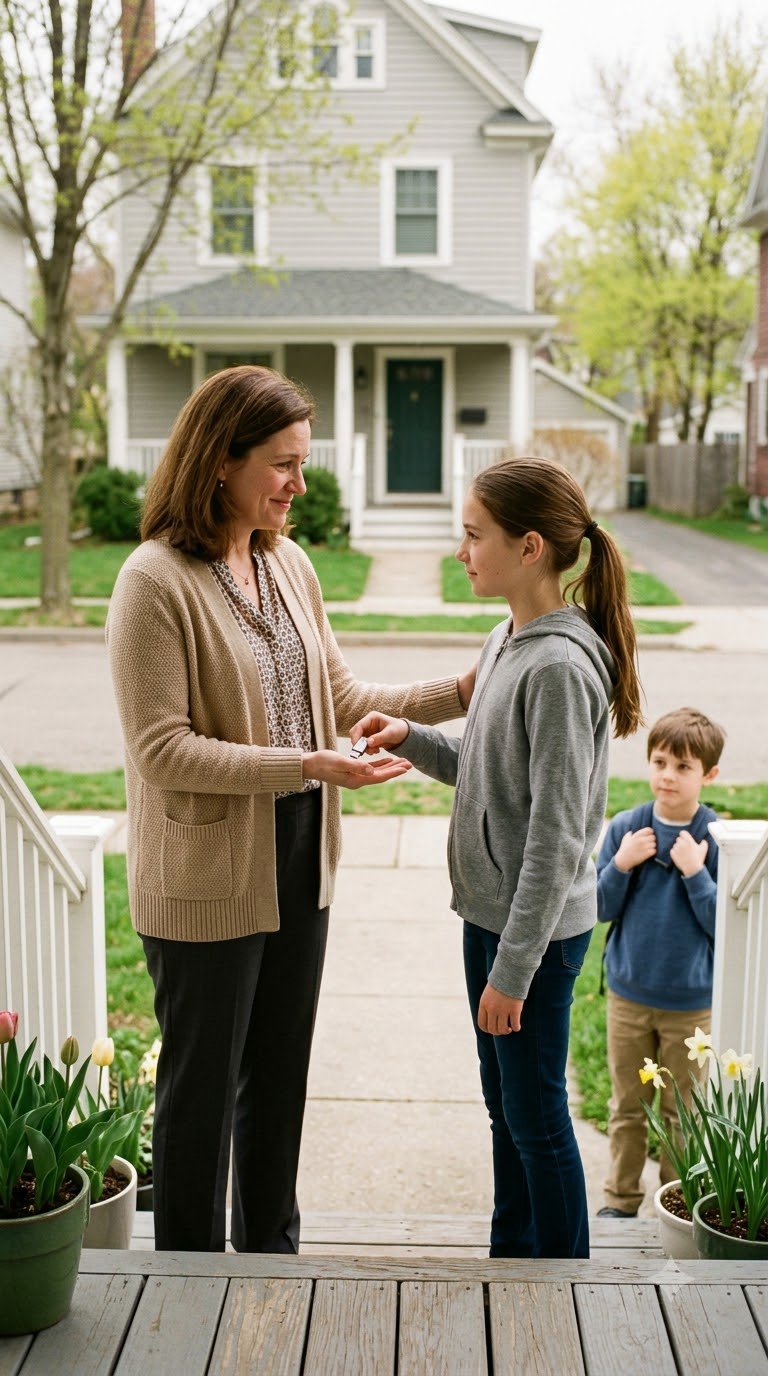
They were planting evidence.
One small copy at a time.
Because they understood something most of the adults on our street had failed to see.
Rick could control one house.
He could delete one message.
He could hide one file.
But he couldn’t search every garden.
And he couldn’t silence an entire neighborhood.
Geographic Reference
In the end, the flash drive beneath my window did exactly what those children had hoped it would.
It made one adult finally pay attention.
