

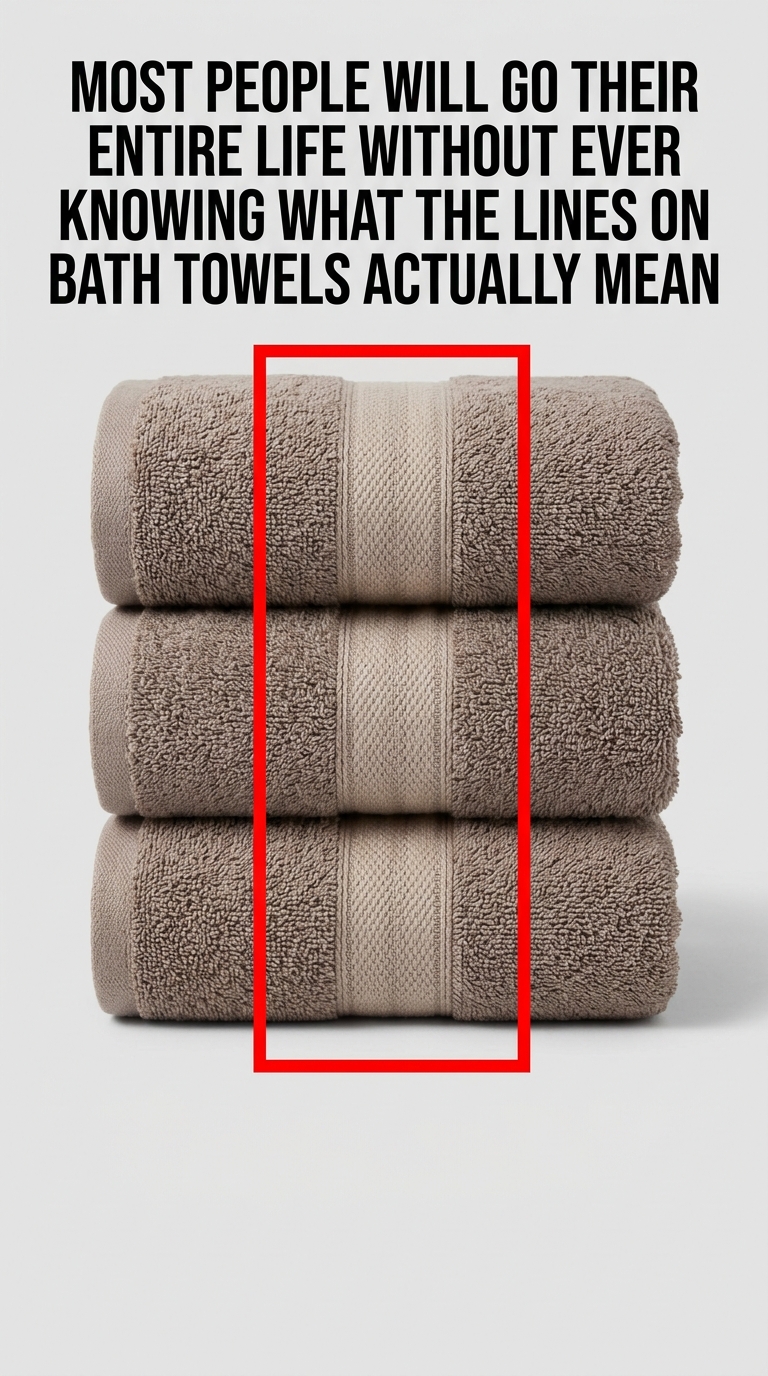
WHY BATH TOWELS HAVE THAT WOVEN BAND—AND WHAT IT’S REALLY FOR
It’s one of those small details people notice every day without giving it much thought: the textured woven strip located near the ends of many bath towels.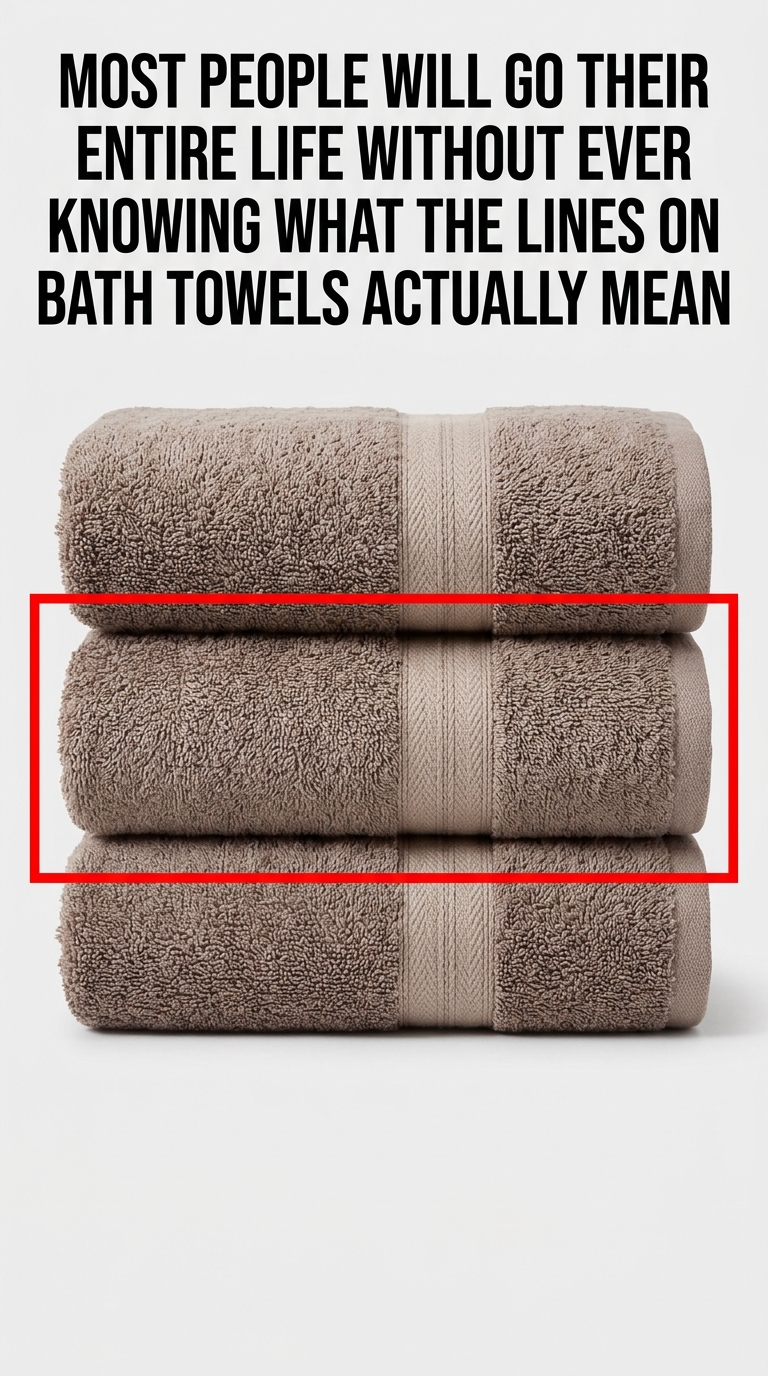
Some people believe it’s purely decorative.
Others joke that it indicates which side of the towel should be used. In reality, that woven band usually serves a functional purpose in the towel’s construction—and it may even help extend the towel’s lifespan.
THE STRIPE IS COMMONLY KNOWN AS A DOBBY BORDER
In the textile industry, that woven strip is often referred to as a dobby border.
Unlike the soft, fluffy middle section of the towel, the dobby border features a tighter and flatter weave.
Manufacturers frequently include it not only for visual appeal but also to provide additional structure and durability.
WHY TOWELS BENEFIT FROM EXTRA SUPPORT
Bath towels endure constant wear and tear.
They are routinely:
soaked with water
rubbed against the skin
twisted or wrung out
washed over and over
exposed to heat during drying
Over time, these repeated actions place significant stress on the fabric.
The main absorbent area of most towels is made from looped terry cloth, which is excellent for drying but can also be more susceptible to damage.
Without extra reinforcement, towels can begin to:
fray around the edges
lose their original shape
curl or become distorted
shrink unevenly after repeated laundering
HOW THE WOVEN BORDER HELPS
The dobby border acts as a stabilizing feature at the ends of the towel.
In practical use, it can help:
Reduce edge fraying
The ends of a towel usually wear out faster than the center. A tighter weave helps strengthen these vulnerable areas.
Maintain the towel’s shape
Because the border does not stretch in the same way as terry loops, it can help preserve a cleaner, more consistent rectangular form.
Minimize uneven puckering
After repeated washes, towels can develop wavy or distorted edges when different sections of fabric shrink at different rates. The denser border helps reduce this issue.
Improve folding and storage
A towel that holds its shape tends to fold more neatly and stack more evenly in a linen closet.
IT ALSO SERVES A DECORATIVE PURPOSE
The border is not solely functional. It is often used as a design feature as well.
Manufacturers frequently incorporate:
woven designs
textured accents
decorative stripes
logos or subtle branding
into the border area without affecting the towel’s primary absorbent surface.
This allows the central portion to remain focused on drying performance while the edges contribute both style and support.
DOES IT CHANGE HOW ABSORBENT THE TOWEL IS?
In most cases, the dobby border itself absorbs less water than the plush terry center because it uses a tighter weave and lacks the characteristic loops. This is intentional.
The towel’s primary drying capability still comes from the terry cloth that covers most of its surface.
The border’s role is mainly to enhance durability and appearance rather than improve moisture absorption.
THE BOTTOM LINE
That woven stripe near the end of many bath towels is much more than a decorative detail.
It is typically a dobby border designed to:
strengthen the towel’s edges
help preserve its shape
reduce wear and tear over time
add texture and visual appeal
It may seem like a minor feature, but it plays an important role in helping many towels remain durable and functional for years.
