

PART 1
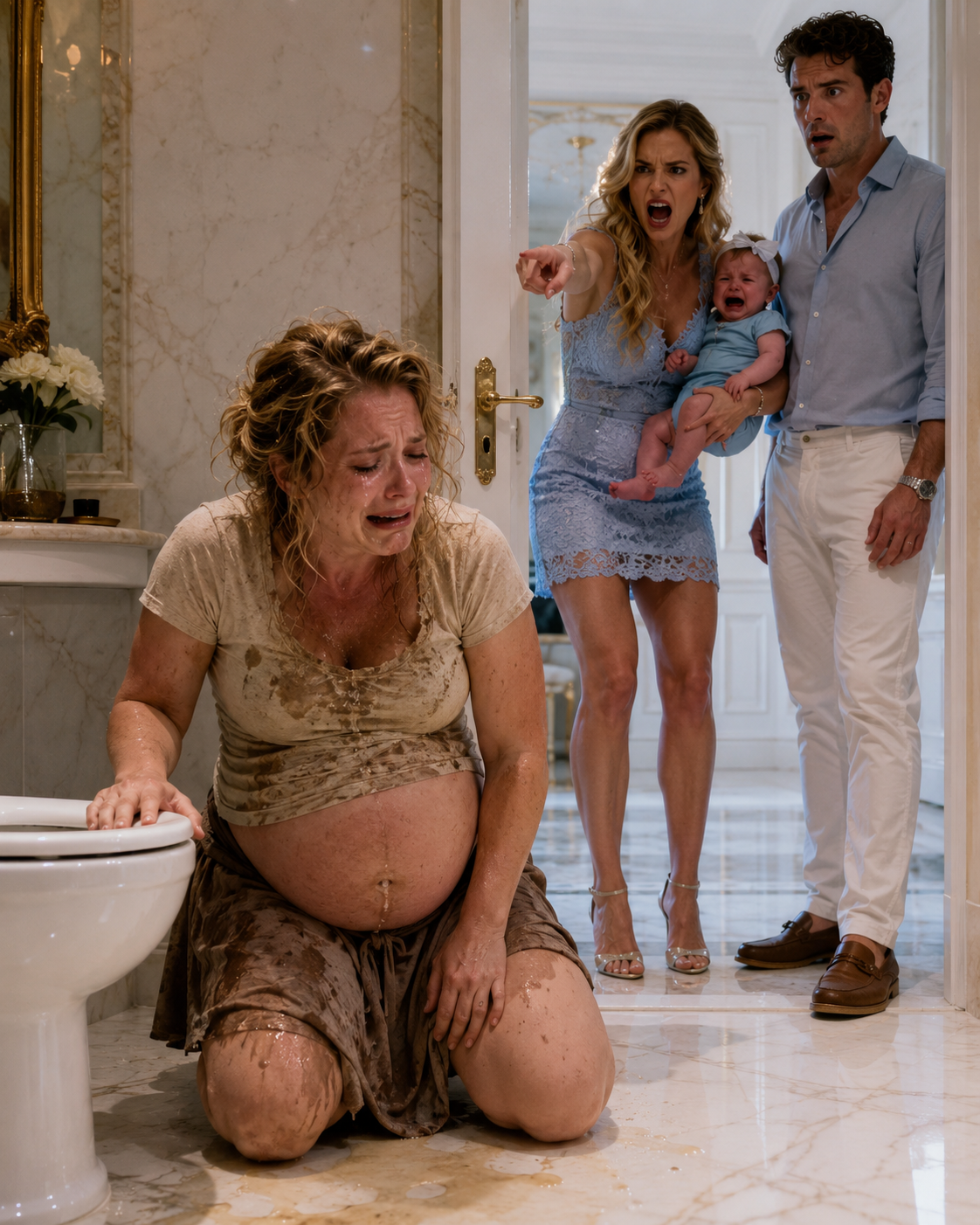
“Who is the man, Mom? Tell me right now! Did you come to my house to take care of my baby or to hide a secret pregnancy?”
It still breaks my heart whenever I remember that those terrible words came out of my mouth.
My mother, Abigail Miller, was fifty-three years old. She had been widowed for nearly a decade and lived alone in a quiet suburban neighborhood in Columbus, Ohio. Six months earlier, I had practically begged her to pack up and move to Atlanta, Georgia, to help me care for my newborn daughter, Hannah.
My husband, Christopher, and I were utterly drained by the constant demands of raising a child while keeping up with our jobs.
I worked as a project coordinator at a major tech company, and my long maternity leave had just ended as the biggest project of my career was beginning. Christopher worked long hours at his financial firm, and neither of us was comfortable leaving little Hannah with an inexperienced stranger.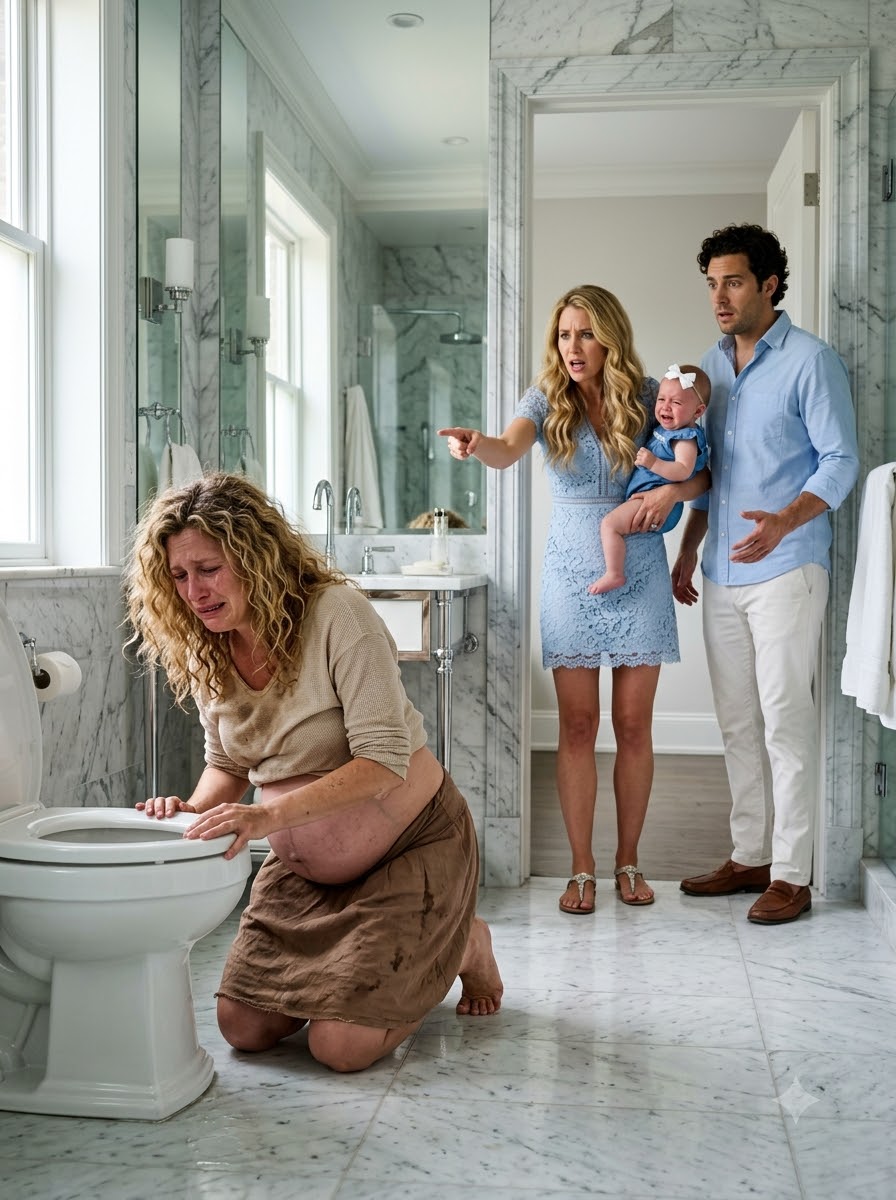
When I called my mother crying, she did not hesitate for even a moment.
“You focus on your career, Claire,” she told me over the phone. “I will gladly take care of my precious granddaughter.”
She ended up caring for far more than just the baby.
Whenever I came home late at night, Hannah was already bathed and sleeping peacefully, the laundry was folded neatly, a hot dinner sat waiting on the stove, and the whole house was spotless. I tried to repay her exhausting work by buying expensive designer clothes, premium vitamins, luxurious body creams, and regularly sending spending money straight to her bank account.
She objected to my spending almost every time.
“Save your hard-earned money for the baby’s future,” she would softly scold me.
I foolishly took her modest refusal as nothing more than a mother’s gratitude.
Now, I understand that buying her expensive things was much easier than actually sitting down and asking how she was doing.
By her fifth month in our home, I started noticing something deeply unusual about her appearance.
My mother was eating less and less during dinner, yet her stomach was becoming more noticeable with every passing week.
One pleasant afternoon, while watching her chop vegetables, I even made a thoughtless joke.
“At this rate, Mom, you are going to go back home to Columbus with a pampered old lady belly,” I laughed.
She gave me a faint smile before quickly lowering her eyes toward the cutting board.
“It is probably just bad bloating,” she replied softly. “And my lower back has been hurting me quite a lot lately.”
I bought her some heat patches from the pharmacy and immediately returned to my demanding work schedule.
Several weeks later, her face looked noticeably gaunt, her arms seemed as fragile as thin twigs, yet her abdomen stayed round, firm, and tight.
She looked unmistakably pregnant.
Since I had given birth only months earlier, I recognized that distinctive shape immediately.
The idea of a fifty-three-year-old widow being pregnant seemed completely ridiculous to me, but my thoughts slowly filled with suspicion.
I tried arranging a doctor’s appointment for her, but she firmly refused.
“Please do not spend your money on silly checkups,” she insisted. “It will pass on its own soon.”
Christopher suggested that she was simply exhausted from spending all day chasing after a crying baby.
I gladly accepted his reassuring explanation because it fit conveniently into my hectic life.
That changed one terrible afternoon when I came home earlier than expected.
I entered the house and found my mother doubled over the toilet, vomiting so violently that her legs were trembling.
Christopher stood helplessly in the hallway.
“Claire, I really think we need to take her to the emergency room right now,” he whispered nervously.
When I saw her enlarged abdomen beneath her tight shirt, all the anxiety I had carried for weeks suddenly erupted into something cruel.
“Mom, what on earth are you hiding from us?” I demanded loudly.
She slowly raised her pale face from the porcelain bowl.
“What are you talking about, sweetie?” she asked weakly.
“I am talking about that!” I shouted, pointing straight at her stomach. “Who is the father?”
Christopher immediately took hold of my shoulder, trying to calm me.
“Claire, please stop this right now,” he pleaded.
I angrily shoved his hand away.
“She is fifty-three years old, Christopher, and she has been hiding a secret for months,” I yelled. “Mom, if you are pregnant, just admit it right now, but do not come into my house pretending to be sick while taking care of my daughter!”
Her expression immediately went still.
She did not shout at me.
She did not even attempt to defend herself.
Her silence was far more painful than any argument could have been.
She looked at me as though I were a heartless stranger standing before her in the bathroom. She wiped her mouth with a tissue, leaned against the hallway wall for support, and slowly disappeared into her guest bedroom without saying a single word.
She skipped dinner that evening and would not speak to me for the rest of the night.
Later, convinced I was about to uncover some terrible secret, I opened the home security footage on my laptop.
I spent hours rewinding the saved recordings from the previous weeks.
I watched my mother preparing bottles for the baby at four in the morning, her body visibly shaking from exhaustion.
I watched her hold baby Hannah against her chest while her other hand pressed against her abdomen in obvious pain.
I watched her quietly vomit into the kitchen sink while we were both at work.
I watched her sit alone on the living room floor, silently crying whenever she thought nobody was watching.
Then I found the footage from that very afternoon.
Baby Hannah had begun choking while eating her soft fruit puree.
My mother rushed across the room, picked her up, and expertly patted her back until the baby was breathing normally again.
Immediately after saving my daughter’s life, my mother collapsed against the living room wall, completely exhausted.
Her shirt accidentally lifted as she struggled to catch her breath.
I saw a clear medical bag securely taped to her lower right abdomen.
A huge surgical incision was visible directly beneath the plastic pouch.
There had been no secret pregnancy.
I turned the volume on my computer all the way up.
My mother sat alone on the floor, gasping for breath, and whispered to herself.
“Just hold on a little longer, Abigail,” she murmured in a broken voice. “Just until Claire finishes her big work project, because you cannot cause any problems for her right now.”
My legs suddenly gave way, and I collapsed onto the floor in complete shock.
I had cruelly accused my sweet mother of hiding an embarrassing affair, when in reality she was secretly suffering from a terrible illness just to protect my peace of mind.
I still had absolutely no idea what horrifying truth I was about to learn.
PART 2
I scrambled up from the floor and rushed straight to my mother’s bedroom door.
“Mom, please open the door right now!” I sobbed, pounding my fists against the wood.
There was no response from inside.
I struck the door again, completely terrified.
When I turned around, Christopher was standing at the end of the hallway with sleeping Hannah in his arms.
The strange expression on his face told me everything I needed to know.
“You knew about this whole thing, didn’t you?” I asked him with a trembling voice.
He slowly lowered his gaze toward the floor.
“I did not know everything, Claire,” he confessed softly.
A sharp wave of betrayal swept through me.
“What exactly did you know, Christopher?” I demanded.
“A few weeks ago, I found blood on a bath towel in the laundry room, and your mother begged me not to tell you,” he explained quietly.
“And you actually agreed to keep that secret from me?” I cried out.
“She told me she was already seeing a specialist in town, and she said you were about to present your big corporate project and would drop everything if you found out,” he replied defensively.
Hot tears filled my eyes as I stared at him.
“Did you see her struggling like that more often?” I asked.
Christopher stayed silent for several long seconds.
“Answer me, how many times did you see her in pain?” I pressed.
“Several times,” he whispered softly.
For a moment, I wanted to direct all my anger and blame toward my husband.
Then I suddenly remembered all the times I had seen my mother holding her lower back in discomfort.
I remembered every evening when she politely told us she was not hungry for dinner.
I remembered how, every night when I returned home from work, my first questions were always about practical matters.
“Has Hannah eaten her dinner yet?” I would ask.
“Did you remember to sterilize the baby bottles?” I would check.
“Can you please stay an extra hour tomorrow because I have a late meeting?” I would request.
Not once had I stopped to ask her the simplest question: “Mom, are you okay?”
I pushed open her bedroom door without waiting any longer.
My mother was sitting quietly on the edge of the mattress, looking incredibly small and fragile beneath the dim light.
I dropped to my knees in front of her.
“I saw the security camera footage, Mom,” I wept.
She quickly looked away from me.
“Mom, please tell me what is wrong with you,” I begged.
“It is nothing that I cannot handle on my own,” she replied stubbornly.
“Please do not ever say that to me again,” I cried, taking her cold hands in mine.
The thick wall of silence she had built finally collapsed, and tears streamed down her wrinkled cheeks.
“It is cancer,” she whispered softly.
That one terrible word erased my career, my corporate project, and my foolish accusations in an instant.
“Where is it located?” I asked, my voice cracking.
“In my colon,” she answered flatly.
“How long have you known about this?” I questioned.
She needed a painful moment to gather enough strength to answer.
“I was officially diagnosed almost a year ago,” she revealed.
I froze on the floor.
“A whole year ago? But you came to live with us six months ago!” I exclaimed in utter confusion.
My mother gave me a sad smile that I will never be able to erase from my memory.
“That is the exact reason why I came to Atlanta, sweetie,” she confessed.
“What do you mean by that?” I asked.
She gently glanced toward the small baby crib in the corner of her room.
“When you called me crying on the phone because you could not find a trustworthy nanny, I had already undergone major surgery and was fitted with a colostomy bag, but I needed to continue my specialty treatments in a larger city anyway,” she explained softly.
“Did you actually pause your severe chemotherapy treatment just to take care of my daughter?” I shouted in disbelief.
“It was not like that at all,” she tried to reassure me.
“Then tell me the absolute truth right now!” I pleaded.
My mother tightly closed her eyes and drew in a deep breath.
“I thought I would only stay for a few short weeks, but then you were under so much pressure at work, Christopher was working endless hours, and little Hannah was so helpless,” she murmured gently.
“Mother, how could you do that to yourself?” I sobbed.
“I desperately wanted to see my granddaughter grow up just a little bit, Claire,” she whispered.
That was when I finally understood a terrifying truth that frightened me far more than any medical diagnosis ever could.
My mother knew that her remaining time on this earth was extremely limited.
She had deliberately chosen to spend her final precious energy taking care of us.
“We are going to the emergency room right this second,” I declared, standing up.
“We can wait until tomorrow morning,” she argued softly.
“No, we are going right now!” I insisted firmly.
I dropped back to my knees and held her warm face between my hands.
“Listen to me very carefully, Mom, you are never a burden to this family,” I promised her through my tears.
A heavy tear rolled down her cheek and landed on my wrist.
“I just did not want to become a useless burden to you,” she wept softly.
A sudden, fierce rage began boiling inside my chest.
I was not angry with my sick mother.
I was furious with myself and my selfish lifestyle.
The brave woman who kept our entire household running smoothly believed that needing basic medical help made her a burden.
We called an ambulance and had her taken directly to the hospital.
In the crowded emergency room, the triage nurses bombarded me with urgent medical questions I could not answer.
They asked about her daily medications, the exact date of her previous surgery, her primary oncologist’s name, her recent lab results, and her last chemotherapy cycle.
For almost every question, I could only whisper the shameful words: “I do not know.”
Every “I do not know” felt like a heavy strike against my conscience.
At three o’clock in the morning, an exhausted doctor came out into the waiting room.
“Your mother has a severe partial intestinal obstruction, a localized abdominal infection, and a massive fluid accumulation in her belly,” he explained grimly.
“Is that fluid the reason why her stomach looked so enlarged?” I asked anxiously.
He slowly nodded.
“It is a condition called ascites, and we need to run comprehensive scans to determine how far her cancer has advanced,” he said.
The foolish word “pregnancy” echoed mockingly in my mind, making me feel violently nauseous.
It was not a new life growing inside her abdomen.
It was dangerous fluid caused by a terminal illness that I had deliberately refused to notice.
Later that morning, I drove back to our house to look for her medical files.
My mother had told me that her paperwork was hidden inside a false bottom of her travel suitcase.
I pulled out thick medical folders filled with prescriptions, diagnostic reports, her original surgical notes, and detailed chemotherapy schedules.
I also found a plain white envelope containing every dollar I had given her during the past six months. She had not spent a single penny on herself.
On the front of the envelope, she had written in her gentle handwriting: “For Hannah’s college fund.”
Underneath the medical folders, I discovered a neatly folded sheet of personal stationery.
I recognized her careful handwriting immediately.
“If Claire ever finds out about my condition, she must never blame herself for a single moment. I made the conscious choice to come here because I wanted to see her become a wonderful mother and meet my darling granddaughter. Taking care of Hannah was never a heavy burden, but rather one of the most beautiful gifts of my entire life.”
My knees gave way, forcing me to sit down on the dusty floor.
My mother had concealed her terrible pain to protect my career ambitions.
She had saved every penny I gave her for my daughter’s future education.
She had even written a thoughtful letter forgiving me in advance for my ignorance.
But when I flipped the paper over, I discovered a handwritten request on the back that made the blood in my veins run cold.
I hurried back to the hospital, gripping that piece of paper tightly in my fist.
When I entered her hospital room, her head doctor was sitting quietly beside her bed.
He looked up at me with a solemn expression.
“Mrs. Claire, we need to have a very serious discussion about the remaining options for your mother,” he stated softly.
That was when I understood that I still had not heard the worst of the news.
PART 3
The doctor gently closed the door behind him to give us privacy.
I sat in the visitor’s chair beside my mother’s bed and held her thin hand in mine.
“The latest imaging shows that the malignancy has metastasized significantly to the peritoneal lining, which is causing these recurring blockages,” the doctor explained gently. “We can attempt to stabilize her current infection and discuss a mild palliative chemotherapy plan, but we must be extremely clear about our realistic goals.”
I immediately hated that cold medical word.
Palliative sounded like surrendering completely to death.
“Are you telling me that you are not going to try to cure her at all?” I demanded angrily.
The physician looked at me with deep compassion.
“At this stage, our focus must shift to managing her severe symptoms, preventing further pain, and granting her comfortable time with her family,” he replied calmly.
“How much time does she have left?” I asked, my voice trembling.
My mother gently squeezed my hand, trying to calm me.
“Claire, please do not push him,” she whispered softly.
“I need to know the truth, Mom!” I cried out.
“No medical professional can give you a precise countdown, but time is certainly limited,” the doctor answered honestly.
My mother breathed with visible difficulty through her oxygen tube.
“Then we will do whatever treatment is available to fight this,” I told the doctor. “We are going to fight with everything we have.”
My mother slowly turned her head toward me on the white pillow.
“No, Claire,” she said firmly.
I stared at her in complete shock.
“What on earth do you mean by no?” I asked in disbelief.
“I do not want you to force me through harsh treatments just because you are consumed by guilt,” she stated with remarkable clarity.
Her blunt truth struck me directly in the chest like a physical blow.
“It is not your fault that I am sick, Claire,” she added gently.
“Yes, it is my fault for being so blind!” I sobbed heavily.
“I want you to help me, sweetie, but helping me does not mean forcing me to spend my final months hooked up to machines in an intensive care unit just so you can feel like you paid back a debt,” she explained quietly.
I rose from my chair in protest.
“Please do not talk about these being your final months!” I yelled desperately.
“Someone has to be brave enough to face reality, Claire,” she replied calmly.
The compassionate doctor respectfully lowered his head and stepped out of the room, leaving us alone.
I wanted to cover my ears and scream like a helpless little child.
My mother held firmly onto my hand and refused to let me withdraw.
“Listen to me, Claire, if the specialists believe a mild treatment can give me a few good weeks without severe pain, I will gladly try it,” she said tenderly. “I want to watch little Hannah take her very first steps, I want to keep teasing Christopher about his terrible morning coffee, and I want to spend quality time with you. However, if the moment arrives when medical intervention only prolongs my agony, you must promise me right now that you will listen to my wishes.”
I buried my face in her hospital blanket and cried uncontrollably. “I cannot make that promise to you, Mom,” I cried.
“Yes, you can, because you are my strong daughter,” she insisted gently.
“I am so terrified of losing you,” I confessed.
“I do not want to leave you either, sweetie,” she whispered.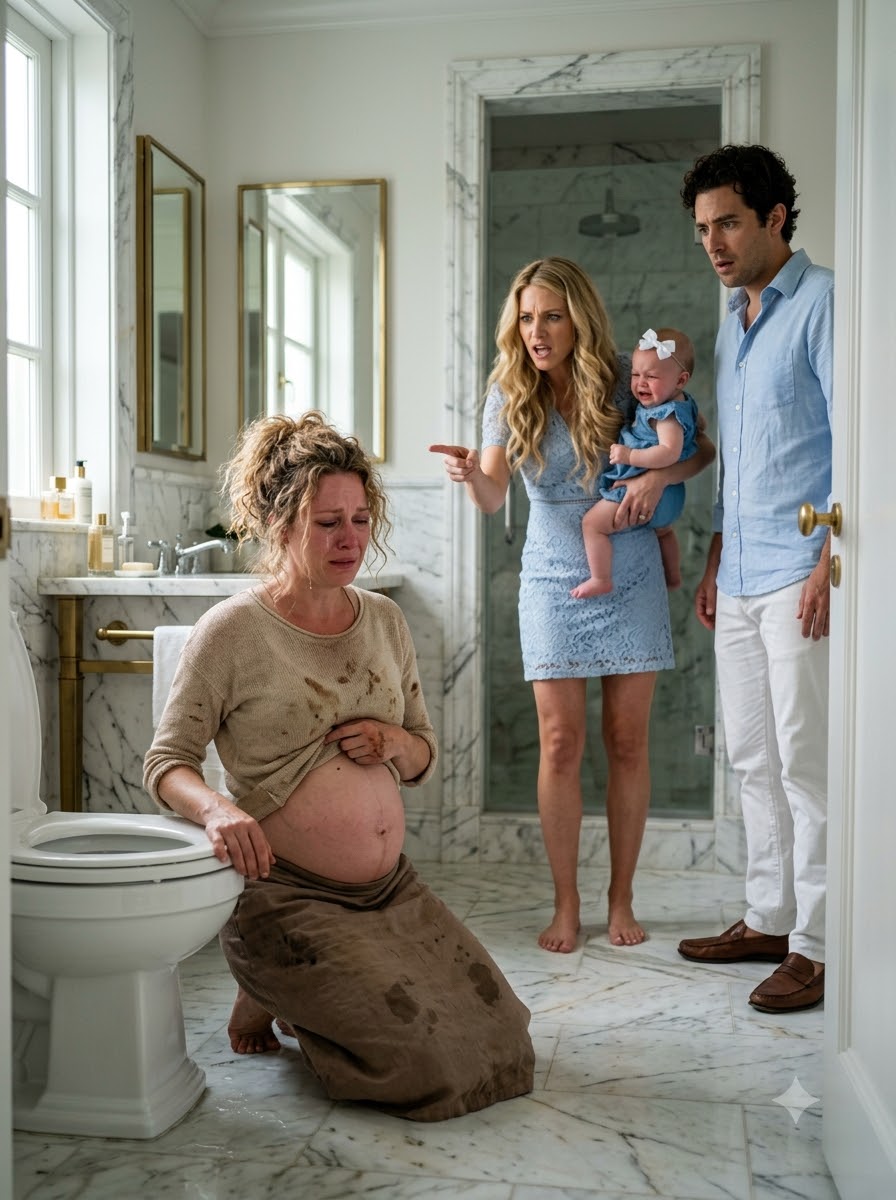
That was the first time in my entire life I had ever heard my mother admit that she was afraid of anything.
My mother had always been an unbreakable pillar of strength.
When my father died a decade ago, she held our family together without ever falling apart.
When money was scarce during my childhood, she stayed up late sewing custom clothes to cover our household bills.
When I was accepted into college, she sold her beloved heirloom jewelry without hesitation to pay my dorm fees.
When I married Christopher, she assured me she was not sad because daughters never truly leave their parents, but simply expand the family home.
She had never complained that any burden was too heavy for her to carry.
Maybe our biggest mistake as a family was believing that her quiet strength required no effort.
I leaned closer to her face.
“Why didn’t you tell me about the diagnosis from the very beginning?” I asked softly.
My mother stared through the hospital window at the gray sky.
“Because my entire life, I was always the one who solved everyone else’s problems,” she admitted. “I was deeply embarrassed for my own daughter to see me dependent on a colostomy bag, throwing up in the bathroom, and needing basic help just to bathe myself.”
“You are my mother, and there is nothing to be embarrassed about!” I wept.
“That is precisely why it was so hard,” she smiled faintly. “Mothers do many foolish things just to keep their children from seeing them as weak.”
“Well, your foolish silence almost killed you in our home,” I replied bitterly.
“No, the cancer is what is taking my life,” she corrected me gently. “My silence only made it harder for you to comfortably sit with me.”
She did not make a cheap excuse for her actions, nor did she let me carry all the guilt by myself.
That balanced grace was completely characteristic of her.
Even while lying in a hospital bed with a terminal illness, she was still trying to make things easier for her family.
That same morning, I called my office and formally requested an indefinite leave of absence.
My demanding supervisor immediately argued that our high-stakes corporate project was entering its most important launch phase.
For the first time in my professional life, I felt no fear about disappointing my boss.
“My mother is dying of advanced colon cancer, and I am not asking for your permission to take care of her,” I stated firmly over the phone. “I am informing you that I will not be available for work.”
I ended the call without waiting for his response.
For years, I had foolishly believed that becoming indispensable to a major corporation was the ultimate measure of success.
Standing in that sterile hospital hallway, I finally understood how dangerous it was to feel indispensable everywhere except in my own personal life.
My mother remained in the hospital for eleven long days while doctors treated her infection and relieved the blockage.
When we finally brought her home, we refused to let our household operate the same way again.
We would not allow our family routine to come at the expense of her physical health.
We hired a compassionate full-time home nurse to handle her daily care.
We enrolled little Hannah in a lovely neighborhood daycare program for a few hours every morning.
Christopher received permission from his firm to work from home three days a week.
I completely rearranged my life around one simple, undeniable truth: my mother needed to be cherished and cared for.
At first, her stubborn nature resisted our new routine.
“You kids are spending way too much money on private nurses,” she protested from her armchair.
“We have plenty of savings, and you deserve the best care,” I replied firmly.
“Hannah is far too young to be sent off to daycare,” she worried.
“She is thriving there and making sweet little friends,” Christopher assured her.
“What about your important career project, Claire?” she asked quietly.
“My career can wait, but I only have one mother,” I answered directly.
The first time I said those words to her, she stopped arguing completely.
Still, properly caring for her did not immediately erase the deep guilt inside my heart.
Painful remorse would strike me at the most unexpected moments throughout the day.
It hit whenever I found medical supplies inside the bathroom cabinet.
It struck whenever I watched her fall asleep sitting upright in her favorite armchair.
It washed over me whenever she weakly tried to clear the dinner plates, forcing me to take them from her fragile hands.
The awful words from that terrible afternoon kept repeating inside my mind: “Who is the father?” and “How could you come into my house like that?”
One warm afternoon, my mother sat on our back patio watching Hannah stack colorful plastic blocks on the rug.
I pulled up a chair beside her.
“Mom, I really need to talk about that terrible afternoon in the bathroom,” I began softly.
“We have already put that behind us, Claire,” she replied gently.
“No, we haven’t talked about it enough,” I insisted. “I need you to tell me the absolute truth. When I made those horrible accusations against you, how deeply did it hurt your heart?”
My mother remained silent, watching the clouds drift overhead.
This time, I would not let her protect my feelings.
“It hurt me very deeply, Claire,” she finally admitted in a quiet voice.
A tight, agonizing knot formed in my throat.
“How much did it hurt?” I whispered.
“In that painful moment, I felt as though all my long years of being your loving mother had completely vanished in a split second,” she confessed honestly.
I lowered my head into my hands as tears ran between my fingers.
“I am so deeply sorry for being such a monster to you,” I sobbed.
“You were simply terrified and acting out of fear,” she offered graciously.
“That fear does not excuse me judging you so cruelly,” I insisted.
“No, it certainly does not,” she agreed gently.
Her honest response hurt my pride, but it was exactly the truth I needed.
I did not want some fake, convenient apology designed only to make me feel better about myself.
“Can you ever truly forgive me for what I said?” I asked, looking into her eyes.
My mother watched little Hannah struggle to fit a square plastic block into a round hole on the patio rug.
“Forgiving someone does not mean pretending that a painful event never happened,” my mother stated wisely. “However, I refuse to waste whatever precious time I have left on this earth punishing my own daughter.”
The heavy phrase “whatever time I have left” lingered in the warm air between us.
I had already learned not to ask her to stop acknowledging her mortality.
“Then please allow me to take care of you properly now,” I begged softly.
“You are already taking wonderful care of me, sweetie,” she smiled.
“I am not doing it to pay off a debt,” I promised her. “I am doing it because I am your daughter who loves you.”
This time, a genuine, radiant smile brightened her thin face.
“That is all I ever wanted to hear,” she whispered.
The months that followed brought intense physical pain, but they were also the most meaningful months of my entire life.
There were frequent medical appointments, difficult prescription adjustments, and agonizing nights when the pain became severe.
Some days, my mother could not tolerate even one bite of solid food.
On other days, her appetite suddenly returned, and she happily asked for chicken soup or lemon gelatin, eating nearly every bite with joy.
There were bright mornings when little Hannah would stumble into her bedroom on uncertain feet, happily calling, “Grandma! Grandma!”
My mother would immediately open her frail arms wide, regardless of how exhausted she was.
“Come here to my arms, my precious little girl,” she would laugh.
We also shared deep conversations that we had never managed to have during the previous thirty years of my life.
I learned that before meeting and marrying my father, she had dreamed passionately of becoming an elementary school teacher.
I discovered that as a young woman in Ohio, she used to sing solos at local community festivals.
I even learned that after my father died, a kind man named Thomas, who ran a fresh fruit stand at the local farmers market in Columbus, used to save the sweetest peaches especially for her every week.
“Did you have romantic feelings for him, Mom?” I teased her gently.
My mother broke into a bright, youthful laugh.
“You are such a nosy daughter!” she exclaimed, blushing slightly.
“That laugh definitely means you liked him!” I teased back.
She gazed thoughtfully out the window toward the garden.
“Thomas was a truly wonderful man,” she admitted softly.
“Why didn’t anything ever happen between the two of you?” I asked curiously.
“I was far too busy trying to survive and support you, and then I simply grew accustomed to being alone,” she explained quietly.
Her honest words left a quiet ache in my heart.
For my entire life, I had seen my mother only through the narrow lens of her role as “Mom.”
I had never stopped to see her as Abigail, an independent woman with her own desires, dreams, romantic possibilities, and private loneliness.
She was a person who desperately needed someone to ask what she wanted, whether she was tired, or whether she was afraid of the dark.
I began using my smartphone to record hours of videos of her for Hannah’s future.
She recorded family recipes, childhood lullabies, treasured memories from her youth, and heartfelt advice for Hannah’s future milestones.
In one especially moving video, she looked straight into the camera with remarkable clarity.
“Hannah, when you grow up to be a beautiful young woman, always remember that your mother works extremely hard and sometimes thinks she has to be completely invincible,” she said softly into the camera. “If you ever see her looking far too serious or stressed, make her sit down in a chair and give her a long, warm hug.”
I began quietly crying behind the phone camera.
My mother playfully frowned at me from her pillows.
“Do not cry while I am trying to record a sweet message, Claire, you are going to ruin the audio quality!” she scolded playfully.
We both ended up laughing through our tears.
Christopher also underwent his own profound transformation during those months. One late night in the kitchen, he admitted that he had been carrying a heavy burden of guilt for not telling me about the blood on the towel sooner.
“I should have been much more insistent with her,” he said regretfully.
“Yes, you probably should have been,” I agreed quietly.
“I should have driven her to the clinic regardless of her protests,” he added.
“Yes,” I acknowledged softly.
Then I took a deep breath and looked at my husband.
“And I should have actually looked at my own mother instead of passing by her,” I confessed.
There was no point in blaming each other or arguing over who had failed her the most.
The truth was that all three of us had failed her in our own different ways.
My mother had failed by foolishly believing that genuine love meant hiding her intense physical suffering from her family.
Christopher had failed by keeping a dangerous secret that should have been revealed immediately.
And I had failed by treating my loving mother as nothing more than a useful part of our household: the person who cooked our meals, washed our clothes, and kept the baby safe.
She had simply become the dependable woman who could “always handle everything.”
After several peaceful months together, my mother’s fragile health began deteriorating quickly.
At first, the decline was slow, but then it progressed with terrifying speed.
One quiet afternoon, she called me into her bedroom and reached for my hand.
“I want to go back home to Columbus,” she said softly.
“Do you mean just for a short visit, Mom?” I asked anxiously.
She slowly shook her head against the pillow.
I immediately understood what she truly meant.
“Mom, please…” I began to plead.
“I want to be in my own home, Claire,” she stated gently.
My first selfish instinct was to argue with her.
Our small hometown in Ohio did not have the advanced medical centers or high-level cancer specialists available in Atlanta.
The local hospital was small, and I was terrified that she might experience a sudden medical emergency far from the best doctors.
Then I remembered the handwritten request on the back of the paper I had found inside her travel suitcase.
“If there comes a day when medical science has nothing meaningful left to offer, I want to go back home to my quiet town. I do not want Claire to mistake keeping my body alive on machines with actually saving my life.”
That request had chilled me months earlier because my mother understood me better than I understood myself.
She knew my overwhelming guilt would push me to fight an aggressive and pointless medical battle against the inevitable approach of death.
I looked into her exhausted eyes and swallowed my fear.
“I will arrange everything for us to travel back home,” I promised her.
With the full support and coordination of her hospice team, we returned to Ohio a few days later.
Christopher carefully drove the family car while Hannah and I sat in the backseat, keeping my mother comfortable.
When we finally reached her cozy home in Columbus, neighborhood friends began appearing at the front door with homemade casseroles, freshly baked bread, flowers from their gardens, and warm condolences.
Inside, her house carried the wonderfully familiar scent I remembered from childhood: aged oak, lavender soap, and fresh coffee.
The following afternoon, a quiet, hesitant knock came at the front door.
I opened it and found an older gentleman standing on the porch, holding a worn felt hat and a small brown paper bag.
“Is Abigail here?” he asked softly.
My mother lifted her head from the pillows where she was resting in the living room.
A radiant smile spread across her pale face, one I had not seen in many months.
“Thomas,” she called out weakly.
He stepped inside and carefully placed the paper bag on the side table beside her armchair.
“I managed to source some fresh peaches for you,” he said with a warm smile.
“Peaches are not even in season right now, Thomas,” she chuckled softly.
“That is precisely why they cost me an arm and a leg at the market,” he joked back gently.
My mother laughed happily.
Thomas quietly sat in the chair beside her for nearly an hour.
They barely exchanged any words. They simply held hands, enjoying the peaceful silence between them.
When he finally stood to leave, I walked him to the front porch.
“Did you know that she was suffering from cancer all this time?” I asked him quietly.
He slowly nodded, lowering his eyes toward his worn shoes.
“She told me about her diagnosis many months ago,” he revealed softly.
A familiar ache suddenly tightened in my chest as I realized that yet another person had known about her illness while I had remained completely unaware.
But this time, I did not respond with defensive anger.
“Why didn’t you reach out to warn me about her condition?” I asked gently.
“Because your mother explicitly asked me not to burden you,” he answered honestly.
He turned toward the living room window, looking at her resting figure.
“Your mother spoke about you constantly every single time I saw her,” he added softly.
“What kinds of things did she say about me?” I asked, tears filling my eyes.
Thomas smiled warmly.
“She spoke about you as if you were the brilliant person who personally invented the moon and stars,” he answered tenderly.
I turned away, trying to hide my heavy sobbing.
That evening, my mother managed to eat two small slices of the fresh peach Thomas had brought her.
“These are absolutely delicious,” she whispered contentedly.
Nine days later, she passed away peacefully.
It happened during the quiet hours of the early morning.
Hannah was sleeping soundly in the adjoining bedroom, while Christopher was in the kitchen making a pot of coffee.
I sat beside her bed, holding her fragile hand between both of mine.
My mother slowly opened her eyes and looked at me.
“Claire,” she whispered weakly.
“I am right here with you, Mom,” I answered gently.
“Is little Hannah okay?” she asked.
“She is sleeping peacefully in the other room,” I assured her.
She nodded approvingly.
For several long seconds, she looked deeply into my eyes.
“Please do not carry too much heavy weight on your shoulders, sweetie,” she murmured softly.
Tears streamed down my face.
“Oh, Mom…” I sobbed.
“Promise me that you won’t,” she pleaded weakly.
“I promise you with all my heart,” I answered.
“And when little Hannah tells you that something hurts her heart or body, listen to her words before assuming things in your head,” she advised gently.
I repeatedly nodded.
“I will, Mom, I promise I will,” I wept.
A faint, beautiful smile appeared on her lips.
“You were such a wonderful daughter to me,” she whispered softly.
I shook my head.
“I was not always a good daughter to you,” I sobbed.
Her frail hand moved weakly within mine.
“Daughters do not ever have to be perfect, Claire,” she whispered back.
She paused, taking a shallow, struggling breath.
“They just need to know how to find their way back home,” she added softly.
Those were the final coherent words she ever spoke.
When her shallow breathing stopped moments later, I gently rested my forehead against her warm hand.
I did not scream or wail.
I simply whispered into the quiet room: “Thank you so much for waiting for me to find my way back.”
After the funeral, I discovered a small wooden keepsake box hidden beneath her childhood bed.
Inside were three sealed letters: one addressed to Christopher, one for baby Hannah to open when she turned eighteen, and one clearly marked for me.
I opened my letter while sitting quietly in the same bedroom where I had slept as a young girl.
“My dearest Claire:
If you are reading these words, it means that I have finally left this world. You are allowed to cry as much as you need to, but please remember to eat proper meals and rest your body. I do not ever want you to transform that terrible afternoon in the bathroom into the defining story of our relationship. Yes, your words hurt my heart in that painful moment, but our true story is infinitely larger than one horrible phrase spoken in anger. Our real story is you coming home from elementary school with scraped knees and needing my hugs. It is you studying late into the night until you fell asleep on your textbooks. It is watching you proudly walk across the stage at your college graduation. It is seeing you look so radiant dressed as a bride on your wedding day. It is watching you hold tiny Hannah for the very first time and nervously asking me if you were going to be a good mother. I do not want you to spend the rest of your life punishing yourself for a mistake. I simply want you to learn a vital lesson from it. The precious people you love in this life need you to truly look at them. They need to be seen not only when they are useful to you, not only when they are cooking meals, not only when they are babysitting your children, and not only when they appear to be strong. Look at them when they are quiet and withdrawn. Ask them gentle questions when you notice their habits changing. Listen to them when they tell you that they are tired. Do not ever teach sweet Hannah that loving a family means enduring suffering until you break into pieces. Teach her that she is always allowed to say: ‘I am hurting,’ ‘I am afraid,’ or ‘I need help.’ And make sure that whenever she speaks those vulnerable words, someone immediately responds with: ‘I am right here with you.’ Not when a work meeting finishes, not when you finally find spare time, but right now in the moment. With all my eternal love, Mom.”
I remained in that quiet bedroom, crying for a very long time.
When we returned home to Atlanta, I officially turned down the major corporate promotion I had spent nearly two years pursuing.
My stunned supervisor asked me to sit down in his glass office so he could argue against my decision.
“Claire, career opportunities like this high-paying executive role do not come around twice in a lifetime,” he warned me sternly.
I pictured my sweet mother whispering to herself in front of a security camera that she had to endure unbearable pain just so I could complete my project.
I looked directly into my boss’s eyes and answered calmly.
“Neither does my life, sir.”
Christopher and I immediately began marriage and family counseling to repair our communication.
Little Hannah continued growing into a vibrant, joyful child.
Within our home, we created one strict family rule that sounded simple but completely transformed our lives: no one in this house was ever expected to pretend they were fine just to keep others comfortable.
Exactly one year after my mother died, we traveled back to Columbus to honor her memory.
Old Thomas was still working at his fresh fruit stall at the local market on sunny mornings.
When he saw little Hannah approach his stand, his face brightened, and he immediately handed her a small bag of ripe peaches.
My daughter took one peach and smiled warmly at him.
“Thank you so much, Grandpa Thomas,” she said sweetly.
The old man froze.
He slowly removed his felt hat and held it over his face, hiding the tears filling his eyes.
I did not correct my daughter’s gentle choice of words.
Together, we walked to the quiet cemetery on the edge of town.
Hannah placed a colorful crayon drawing on my mother’s stone monument, showing four hand-drawn figures holding hands beneath a yellow sun.
“This big one right here is Grandma Abigail,” Hannah explained proudly, pointing her tiny finger at the largest figure.
I knelt on the soft grass before the headstone.
“Mom, I am still learning how to truly look at people every day,” I whispered softly.
A gentle breeze moved across the green cemetery, swaying the fresh flowers we had placed there.
My thoughts returned once again to that hidden security camera footage.
For many dark months, I had hated that recording because it was undeniable proof of my disgraceful cruelty.
But with time, I realized that the security camera had actually been my mother’s final and greatest gift to my soul.
That recording had brutally forced me to wake up and truly see the people I loved before it was too late.
Now, whenever little Hannah calls for me while I am working at my computer, I do not simply answer from across the room or finish typing my email first.
I deliberately close my laptop, turn my entire body toward her, and look directly into her eyes.
I did not suddenly become a perfect mother.
I still become exhausted by household chores, I still feel stressed by daily responsibilities, and there are still busy days when twenty-four hours seem nowhere near enough to finish everything.
But I now make a conscious effort to look up from my busyness.
I have learned that a loving family rarely falls apart in one dramatic explosion.
Instead, a family slowly breaks down when its members stop asking genuine questions about each other’s well-being.
It breaks down when people stop truly listening.
It dissolves when we begin treating the people we love as nothing more than functional pieces of household furniture.
We fall into the dangerous habit of depending on the mother who cooks, the husband who fixes things, the grandmother who babysits, or the daughter who never causes trouble.
We foolishly call them reliable, strong, or resilient people who can supposedly handle whatever life throws at them.
Then one painful day, we wake up and discover that they were never invincible.
They had simply learned to suffer in complete silence so they would not inconvenience us.
My mother came to my home to help me care for my newborn daughter.
Six months later, I watched her abdomen grow and immediately assumed the worst about her character.
I accused her of concealing something embarrassing and shameful.
The truth was that she had been quietly hiding excruciating physical pain to protect my corporate career ambitions.
The most heartbreaking truth was that, even while suffering from a terminal disease, her greatest fear was not her own death.
It was becoming an inconvenient burden to her busy daughter.
That is why there is one phrase I have permanently banned from my family’s vocabulary: “I can handle it on my own.”
No one should ever have to endure severe pain alone.
Even the strongest people who love us become exhausted.
They get sick, they become afraid, and they need help.
They deserve to be cherished and cared for with gentle tenderness.
Sometimes a loving mother will not ask her children for help twice.
Sometimes she will not even gather enough courage to ask once.
Sometimes she will simply lean her exhausted body against a cold wall, grit her teeth in silence, and patiently wait for one of her children to finally stop obsessing over everything else in the world…
And finally look at her.
THE END.
