


PART 2
Forty-seven white peony arrangements.
Custom lighting.
A string quartet placed far enough from the tables to soften conversation instead of drowning it.
Four months of work.
“You notice event design?”
“I notice competence.”
Somehow that compliment mattered more than being told the room was beautiful.
Her earpiece crackled.
“Evelyn, catering needs you in the west corridor.”
Reality rushed back.
“I have to work.”
Lucien nodded.
Then he reached inside his jacket and held out a card.
Only his name and a phone number.
No title.
No company.
“Dinner tomorrow.”
Evelyn stared at the card.
“That sounded less like an invitation.”
“It is an invitation.”
“You forgot the question mark.”
“I was optimistic.”
“Dangerous quality.”
“So I’ve been told.”
She should have refused.
She knew it.
Instead she slid the card into her pocket.
“Seven-thirty.”
“I’ll send a car.”
“I have my own.”
“I know.”
That made her pause.
Lucien’s expression did not change.
“I know your company,” he explained. “You’ve managed three events in buildings I own.”
“That explanation is only mildly less disturbing.”
“Seven-thirty.”
He walked away.
Evelyn stayed where she was, clipboard in one hand, the memory of an impossible kiss still warm against her mouth.
Her assistant, Megan, appeared from the corridor.
“Problem?”
Evelyn watched Lucien cross the ballroom.
People stepped aside for him without being asked.
“Yes.”
“What kind?”
Megan’s question hung in the air between the peonies and the soft light.
Evelyn did not answer right away. She watched the last of Lucien’s dark suit disappear through the side door that led to the service elevator only a handful of people were allowed to use. The two men who had been standing near the ballroom doors followed at a distance that looked casual and was not. One of them glanced back once, pale eyes sweeping the room, then both of them were gone.
“The kind that doesn’t go away when the event ends,” Evelyn said.
Megan’s eyebrows rose. She was twenty-six, sharp, and had worked for Evelyn long enough to recognize when a client was about to become a problem and when a personal problem was about to become a client. “That was Lucien Moretti.”
“I know.”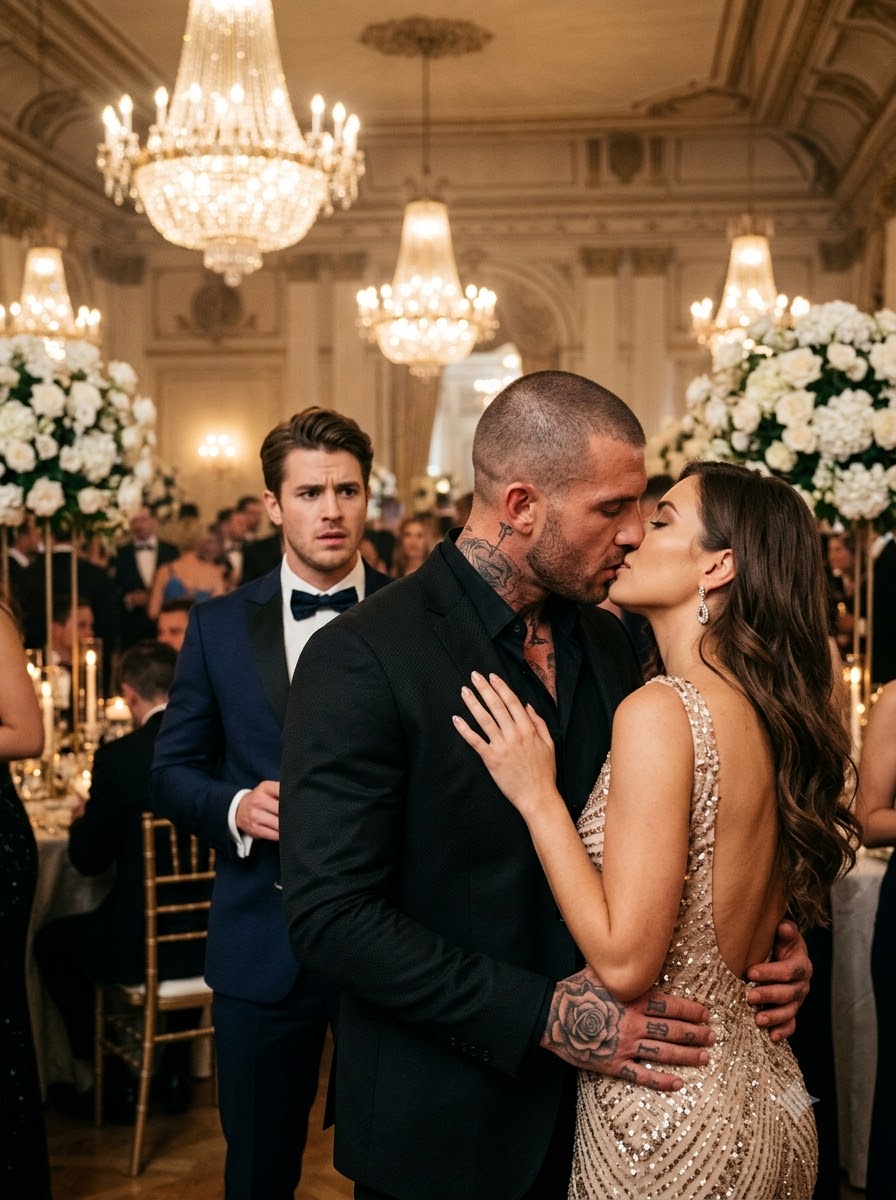
“You kissed Lucien Moretti.”
“I know that too.”
Megan exhaled through her teeth. “Catering is short two servers and the ice sculpture is melting faster than the timeline allows. If you want to have a crisis about the most dangerous man in the room, can we schedule it for after the donors leave?”
Evelyn almost smiled. The almost-smile felt strange on her face. “Lead the way.”
They moved through the west corridor while the gala continued without them. The catering crisis was ordinary—someone had double-booked a runner, the ice sculpture needed a discreet relocation, a donor’s gluten-free plate had been served with a garnish that contained barley. Evelyn fixed what could be fixed and apologized for what could not. Her hands stayed steady. Her voice stayed even. Underneath both, the place where Lucien’s hand had rested between her shoulder blades still felt warm.
By midnight the last major donor had left. By twelve-thirty the quartet was packing. By one the florists were stripping the tables. Evelyn stood in the nearly empty ballroom with her clipboard and the quiet that always arrived after four hundred people went home. The peonies looked larger in the low light. The scar on Lucien’s jaw kept returning to her mind without permission.
Megan appeared at her elbow with two coffees and a folded piece of paper. “Security log. The Moretti men left through the garage at 10:17. No one else from that party stayed.”
Evelyn took the coffee. “Thank you.”
“You don’t have to tell me anything,” Megan said. “But if you’re meeting him tomorrow, text me the address before you go and the time you expect to leave. And if you change your mind, you can still change your mind.”
“I know.”
Megan studied her for a moment longer, then nodded and went to oversee the final load-out. Evelyn stayed where she was until the lights dropped to the overnight setting. Only then did she pull the card from her pocket. The paper was thick. The number was printed in a clean typeface with no flourish. She typed it into her phone under the name Lucien Moretti and stared at the empty message field for a long time before she put the phone away.
The next afternoon she stood in her apartment in a black dress she had not worn since before the engagement ended. The apartment was small, high enough to see a slice of the river, and carefully arranged so that nothing in it reminded her of the life she had almost had. She had canceled two vendor meetings and moved a site walk. When the car arrived at seven-twenty it was not a town car with a logo. It was a dark sedan with a driver who did not speak except to confirm her name and who opened the door without looking at her legs.
The restaurant was on a quiet street in the West Village. No sign. A single door that opened onto a narrow staircase. At the top a hostess who recognized the driver led Evelyn to a table in a corner where the light was low and the nearest other table was empty. Lucien was already there. He stood when she approached. The suit was different—charcoal again, but softer. The scar was the same.
“You came,” he said.
“You were optimistic.”
“I still am.”
They sat. The menus were short. Lucien ordered wine without asking her preference and then asked whether she wanted something else. She did not. For the first several minutes they spoke about nothing that mattered: the gala, the ice sculpture, the way the quartet had chosen pieces that left space for conversation. He listened the way he had looked at the room the night before—completely, without performing attention.
Halfway through the first course he said, “Adrian called my office this morning.”
Evelyn’s fork stopped. “What did he want?”
“To know whether you work for me now.”
“And what did you tell him?”
“That you design events and that I own buildings. The rest is none of his concern.”
She set the fork down. “Is that true?”
“Which part?”
“That the rest is none of his concern.”
Lucien met her eyes. “It is if you want it to be.”
The honesty of the answer settled something that had been tight in her chest since the ballroom. She picked up her wine. “I spent two years learning how to make myself smaller so he would stay. I’m not interested in learning how to make myself smaller so someone else will keep me safe.”
“I didn’t offer to keep you safe,” Lucien said. “I offered dinner.”
“You told me I wasn’t going back.”
“I told you that you didn’t have to. There’s a difference.”
She studied him across the small table. The gray eyes did not shift away. “And if I decide I want to go back?”
“Then you go.”
“Just like that.”
“Just like that.”
The server arrived with the second course. They ate. The conversation moved to safer ground and then, without either of them deciding it, moved again. He asked about the company she had built after she left the firm that had hired her straight out of design school. She told him about the first event that had almost bankrupted her and the second one that had saved her. He told her, without details, that he had spent most of his twenties learning which of his father’s methods still worked and which ones would get everyone killed. Neither of them used the words that lived in the stories people told about him. They did not need to.
After the plates were cleared he said, “There’s a problem.”
“With the dinner?”
“With Adrian. He left a message with one of my people. He wants a meeting. He says he has information about a project you and I supposedly discussed last night.”
Evelyn felt the cold start at the base of her spine. “We didn’t discuss any project.”
“I know.”
“Then why—”
“Because he wants leverage. And because he believes I will care enough about you to give him something in exchange for staying away.”
She sat back. The restaurant noise seemed farther away than it had a moment earlier. “Will you?”
“No.”
“Why not?”
“Because you didn’t ask me to.”
The answer was simple enough that it should not have mattered. It did. Evelyn looked at her hands on the table and then at him. “What happens if he keeps pushing?”
“He will be told, clearly and once, that you are not a negotiation. After that the choice is his.”
“And if he makes the wrong choice?”
Lucien was quiet for a moment. When he spoke his voice was the same soft register he had used in the ballroom. “Then he will discover that some doors do not open again.”
She should have been afraid. Part of her was. The larger part recognized the same stillness she had felt when she kissed him—the stillness of a decision already made. “I don’t want you to hurt him for me.”
“I won’t do it for you,” Lucien said. “If it happens it will be because he decided the risk was worth it. You won’t be asked to watch. You won’t be asked to choose.”
The server returned with coffee neither of them had ordered. Lucien thanked him and waited until he was gone. “You can leave now if you want. The car will take you home. Nothing about tonight requires a second night.”
Evelyn wrapped both hands around the cup. The porcelain was warm. “And if I stay?”
“Then we finish the coffee. And tomorrow, if you still want to, we talk about whether you want to see what happens when someone who notices competence decides he would like to keep noticing it.”
She looked at him for a long time. Outside, rain had started against the windows. Inside, the low light caught the scar along his jaw and the steady gray of his eyes. She thought of the ballroom, of the three seconds, of the hand that had left her back the moment Adrian was gone. She thought of the two years she had spent trying to become the version of herself that would finally be chosen.
“I’m not going back,” she said.
Lucien’s mouth moved—the same almost-smile she had seen the night before. “I know.”
They finished the coffee. When they stood he did not touch her until they reached the narrow staircase. There he offered his arm the way a man offers an arm on wet stone steps. She took it. At the bottom the driver was waiting with an umbrella. Lucien walked her to the car and opened the door himself.
“Text Megan,” he said. “Tell her you’re on your way home.”
“You were listening.”
“I notice competence,” he answered. “And people who look after the people who look after them.”
She got into the car. Before the door closed she said, “Seven-thirty again. Somewhere with better lighting. I want to see your face when I tell you that the ice sculpture was a mistake.”
“I’ll send the address.”
“I have my own car.”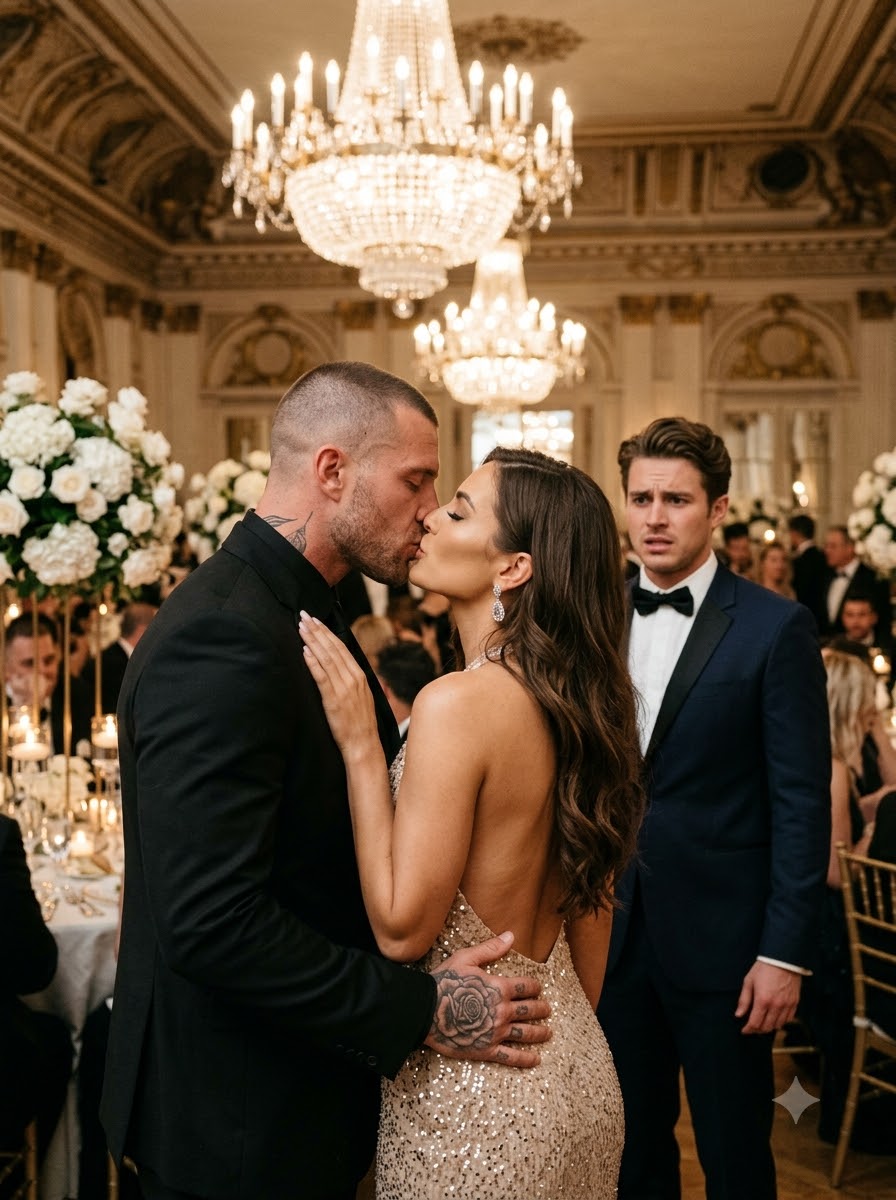
“I know.”
The door shut. The sedan pulled away from the curb. Evelyn watched the rain on the window and the reflection of the streetlights sliding across it. Her phone buzzed. Megan’s name.
You alive?
Evelyn typed back: Alive. Home in twenty. Details tomorrow if you still want them.
The reply came immediately: I want them. And I’m keeping the security log open until you text me from your apartment.
Evelyn put the phone down. For the first time in seven months the quiet in the car did not feel like something she had to fill. It felt like space. Outside the city moved past in streaks of light and water. Somewhere behind her a man who had once broken her heart was learning that certain doors no longer opened. Somewhere ahead a man who had not asked her to be smaller was waiting to see whether she would keep showing up.
She closed her eyes and let the car carry her the rest of the way home.
