

The Amulet That Saved the House
Marisol Ramírez never imagined she would end up putting a price on her husband’s memories.
There were things a woman could sell without her soul breaking: duplicate plates, an old chair, flowerless pots, a lamp no one used. But Julián’s pocket watch was not just any object. It was the watch he opened every morning before drinking his coffee, even though he always said he carried time “by a good carpenter’s eye.” It was the watch that had rested for years next to the sweet bread on Sundays, on the kitchen table, while the children ran barefoot across the patio.
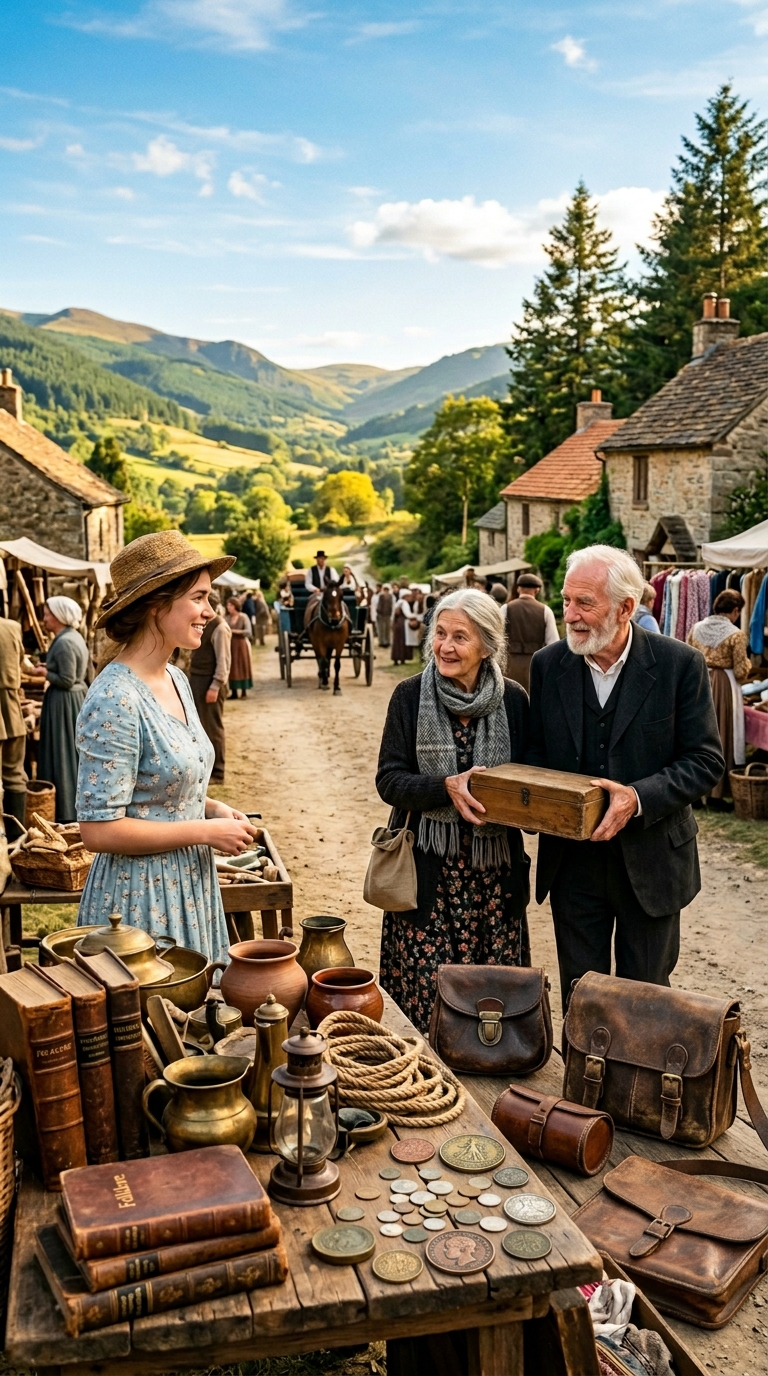
Now it sat there, on a folding table in front of the house, with a small sign that read: $1,200.
Marisol looked at the price, swallowed hard, and lowered it to $900.
Not because it was worth less, but because she needed to sell it that same day.
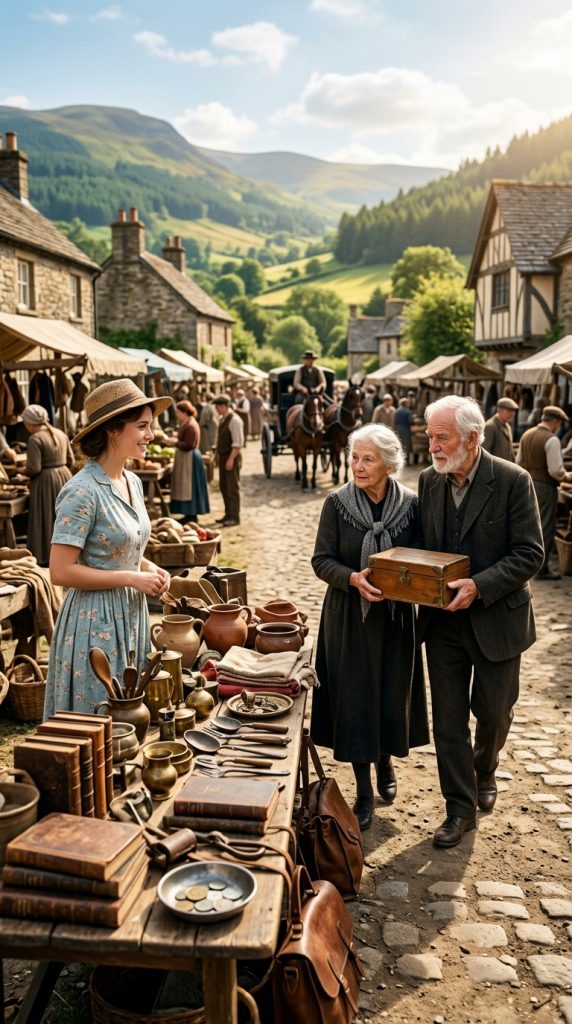
From inside the house came a faint sound: Julián moving in bed. Marisol froze for a second, as if guilt could hear her. Then she continued arranging the items under the shade of the bougainvillea: old books, chisels, a set of gouges, a carved wooden hummingbird figure, two unfinished frames, and a small cedar box that Julián had kept for as long as she could remember on the top shelf of the wardrobe.
She had not wanted to touch that box.
She brought it down at the end, when there was almost nothing left to sell.
The bank’s notice remained nailed to the front door, folded by the wind, like a threat that did not know how to leave. They had fifteen days to pay three overdue installments or the process to take the house would begin. The same house that Julián had built with his own hands, brick by brick, when they were still young and believed that exhaustion was proof of love and not a sentence.
The accident had happened four months earlier.
Julián was a carpenter in San Martín Tilcajete, a town in Oaxaca where wood seemed to speak in the right hands. He made doors, tables, chairs, toys, small altars for humble homes, and fine furniture for families who came from the city. No one understood how a man who had never studied design could bring so much beauty out of a twisted log.
“The wood tells me which way to go,” he used to say, smiling.
That afternoon, Marisol called him for dinner three times. When he didn’t answer, she went to the workshop. She found him on the floor, pale, with a wounded leg and his back hit against a stone base. The saw had not taken his life, but the fall had stolen something similar: the ability to stand up.
The village doctors said rest. The ones in Oaxaca said patience. One more, whom they paid with their last savings, said maybe yes, maybe no, that the spine was inflamed and they had to wait.
But life does not wait.
The medicine cost money. Food cost money. Lupita and Emiliano’s school cost money. The house debt cost money. And the closed workshop did not produce a single peso.
Julián did not know that Marisol was selling his things. She had gotten up before dawn, when he had finally managed to sleep after a night of pain. She was not doing it to betray him. She was doing it because she knew him. She knew that if he saw the watch on that table, he would ask her to put it away. He would say that he would find a way, that his hands would work again, that God squeezes but does not choke.
And Marisol, who did believe in God, also knew that the bank had no mercy.
Around mid-morning the first neighbors arrived.
Doña Petra bought two clay bowls. Don Chuy took a small tool and did not haggle. A young woman asked about the wooden hummingbird, but when she heard the price she made a face and left. Marisol pretended it didn’t hurt. Every item that didn’t sell was one less minute to save the house.
Near noon, an old wine-colored truck appeared, moving slowly down the dirt street. It was not from anyone in the village. It stopped in front of the house and two elderly people got out.
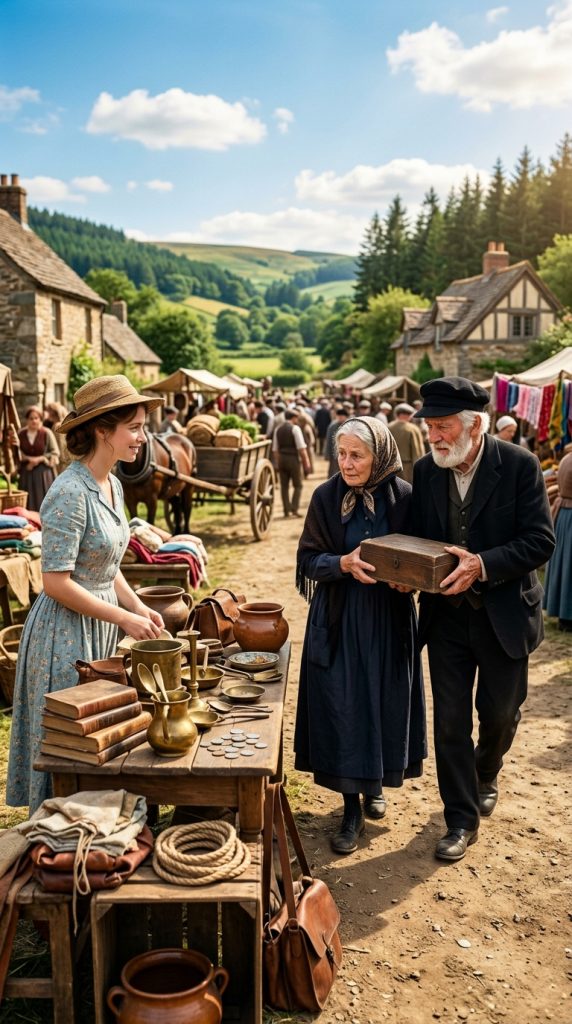
The man was tall, wearing a light hat, a well-ironed shirt, and a dark wooden cane. His face was serious but not hard. The woman was small, with white hair gathered in a bun, and a black shawl over her shoulders despite the heat. She walked slowly, looking at every item on the table as if searching for something she could not name.
“Good afternoon,” said the man. “Are you selling these pieces?”
“Yes, sir,” replied Marisol. “Everything is for sale.”
He picked up a gouge, examined it carefully, and weighed it in his hand.
“Good steel,” he murmured. “And well cared for.”
Marisol nodded, proud and ashamed at the same time.
“They belonged to my husband.”
“Was he a carpenter?”
“He is a carpenter,” she corrected, more firmly than necessary. “He’s just sick right now.”
The man looked at her with respect and asked no more.
While he examined the tools, the woman stood in front of the small cedar box. The lid was slightly open. A ray of sunlight came through the crack and touched something inside.
The woman reached out her hand.
“May I?” she asked.
Marisol hesitated. She didn’t know what was in that box, only that Julián never spoke about it.
“Yes,” she said finally.
The woman opened the lid.
Inside was a piece of yellowish cloth and, wrapped in it, a silver amulet. It was oval, finely filigreed, with a blue stone in the center, the color of certain skies after the rain. Marisol had seen it once, years before, when she was cleaning the wardrobe. Julián had told her it was the only thing he had from his childhood. Nothing more.
The old woman took the amulet.
And the world seemed to stop.
Her fingers began to tremble. Her mouth opened slightly, but no words came out. The man approached when he saw her so pale.
“Carmen,” he said. “What’s wrong?”
She lifted the amulet toward him.
The cane struck the ground.
Once.
Then again.
The man did not move.
“Where did you get this?” he asked, and although his voice was low, Marisol felt that something enormous was hidden behind those words.
“It belonged to my husband,” she answered. “He’s had it since before I met him.”
The woman, Carmen, pressed the amulet against her chest. Tears filled her eyes but had not yet fallen.
“What is your husband’s name?”
“Julián Ramírez.”
“How old is he?”
Marisol frowned.
“Thirty-eight.”
The man closed his eyes.
The old woman let out a small moan that Marisol barely heard.
“Our son would be thirty-eight,” Carmen whispered.
Marisol felt a chill down her back, even though the sun was beating strongly on the patio.
“I don’t understand.”
The man took a breath.
“Our names are Aurelio Mendoza and Carmen Salvatierra. Thirty-two years ago we lost our son in a storm, near the old road between Etla and this area. He was six years old.”
Marisol brought a hand to her mouth.
Julián never remembered anything before the age of six.
The family that raised him — good peasants, now deceased — had always told him that they found him after a storm, walking alone, covered in mud, unable to say his name. They took him to the authorities, no one claimed him, and they ended up raising him as their own. They named him Julián because he appeared on January 9, the day of Saint Julian.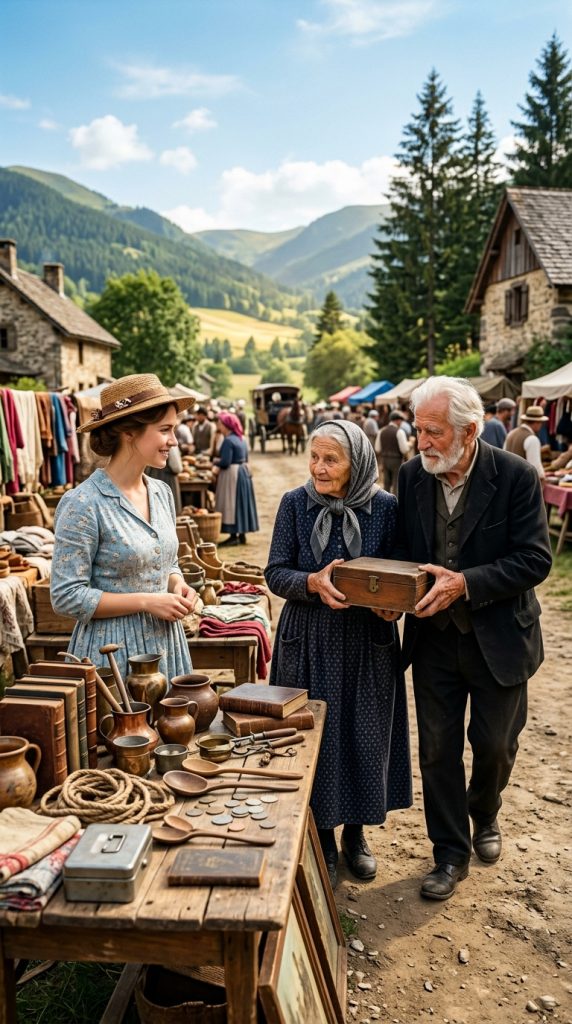
“No,” said Marisol, but it was not denial. It was fear. It was astonishment. It was a door opening too fast.
Carmen turned the amulet over with trembling hands.
“Here are the initials,” she said. “A and C. Aurelio and Carmen. We had it made when our Santiago was born.”
“Santiago,” Marisol repeated.
The name hung between them like a bell.
From inside the house, Julián coughed.
The three of them looked toward the door.
“He’s inside,” said Marisol.
Carmen did not ask permission with words. She asked with her eyes.
Marisol understood.
She led them down the adobe corridor, past the children’s toys, past the altar with the Virgin of Guadalupe, past the closed workshop whose door seemed to guard the silence of a suspended life. When they reached the room, Marisol stopped.
Julián was awake, propped up on the pillows. His face was thinner than before, his beard grown out, and his eyes tired. When he saw the strangers, he tried to sit up, but the pain clenched his jaw.
“Who are they?” he asked.
Marisol didn’t know what to say.
It was Carmen who approached the bed. She did not walk like a visitor. She walked like someone who had been arriving late to the same place for thirty-two years.
She sat in the chair next to Julián and opened her hand.
The amulet shone under the window light.
Julián looked at it and then at Marisol.
“Why did you take it out?”
Marisol’s eyes filled with tears.
“Forgive me.”
But Carmen spoke before the guilt could grow.
“Have you had this since you were a child?”
Julián took a moment to answer.
“Since I have memory. Which isn’t much.”
“Do you remember anything before arriving in the village?”
He slowly shook his head.
“Only dreams. Water. Thunder. A woman’s voice screaming a name I never manage to understand.”
Carmen covered her mouth.
Aurelio remained at the threshold, rigid, gripping the cane tightly.
“Our son was named Santiago,” said Carmen. “He got lost during a storm. He was wearing this amulet around his neck.”
Julián looked at the amulet as if he had just seen it for the first time.
“It can’t be.”
“I said that for thirty-two years too,” replied Carmen, now crying openly. “Every time someone said he might have died. Every time they asked me to stop searching. Every time they told me to accept God’s will. I said: it can’t be.”
Julián did not speak.
His gaze moved from Carmen to Aurelio. The old man had red eyes. He was no longer trying to look strong.
“I don’t remember your faces,” said Julián in a broken voice. “If this is true… I’m sorry. I don’t remember.”
Carmen took his hand.
“My son, I remember you for both of us.”
That sentence broke something in the room.
Marisol cried silently by the door. She didn’t know if she was witnessing a miracle or a wound reopening after so many years. Perhaps both things were the same.
There was no immediate, clean truth like in novels. There were doubts. Questions. Dates. Old papers. Visits to the civil registry. A forgotten record of a missing child. A report of a child found without memory weeks after the storm. A small scar on Julián’s right eyebrow, described in both documents.
Then came a blood test in the city.
The results took ten days.
Ten days in which Carmen arrived every morning with broth, freshly made tortillas, and egg yolk bread. Ten days in which Aurelio sat with Julián and they talked about wood as if they had worked together all their lives. Ten days in which Lupita and Emiliano, shy at first, began to run toward the truck when they saw them arrive.
“Grandma Carmen brought chocolate,” Emiliano would shout.
Marisol was afraid of getting used to it. Afraid it was all a mistake. Afraid that Julián would get his hopes up and lose something he didn’t even know he had lost.
But when the envelope arrived, there was no need to read much.
Aurelio Mendoza and Carmen Salvatierra were Julián’s biological parents.
Or Santiago’s.
Or both.
Julián held the papers for a long time without saying anything. Then he looked at the amulet, which Marisol had placed on his nightstand.
“Thirty-two years,” he murmured.
Carmen nodded.
“Thirty-two years, son.”
He closed his eyes. A tear ran down his temple.
“I don’t know how to be Santiago.”
Aurelio approached slowly.
“You don’t have to stop being Julián. No one is here to take away the life you built. We came to thank that you are alive in it.”
Then Julián cried.
Not like men who surrender, but like those who can finally release a burden they didn’t know they were carrying.
The next day, Aurelio went to the bank with Marisol.
She tried to refuse when he asked to speak with the manager. She tried to say they couldn’t accept so much, that they barely knew each other, that a debt wasn’t erased with recovered blood. Aurelio let her speak until she finished.
Then he placed his hat on the manager’s desk and said:
“That house belongs to my son, my daughter-in-law, and my grandchildren. And no one is going to take it from them while I am still breathing.”
He paid the full debt.
Without ceremony.
Without asking for thanks.
When Marisol left the bank, she had to sit on the sidewalk because her legs were trembling. Carmen sat beside her and took her hand.
“You saved my son without knowing who he was,” she said. “You took care of him when we couldn’t. Now let us take care of you a little too.”
The help did not end there.
Aurelio brought a specialist from Mexico City. They reviewed studies, ran new tests, and changed medications. The doctor was clear: the recovery would be long, painful, and not fully guaranteed. But there was real hope. The injury was not irreversible.
Julián listened to this with his eyes fixed on the ceiling.
That night, when everyone had left, Marisol lay down carefully beside him.
“Are you afraid?” she asked.
“Very much.”
“Me too.”
He reached for her hand.
“You tried to sell my watch.”
Marisol froze.
“I tried to sell it.”
“I saw you from the window when Don Chuy took the gouges.”
She began to cry.
“Forgive me. I didn’t know what to do.”
Julián squeezed her fingers.
“You did what you had to do. I was so busy feeling useless that I didn’t see you were carrying the whole house on your shoulders.”
Marisol rested her forehead on his shoulder.
“You’re not useless.”
“No,” he said, looking at the amulet. “I think I was just lost again.”
The recovery began with small movements. First a toe. Then the leg responding slightly. Then pain. A lot of pain. Days of rage, sweat, and exercises that seemed humiliating for a man who once carried planks as if they were dry branches.
Aurelio was there many afternoons.
Not as a savior, but as a patient father. Sometimes he told him stories about when Santiago was a child: how he liked to sleep with a wooden horse, how he bit tortillas in the middle, how once he hid Carmen’s shoes in a pot because he didn’t want her to go to the market.
Julián listened to these stories like someone receiving photos of a life he didn’t remember, but which still belonged to him.
One day he asked:
“Did you love me very much?”
Carmen, who was folding clean clothes, turned with a face full of emotion.
“We still do.”
Three months later, Julián stood up.
It was not elegant. It was not steady. It was not like in the movies.
He trembled. He cursed under his breath. He gripped Aurelio’s and the therapist’s shoulders. Marisol covered her mouth to keep from screaming. Lupita and Emiliano watched from the door with wide eyes.
Julián took one step.
Then another.
The third made him cry.
“Daddy’s walking,” Lupita whispered.
And then everyone cried.
The house was not lost. The workshop gradually reopened. At first Julián only supervised, sitting on a high chair. Aurelio, who had not touched tools for years, began working the wood with him again. Father and son spent hours discussing measurements, grains, and joints. Sometimes they remained silent, and that silence also built something.
The first piece they made together was a new cedar box.
Not to hide the amulet.
To store the documents, the found photographs, the blood test, and a note that Carmen wrote with trembling handwriting:
“So that our story never gets lost again.”
The pocket watch returned to the breakfast table, next to Julián’s cup. The wooden hummingbird, which no one bought that Saturday, remained on a shelf in the workshop. Marisol said it hadn’t sold because it knew it still had to stay.
One Sunday morning, almost a year after the accident, Julián walked to the patio without help. Slowly, with a cane, but alone. The bougainvillea was full of purple flowers. Carmen was preparing chocolate. Aurelio was teaching Emiliano how to sand a small board. Lupita was reading aloud from an old book that Marisol had rescued from the sale.
Julián stopped beside his wife.
“Marisol.”
“What?”
He opened the pocket watch, as he used to do before.
“It’s time.”
She smiled, confused.
“Time for what?”
Julián looked at his parents, his children, the workshop, the house they had almost lost, the amulet he now wore around his neck for the first time in years.
“Time to stay.”
Marisol rested her head on his shoulder.
For a long time she had thought she was selling memories to keep from losing her home. But that day she understood that some memories cannot be sold, cannot be lost, and cannot be broken.
They only wait.
Sometimes for thirty-two years.
Sometimes inside a forgotten box.
Sometimes in the chest of a man who did not know he was carrying, next to his heart, the way back home.
