

The first thing my mother-in-law destroyed wasn’t my wedding photo. It was the illusion that I had married into a respectable family.
On the third morning of my marriage, I came downstairs in a silk robe and discovered eleven strangers gathered around my dining table.
My husband, Adrian Vale, stood beside the window, pale and silent. His mother, Veronica, was seated at the head of the table as though the house belonged to her.
“Good,” she said when she saw me. “The bride is finally awake.”
I stopped halfway down the stairs. “Why are there people in my home?”
Veronica smiled. “Family.”
One aunt had a notebook. An uncle carried a folder. Two cousins were drinking the coffee I had purchased the night before.
Adrian wouldn’t look at me.
Veronica tapped her fingers against the table. “Sit. We need to establish rules before bad habits form.”
I almost laughed.
Instead, I sat down.
Rule one: I would quit working after marriage.
Rule two: Adrian’s mother would have a key to our house.
Rule three: every major purchase required “family approval.”
Rule four: holidays belonged to the Vale family.
Rule five: any inheritance, investments, or property I owned should be “consolidated” with Adrian’s finances.
That last one immediately caught my attention.
“What exactly do you think I own?” I asked.
Veronica’s eyes narrowed. “Enough to become confused about your place.”
A cousin snickered.
Another aunt said, “Adrian is rich. Women become arrogant when they marry money.”
I looked at my husband.
He remained silent.
That silence wounded me more than their insults. Three nights earlier, he had promised that marriage meant partnership, not submission. Now he stood there while his family wrote down rules for my obedience as though they were drafting a contract.
Then Veronica stood, walked over to the mantel, and lifted our framed wedding portrait.
“You also chose the wrong picture,” she said. “It makes you look too important.”
She pulled the photograph out of the frame.
Adrian finally moved. “Mom—”
It was already too late.
Veronica tore the photograph straight through my face.
The entire room went silent.
Something inside me became colder than anger.
I slowly rose.
“Put that down.”
She tore it again.
“You need humility.”
I stared at the shredded photograph scattered across the floor. Then I looked at the long mahogany table covered with folders, coffee cups, and handwritten rules.
For three days, I had tolerated their arrogance because Adrian had begged me to give his family time.
That patience ended there.
I placed both hands beneath the edge of the table.
Veronica laughed. “What are you doing?”
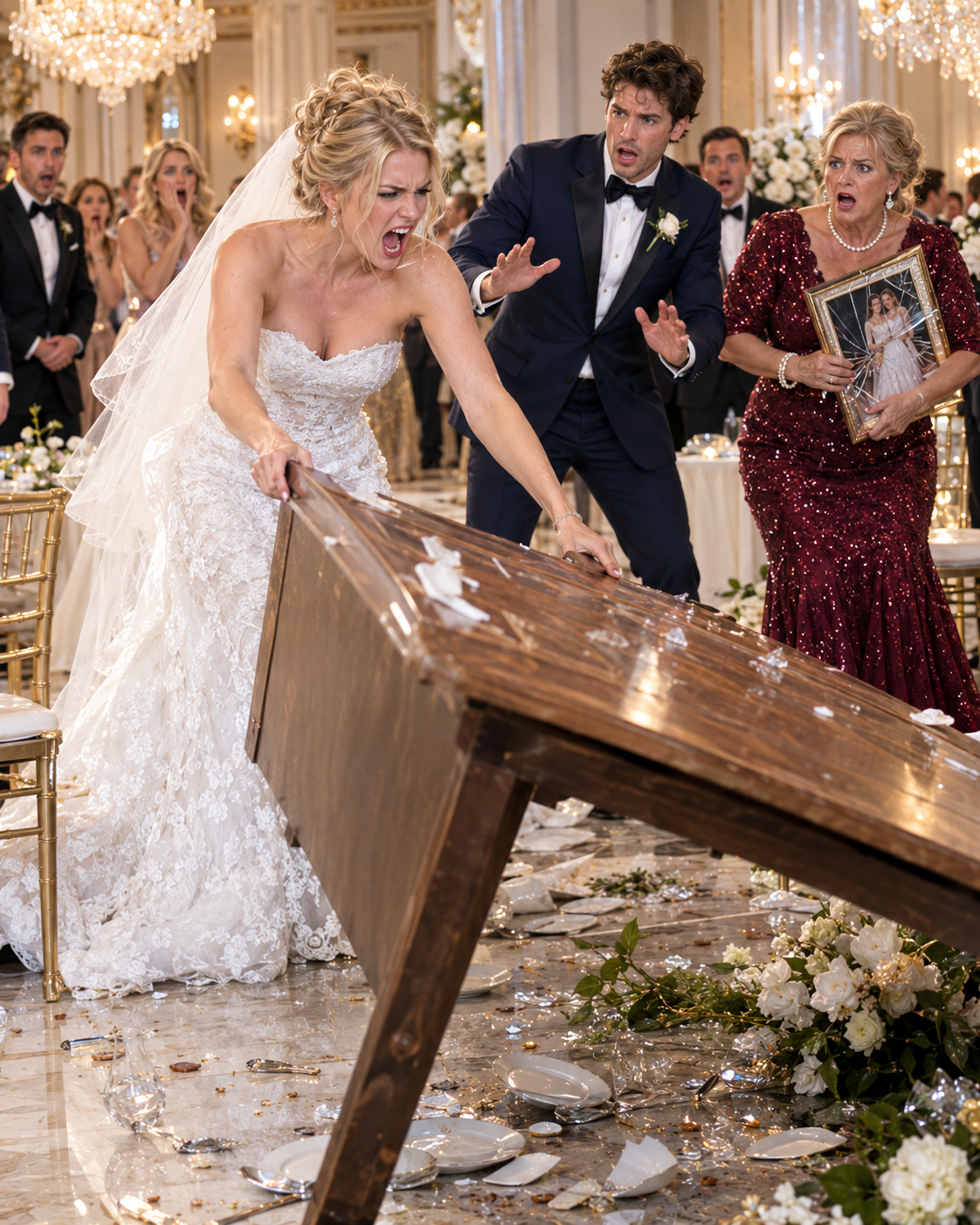
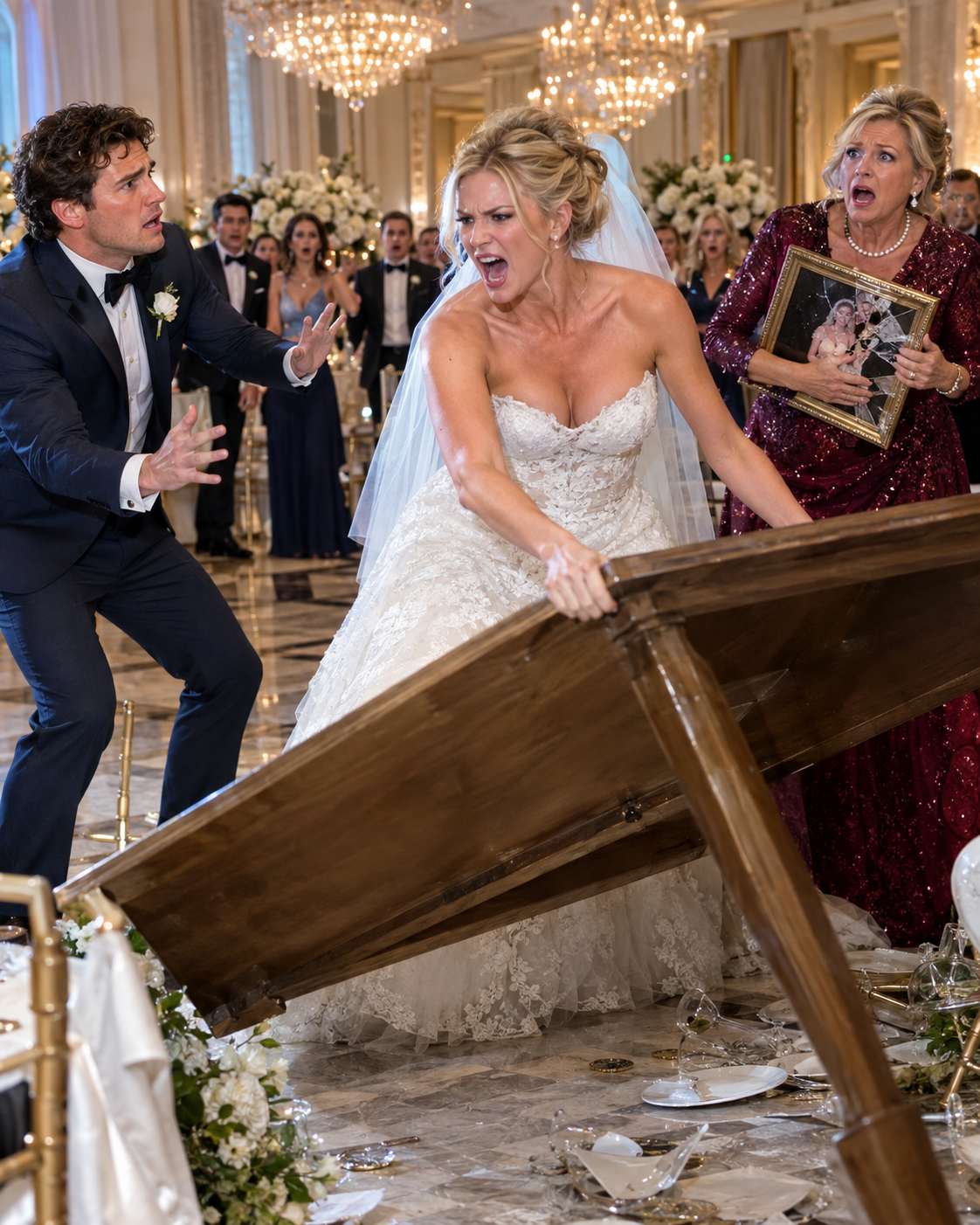
I flipped it.
Cups shattered. Papers flew everywhere. Chairs scraped violently across the floor.
Someone screamed.
Adrian turned completely white.
His mother pointed at me, trembling. “You insane little gold digger!”
Adrian finally found his voice.
“Mom,” he whispered.
Then, louder and horrified:
“Mom, do you know who she is?”
No one moved.
Veronica’s face twisted. “She is your wife, apparently. A badly raised one.”
Adrian stared at the papers scattered around the room.
“No,” he said. “You don’t understand.”
I did.
That was the moment I understood something else too: Adrian hadn’t protected me because he was afraid of his family. He had protected them from the truth because he wanted to keep pretending their approval mattered.
Veronica crossed her arms. “Then enlighten us.”
I stepped around the overturned table.
“My name is Elena Marlowe.”
One of the uncles shrugged.
The aunt holding the notebook suddenly stopped breathing.
She knew.
Marlowe Capital had financed half the luxury developments on the eastern seaboard, including three companies the Vale family relied upon.
But that wasn’t my real advantage.
I wasn’t merely an heiress.
I was chairwoman of Marlowe Family Holdings, the controlling lender behind Vale Hospitality’s largest expansion loan.
The “rich man” I had married came from a family whose wealth was largely leveraged.
Adrian had warned me before our wedding that his family was difficult. He hadn’t told them who I was because he wanted them to accept me without my surname opening doors.
It had been a foolish experiment.
Now it was finished.
Veronica laughed too loudly. “That’s absurd.”
The aunt whispered, “Veronica…”
“What?”
“She’s on the Marlowe board.”
I bent down and picked up one of the folders that had fallen open.
Inside was a typed list of “recommended transfers.”
My brokerage account.
My Manhattan apartment.
My voting rights in two private funds.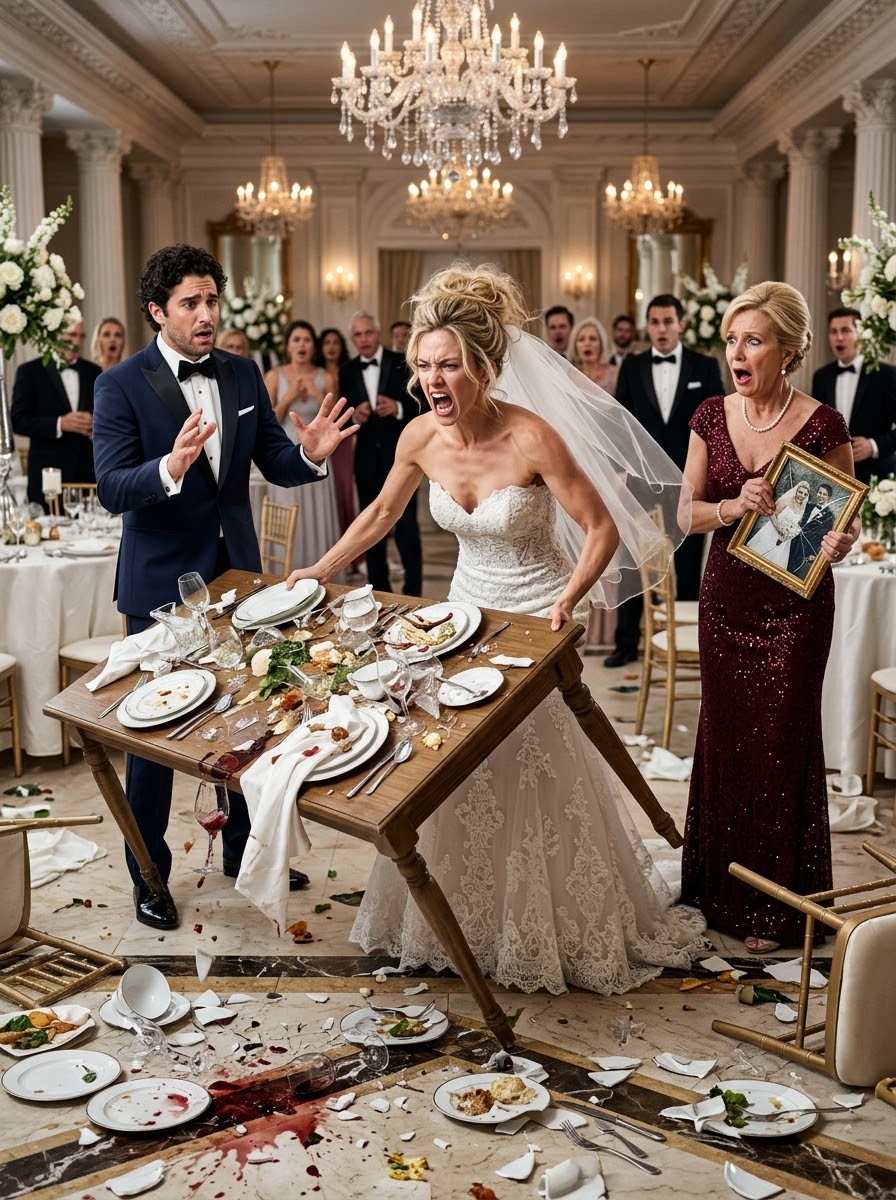
They had investigated me.
Not enough to understand who controlled the companies behind those assets, but enough to know I had money.
So this had never been about tradition.
It was a raid.
I looked at Adrian. “Did you know about this?”
“No.”
“Did you know they were coming?”
His silence answered.
I nodded once.
It hurt, but pain was useful when it made the truth impossible to ignore.
Veronica recovered quickly. “Families combine assets. That is normal.”
“No,” I said. “Predators call theft normal when everyone around them is too frightened to object.”
Her brother stepped toward me. “Watch your tone.”
I pulled out my phone.
He stopped.
“I’ve been recording since rule two.”
Veronica’s expression changed, and every face around the room suddenly went blank.
I continued. “And that folder contains evidence that members of your family intended to pressure me into transferring individually owned assets after marriage.”
Veronica scoffed. “Call whoever you want.”
I smiled.
“I already did.”
Through the front windows, three black sedans entered the driveway.
Her smile disappeared.
My attorney walked inside with two compliance officers and a forensic investigator from Marlowe Capital.
He glanced at the documents scattered across the floor.
“Mrs. Marlowe,” he said calmly, “we found the data breach.”
Then he looked directly at Veronica.
“And it leads to Vale Hospitality’s finance office.”
Adrian closed his eyes.
His mother didn’t.
“This is a family misunderstanding!” Veronica shouted. “You cannot bring investigators into my son’s house!”
“My house,” I corrected.
She froze.
I had purchased the property through a trust six months before our engagement. Adrian knew I owned real estate. He simply hadn’t known this house belonged to me.
My father had taught me one rule about money: never confuse love with surrendering the roof above your head or the signature beside your name.
My attorney placed three documents on the counter.
The first showed that a Vale Hospitality finance employee had illegally accessed a private due-diligence file connected to me.
The second showed the file had been emailed to Veronica.
The third showed Vale Hospitality had used inflated asset valuations to satisfy covenants on a Marlowe-backed loan.
Adrian’s uncle, the CFO, went pale.
I looked at him. “You came here to teach me financial obedience while your company was falsifying collateral?”
He sat down.
Veronica turned toward Adrian. “Do something!”
He finally did.
He walked toward me.
“I should have stopped this the second they walked in,” he said.
“Yes.”
“I thought if I kept the peace—”
“You kept their peace.”
I removed my wedding ring.
His expression collapsed.
“I love you.”
“I believe you.”
That made it worse.
I placed the ring on the counter.
“But love without courage becomes permission.”
Veronica snapped, “You’re ending a marriage over a photograph?”
I looked at the torn pieces beneath the overturned table.
“No. I’m ending it over the eleven people who came into my home to inventory my life while my husband watched.”
By evening, Marlowe Capital had frozen further disbursements to Vale Hospitality pending review.
I didn’t destroy their company.
They had done that themselves.
The investigation uncovered false valuations, undisclosed related-party payments, and personal expenses charged through corporate accounts.
The board removed Adrian’s uncle. Two executives were referred to regulators.
Veronica lost the company-funded residence, driver, and credit cards she had treated like birthrights.
Her relatives disappeared as soon as the money did.
Adrian cooperated fully.
That protected him legally.
It didn’t save our marriage.
He signed the divorce settlement without contesting my property.
Six months later, I stood in the same dining room.
The broken table was gone.
So was the torn photograph.
A smaller oak table now sat beside open French doors overlooking the garden. I was hosting dinner for five people I trusted.
No rules.
No performance.
No one measuring my worth.
My attorney raised a glass. “To expensive lessons.”
I smiled.
On the mantel sat one photograph from the wedding—not the one Veronica had destroyed. This one showed me alone before the ceremony, looking directly into the camera.
Calm. Certain. Whole.
My phone buzzed.
A message from Adrian.
I hope someday you can forgive me.
I turned the screen facedown.
Forgiveness didn’t mean reopening the door.
Sometimes the most satisfying revenge was realizing that the people who once tried to control you no longer had any way to reach you.
