

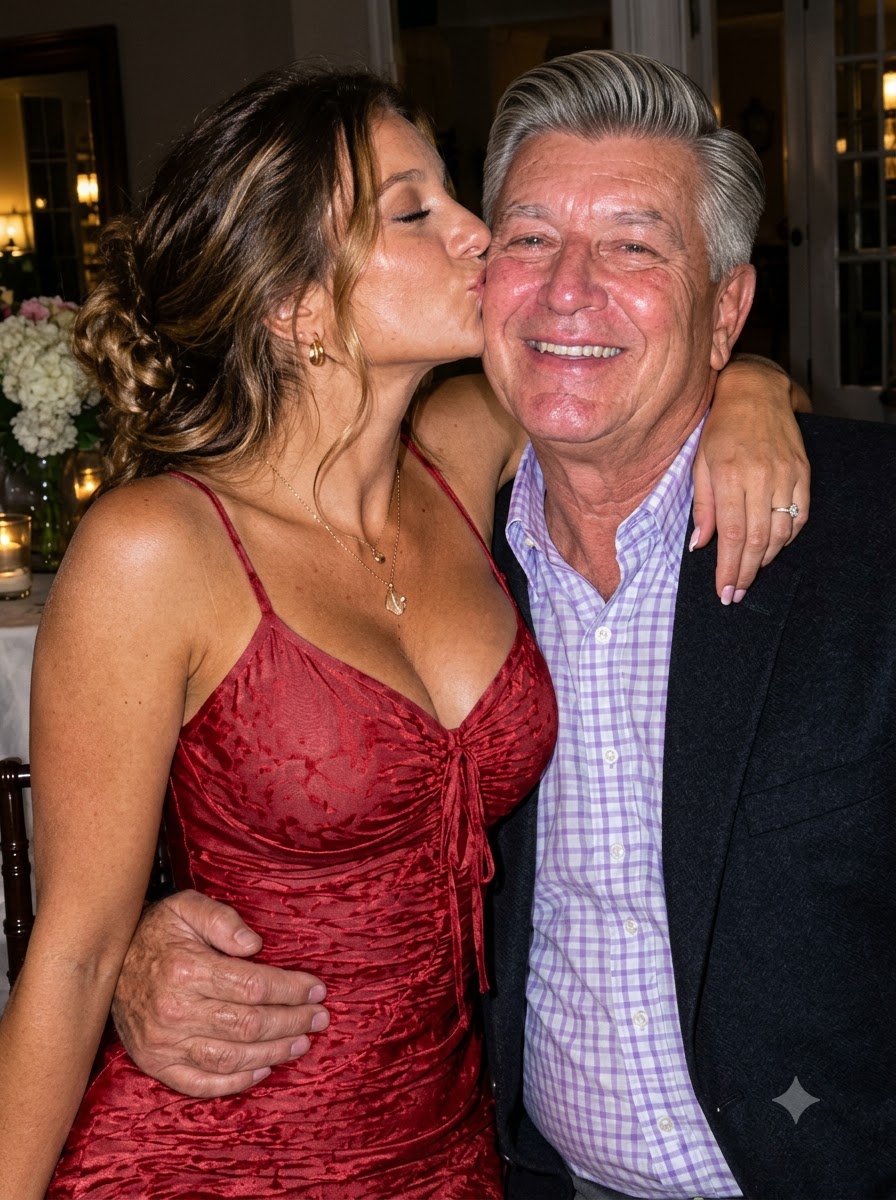
Every time Marcus and I asked our father about his much younger wife, he insisted everything was fine. Then, shortly before he died, he whispered something that completely changed how we understood the previous six years.
“I fixed it in time.”
At first, I assumed he was confused.
I was wrong.
Eight months after we buried my mother, the house still carried her scent. Lavender remained in the linen closet, lemon polish lingered on the banister, and a faint trace of jasmine hand cream stayed on kitchen towels nobody had the heart to wash.
I still expected Mom to come through the door with groceries and complaints about traffic.
Instead, one Sunday in April, Dad arrived with Vanessa.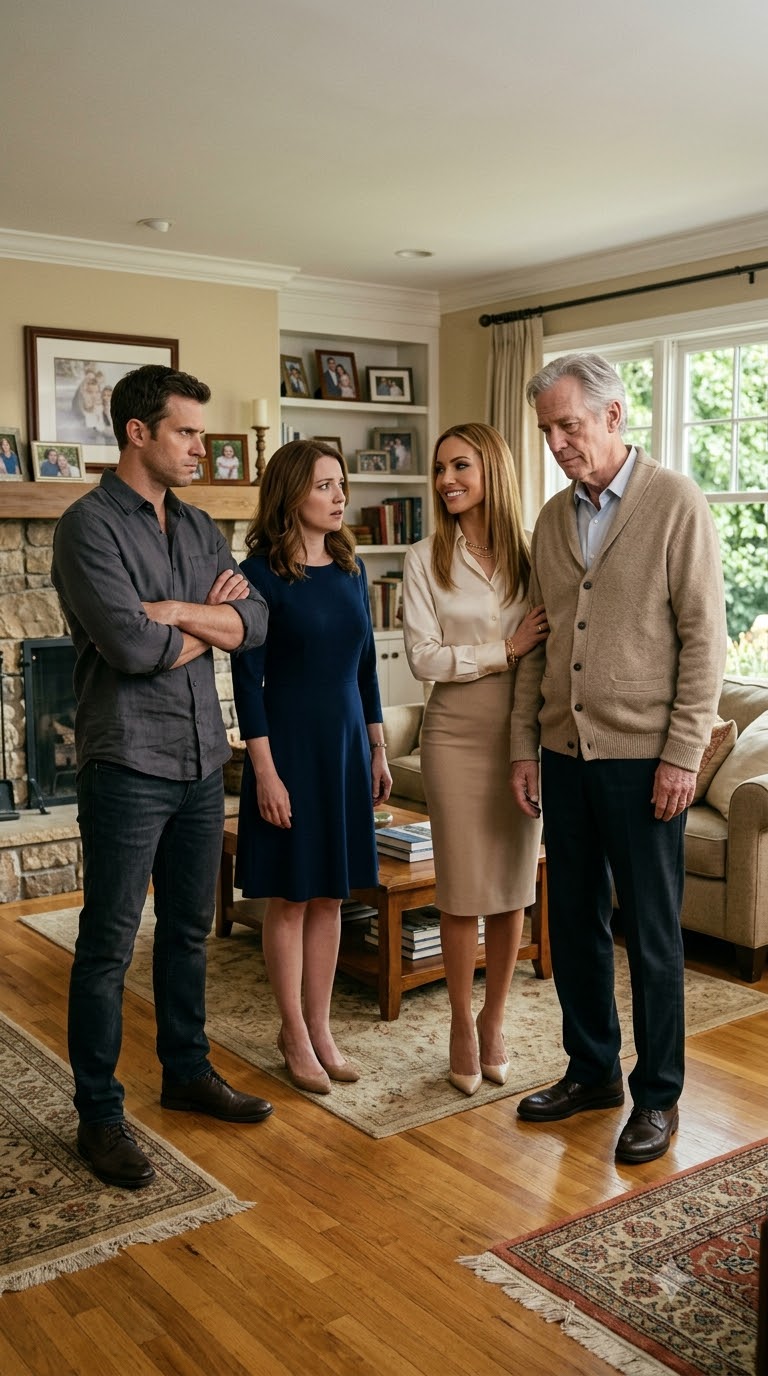
She was thirty-six years younger than him.
And two years younger than me.
“Diane, sweetheart,” she said brightly. “It’s so wonderful to meet my husband’s daughter finally.”
I stared at her.
“It’s nice to meet you,” I managed.
Marcus had driven up from the city because I had begged him to. He stood in the doorway with his arms crossed, saying nothing.
Dad kissed the top of my head.
He looked thinner and exhausted in a way that had nothing to do with sleep.
“Let’s have dinner,” he said. “Vanessa cooked.”
She hadn’t.
She had ordered the food and moved roasted chicken from a catering tray onto Mom’s good serving platter.
At dinner, Vanessa placed one manicured hand on Dad’s forearm.
“Robert, my love, tell them about the trainer I found you. He’s a miracle worker.”
“I’m 68, Vanessa.”
“Which is exactly why,” she laughed.
Marcus drained half his water in one swallow.
Then Vanessa noticed Dad’s watch.
“That’s a nice watch, darling. The Patek, right? You have three of them, don’t you? The rose gold is my favorite.”
“Two,” Dad said quietly. “I have two.”
“Mm. Well, they’re gorgeous.”
I lowered my eyes to Mom’s china, decorated with tiny blue flowers around the rim.
Then Vanessa looked at me.
“Your father tells me you all used to spend summers at some lake house. Is it big? Is it winterized? I’ve been dying to see it.”
“It’s small,” Marcus said flatly. “Dad built it himself.”
“Oh, how darling. Robert, we should really go up there. Or maybe list it. Just as a conversation.”
“Vanessa…”
“I said as a conversation, darling.”
After dinner, she went upstairs to change into something “more comfortable” and came back wearing cashmere that cost more than my mortgage payment.
Marcus caught my elbow in the hallway.
“Di. Tell me you see it.”
“I see it.”
“Then say something.”
“He’s happy, Marcus. Look at him. He’s smiling.”
“He’s medicated. There is a difference.”
I didn’t respond.
I walked toward the kitchen because I couldn’t stand in the house where we grew up and admit my brother might be right.
Dad was standing at the counter.
VANESSA SLID A FOLDED DOCUMENT ACROSS THE GRANITE TOWARD HIM.
“Just the update we talked about, darling. The accountant already looked it over.”
Dad picked up the pen.
He didn’t read it.
He signed.
Then he looked up and saw me.
For a moment, something crossed his face.
Not guilt.
Not confusion.
Something quieter and older than both.
He folded the paper and handed it back to her.
“Everything alright, honey?”
“Yes, Dad.”
I could have asked.
I could have walked over, turned the paper around, and read a single line.
Instead, I was thirty-four years old, standing in my mother’s kitchen, and I chose to keep the peace.
I told myself I would ask tomorrow.
Six years later, I still hadn’t.
By then, I barely recognized the house.
Vanessa redecorated every room twice. Mom’s wallpaper disappeared. Her china cabinet was replaced with something glossy and white that looked like hotel furniture.
The lake house was worse.
“He built that place with his own hands,” Marcus told me one night. “And she convinced him it was ‘too much upkeep.’”
“He signed the papers, Marcus.”
“She put the pen in his hand, Di. There’s a difference.”
I didn’t argue because I knew he was right.
I just didn’t know what to do.
Dad’s old friends stopped visiting. He called less often. When he did, Vanessa always seemed to be nearby, and his sentences grew shorter.
Then came the hospital.
Dad had been unwell for months, but nobody told us how serious it was until he was admitted.
I dropped everything and drove four hours through the rain.
Marcus was already pacing in the hallway.
“How is he?”
“Tired. Thin. She’s in there.”
I opened the door.
Vanessa sat by the window, designer sunglasses resting on her head, scrolling through her phone.
She barely looked up.
“Oh. You made it.”
“Hi, Vanessa.”
Dad’s eyes were closed. His hand rested on the blanket, thinner than I remembered.
I sat beside him and took it.
“Dad. It’s me.”
His eyes slowly opened.
When he saw me, something in his face softened in a way I hadn’t witnessed in years.
“There she is,” he whispered.
“I’m here. Marcus is here too.”
“Good. Good.”
Vanessa sighed and stood.
“I need coffee,” she murmured. “Watch him.”
She left.
The door clicked shut.
Dad’s grip tightened, weak but deliberate.
“Diane.”
“I’m listening.”
“I fixed it, sweetheart.”
I leaned closer.
“Fixed what, Dad?”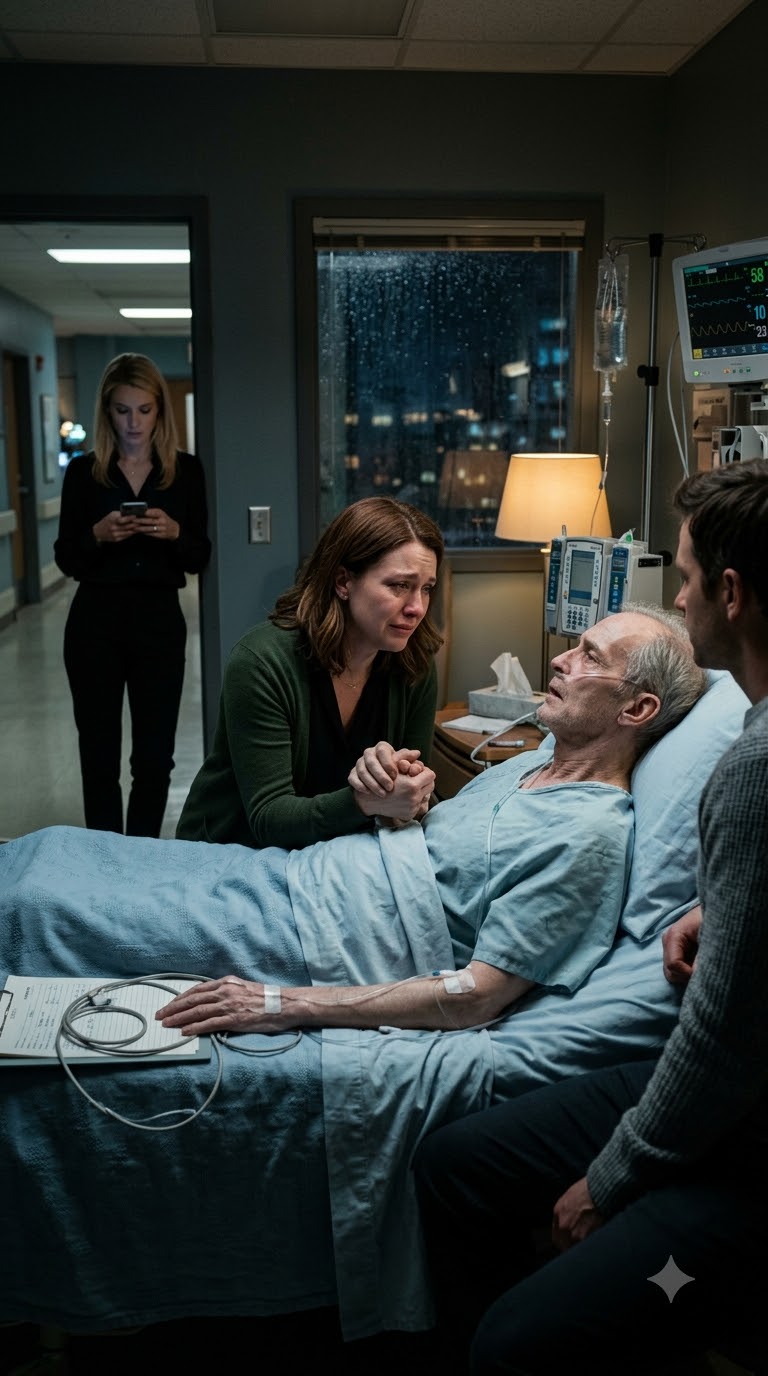
His eyes were wet, but he smiled. He wasn’t confused. He looked clearer than I had seen him in months.
“I fixed it in time.”
“Fixed what?”
He squeezed my hand once more and closed his eyes.
I sat there trying to make sense of it.
I thought about asking again. I thought about calling Marcus in.
But Dad looked peaceful for the first time in six years. So I didn’t press him.
Once again, I told myself I would ask tomorrow.
Over the next several days, Vanessa’s visits grew shorter and less frequent. By the weekend, she barely stayed, always claiming she had somewhere else to be.
On Tuesday morning, she wasn’t there.
Dad passed peacefully before either of us could reach him.
The call came from a nurse.
Not Vanessa.
Later, Marcus learned through the same friend at the brokerage that Vanessa had been speaking with the listing agent that morning, around the same time the nurse said Dad had slipped away.
None of it seemed real.
By the time we arrived at the funeral home the next day, Vanessa had already decided everything.
“I know exactly what he would have wanted,” she told family and friends, dabbing at eyes that never seemed to produce tears.
“The lilies were his favorite.”
They weren’t.
Dad hated lilies.
“And this photo. So handsome. He loved this one.”
It was a rigid corporate headshot from a retirement dinner a decade earlier. Dad had complained about that tie for an entire week.
“Vanessa,” I said evenly, “we have the picture from the lake house. The one on the dock.”
“Oh, sweetie.” She patted my arm. “That’s not really funeral-appropriate, is it? He’s in a T-shirt.”
Marcus turned away and walked outside before saying something we couldn’t take back.
I followed him.
He leaned against my car, his arms folded and his jaw clenched.
“She’s listing the house, Di.”
“What?”
“The house. Our house. I checked. She’s already listed it with an agent. Photos and everything. She just hasn’t made it public yet.”
Something inside my chest went completely still.
“How do you know?”
“A friend at the brokerage. She started the paperwork three days before he died, Diane. Three days.”
I stared across the parking lot.
“I fixed it in time.”
“What?”
“Something Dad said. In the hospital. He said, ‘I fixed it in time.’ I thought he was rambling.”
Marcus looked at me.
“Fixed what?”
“I don’t know.”
At the funeral, the chapel reeked of lilies Dad had always hated. Vanessa had arranged three enormous displays around the altar.
Marcus sat beside me, his jaw clenched and his hands folded so tightly that his knuckles had turned white.
Vanessa sat in the front row wearing black Chanel, pressing a tissue against a dry cheek. Every few minutes, she looked around the room like a hostess inspecting a gathering.
“That’s not even his song,” Marcus muttered beneath the piano music.
“I know.”
“That photo doesn’t look like him.”
“I know, Marcus.”
The photograph on the easel came from a charity gala Vanessa had taken him to. His smile looked polite and exhausted.
I kept my hands folded in my lap and stared at the funeral program. Dad’s entire life had been reduced to a font Vanessa had selected because it “looked expensive.”
Behind us, family friends whispered. I could sense their eyes shifting between Marcus and me, then Vanessa, as though everyone knew something was wrong but nobody wanted to say it.
Vanessa checked her phone.
Once.
Twice.
Then she glanced toward the main doors.
Phone.
Doors.
Phone again.
Whoever she expected clearly wasn’t arriving.
Marcus leaned toward me.
“I stopped by the house this morning to get Dad’s good cufflinks. The code doesn’t work. She changed the locks yesterday.”
Something inside my chest shifted.
Not panic.
The opposite.
The pastor began speaking about a man I barely recognized. Charitable. Devoted husband. A man who “found love again in his golden years.”
Vanessa dabbed at her dry tissue.
And I thought about Dad in the hospital.
“I fixed it, sweetheart. I fixed it in time.”
I needed to understand those words more than ever.
Then I noticed the funeral director entering through a side door with an envelope.
He walked down the aisle and leaned beside Vanessa.
He whispered something.
I watched the color disappear from her face.
Her jaw dropped slightly. The hand holding the tissue fell into her lap.
“Diane,” Marcus breathed.
“I see it.”
Vanessa whispered something back, low and urgent.
The director shook his head, calm and unmoving, then pointed toward the envelope.
She rose too quickly.
Her clutch dropped to the floor with a sharp clap that caused several people to jump.
She didn’t even retrieve it.
She hurried through the staff door.
The room became silent.
The pastor stopped in the middle of his sentence.
Marcus turned toward me.
“What just happened?”
“I don’t know yet.”
“Should we?”
“Yes.”
I stood, smoothing the front of my dress the way Mom used to before church, and walked into the aisle.
Every eye turned toward me.
For the first time in six years, I didn’t make myself smaller beneath their attention.
Marcus followed.
The funeral director met my eyes as we passed. He gave me one small nod, like a man passing along something he had carried for a long time.
I thought about Dad’s whisper. I thought about the document I had watched him sign six years earlier in the kitchen, the one I had never bothered to ask about.
At the side door, Marcus briefly placed a hand against my back.
“Whatever’s on the other side of this, we’re doing it together.”
“I know.”
DOWN THE CORRIDOR, VANESSA’S VOICE WAS ALREADY SHARP AND SHAKING.
Inside the funeral home’s back office, we found her arguing with the director and a composed older man in a gray suit.
I recognized him immediately.
Mr. Halvorsen.
Dad’s attorney for thirty years.
“Fourteen months ago,” Halvorsen said evenly, “your father revised his will. The house, the remaining assets, and control of the estate pass to his children in trust. You receive the prenuptial settlement. Nothing more.”
Vanessa crushed the tissue in her fist.
“He also left sealed instructions with the funeral director,” Halvorsen continued. “His own photo. His own music. His own readings. To be opened at the service, not before.”
“He was confused,” Vanessa hissed, turning toward me. “Manipulated. I’ll contest every page of it.”
I looked at the woman who had covered my mother’s memory with paint, sold the lake house, and arranged a funeral my father would never have recognized.
“He wasn’t confused,” I said quietly. “He just stopped being afraid of you.”
For the first time, she had no response.
Marcus touched my elbow, and we returned to the chapel.
Soon after, the funeral director announced a small alteration to the program.
The screen changed.
There was Dad on the dock at the lake house, sunburned and grinning, holding a fish nobody believed he had caught.
The song playing through the speakers was the one he used to hum in the garage.
Marcus’s shoulders finally relaxed.
For the first time that day, the funeral felt like my father’s.
Weeks later, Marcus and I stood on the porch of our childhood home, the keys warm in my hand.
Vanessa was gone.
Mom’s china had been returned to the cabinet, and the real photograph of Dad rested on the mantel.
The lake house was gone, and six years of silence could never be undone.
The lake house could never be recovered. Neither could the years when Dad had withdrawn and we had allowed his repeated “everything’s fine” to end every difficult conversation. I still wished he had trusted us sooner. I was still angry that he had stayed silent for so long.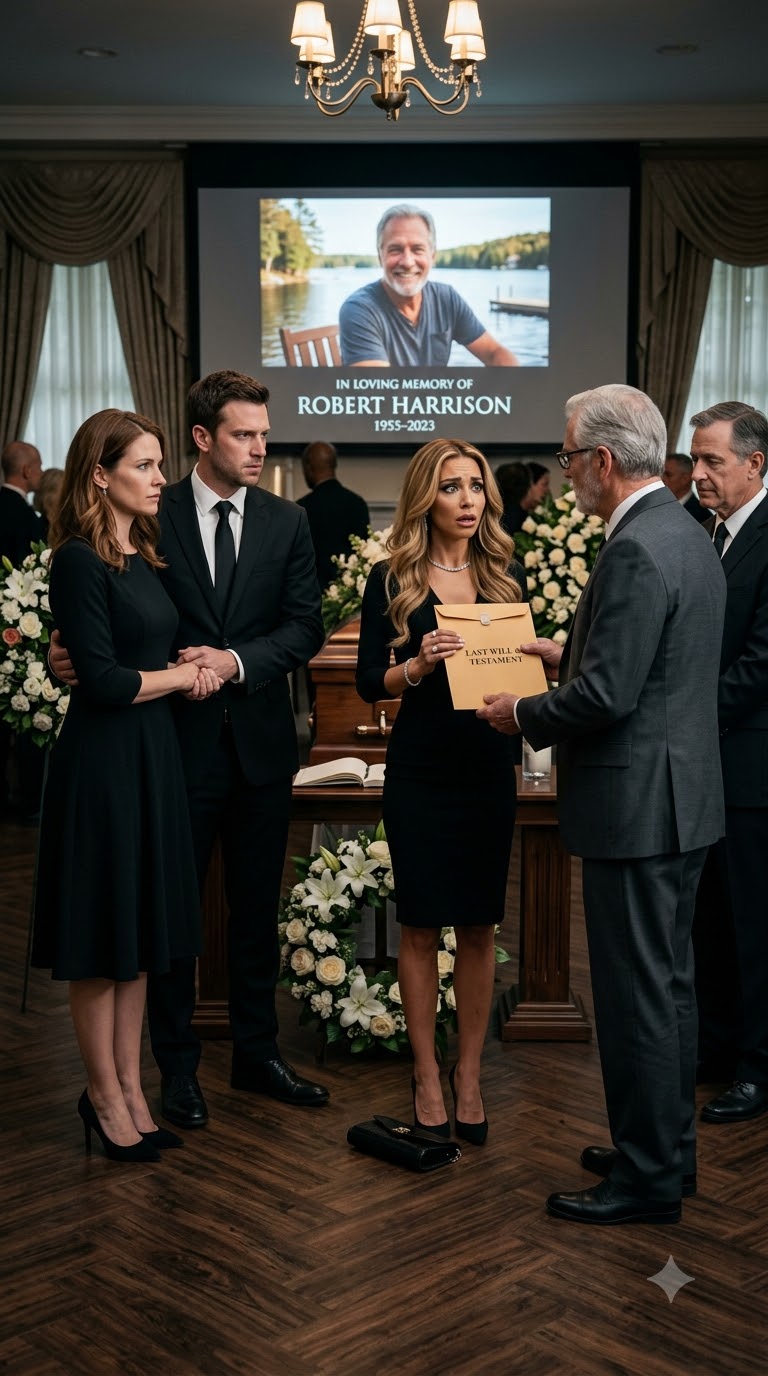
But grief could carry both things at once: the pain of what had happened and the knowledge that, before it was too late, he had tried to make something right.
But I finally understood.
For years, I had believed Dad had chosen Vanessa over us. Every short phone call felt like rejection. Every family possession she changed or sold seemed like proof.
Yet somewhere during those final years, Dad had quietly taken action.
He changed his will.
Protected the house and the remaining estate.
Even protected his own funeral from becoming someone else’s performance.
“I fixed it in time,” he had whispered.
He had.
Not soon enough to save everything.
But soon enough to save what could still be saved.
And now, so had I.
SO HERE’S THE REAL QUESTION:
If someone spent years believing they had lost everything, only to discover their loved one had been quietly fighting for them all along, would those years of silence still feel like a betrayal, or the greatest act of love?
