

PART 1
My name is Emily, and while my neighbors prayed for my “redemption,” I was serving overseas.
My mother, Diane, had perfected the performance. At church, the grocery store, even around my former teachers, she’d lower her eyes and whisper, “Emily made terrible choices.”
Nobody asked what choices.
That silence gave her everything she needed.
Meanwhile, I was thousands of miles away in Kuwait and Afghanistan, sleeping on military cots, choking on dust, and writing letters home whenever loneliness became unbearable.
Six came back unopened.
REFUSED.
Stamped across every envelope.
What I didn’t know was that Mr. Greer, our mailman for more than thirty years, had noticed the military postmarks. He quietly kept track of them. Somehow, one person back home understood the truth.
When my service ended, Mr. Greer met me at the bus station in his battered Ford pickup.
I thought he was simply giving me a ride home.
I was wrong.
The moment we turned onto my childhood street, he suddenly stopped.
“Stay inside,” he said.
Then he locked the doors.
I looked toward my parents’ house and saw my mother standing behind the curtains with a phone pressed against her ear.
Mr. Greer’s face went pale.
“She called 911,” he said. “She told them an escaped prisoner is outside her house.”
Seconds later, sirens ripped through the neighborhood.
Three police cruisers arrived.
Then came neighbors.
My old teachers.
People from church.
And finally, a local television van.
That’s when Mr. Greer admitted what he’d done.
Before picking me up, he’d called a reporter.
My mother had spent four years convincing everyone that her daughter was a convicted criminal.
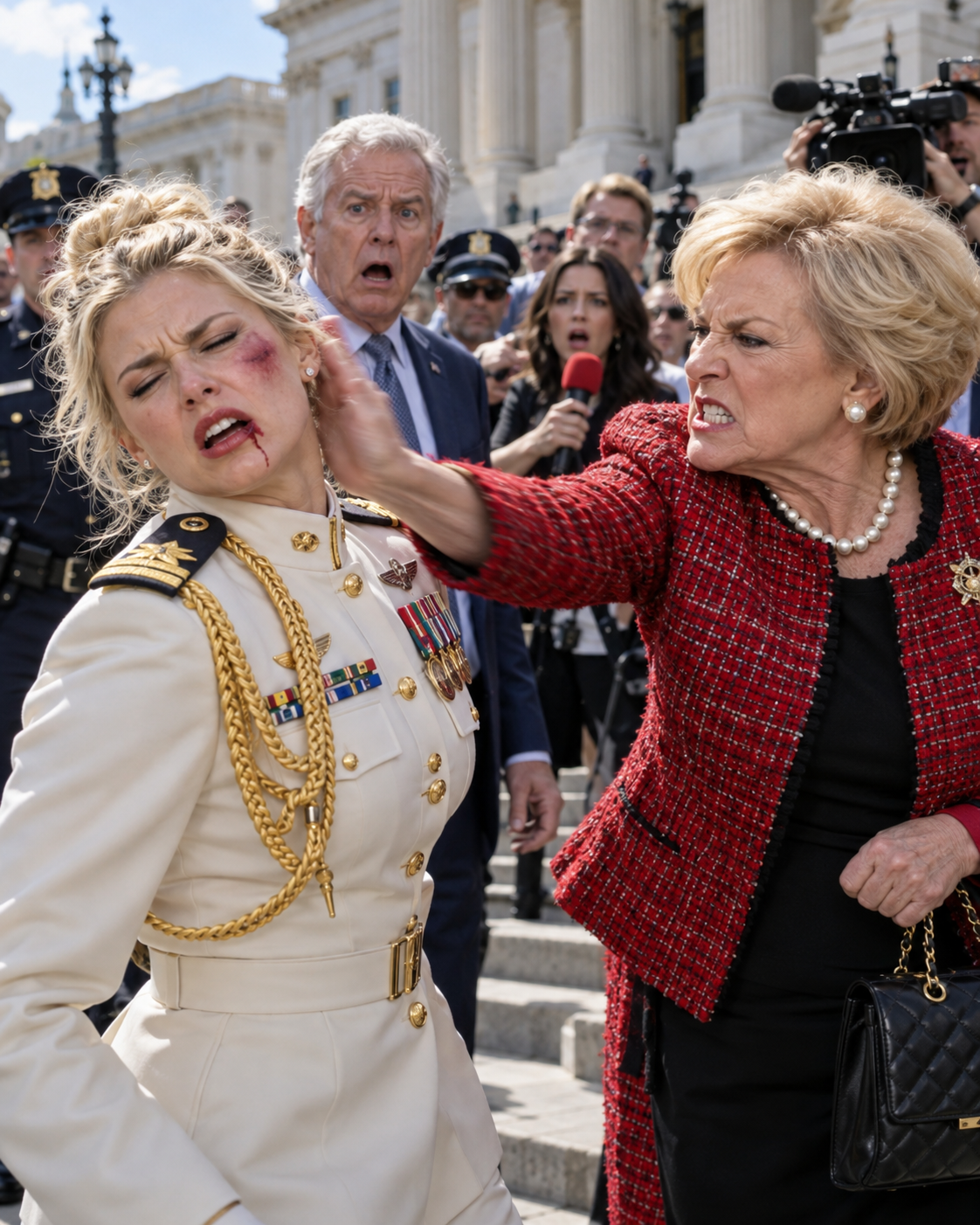
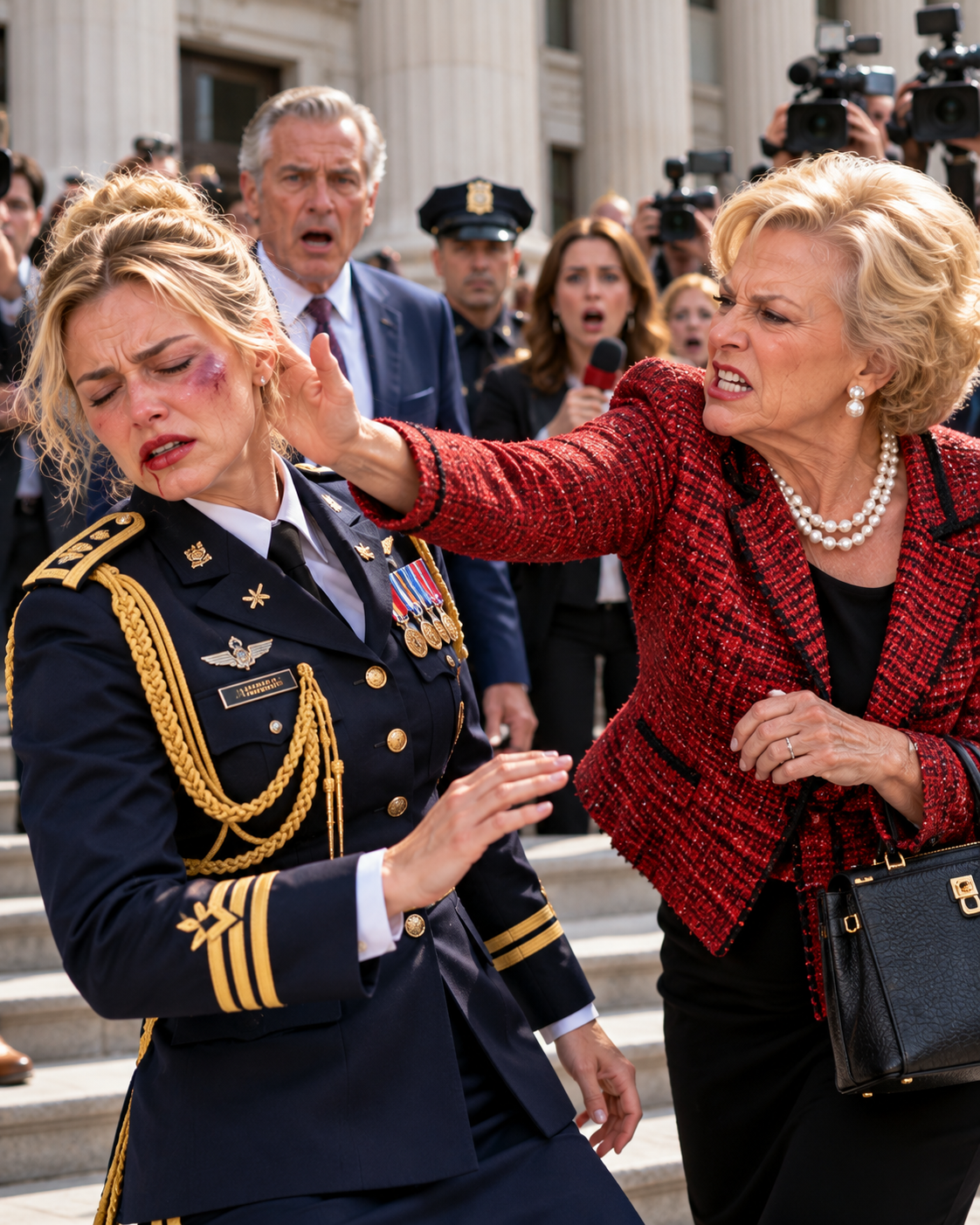
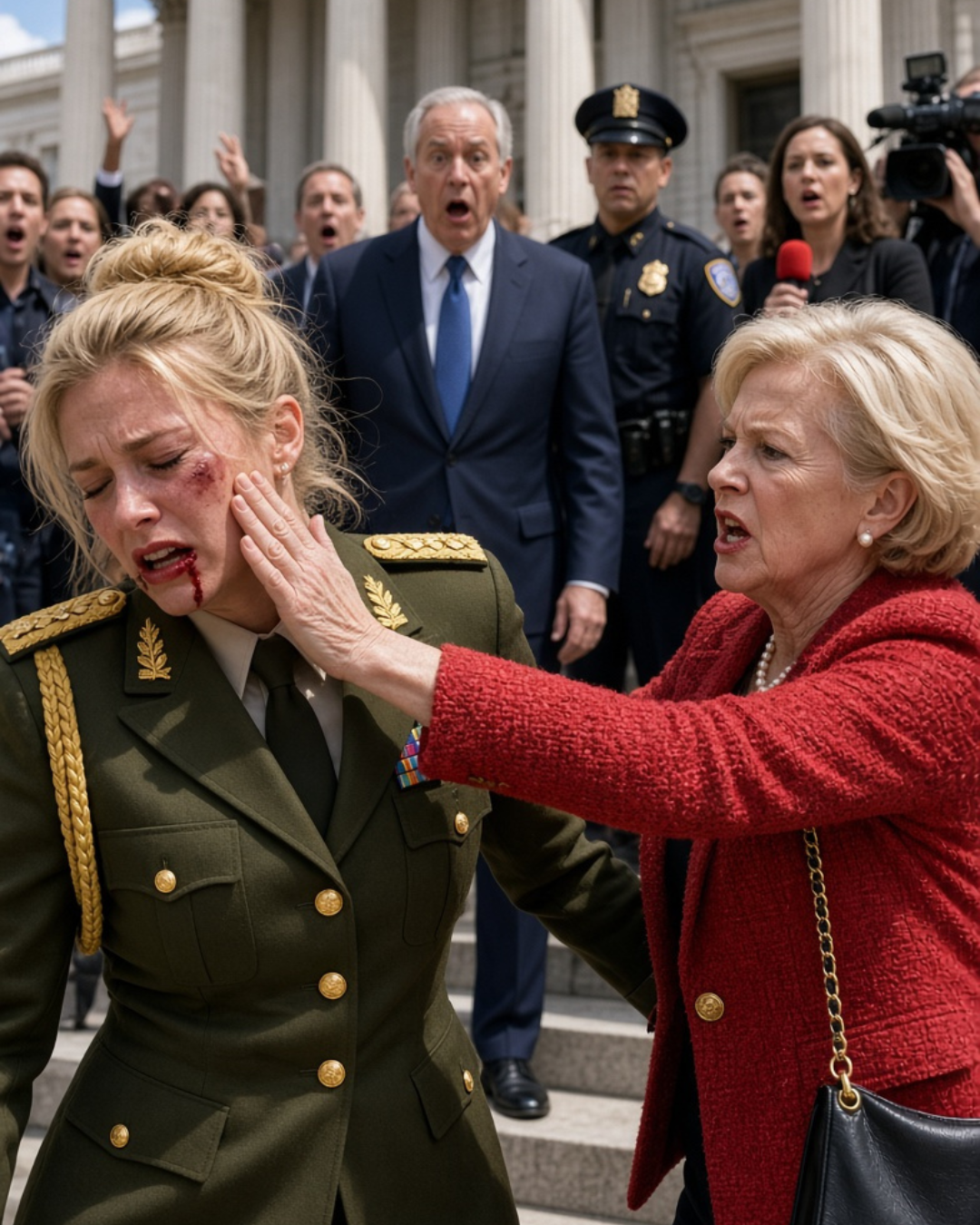
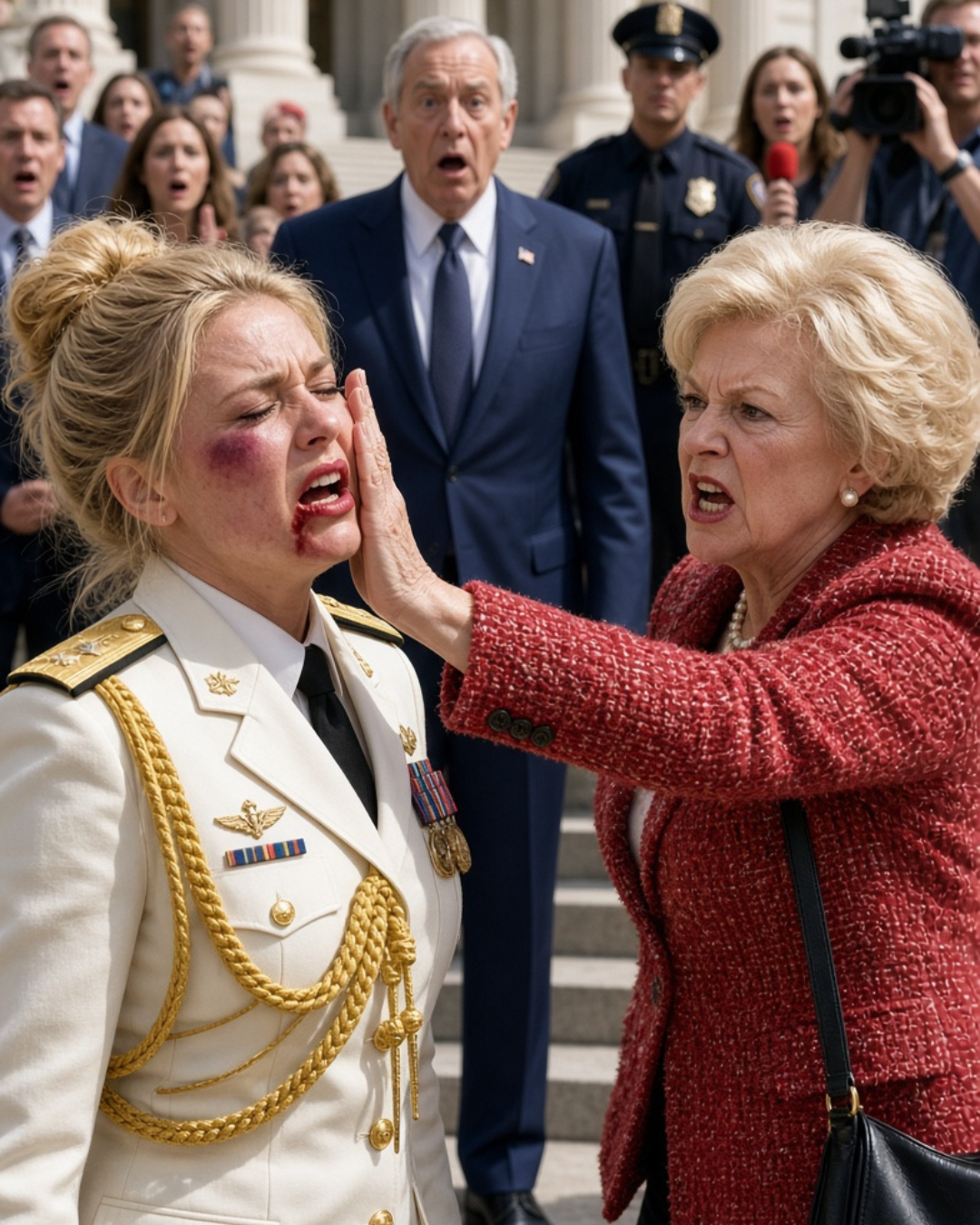
Now that daughter was sitting twenty yards away in a spotless Army uniform, while cameras rolled and police officers stared at my mother, waiting for an explanation.
She locked the front door.
But there was nowhere left for her lie to hide.
For a few seconds, nobody moved.
The sirens had stopped, but their echo seemed to hang over the street. Red and blue lights slid across the windows of the houses where I had grown up. Somewhere behind me, a screen door creaked. Someone whispered my name.
Not “the escaped prisoner.”
My name.
Emily.
I sat in the passenger seat of Mr. Greer’s pickup, my hands resting on my knees, trying to understand how I had become a stranger in my own neighborhood.
The first police officer approached slowly. He was young, perhaps younger than I had been when I enlisted. His hand remained away from his weapon, and his expression held more confusion than suspicion.
“Ma’am,” he said through the open window, “could you step out of the vehicle?”
Mr. Greer glanced at me.
“You don’t have to answer anything until they verify who you are,” he murmured.
“I know,” I said.
My voice sounded steadier than I felt.
I opened the door and stepped onto the pavement.
The uniform that had made me feel capable in deserts and crowded bases suddenly seemed too bright beneath the flashing lights. I had worn it when receiving orders, when standing in formation, when saying goodbye to people who had become closer than family.
Now I wore it in front of my mother’s house while three police officers studied me as if I were a puzzle.
The officer looked at my name tape.
“Emily Carter?”
“Yes.”
“Do you have identification?”
I reached into my wallet and handed him my military ID and driver’s license. He examined both, then returned to his cruiser. Another officer spoke quietly into the radio.
Across the lawn, my mother stood behind the front door. The glass in the upper half reflected the lights, but I could still see her face.
She looked frightened.
Not concerned. Not relieved.
Frightened.
My father stood several feet behind her, one hand resting on the wall as if he needed it to remain upright. He had not changed much. His shoulders were still broad, his hair still silver at the temples. But he seemed smaller than I remembered.
A crowd had gathered along the sidewalk.
Mrs. Alvarez from two houses down had wrapped a cardigan around herself. Mr. and Mrs. Bell stood beside their mailbox. Two teachers from my old high school were there, their faces pale with recognition.
And near the curb, a television reporter held a microphone while a cameraman adjusted his equipment.
I turned to Mr. Greer.
“You really called them?”
He swallowed.
“I called the station and told them there was a story they needed to see. I didn’t know if they would come.”
“They came.”
“I thought your mother might change her mind once she saw you.”
I looked at the locked front door.
“She didn’t.”
The young officer returned. “Everything checks out. You’re not listed as wanted or escaped.”
A murmur moved through the crowd.
The officer looked toward the house. “Your mother reported that an escaped prisoner was on the property. She gave us your name.”
I felt the words settle in me one by one.
My mother had not mistaken me for someone else.
She had not panicked because she failed to recognize me.
She knew exactly who I was.
“What did she tell you?” I asked.
“That you had been convicted and released without authorization. She said you might be dangerous.”
A strange calm came over me. The kind that arrives after fear has used up all its strength.
“I was never convicted,” I said.
The officer nodded. “We understand that now.”
Behind him, the reporter stepped closer. Mr. Greer moved between us.
“Give her a minute,” he said.
The reporter lowered the microphone. “I’m sorry. I know this is overwhelming.”
I looked at the camera. It was already pointed toward me.
For four years, my mother had told the town a story about my life.
Now everyone wanted to hear mine.
But I wasn’t ready to give it to them in the street.
“Can I speak to my father?” I asked.
One of the officers glanced toward the house.
“You can, as long as you feel safe.”
That word caught me off guard.
Safe.
I had spent years sleeping in unfamiliar places, under unfamiliar skies, surrounded by alarms and uncertainty. I had learned to distinguish danger from discomfort.
The house did not feel dangerous.
It felt worse.
It felt like a place that had taken the shape of home and emptied itself of everything that made it one.
My mother opened the door only after the officer knocked. She kept the chain latched.
“I want to speak with my father,” I said.
Her fingers tightened around the edge of the door.
“Your father is not well.”
“I can see that.”
“You need to leave.”
“Why?”
Her eyes flicked toward the camera. “Because this is private.”
“You made it public when you called the police.”
Her face hardened. “I was protecting this family.”
The sentence was so familiar that it felt rehearsed.
She had said it before.
Maybe not to me, but to herself.
My father appeared behind her.
“Diane,” he said softly, “let her in.”
My mother turned. “No.”
“Let her in.”
It was the first time I had heard him contradict her in years.
She looked back at me. For the briefest moment, I saw something beneath her anger. Not remorse. Not yet.
Panic.
Then she unlatched the door.
I stepped inside.
The house smelled of lemon cleaner and old furniture. Everything was exactly where it had been when I left: the wooden bowl on the entry table, the framed photograph of my parents on their anniversary, the brass lamp with the crooked shade.
But the family pictures were gone.
Not all of them. Just the ones with me in them.
The empty spaces on the wall were lighter than the paint around them.
I stopped beneath one of those pale rectangles.
My father noticed.
“Your mother took them down,” he said.
“She said people asked questions.”
My mother shut the door behind us. Outside, voices blended with the low hum of the television crew.
“What questions?” I asked.
She folded her arms. “Where you were. What happened. Why you stopped writing.”
“I didn’t stop writing.”
Her expression changed.
Only slightly.
But I saw it.
“You never received my letters,” I said.
“You sent a few.”
“I sent dozens.”
My father looked at her.
Diane’s eyes moved toward the hallway.
“I don’t know what you think you sent,” she said.
“Six letters came back to me unopened.”
“Then perhaps you addressed them incorrectly.”
I almost laughed, though nothing was funny.
The military post office had checked every address. The envelopes had been stamped with my parents’ street, city, and state. Each one had returned to me marked REFUSED.
“I used the same address you’ve lived at for thirty years.”
“You don’t know what you’re talking about.”
My father’s face had gone gray.
“Diane,” he said again.
She spun toward him. “Don’t start.”
“Did you return her letters?”
The silence answered before she did.
My father closed his eyes.
The question was not new to him.
That realization hurt more than the answer would have.
“You knew?” I asked.
He opened his eyes.
“I knew some mail had been returned.”
“Some?”
“I didn’t know—”
“You knew enough.”
“I asked her about it.”
“And what did she say?”
My mother’s voice sharpened. “I said you had made your decision.”
“What decision?”
“To disappear.”
“I joined the Army.”
“You left without telling us.”
“I told you.”
“You called from a recruiting office and announced you were throwing your life away.”
“I was twenty-two.”
“You were angry.”
“I was trying to build a life.”
Her expression faltered.
For years, I had imagined this conversation. In those daydreams, I shouted. She cried. My father finally took my side. The truth burst through the walls and left everyone changed.
Real life was quieter.
My mother stood three feet away, gripping her own elbows. My father stared at the floor. Outside, the neighborhood watched through windows and camera lenses.
The truth did not burst through anything.
It seeped.
Slowly.
Coldly.
The young officer entered the foyer and cleared his throat. “Ma’am, since the report was unfounded, we’ll need to document what happened.”
My mother looked at him. “I made a mistake.”
“You reported a wanted person.”
“I was frightened.”
“Were you aware she was your daughter?”
The question seemed to strike her.
“Yes.”
“Then why did you identify her as an escaped prisoner?”
She said nothing.
My father answered for her.
“Because she has been telling people that Emily was in prison.”
The officer glanced at me.
“That isn’t true,” I said.
“No,” my father replied. “It isn’t.”
The television reporter stood just beyond the open door, listening.
My mother’s face collapsed into something I had never seen there before: not grief, but exhaustion.
She pressed her back against the wall.
“Everyone wanted an explanation,” she said.
“For what?”
“For you leaving.”
“I told you why.”
“You enlisted after the argument with your father. You packed one bag and walked out. You stopped answering calls.”
“I stopped answering because you told me not to come back unless I apologized.”
“I was angry.”
“So was I.”
“You were always difficult.”
The words landed with the dull force of an old bruise being touched.
My father looked at her. “Diane.”
“What?” she demanded. “It’s true. She was angry all the time. She blamed us for everything.”
“I blamed you for selling the house my grandmother left me.”
The room went silent.
That was the part we had never spoken about outside the family.
My grandmother had left me a small inheritance and a letter saying it was meant to help me attend graduate school. My parents had persuaded me to lend them the money when my father’s business struggled. They promised to repay me.
Instead, they used it to settle debts and refinance the house.
When I asked about it, my mother told me I was selfish for wanting the money back.
My father said the business would recover.
It never did.
By the time I enlisted, I had stopped believing promises.
“I didn’t blame you for everything,” I continued. “I blamed you for asking me to trust you, then punishing me when I remembered what you promised.”
My father lowered his head.
My mother’s eyes filled, but she did not cry.
“That money kept this house,” she said.
“It kept you comfortable.”
“It kept your father from losing everything.”
“You could have told me the truth.”
“You were young.”
“I was old enough to be lied to.”
The officer shifted uncomfortably. The second officer stepped outside to speak with the reporter.
I suddenly felt ashamed of the audience—not because I had done anything wrong, but because the most private fractures in a family were being exposed beneath the bright attention of strangers.
I turned toward the door.
“I’m leaving.”
My father reached for my arm, then stopped before touching me.
“Emily.”
I looked at him.
He had always been the quieter one. When I was young, I mistook quiet for kindness. Later, I understood that silence could protect a person from conflict while leaving someone else alone inside it.
“I should have told them,” he said.
“Told them what?”
“The truth.”
“You knew the truth?”
“I knew you enlisted. I knew you were stationed overseas. Your mother showed me the letters.”
My breath caught.
“She showed you?”
“She said they were from someone pretending to be you.”
“Why would you believe that?”
“I didn’t.”
The room seemed to tilt.
My father looked toward the staircase.
“Your mother told me you were ashamed of us. She said you had written to ask for money and that she had refused. Then the letters stopped.”
“I never asked for money.”
“I know that now.”
“Why didn’t you call me?”
“I tried.”
“When?”
“After the first year.”
“You had my number.”
“Your mother said it had changed.”
I stared at him.
“She told me your unit wouldn’t give out information. She said contacting you could get you in trouble.”
“That’s not how it works.”
“I know.”
His voice broke on the last word.
I wanted to feel only anger. It would have been easier. Anger had edges. It gave a person somewhere to stand.
But my father looked old and genuinely lost.
“How did you know?” I asked.
He rubbed his hands together.
“Mr. Greer came by.”
I turned toward the window. Through the glass, I could see the mailman standing beside his truck, speaking with one of the teachers.
“What did he tell you?”
“He asked why we kept refusing military mail.”
“And?”
“I told him we didn’t.”
My mother spoke from behind me.
“You told him nothing.”
My father looked at her. “You refused it.”
“I returned mail that wasn’t properly addressed.”
“Emily’s address was on every envelope.”
“You don’t know that.”
Mr. Greer appeared in the doorway.
“I do,” he said.
Everyone turned.
He held a small cardboard box against his chest.
His battered cap was still on his head, and his expression was solemn.
“I kept copies,” he said.
My mother stepped forward. “You had no right.”
“I had every right to remember what I delivered.”
“You went through my mail?”
“No. I recorded the envelopes after they came back through the system.”
He set the box on the entry table.
The lid was worn at the corners. A strip of masking tape held one side together.
“For four years,” he said, “I noticed letters with military postmarks being returned from this house. Sometimes your mother marked them refused. Sometimes she said the address was wrong. But it was never wrong.”
He opened the box.
Inside were photographs.
Not the letters themselves. Photographs of envelopes, each one bearing my name in handwriting I recognized immediately.
Mine.
My throat tightened.
Mr. Greer arranged them on the table.
There were more than six.
Dozens.
Some were addressed from Kuwait. Others from Afghanistan. A few carried dates I barely remembered writing.
I reached for one.
My hand shook.
On the front, beneath my parents’ address, was a faint red stamp.
REFUSED.
“How many?” I asked.
“Thirty-two that I documented,” Mr. Greer said. “There may have been others.”
My mother moved toward the box.
I stepped in front of it.
She stopped.
“You don’t understand,” she said.
“Then explain it.”
“I was trying to keep the story consistent.”
My father stared at her. “What story?”
She looked at him, then at me.
For the first time, she seemed to realize that the lie had not been a single decision. It had been a staircase, each step leading to another.
“When Emily left,” she said, “people asked where she was.”
“I told you I was enlisting.”
“You had already left.”
“I was at basic training.”
“You wouldn’t answer my calls.”
“I didn’t have access to my phone.”
“You sent one message saying you were fine.”
“I sent several.”
She looked down.
“I told everyone you had gone to school out west.”
My father’s eyebrows drew together. “You told me she was in prison.”
“I didn’t say that at first.”
“When did you?”
“When Reverend Mallory asked why Emily wasn’t at the memorial service for your mother.”
“My grandmother’s memorial,” I said.
She nodded.
“That was six months after I enlisted.”
“I panicked,” she whispered. “I didn’t know what to say.”
“So you said I was in prison?”
“I said you had made mistakes.”
“And people filled in the rest?”
“At first.”
“Then you corrected them?”
“No.”
“Why?”
Her eyes met mine.
“Because they looked at me differently.”
It was such a small answer.
That was what made it devastating.
Not because it explained everything, but because it explained enough.
My mother had discovered that people were kinder to a grieving woman than to a mother whose daughter had simply chosen a life she did not understand. A criminal daughter was a tragedy. A daughter who enlisted, left home, and stopped obeying was an accusation.
So she had chosen the version that made her innocent.
“The first time someone called you brave,” she continued, “I should have told the truth. But I had already said too much. Then people began asking if you would ever come back. I said you were serving your sentence.”
My father looked ill.
“And the letters?” he asked.
My mother’s gaze fell to the box.
“I couldn’t let you come home.”
I felt the room narrow around those words.
“Why?”
“Because if you came home, everyone would know.”
“You could have admitted you lied.”
“After four years?”
“Yes.”
“You think people forgive that easily?”
“No,” I said. “I think they forgive honesty more easily than they forgive being deceived.”
She flinched.
The officer gently interrupted. “Ma’am, I’m going to need your statement. We’ll also need to explain to the dispatcher that the report was false.”
My mother nodded without looking at him.
The television reporter remained outside. The camera was no longer focused on me. It was pointed toward the open doorway, catching fragments of the room and the family inside it.
I did not want to become a headline.
I wanted one uncomplicated thing.
I wanted to know why, every night overseas, I had believed my parents were choosing not to answer.
I wanted to know whether they had ever missed me.
My father sat on the bottom stair.
“Your room is still upstairs,” he said.
I looked at him.
“Is it?”
“Your mother changed it into storage.”
“Then it isn’t my room.”
He nodded as if he deserved that.
“I kept your desk.”
“Why?”
“Because I thought you might come back.”
My mother turned sharply. “You said she was never coming back.”
“I said that because you told me she didn’t want us.”
A new silence fell.
The kind that comes when people realize they have been living beside one another inside separate versions of the same lie.
Mr. Greer gathered the photographs and pushed the box toward me.
“Take these,” he said.
I hesitated.
“They belong to you.”
I picked up the box.
It was heavier than it looked.
At the front door, Mrs. Alvarez stood with tears in her eyes.
“I’m sorry,” she said.
I had known her since I was nine. She had brought soup when my father had surgery and kept my cat for a week when I moved into the barracks.
“For what?” I asked.
“For believing what I was told.”
“You had no reason to question it.”
“I should have asked you.”
I looked down the sidewalk. Several neighbors were still there, watching quietly. The old teachers. The church members. People who had nodded sympathetically when my mother spoke of my “troubled past.”
“I don’t know what I am yet,” I said. “But I’m not sure I want to be the person everyone gathers around tonight.”
Mrs. Alvarez nodded. “Then don’t be.”
It was the first simple kindness anyone had offered me.
Mr. Greer opened the passenger door of his truck.
I placed the box on the seat.
Before I climbed in, my father came outside.
He stood on the walkway without his coat, though the night air had turned cold.
“Emily,” he said.
I waited.
“I’m sorry.”
The words were ordinary. Too ordinary for four years of silence.
But he said them without defending himself.
That mattered.
“I believe you’re sorry,” I said. “I don’t know what to do with it yet.”
“You don’t have to.”
My mother remained inside the doorway.
She did not come out.
As Mr. Greer pulled away from the curb, the television lights faded behind us. The neighborhood disappeared into darkness, house by house.
I held the cardboard box against my chest.
At a red light, I opened it again.
The envelopes had been stacked in chronological order. Mr. Greer must have arranged them carefully.
On top was the oldest one.
I recognized the date immediately.
It had been written three months after I left home, when I was still in training and still believed that distance could be repaired with enough words.
I turned it over.
There was no REFUSED stamp.
No return address.
No mark from the postal system.
Only a thin line of blue ink across the flap.
The envelope had been opened, then sealed again.
I looked closer.
The handwriting on the front was mine, but the handwriting on the back—the note someone had written in the margin—was unfamiliar.
Mr. Greer glanced over.
“What is it?”
I could barely speak.
“Someone wrote on this.”
At the next light, he pulled over.
I held the envelope beneath the dashboard lamp.
The message contained only seven words:
Ask your father what happened to the money.
PART 2
“Ask your father what happened to the money.”
The words blurred beneath the dashboard light.
Mr. Greer did not ask me to explain. He waited until I folded the envelope closed, then eased the truck back onto the road.
For several blocks, neither of us spoke.
The town passed outside in familiar fragments: the pharmacy with the flickering green sign, the diner where my high-school friends had celebrated graduation, the courthouse clock glowing above the darkened square. Everything looked unchanged.
I was the thing that had changed.
“What money?” Mr. Greer asked eventually.
I kept my eyes on the envelope.
“The inheritance my grandmother left me.”
He glanced at me. “Your mother told people it was used for your education.”
“She told me it would be.”
“And your father?”
“He said the business needed it temporarily.”
“Did you ever get it back?”
“No.”
Mr. Greer’s hands tightened around the steering wheel.
“That message wasn’t written by me,” I said. “I’ve never seen this envelope before.”
“Could someone have opened it before it reached your parents?”
“It was addressed to them. The message is on the back flap.”
He nodded slowly.
“Do you know the handwriting?”
I studied the blue ink again.
“No.”
But that was not entirely true.
The shape of the letters felt familiar. The narrow loops. The way the writer crossed the t in “father” with a short, deliberate stroke.
I had seen it somewhere.
Not recently.
Not clearly.
“Your grandmother kept records,” Mr. Greer said. “She was that sort of person.”
“She kept everything. Receipts, appointment cards, birthday invitations. She had a filing cabinet in the hallway.”
“Then perhaps there’s more than a letter.”
I thought of the house I had left behind, the empty spaces on the walls, my mother’s locked expression when I mentioned the inheritance.
“Maybe.”
Mr. Greer turned onto a quieter street and stopped outside a small white house with blue shutters.
“This is my place,” he said. “My wife passed three years ago, but I still keep the guest room made up. You can stay there tonight.”
I looked toward the dark windows.
“I don’t want to impose.”
“You’re not imposing. You’re arriving.”
The distinction settled warmly in my chest.
I carried the box inside.
Mr. Greer’s home smelled of coffee, cedar, and the faint lavender scent of furniture polish. Family photographs covered one wall, but unlike my parents’ house, none had been removed. There were pictures of his wife, Margaret, at different ages; their two sons; grandchildren gathered around birthday cakes and Christmas trees.
He saw me looking.
“Margaret believed photographs were promises,” he said. “Proof that a moment happened, even after everyone forgot the details.”
I set the box on the dining table.
“Did she know about my letters?”
“She knew I was worried.”
“Did you ever tell her?”
“I told her enough.”
He filled two mugs and placed one beside me.
“Why did you keep track of the envelopes?”
He sat across from me.
“Because I delivered your mail for thirty years. People think a mail carrier only moves paper from one place to another. But after a while, you learn the rhythm of a household. Who receives birthday cards. Who gets medical bills. Who waits for checks. Who stops getting anything.”
He looked at the box.
“Your letters stood out. Military postmarks. Your name. Returned unopened. Then your mother began telling people you were in prison.”
“How did you know she was lying?”
“I didn’t, at first.”
“You believed her?”
“I believed she was afraid of something. That isn’t the same as believing her story.”
He leaned back.
“Your grandmother was one of the first people on my route. She used to leave a biscuit for my dog during winter. After she died, I delivered the estate notices to your parents. I knew she had left something to you.”
“She left me money for school.”
“She told me once that you were the only one in the family who understood what that money was for.”
I looked at the envelope.
“What else did she say?”
“That she hoped you wouldn’t let anyone make you feel guilty for wanting a future.”
My eyes stung.
I had forgotten that conversation.
Or perhaps I had tried to.
My grandmother had said those words on her back porch during the summer before she died. I was nineteen, frustrated with college applications and my parents’ constant arguments about money.
“You’re allowed to want more than survival,” she had told me.
At the time, I thought she was talking about school.
Maybe she had been talking about everything.
“I need to see my father,” I said.
Mr. Greer checked the clock. It was after ten.
“He may not be ready.”
“I’m not asking him to be ready.”
He gave me the truck keys.
“I’ll take you.”
“I can drive.”
“I know.”
He stood, then paused beside the table.
“Emily, if the letter was opened and resealed, your father may not be the only person who knows about it.”
I looked at him.
“Who else?”
“Your mother.”
The thought had already occurred to me.
That was what frightened me.
The house was dark when we returned. My mother had left the porch light on, but no other windows glowed. Mr. Greer remained in the truck while I walked to the front door.
Before I knocked, it opened.
My father stood there in a robe and slippers.
He looked at the box in my arms.
“You found something.”
“How did you know?”
“Your mother told me you had taken the letters.”
“Photographs of letters.”
His gaze shifted toward the street.
“Is Mr. Greer with you?”
“Yes.”
He stepped aside.
“Come in.”
The foyer looked exactly as it had when I left, except for the photographs removed from the walls. My father led me to the kitchen. The table was covered with papers, a half-empty glass of water, and the medication bottles he had tried to hide earlier.
I set the box down.
He sat slowly.
“What happened to the money?” I asked.
His eyes closed.
For a moment, I wondered whether he would pretend not to understand.
Then he said, “Your mother used most of it to pay the business debts.”
“Most?”
“Some went toward the house.”
“Why did you tell me it was temporary?”
“Because I believed I could replace it.”
“But you didn’t.”
“No.”
“Why didn’t you tell me?”
“Because I was ashamed.”
His answer was quiet, and it did not excuse him.
“How much was left?”
He looked toward the window.
“Almost twelve thousand dollars.”
I stared at him.
The inheritance had been nearly forty thousand.
“You took thirty thousand?”
“We didn’t take it. We borrowed it.”
“You borrowed it without a contract, without a repayment schedule, and without asking me?”
“I was your father.”
“That doesn’t make my money yours.”
“No,” he said. “It doesn’t.”
The admission left a strange emptiness between us.
“Who wrote the note on the envelope?”
He frowned.
“What note?”
I removed the envelope from the box and placed it on the table.
His face changed.
Not dramatically. His mouth tightened, and one hand moved toward the edge of the table. But I saw recognition.
“You’ve seen this before.”
He did not answer.
“Dad.”
He touched the envelope with one finger.
“Your grandmother wrote that.”
I looked again at the handwriting.
“The note?”
“She wrote it before she died.”
“What does that mean?”
He pulled open the drawer beside him and removed a small key ring.
“There’s something in the attic.”
“Why didn’t you give it to me?”
“Your mother wouldn’t let me.”
“Wouldn’t let you?”
He gave a tired smile.
“That makes it sound as if I fought very hard.”
The honesty hurt.
“What is it?”
“Your grandmother’s file box.”
I remembered the filing cabinet from her hallway. Gray metal, four drawers, each labeled in her neat handwriting.
“Why is it here?”
“She left it in the house after the estate was settled. Your mother said it was full of old receipts and didn’t matter.”
“And you kept it?”
“I moved it to the attic.”
“Why?”
“Because I knew one day you might ask.”
I looked toward the ceiling.
“Then let’s go.”
The attic stairs creaked beneath our weight. My father climbed slowly, one hand on the railing. I followed with the box tucked beneath my arm.
At the top, he switched on a bare bulb.
Dust floated through the yellow light. Old holiday decorations, suitcases, and boxes filled the narrow space beneath the roof. A rocking chair stood beneath the small window, covered by a sheet.
He crossed to the far wall and pulled aside a stack of Christmas ornaments.
Behind them sat a gray filing cabinet.
The key fit the top drawer.
My father opened it.
Inside were folders, envelopes, and several spiral notebooks tied with green ribbon. The labels were written in my grandmother’s hand.
PROPERTY.
TAXES.
EMILY.
My breath stopped.
My father reached for the folder, then withdrew his hand.
“You should open it.”
I did.
The first page was a photocopy of her will. The second was a handwritten list of accounts and instructions for the executor. The third was a letter addressed to me.
Emily,
If you are reading this, then you are old enough to understand that love and trust are not always kept by the same people.
I sat down on the floor.
My father lowered himself onto the rocking chair.
The letter continued.
I have left you money because I have watched you work for every opportunity while others assumed you would remain available to rescue them. Please do not use this gift to preserve a life that does not honor you.
I pressed my palm to my mouth.
The next paragraph was dated two weeks before her death.
Your parents know the terms of my will. They also know that the money is to remain in an account in your name until you are thirty, unless you authorize a withdrawal in writing. If anyone tells you otherwise, ask to see the documents.
I looked at my father.
He stared at the floor.
“Did you know this?”
“She showed me the will.”
“Then you knew they weren’t supposed to use it.”
“I knew.”
The attic seemed suddenly too small.
“Why did the bank allow it?”
“Your mother was listed as a custodian.”
“She was my custodian?”
“You were nineteen.”
“And you signed?”
“I signed one withdrawal.”
“One?”
“The rest were done by your mother.”
I turned back to the folder.
Beneath the letter was a bank statement. Then another. The balance had begun at thirty-eight thousand, four hundred dollars.
The first withdrawal was for eight thousand.
The description read: BUSINESS TAXES.
The second was for twelve thousand.
HOUSE REFINANCE.
The third was marked EDUCATION EXPENSE.
That one made me laugh, though my eyes were wet.
“What was the education expense?”
“Your mother bought the computer.”
“The computer she gave me for one Christmas?”
My father’s silence answered.
There were more pages. Withdrawals made in small amounts, some for groceries, some for repairs, one for a vacation rental at the lake.
The final balance was eleven thousand, eight hundred and six dollars.
“That’s what was left.”
He nodded.
“Where is it now?”
His face tightened.
“Your mother transferred it last year.”
“To where?”
“I don’t know.”
“You don’t know?”
“She said she was protecting it.”
“From whom?”
“From you.”
I stared at him.
“Why would she need to protect my money from me?”
“She said you would use it to disappear permanently.”
“I was already overseas.”
“She believed you were punishing us.”
I closed the folder.
“What happened to the account?”
“I think she moved it into a certificate of deposit.”
“Under whose name?”
He looked away.
“Dad.”
“I don’t know.”
The answer was not convincing.
“You know.”
He rubbed his forehead.
“Her name was on the account.”
“So she took it.”
“She said she was holding it until you came home.”
“I came home.”
“She was afraid you would demand everything.”
“I have every right to demand everything.”
“Yes.”
The attic door creaked below us.
My mother stood at the bottom of the stairs.
Her face was pale.
“How did you get up here?” she asked.
“The key was in Dad’s drawer.”
She looked at him.
“You promised me.”
“I promised to keep her from being deceived.”
“You promised you wouldn’t show her.”
“I didn’t show her. She found it.”
My mother climbed the stairs, holding the railing.
When she reached the top, her eyes fell on the open folder.
For once, there was no performance in her face. No anger prepared for an audience. Only the exhausted knowledge that the final hidden room had been opened.
“You wrote on the envelope,” I said.
She shook her head.
“Your grandmother did.”
“Why?”
“Because she knew.”
“Knew what?”
“That I would take it.”
My mother sat on the edge of an old trunk.
“I didn’t plan to take it,” she said. “Not at first.”
“That’s not an answer.”
“Your father’s business was failing. We had creditors calling. The house needed repairs. I thought we would replace the money within a few months.”
“You withdrew more than thirty thousand.”
“I kept records.”
“Records don’t make it yours.”
“No.”
Her voice was barely audible.
“Why didn’t you tell me about the account?”
“Because your grandmother made me feel as if I had no right to be your mother.”
I frowned.
“She told me you were different from us. That you had a chance to leave this town and become someone better. I was proud of you, but I was also afraid you would leave and never look back.”
“So you made sure I couldn’t trust you.”
“I thought if you needed us, you would stay connected.”
“That isn’t connection.”
“I know.”
She looked at the folder.
“When the first letter came, I opened it.”
My pulse quickened.
“Which letter?”
“The one with the note.”
“Did you read it?”
“Yes.”
“What did it say?”
“She told you to ask about the money.”
“And then?”
“I panicked.”
“So you refused my letters.”
“I returned some.”
“All of them?”
“Not all.”
My father looked at her.
“Diane.”
“I kept a few.”
“Why?”
She met my eyes.
“Because they were the only proof that you still thought about us.”
The words should have softened me.
Instead, they made me ache.
“You kept them?”
She nodded.
“Where?”
She looked toward the filing cabinet.
“The bottom drawer.”
My father rose and opened it.
Inside were envelopes bound with a faded red ribbon.
He brought them to me.
The first was dated during my training. The next had been written from Kuwait. Then Afghanistan. Each one bore my handwriting.
I untied the ribbon.
The letters were still sealed.
All but one.
The oldest envelope had been opened. The paper inside was folded carefully, its edges worn.
I recognized my own words.
I had written about being scared, about missing home, about wondering whether my father’s business had survived. I had told my mother that I was sorry for leaving angry.
At the bottom, I had written:
I don’t need you to agree with my choices. I just need to know I still belong somewhere.
My mother had kept that letter for four years.
I looked up.
“Why didn’t you answer?”
Her lips trembled.
“Because I didn’t know how to answer without admitting what I had done.”
“You could have said you were sorry.”
“I wasn’t ready.”
“You were ready to tell everyone I was in prison.”
She closed her eyes.
My father reached into the bottom drawer again.
“There’s something else.”
He removed a small envelope, yellowed with age.
It was addressed to me.
The handwriting on the front was my grandmother’s.
My name appeared beneath a date from two days before she died.
I opened it carefully.
Inside was a single sheet.
Emily,
Your mother may tell you that the money was necessary. Your father may tell you he meant to repay it. Both things can be true, and neither makes the decision acceptable.
But there is one more truth you should know.
I did not leave you only money.
I left you a choice.
If you decide to forgive them, let it be because they have become honest—not because they are afraid of losing you. If you decide not to forgive them yet, that does not make you cruel. You are allowed to protect the life you worked to build.
At the bottom, beneath her signature, she had added one final line.
The deed to the cottage is in the envelope behind this letter.
I looked at my father.
“What cottage?”
His face drained of color.
My mother stood abruptly.
“Emily, wait.”
I unfolded the paper behind the letter.
It was a property deed.
The address belonged to a small lakeside cottage my grandmother had owned for decades. The place where I had spent summers reading on the porch, where she had taught me to fish, where she had once told me I was allowed to want more than survival.
The deed named me as the sole beneficiary.
But beneath it was a second document.
A mortgage agreement.
The cottage had been used as collateral for a loan.
The signature on the agreement was mine.
I stared at it.
“I never signed this.”
My mother’s silence was immediate and absolute.
My father whispered, “Diane.”
She looked at the document, then at me.
“I was going to fix it.”
“How?”
“I thought the business would recover.”
“You used the cottage too?”
“It was empty.”
“It was mine.”
“I was your mother.”
The phrase sounded smaller now.
Not a defense.
A confession.
I held the document between us.
“Who forged my signature?”
My mother’s eyes filled.
She did not answer.
My father stepped away from her.
“Diane,” he said, his voice unsteady, “tell her the truth.”
My mother looked toward the attic window, where the town lights shimmered faintly below.
Then she reached into the pocket of her robe and removed a small brass key.
“I didn’t forge it,” she said.
She placed the key in my hand.
“It was already signed.”
I stared at her.
“By whom?”
Her gaze moved to my father.
My father sank back into the rocking chair.
And in the silence that followed, I understood that the lie had begun long before I ever left for the Army.
PART 3
My father’s eyes remained fixed on the key in my hand.
For several seconds, the only sound in the attic was the low hum of the furnace below us.
“By whom?” I asked again.
My mother lowered herself onto the old trunk.
“Your grandmother had the cottage refinanced before she died,” she said. “The loan was meant to cover your father’s business debts. She told us it was temporary.”
I looked at my father.
“You said you borrowed from my inheritance.”
“I did.”
“You never told me the cottage was involved.”
“I wanted to.”
“When?”
He looked toward the filing cabinet.
“After your grandmother died, your mother handled the estate paperwork. She said the cottage was being transferred to you, but the mortgage had to be settled first.”
“That isn’t what this document says.”
“No.”
“Then what does it say?”
My mother folded her hands in her lap.
“The cottage secured a line of credit. Your father signed for it.”
“And my signature?”
She looked down.
“It was on an authorization form.”
“I never signed anything.”
“Your grandmother had signed several documents in your name before she died.”
I stared at her.
“That makes no sense.”
“She was your legal guardian for the estate until you turned twenty-one. She had authority to manage certain things.”
“Not forge my signature.”
“She didn’t forge it.”
My father stood.
“Diane, stop.”
My mother’s face tightened.
“Your grandmother signed as your representative.”
I looked at the document again. The signature resembled mine enough to deceive someone who wanted to believe it. Beneath it, in smaller print, appeared the words: Emily Carter, by Margaret Carter, authorized representative.
My grandmother’s name.
The signature was hers.
I felt some of the air return to the room, but not the relief I expected.
“She signed this?”
“She believed the business could be saved,” my father said. “She believed your mother and I would repay the loan.”
“Did you?”
“We made payments for a while.”
“Then what happened?”
“Your mother stopped making them.”
My mother turned toward him. “We didn’t have the money.”
“You used the remaining inheritance.”
“To keep the house.”
“You used it for the lake vacation.”
“That was before the payments fell behind.”
“You knew the cottage was at risk.”
“I knew.”
I looked between them.
“How close was it to being lost?”
My father’s voice was barely above a whisper.
“The bank sent a foreclosure notice last year.”
My hand tightened around the key.
“What did you do?”
“I called them,” my mother said. “I asked for more time.”
“And?”
“They agreed to restructure the loan.”
“Under whose name?”
“Mine.”
“Why?”
“Because I was trying to protect the cottage.”
“By putting the debt in your name?”
She gave a weary laugh.
“I didn’t have another choice.”
“There is always another choice besides hiding everything from me.”
“You were gone.”
“You knew where I was.”
“You had stopped answering.”
“I was overseas.”
“You had stopped answering us.”
“That is not the same thing.”
She flinched, but did not argue.
My father walked to the filing cabinet and removed another folder. His hands were unsteady.
“The loan was paid off three months ago,” he said.
I looked up.
“With what?”
He placed a bank receipt on top of the deed.
The account holder was Diane Carter.
The amount was exactly eleven thousand, eight hundred and six dollars.
My mother had used the remaining inheritance.
The money that belonged to me.
The money she had supposedly been protecting from me.
“You paid off the cottage with my money,” I said.
“I paid off the loan so you wouldn’t lose it.”
“You had no right.”
“I know.”
She said it immediately this time.
No defense. No explanation.
Just the truth.
I set the key on the folder.
“Why didn’t you tell me when I came home?”
“Because I was afraid you would ask where the money went.”
“I did ask.”
“And now you know.”
“No,” I said. “I know what you did. I still don’t know why you believed you could keep doing it.”
She looked toward the small attic window.
“When your grandmother died, I thought I had failed her. She trusted us to take care of you, and instead we needed you to take care of us.”
“You didn’t need me. You needed money.”
“Yes.”
The answer was so direct that it left nothing to fight.
My father sat again.
“I should have stopped her,” he said.
“You should have told me.”
“Yes.”
“Why didn’t you?”
He rubbed his palms together.
“Because every time I thought about calling, I imagined you hearing how badly everything had gone. The business. The house. The cottage. I thought you would see us as failures.”
“I already saw that you had lied.”
“I know.”
I looked at the documents spread across the floor.
All those years, I had believed the distance between us began with my decision to enlist.
It hadn’t.
It had begun earlier, when they chose secrecy over trust and called it protection.
The Army had not taken me away from my family.
Their fear had.
My mother reached for the folder, but stopped before touching it.
“The cottage is yours,” she said. “The deed is clear. The loan is paid. I won’t ask you for anything else.”
“That’s not enough.”
“I know.”
“What will you do about the inheritance?”
“I’ll repay it.”
“With what?”
“I can sell the house.”
My father turned toward her.
“Diane.”
“It’s the only thing we have.”
“No,” I said. “You have other options.”
She gave me a tired look. “You don’t owe us solutions.”
“I’m not offering one for you. I’m deciding what I want.”
The difference seemed to surprise her.
I gathered the documents into a stack.
“I want a complete accounting. Every withdrawal, every payment, every document connected to the cottage and the inheritance.”
My father nodded.
“You’ll have it.”
“I want the account transferred into my name.”
“It’s closed,” my mother said. “The balance is zero.”
“Then the debt becomes yours.”
She nodded.
“I know.”
“And I want the letters.”
She looked toward the red ribbon.
“All of them?”
“All of them.”
She stood and crossed to the drawer.
When she returned, she carried the letters in both hands. She held them out without meeting my eyes.
I took them.
The stack was lighter than the cardboard box Mr. Greer had given me, but it seemed heavier. These were not photographs or evidence. They were pieces of myself I had sent into the dark and never known were waiting on the other side.
My mother remained standing.
“There’s something else,” she said.
I waited.
“The town believes you were in prison because I told them you were.”
“Yes.”
“I’ll correct it.”
“You need to.”
“I will.”
“Not with another version.”
“I know.”
“Tell them exactly what happened.”
Her face tightened at the thought.
“Everyone will know about the money.”
“Everyone already knows I was supposedly a criminal.”
She looked wounded.
“That isn’t fair.”
“No,” I said. “It isn’t. But neither was making me one.”
My father lowered his head.
The words remained in the attic between us.
Finally, my mother nodded.
“I’ll tell them.”
We went downstairs together.
Mr. Greer was waiting in the kitchen. He had entered through the back door, carrying a paper bag from the diner. He took one look at our faces and did not ask questions.
“Coffee,” he said. “And pie.”
The ordinary kindness of it nearly undid me.
We sat around the kitchen table. My mother made tea. My father sorted the papers into neat piles. Mr. Greer poured coffee into mismatched mugs.
For the first time since I had returned, nobody performed.
My father called the bank the next morning.
The manager confirmed everything: the original inheritance account, the withdrawals, the refinancing of the cottage, the final payoff. He sent copies of every document to my email and printed another set for me.
There was no hidden fortune waiting to be discovered, no easy way to restore the years or the money.
The truth was less dramatic than the lie.
That made it harder to escape.
My mother contacted the local newspaper herself.
The reporter who had come to the house arrived that afternoon, this time without a camera crew. She sat at the dining table while my mother read from a prepared statement.
“My daughter, Emily Carter, was never convicted of a crime,” she said. “She was serving in the United States Army overseas. I told people otherwise because I was ashamed of how our family had changed and afraid of being judged. I returned letters she sent home and allowed others to believe she was in prison. That was wrong.”
She paused.
Her hands trembled.
“I also mishandled money left to Emily by her grandmother. I told myself I was protecting our home, but I was protecting myself from the consequences of my choices. Emily owes me no forgiveness.”
The reporter lowered her pen.
“Do you want to apologize publicly?”
My mother looked at me.
I had not asked her to include me. I had not reviewed the statement. But I had agreed to sit in the room.
“Yes,” she said. “I’m sorry, Emily. Not because people found out. Because I chose a lie over you.”
I did not answer immediately.
The apology was not a bridge. It was a plank placed across a distance that still existed.
“I heard you,” I said.
My father read his own statement afterward.
“I knew Emily was serving overseas,” he said. “I did not correct the lie. I allowed fear and shame to make me silent. I also failed to protect money and property that belonged to her. I am responsible for that.”
He looked older than he had the night before.
“I should have been brave earlier.”
The story appeared online the following morning.
Some people left cruel comments. Most did not. Many expressed shock. A few admitted they had believed my mother without asking questions.
Mrs. Alvarez came by with a casserole.
The two old teachers from my high school sent handwritten notes.
Reverend Mallory asked whether I wanted to speak at church. I declined.
I was not ready to become a lesson.
Mr. Greer did not ask me to do anything.
He simply continued delivering mail.
Two weeks later, the letters were sorted and placed in a small wooden box I bought from a craft shop near the courthouse. I read them slowly, one at a time.
Some were ordinary. I wrote about weather, meals, training exercises, and the strange comfort of familiar stars above unfamiliar ground.
Others were harder.
I had written about loneliness. About watching people leave. About being afraid that I was becoming someone my family would no longer recognize.
At the end of one letter, I had written:
If I don’t come home the same, please remember that I’m still me.
My mother had kept that letter unopened.
For years, I had thought silence meant they had not cared enough to read my words.
Now I understood that sometimes people refuse a letter because they fear what it will ask them to become.
That did not excuse her.
But it explained the shape of the silence.
Explanation was not forgiveness.
I kept repeating that to myself.
Three weeks after the police call, I visited the cottage.
The key my mother had given me fit the front door.
The place smelled of pine and lake water. Dust covered the furniture, but my grandmother’s blue quilt still lay folded at the end of the bed. The porch boards creaked beneath my boots.
I carried the wooden box of letters inside.
Outside, the lake moved quietly beneath the late afternoon sun.
For the first time in years, I allowed myself to imagine a future that did not depend on anyone else’s permission.
I could sell the cottage.
I could rent it.
I could keep it.
The choice belonged to me.
My father came the following Saturday. He stood at the edge of the porch holding a toolbox.
“The railing is loose,” he said.
“I noticed.”
“I can fix it.”
I considered him.
“Do you want to?”
“Yes.”
“Then fix it.”
He worked for an hour without speaking. I sat at the table with a cup of coffee, listening to the rhythm of the hammer.
When he finished, he tested the railing twice.
“It’ll hold,” he said.
“So will I.”
He looked at me.
“I know.”
We sat beside the lake.
“I’m going to sell the house,” he said.
I turned toward him.
“Are you sure?”
“Your mother thinks we should keep it, but I’m tired of preserving a place that has become an excuse.”
“Where will you go?”
“We found a small apartment near your uncle.”
“And Mom?”
“She’ll go too.”
I waited.
He looked down at his hands.
“She’s seeing a counselor.”
“That’s good.”
“She says she wants to understand why she keeps turning fear into control.”
I looked out at the water.
“Understanding is a beginning.”
“Yes.”
He was quiet for a while.
“Will you ever forgive us?”
I did not answer quickly.
“I don’t know.”
He nodded.
“But I’m willing to see what happens.”
His shoulders lowered, as if he had been holding his breath.
“That’s more than I deserve.”
“Maybe. But I’m not offering it as a reward.”
“What are you offering?”
“A chance to build something honest.”
He looked toward the lake.
“I’d like that.”
My mother came to the cottage a week later.
She stood in the doorway, uncertain whether she was welcome.
I had expected to feel anger. Instead, I felt tired, and beneath the tiredness, something quieter.
Not peace.
The beginning of it.
“I brought the accounting documents,” she said.
“Leave them on the table.”
She did.
“And the repayment plan,” she added.
I read it that evening. She had sold several pieces of jewelry, opened a part-time bookkeeping position, and arranged monthly payments. It would take years to repay everything.
I accepted the plan.
Not because the money could restore what had been lost, but because responsibility mattered.
My mother remained near the door.
“May I sit?”
“Yes.”
She sat across from me.
For several minutes, we listened to the lake.
“I used to think you left because you didn’t love us,” she said.
“I know.”
“I understand now that you left because you needed to become someone outside our expectations.”
“Yes.”
“I was proud of you.”
“You never said that.”
“I thought you knew.”
“People shouldn’t have to guess about love.”
She looked down.
“I’m learning that.”
I studied her face. She seemed smaller than she had in the attic, but not defeated. More like someone who had finally stopped pretending she knew the way.
“I loved you,” she said. “Even when I was lying.”
“I believe you.”
“Does that make anything better?”
“No.”
She nodded.
“But it makes it true.”
She looked at me, and tears gathered in her eyes.
“Can I write to you?”
The question reached deeper than she could know.
I thought of the envelopes in the wooden box.
“Yes,” I said. “But I may not answer every letter.”
“I understand.”
“And you can’t write as if nothing happened.”
“I won’t.”
“Then write honestly.”
“I will.”
When she left, she paused at the steps.
“Emily?”
I looked up.
“I’m glad you came home.”
I held her gaze.
“So am I.”
She nodded and walked toward her car.
I remained on the porch until the sound of the engine faded.
A month later, I returned to town wearing civilian clothes.
Mr. Greer was sorting mail beside his truck. He looked up and smiled.
“Home for good?”
“Home for now.”
“That’s different.”
“It is.”
He handed me an envelope.
The handwriting was my mother’s.
I did not open it immediately.
Instead, I looked toward the street where the police cars had once stood, where the cameras had captured the collapse of a lie.
That night, the town had seen me as a story.
A soldier.
A supposed criminal.
A daughter betrayed.
But I was none of those things alone.
I was the person who had left, the person who had served, the person who had returned, and the person who had chosen what came next.
Mr. Greer leaned against his truck.
“You keeping the cottage?”
“Yes.”
“What will you do with it?”
“I’m turning it into a place for veterans to rest when they come home.”
He smiled.
“Your grandmother would like that.”
“I think so.”
I opened my mother’s letter.
It was short.
She wrote that she had gone to counseling, that my father had found work repairing equipment, and that they had told the truth to everyone who asked. She wrote that some people had forgiven them and some had not.
At the end, she said:
I am learning that loving you does not mean keeping you close. It means telling you the truth, even when the truth makes you free to leave.
I read the sentence twice.
Then I folded the letter and placed it in my pocket.
The road ahead was not simple. Trust would not return because apologies had been spoken or documents had been signed. Some days, I would still feel the old anger. Some memories would remain tender.
But the cottage was mine.
The letters were mine.
My name was mine.
And for the first time, the life waiting for me did not feel like something I had to defend.
It felt like something I was allowed to choose.
