


My parents called off my birthday because my sister threw a tantrum, so I silently packed my belongings and left. From far away, I watched the perfect family they had protected for years gradually unravel without the daughter who had been holding everything together.
PART 1
My parents canceled my twenty-fifth birthday dinner because my sister cried in the driveway.
She was not hurt.
Nothing terrible had happened.
She had simply discovered that the restaurant had written my name on the birthday cake instead of hers.
I stood in the hallway wearing the blue dress I had spent months saving for while Mom quietly said, “Maybe we should just do it another night. Madison is overwhelmed.”
Dad sighed.
“Your sister is fragile right now.”
Madison was twenty-two, voluntarily unemployed, and somehow always fragile whenever attention shifted even slightly away from her.
I walked into the living room and watched my birthday vanish before my eyes.
The flowers I had chosen were being taken upstairs to Madison’s vanity.
The restaurant confirmation was still open on Dad’s phone.
Mom was calling to cancel the cake. Madison sat under a blanket on the sofa, wiping completely dry cheeks with both hands.
“She feels excluded,” Mom explained.
“From my birthday?” I asked.
Dad gave me that familiar look that meant I was supposed to become reasonable before anyone expected Madison to act decently.
“It’s one dinner, Claire.”
But it had never been just one dinner.
My graduation celebration had turned into a party for Madison’s dance recital.
My first promotion dinner was canceled because she broke up with a man she had dated for three weeks.
My apartment-warming party became a family discussion about helping Madison “find herself.”
For years, I paid the rent while living in the smallest bedroom.
I covered the utilities whenever Dad’s hours were reduced.
I bought groceries whenever Mom said money was tight.
And I still apologized whenever Madison demanded more emotional space.
I looked at the canceled reservation, the cake being put away, and the satisfied smirk that briefly appeared above my sister’s blanket.
Something inside me did not break.
It simply fell into place.
“Okay,” I said.
Mom blinked.
“Okay?”
“Cancel it.”
Dad immediately relaxed.
“That’s mature.”
I smiled.
“I’m glad you think so.”
I went upstairs, changed out of the blue dress, and packed two suitcases.
I did not slam any doors or make an announcement.
I folded my clothes carefully.
I gathered my documents from the drawer.
I took the savings envelope hidden beneath my mattress.
Then I placed the spare house key on my pillow.
At 11:43 that night, while my parents ate takeout with Madison in the living room, I slipped out through the back door.
No goodbye.
No argument.
No forwarding address.
The next morning, Mom texted me.
Stop sulking. We need you to pick up groceries.
By then, I was already six hours away.
For the first time in my life, their perfect little family had to manage without the daughter they had forgotten was keeping everything together.
PART 2
During the first week, they called me selfish.
The second week, I was dramatic.
By the third, they were calling constantly.
Dad’s car insurance payment failed.
The electricity bill became overdue.
Madison forgot to pay the internet bill and blamed stress.
Mom sent me a photo of the empty refrigerator with one sentence.
We are disappointed in who you’ve become.
I did not respond.
I rented a tiny studio above a bakery, worked extra shifts, and slept on a mattress on the floor for two months.
It was uncomfortable.
It was also peaceful.
Peace felt luxurious.
Without my income, the household changed rapidly.
Mom stopped going to the salon.
Dad canceled his golf membership.
Madison’s “wellness classes” disappeared.
Relatives began asking why my parents could no longer host Sunday dinners.
They told everyone I had abandoned them.
I let them tell that story.
One year later, I earned my professional license. Two years later, I became the lead designer for the renovation of a historic hotel.
Three years later, the finished project received a national award. That was when Madison finally found me.
She arrived at the award gala in a borrowed dress, wearing the same wounded expression that had once erased my birthday.
Mom and Dad came in behind her, acting as though they belonged there.
Madison stared at the enormous banner displaying my name.
Claire Bennett, Principal Architect.
Her smile trembled.
“So this is what you’ve been doing?”
Dad looked around the ballroom in disbelief.
Cameras flashed.
Donors moved through the room.
The mayor shook my hand.
Mom leaned toward me and whispered, “Why didn’t you tell us?”
I calmly met her eyes.
“You never asked.”
Madison laughed far too loudly.
“Don’t act superior. You only got here because you ran away from family responsibilities.”
A nearby reporter turned in our direction.
Madison noticed the microphone and made her mistake.
“She abandoned our parents,” she said. “She left because we canceled one silly birthday dinner.”
My phone vibrated.
My assistant had sent over the file I had requested.
Old transfers.
Household bills.
Rent records.
Evidence.
I opened the document and smiled.
PART 3
Madison expected everyone in the room to believe her tears.
At home, they always had.
But this was not home.
Before she could cry any harder, I handed my phone to the reporter.
“These are the payments I made for my parents for five years,” I said. “Mortgage help, utilities, groceries, insurance, and my sister’s expenses. I moved out after they canceled my birthday because she threw a tantrum. Not because I abandoned them.”
Mom reached toward my arm.
“Claire, please.”
I stepped away.
“No. You wanted the story public. Let it be complete.”
The reporter did not turn it into some dramatic family scandal.
She asked one simple question that exposed them more effectively than anger ever could.
“So your daughter was supporting the household while calling her selfish?”
Dad opened his mouth.
Nothing came out.
Madison snapped, “She’s making herself look like a victim.”
I looked at the sister who had been given every room I had been forced to leave.
“No,” I said. “I’m showing everyone the job I resigned from.”
The ceremony continued.
My parents and Madison remained near the dessert table, silent and exposed, while my name was announced.
I walked onto the stage and accepted the award without mentioning any of them.
That hurt them more than an attack ever could.
Not humiliation.
Irrelevance.
Afterward, the perfect family image collapsed.
Relatives asked to see the records.
Mom stopped receiving sympathy once everyone understood how much money I had contributed.
Dad sold his golf equipment to cover overdue expenses.
When my parents finally told Madison no, she moved out and accused them of caring more about money than her feelings.
I watched everything from a distance. Revenge was unnecessary.
Consequences were enough.
One month later, Mom sent me a long message saying they missed me.
Near the end, she wrote: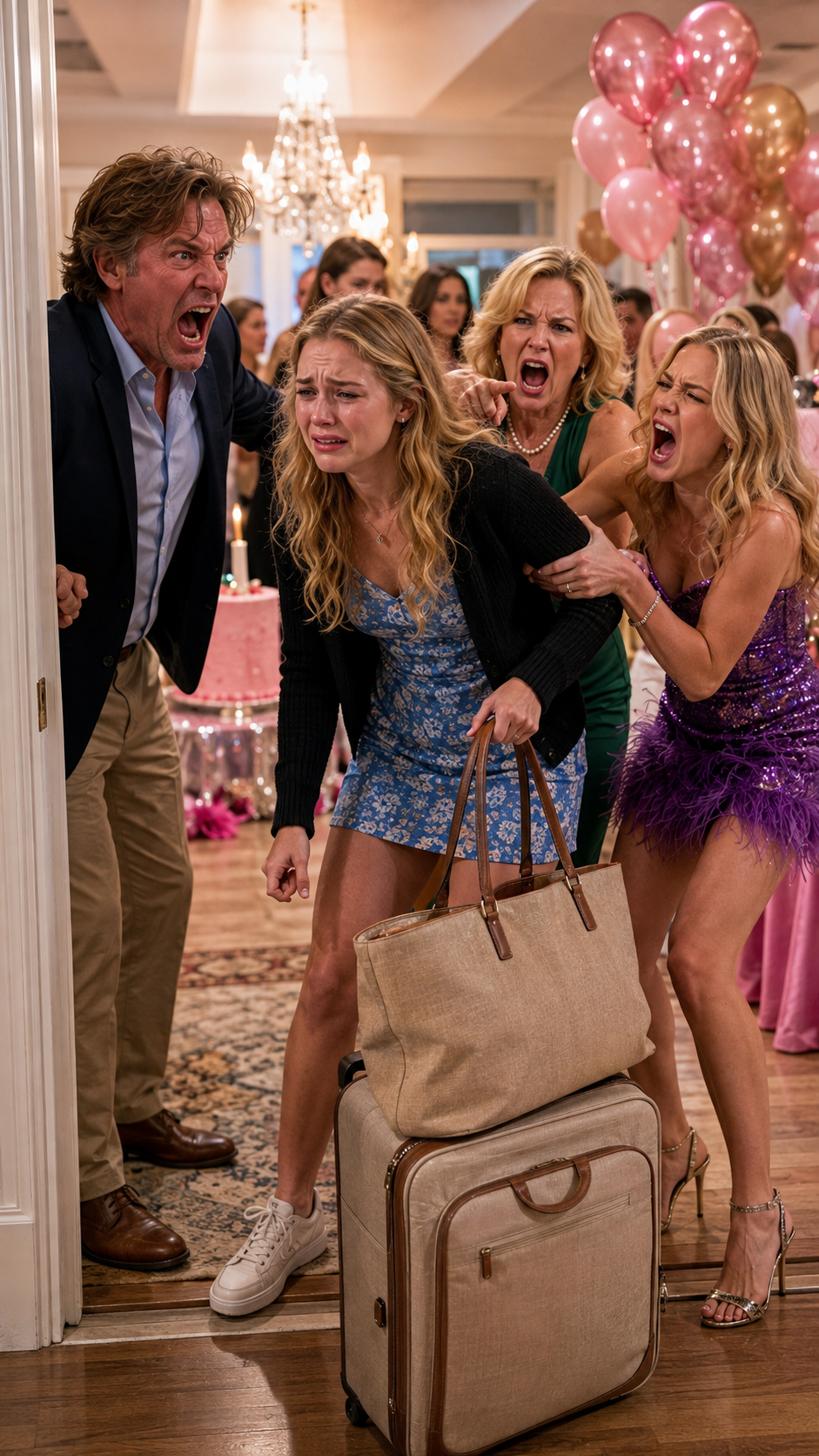
We can celebrate your birthday properly this year.
I replied.
You already gave me the best gift.
She asked what I meant.
I looked around my apartment.
At the award sitting on the shelf.
At the peaceful home I had created after leaving people who only loved me when I remained useful.
Then I typed:
You canceled my party.
So I stopped canceling myself.
