

PART 1
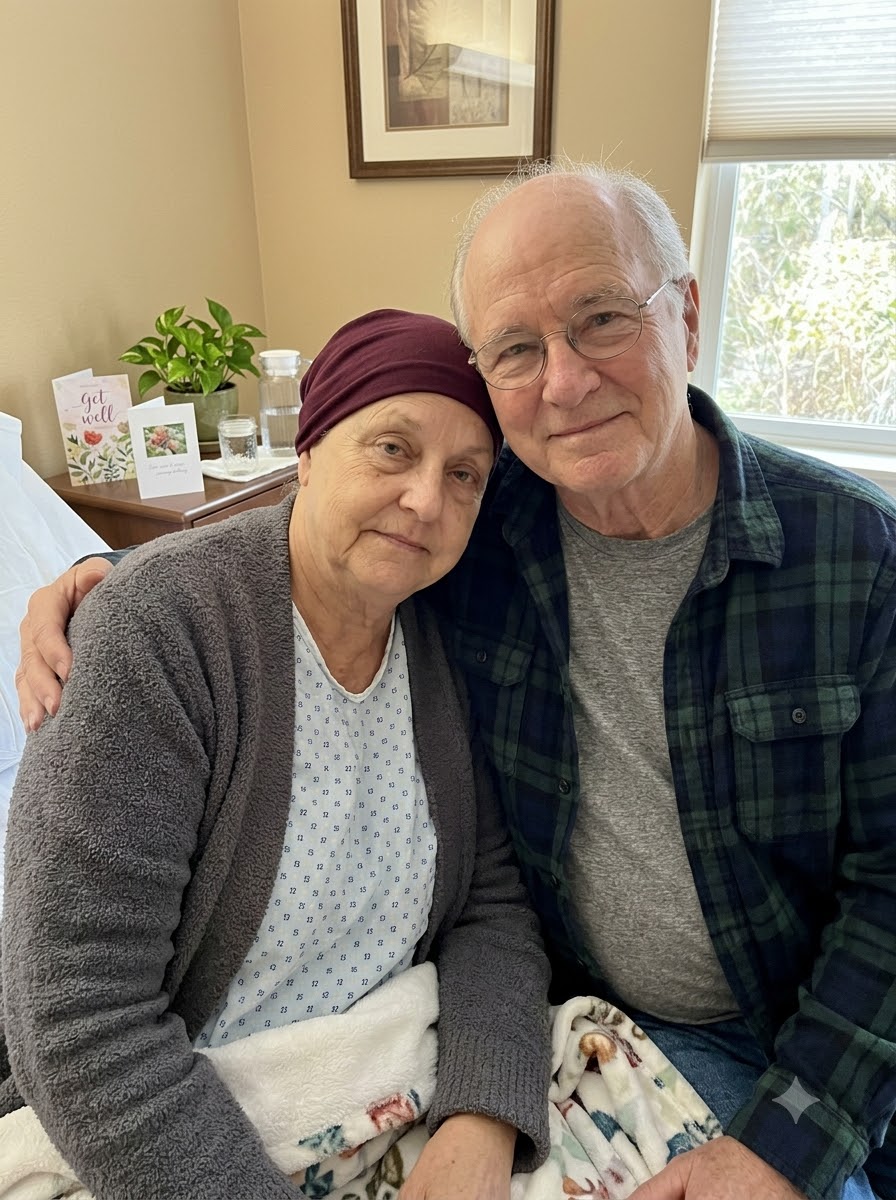
The morning after my doctor confirmed there were no signs of active cancer, my former husband’s closest friend arrived at my front door carrying a worn shoebox.
“Lydia,” Colin said nervously, “Peter asked me to give you this. There’s something about the months before your diagnosis that you deserve to know.”
I couldn’t take my eyes off the box.
For almost an entire year, I’d been convinced that my husband had walked away because of my illness. Night after night, I’d questioned whether cancer had somehow made me impossible to love.
And now Colin stood on my porch, holding something that might completely overturn everything I believed about the end of my marriage.
My name is Lydia. I’m 59 years old, and I spent 35 years married to a man named Peter.
Together, we brought up our two children, Rebecca and Simon, purchased a modest family home, and recently celebrated the arrival of our first granddaughter, Maisie.
For most of those years, I genuinely believed we had a good marriage.
Like any couple, we sometimes disagreed about finances, housework, and Peter’s tendency to devote entire Saturdays to baseball. But we also shared laughter, marked every anniversary, and stood beside each other when life became difficult.
Only in hindsight did I recognize that things had begun to shift.
During the final two years of our marriage, Peter grew increasingly withdrawn. Conversations about retirement seemed to make him uncomfortable, and he rarely wanted to discuss the years ahead.
Whenever I asked what was bothering him, he said work was exhausting him.
And I accepted his explanation.
The spring before I learned I had cancer, I proposed taking a real vacation together, something we hadn’t done in years.
Seeing the ocean had always been one of my dreams. I discovered a lovely little seaside cottage with blue porch chairs and a narrow walkway leading straight to the sand.
“Five days with nothing to do but listen to the waves,” I told Peter, showing him the photographs.
He smiled.
“Five days away from your garden? Will the tomatoes survive?”
“They’ll manage.”
“And what about me?”
I laughed. “I suppose you can come.”
He kissed my forehead, and I reserved the cottage with money I’d carefully put aside from my part-time bookkeeping work.
I was so thrilled that I began thinking about what to pack several months before our departure.
But just two weeks afterward, my entire world changed.
For some time, I’d been dealing with abdominal pain that wouldn’t go away. Several medical visits, imaging tests, and a biopsy eventually led to the diagnosis I had feared.
Cancer.
I remember sitting across from my doctor, struggling to absorb the medical terms that came afterward.
Chemotherapy. Treatment. Recovery. Uncertainty.
Peter held my hand while the doctor explained everything.
During our drive home, he tightened his grip on my fingers.
“We’ll figure this out.”
I trusted him completely.
After sharing 35 years of marriage, I believed we could overcome anything as long as we faced it together.
That evening, Rebecca visited, and Simon joined us by telephone to discuss how they could support me during treatment.
We arranged transportation to appointments and talked about shopping, cooking, and other everyday responsibilities.
Peter contributed very little to the conversation.
I thought he was simply overwhelmed with fear.
I never imagined what he was actually thinking.
Several weeks passed.
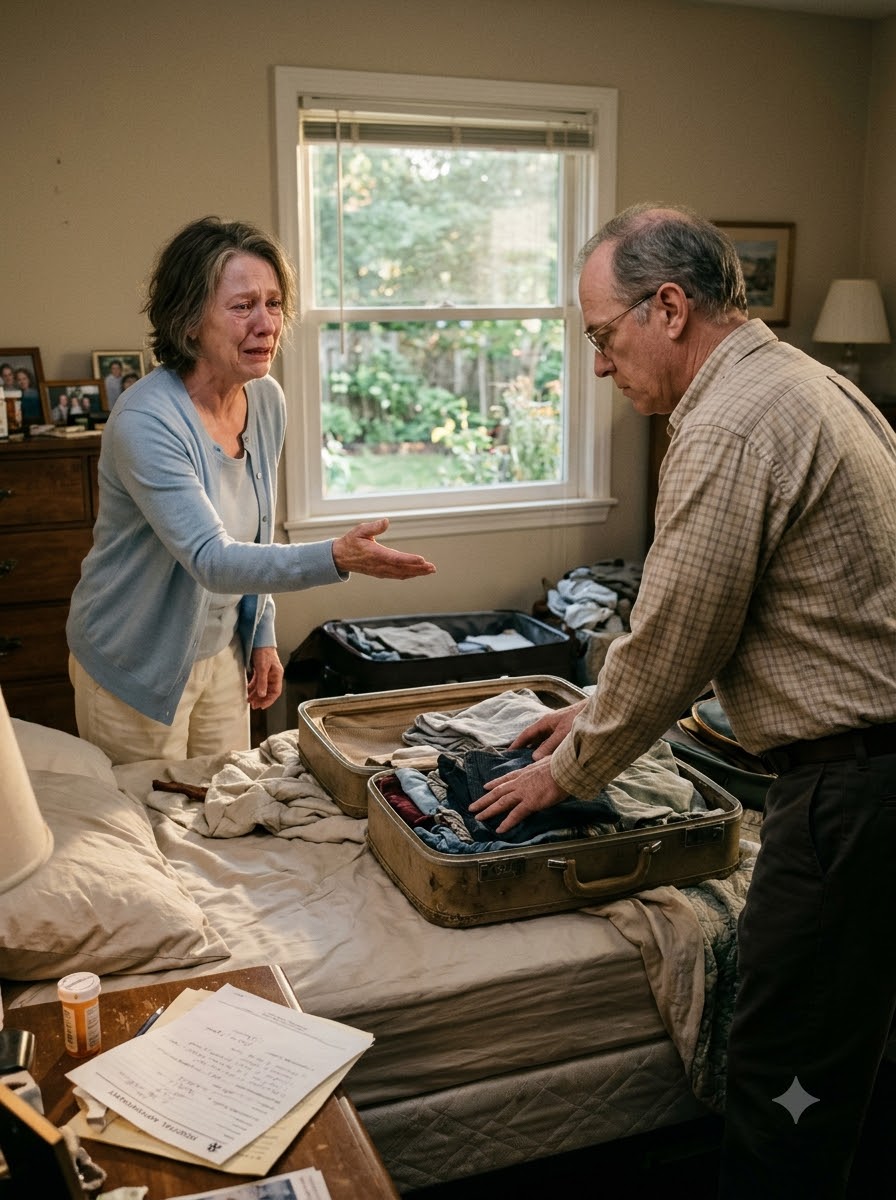
Then, on the evening before my first chemotherapy session, I entered our bedroom and discovered Peter filling a suitcase.
“Are you going somewhere?” I asked.
He kept his eyes lowered.
“Peter?”
He folded another shirt with deliberate care.
Eventually, he spoke.
“Lydia, I can’t do this anymore.”
I stared at him in confusion.
“What do you mean?”
He finally turned around.
“Your illness. Everything that’s happening. I can’t be the husband you need right now.”
For a moment, I couldn’t understand what I was hearing.
“The doctors think the treatment has a good chance of working. I know you’re scared, but—”
“It’s not that simple.”
He reached into the closet and took down another suitcase.
A terrible feeling settled in my stomach.
“You’re leaving me?”
He nodded.
“I’m sorry.”
“Tomorrow is my first treatment!”
“I know.”
“You promised we’d get through this together.”
He avoided my eyes.
I asked whether he loved me anymore.
Instead of answering, he said he needed space.
I pleaded with him to stay, but he continued putting his belongings into the suitcases.
And then he left.
The following morning, Rebecca came to drive me to the hospital.
When I explained what her father had done, she began sobbing so uncontrollably that she pulled into a gas station.
“Maybe he’ll come back,” she whispered.
I shook my head.
“He took both suitcases.”
That was how I began chemotherapy.
Without the man who had promised to remain beside me.
During the first several days, I kept checking my phone, expecting Peter to contact me.
But instead of a call, I received divorce documents.
When I attempted to reach him, he eventually responded with a message instructing me to communicate through his lawyer.
Rebecca confronted him, demanding an explanation, but he wouldn’t give her one.
“He just kept saying he couldn’t be the husband you needed,” she told me.
Simon also wanted to confront his father, but I begged him to leave it alone.
Cancer was already consuming every bit of strength I possessed.
I couldn’t endure another fight.
The months that followed were some of the hardest of my life.
Chemotherapy made me nauseated and exhausted. There were mornings when even getting dressed seemed impossible.
When my hair started falling out, Rebecca helped wash what remained over our kitchen sink.
Simon delivered groceries, cooked meals, and drove me to the hospital whenever his sister was unavailable.
One evening, he entered the kitchen and found me laying out two dinner plates.
Without speaking, he quietly put one back into the cupboard.
I waited until he left before breaking down.
My grief went beyond losing my marriage.
I felt humiliated.
Somewhere inside, I’d convinced myself that Peter had seen what illness was doing to me and decided I was no longer worth staying for.
Meanwhile, our divorce continued.
My attorney, Teresa Walsh, helped me examine the financial agreement. Because the mortgage was nearly paid off, I had savings, and my health insurance covered much of my medical care, keeping the house appeared manageable.
Peter and I divided the assets listed in the divorce disclosures, including our retirement accounts and shared savings.
I planned to refinance the small outstanding mortgage once my treatments were finished.
The divorce was finalized before I completed chemotherapy.
Thirty-five years of marriage ended with a handful of signatures.
And throughout that painful time, Peter never once contacted me to ask whether I was recovering.
Yet his best friend, Colin, continued checking on me.
Colin and Peter had known each other since high school, and over the decades, he’d become a trusted friend of our entire family.
He occasionally brought groceries, fixed a damaged step on my porch, and kept me company on days when I couldn’t bear the silence.
One afternoon, as we sat drinking coffee, I said, “I suppose Peter just couldn’t stand having a sick wife.”
Colin abruptly stopped stirring his drink.
“Is that what he told you?”
I looked at him.
“What do you mean?”
His expression changed.
“Nothing. I shouldn’t have said that.”
I pressed him for an explanation, but he refused to elaborate.
Eventually, I let the subject drop.
Winter came and went.
Little by little, my strength returned.
My hair started growing again. I could walk through the neighborhood without needing to stop and rest, and everyday pleasures slowly became enjoyable.
One afternoon, while organizing old emails, I discovered the reservation confirmation for our canceled beach vacation.
I opened the message.
The photographs showed the same charming cottage, its blue porch chairs, and the ocean I’d dreamed of seeing.
Rebecca found me staring at the pictures.
“Mom, you don’t have to keep reminders of Dad.”
“This isn’t about him,” I said. “I wanted to see the ocean long before I married your father.”
She sat beside me.
“Then go.”
“Alone?”
“Mom, you’ve survived chemotherapy and a divorce. I think you can handle a vacation.”
I laughed.
She gently squeezed my hand.
“Please don’t let him take this dream away from you too.”
I didn’t make a reservation that afternoon.
But I kept the email.
Several weeks later, nearly a year after Peter abandoned me, I returned to the hospital for follow-up imaging.
My oncologist reviewed the results and smiled.
“Lydia, there’s no evidence of active cancer.”
I immediately began crying.
She reminded me that regular monitoring would still be necessary, but the findings were extremely promising.
I called Rebecca as soon as I could.
That evening, both my children arrived with dinner and a celebratory cake. Little Maisie clapped whenever someone laughed, blissfully unaware of why everyone was so happy.
For the first time in almost a year, I could genuinely imagine a future worth looking forward to.
Then, the following morning, my doorbell rang.
Colin was standing outside.
In his hands was an old shoebox.
And the expression on his face told me that whatever was inside would not be easy to hear.
PART 2
Colin shifted awkwardly on the porch, holding the box as though he wasn’t certain I would accept it.
“Peter gave me this about a month ago,” he explained. “He wanted me to wait until you’d finished treatment and received encouraging results.”
I frowned.
“Why?”
“He said he didn’t want to interfere with your recovery.”
A bitter laugh escaped me.
“He walked out the night before chemotherapy, but now he’s worried about interfering with my recovery?”
Colin dropped his gaze.
“I know how that sounds.”
“Then why isn’t Peter here himself?”
“I told him to bring it. He said you probably wouldn’t open the door.”
“He’s right.”
Colin looked up at me.
“Lydia, I’m not asking you to forgive him. But there’s something inside that I think you should see.”
After hesitating, I stepped aside and allowed him into the house.
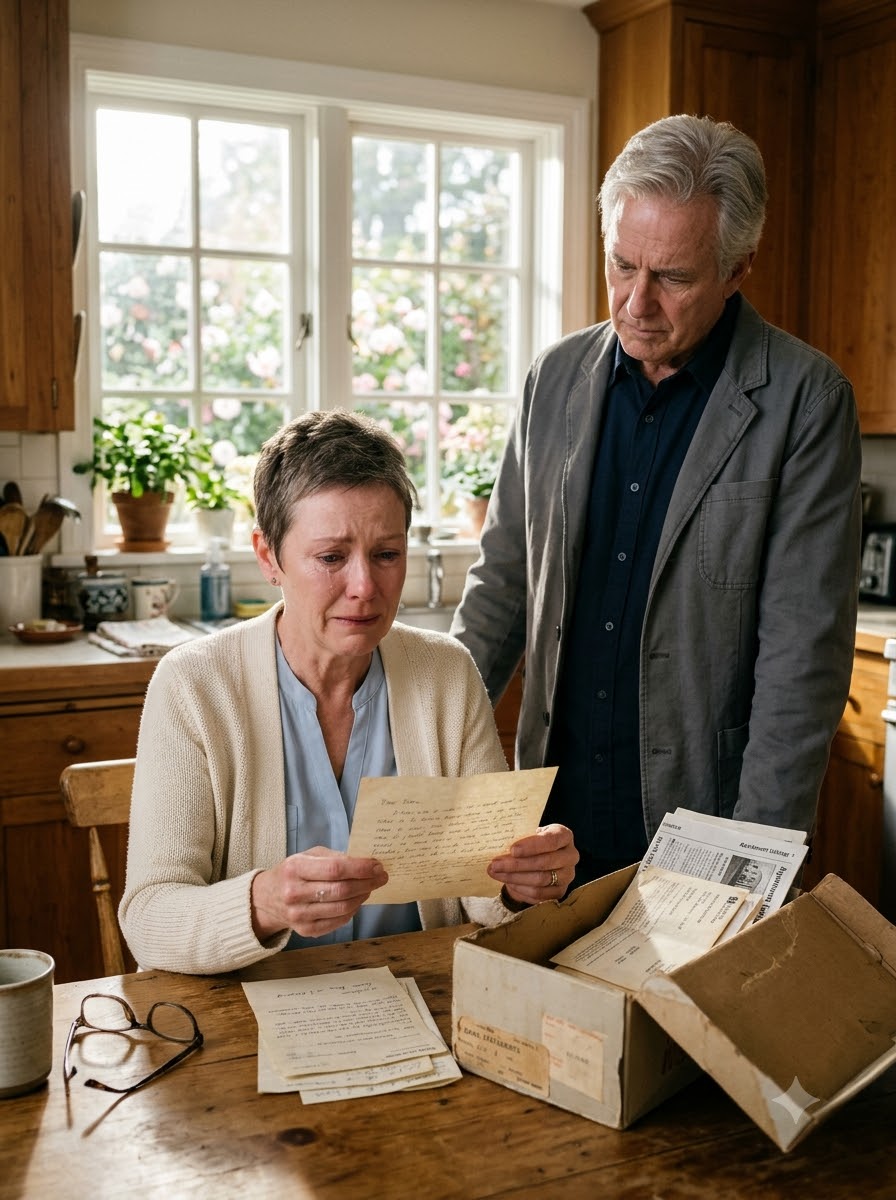
We settled at the kitchen table, where I carefully lifted the lid.
Inside were several envelopes, printed financial records, bank statements, and a handwritten letter.
I recognized Peter’s handwriting immediately.
My fingers shook as I unfolded the pages.
Lydia,
I lied to you about why I left.
Your illness didn’t make me want to end our marriage. I’d already made that decision months earlier. In fact, I’d been unhappy for years and had seriously considered divorce for almost 2 years before your diagnosis.
I was afraid to tell you. I kept postponing the conversation because I didn’t want to hurt you or disappoint our children.
By the time you became sick, I’d already started making plans to leave.
I stopped.
My chest tightened so painfully that I struggled to draw a proper breath.
I turned toward Colin.
“Is this true?”
He slowly nodded.
I reached for the documents beneath the letter.
The first was an inquiry about renting an apartment, dated seven months before my cancer diagnosis.
Peter had contacted a residential complex in a nearby town, asked about available apartments, and calculated whether he could afford living independently.
Other pages contained estimated rental payments, moving costs, and handwritten notes about dividing our finances.
While I was imagining our retirement together, Peter had already been researching where he would live without me.
Then another printed apartment listing caught my attention.
Along its edge, Peter had written six words.
Tell Lydia after the beach trip.
I stared at the handwriting.
For a moment, everything around me seemed to shift.
He had planned to end our marriage after our anniversary vacation.
Suddenly, I remembered showing him photographs of the cottage.
I remembered him smiling, asking questions about restaurants nearby, and listening while I excitedly described strolling along the beach.
And through all those conversations, he had already been preparing to leave.
I looked at Colin.
“Peter was going to leave after our vacation?”
He examined the note.
“I knew he was thinking about divorce. I didn’t know he’d made a plan around your trip.”
I returned to Peter’s letter.
When you were diagnosed, I panicked.
I’d planned to tell you after our vacation, but suddenly everything changed. I knew that staying through your treatment would make leaving afterward even more difficult, so I used your illness as an excuse to walk away sooner.
Instead of being honest, I made you believe I couldn’t handle having a sick wife.
I knew you would blame yourself.
I let you.
There is no excuse for what I did.
The letter slipped from my fingers onto the table.
“So he knew,” I whispered. “He knew I’d think he left because I was sick.”
Colin nodded.
Tears began spilling down my face.
“For almost a year, I looked in the mirror and wondered what was wrong with me. I thought losing my hair and becoming weak had made me impossible to love.”
Colin reached toward me, but I moved away.
“Did you know he was planning to leave?”
He paused.
“Yes. He told me the previous summer that he was considering divorce.”
“And you said nothing?”
“I told him he needed to talk to you. I thought he might change his mind.”
“But when he actually left?”
Colin looked deeply ashamed.
“I felt trapped between keeping my friend’s confidence and telling you something that wasn’t mine to tell. You were already undergoing treatment, and I convinced myself that staying quiet would protect you.”
“You watched me blame myself.”
“I know.”
“And you let me.”
He nodded again.
“I was wrong, Lydia. Helping you with groceries and repairs doesn’t excuse that.”
After a moment, he continued.
“About 6 weeks ago, I finally confronted Peter. I told him I’d watched you suffer for months because of the lie he’d allowed you to believe. I said that if he was genuinely sorry, he needed to tell you everything himself.”
“What did he say?”
“At first, he got defensive. Then he admitted he’d handled everything terribly. A couple of weeks later, he brought me this box.”
I looked at the papers spread across my kitchen table.
“Why didn’t you tell me then?”
“He wanted to wait until your next scan. I agreed because I was afraid of causing you more distress. Looking back, I shouldn’t have made that decision for you either.”
I could hear the sincerity in his apology, but forgiveness was beyond me at that moment.
Instead, I reached for another group of documents.
They were bank statements.
The account number was unfamiliar.
As I examined the transaction history, I realized Peter had been putting money aside throughout our marriage.
Some deposits came from consulting jobs he’d occasionally accepted. Others were transfers from his personal spending account.
The balance was considerable.
I found the explanation in the next paragraph of his letter.
I should have disclosed this account and the consulting income during our divorce, and I know I was wrong to hide them.
When Colin confronted me, I finally understood that I’d spent years avoiding responsibility for my decisions.
I’ve included the statements so you can review them with your attorney. If you decide to pursue the matter, I will provide every record necessary and accept the financial consequences.
I stared at the figures in disbelief.
Peter hadn’t simply been secretly preparing to end our marriage.
He had also withheld financial information during our divorce proceedings.
And now, apparently burdened by remorse, he had decided to reveal it.
I looked toward Colin.
“Why did he give you the box instead of coming himself?”
“He said he couldn’t bear to see what you’d think of him.”
I slowly shook my head.
“After everything he did, he’s still more worried about his own feelings.”
Colin couldn’t answer.
Before he left, I told him I needed time away from him too.
“I appreciate what you did for me when I was sick,” I said. “But I need time to understand why you kept this from me.”
He nodded.
“I understand.”
That same afternoon, I contacted Teresa.
She studied the bank statements and checked them against the financial disclosures from our divorce.
The records confirmed that Peter had failed to disclose the account and some of his consulting income.
Teresa explained that we would need additional documents to determine which assets should have been included in our original settlement.
With my approval, she contacted Peter’s attorney.
Peter cooperated, supplying the missing information.
Over the next several weeks, negotiations resulted in a revised financial agreement accounting for the previously undisclosed marital property.
I received another payment, along with reimbursement for part of my legal costs.
The additional money certainly helped.
But money wasn’t what troubled me most when I lay awake at night.
It was the note on that apartment listing.
Tell Lydia after the beach trip.
While I had been eagerly imagining our vacation, Peter had been calculating how and when to leave me.
He’d allowed me to believe we were planning a shared future even though he was already preparing to walk away from it.
That realization was nearly as painful as the night he abandoned me.
When Rebecca and Simon discovered the truth, they confronted their father.
Rebecca later told me about their conversation.
“I told him he had every right to leave a marriage he didn’t want anymore,” she said. “But he had no right to make you think your cancer made you unlovable.”
“What did he say?”
“He admitted he knew you’d blame yourself.”
Simon had demanded to know why Peter hadn’t simply told me the truth.
Peter said he’d been frightened.
“Then you should’ve told her years ago,” Rebecca said.
For once, their father apparently had nothing to say.
In June, Rebecca invited the family to dinner.
Peter asked whether he could speak privately with me afterward.
I agreed, on the condition that our conversation remain peaceful.
Once dessert was finished, he followed me onto the back porch.
He seemed older than the man I remembered.
“Lydia,” he began, “I was a coward.”
“Yes,” I replied.
“I know I hurt you.”
“You didn’t just hurt me, Peter. You made me believe the worst thing that ever happened to me was the reason you stopped loving me.”
He looked down.
“I know.”
“You told me you couldn’t handle my illness. You knew I’d think that was why you were leaving.”
“Yes.”
“And you let me believe it for almost a year.”
His eyes filled with tears.
“I was ashamed. I’d been planning to leave, and when you got sick, I couldn’t admit what I’d already decided.”
“So you let me carry the shame instead.”
He nodded.
“I’m sorry.”
I stood quietly, looking at the man I’d once trusted more than anyone else.
And when he finally asked me for forgiveness, I realized that the answer I gave him would mark the end of something far bigger than our marriage.
PART 3
For a long moment, I studied Peter’s face.
I remembered the evening before my first chemotherapy appointment, when I’d stood helplessly in our bedroom, begging him not to leave.
I remembered the months that followed, when I struggled through treatments while wondering what was wrong with me.
And I remembered the handwritten note proving that his decision had been made long before I became ill.
“You could have told me you were unhappy. Maybe we could have worked things out. Maybe we still would have divorced. But at least I would have known the truth.”
“I know.”
“And hiding money from me?”
“That was wrong too. I have no excuse.”
Peter wiped the tears from his face.
“Can you ever forgive me?”
I thought about the frightened woman I’d been that night, pleading with her husband to stay.

Then I thought about everything I’d endured and overcome without him.
“Maybe someday I won’t feel angry when I hear your name,” I answered. “But our marriage is over, Peter.”
He nodded slowly.
“I understand.”
“I hope you become a better man. But I won’t spend the rest of my life waiting for that to happen.”
He returned quietly to the house.
And something unexpected happened as I watched him walk away.
My heart didn’t shatter.
For the first time, I wasn’t hoping he would turn around.
I wasn’t waiting for him to choose me.
I had finally stopped waiting for Peter altogether.
During the following weeks, Colin contacted me several times to apologize again.
I wasn’t ready to resume the friendship we’d shared before, but eventually I agreed to meet him for coffee.
He admitted that he’d valued his loyalty to Peter more than his responsibility to be honest with me.
I told him I remained grateful for the kindness he’d shown during my illness, but that trust couldn’t simply be restored with an apology.
He accepted my feelings without trying to argue.
Our friendship didn’t immediately return to what it had been, although we gradually began speaking from time to time.
About a month after my conversation with Peter, I finally did something I’d been putting off for far too long.
I booked a trip to the ocean.
Rebecca offered to accompany me.
I appreciated her offer, but I knew I wanted to experience this journey by myself.
I reserved a little cottage close to the beach and spent five beautiful days following my own wishes.
I wandered through small shops, enjoyed seafood at a restaurant overlooking the water, and bought a stuffed dolphin for Maisie.
Every morning, I walked beside the waves.
There was no schedule I had to follow, no one else’s preferences to consider, and no need to explain why I wanted to linger somewhere a little longer.
On my final morning, I woke before sunrise.
I removed my sandals and walked barefoot toward the shoreline.
When the first wave rolled over my feet, the cold water startled me.
I burst out laughing.
For so many years, I’d imagined this exact moment differently.
In my mind, Peter had always been standing beside me, holding my hand as we celebrated the life we’d spent decades creating.
But now I was standing there by myself.
And to my surprise, I didn’t feel abandoned.
I felt calm.
I took my phone from my pocket and called Rebecca.
“Mom! How’s the beach?”
I gazed toward the horizon as the first sunlight spread across the ocean.
“Beautiful,” I said. “Even better than I imagined.”
“Are you happy?”
I paused and considered everything that had happened over the previous year.
The frightening diagnosis.
The night Peter packed his suitcases.
The endless hospital appointments.
The chemotherapy that left me exhausted.
The divorce that ended our 35-year marriage.
And finally, the old shoebox containing truths I never expected to discover.
For months, I had believed that losing my husband meant losing the entire future I’d spent most of my adult life imagining.
But standing there with the waves washing over my feet, I understood something I’d been unable to see during those painful months.
Peter had played an important role in my life.
We’d shared countless memories, built a family, and spent years together that couldn’t simply be erased.
But my value as a person had never depended on his presence.
And his choice to leave had never been proof that I was undeserving of love.
“Yes, sweetheart,” I told Rebecca, smiling through my tears. “I’m happy.”
After ending the call, I remained on the beach, watching the sun rise over the water.
I couldn’t predict exactly what the coming years would bring.
There would still be follow-up medical appointments, memories that hurt, and moments when the past returned more painfully than I expected.
But there would also be birthdays to celebrate, time spent with my grandchildren, places I’d never visited, and peaceful ordinary mornings worth anticipating.
At 59, I wasn’t beginning again because I’d somehow failed at life.
I was moving ahead because I had survived.
And as I continued along the shoreline, feeling the cool sand beneath my feet and looking out at the endless ocean, I finally remembered something the hardest year of my life had nearly made me forget.
Another person’s decision to walk away cannot define your worth.
And when the future you once imagined disappears, that doesn’t mean you’ve lost the opportunity to create another beautiful one.
THE END.
