

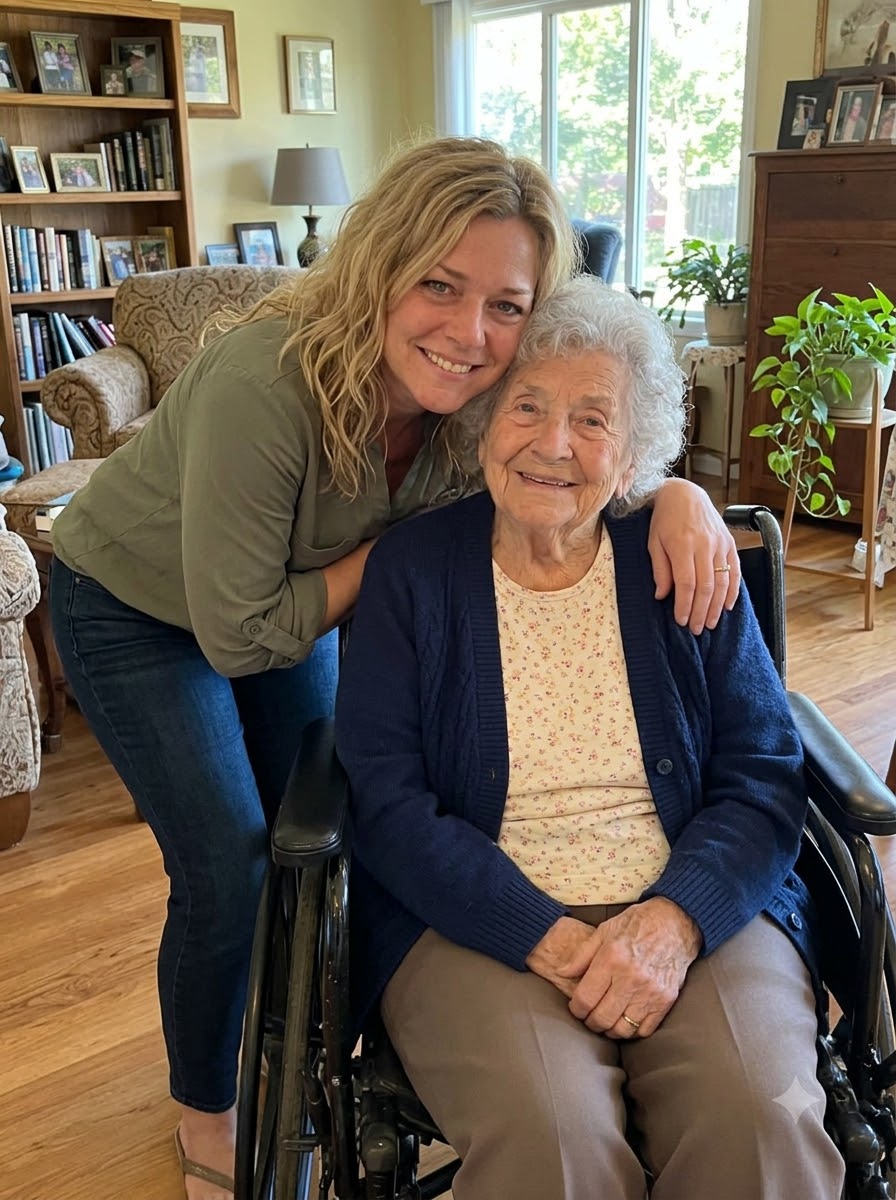
PART 1 — Twenty-Two Years of Sacrifice, Gone in One Day
“I’m sorry, ma’am. But the entire balance was withdrawn several months ago.”
The young bank teller spoke softly, using the careful tone nurses adopt when delivering news they know will hurt.
I recognized that voice. I’d used it myself more times than I wanted to remember.
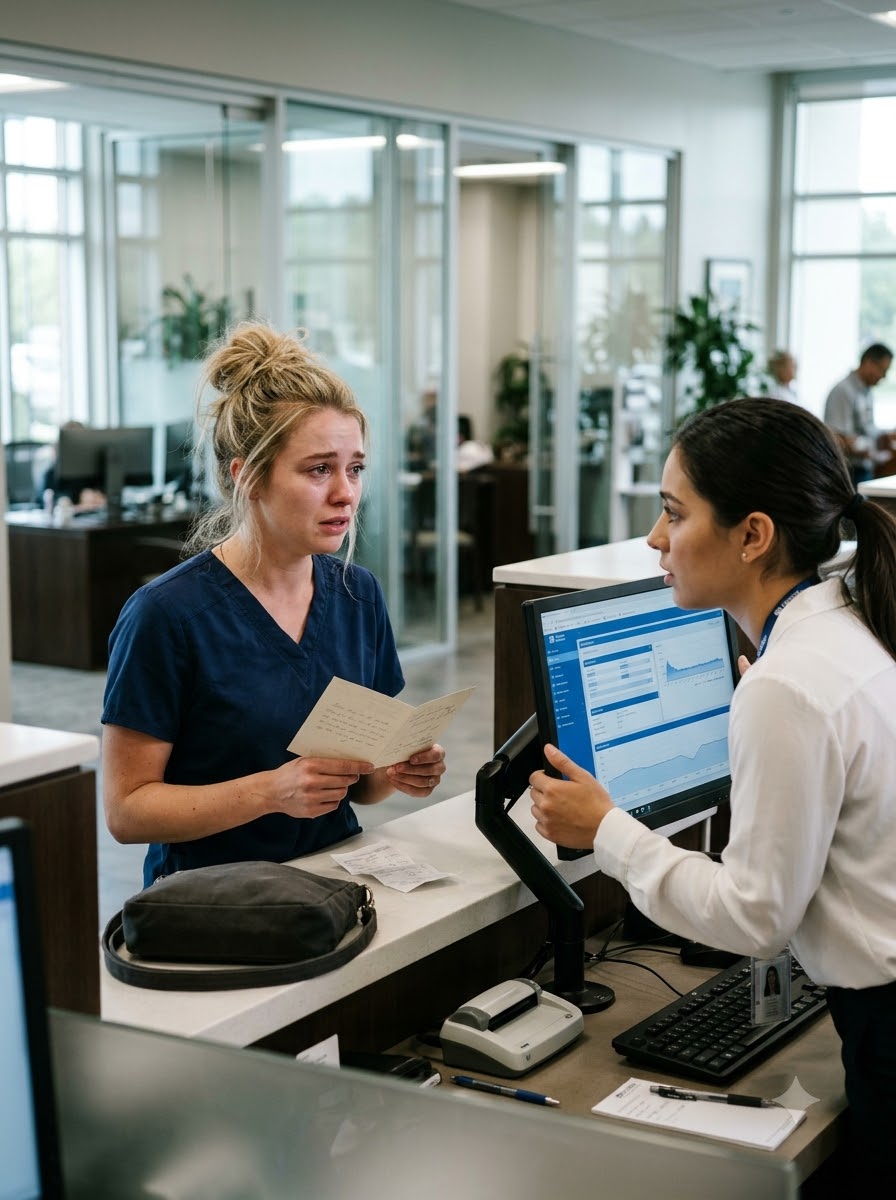
“There must be a mistake,” I said, gripping the counter until my fingers ached. “Please check again.”
Her name tag read Priya. She looked about twenty-two, with a small gold cross hanging from a chain around her neck.
She studied my face briefly before returning to her computer. Her fingers moved across the keyboard. She frowned, entered something else, and examined the screen again.
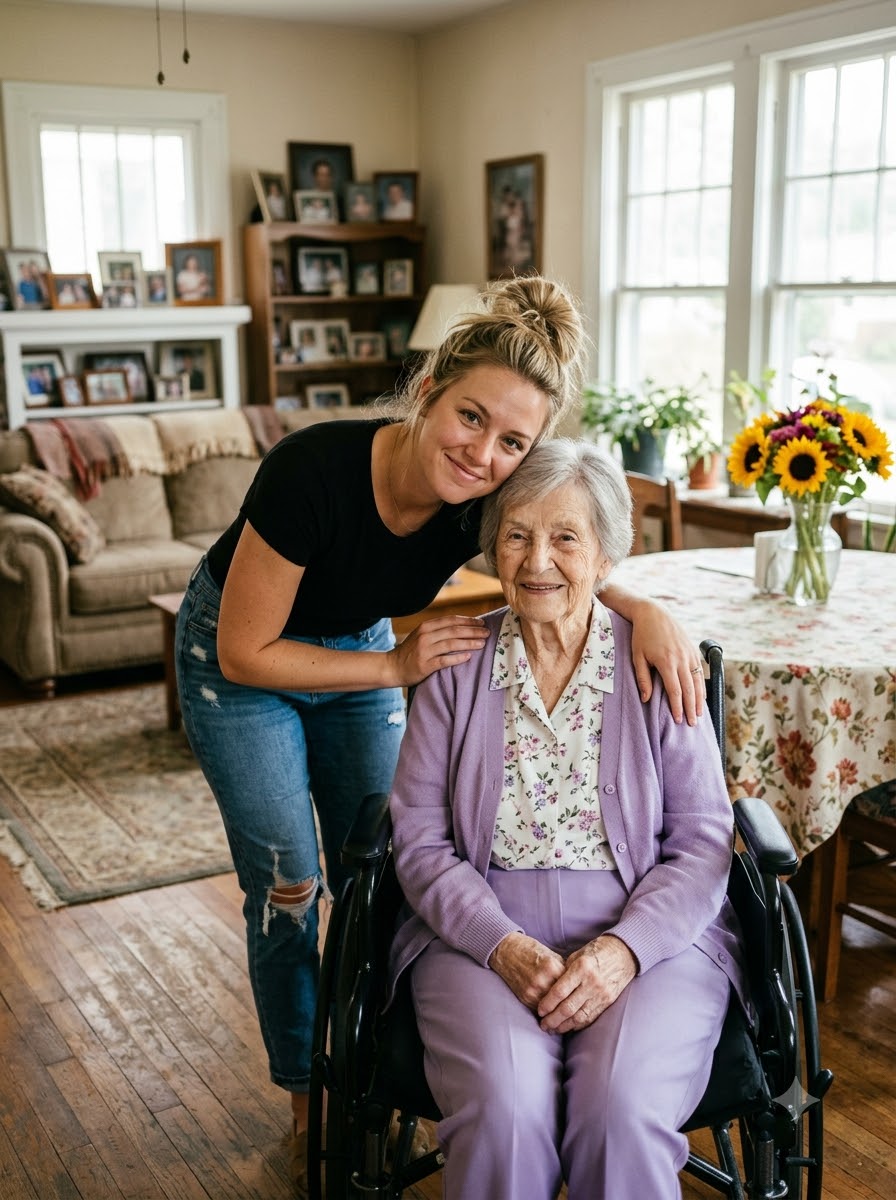
I stood there holding my grandmother’s final birthday card.
It was an inexpensive drugstore card featuring a cartoon cat wearing a party hat.
Inside, Grandma’s trembling handwriting read:
Happy 26th, my Ellie girl. For your future. Love you more than all the stars.
And tucked into the card, just as there had been every birthday since I was four, was a deposit receipt from Lakeside Credit Union.
$1,000.00.
“I’m so sorry,” Priya repeated.
Then she did something unexpected.
She turned her monitor so I could see it.
There was the savings account Grandma had opened for me twenty-two years earlier.
The transaction history showed a deposit every March, each for one thousand dollars. There were small amounts of interest scattered between them.
At its highest point, the balance had reached $26,418.37.
Then, on March 14 of that year, someone had withdrawn everything.
The account had been closed.
Beside the transaction was the name of the person responsible.
Diane Mercer. Acting under power of attorney.
My mother.
I read her name three times.
I couldn’t imagine what my expression looked like, but Priya reached across the counter and gently touched my wrist.
“Do you want to sit down?”
“No,” I answered. “No. I’m fine.”
I wasn’t.
It was Tuesday morning, and I was still wearing my scrubs after a night shift.
I stood in that credit union clutching a birthday card with a cartoon cat while the floor seemed to shift beneath me.
March 14.
I knew that date as clearly as someone remembers the day of a terrible accident.
It was the only day my mother had visited Grandma in the hospital.
My mother left me with Grandma when I was four years old.
People often say children don’t remember much from that age.
But I remember that day.
It was raining.
Mom drove a red Honda with a dent in the passenger-side door.
She’d packed my clothes into two grocery bags.
In Grandma’s driveway, she knelt in front of me and zipped my yellow raincoat all the way to my chin.
“Just until I get settled,” she promised. “Okay, baby? Just a little while. Then I’ll come back for you.”
I remember the smell of strawberry gum on her breath.
I remember how she avoided looking at Grandma when she returned to the car.
Mom did eventually get settled.
About a year later, she married Rick, a man who sold commercial flooring.
They purchased a house forty minutes away in Westbrook, complete with a two-car garage and a basketball hoop mounted above it.
She had two more daughters.
Kayla was born when I was ten.
Madison arrived when I was thirteen.
But Mom never returned for me.
She didn’t disappear entirely.
Sometimes I wondered whether that would have been easier.
She called on most of my birthdays.
At Christmas, she mailed cards containing family photographs of herself, Rick, Kayla, and Madison wearing matching sweaters beside their Christmas tree.
I would study those pictures, searching their faces for some sign that I belonged among them.
Occasionally, Mom came to Grandma’s for Thanksgiving.
She always left before dessert.
There was always an explanation.
Kayla had a fever.
Rick’s mother was visiting.
The roads were dangerous.
Somehow, the roads were always dangerous.
So I remained with Grandma.
And Grandma became my entire world.
She taught me to read at her kitchen table using old copies of Reader’s Digest.
She taught me to ride a bicycle in the church parking lot, running behind me with one hand on the seat despite her aching knees and wheezing breath.
She cared for me through chicken pox, two broken wrists, countless nightmares, and my first devastating heartbreak.
I was sixteen when Tyler Booth ended our relationship by text message.
I cried so violently that I became sick.
Grandma held my hair back over the toilet.
“That boy has the brains of a cinder block, and someday you’re going to forget his middle name.”
She was right.
I couldn’t tell you his middle name now.
Every happiness, every disappointment, every insignificant detail of my school day belonged to her.
She worked at the dry cleaner on Main Street until she was sixty-eight.
When I came home from school, she was usually waiting by four o’clock with apple slices, peanut butter, and old country music playing on the radio.
And every birthday, she gave me another deposit slip.
The first time she explained it, I was five.
I’d mistaken the slip for a coupon.
Grandma laughed and pulled me onto her lap.
“This is money,” she explained. “Real money. I’m putting it in the bank for you, and every year I’m going to put in a little more, and it’s going to grow and grow like a tomato plant. And when you’re big, it’s going to help you do whatever you want to do.”
“Can I buy a pony?”
“You can buy whatever you want, when you’re big. But you have to promise me something.”
She extended her pinky.
“You can’t touch it until I’m gone. While I’m here, I’ll take care of you. That’s my job. This is for after.”
“After what?”
She kissed my hair.
“After a long, long time.”
I linked my pinky with hers.
And I promised.
As I grew older, that promise became increasingly difficult to keep.
Because I began understanding what a thousand dollars actually cost Grandma.
She lived on her earnings from the dry cleaner and Social Security, then eventually on Social Security alone.
A thousand dollars represented an entire year’s spare change, carefully collected in a coffee can on top of the refrigerator.
I watched her repair the same brown wool coat through six winters.
She patched the elbows, mended the pockets, and replaced sections of the lining twice.
When I was seventeen and working at a grocery store, I offered to buy her a new coat for Christmas.
She refused.
“This coat has another ten years in it,” she said. “Like me.”
I watched her clip coupons and keep the thermostat at sixty-two degrees while wearing two sweaters indoors.
Sometimes she skipped medical appointments because she couldn’t spare the forty-dollar copayment.
Yet every March, she carried an envelope of cash to Lakeside Credit Union.
She always returned with a deposit receipt.
And the balance kept growing.
At nineteen, I finally begged her to spend some of the money on herself.
“Grandma, please. Use some of it. Just for the furnace. I don’t need it.”
She peered at me over her reading glasses.
“Eleanor Rose.”
She only used my full name when she was serious.
“You made me a promise.”
“I was five.”
“A promise is a promise. You’re going to be a nurse. Nursing school costs money. And I am not going to be here forever to help you with it.”
She returned to her crossword puzzle.
“Furnace is fine. Furnace is older than you and tougher than both of us.”
At twenty-three, I was accepted into the nursing program at Bellmont Community College.
I’d delayed school while working as a nursing assistant to build savings and gain experience.
I completed prerequisite classes at night.
Halfway through the program, I was among the strongest students in clinical training.
Then Grandma began losing weight.
She insisted nothing was wrong.
She said she simply wasn’t hungry.
By the time I persuaded her to see a doctor, cancer had spread through her pancreas and liver.
The doctor estimated six months.
Grandma lived eleven.
She’d always enjoyed proving people wrong.
I suspended my studies.
There wasn’t another choice.
Someone had to drive her to treatments, organize her medications, and sleep beside her bed when the pain became unbearable.
I worked additional weekend hospital shifts to cover expenses Medicare wouldn’t pay.
Her prescriptions alone cost more than my monthly rent would have.
I became so exhausted that I once fell asleep standing inside a hospital elevator.
I woke on the fourth floor with no memory of getting there.
Five months into her illness, in October, the hospital billing department called.
We owed $3,000.
Her oncologist wanted to try another medication, but insurance wouldn’t cover it.
I stood outside Grandma’s oncology room beside a humming vending machine, unable to imagine how I’d pay.
So I called my mother.
She answered on the fifth ring.
A television played behind her.
Someone on a game show was laughing.
“Ellie? What’s wrong?”
“It’s Grandma,” I said. “She’s not doing well. There’s a medication her doctor wants to try, and the bills are piling up, and I’ve been working every shift I can, but I’m short. I’m really short, Mom. I wouldn’t ask if I had anywhere else to go.”
She didn’t respond immediately.
I heard her cover the phone and speak to someone.
Then she returned.
“Ellie, I can’t.”
“I’m not asking for a lot. Even five hundred would help. Even two hundred.”
“I have my own family to think about.”
Her voice became cold.
“Madison needs braces. Kayla’s got a travel volleyball team. Rick’s commissions are down this year. There’s no money for you.”
There’s no money for you.
Not for Grandma.
For me.
As though I were asking for vacation money.
“She’s your mother,” I reminded her.
“I know who she is, Ellie.”
Her voice sharpened.
“Believe me, I know. Look, I have to go. Tell her I hope she feels better.”
The call ended.
I remained beside the vending machine, staring at a bag of Doritos trapped halfway down its dispensing coil.
It hung there, unable to fall.
I don’t know why that detail stayed with me.
A nurse passing through the hallway asked whether I was all right.
“I’m fine.”
I returned to Grandma’s room.
She was awake and immediately noticed my expression.
“You called your mother.”
I said nothing.
Grandma reached for my hand.
Her skin had become almost transparent, thin as tissue paper.
“Don’t you worry about the money,” she whispered. “We’ll figure it out. We always figure it out, don’t we?”
And somehow, for a while, we did.
I sold my car and purchased an older one.
I worked more shifts.
Her church organized a collection.
We managed.
Then March arrived.
And my mother suddenly appeared.
It was Thursday, March 14.
I’d arrived early with Grandma’s favorite lemon yogurt.
When I entered her hospital room, Mom was sitting beside the bed holding a large bouquet of supermarket tulips.
She wore a camel-colored coat, and her hair was professionally styled.
A man in a gray suit stood near the window carrying a briefcase.
“Ellie!”
Mom rose and hugged me.
She hadn’t hugged me in years.
I stood stiffly with the yogurt in my hand.
“Look at you. You look exhausted, honey.”
“What are you doing here?”
“I came to see my mother. Is that a crime?”
I looked at Grandma.
She was propped against her pillows, blinking slowly.
The previous night, her morphine dose had been increased because the pain had become severe.
Her eyes were cloudy.
She smiled at me, but she seemed uncertain about where she was.
“Who’s he?” I asked, indicating the stranger.
“Oh, that’s Gary. He’s a friend of Rick’s. He’s a notary. I just need Mom to sign a couple of things. Insurance stuff. So I can help with the bills.”
“You said you couldn’t help with the bills.”
Mom’s smile tightened.
“Well, I’m trying to now. Okay? I’m trying.”
She opened her purse and produced a twenty-dollar bill.
“Ellie, why don’t you go down and get us some coffees? I’d love a latte. You look like you could use one too.”
I should have refused.
I should have remained in that room.
I’ve replayed those twenty minutes countless times.
But I was exhausted.
And my mother was being kind to me.
Some small part of the abandoned four-year-old inside me desperately wanted to believe she’d finally returned.
So I accepted the money.
I went downstairs.
When I came back twenty minutes later, Gary was gone.
Mom was putting on her coat.
“I can’t stay,” she said. “Kayla’s got a game. But I’m so glad I came.”
She kissed Grandma’s forehead.
Then she kissed my cheek, collected her latte, and left.
Grandma looked toward me with unfocused eyes.
“Was that Diane?”
“Yeah, Grandma. That was Mom.”
“Oh,” she murmured, closing her eyes. “That’s nice. She came.”
Two weeks later, Mom texted me a photograph of a white SUV parked at a dealership with a giant red bow on its hood.
Finally treated myself!! Rick’s been on me forever to get rid of the old one.
A month afterward, she posted a picture of Kayla and Madison holding brand-new silver laptops.
Back to school early!! Proud mama.
More photographs followed.
Shopping bags.
A weekend at a lake resort in the Poconos.
New patio furniture.
I wondered where the money was coming from.
Rick’s commissions had supposedly declined.
Madison still needed braces.
Grandma died on August 1.
She was in her own bed.
I held her hand while Patsy Cline played on the radio.
Mom arrived twenty minutes late to the funeral.
She cried louder than anyone else.
She told the pastor what a wonderful mother Grandma had been.
Then she left before the luncheon.
And now, months later, I was standing at Lakeside Credit Union staring at her name beside a withdrawal for $26,418.37.
I thanked Priya.
I don’t remember reaching my car.
But I remember sitting with the engine off, Grandma’s birthday card in my lap, staring at the cartoon cat.
My hands shook so badly I couldn’t put the key into the ignition.
Eventually, the shaking stopped.
I picked up my phone.
And I called the one person who knew my grandmother almost as well as I did.
“Margie? It’s Ellie. I need your help. But Mom can’t know beforehand.”
PART 2 — The Brown Coat, the Bank, and the Truth My Mother Couldn’t Hide
Margaret Holloway had been Grandma’s closest friend for forty-one years.
They’d met at church as young mothers.
After her divorce, Margie attended law school at thirty-five and practiced family law in town for twenty-five years before retiring.
She maintained her license and still handled wills and estate matters for church members, usually without charging them.
She claimed retirement would drive her crazy if she stopped working entirely.
Margie had prepared Grandma’s will.
Two weeks after the funeral, she’d read it to me in her living room while I sat on her flowered sofa holding a cup of untouched tea.
When she opened her door that afternoon, she was wearing gardening gloves and a sun hat.
One glance at my face was enough.
She removed her gloves.
“Come inside. Sit down. Tell me.”
I told her everything.
I showed her the transaction printout Priya had provided.
I described March 14, the notary named Gary, Mom’s twenty-dollar bill, and the white SUV with the red bow.
Margie listened without interruption.
When I finished, she removed her glasses and pressed her fingers against her eyes.
“That woman,” she whispered. “Oh, Rose. Oh, honey.”
“Can she do that? Legally? Just walk in with a notary and get Grandma to sign?”
“No,” Margie answered. “Not like that. A power of attorney means you’re supposed to act in the person’s best interest. You’re a fiduciary. You can use the money to pay their bills, their care, their needs. You can’t take it to buy yourself a car.”
She replaced her glasses.
“And there’s a bigger problem for your mother.”
“What?”
“Your grandmother couldn’t have legally signed anything that day. Not if she was on the morphine you’re describing. To sign a power of attorney, a person has to understand what they’re signing. Was she confused? Disoriented?”
“She asked me if it was Diane. Her own daughter. She’d been sitting there with her for half an hour, and she asked me who it was.”
Margie nodded.
“We need her medical records from that day. The nurses’ notes. Can you get those?”
“I can request them. I’m her next of kin. I’m the executor.”
“Good.”
Margie crossed to an old wooden filing cabinet and opened its bottom drawer.
“There’s something else. I was going to give you this when you finished school. Rose asked me to. But I think you need it now.”
She returned carrying a thick cream-colored envelope.
On the front, in Grandma’s handwriting, were the words:
For Ellie. When the time is right.
My hands began trembling again.
“Read it later,” Margie advised. “Not now. Now we work.”
We spent the afternoon and evening making calls.
I contacted the hospital records department and requested Grandma’s March medical records.
Priya gave me the name of Lakeside’s fraud officer.
Margie contacted an old acquaintance, Detective Lena Alvarez, who investigated financial crimes and elder abuse for the county.
“Elder financial exploitation is a crime in this state,” Margie explained after speaking with her. “Taking money from a vulnerable adult by abusing a power of attorney. Lena says she sees it every week. Sons, daughters, nieces. Usually it’s somebody the person trusted.”
“Grandma didn’t trust her. Grandma was too sick to know who she was.”
“That makes it worse, honey. Not better.”
By nine that evening, Margie had written a formal demand letter.
Three pages.
Calm, precise language.
It stated that Diane Mercer had withdrawn $26,418.37 on March 14 from funds belonging to Rose Ann Walsh’s estate and specifically designated for her granddaughter, Eleanor.
It challenged the validity of the power of attorney and demanded repayment to the estate within ten business days.
It also stated that the county financial crimes unit had been notified and that the estate reserved its legal rights.
The next morning, Grandma’s medical records arrived by email.
I knew someone in the hospital records department through my work, and the request had been processed faster than I’d expected.
I opened the file at Margie’s kitchen table.
The March 14 nursing notes read:
March 14. 8:40 a.m. Patient received increased dose of morphine per order. Patient drowsy, oriented to self only. Did not recognize daughter on arrival. Asked nurse twice what year it was.
Oriented to self only.
Grandma knew she was Rose.
That was all.
Margie read over my shoulder.
She didn’t speak.
She simply placed her hand against my back.
At ten o’clock, I met Detective Alvarez in a small room at the county building.
She was in her forties, with short black hair and a tired but compassionate face.
She wrote notes on a yellow legal pad as I explained everything.
When I handed her the nurses’ observations, she nodded.
“This is strong. This is very strong. The notary will be our first conversation. Notaries are supposed to make sure the person signing is competent. Gary’s going to have some explaining to do.”
She studied me.
“I have to ask you something, and I want you to think about it. Do you want to press this? Your mother could be charged. This could be a felony at this amount.”
I thought of Mom kneeling in Grandma’s driveway, zipping my yellow raincoat to my chin.
“I want my grandmother’s money back,” I said. “I want my mother to understand what she did. I don’t know about the rest yet.”
Alvarez nodded.
“That’s an honest answer. Let me do my job, and you’ll have some time to decide. Prosecution isn’t up to you alone, but what the victim’s family wants matters. A lot.”
When I returned to Margie’s house, she had placed the demand letter inside an envelope.
“We can mail it. Certified. She’ll get it at home in two or three days.”
I stared at the envelope.
“No. I want her to get it today.”
Margie raised an eyebrow.
“At her house?”
“She won’t open the door. She’ll see it’s from you and she’ll throw it out before Rick gets home. She’s done it before with Grandma’s letters.”
I paused.
“She works at First County Bank. On Oak Street. She’s the assistant branch manager.”
Margie became very still.
“She works at a bank.”
“Twelve years.”
“And she took a vulnerable woman’s account using a power of attorney obtained from someone who didn’t know her own name.”
Margie closed her eyes.
“Ellie, honey, if First County finds out about this, she’s done. Banks don’t keep employees who are investigated for financial exploitation.”
“I know.”
“Is that what you want?”
I wish I could say I was thinking about justice in some grand, noble way.
But I was thinking about Grandma’s brown wool coat.
Its worn elbows.
The patched pockets.
The lining she’d repaired twice.
“I want her to look at what she did,” I answered. “Somewhere she can’t throw it in the trash.”
That evening, I returned to the house Grandma had left me.
I found a department-store shopping bag with rope handles.
Before putting the legal documents inside, I opened the hall closet.
I took down Grandma’s brown wool coat.
I folded it carefully and placed it at the bottom of the bag.
Then I collected my birthday cards from the kitchen drawer.
All twenty-two.
The cartoon cat.
The puppy wearing a party hat.
The glittery rainbow card from when I was nine, which still left glitter everywhere.
Every card still held its deposit slip.
I tied them together with one of Grandma’s old hair ribbons and placed them over the coat.
Next came the Lakeside transaction printout, with the March 14 withdrawal highlighted.
Then the medical notes, with the words Oriented to self only circled.
Margie’s demand letter.
And Detective Alvarez’s business card, with the case number handwritten on the back.
Finally, I added a sticky note.
She patched this coat for six winters so you could buy an SUV.
By eight-thirty the following morning, I was parked across from First County Bank on Oak Street.
Through the large windows, I could see my mother sitting near the front.
Her desk had a little brass nameplate.
She was laughing at something a man in a suit had said, touching her hair as she smiled.
A bicycle courier waited at the corner.
Margie had arranged the delivery.
I handed him the shopping bag and instructed him to give it directly to Diane Mercer and obtain her signature.
He entered the bank.
I watched from my car.
Mom looked up and offered him her professional smile.
She signed for the delivery.
Then, right there at her desk, she opened the bag.
She’d always enjoyed opening presents in front of other people.
I saw her reach inside.
I saw her pull out Grandma’s coat.
Then I started my engine and drove away.
I made it four blocks before my phone rang.
Mom was screaming before I could greet her.
“What have you done?! How am I supposed to show my face at work now?”
I pulled into the parking lot of a closed Blockbuster, switched the phone to speaker, and set it on the dashboard.
I let her continue.
“Do you know who was standing at my desk? Do you have any idea? My regional manager! He was standing right there! He saw the whole thing! He saw the police card, Ellie! The detective’s card! He picked it up off my desk and looked at it and put it in his pocket!”
Her voice cracked.
“He said we need to talk this afternoon. Do you know what that means? Do you know what you’ve done to me?”
“Do you know what you did to Grandma?”
“Oh, don’t you start. Don’t you dare start with that.”
I heard a door close.
She’d apparently moved somewhere private.
Her voice dropped to an angry whisper.
“That was my mother’s money. My mother’s. I’m her daughter. I had every right to it.”
“It was in an account with my name on it, Mom.”
“She put it there to spite me!”
I went still.
“What are you talking about?”
“Every year,” Mom said, her voice shaking. “Every single year, she put a thousand dollars in that account for you. And what did she ever give me? Nothing. Not a dime. When I needed help with Kayla’s daycare, she said no. When Rick got laid off in 2012, she said no. Twenty-two thousand dollars, Ellie. She put twenty-two thousand dollars in your name while my girls went without.”
“Your girls didn’t go without. Your girls have a basketball hoop and a two-car garage.”
“You don’t know anything about my life!”
“You’re right. I don’t. You made sure of that.”
Silence followed.
I could hear her breathing rapidly.
“She was sick,” I continued. “She was dying. She was on so much morphine she didn’t know what year it was. The nurses wrote it down. She asked me if it was you, Mom. After you sat with her for half an hour, she asked me who you were. And you sent me downstairs for a latte so you could have Gary put a pen in her hand.”
“That’s not what happened.”
“I have the records. I have the bank statement. I have the date.”
“That money was going to come to me anyway. When she died. I’m her only child. I just took it a little early.”
“It was never going to come to you. It was in a separate account with my name on it. And her will left you exactly what you gave her in the last twenty years. You can ask Margie what that was.”
Mom said nothing.
She knew.
“I called you from the hospital,” I said, struggling to keep my voice steady. “In October. I begged you. I stood in that hallway and I begged you for two hundred dollars for her medication, and you said you had your own family to think about. Five months later, you took twenty-six thousand dollars and bought yourself a car.”
“I was going to pay it back.”
“When?”
“Eventually! When things got better!”
“You bought laptops, Mom. You went to the Poconos. You posted pictures.”
Then she began sobbing.
Not angry shouting anymore.
Real, breathless crying.
I sat in that abandoned Blockbuster parking lot listening.
I wanted to feel victorious.
I wanted to believe exposing her had brought relief.
Instead, I felt sick.
When she finally quieted, I spoke.
“The letter says ten business days. Twenty-six thousand, four hundred and eighteen dollars and thirty-seven cents, back into Grandma’s estate. That’s all I want.”
“And if I can’t?”
“Then Detective Alvarez is going to have a lot of questions for you. And for Gary.”
“You’d do that to your own mother?”
“You did it to yours.”
She hung up.
I remained parked for a long time.
When I finally drove home, I stood in the hallway staring at the empty wooden hanger where Grandma’s coat used to hang.
Then I sank onto the floor and cried until I fell asleep against the closet door.
I woke that afternoon to nine missed calls.
Most were from Mom.
Two came from an unfamiliar number.
While I was looking at the screen, the unknown number called again.
“Hello?”
“Ellie? It’s Rick. Your mom’s husband.”
I sat upright.
I’d met Rick perhaps fifteen times in my life.
He was a large, quiet man with a mustache who shook my hand too firmly and called me kiddo.
I knew he sold flooring and liked the Eagles.
Not much else.
“Hi, Rick.”
“I’m sorry to call you out of the blue,” he said carefully. “Diane came home in the middle of the day. She’s been crying for two hours. She won’t tell me what’s going on. She just keeps saying you’re trying to destroy her.”
He hesitated.
“So I went through her purse. I’m not proud of it. And I found a letter from a lawyer.”
I closed my eyes.
“Is it true? What it says? That the money for the car came from your grandmother’s account?”
“Yes.”
He was silent.
“She told me it was a bonus,” he eventually said. “From work. She said she got a big bonus for hitting her numbers. I believed her.”
He gave a hollow laugh.
“I sold flooring for twenty-six years. You’d think I’d know when somebody’s selling me something.”
“I’m sorry, Rick.”
“Don’t you be sorry. You don’t have anything to be sorry for.”
He took a long breath.
“Kiddo, I didn’t know about the hospital either. About you calling. She told me you called asking for money for school, and she told you no. She never said it was for your grandmother’s medicine.”
My throat tightened.
“I’d have given it to you,” he said quietly. “I want you to know that. I’m not rich, but I’d have found it.”
“Thank you.”
“I’m going to sort this out on my end. I don’t know how yet. But I’m going to.”
That evening, I received an Instagram message.
The profile showed a teenage girl in a volleyball uniform with her hair in a high ponytail.
Kayla.
My sixteen-year-old half-sister.
Is it true? Mom says you’re trying to send her to jail.
I stared at the message.
I thought of all those Christmas photographs, of the little girl I’d studied for years, wondering whether she looked anything like me.
I replied:
I’m not trying to send anyone to jail. I’m trying to get back money Grandma saved for me. Mom took it while Grandma was very sick.
The typing dots appeared, vanished, then returned.
Did she buy the car with it?
Yes.
And our laptops?
I hesitated.
Yes.
A long silence followed.
Then:
I didn’t know. I swear I didn’t know.
I know you didn’t. None of this is your fault.
Another pause.
I don’t even remember Grandma that well. Mom never took us there. Was she nice?
I lowered my phone against my chest and stared at the ceiling.
Then I typed:
She was the best person I ever knew.
For five days, I heard nothing directly from Mom or Rick.
Kayla continued messaging.
Sometimes she sent photographs of her volleyball team.
Sometimes she asked about nursing school.
I answered every message.
It felt like speaking through a wall to someone who’d always lived in the next room.
On the third day, Detective Alvarez called.
“I spoke to Gary Pruitt,” she said. “The notary. He folded in about four minutes. Said Diane told him her mother was a little tired but fine. Said he didn’t ask any questions because she was a friend of Rick’s. He’s very worried about his commission right now. He’s being very helpful.”
“What happens next?”
“Next, I talk to your mother. I’ve left two messages. She hasn’t called back.”
Alvarez paused.
“Her lawyer called me instead. She’s hired a lawyer. That tells me she understands how serious this is.”
On the sixth evening, I finally opened Grandma’s letter.
I’d carried it in my purse since Margie gave it to me.
Every previous attempt had ended with trembling hands and the envelope going back into my bag.
That night, I sat in Grandma’s usual chair at the kitchen table.
I made a cup of the cheap black tea she’d always purchased.
Then I opened the cream-colored envelope.
Inside were four handwritten pages.
The writing was careful and slanted.
Grandma must have written them before her illness became severe because the letters were still steady.
The first words made my eyes fill.
My Ellie girl,
If you are reading this, I’m gone, and Margie decided it was time. She’s a smart woman, so I’ll trust her judgment.
First, the important thing. I love you more than all the stars. I always have. You were the best thing that ever happened to me, and I’m not saying that because you’re the only one reading this.
Second. I need to tell you something about the money.
I didn’t put that money away just for your future. I put it away because I was scared. I was scared that if anything ever happened to me, you’d be alone, the way you were in my driveway that day with your two grocery bags. I couldn’t stand that. So every year I put away what I could. I wanted you to have a floor under your feet. Something nobody could take away from you.
I know your mother thinks I did it to hurt her. She told me so, more than once. She thinks I loved you more. Maybe I did, a little. You were here, and she wasn’t. But I want you to know something about her, and I want you to listen even if you’re angry.
Your mother was nineteen when she had you. Your father left before you were born. She was a scared, angry little girl, and I was hard on her. Harder than I should have been. I was her mother, and I didn’t know how to help her, so I criticized her instead. I told her she’d ruined her life. I said that to my own daughter when she was holding you in the hospital. I’ve regretted it every day for twenty-six years.
When she left you with me, I was angry. I was angry for years. But I’ve come to think now that she left you here because some part of her knew I’d do a better job than she could. And I think she has never forgiven either of us for being right.
I’m not telling you this so you’ll forgive her. That’s your choice. I’m telling you because someday she may come to you needing something. And when she does, I want you to remember that she was my little girl once too. That’s all.
The money is yours. Go be a nurse. Go be a good one. You already are.
Love,
Grandma
P.S. Throw out that brown coat. It’s done. I just didn’t want to admit it.
I read the letter three times.
The postscript made me laugh through my tears.
Then I lowered my head onto the kitchen table and cried.
For Grandma.
For my mother.
And for a frightened nineteen-year-old girl lying in a hospital bed while her own mother told her she’d ruined her life.
The next morning, someone knocked on my door.
When I opened it, my mother stood on the porch.
And in her hands was the department-store bag containing Grandma’s brown coat.
PART 3 — The Inheritance Nobody Could Steal
I almost didn’t recognize Mom.
She wore no makeup.
Her hair was tied into a messy ponytail.
Instead of her usual carefully chosen clothes, she had on an old sweatshirt and jeans.
She held out the shopping bag.
“I didn’t want to keep the coat,” she said hoarsely. “It’s not mine.”
I accepted it and looked inside.
Grandma’s coat lay neatly folded.
The birthday cards were still tied together with the ribbon.
Mom had carefully replaced everything I’d sent.
“Can I come in?” she asked. “Just for a minute. I won’t stay.”
I considered refusing.
I remembered every Thanksgiving when she’d left before pie.
But I stepped aside.
“Okay.”
She entered the kitchen and stopped.
I realized she hadn’t been inside Grandma’s house for nearly three years.
She looked at the radio on the windowsill, the coffee can above the refrigerator, and Grandma’s old chair.
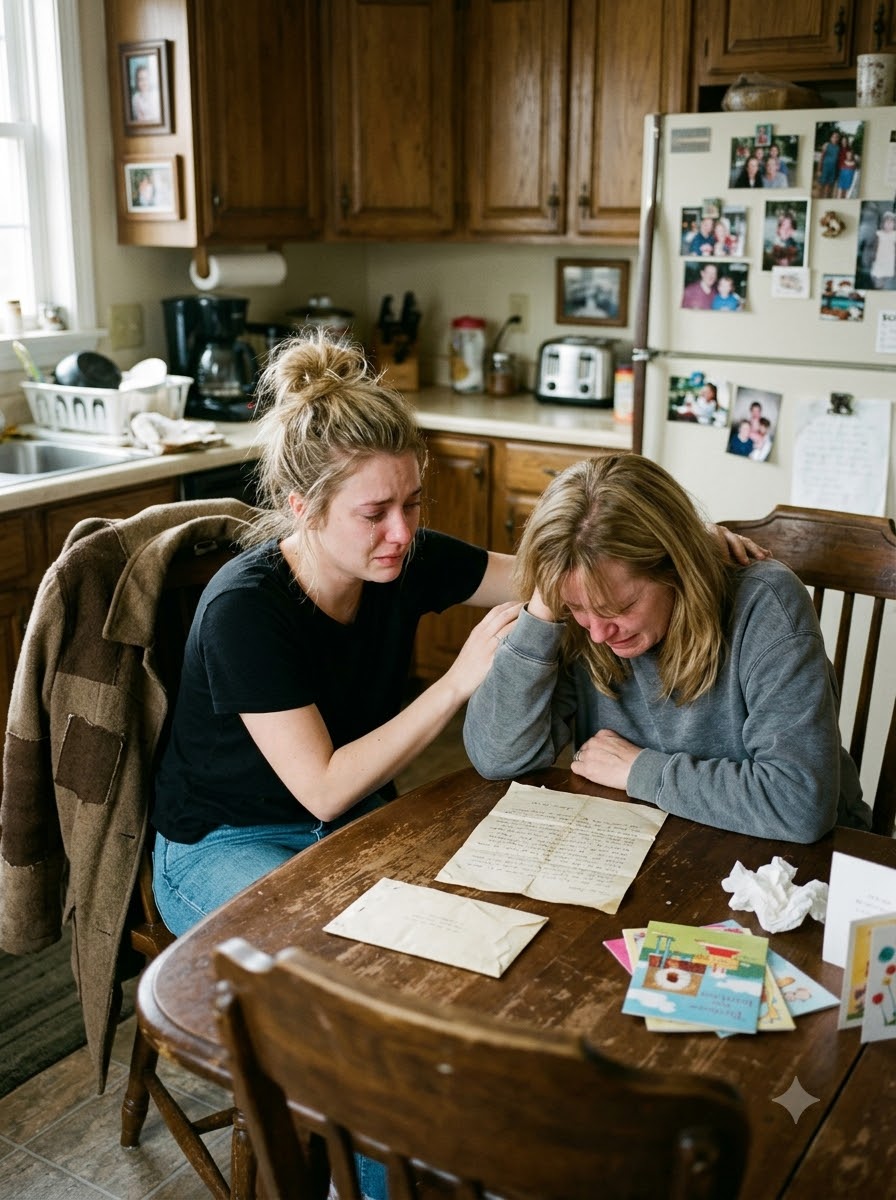
“Nothing’s changed,” she murmured.
“She didn’t like change.”
“No. She didn’t.”
For a moment, Mom almost smiled.
Then the expression vanished.
We sat across from each other at the kitchen table.
I didn’t offer her tea.
I couldn’t think what I should offer.
“I lost my job,” she said.
I stayed silent.
“They called me into a meeting with the regional manager and HR. Thursday. I had to tell them everything. They said they couldn’t have someone in a branch manager position who was under investigation for financial exploitation of a vulnerable adult.”
She spoke slowly, as though the words hurt.
“Twelve years. They had security walk me to my car.”
“I’m sorry.”
To my surprise, part of me meant it.
“No, you’re not.”
“I’m not sorry it happened. I’m sorry it had to.”
She studied me.
Then she reached into her purse and placed a folded piece of paper on the table.
It was a cashier’s check.
Payable to the Estate of Rose Ann Walsh.
$26,418.37.
I stared at the amount.
“Rick sold the SUV,” Mom explained. “We got back almost all of it. He took the rest out of his 401(k). The girls returned the laptops. Kayla made them. She found out what happened and she marched Madison back to Best Buy and returned both of them and brought me the receipt and threw it at me.”
She gave a broken little laugh.
“My sixteen-year-old threw a receipt at me.”
“Mom…”
“Rick’s not talking to me. Not really. He’s sleeping in the den. He says he needs time to figure out who he married.”
She flattened her palms against the table.
“I don’t know if he’s going to stay.”
I couldn’t find an answer.
Instead, I picked up the check.
There it was.
Years of Grandma’s coupons, patched coats, and thermostat turned down to sixty-two degrees.
All represented by one small piece of paper.
“I didn’t come here to make you feel bad for me,” Mom said. “I came to give you that. And to ask you something.”
“What?”
She lowered her eyes.
“The detective. My lawyer says if you tell the district attorney you don’t want to pursue it, now that the money’s back, they might let me plead to something smaller. Or maybe not charge me at all. He says it’s up to them, but what you say matters a lot.”
She swallowed.
“I’m not asking you to forgive me. I know I don’t deserve that. I’m asking you for Kayla and Madison. I don’t want them to have a mother with a felony.”
And suddenly I remembered Grandma’s letter.
Someday she may come to you needing something.
I sat in her chair, facing my mother.
“Why did you do it?”
Mom looked toward the backyard.
Beyond the kitchen window stood Grandma’s clothesline, which she’d used every summer for forty years despite owning a dryer.
“I’ve asked myself that every night this week,” Mom said. “I tell myself it was the money. Rick’s commissions really were down. The girls really did need things. But that’s not the truth.”
She inhaled shakily.
“The truth is I sat in that hospital room and I watched you walk in with her yogurt. Her favorite kind. You knew her favorite kind. She lit up when she saw you, Ellie. Even drugged up out of her mind, she lit up. And she looked at me like I was a stranger.”
“She didn’t know who you were. She was sick.”
“I know that. I know it now. But in that moment, I just thought, she never looked at me like that. Not once. Not when I was a kid. Not ever.”
Mom wiped her eyes.
“And I thought about that account. Twenty-two years of birthday cards. And I thought, she gave her everything. She gave her my life. She can give me this one thing.”
“She didn’t give me your life, Mom. You left me in her driveway.”
“I know.”
Her voice broke.
“I know I did.”
Silence filled the kitchen.
The refrigerator hummed.
Outside, a passing car played its radio too loudly.
“She told me I’d ruined my life,” Mom whispered. “When you were born. She stood at the end of my hospital bed and told me I’d ruined my life. I was nineteen.”
“I know.”
Mom looked up sharply.
“How do you know that?”
I reached into my purse.
I removed Grandma’s cream-colored envelope and unfolded the letter.
Then I slid the third page across the table.
The page about my mother.
Mom recognized the handwriting immediately.
“Read it,” I told her.
She began reading.
I watched her reach the paragraph about the hospital.
Her hand rose to her mouth.
When she reached Grandma’s words about her daughter having once been her little girl too, a terrible sound escaped her.
It was the kind of cry a frightened toddler might make after losing her mother in a grocery store.
She lowered her forehead onto the letter and sobbed.
I let her cry.
After a while, I stood and walked around the table.
I wasn’t ready to embrace her.
But I placed my hand against her back, just as Margie had done for me.
“She regretted it,” I said. “Every day. She wrote it down so you’d know.”
“Why didn’t she tell me?” Mom asked into the table. “Why didn’t she ever just tell me?”
“I don’t know. Maybe for the same reason you never told her you were sorry for leaving. Maybe you were both waiting for the other one to go first.”
Eventually, Mom sat upright.
Her face was swollen and red.
She smoothed the letter with both hands, carefully flattening the paper as though afraid it might break.
“Can I have a copy of this?”
“You can have that page. It was always yours anyway.”
She folded it and placed it in her purse.
Then she stood in the kitchen doorway, looking around one final time.
“I’ll call the detective,” I said.
Mom turned.
“I’ll tell her the money’s been returned. I’ll tell her I don’t want you to go to prison. I’ll tell her I want you to have to live with it instead.”
I took a breath.
“That’s the best I can do. I can’t promise what the DA will decide.”
She nodded.
She didn’t thank me.
Perhaps she understood that thank you would have been too small for what stood between us.
“Ellie,” she said. “The coat. Can I… would it be okay if…”
I looked toward the shopping bag.
“She told me to throw it out. In the letter. She said it was done.”
“Oh.”
Mom lowered her gaze.
“But I’m not going to. I’m going to get it fixed. Properly, this time. And I’m going to wear it.”
Her eyes filled again.
She stepped onto the porch and walked down to an old gray Toyota parked beside the curb.
Not a white SUV.
She sat behind the wheel for a minute before driving away.
That afternoon, I contacted Detective Alvarez.
Eventually, the district attorney decided not to pursue felony charges.
My mother pleaded guilty to a misdemeanor involving a false statement on the credit union withdrawal paperwork.
She received one year of probation, a fine, and one hundred hours of community service.
She completed those hours at a senior care center in Westbrook.
Rick drove her there every Saturday morning.
Kayla told me about it.
Gary Pruitt lost his notary license.
He sent me an apology letter, although most of it seemed to be about himself.
I threw it away.
In October, the money was restored to my account.
Every penny.
Plus a little interest Margie insisted on charging out of what she called “principle and spite.”
In January, I returned to nursing school.
It wasn’t easy.
I was several years older than many classmates, and I’d forgotten how exhausting three-hour lectures could be.
But I’d held Grandma’s hand as she died.
I knew how to endure difficult things.
I finished the program in December with the second-highest marks in my class.
I would have graduated first, except a twenty-one-year-old student named Brandon Ochoa beat me by a quarter of a point on the pharmacology final.
I’m still slightly bitter about that.
My pinning ceremony took place on a freezing Saturday morning in a high school auditorium.
I wore white scrubs.
Over them, because it was eighteen degrees outside, I wore Grandma’s brown wool coat.
I’d taken it to Mr. Kaminski, an elderly tailor on Fourth Street.
He’d examined it for a long time, running his fingers over the repairs Grandma had made.
“Someone loved this coat,” he observed.
“Someone loved a lot of things.”
He replaced the lining and buttons.
At my request, he left every one of Grandma’s original patches untouched.
It became the warmest coat I’d ever worn.
Margie sat in the auditorium’s second row wearing a purple hat.
She applauded louder than anyone.
Rick sat beside her.
Kayla had told me he’d moved back into the bedroom and that he and Mom were attending counseling.
Their marriage wasn’t repaired.
But they were trying.
Kayla and Madison sat next to him.
Kayla held a glitter-covered poster reading GO ELLIE.
Glitter scattered over everyone in the row.
Madison had finally gotten her braces.
She smiled at me, showing every one of them.
And at the very back of the auditorium, near the exit, sat my mother.
Alone.
She didn’t wave.
She didn’t approach the front.
She simply watched with her hands folded in her lap.
When my name was announced, I crossed the stage.
The dean fastened a small gold pin to my collar.
I searched the audience until I found Mom.
She was crying.
This time, she didn’t try to hide it.
Afterward, the lobby filled with families taking pictures and embracing their graduates.
I looked for her.
She stood beside the doors, already wearing her coat.
Ready to leave early.
Just as she’d always done.
I approached.
She looked nervous.
“You’re leaving,” I said.
“I didn’t want to intrude. I know it’s your day.”
“There’s a lunch. At the Italian place on Main Street. Margie made reservations for twelve people. There’s an extra seat.”
I paused.
“If you want it.”
Mom stared at me.
“Grandma always made you leave before pie,” I said. “I’m not going to.”
She laughed through tears.
Then she nodded.
She joined us for lunch.
She sat at the far end of the table between Rick and Madison and said very little.
But she stayed.
She stayed for the tiramisu.
She stayed until the waiter began stacking chairs.
Today, I work in oncology on the fourth floor of St. Luke’s Hospital.
It’s the same floor where Grandma spent much of her final year.
People sometimes ask whether it’s painful to work there.
Whether walking past her old room or the vending machine where I begged Mom for two hundred dollars brings everything back.
For a while, it did.
Now, most days, it feels like the place where I discovered what I was meant to do.
My charge nurse says I’m particularly good with families.
I know how to sit beside daughters who work on crossword puzzles they never finish.
I know how to speak gently to sons who arrive late with supermarket flowers and don’t know what to say.
I don’t judge them the way I once might have.
Because I’ve learned that sometimes the person who stays away longest is also the person most frightened of what they’ll find when they finally walk through the door.
My mother and I aren’t close.
I won’t pretend everything became perfect.
We speak about once a month.
Usually the calls are short.
She asks about work.
I ask about Kayla and Madison.
Sometimes neither of us knows what to say.
We sit through uncomfortable silences until one of us finally says, “Well.”
Mom eventually found another job.
She became a teller at a credit union in Westbrook.
At forty-six, she was starting over from the bottom.
She told me she enjoyed it more than she’d expected.
One of her regular customers is an elderly woman who arrives every March with an envelope of cash for her grandson’s savings account.
Mom said she has to step into the back room for a minute after serving that customer.
Every single time.
Last August, on the anniversary of Grandma’s death, Mom accompanied me to the cemetery.
She brought a container of lemon yogurt.
She placed it beside my flowers on the headstone.
She didn’t explain.
She didn’t need to.
But the family member I’ve grown closest to is Kayla.
Our relationship developed slowly.
Messages became phone calls.
Phone calls became Saturday visits.
She began taking the bus to Grandma’s house.
She sits at the kitchen table in the chair that used to be mine and asks about the grandmother she barely knew.
What was Grandma like when she was angry?
What songs did she sing?
Did she really make me read Reader’s Digest?
Was the furnace really older than me?
It was.
It finally stopped working last winter.
I replaced it using my first paycheck.
Grandma would have been furious.
Kayla wants to become a nurse.
She told me last September while we sat on Grandma’s back steps.
She spoke quietly, almost as though admitting a secret.
I told her she’d be wonderful at it.
She studied me for a long moment.
“Do you think I’m like her?” she asked. “Like Mom?”
I thought about a sixteen-year-old girl marching her younger sister into Best Buy to return two laptops.
I remembered her throwing the receipt at our mother.
“I think you’re like Grandma.”
Kayla cried a little.
She pretended she hadn’t.
Last week, she turned seventeen.
I bought her an inexpensive birthday card from the drugstore.
A cartoon dog wearing sunglasses decorated the front.
Inside, I wrote:
Happy 17th, Kayla. For your future. Love you more than all the stars.
Before sealing it, I went to the bank.
Not Lakeside.
I couldn’t bring myself to return there.
Instead, I visited a small credit union near the hospital.
I opened a savings account in Kayla’s name, with myself as custodian.
I deposited one thousand dollars.
After paying rent, bills, and my student loan installment, it was nearly everything I’d managed to save that month.
I slipped the deposit receipt into her birthday card.
Then I drove to Westbrook and handed it to her on the porch.
Mom stood behind her in the doorway.
Kayla opened the card and read my message.
When the deposit slip fell into her hand, she stared at it.
Then she looked up at me, confused.
“What is this?”
“It’s money,” I explained. “Real money. I put it in the bank for you, and every year I’m going to put in a little more. And it’s going to grow and grow like a tomato plant. And when you’re older, it’s going to help you do whatever you want to do.”
“Ellie, I can’t…”
“You have to promise me something.”
I held out my pinky.
“You can’t touch it until you need it for school. Not for a car. Not for a laptop. For school.”
Kayla stared at my finger.
Then at the deposit slip.
Then she glanced over her shoulder toward Mom.
My mother stood in the doorway with both hands covering her mouth.
Her eyes were wet.
She knew where those words had come from.
Perhaps she’d heard Grandma make a similar promise long ago.
Kayla turned back toward me.
She linked her pinky with mine.
“I promise.”
I drove home with the radio playing.
An old Patsy Cline song came on, one Grandma had loved.
I turned up the volume and sang badly all the way down Route 9.
Just like she used to.
When I arrived, I hung Grandma’s repaired coat on the hook beside the door.
The lining was new.
The old patches remained.
Six winters’ worth of them.
I stood with my hand resting on the sleeve.
People sometimes ask what Grandma left me.
They expect me to mention the $26,418.37.
Or the nursing degree.
Or the financial security she’d spent twenty-two years trying to provide.
And she did leave me those things.
I’m grateful every day.
But her greatest gift wasn’t the money.
It was the habit of saving something for someone else, year after year, even when there was barely enough to spare.
It was learning to repair your own coat so somebody you love might have a better future.
It was understanding the value of a promise made by a five-year-old girl.
That’s an inheritance no one can withdraw.
Not even with a notary and a latte.
Somewhere in Westbrook, inside a teenage girl’s bedroom drawer, there’s a birthday card featuring a cartoon dog wearing sunglasses.
Inside is a deposit slip for one thousand dollars.
Next March, there will be another.
And another the year after that.
I’ll keep adding to it.
Just like Grandma did.
Like a tomato plant.
Little by little.
Until it grows.
