


PART 1: THE LANGUAGE THEY BELIEVED I COULDN’T UNDERSTAND
My daughter’s future in-laws traveled from Europe to meet our family. During dinner, they began speaking French, completely convinced that I couldn’t understand them.
Then I heard what they were saying about my daughter.
My name is Margaret Doyle. I am sixty-three years old, divorced, recently retired, and living alone outside Rochester.
For most of my adult life, I had learned how to disappear.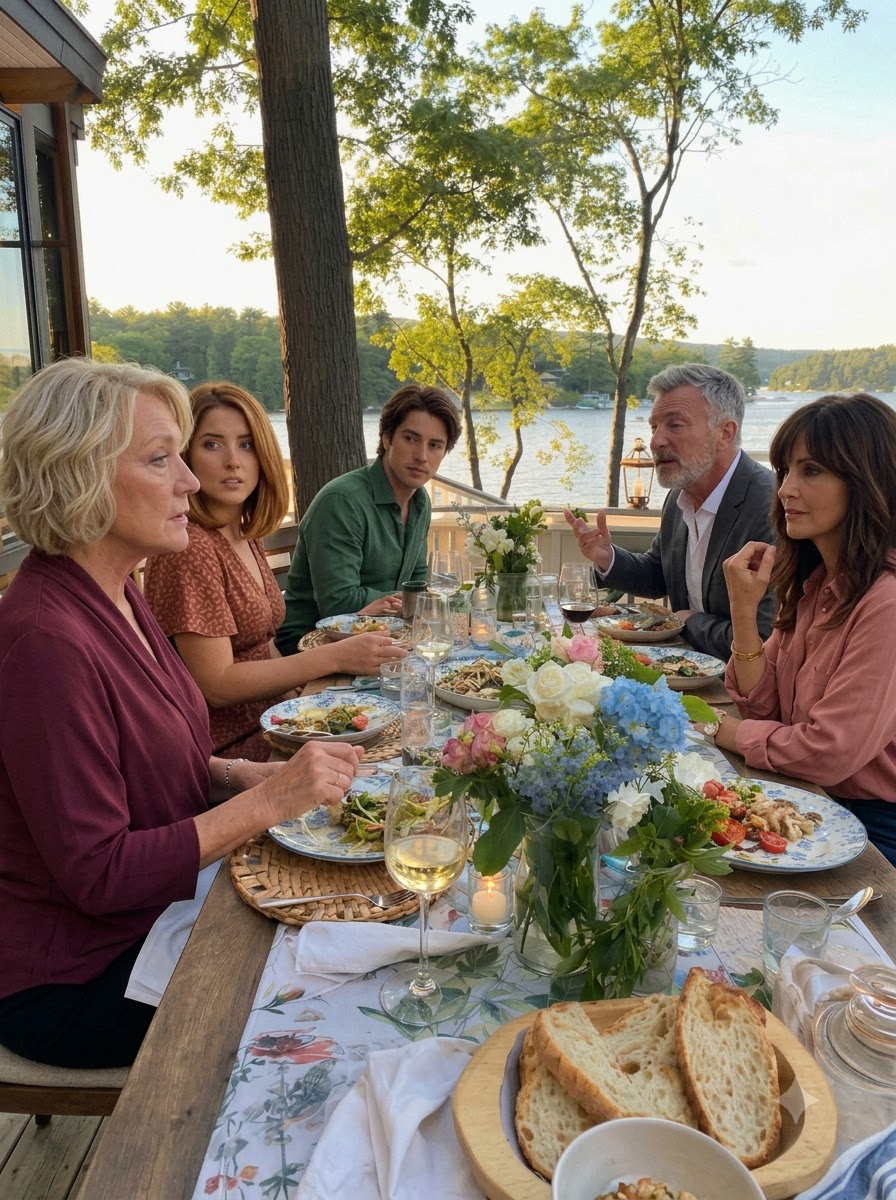
During thirty-one years of marriage, my former husband rarely raised his voice. He never needed to. A simple glance, an annoyed sigh, or a quiet question about whether my opinion truly mattered was usually enough to make me withdraw.
By the time our divorce was finalized, I had forgotten how to enter a room without apologizing for taking up space.
My daughter Claire was different.
At thirty, she was a successful graphic designer living in Boston. She was thoughtful, realistic, and straightforward. Some people confused her calm personality with being ordinary, but she never felt the need to prove her intelligence to anyone.
Two years earlier, she met Luca Beaumont, a structural engineer who grew up in Brussels. He was gentle, considerate, and completely devoted to her.
When he proposed, Claire called me first.
Three months later, Luca’s parents traveled to America.
Claire and Luca rented a lake house near Lake George for the weekend. I arrived carrying flowers, fresh bread, and a bottle of wine because I still felt I needed to bring something valuable before entering someone else’s space.
“Mom, I really want this weekend to go well,” Claire whispered.
She explained that Luca’s parents, Hélène and Philippe, were proud of their family and European heritage.
“I’ll behave,” I promised.
Claire frowned because that was not what she was asking.
But it was what I heard.
Be agreeable. Stay quiet. Do not make anyone uncomfortable.
Hélène was graceful and perfectly mannered. Philippe wore an expensive watch and carried himself like someone who had never questioned whether he belonged.
Before dinner, we sat on the deck talking about the wedding.
Then Hélène began speaking French with her husband.
I understood every word.
What they did not know was that before I became a wife, mother, and teacher, I had lived in Lyon for eight years.
At twenty-two, I arrived in France with one suitcase and no real direction. I learned French by serving tables, dealing with landlords, and creating a life in a city that forced me to stop being afraid.
I almost never talked about those years.
After decades of marriage, the confident young woman I once was felt like someone I barely recognized.
So I stayed quiet and listened.
At first, their comments seemed harmless. Hélène described the lake house as charming but rustic. Philippe joked that Americans often mistook nature for culture.
Then Hélène looked at Claire.
“She’s sweet,” she said in French. “A little simple, perhaps.”
Luca immediately disagreed.
“Please don’t call the woman I’m marrying simple.”
Hélène brushed aside his concern, saying she only meant Claire was uncomplicated and never pretended to be something she was not.
They still believed I understood nothing.
That evening, Claire prepared beef bourguignon. She had practised for three weeks because she wanted to respect Luca’s family.
Philippe complimented the meal in English.
Then he switched back to French and said he finally understood where Claire’s lack of refinement came from. Her mother seemed kind, he explained, but clearly had not seen much of the world.
Hélène responded that there was nothing wrong with living an ordinary life. Not everyone had ambition, curiosity, or bravery.
My fingers tightened around my fork.
Then Philippe said he worried Luca would spend his marriage supporting a wife without a proper cultural background. He hoped his grandchildren would understand where they came from.
By that, he meant Brussels.
He did not mean Claire.
And he certainly did not mean me.
Something inside me—something that had been shrinking itself for decades—finally refused to become smaller.
I placed my fork beside my plate.
PART 2: THE WOMAN FROM LYON RETURNED
Philippe was still speaking when I lifted my eyes and answered him.
In perfect French.
I did not raise my voice.
I spoke calmly, using the formal manner I had learned in Lyon—the kind of courtesy that allows someone to deliver a powerful correction without ever losing composure.
“Forgive me, Philippe,” I began. “I have enjoyed your conversation so much that I did not want to interrupt.”
The entire table went silent.
Hélène’s fork stopped in midair. Philippe slowly turned pale.
“I lived in Lyon for eight years,” I continued. “I worked on Rue Mercière and lived near Croix-Rousse. I learned French from people who did not slow down for foreigners. So I have understood everything you have said since arriving.”
Claire stared at me.
Luca covered his face with one hand.
I repeated their comments—the rustic house, Claire’s supposed simplicity, my ordinary life, and their concerns about our family lacking culture. Then I became more precise. “You sat at my daughter’s table and ate a meal she spent weeks perfecting to show respect for you. You used a language you believed shielded you to insult her right in front of her.”
Neither of them reacted.
“That is not how people with true cultural elegance behave,” I said. “In Lyon, we would describe it as the behavior of people who have money but lack manners. That is one of the most common kinds of poverty.”
Hélène tried to interrupt.
“I am not finished,” I said calmly. “You have spent the last two hours discussing my family. Now it is my turn, and I am giving you the courtesy of speaking in a language you can understand.”
I told them everything Claire had accomplished.
She had built a successful career in a challenging field without anyone supporting her financially. She had made a name for herself in a city far away from home and earned admiration from people who understood the world far beyond luxury watches and expensive dinners.
“And she chose your son,” I said. “He is kind, and he is embarrassed by the way you are acting tonight. That tells me you raised him better than you are behaving right now.”
I explained that their grandchildren would not be raised believing Brussels was more important than Rochester.
They would know that their grandmother once went to another country alone with one suitcase and built a life through her own determination.
“That is the cultural foundation I plan to give them,” I finished. “I believe it will serve them well.”
Then I picked up my fork and returned to English.
“This is excellent, sweetheart,” I told Claire. “The sauce is perfect.”
The silence that followed felt incredibly satisfying.
But Philippe did not leave in anger.
Instead, he carefully placed his knife and fork down.
“Madame Doyle,” he said in English, making sure Claire could understand, “you are right. I am ashamed.”
I had expected him to become defensive or offended.
Instead, he openly admitted what he had done.
“We hid behind our language because cruelty was easy when we believed no one understood us,” he said. “Claire, what I said was untrue and cowardly. You welcomed us graciously, and I repaid you with disrespect.”
Hélène began to cry.
“I called you simple,” she confessed. “But you frightened me because Luca loves you more deeply than he has ever loved us.”
Claire asked why that scared her.
Hélène answered honestly.
She was afraid of losing her son to a warmer family. Instead of admitting that fear, she chose to believe Claire was beneath them.
Her honesty did not erase the cruelty.
But it changed what happened afterward.
PART 3: THE WOMAN I HAD NEVER TRULY LOST
The rest of the weekend became something none of us expected.
Philippe started asking about Lyon with sincere curiosity. I discovered that he had completed part of his engineering training there during the same period when I was living in the city.
That night, we stayed awake until two in the morning, debating in French about old restaurants and sketching a map on a napkin.
Claire later told me she stood on the stairs crying because she had never seen that side of me before.
Hélène and I did not immediately become close.
But on the final morning, she joined me on the deck.
“I would like to know the woman who lived alone in Lyon at twenty-two,” she said. “I don’t believe Claire knows her. I’m not certain you know her anymore either.”
“I’m getting to know her again,” I replied. “You may come along.”
Claire and Luca married the following spring in the Finger Lakes.
Philippe brought the wine. Hélène helped me select my dress through several video calls, gently correcting my French like someone who had chosen to care about me.
During the reception, Philippe delivered part of his toast in French.
Then he laughed and said, “I will translate for the other American guests, but not for Margaret. I learned over a very good beef bourguignon that she understands every word.”
Everyone laughed.
And so did I.
For once, I did not shrink myself.
Looking back, the story was never truly about Philippe and Hélène.
It was about the moment I placed my fork down.
For thirty-one years, I had become the kind of woman who kept her eyes lowered. I heard hurtful comments and let them pass. I walked into every room carrying gifts, hoping no one would question whether I belonged there. My former husband had slowly and quietly taught me that staying silent was the safest way to exist.
Over time, I confused that lesson with who I truly was.
But French belonged to a chapter of my life before my marriage.
It belonged to Lyon, to bravery, to arriving with one suitcase and no clear direction. It belonged to the young woman who challenged landlords, worked exhausting hours, and never hesitated to use her voice.
When Hélène insulted my daughter in French, she unknowingly reached beyond the quiet retired woman sitting at that table.
She spoke directly to the woman underneath.
And that woman had never learned to look down.
Claire and Luca now have a little daughter named Margaux.
She is growing up surrounded by two countries and two languages. She has four grandparents who love her deeply.
Whenever I babysit her, I speak French with her.
The first complete sentence she ever said to me was “mon amie”—my friend.
Philippe and I still exchange emails in French. He ends every message with: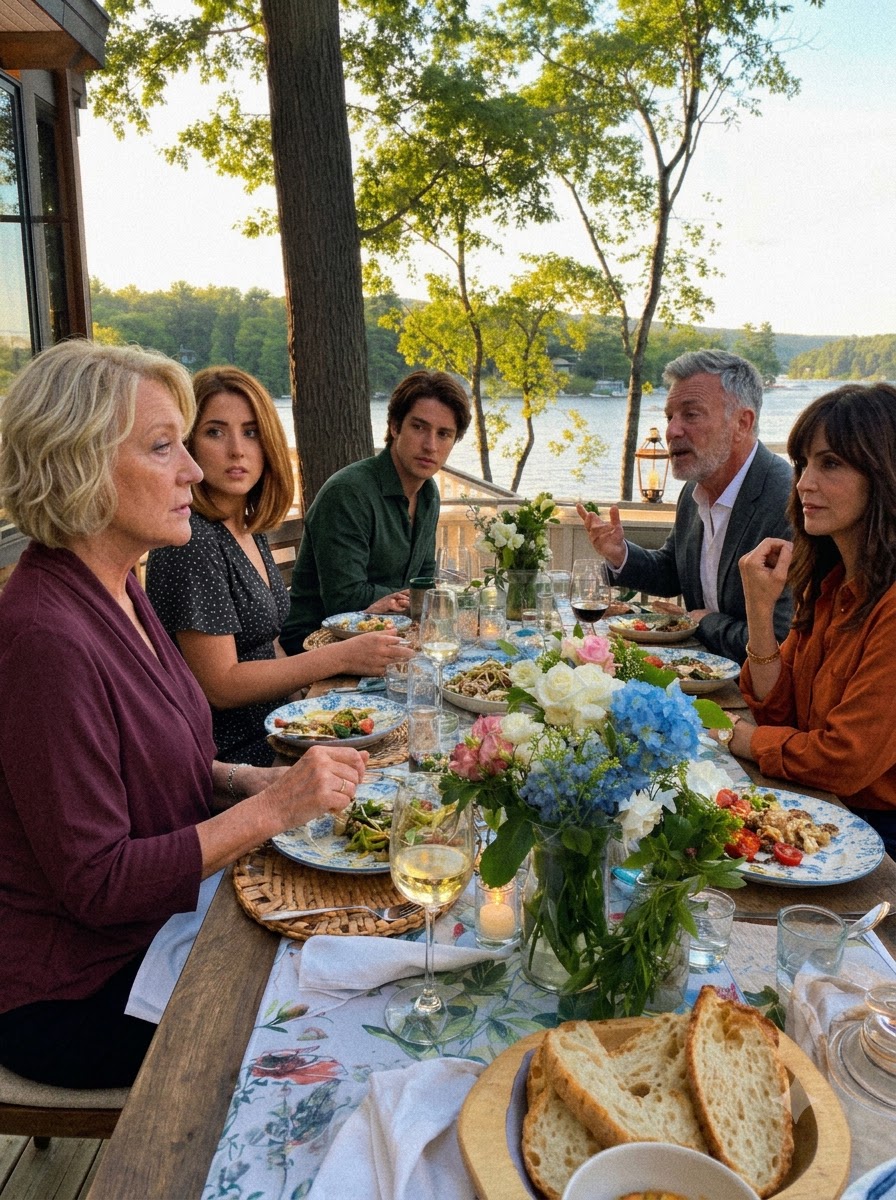
“To the woman who understood every word.”
But he is not completely right.
I did not understand because I was preparing a trap or keeping some hidden advantage.
I understood because long before anyone convinced me to disappear, I had been courageous enough to travel alone and create a life for myself.
That woman had never truly gone away.
She endured through the marriage, the divorce, and all the quiet evenings that followed.
She was simply waiting for someone to speak to her in a language her fears had never learned.
At a dinner table beside a copper-colored lake, someone finally did.
