


PART 1
My daughter received a magnificent beachfront mansion in La Jolla, California, valued at approximately $4 million. I inherited an aging wooden cabin tucked away in the mountains, a place that appeared to have been forgotten for years.
To Vanessa, the difference between our inheritances was something worth celebrating.
She mocked the cabin, insulted me for being old, and made it clear that she no longer wanted me in her life.
But the moment I opened that cabin’s front door, I realized my late wife had left behind something far more important than either of us understood.
And what I discovered there would change everything.
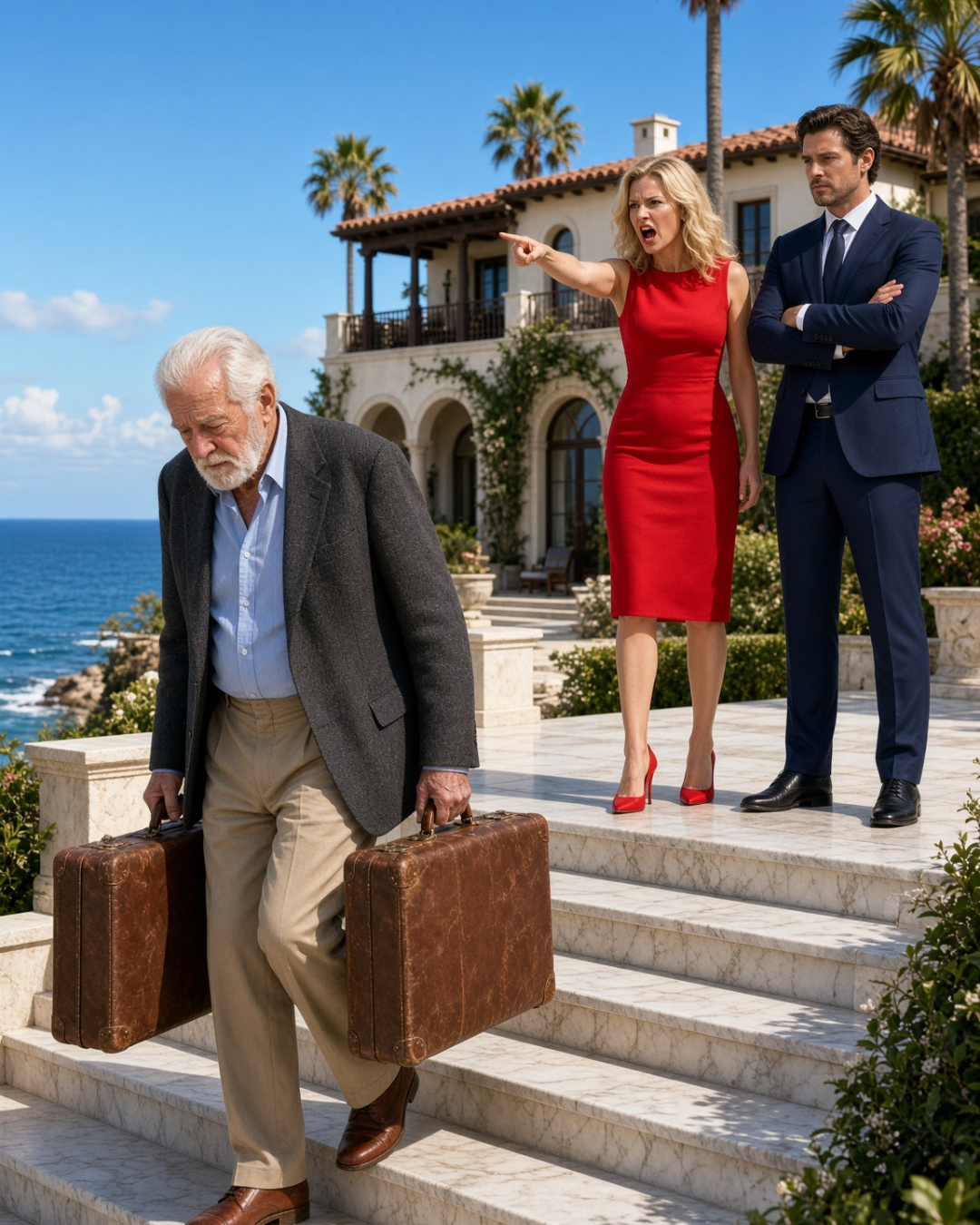
“You heard the attorney, Dad,” Vanessa said, swinging the mansion keys around her finger. “This house is mine now.”
I stood in the living room, surrounded by memories of Margaret, my wife of forty-three years.
Only three weeks earlier, we had buried her.

Her favorite chair was still beside the window. The decorations from her final Christmas had been carefully packed away, but I could almost hear her laughter filling the room.
I looked at our daughter.
“Vanessa, your mother passed away only three weeks ago. Can’t we wait before making any decisions?”
She responded with an impatient roll of her eyes.
“That’s exactly your problem. You always expect people to take care of you. Mom finally understood you were nothing but a burden.”
Those words hurt more than I expected.
I was seventy-one years old. I had spent my working life as a structural engineer, supporting our family, raising Vanessa, and building a future with Margaret.
I had never imagined that our daughter would one day regard me as an inconvenience.
Brandon, Vanessa’s husband, stood beside the marble fireplace, looking entirely too pleased with himself.
“There’s a retirement facility nearby, Robert. Maybe you should look into it.”
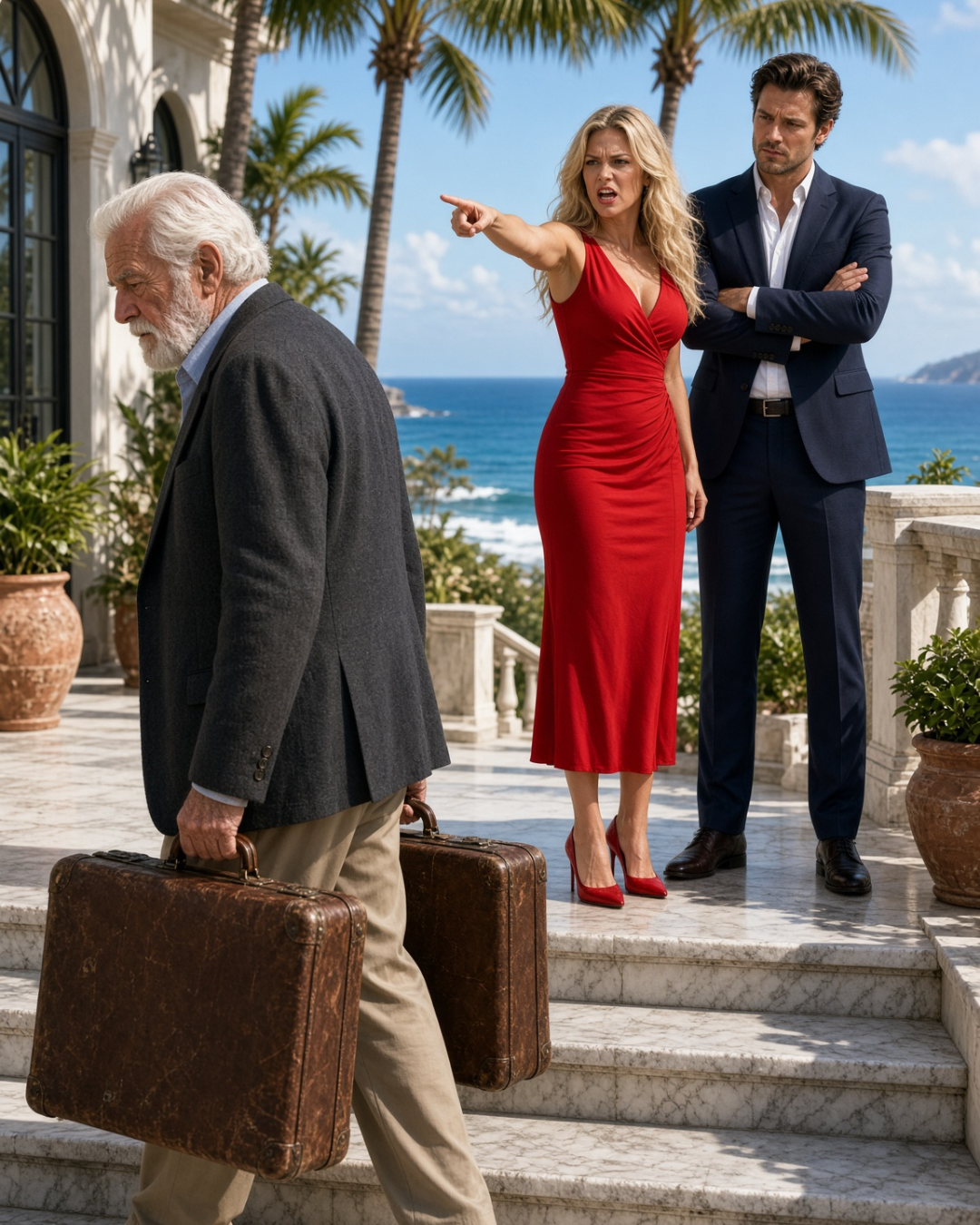
Neither of them seemed troubled by the fact that I was standing beside two packed suitcases in the house where I had spent so much of my life.
Margaret’s will had surprised everyone.
Our daughter had inherited the spectacular oceanfront residence, while I had been left an old cabin in the mountains near Julian.
Vanessa called my inheritance “the termite hotel.”
Brandon found that amusing.
“You might get a few dollars if someone wants the wood.”
I could have argued. I could have reminded Vanessa of everything Margaret and I had done for her.
Instead, I picked up my suitcases.
I had just lost my wife. I didn’t have the strength to fight my daughter over the place we had once called home.
I loaded my belongings into the car and drove away.
As I left, Vanessa was already discussing possible renovations with an interior designer.
The journey into the California mountains took nearly three hours.
By the time I reached the property, the sky had grown dark, and the first drops of rain were falling.
The cabin looked worse than I remembered.
Weeds had swallowed much of the porch. Several windows were boarded over, and the roof appeared to be in poor condition.
From the road, it looked like a building that had been abandoned for decades.
Margaret had always been fond of this place.
Before her illness, she sometimes spent weekends here alone, saying she needed time to think and enjoy the quiet.
I had trusted her completely.
Now, standing outside the neglected structure, I couldn’t understand why she had chosen to leave it to me.
I carried my suitcases to the porch and fitted the old key into the lock.
The door creaked as I pushed it open.
Then I stopped.
Nothing inside resembled the deteriorating exterior.
Beautiful hardwood floors reflected the warm light of modern recessed fixtures.
Elegant furniture filled the living room. A large stone fireplace dominated one wall, and beyond it stood a completely renovated kitchen with stainless steel appliances.
The interior was spotless.
Every detail had been thoughtfully arranged, from the comfortable chairs to the carefully finished woodwork.
Someone had spent a considerable amount of money restoring this cabin while intentionally allowing its exterior to appear neglected.
I stood motionless, trying to understand what I was seeing.
Then something on the dining table caught my attention.
A blue envelope lay beside a small brass key.
My name was written across the envelope in Margaret’s unmistakable handwriting.
My hands began trembling as I opened it.
“My dearest Robert,
“If you’re reading this, Vanessa has probably already revealed how she intends to treat you. I’m sorry you had to experience that.
“But please understand something.
“This cabin is not what it appears to be.
“Look beneath the wooden floorboard beside the fireplace.”
I read those words twice.
Margaret had known.
Somehow, before she died, she had anticipated how our daughter might behave.
I turned toward the fireplace.
The floorboards looked perfectly ordinary, but when I examined the one Margaret had mentioned, I noticed a narrow seam.
Using my pocketknife, I carefully lifted the board.
It came loose with surprising ease.
Beneath it was a compact fireproof metal box.
I took the brass key from the table and inserted it into the lock.
It turned smoothly.
Inside the box were neatly arranged documents, old photographs, financial statements, and another letter.
I sat on the floor and began reading.
The first documents concerned the cabin and the land surrounding it.
At first, the legal descriptions meant little to me.
Then I noticed the acreage.
Forty-eight acres.
Over the previous fifteen years, Margaret had quietly purchased parcels of surrounding land and placed them into a family land trust.
The property included mature woodland, a natural spring, and a wildlife corridor considered important for conservation.
The cabin was only a small part of what she had assembled.
Several months before her death, a regional conservation organization had approached her about a possible permanent conservation easement.
A preliminary assessment placed the potential value of the land and related property interests at approximately $5.8 million, subject to formal appraisal and negotiations.
I stared at that number.
Five point eight million dollars.
Vanessa had been delighted to receive a mansion worth $4 million.
She had laughed at the cabin because she believed it was nearly worthless.
Yet Margaret had left me an interest in property that might be worth substantially more.
And according to the trust documents, her entire interest now belonged to me.
For a moment, I couldn’t even think.
Then I reached for the next folder.
It contained records from Margaret’s financial accounts during her cancer treatments.
I began examining the transactions.
Some payments were ordinary medical expenses.
Others were not.
Large amounts had been transferred into accounts associated with Brandon’s businesses.
Certain withdrawals were labeled as property maintenance. Others appeared to cover services for which there was no evidence any work had been completed.
Vanessa had received limited financial authority to help her mother manage medical expenses while she was undergoing treatment.
The records suggested that authority had been used for purposes Margaret had never intended.
My stomach tightened.
Margaret had discovered the irregularities before her condition deteriorated.
Rather than confronting Vanessa immediately, she had hired a forensic accountant and instructed her attorney to preserve the evidence.
I reached for her second letter.
Its final paragraphs brought tears to my eyes.
“I left Vanessa the beautiful house because I wanted to give her the life she always believed she deserved.
“But I left you this cabin because you understand that a home is more than expensive walls.
“The truth about the money is already with my attorney.
“Please live the rest of your life, Robert. Don’t spend your remaining years sacrificing yourself to satisfy our daughter’s demands.”
I remained beside the fireplace for a long time.
I wasn’t crying because the land might be worth millions.
I was crying because Margaret, even while facing the end of her life, had been thinking about how to protect me after she was gone.
She had known I would be devastated by her death.
She had also understood something about our daughter that I had refused to see.
Eventually, I gathered the papers and placed them back inside the box.
Outside, rain tapped against the windows.
For the first time since Margaret’s funeral, I felt that I wasn’t entirely alone.
But as I examined the financial records again, another thought began troubling me.
If Vanessa and Brandon had been taking money from Margaret during her illness, how much had they actually taken?
And how far would they go to prevent me from discovering the truth?
PART 2
The following morning, I called Margaret’s attorney, Evelyn Price.
I explained what I had found beneath the floorboards and asked whether the documents were authentic.
She confirmed everything.
“Margaret made careful arrangements, Robert. She wanted you to review the evidence before deciding whether to pursue recovery of the missing funds.”
I looked around the beautifully restored cabin.
“Does Vanessa know?”
“She knows your wife discovered financial irregularities. But she doesn’t know how much evidence we have.”
That answer told me Margaret had planned this carefully.
She hadn’t simply hidden a few papers and hoped I would find them.
She had arranged for the truth to be preserved.
Later that afternoon, my phone rang.
Vanessa.
“Well, Dad, how’s life in the creepy old cabin?”
I glanced toward the modern kitchen and the comfortable living room.
“Actually, it’s quite comfortable.”
She laughed as though I had made a ridiculous joke.
“Brandon says that land is probably worth twenty thousand dollars at most. We’ll give you fifteen thousand and take it off your hands.”
I looked out at the pine trees surrounding the property.
“I’m not interested in selling.”
Her tone immediately hardened.
“You’re being ridiculous. When your savings disappear, you’ll come asking us for help.”
Then she ended the call.
I stood beside the window, thinking about the offer.
They had inherited a beachfront mansion worth millions, yet they were still interested in taking my supposedly worthless cabin.
I wondered whether they knew more than they were admitting.
Over the next week, Evelyn arranged several meetings with the forensic accountant Margaret had hired.
Together, we examined the records she had preserved.
The findings were deeply disturbing.
Approximately $640,000 in transactions required explanation.
Many of the transfers were connected to Brandon’s struggling property business.
Some had been recorded as legitimate expenses, but the supporting documentation was incomplete or inconsistent.
Other payments appeared to involve services that had never been performed.
As we worked through the statements, another uncomfortable fact emerged.
The La Jolla mansion, despite its impressive market value, still carried a substantial mortgage.
Vanessa had inherited a magnificent property, but not the completely debt-free fortune she seemed to imagine.
Meanwhile, she continued posting photographs of herself beside the swimming pool, celebrating the luxurious lifestyle she believed was finally hers.
I said nothing publicly.
Margaret had left me evidence, not an invitation to humiliate our daughter.
I wanted the missing money accounted for.
I wanted the truth.
A few days later, Brandon called me himself.
This time, he offered $25,000 for the mountain property.
I refused.
His friendly manner disappeared almost immediately.
He suggested that a man of my age might not be capable of making sound financial decisions.
Then he hinted that Vanessa could seek legal intervention if she believed I was unable to manage my affairs independently.
I listened without interrupting.
When the call ended, I saved his voicemail and forwarded it to Evelyn.
His attempt to intimidate me only strengthened my determination to keep the cabin.
That evening, Evelyn called again.
“The conservation organization wants a formal meeting. They’ve reviewed the trust documents.”
I felt a small measure of relief.
“That’s encouraging.”
“Yes. But Robert, there’s something else.”
Her voice had changed.
“The accountant identified another transfer from Margaret’s accounts.”
I waited for her to continue.
“It was authorized two days after she lost consciousness.”
I gripped the phone more tightly.
“Who approved it?”
There was a brief silence.
“Vanessa.”
I closed my eyes.
Margaret had been fighting cancer, and our daughter had been entrusted with helping her.
The possibility that Vanessa had continued authorizing questionable transactions after her mother lost consciousness was almost impossible to accept.
I remembered the little girl Margaret and I had raised.
I remembered her birthday parties, school performances, and the afternoons when she had fallen asleep on the sofa with her head in Margaret’s lap.
How had we reached this point?
Evelyn advised me not to confront Vanessa alone.
The financial evidence needed to be handled carefully, and the proposed conservation agreement required proper review.
I agreed.
For the next three weeks, I remained in the cabin, reading documents, meeting with Evelyn, and slowly becoming familiar with the land Margaret had loved.
The property was peaceful.
In the mornings, sunlight filtered through the trees.
In the evenings, I sat beside the fireplace and looked at photographs Margaret had left behind.
I began to understand why she had come here whenever she needed quiet.
This wasn’t merely an investment.
It was a place she had protected, piece by piece, for fifteen years.
And she had entrusted it to me.
Three weeks after my first visit, a white luxury SUV appeared at the end of the driveway.
Vanessa and Brandon had arrived.
I watched through the window as they climbed out and examined the cabin’s weathered exterior.
Brandon carried a folder under one arm.
He approached the porch with the confidence of a man who expected to get his way.
“We’re finished going back and forth, Robert,” he announced.
Vanessa looked at the aging boards and neglected exterior.
“Dad, this place is falling apart. Living here only proves you can’t make sensible decisions anymore.”
I opened the door wider.
“Then perhaps you’d better come inside.”
She walked past me.
And immediately stopped.
Her eyes moved from the gleaming hardwood floors to the renovated kitchen, then to the elegant furniture and massive stone fireplace.
“What happened here?”
“Nothing happened. This is how your mother left it.”
She turned toward me in disbelief.
“Where did you get the money for all this?”
Before I could answer, she noticed two people sitting at the dining table.
Evelyn Price.
And the forensic accountant.
Brandon’s expression changed.
“What are they doing here?”
I gestured toward the empty chairs.
“Please sit down. There are some things we need to discuss.”
Vanessa folded her arms.
“I’m not taking orders from you.”
Evelyn opened the folder in front of her.
“Then perhaps you’ll be interested in what these records show.”
She spread several documents across the table.
Bank statements.
Invoices.
Transfers involving Brandon’s company.
And the authorization for a transaction that had occurred after Margaret became unconscious.
Vanessa stared at the papers.
The confidence drained from her face.
“Mom agreed to those expenses.”
Evelyn answered without raising her voice.
“The available medical records and authorization documents raise serious questions about that.”
Brandon leaned closer to his wife.
“Don’t answer anything else.”
The accountant then presented a summary of the questionable transactions.
“Approximately $640,000 in withdrawals requires explanation. We’ve preserved the supporting evidence and are preparing civil recovery proceedings.”
Vanessa turned toward me.
Her expression shifted from disbelief to anger.
“Dad, you would actually take your own daughter to court?”
I felt a familiar ache in my chest.
She was still my daughter.
Nothing she had done could erase that.
But neither could our relationship erase what had happened to Margaret.
“Vanessa, that money belonged to your mother.”
She raised her voice.
“She was going to leave everything to me anyway!”
I looked directly at her.
“No,” I answered quietly. “You assumed she would.”
Brandon pushed his chair back and gestured angrily toward the room.
“Fine! Keep this miserable property! We don’t want it.”
I reached into the folder beside me.
There was one more document they hadn’t seen.
I placed it on the table.
It was the preliminary valuation prepared in connection with the proposed conservation agreement.
Evelyn explained that Margaret’s surrounding acreage had considerable potential value, although the final amount would depend on an independent appraisal and successful negotiations.
Brandon picked up the report.
His eyes stopped on the estimated figure.
He read it again.
“Five point eight million dollars?”
Vanessa snatched the document from his hands.
For several seconds, neither of them spoke.
Then she looked at me, her face pale.
“That land is worth more than my mansion?”
“Potentially,” Evelyn replied. “The final valuation hasn’t been completed.”
Vanessa’s shock quickly became outrage.
“Mom should have left that property to me!”
I sat back and looked at the daughter who had forced me out of our family home.
“Your mother left you a beautiful beachfront house worth millions. You still treated your father as though he had no value because you believed he’d inherited nothing.”
Her eyes filled with tears.
The anger in her voice suddenly disappeared.
“Daddy, please. We can work this out.”
I had waited weeks to hear her speak to me with anything resembling affection.
But I couldn’t ignore why her attitude had changed.
I shook my head.
“Then start by taking responsibility for what happened to your mother’s money.”
For the first time, Vanessa had no immediate answer.
And I knew the most difficult part of this story was still ahead of us.
PART 3
The meeting at the cabin did not end with a family reconciliation.
Vanessa and Brandon left knowing that Margaret had preserved extensive records of the financial transactions made during her illness.
They also knew the mountain property they had dismissed as worthless might be more valuable than the mansion they had celebrated inheriting.
But understanding those facts was not the same as accepting responsibility.
The legal process continued.
Evelyn worked with the forensic accountant to prepare the civil recovery proceedings.
Every questionable transaction had to be examined. The relevant documents had to be preserved, and the explanations offered for the withdrawals had to be assessed.
It was exhausting.
At seventy-one, and still grieving my wife, I had never imagined spending my days reviewing financial records connected to my own daughter.
There were moments when I wanted to stop.
I would sit beside the fireplace and wonder what Margaret would have wanted me to do.
Then I remembered her letter.
She had not asked me to punish Vanessa.
She had asked me to live the rest of my life without sacrificing myself to satisfy our daughter’s demands.
That distinction mattered.
I wasn’t trying to destroy Vanessa’s future.
I was trying to honor Margaret’s wishes and protect what she had spent her final months safeguarding.
As the months passed, the evidence became increasingly difficult for Vanessa and Brandon to dispute.
Eventually, they agreed to a settlement requiring substantial repayment.
The amount involved was serious enough that their finances could not absorb the consequences easily.
They sold the La Jolla mansion.
The proceeds were needed to address the property’s outstanding mortgage, legal expenses, and their settlement obligations.
Financial authorities also reviewed the suspicious transactions separately.
Brandon’s property business, already struggling, collapsed under its mounting debts.
Vanessa moved into a modest rental apartment and found regular employment.
I learned about these developments gradually.
There was no satisfaction in hearing that my daughter had lost the home she had been so eager to claim.
I remembered her standing in our living room, swinging the mansion keys around her finger.
I remembered how she had spoken about her mother as though Margaret’s death were simply the beginning of a more luxurious life.
And I remembered the little girl who had once needed us for everything.
Those memories existed together.
I could love my daughter and still recognize that she had done something deeply wrong.
For years, I had believed that being a good father meant protecting Vanessa from hardship whenever possible.
If she needed help, Margaret and I helped.
If she made a mistake, we tried to make the consequences easier.
We wanted her to have a comfortable life.
But watching the events unfold after Margaret’s death forced me to confront something I had avoided for too long.
Protecting someone from every consequence is not always an act of love.
Sometimes it prevents them from understanding the harm they have caused.
And sometimes the person offering protection ends up paying a price that should never have been theirs to bear.
I couldn’t change the past.
I couldn’t make Vanessa appreciate the years Margaret and I had devoted to raising her.
But I could stop allowing her decisions to determine the remainder of my life.
Eight months after I first arrived at the cabin, the property looked entirely different.
I had repaired the roof and restored the porch.
The weathered exterior that had once concealed Margaret’s beautiful renovations was finally receiving the attention it deserved.
Near the entrance, I planted her favorite roses.
I chose the spot carefully, imagining how she would have wanted them arranged.
Working around the cabin gave my days a rhythm.
There were repairs to oversee, small improvements to make, and quiet evenings to enjoy.
The surrounding forest became familiar to me.
I learned how the light changed across the trees during the afternoon and how the air smelled after a mountain rain.
Everywhere I looked, I found another reason Margaret had loved this place.
Meanwhile, the discussions with the conservation organization progressed.
With Evelyn’s assistance, I negotiated an agreement that protected the surrounding forest while providing a comfortable income for my retirement.
The land would remain preserved, just as Margaret had hoped.
And I would have the financial security to spend my remaining years without depending on Vanessa or Brandon.
It was an extraordinary gift.
Yet the money was not what mattered most.
Margaret had given me something I hadn’t realized I would need.
A place where I could grieve without being treated as a burden.
A home where I didn’t have to defend my right to remain.
A future that belonged to me.
One evening, a letter arrived from Vanessa.
I recognized her handwriting before I opened it.
She wanted to know whether we might speak again.
I sat at the dining table and read her words carefully.
Part of me wanted to call her immediately.
She was my only daughter.
I missed the relationship I had believed we shared, even though I now understood how much of it had been built on assumptions I didn’t want to question.
But I also remembered the day she had ordered me out of the La Jolla house.
I remembered Brandon suggesting a retirement facility.
I remembered the way they had laughed at my inheritance.
And I remembered the sudden change in Vanessa’s attitude when she discovered the mountain property might be worth millions.
Trust couldn’t be restored simply because she now wanted to talk.
Perhaps we would find a way forward someday.
Perhaps she would come to understand why her actions had caused so much pain.
But I wasn’t ready to pretend that everything had been repaired.
I folded the letter and placed it beside Margaret’s photograph.
Then I went outside.
The evening air was cool and carried the scent of pine needles and recent rain.
I sat on the porch with a warm cup of coffee.
Beyond the railing, sunlight filtered through the trees, illuminating the forest Margaret had spent fifteen years quietly protecting.
I thought about the strange way our inheritances had unfolded.
Vanessa had received a spectacular mansion overlooking the Pacific Ocean.
She had believed its price tag proved that she was the fortunate one.
When she saw what I had inherited, she treated me as though I had been given nothing.
But the cabin had never been worthless.
Its neglected appearance had hidden an extraordinary restoration, valuable land, and the careful arrangements Margaret had made before her death.
More importantly, it had sheltered the final words she wanted me to hear.
She had known I would be lonely.
She had known our daughter might treat me cruelly.
And she had spent her remaining strength making certain I would have a place to go.
I wished I could tell her how much that meant.
I wished I could sit beside her on the porch and ask why she had kept so much of her planning secret.
Most of all, I wished we could have grown old here together.
But I couldn’t have that future.
What I could do was honor the one she had left for me.
I looked toward the roses growing beside the porch.
For forty-three years, Margaret had been my partner, my closest friend, and the person who understood me better than anyone else.
Even after her death, she had found a way to remind me that I deserved dignity and peace.
I finally understood why she had chosen this place.
The mansion was beautiful, but beauty alone couldn’t make a home.
A house could be sold.
Money could disappear.
Luxury could vanish as quickly as it arrived.
But security, respect, and the freedom to live without fear of being discarded were worth far more than expensive walls.
Vanessa had inherited a mansion and eventually lost it while pursuing the wealth she believed she deserved.
I had inherited an old cabin that everyone dismissed as worthless.
Yet inside those weathered walls, I found the truth about my wife’s final months, the protection she had arranged for me, and a future I hadn’t dared to imagine after her death.
As the sun disappeared behind the trees, I finished my coffee and remained on the porch a little longer.
For the first time in months, I wasn’t wondering where I belonged.
I was already home.
