


LINDA DAWSON HAD SPENT EIGHT YEARS LEARNING HOW TO LIVE WITHOUT HER HUSBAND, PAUL.
She believed she had finally adapted to the loneliness—until one Christmas, a phone call from her daughter-in-law showed her just how narrow her life had become.
Hannah’s voice sounded polite, yet distant. “Linda, I think it would be easier if you stayed home this Christmas.”
Linda sat beside the fireplace, surrounded by decorations she had carefully arranged for a family gathering that was suddenly no longer happening.
For years, she had always made herself available whenever her son Mark needed her.
She cooked.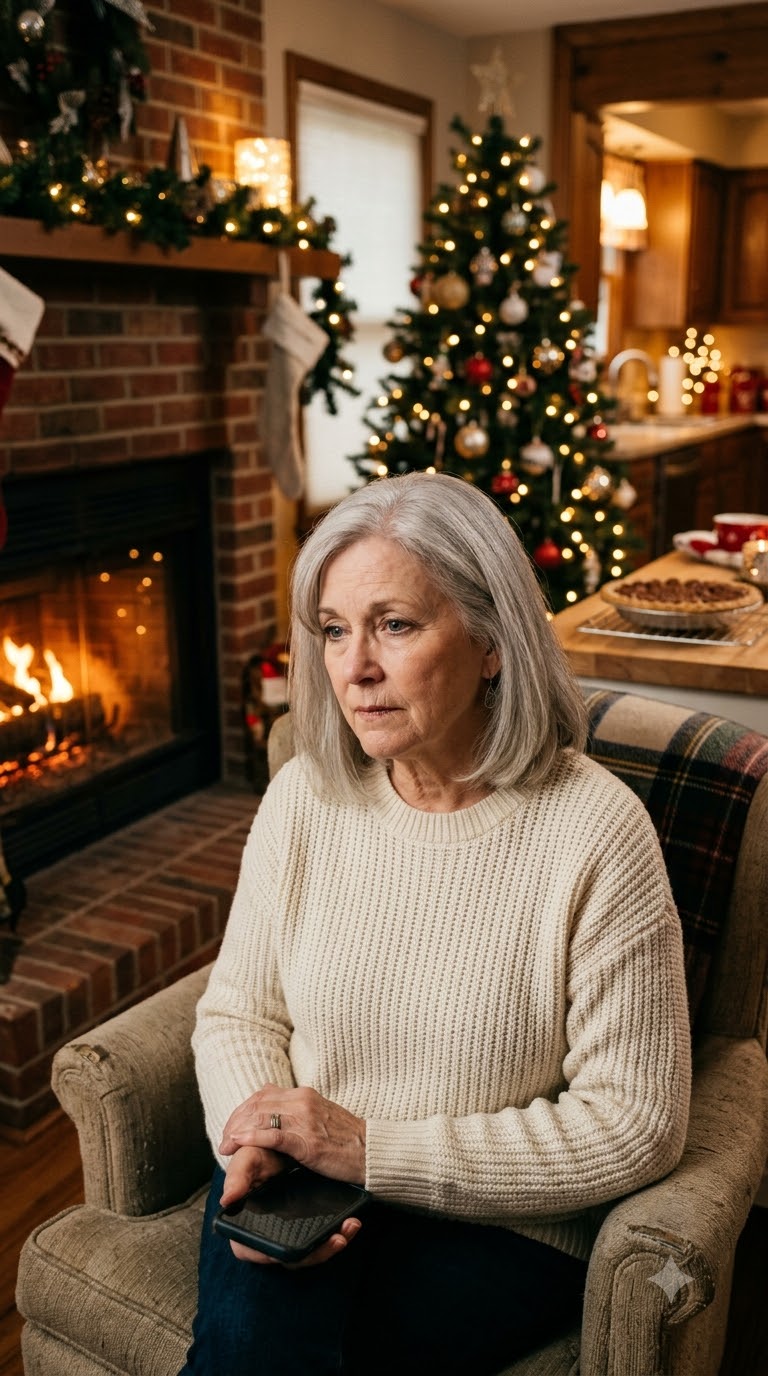
She hosted.
She remembered birthdays.
She baked Paul’s mother’s pecan pie every holiday.
She organized her life around everyone else.
And now, apparently, the simplest solution for everyone was for her to stay away.
Linda didn’t argue.
She didn’t plead.
She simply ended the call.
Later that evening, alone in the stillness of her house, she remembered something Paul had often told her.
“You spend your whole life taking care of everyone else. When are you going to do something just because you want to?”
At sixty-seven, eight years after his death, Linda suddenly understood that she had no answer.
So she went upstairs.
She took an old suitcase down from the top shelf.
Opened her laptop.
And booked a twelve-day Christmas tour through Germany, Austria, and Switzerland.
Her hands trembled as she clicked the confirmation button.
But she clicked it anyway.
For the first time in years, she wasn’t waiting for someone else’s permission.
She was giving herself permission.
On the flight to Europe, Linda sat beside a seventy-one-year-old widower named Robert. Halfway across the Atlantic, after nearly an hour of easy conversation, he asked:
“Are you heading home or heading somewhere new?”
Robert was a retired civil engineer from Portland. His wife had passed away four years earlier, and he was traveling to Munich to spend Christmas with his daughter.
Linda told him about her tour.
“Germany, Austria, Switzerland. Twelve days.”
“By yourself?”
“Yes.”
Robert smiled.
“Good for you.”
There was no pity in his voice.
No disbelief.
He genuinely meant it.
Linda admitted that it was the first major thing she had done alone since Paul died.
Robert nodded.
“It took me three years after my wife died before I went anywhere except the grocery store.”
Linda gave a sad smile.
“I barely left my town.”
“What finally changed?”
She thought about Hannah’s phone call.
“I was told to stay home for Christmas.”
Robert looked at her carefully.
“By somebody who should have known better?”
“My daughter-in-law.”
He paused.
“And instead?”
Linda turned her eyes toward the airplane window.
“And instead, I’m going to Europe.”
Robert smiled.
That was all.
They didn’t exchange phone numbers.
They didn’t make promises to remain in contact.
At Frankfurt Airport, they wished each other well before heading off in different directions.
And somehow, that short conversation was exactly what Linda needed.
Her tour group assembled at eight the following morning.
Twenty-four travelers gathered around a sign held by their guide, Greta, an energetic thirty-five-year-old woman who appeared to genuinely enjoy meeting new people.
Linda ended up walking beside Patricia, a sixty-nine-year-old retired attorney from Atlanta.
“What brings you here?” Patricia asked.
Linda replied without hesitation.
“My daughter-in-law told me to stay home for Christmas.”
Patricia blinked.
“So you booked a European vacation?”
“Yes.”
Patricia smiled.
“Good.”
Then she added:
“People told me I was too old to start over. So I retired and started over anyway.”
Linda immediately found herself liking her.
Nearby were Dennis and Beverly, a Chicago couple who had been married for forty-three years.
They navigated the airport as if they had been doing it together for decades.
Beverly glanced toward a bag.
Dennis picked it up.
Dennis made a small gesture toward the escalator.
Beverly understood instantly.
Watching them hurt Linda more than she had expected.
She had once been one half of a partnership like theirs.
Paul had been the one who was good at dreaming.
Linda had been the one who knew how to turn those dreams into reality.
Together, they had moved through life almost without needing words.
Now she was alone.
For thirty seconds, that thought threatened to pull her backward.
Then Greta started walking.
Linda followed.
SHE HAD NOT CROSSED AN OCEAN TO SPEND TWELVE DAYS GRIEVING SOMETHING SHE COULD NOT CHANGE.
Their first destination was Rothenburg ob der Tauber, a medieval Bavarian town so picturesque that Linda wrote in her new journal that it looked like the inside of a snow globe.
Timbered buildings stood beneath steep roofs, cobblestone streets wound through the town, and a Christmas market glowed beneath strings of warm lights.
That market became the first moment Linda truly knew she had made the right choice.
Patricia walked alongside her between rows of wooden stalls.
She purchased a small ornament.
“I collect these instead of photographs,” Patricia explained. “Pictures disappear into your phone. Ornaments come out once a year and force you to remember.”
“Do you have a Christmas tree at home?” she asked.
“Yes.”
“For yourself?”
Linda thought about the decorations waiting back in Ohio.
“It started as a tree for my son and daughter-in-law.”
She smiled.
“But I suppose it ended up being for me.”
Patricia nodded.
“That sounds like a better ending.”
Linda bought an ornament as well.
It was a delicate glass globe containing a tiny winter village.
It looked incredibly fragile.
She kept it in her hand luggage throughout the rest of the trip.
That evening, the group had dinner together around a long wooden table.
Linda sat between Patricia and Gerald, a sixty-five-year-old retired history teacher from Seattle.
Gerald seemed unable to visit a historical site without offering an explanation.
Normally, Linda might have found that tiring.
Instead, she enjoyed listening to him.
Gerald spoke about trade routes, medieval architecture, family businesses, and the centuries-old purpose of Christmas markets.
His excitement was contagious.
Eventually, Linda said:
“You must have been a good teacher.”
Gerald shrugged.
“I was adequate. I improved for thirty years and retired before I had time to get worse.”
Linda laughed.
“Do you miss teaching?”
“The students. Not the institution.”
“What do you do now?”
“I read. Travel when I can. And fail repeatedly at gardening.”
“My husband loved gardening.”
“Was he good?”
“Very.”
Linda smiled.
“I could kill almost anything. Paul could grow almost anything.”
“What happened to the garden after he died?” “It’s still there. I maintain it badly. The perennials return because they’re stubborn. I gave up on annuals.”
Gerald lowered his eyes toward his wine.
“My wife had roses.”
Linda looked over at him.
“I killed them the first year after she died.”
“How long has she been gone?”
“Six years.”
For a moment, silence settled between them.
Then Linda asked:
“Children?”
“Two daughters. Wonderful women. Very busy.”
“My son is good too.”
She paused.
“Also very busy.”
Gerald raised his glass.
“And yet here we are.”
Linda lifted hers.
“And here we are.”
The days that followed took them through Nuremberg, Munich, Salzburg, Innsbruck, and eventually Switzerland.
Every city gave Linda something she hadn’t realized she had been missing.
In Salzburg, she and Patricia spent twenty minutes arguing over whether its Christmas market was better than the one in Rothenburg.
It was the first disagreement Linda had actually enjoyed in years.
Then they reached Innsbruck.
And the mountains.
Linda hadn’t stood in front of mountains since a road trip through Colorado with Paul in 1998.
She had forgotten what mountains could do to a person’s sense of perspective.
The towering peaks didn’t erase her problems.
They simply pushed them farther into the distance.
Hannah’s voice telling her to stay home seemed farther away.
The empty Christmas house seemed farther away.
Eight years spent reshaping herself around everyone else’s expectations seemed farther away.
The mountains remained.
Huge.
Silent.
Indifferent.
Patricia came to stand beside her.
She didn’t say a word.
Linda realized it had been a very long time since she had known a friend who understood when silence was enough.
By the seventh day, while in Lucerne, Linda did something she almost never did.
She uploaded photographs online.
She had created a social media account two years earlier because Mark had suggested it might help her remain connected.
Most of the time, she used it to look at pictures of other people’s grandchildren.
But this time, she shared pictures of herself.
Christmas markets.
Meals whose names she couldn’t pronounce.
The ornaments she had gathered.
A wooden bear from Salzburg.
A small cowbell from Innsbruck.
A paper star from Lucerne.
Then she uploaded a photograph taken on Lucerne’s famous wooden bridge.
Patricia stood beside her.
Gerald stood on her other side.
All three were laughing.
Winter sunlight stretched across the river behind them.
When Linda looked at the photograph later, something about it stopped her.
She looked happy.
Not a polite smile.
Not a posed expression.
Actually laughing.
She hadn’t seen herself laugh like that in a photograph since Paul died.
Within two hours, notifications began filling her phone.
Old friends.
Neighbors.
Women from church.
Paul’s sister.
People she hadn’t spoken with in years.
The messages were almost identical.
You look wonderful.
Where are you?
I didn’t know you were traveling!
You look so happy.
And several people asked:
Who is the man?
The man was Gerald.
Nothing more.
A retired history teacher who had killed his late wife’s roses and become Linda’s friend during a twelve-day tour.
But in the photograph, he stood close enough to invite questions.
That evening, Mark called.
“Mom.”
“Yes?”
“Who is that guy?”
Linda smiled.
“His name is Gerald. He’s a retired teacher from Seattle.”
“You look…”
He stopped.
“Happy?” Linda offered.
“I was going to say comfortable.”
“That too.”
There was a pause.
“I didn’t know you were going to Europe.”
“I didn’t tell anyone.”
“Why?”
Linda considered the question.
“Because I didn’t want anyone giving me opinions about whether I should go.”
Mark went quiet.
“Mom…”
“Yes, sweetheart?”
“I’m sorry about Christmas.”
“I know.”
“Hannah should never have—”
“Mark.”
He stopped.
Linda looked around her hotel room.
“I’m having a wonderful time. I’m in Switzerland. I’ve walked through Christmas markets and seen mountains and stood on a bridge that’s centuries old. I’ve met people. I’ve laughed.”
“You looked great in that picture.”
“I feel great.” “I didn’t know you wanted to do things like this.”
Linda smiled.
“Neither did I.”
Then she added:
“Not until your father reminded me.”
“Dad?”
“Not literally. But sometimes I still hear him in my head. He used to tell me I spent too much time looking after everyone else.”
Mark sighed.
“He was right.”
“Yes.”
“I’m sorry.”
“I know.”
Then Linda said:
“Come to dinner when I get home. Bring Hannah. I’ll make the pecan pie.”
“Mom, you don’t have to.”
“I know.”
She smiled.
“I want to. There’s a difference.”
That sentence changed something between them.
Before they ended the call, Mark said:
“I love you.”
“I love you too.”
After placing the phone down, Linda opened the journal she had been writing in each night.
She hadn’t kept a journal since she was nineteen.
She had forgotten that putting something into words was another way of preserving it.
That night she wrote:
Day seven. Lucerne. Patricia. Gerald. The bridge. Mark called. I’m here. I’m actually here.
Then:
Paul was right. I should have been doing this years ago.
She stared at the sentence.
Then wrote:
But maybe I wasn’t ready until now.
The thought felt significant.
On the tenth day, Greta led the group to a small Alpine town that wasn’t included in the official itinerary.
Patricia and Linda walked ahead until they reached a snowy overlook.
Beyond the valley, mountains vanished into the clouds.
Patricia asked:
“What are you going to do when you get home?”
Linda frowned.
“What do you mean?”
“With your life.”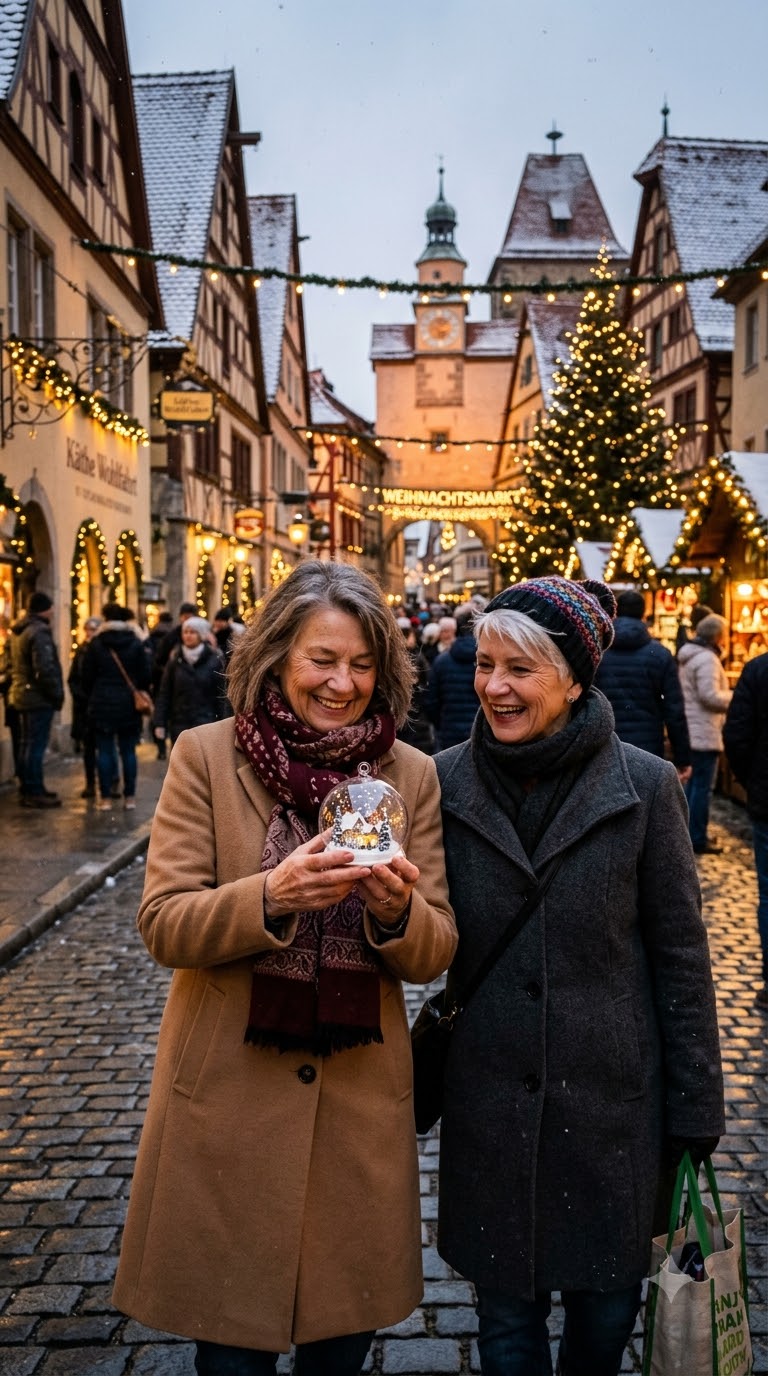
Patricia looked directly at her.
“Are you going back to exactly what you were doing before?”
Linda pictured the house.
The decorations.
The holidays where she had gradually become an extra person in other people’s plans.
Eight years spent making herself useful without ever asking whether she was fulfilled.
“No,” Linda said.
“What will you do instead?”
“I don’t know yet.”
She looked toward the mountains.
“But it will be different.”
Patricia nodded.
“I started over at sixty-eight.”
Linda looked at her.
“I thought it was too late.”
“Was it?”
“No.”
“What changed?”
Patricia smiled.
“I started saying yes.”
“To what?”
“This.”
She gestured toward the valley.
“Trips. Conversations. Learning things I didn’t need to learn. Being interested in the world instead of only being useful to one tiny part of it.”
Linda quietly repeated the phrase.
“Useful to one tiny part of it.”
“That’s what I was.”
“And?”
“It wasn’t enough.”
Linda nodded.
“No. It wasn’t.”
Patricia never explained exactly what she meant by us, but Linda understood anyway.
Women who had spent decades arranging their lives around everyone else.
Good wives.
Good mothers.
Reliable employees.
Dependable friends.
Always useful.
Rarely stopping to ask what they wanted.
“I’m going to travel again,” Linda said.
“Good.”
“I’m going to call people instead of waiting for them to remember me.”
“Good.”
“And I’m going to decorate for Christmas only because I want to.”
Patricia laughed.
“You love decorating.”
“I do.”
“Then decorate.”
“I WILL. BUT I WON’T DO IT AS AN OFFERING TO PEOPLE WHO MAY OR MAY NOT SHOW UP.”
Patricia nodded.
“That’s different.”
Linda looked at her.
“I want to take another trip.”
“So do I.”
“Would you come?”
Patricia smiled.
“I was going to ask you exactly the same thing.”
Two days later, Linda flew home.
The flight was uneventful.
Bad movies.
Half-sleep.
Breakfast served at a time her body couldn’t understand.
She landed in Cleveland at 6:40 in the morning, picked up her car from long-term parking, and drove along the familiar Ohio roads.
Her house appeared exactly as she had left it.
The tree was still standing.
The decorations remained where they had been.
The rooms were still quiet.
But Linda was no longer the same woman who had left.
She unpacked carefully.
Then she placed her four new ornaments on the Christmas tree.
The glass village from Rothenburg.
The wooden bear from Salzburg.
The cowbell from Innsbruck.
The paper star from Lucerne.
She stepped back and looked at it.
The tree seemed different.
Not because four ornaments could change it.
Because she had changed. She prepared some coffee and settled into her kitchen table.
Seventeen messages were waiting for her.
This time, Linda responded to people.
Paul’s sister.
A woman from church.
An old friend she hadn’t talked to since 2019.
She didn’t answer Hannah.
Hannah’s message said:
Beautiful photos! Looks like you had a lovely time!!!
Linda noticed the excessive punctuation.
Polite.
Social.
Obligatory.
She wasn’t ready to reply with something dishonest.
So she left it unanswered.
Instead, she called Mark.
“Mom, you’re home.”
“Just got in.”
“You exhausted?”
“Strangely, no.”
“The photos were amazing.”
“Thank you.”
“You really looked happy.”
“I was.”
Mark became quiet.
“I haven’t seen you look like that since Dad.”
“Neither have I.”
“He would have loved seeing you there.”
“He would have told me I should’ve gone sooner.”
Mark laughed softly.
Linda continued:
“Come for dinner Saturday.”
“You don’t need to cook.”
“I want to cook.”
She paused.
“Your grandmother gave me that pecan pie recipe when Paul and I married. I love making it. I’m not going to stop doing things I love simply because nobody expects them anymore.”
“Okay.”
“Six o’clock.”
“We’ll come.”
After ending the call, Linda opened her computer.
An email from Patricia was already waiting.
The subject line read:
Next one?
Inside were three options.
Portugal.
The Greek islands.
A train journey through Scotland.
Linda opened each link.
Read through everything.
Then replied:
Scotland. Spring. Let’s do it.
Patricia responded within ten minutes.
Booking now.
Linda booked as well.
Her hands didn’t tremble this time.
She knew precisely what she was doing.
For years, she had waited for someone to tell her that wanting more was acceptable.
No one had.
Because no one needed to.
She had always been allowed.
She simply hadn’t understood that.
Paul had spent thirty-five years telling her to care for herself as carefully as she cared for everyone else.
It had taken losing him, eight years of loneliness, and one painful Christmas phone call before she finally listened.
Linda closed the laptop and returned to the tree.
The new ornaments rested among decades of older decorations.
School crafts from grandchildren.
Ornaments she had bought with Paul.
Replacements for things that had broken over the years.
The little glass globe reflected the Christmas lights.
It was fragile.
Linda had carried it all the way across Europe in her hand luggage.
It had survived.
That thought remained with her.
Fragile things could survive long journeys when someone carried them carefully.
For thirty-five years, Paul had carried her carefully.
Now she was learning how to carry herself.
She was sixty-seven.
She had twelve days in Europe recorded inside a journal.
Four new ornaments.
A new friend named Patricia.
A son coming for dinner.
And Scotland waiting in spring.
She had everything she needed.
Most importantly, she had permission.
She had always had it.
She had simply needed to be excluded from Christmas before she finally discovered it.
But the story wasn’t over.
The Saturday dinner mattered too.
Mark and Hannah arrived fifteen minutes late, exactly as they always did.
Linda had prepared pecan pie.
She had also made pot roast, roasted carrots, salad, and bread.
Far too much food for three people.
But it felt right.
Hannah came in carrying a carefully selected bottle of wine.
She was also wearing the blue earrings Linda had given her three Christmases earlier.
Linda noticed.
Small things.
But effort often appeared disguised as small things.
“The house looks beautiful,” Hannah said.
“I brought back some new ornaments.”
Hannah walked over to the tree.
She noticed the glass globe.
“Where did you get this?”
“Rothenburg. At the Christmas market.”
Hannah picked it up carefully.
“It feels like it could break if you breathed on it.”
“I carried it all the way home in my hand luggage.”
Hannah placed it back on the branch.
Then she said quietly:
“I’m glad you went.”
Linda looked at her.
Hannah continued staring at the tree.
“I know I…”
“Hannah.”
She turned around.
“It’s okay.”
“No.”
Hannah shook her head.
“It wasn’t.”
Linda watched her.
“It made me take the trip. So strangely enough, part of me is grateful.”
Hannah looked uncomfortable.
“You’re very gracious.”
“I’m trying.”
“More gracious than I deserve.”
Linda smiled.
“Probably.”
Hannah stared at her.
Then suddenly burst into laughter.
Linda laughed too.
It was the first real laugh they had shared in years.
They walked into the kitchen. Hannah helped arrange the table.
Mark uncorked the wine.
And somewhere during dinner, something shifted.
Normally, their conversations seemed carefully controlled.
Safe subjects.
The weather.
Work.
Plans.
Nothing that could lead to disagreement.
But this time, Hannah asked genuine questions.
What had the Christmas markets been like?
How had the food tasted?
What was it like standing in cities where some buildings had been there for eight hundred years?
“Does being somewhere that old make you feel insignificant?” Hannah asked.
“No.”
Linda paused to think.
“It makes me feel placed. Like I’m part of something much longer than my own life.”
Hannah thought about that.
“I’ve never been to Europe.”
“You should go.”
“I keep meaning to.”
Linda smiled.
“I spent eight years meaning to.”
She looked straight at Hannah.
“Meaning to go somewhere and actually going are two very different things.”
A brief silence followed.
Then Mark asked:
“Tell us about Patricia.”
So Linda told them.
She talked about Patricia starting over at sixty-eight.
About Gerald and his history lessons.
About Greta.
The little Alpine town they had discovered.
Robert on the plane.
Mark smiled.
“You made friends.”
“I did.”
“You always told me you weren’t good at making friends.”
“I’m not very good at it here.”
“Why?”
Linda thought about it.
“History.”
Hannah frowned.
“What do you mean?”
“At home, everyone already knows who you’re supposed to be. The mother. The widow. The person who makes the pie. The woman who’s been managing alone for eight years.”
She smiled.
“When you travel, nobody knows any of that. You’re simply whoever you are at that particular moment.”
“That sounds freeing,” Hannah said.
“It was.”
Hannah fell quiet.
Then, unexpectedly, she said:
“Sometimes I feel that way too.”
Mark looked at her.
Linda waited.
“Like everyone already decided who I am,” Hannah continued. “And sometimes I’m just performing the part.”
She seemed almost startled by her own honesty.
Linda nodded.
“I think most people feel that way eventually.”
“Did you?”
“For eight years, I was almost entirely ‘Paul’s widow’ and ‘Mark’s mother.’ Nobody forced that on me. I was simply available to be those things and not much else.”
Hannah looked at her.
“And now?”
Linda smiled.
“Now I’m also the woman who traveled through Europe alone at sixty-seven and made a friend who’s going to Scotland with me.”
Hannah stared at her.
“You’re going where?”
“Scotland. In April.”
Mark laughed.
“You already booked another trip?”
“Yes.”
Hannah studied Linda for several seconds.
Then she said:
“I’m sorry, Linda.”
Linda noticed the name immediately.
Not Mom.
Linda.
FOR YEARS, HANNAH HAD CALLED HER MOM BECAUSE THAT WAS WHAT DAUGHTERS-IN-LAW WERE EXPECTED TO DO.
Yet somehow, hearing her own name felt more intimate.
More honest.
“I know.”
“I handled Christmas terribly.”
“Yes.”
“I was thinking about schedules and logistics.”
Hannah swallowed.
“I wasn’t thinking about you as a person.”
“Yes.”
Mark remained completely still.
Linda could tell he had been hoping for this conversation but had never known how to make it happen.
“I’d like to do better,” Hannah said.
“I’d like that.”
“What does better mean?”
Linda thought about the question.
“Include me.”
Hannah waited.
“Not because you feel obligated,” Linda continued. “Include me because you actually want me there. And if you don’t want me there, honesty is still better than pretending.”
“I do want you there.”
“Then include me.”
Hannah nodded.
“Okay.”
They finished dinner.
Then they had pecan pie.
Hannah ate two slices.
Later, she asked Linda to show her the photographs from Europe.
They sat together on the couch as Linda scrolled through the markets, the food, Salzburg, Innsbruck, and eventually the photograph on the bridge in Lucerne.
Mark pointed toward it.
“That’s the picture.”
“What picture?”
“The one that started everything.”
Linda laughed.
“What did it start?”
“Everyone saw you.”
He shook his head.
“People who hadn’t spoken to you in years were sharing it and saying, ‘Look at Linda.’”
“Look at Linda.” Mark smiled.
“You looked so…”
“Alive?”
“Yes.”
Linda looked at the woman laughing in the photograph.
“I was.”
Mark continued staring at it.
“I didn’t realize how much of that had disappeared.”
Linda placed her hand on his arm.
“Neither did I.”
When Mark and Hannah left around ten, Hannah wrapped both arms around Linda.
A genuine hug.
“Thank you for dinner.”
“Come again.”
Linda smiled.
“Not for Christmas or a birthday. Just come.”
“We will.”
Linda believed her.
Not entirely.
But more than she would have a month earlier.
Mark kissed her cheek.
“Love you, Mom.”
“Love you too.”
After their car vanished down the driveway, Linda made herself some tea and went back to the kitchen table.
The house was quiet.
But now the quiet felt different.
Before Europe, silence had meant absence.
Now silence could mean choice.
If Linda wanted company, she could call someone.
If she wanted to be alone, she could choose that.
Both were possible.
That was new.
She opened her journal and wrote:
Saturday dinner. Pot roast. Hannah wore the blue earrings. She called me Linda. She apologized. I think she meant it.
Then: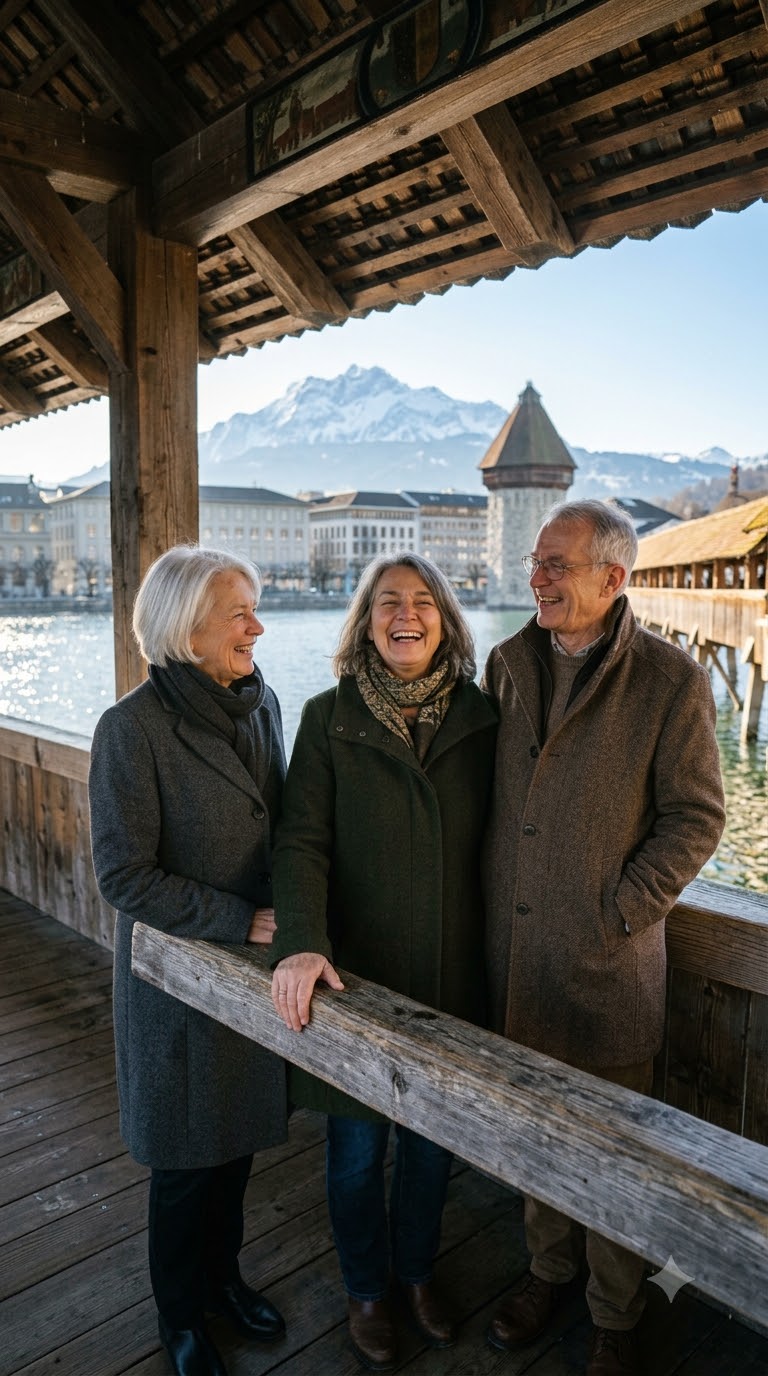
Mark said I looked alive in the photograph.
He was right.
I was.
I am.
Then:
Scotland. April 14.
Paul’s grandparents had moved from Scotland to Ohio generations earlier.
Linda thought about them leaving one place behind and creating a life somewhere else.
Then she thought about herself.
What she was creating wasn’t enormous.
But it was hers.
The journal.
The ornaments.
Her friendship with Patricia.
The trip to Scotland.
The pecan pie recipe she would someday pass on to Mark.
At sixty-seven, sitting alone at her kitchen table beneath the glow of the Christmas tree, Linda understood something simple.
This life was enough.
More than enough.
It was good.
She could almost hear Paul teasing her.
I TOLD YOU SO.
Linda smiled.
“Yes. You did.”
He had been telling her for thirty-five years.
She had finally listened.
Scotland in April.
The glass globe still unbroken.
Permission finally given.
Linda Dawson, alive.
And that was everything.
