

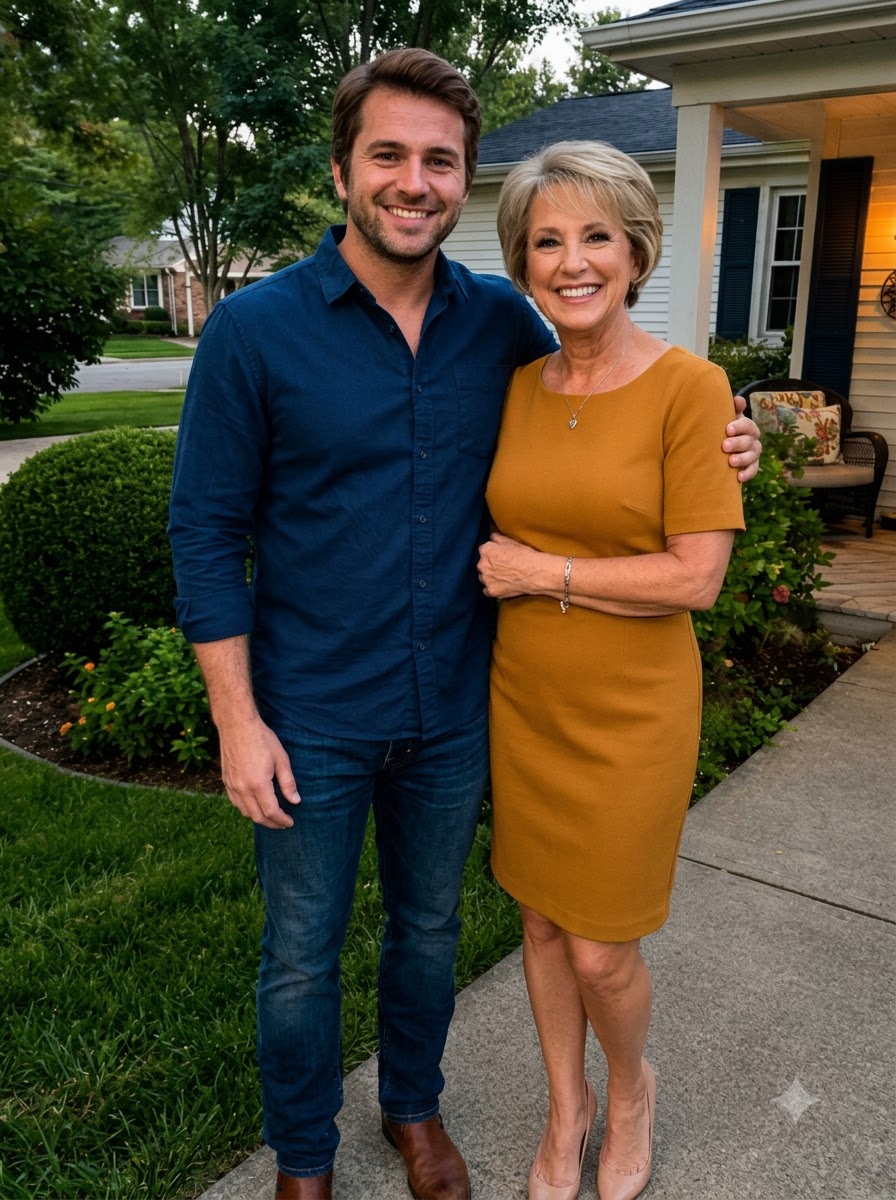
PART 1: THE THURSDAY SECRET
Three years after my father passed away, my mother’s house on Willow Lane had become quiet. The piano stayed closed, the garden became overgrown, and her smiles vanished almost as quickly as they appeared. I visited every week carrying food, photographs, and invitations she seldom accepted. Checking on her had become my way of proving I had not failed Dad.
Patrick, my childhood friend, continued visiting regularly. He cut the lawn, fixed little things, and stayed with Mom whenever the loneliness became too difficult. I trusted him. He had grown up four houses away and had always felt like family. Then one Thursday, I showed up without calling first.
The driveway was empty, but before I could pull away, Patrick arrived with Mom sitting beside him. She was wearing the blue dress she had once kept for anniversaries.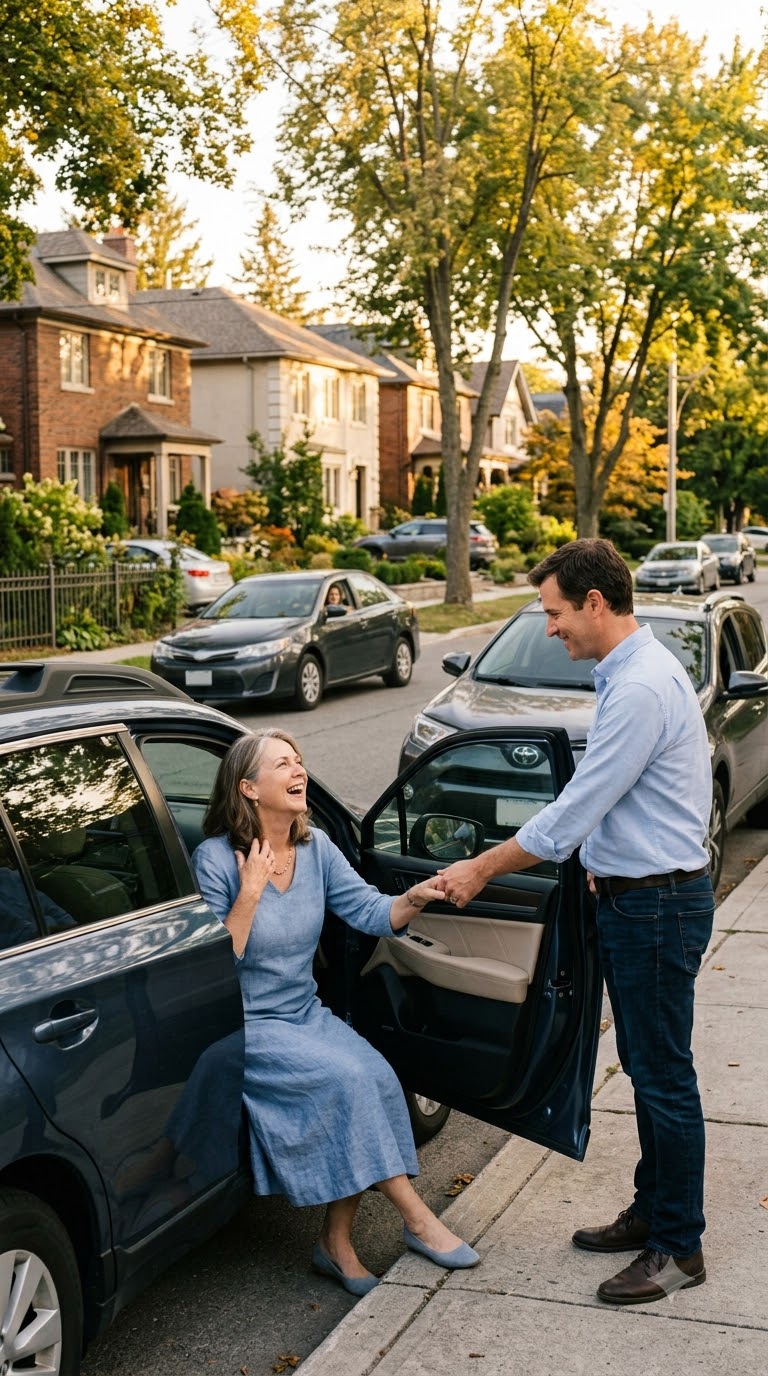
She was laughing.
It was not the careful smile she gave me. This was genuine laughter, her head tipped back and one hand resting near her collarbone. I had not seen her this alive since Dad died.
Patrick helped her out of the car, walked her to the porch, and waited until she was safely inside. Even so, the secrecy bothered me.
For the next two Thursdays, I watched from across the street. Patrick arrived at exactly the same time. Mom wore dresses she had stored away years earlier. Every week, she came home smiling.
Eventually, I asked her directly.
“Where do you go every Thursday?”
“Patrick takes me dancing in the park,” she said. “It has become our little tradition.”
I asked if I could come with them one time.
Her happiness disappeared.
“No. I would rather keep it between us.”
My husband, Daniel, said privacy was different from secrecy. My brother Marcus initially laughed, but his attitude changed after I explained how strongly Mom refused to let me come.
The next Thursday, I confronted Patrick outside her home.
“We don’t dance,” he admitted.
He explained that Mom had made him promise not to tell anyone, especially me. When I asked if she was sick, he said no. When I accused him of secretly being involved with her, hurt appeared across his face.
“It is not that,” he said. “But the truth is not mine to reveal.”
Then he drove away, leaving me even more worried than before.
PART 2: THE WOMAN IN THE BLUE HOUSE
By the following Thursday, I had told myself again and again to leave it alone. But Patrick’s words and the whispers between him and Mom stayed in my mind.
That evening, I parked two houses away and waited.
Patrick arrived at six. Mom came outside wearing a soft blue dress and holding a small tin wrapped in cloth. I followed them across town, keeping several cars between us.
They did not go to a park.
They stopped at a modest blue house.
An elderly woman opened the door, and my mother walked straight into her arms. They held each other like people reclaiming years they had thought were lost forever.
I got out of my car.
Patrick noticed me first and went pale. Then the older woman looked in my direction.
She had my mother’s eyes.
Inside, I demanded to know what was happening.
Patrick explained that he had kept the secret because it belonged to Mom.
The woman’s name was Margaret.
She was my mother’s biological mother.
After my grandmother passed away, Mom started going through files in the attic. Patrick helped her, and inside an old folder they found a letter addressed to Eleanor.
Margaret had written it years earlier after finally finding the daughter she had been forced to give up at seventeen. But the woman who raised Mom had hidden the letter, keeping them from reconnecting.
Mom discovered the truth at sixty-three.
She had kept it from us because she felt ashamed and frightened. After losing the mother who had raised her, she was afraid Margaret might reject her too.
The Thursday visits gave them a chance to get to know one another privately before bringing the family into it. The dancing story was simply a cover.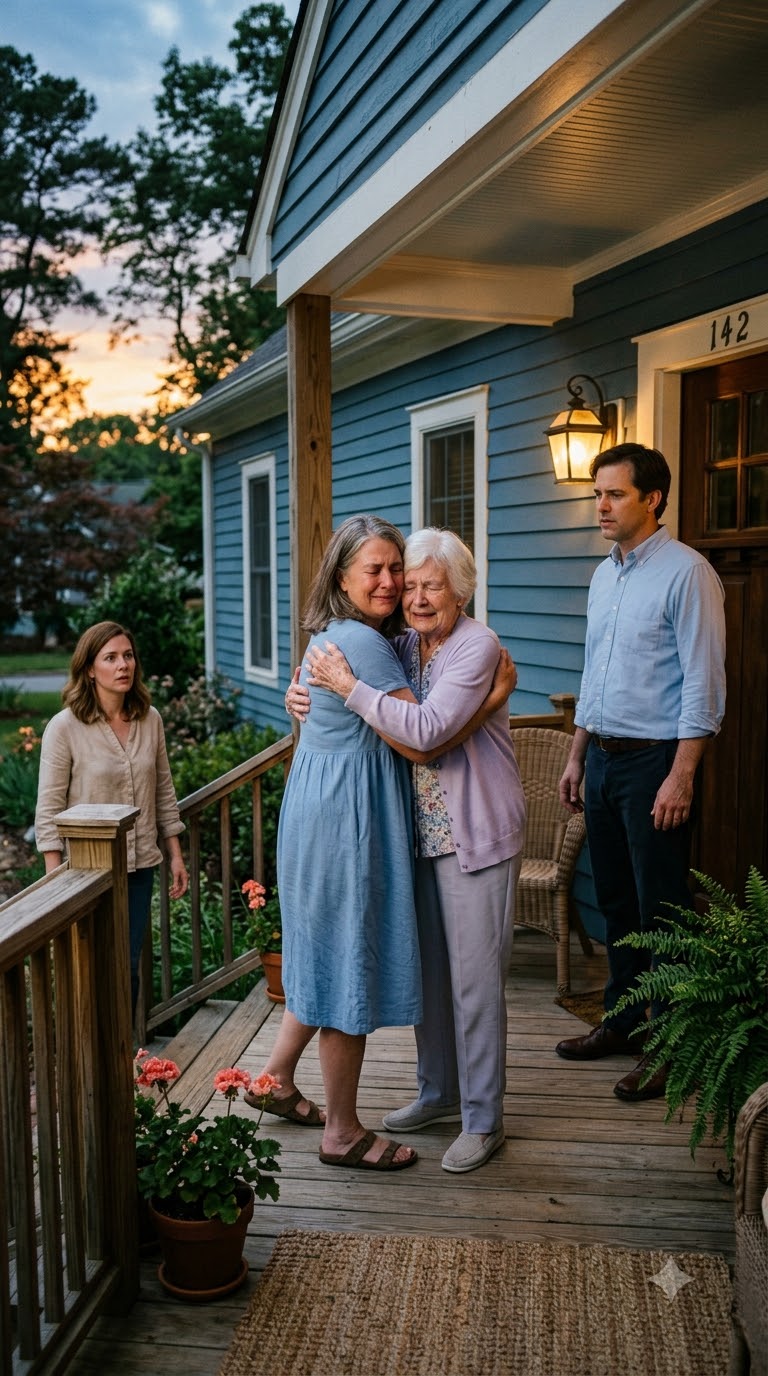
Margaret said she had spent every birthday wondering where her daughter was. She prayed Eleanor was safe and loved, but eventually accepted that they might never meet.
“These Thursdays gave me a reason to open the curtains again,” she whispered.
Something inside me softened.
Fear had occupied every space where the truth was missing. Patrick had only kept a promise and helped two women reclaim the time that had been taken from them.
I knelt beside Margaret. “My name is Rachel,” I said. “I am your granddaughter.”
Her trembling hand wrapped around mine.
Then I turned my attention to Patrick.
“I am sorry.”
He simply nodded, accepting my apology without making me feel smaller.
PART 3: WHEN THE HOUSE HUMMED AGAIN
The next Thursday, I arrived before five and remained on the porch rather than going inside.
When she opened the door, I lifted the covered dish in my hands.
“I wondered whether you wanted company.”
She looked carefully at my face before smiling.
“I was hoping you would ask.”
I came back carrying an old blue photo album packed with pictures from Mom’s childhood, school years, holidays, and everyday afternoons.
“I thought Margaret should have this.”
Mom’s eyes filled with tears.
When Patrick arrived, I settled into the back seat with the casserole resting across my knees. Nobody said anything about it.
At Margaret’s home, I set the album on the coffee table. She placed both hands on the worn cover, seeming almost afraid to open it.
Mom sat beside her.
“Go ahead,” she whispered.
One page at a time, Margaret saw the childhood she had missed. There was Mom on her first bicycle, wearing a paper crown at school, holding Marcus when he was a baby, and standing beside Dad on their wedding day.
Every photograph held grief, but gratitude was there too. The daughter Margaret loved had survived, grown up, and created a family.
Later, Mom noticed the piano standing against the wall.
She opened it and sat down. Margaret sat beside her, and together they began playing a slow, uneven song. Their hands searched for the same melody, while both women laughed whenever one of them missed a note.
I stood in the doorway with a lemon cake in my hands and listened.
For three years, I had tried to bring Mom’s life back through food, invitations, and memories. I had believed that caring meant knowing everything before she was ready to explain it.
But love was not surveillance.
It meant letting someone share the truth when they were ready.
My phone buzzed with a message from Marcus asking how Mom was doing. I watched her sitting beside Margaret, smiling through tears, then slipped the phone back into my pocket.
This was her story to share.
The truth had come more than six decades late, but it had still come.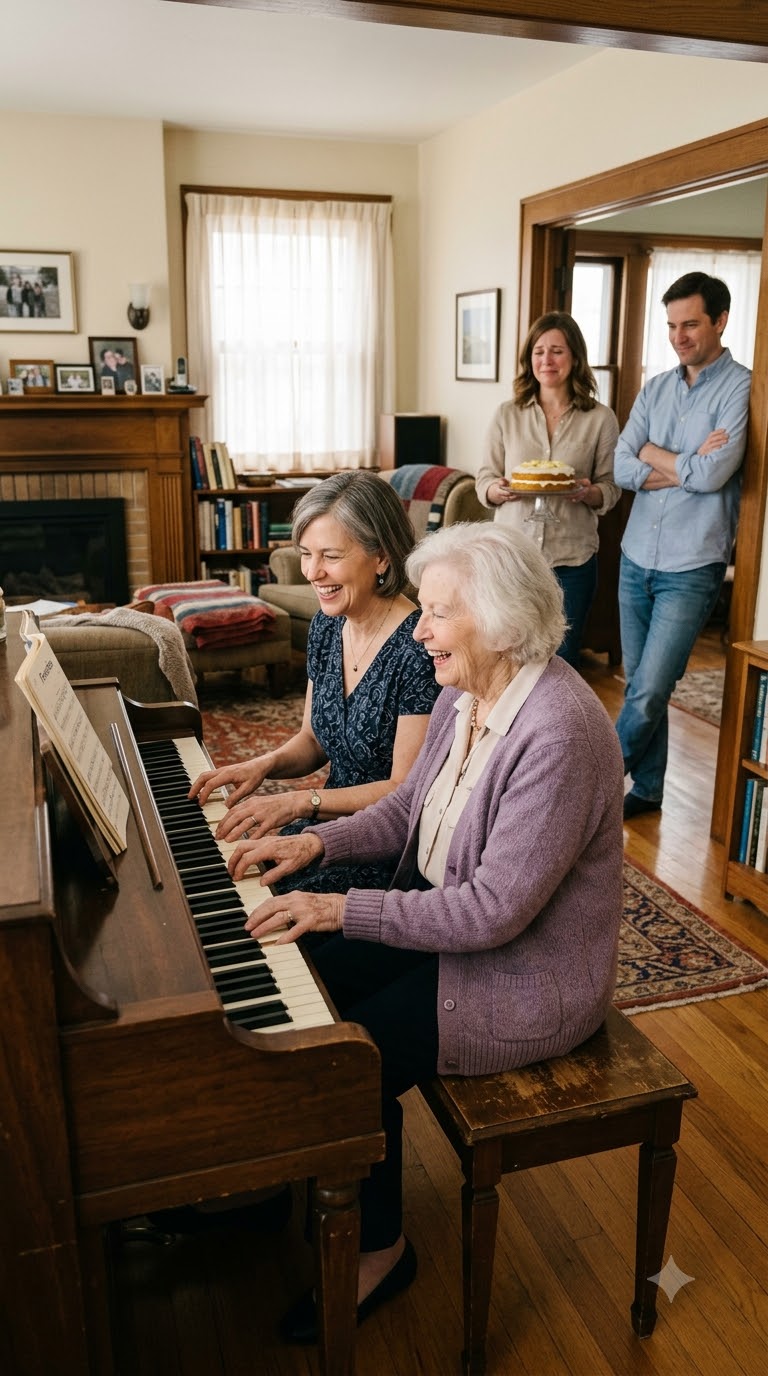
Mom had not betrayed Dad by laughing again. Patrick had not taken advantage of her grief. He had helped her reclaim a part of herself that had been missing.
And I had not failed my father by letting her move forward.
The house had not forgotten how to live.
It had simply been waiting for the right song.
As Mom and Margaret continued playing, their laughter spread throughout the room. The piano stood open, the curtains were pulled back, and the silence left behind after Dad’s death finally began to loosen.
For the first time in years, the house was humming again, and she finally looked fully alive again.
