

THE TWELVE SECONDS
The video lasted twelve seconds.
I was standing in a briefing room at Fort Bragg, North Carolina, when my phone vibrated against the table. I still had a marker in my hand when I saw our neighbor Carol’s name on the screen.
“Sarah, you need to see what happened to your mother.”
The video arrived before she finished speaking.
I stepped into the hallway and tapped play.
Miller’s Diner appeared on my screen. The same red booths. The same chrome-trimmed counter. The same brass bell above the front door that had been there since I was a child.
My mother, Linda Miller, stood beside the register in her faded blue apron.
A man I recognized as Jason Parker was standing too close to her.
I couldn’t hear the beginning of their argument. The video opened with Mom reaching toward a paper on the counter.
Jason grabbed it first.
Mom tried to move around him.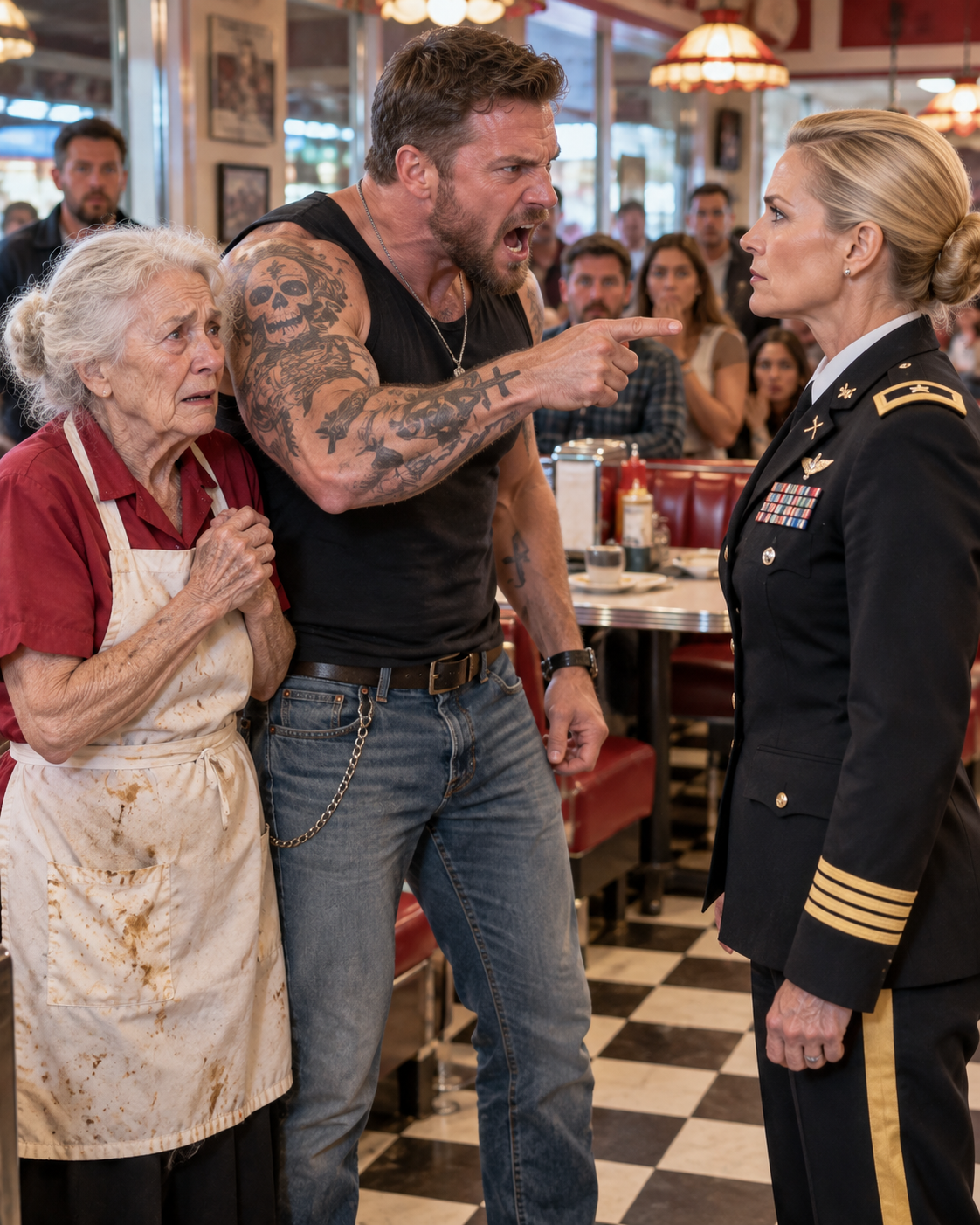
His arm came up.
She stumbled backward and fell to the floor.
Her glasses slid beneath a booth.
For two seconds, nobody moved.
Then Jason looked around at the customers.
“Everybody needs to remember how things work around here.”
Someone behind the phone whispered, “Oh, God.”
Jason turned toward the camera.
“I can do whatever I want in this town.”
The video ended.
I watched it again.
Then a third time.
I called Mom.
She answered on the fifth ring.
“I’m fine.”
“I didn’t ask if you were fine.”
Silence.
I returned to the briefing room, handed my notes to the officer beside me, and told him I had a family emergency.
Six hours later, I was driving toward the small North Carolina town where I grew up.
Mom was sitting at our kitchen table when I arrived. A bruise was forming along her cheek, and she kept her left arm close to her body. Her glasses rested beside a coffee mug, one lens scratched.
I picked them up.
“Did Jason Parker do this?”
Mom stared down at the table.
“I fell.”
“Mom.”
“Sarah, please.”
She finally looked at me.
“Don’t make this bigger.”
I sat across from her.
“Why?”
Her fingers tightened around the coffee mug.
“Because you don’t live here anymore.”
That answer troubled me more than a denial would have.
I asked what Jason wanted.
Mom didn’t respond at first. Then she opened the drawer beside the refrigerator and pulled out a folded envelope.
Inside was an offer from Parker Properties.
They wanted the diner.
More specifically, they wanted the diner and the three acres behind it.
The offer had expired two weeks earlier.
“How long has this been happening?”
Mom rubbed her shoulder.
“Robert started asking last fall.”
Robert Parker was Jason’s father. He had begun with a small construction company and spent twenty years purchasing land around the county. By the time I left for the Army, his signs were everywhere.
“You said no?”
Mom gave me a tired look.
“Your father said no first.”
I looked down at the paper.
Dad had been dead for six years.
Officially, he had lost control of his truck on a wet county road late one night.
There had never been another vehicle identified.
Mom reached across the table.
“Don’t.”
I looked at her.
“Don’t what?”
“Start connecting things that might not be connected.”
I folded the offer and returned it to the envelope.
“Then tell me what is connected.”
Mom stood and carried her coffee to the sink.
She wouldn’t answer.
EVERYONE SAW NOTHING
The next morning, I went to the diner before sunrise.
Mom had been opening that place at 5:30 every morning for almost thirty years. Dad used to work the grill while she ran the counter. After he died, she hired two cooks but refused to change anything else.
Even his old coffee mug still hung on a hook beside the kitchen door.
I stood near the booth where Mom had fallen.
Her glasses had landed underneath it in the video.
That was the image I couldn’t erase from my mind.
A seventy-five-year-old woman on the floor while an entire room acted as though nothing had happened.
By seven, the regulars began arriving.
I knew most of them.
I started asking questions.
“Were you here Tuesday?”
A man named Frank looked down at his coffee.
“For breakfast.”
“Did you see what happened to Mom?”
He stirred sugar into his cup for several seconds.
“Not really.”
“You were sitting six feet away.”
His spoon stopped.
“Sarah, your mom fell.”
At the next table, a retired teacher told me she had been looking toward the window.
Another customer said he had been in the restroom.
A third suddenly remembered that he had left before it happened.
By eight-thirty, I had spoken to seven people.
Nobody had seen anything.
Then Sheriff Mark Collins walked in.
He had known my father for years. When I was a teenager, he used to eat Sunday breakfast in this diner with his wife.
He removed his hat and nodded at me.
“Heard you were back.”
“You heard why?”
His expression stayed the same.
“Your mother’s accident.”
I stared at him.
“Accident?”
“She lost her balance.”
I pulled out my phone.
“I have video.”
He looked at the screen but didn’t take it.
“I’ve seen it.”
“Then you saw Jason Parker.”
“I saw a short clip that starts in the middle of an argument.”
“And ends with my mother on the floor.”
Collins lowered his voice.
“Sarah, I know you’re upset.”
“I’m not asking you how I feel. I’m asking whether you’re investigating.”
He looked around the diner.
Several customers suddenly became very interested in their plates.
“Nobody here says they witnessed an assault.”
“There’s a video.”
“There’s twelve seconds of video.”
He put his hat back on.
“Your mother doesn’t want to file a complaint. Without cooperation and without a clear witness, there’s not much here.”
Mom came out of the kitchen.
“Sarah.”
I looked at her.
She shook her head once.
Collins gave me a small nod and walked out.
I watched his patrol car disappear.
Then I turned toward the room.
Nobody looked at me.
That was when I stopped thinking Jason Parker was the whole problem.
FORTY-SEVEN SECONDS
The waitress who gave me the real video waited until after dark.
Her name was Megan Reed. She was twenty-three and had worked for Mom for about eight months.
At 9:40 that night, someone knocked on Mom’s back door.
Megan stood on the porch wearing jeans and a gray sweatshirt. She kept glancing toward the street.
“Can I come in?”
I stepped aside.
She didn’t sit down.
Instead, she pulled her phone from her pocket.
“The video online isn’t the whole thing.”
Mom looked up sharply.
“Megan.”
“I’m sorry, Mrs. Miller.”
She looked at me.
“I recorded forty-seven seconds.”
I held out my hand.
“Show me.”
The longer recording began twenty seconds before the clip I had seen.
Jason was standing at the counter with a document.
“Sign it, Linda.”
Mom pushed the paper back.
“I already told your father no.”
“He’s tired of asking.”
“Then tell him to stop.”
Jason leaned closer.
“You don’t want this becoming difficult.”
Mom looked toward the other end of the counter.
The camera shifted slightly.
A man stood near the pie display.
Robert Parker.
Jason’s father.
He wasn’t arguing.
He wasn’t trying to stop his son.
He was simply watching.
Jason pushed the document toward Mom again.
“Sign.”
“Get out of my diner.”
Then came the twelve seconds everyone had already seen.
When the recording ended, I said nothing for a moment.
Mom sat down.
Megan’s hands were shaking.
“Mr. Parker saw me holding my phone. I thought he saw me recording.”
“Who posted the short version?”
“A customer. He only caught the end.”
I sent the full video to myself, then uploaded copies to two separate secure accounts. Megan looked at me.
“What are you going to do?”
“Nothing tonight.”
Mom looked relieved.
Then I added:
“Tomorrow I’m going to the county records office.”
The relief disappeared from her face.
The next afternoon, I spent nearly four hours examining property records.
I wasn’t searching for a conspiracy.
I was searching for a pattern.
I found one.
A farm owned by Carol Jenkins’s family had rejected an offer from Parker Properties. Three months later, they found themselves caught in a mortgage dispute.
David Wilson refused to sell two acres near the highway. Soon after, permits for improvements to his property were delayed.
The Harris family challenged a rezoning request. Their property suddenly failed inspections it had passed for years.
I kept writing down names.
Eleven.
Seventeen.
Twenty-four.
By closing time, I had more than thirty.
Then I searched for my father’s name.
His file was thinner.
But inside was a copy of correspondence related to a proposed purchase of our land.
Dad had refused.
Someone had written a note on an internal copy.
UNCOOPERATIVE.
Beneath it was another word.
ESCALATION.
The date was twenty-six days before my father died.
I photographed the page.
Then I sat inside my car for several minutes without turning on the engine.
Mom had warned me not to connect things that might not be connected.
I wasn’t ready to connect them.
But I was finished ignoring them.
I WAITED AT THE COUNTER
Two days later, I returned to Miller’s Diner wearing jeans, boots, and a plain gray sweater.
No uniform.
No ribbons.
Nothing that revealed what I did for a living.
I took Dad’s old booth near the window and ordered coffee.
Mom kept watching me from behind the counter.
“You don’t have to sit here.”
“I know.”
“Sarah.”
“I’m having coffee.”
She gave me the look mothers give their children when they know they’re being deceived but don’t have the energy to argue.
Jason arrived at 10:17.
He entered alone.
The bell above the door rang.
Conversation stopped almost immediately.
Jason noticed me and smiled.
“Soldier girl came home.”
I took another sip of coffee.
He walked toward my booth.
“Your mother tell you to stay out of this?”
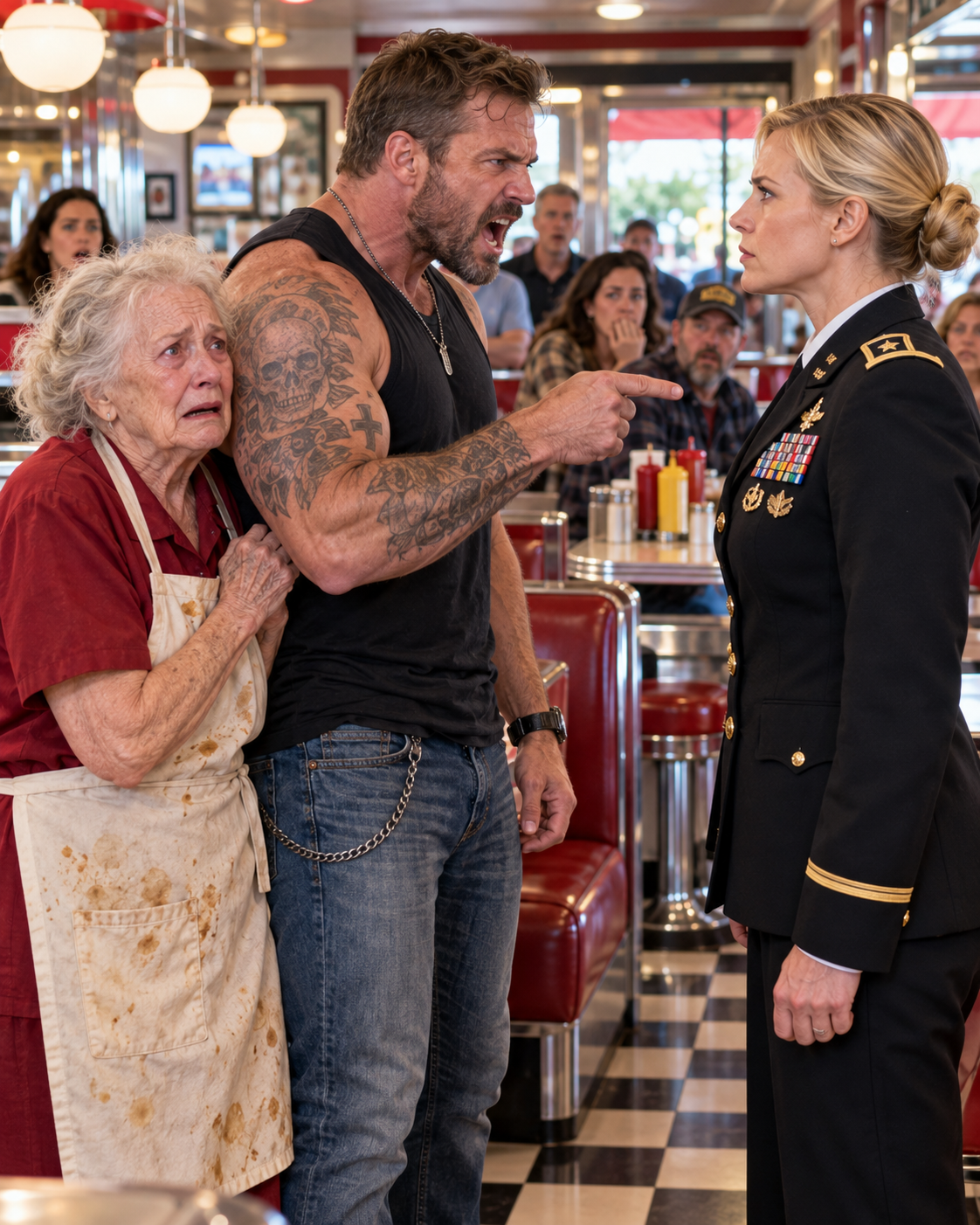
“She told me several things.”
“Then listen to her.”
He placed one hand on the table.
“This is business.”
“Then conduct it like business.”
His smile vanished.
“You think being in the Army means something here?”
“I didn’t mention the Army.”
“You didn’t have to.”
He leaned closer.
“Go back to your base. Your mother signs the papers, everybody moves on.”
“And if she doesn’t?”
Jason straightened.
He said nothing.
The front door opened again.
Sheriff Collins walked inside.
He looked at Jason.
Then at me.
That told me enough.
“Sarah,” he said, “outside.”
“Why?”
“Because you’re creating a disturbance.”
I looked around.
I was still sitting.
Jason was standing over my table.
“I’m drinking coffee.”
Collins stepped closer.
“I’m asking you to leave.”
Mom came out from behind the counter.
“Mark, this is my restaurant.”
“Linda, stay out of it.”
Her expression changed.
I set down my coffee cup.
“Don’t speak to my mother like that.”
Jason quietly laughed.
Then headlights swept across the front windows.
Two black SUVs pulled into the parking lot.
Jason looked outside.
Collins did too.
The diner fell silent.
The doors opened, and several uniformed personnel stepped out.
One of my officers entered first.
He spotted me near the window and walked directly across the diner.
Jason stepped aside.
The officer stopped in front of my booth.
“Good afternoon, Colonel Miller.”
Nobody spoke.
Jason looked at me.
Then at the officer.
Then back at me.
“Colonel?”
I stood.
“Yes.”
Collins’s expression immediately changed.
I picked up my coffee.
“But that doesn’t matter here.”
I looked at Jason.
“This isn’t military business.”
Then I looked at Collins.
“Which means nobody gets to pretend I’m using my rank against you.”
The officer beside me waited.
I handed Mom enough cash to cover my coffee.
“I’m leaving because I have somewhere else to be.”
Collins said nothing.
Jason did.
“This isn’t over.”
I stopped beside the door.
“I know.”
For the first time since I came home, I believed him.
And for the first time, I wasn’t concerned about what he meant.
WHAT MY FATHER LEFT BEHIND
The man waiting for me that afternoon was Thomas Bennett.
He had been my father’s attorney for nearly fifteen years.
I hadn’t seen him since Dad’s funeral.
Thomas placed an old brown leather briefcase on Mom’s kitchen table.
She recognized it immediately.
“Where did you get that?”
“Your husband gave it to me.”
Mom sat down.
I remained standing.
“When?”
Thomas looked at me.
“Six weeks before he died.”
He opened the case.
Inside were copies of property assessments, bank records, correspondence, and handwritten notes.
My frustration began to rise.
“You had this for six years?”
Thomas didn’t try to defend himself.
“Your father told me not to give it to anyone unless Parker came after the diner again.”
Mom pressed her fingers against her mouth.
“Why didn’t he tell me?”
“Because he was trying to protect you.”
I hated that answer.
Mostly because it sounded exactly like Dad.
Thomas reached into a side pocket and pulled out a small digital recorder.
“This is why I’m here.”
He placed it on the table.
I pressed play.
Dad’s voice filled the kitchen.
Older than I remembered.
Tired.
He was discussing property values, permits, and payments.
Then another voice responded.
Robert Parker.
I recognized it immediately.
“People get paid because things need to move.”
Dad said something about county officials.
Robert laughed.
“You want to keep your diner, keep it. But don’t stand in the way of everything around it.”
Dad asked about several families whose properties had changed hands.
There was a pause.
Then Robert said:
“Everybody has a number. If money doesn’t find it, pressure usually does.”
I stopped the recording.
Nobody spoke.
The refrigerator hummed behind us.
Mom reached across the table and touched the recorder with one finger.
“He knew.”
Thomas nodded.
“He suspected.”
That distinction mattered. So did the evidence. I didn’t call Jason.
I didn’t call Robert. And I didn’t call Sheriff Collins.
I made copies.
Then I contacted federal investigators.
What had started with twelve seconds inside my mother’s diner was no longer about twelve seconds.
It was about years.
And now, for the first time, the people involved had no idea exactly what we possessed.
THE PEOPLE WHO HAD STAYED QUIET
The first person to call Mom was Carol Jenkins.
Then David Wilson.
Then a woman from the Harris family.
The twelve-second video had traveled farther than anyone expected. People who hadn’t been willing to speak inside the diner were suddenly seeing thousands of strangers asking the same question:
Why was nobody helping her?
Carol came to the diner before opening one morning.
She sat in Dad’s booth, holding her coffee with both hands.
“They came after our farm too.”
I sat across from her.
“Tell me exactly what happened.”
She did.
Her family had turned down an offer from Parker Properties. Within months, problems began appearing with their loan paperwork.
Carol had always believed it was bad luck.
Until she heard about David.
David had believed his permit problems were bureaucracy.
Until he heard about the Harris family.
The Harris family had believed their inspections were random.
Until they saw Mom on the floor.
People had spent years thinking they were alone.
Now they were comparing dates.
The pattern became increasingly difficult to dismiss.
Federal investigators started collecting records. They traced payments linked to Parker Properties and compared them with land purchases, rezoning decisions, and enforcement actions.
Sheriff Collins’s name appeared.
So did Mayor Susan Carter’s.
Two county commissioners appeared repeatedly as well.
I wasn’t told everything. Investigators don’t work that way, and I wasn’t part of their team.
But I knew enough.
There were payments.
There were favors.
There were decisions that suddenly made sense when the money was placed beside them.
Robert Parker stopped coming to the diner.
Jason stopped too.
For about a week, the town became strangely quiet.
Then Thomas called me at 6:12 one morning.
“We have a problem.”
“What happened?”
“Someone is moving records.”
THREE COPIES
Sheriff Collins had been seen taking boxes out of an evidence storage area.
By the time federal agents arrived, some records were already gone.
Mom heard about it from a customer and immediately called me.
“Sarah, your father’s papers—”
“They’re safe.”
She stopped.
“How do you know?”
Thomas answered that question when he came over later.
He had created three complete copies of Dad’s material years earlier.
One was stored locally.
Two were kept in safe-deposit boxes in different states.
I stared at him.
“Dad told you to do that?”
Thomas shook his head.
“That part was my idea.”
For the first time since seeing him again, I smiled.
“Good idea.”
Taking one box from an evidence room was one thing.
Removing every copy of something that had already been preserved was another.
Federal agents searched the sheriff’s office.
Computers were taken.
Storage devices were taken.
Records were taken.
Collins didn’t report to work the following morning.
Then the arrests began.
Jason Parker was taken into custody first.
Robert followed.
Sheriff Collins was arrested soon after.
Two county commissioners were charged.
An attorney who had worked with Parker Properties for years was accused of participating in fraud and obstructing the investigation.
Mayor Susan Carter resigned.
That didn’t end the investigation into her.
Mom and I watched the news from her kitchen.
She turned the television off halfway through the report.
“I don’t want to watch anymore.”
I didn’t turn it back on.
She walked over to the sink and stood there for a while.
Then she asked the question I knew was coming.
“What about your father?”
I didn’t answer immediately.
Because I didn’t have an answer.
SIX YEARS EARLIER
A federal investigator called me three days later.
I stepped outside the diner to answer it.
He spoke carefully.
There was no new conclusion about Dad’s death.
No one was telling us Robert Parker had caused it.
No one was telling us Sheriff Collins had covered it up.
The evidence did not establish that.
But Dad’s name appeared in records tied to the property pressure.
His own notes showed that he had become concerned.
The word escalation had been written shortly before his death.
And the recording proved he had confronted Robert about the larger pattern.
That was enough for authorities to reopen the case.
I stood beside Mom’s car with the phone pressed against my ear.
“So what are you saying?”
“We’re saying the original conclusion deserves another look.”
“Was my father’s death an accident?”
There was a pause.
“We don’t know.”
It wasn’t the answer I wanted.
But it was the first answer in six years that didn’t pretend to know something that remained uncertain.
When I went back inside, Mom was wiping down the counter.
She looked at me once.
“They reopened it?”
I nodded.
She put the cloth down.
For a moment, she stared toward the old photograph of Dad hanging beside the kitchen entrance.
Then she picked the cloth back up.
“Okay.”
That was all she said.
THE DINER OPENED AGAIN
Mom closed Miller’s Diner for nine days.
She said it was because the kitchen needed repairs.
Nobody believed her.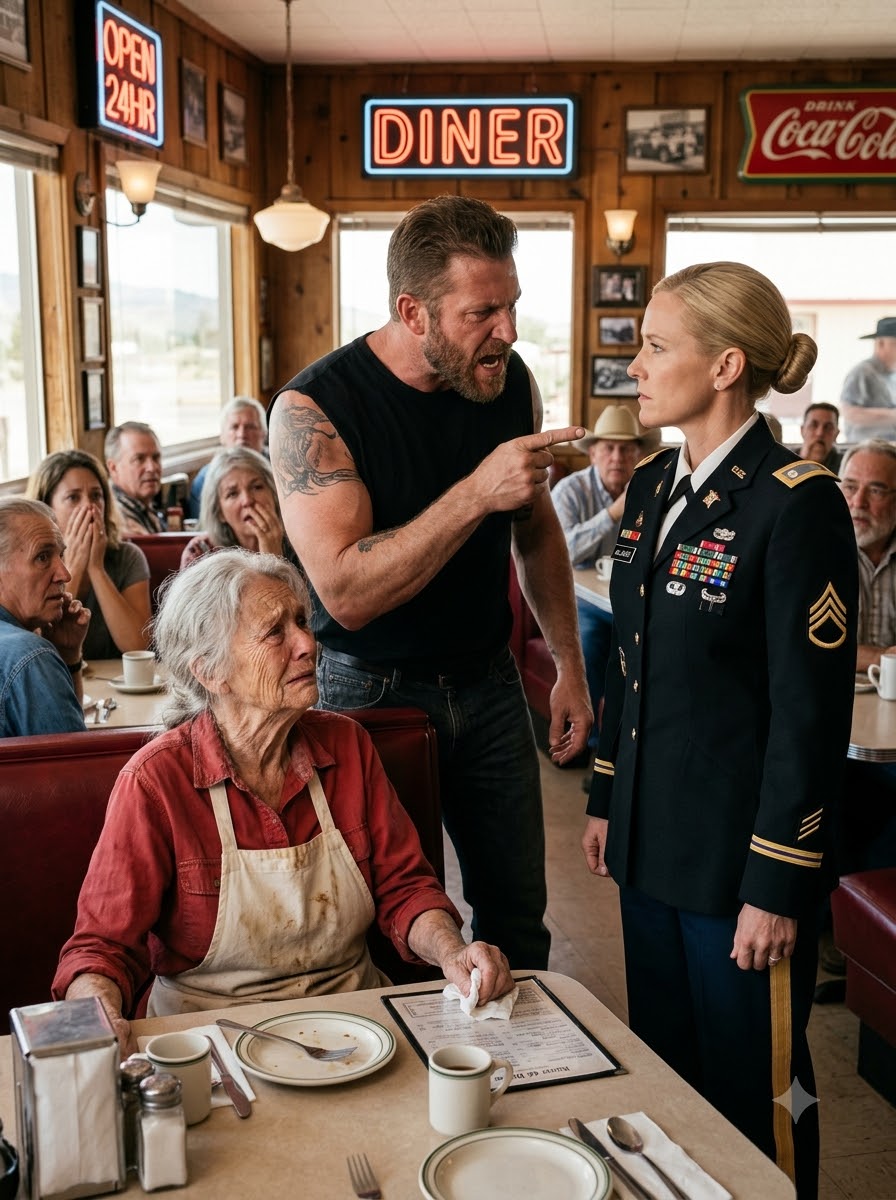
When she reopened, people began arriving before sunrise.
By six-thirty, every booth was occupied.
Carol Jenkins came.
David Wilson came.
The Harris family came.
So did several people who had been inside the diner when Mom fell.
Frank stood near the register for almost a minute before speaking.
“Linda, I’m sorry.”
Mom looked at him.
“For what?”
He swallowed.
“For seeing it.”
She didn’t make him explain.
She simply nodded toward an empty chair.
“Sit down, Frank. Coffee?”
His eyes dropped.
“Please.”
Outside, someone had placed a small wooden sign near the entrance.
Mom hadn’t asked for it.
She almost took it down.
Instead, she left it there.
It didn’t mention the Parkers.
It didn’t mention the sheriff.
It simply said that silence protects the wrong people.
I wasn’t sure Mom liked the wording, but she never removed it.
Around noon, I sat in Dad’s old booth.
The same booth where I’d waited for Jason.
The same booth beneath which Mom’s glasses had disappeared after she hit the floor.
Mom brought me a slice of apple pie.
“You staying tonight?”
“Yeah.”
“Good.”
She started walking away.
“Mom.”
She turned.
I pointed toward her glasses.
She had replaced the scratched lens but kept the same frames.
“You could’ve bought new ones.”
She touched them automatically.
“These still work.”
I smiled.
That sounded like her.
Around us, the diner was loud again. Plates touched tables. Coffee poured. Someone laughed near the window.
Some of those people had looked away when my mother needed them.
Now they were sitting beside the families who had spent years believing their own problems were isolated accidents.
I couldn’t tell them what would happen with my father’s case.
I couldn’t tell Mom that we would ever get a complete answer.
But Robert Parker could no longer walk into her diner and expect the room to fall silent.
Neither could his son.
Mom stopped beside my booth and pushed the pie plate closer.
“Eat before it gets cold.”
So I did.
And beneath the table where her glasses had once landed, there was nothing left for anyone to hide.
