

PART 1
My son Caleb was eight when the doctors told me he needed an operation I could never afford.
I had been raising him alone since the day he was born. His father walked away when I was six months pregnant. He said he wasn’t prepared for a family, packed his things, and vanished before I had even purchased the crib.
Everyone urged me to give the baby up. I refused. I worked every shift available. I cleaned offices at night and cared for elderly patients during the day. I went without meals so Caleb would have everything he needed.
But when the hospital handed me the estimate for his surgery, I felt physically ill.
That was when I met Arthur Pendelton.
I wasn’t originally hired to look after him. I had been employed as a caregiver for his older sister, Florence, after she suffered a stroke. Arthur was eighty-one, widowed, and so wealthy that even the household staff spoke quietly around him.
He wasn’t bedridden yet, but he knew his time was running out.
One evening, he stopped me in the hallway and quietly said, “Soon, I’ll need a caregiver too. My heart is failing.”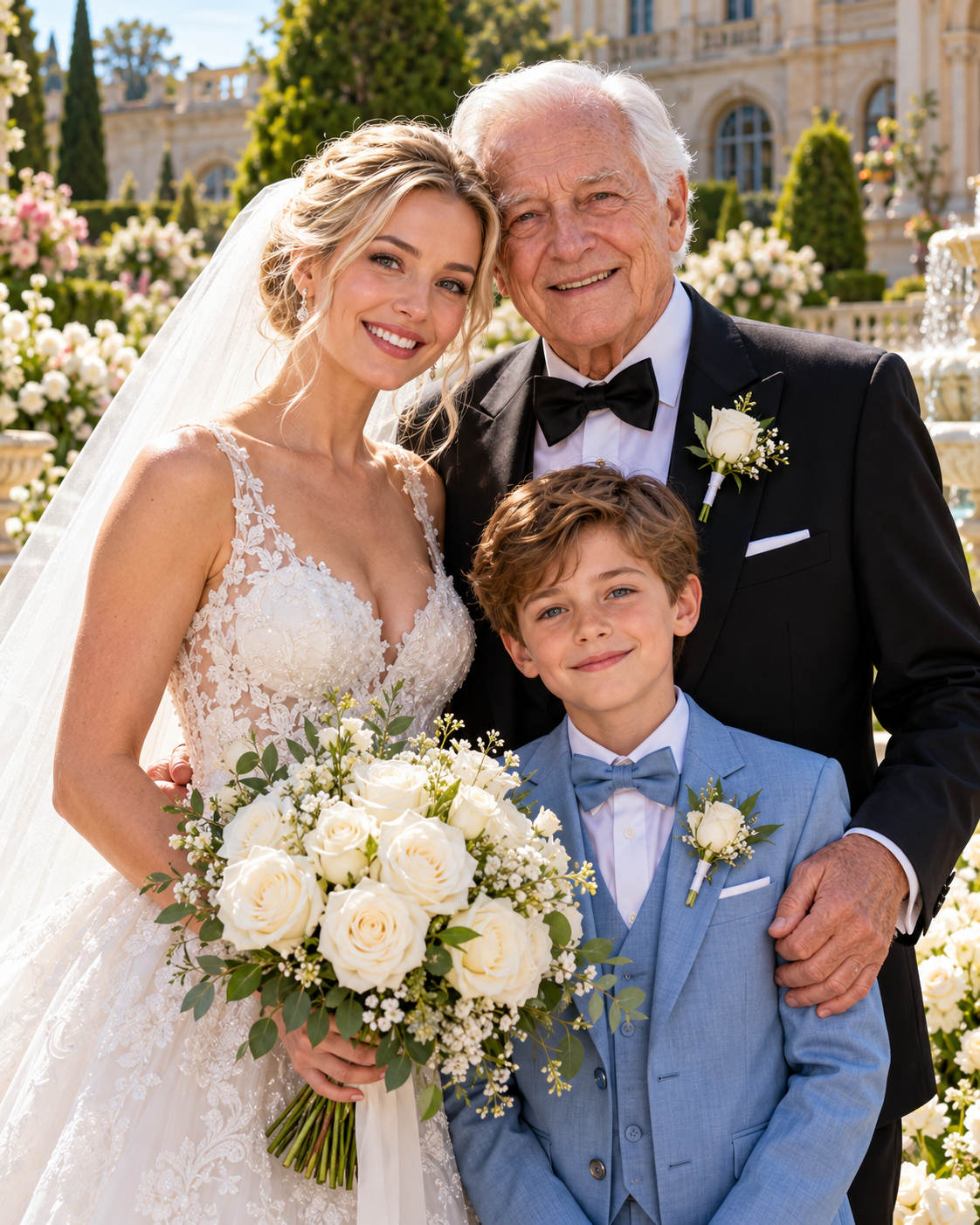
For months, I watched his grown children argue over their inheritance while he was still alive. One night, he asked me why my hands trembled every time the hospital called.
I told him the truth.
The following morning, he offered me a deal.
“Marry me,” he said calmly. “Your son gets the surgery. I get a wife my children can’t control.”
I thought he had lost his mind. Then Caleb’s condition deteriorated. So I agreed.
The wedding was enormous. Reporters gathered outside the mansion gates. White roses covered everything. Arthur’s children looked at me as though I had taken something that belonged to them.
Caleb stood beside me in a small navy suit, smiling. He had no idea I was doing all of this to save his life.
That night, Arthur brought me into his office, shut the door, and said:
“The doctors already have their money. Now you can finally learn what you really signed for.”
PART 2
My breath stopped. I instinctively stepped backward toward the heavy oak door, my heart pounding violently in my chest.
“Arthur… what are you talking about?” I asked, my voice barely above a whisper. “We had an agreement. A legal marriage of convenience. I care for you, Caleb gets his surgery, and your estate stays protected from your children.”
Arthur crossed to his grand mahogany desk, slowly removing his tuxedo jacket. From a locked drawer, he took out a thick black leather-bound binder and pushed it across the polished surface toward me.
“Sit down, Clara,” he said softly. The chill in his voice was gone, replaced by an overwhelming, profound exhaustion.
I paused before sitting in the leather armchair opposite him. Then I opened the binder.
There were no marriage certificates or hospital bills inside. Instead, I found financial audits, offshore bank statements, corporate filings, and covert photographs of Arthur’s two adult children, Julian and Victoria.
“My children aren’t just greedy, Clara,” Arthur said, lowering himself heavily into his chair. “They are dangerous. Three months ago, my private security team discovered that Julian had been quietly bribing my personal physician to alter my heart medication dosages—slowly poisoning me to accelerate my death before my new estate plan took effect.”
I looked at him in complete horror. “They… they tried to kill you?”
“They are still trying,” Arthur corrected me. “According to my late wife’s original trust, if I die while unmarried, fifty-one percent of Pendelton Enterprises automatically reverts to Julian and Victoria. But if I am legally married at the time of my passing, my surviving spouse inherits controlling voting rights and sole executorship over the foundation.”
He leaned forward across the desk, his eyes fixed directly on mine.
“I didn’t marry you just to spite them, Clara. I married you because you are the only person who has entered this house in ten years who doesn’t care about my money. I signed over full legal guardianship of the foundation to you. The moment I die, you become the trustee of a three-hundred-million-dollar charitable trust.”
My head began to spin. “Arthur, no… I can’t manage an empire! I’m a nurse! I clean offices!”
“You are a mother who fought for her child’s life with her bare hands,” Arthur said, his voice filled with absolute conviction. “You have more integrity in your little finger than my children have in their entire bodies. Everything is set up. My legal team will guide you. All you have to do… is survive them.”
Before I could respond, a sudden, frantic pounding shook the office door.
“Father!” Julian’s voice shouted from the hallway, filled with venom. “Open this door! We know what you did with the estate lawyers today!”
Arthur gave me a faint, sorrowful smile. “And so it begins.”
PART 3
The following morning, Caleb was admitted to St. Jude’s Children’s Hospital.
Because of Arthur’s immediate wire transfer, the country’s top pediatric surgical team was assembled within hours. As Caleb was prepared for his operation, Arthur and I sat together in the private waiting room. At 11:00 AM, Julian and Victoria entered the hospital suite with two expensive estate attorneys beside them.
“This marriage is a farce!” Victoria spat, glaring at me as if I were dirt beneath her designer heels. “She’s a mercenary nurse taking advantage of an old man with failing mental capacity! We’ve already filed a petition for emergency adult guardianship over our father!”
Arthur didn’t bother getting to his feet. He calmly took a sip of tea before turning his attention to their lead attorney.
“You’re welcome to try, Victoria,” Arthur said evenly. “However, before you file that petition, perhaps your attorney would like to review this file.”
Arthur reached into his briefcase, removed a manila envelope, and placed it on the coffee table.
Julian’s eyes narrowed. “What is that?”
“It’s a comprehensive forensic toxicology report from an independent lab,” Arthur replied. “Along with a recorded confession from Dr. Evans detailing the fifty thousand dollars you transferred to his private account in the Cayman Islands to tamper with my prescriptions.”
Julian’s face turned deathly pale. The color disappeared so quickly that he looked as though he might collapse onto the hospital carpet.
Their lead attorney immediately moved backward, slipping his hands into his pockets. “Julian… is this true?”
“It’s a lie!” Julian stammered, his voice cracking. “He’s making it up!”
“The State Attorney’s Financial Crimes Unit received the full dossier at eight o’clock this morning,” Arthur added calmly. “If you sign a formal, irrevocable waiver relinquishing all claims to Pendelton Enterprises and the family trust within the next ten minutes, I will instruct my attorneys not to press criminal charges. You will receive your mother’s modest legacy trust, and not a penny more.”
Victoria spun toward her brother, overcome with rage. “You idiot! You tried to poison him?!”
“Shut up, Victoria!” Julian yelled.
Within six minutes, both children signed the waiver documents prepared by Arthur’s legal team, their faces flushed with fear and defeat. They left the hospital without looking back.
Two hours later, the chief surgeon emerged from the operating room in blue scrubs, wearing a broad smile.
“Mrs. Pendelton?” the surgeon called out.
I rose from my seat, my heart jumping into my throat.
“The surgery was a complete success,” the doctor announced. “Caleb’s heart repair went better than expected. He’s in recovery now, fully stable, and he’s going to live a long, healthy life.”
I sank back into my chair, covered my face with my hands, and cried tears of overwhelming, pure relief.
Arthur reached across and placed his warm, steady hand over mine. “He’s safe, Clara. Your little boy is safe.”
FINAL PART
Six months later, bright morning sunlight streamed through the floor-to-ceiling windows of a beautiful, peaceful villa overlooking the coast.
In the backyard, nine-year-old Caleb raced across the lush green lawn, laughing as he chased our golden retriever. His cheeks were rosy, his energy endless, and his heart completely healed.
On the back porch, Arthur rested in a comfortable armchair, wrapped in a soft wool blanket. His health had deteriorated considerably over the previous months, but his expression was peaceful, finally free from the heavy conflict that had burdened his final years.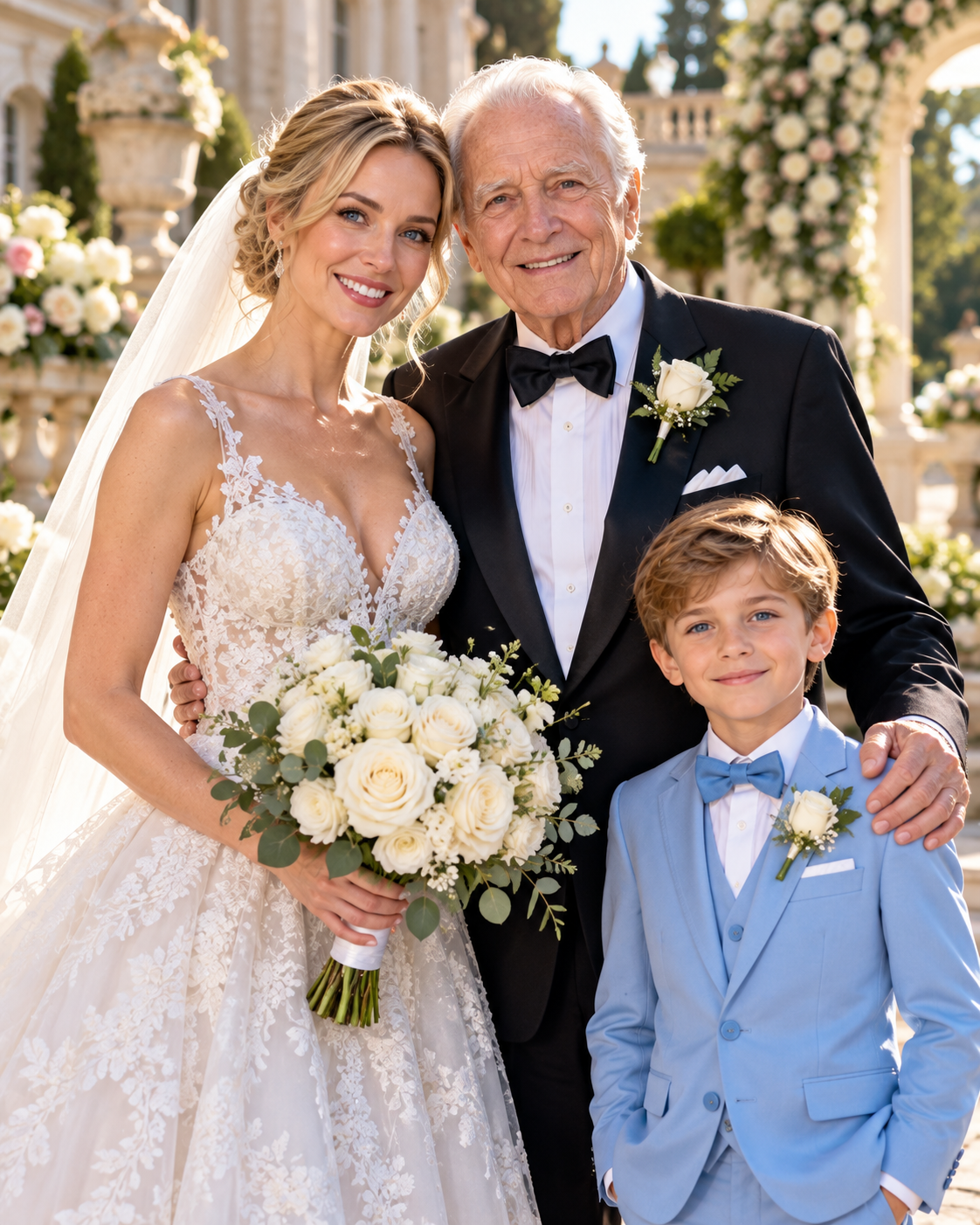
I brought him a fresh cup of chamomile tea and settled into the chair beside him.
“He runs so fast now,” Arthur whispered, his gaze fixed on Caleb playing in the sunlight.
“Thanks to you, Arthur,” I said, leaning over to gently kiss his cheek. “Thanks to everything you gave us.”
Arthur reached for my hand, his grip weak but still filled with warmth.
“You gave me something far more valuable, Clara,” he said softly, a tear shining at the corner of his eye. “You gave me a real family at the end of my life. You showed me that love isn’t something you buy or inherit—it’s something you protect.”
Three weeks later, Arthur Pendelton died peacefully in his sleep, surrounded by the people who genuinely loved him.
His death made national headlines, but inside our home, there was only a quiet and sacred sense of gratitude. The foundation was officially placed under my care, providing millions of dollars in medical grants for children whose families could not afford life-saving surgeries.
One evening, Caleb and I sat beside the fireplace, looking through an album filled with photographs from our months with Arthur. Caleb pulled out a small black-and-white photograph of Arthur as a young man.
“Mom?” he asked softly.
“Yes, sweetie?”
“Was Arthur our guardian angel?”
I looked down at my healthy, vibrant son, whose life had been saved by an elderly man who simply wanted to do one good thing before leaving this world.
I pulled him close, kissed the top of his head, and smiled.
“Yes, Caleb,” I whispered, watching the firelight move across the room. “He was the best kind of guardian angel there is.”
EPILOGUE: THE GARDEN AT SUNSET
Two years after Arthur Pendelton’s death, the evening sun sank low over the cliffs of the coastal estate, covering the sky in rich shades of gold, amber, and violet.
The waves continued crashing against the rocks below, sending a cool, salty breeze through the hydrangeas along the stone terrace. In the middle of the garden stood a simple, elegant white marble bench, engraved with a single line:
Arthur Pendelton (1943–2024) “Love is not something you buy or inherit. It is something you protect.”
I sat on the marble bench with a warm cup of herbal tea, watching golden light move across the lawn. Beside me, an iPad displayed the quarterly audit report for the Pendelton Children’s Medical Foundation.
Two years earlier, when Arthur gave me the keys to his empire, I had been terrified. I was a woman who had spent a decade balancing nursing shifts, counting every penny for groceries, and lying awake at night praying my son’s body would hold on until I could find a way to save him. Managing a three-hundred-million-dollar charitable trust had felt like being asked to steer a ship through a hurricane without a map.
But Arthur’s legal and financial team had faithfully carried out their late chairman’s wishes. More importantly, I quickly realized that running a medical foundation didn’t require an MBA from Harvard. It required empathy, determination, and the unshakable memory of sitting in a cold hospital corridor, staring at an estimate you had no way to pay.
Within twenty-four months, the foundation had funded more than four hundred life-saving pediatric heart surgeries across the country. Every month, I personally reviewed the grant applications. Every month, dozens of mothers received a phone call informing them that their child’s surgery had been completely covered—no strings attached, no debts owed, and no terrifying estimates left sitting on the kitchen table.
A sudden burst of laughter brought me back from my thoughts.
Farther down on the lower lawn, eleven-year-old Caleb raced toward a soccer net, a black-and-white ball rolling in front of his sneakers. His golden retriever, Barnaby, bounded alongside him, barking happily.
Caleb stopped, glanced back over his shoulder, and called out, “Watch this, Mom!”
He planted his left foot and sent the ball directly into the top-right corner of the net. He lifted his hands into the air, performed a dramatic victory dance across the grass, then dropped down to hug Barnaby.
My chest filled with such deep warmth that quiet, sweet tears gathered in my eyes.
Looking at him now—tall and strong, his cheeks flushed with healthy color, his lungs drawing deep and effortless breaths—it was almost impossible to picture the pale, fragile eight-year-old who once couldn’t climb a flight of stairs without gasping for air. His surgical scar had faded into a thin silver line across his chest, a quiet badge of honor and a reminder of the miracle created by an old man’s final act of defiance.
“You’re getting better at that bend!” a voice called from the terrace steps.
I turned and saw Sarah, our lead foundation director and Arthur’s former chief of staff, coming down the stone path with a leather folder in her hands.
“He gets faster every week, Clara,” Sarah smiled, sitting beside me on the bench. “I checked the physical therapy reports from his last routine checkup. The cardiologist says his heart function is completely normal. He’s officially cleared for competitive youth soccer next season.”
“He’s been begging me to sign him up for two months,” I laughed, brushing a speck of dust from my eye. “I guess I don’t have any excuses left.”
Sarah opened the folder and placed a printed executive summary on my lap. “The board approved the new regional hospital initiative this morning. We’re opening the third Pendelton Pediatric Wing in Chicago next spring. The facility will house sixty dedicated beds for low-income families needing specialized pediatric cardiology.”
I looked at the renderings of the new wing—bright, sun-filled rooms, private family suites, and playground courtyard gardens—and felt Arthur’s presence as strongly as if he were still sitting beside us on the marble bench.
“He would be so proud of this, Sarah,” I whispered.
“He knew what he was doing, Clara,” Sarah said softly, gazing toward the ocean. “For forty years, Arthur watched people use his name and his money for status, power, and greed. His own children saw him as nothing more than a bank account waiting to be divided. When he brought you into this house, everyone thought he had lost his mind. But he didn’t lose his mind. He found his legacy.”
She paused and gave me a gentle smile. “Julian and Victoria tried to appeal the trust terms again last month, by the way.”
I didn’t feel even a flicker of anxiety. “And?”
“The judge dismissed the petition with prejudice in less than ten minutes,” Sarah replied smoothly. “The toxicology records and financial trail are permanently sealed in the court archive, but the waiver they signed remains ironclad. They receive their mother’s small legacy allowance, and not a penny more. They will never touch this foundation.”
“Good,” I said quietly. I no longer carried hatred toward Arthur’s children. Anger took energy, and my energy belonged to my son and to the hundreds of children whose lives were still waiting to be saved.
As the sun began disappearing beneath the horizon, casting long crimson shadows across the lawn, Sarah excused herself to complete the evening filings.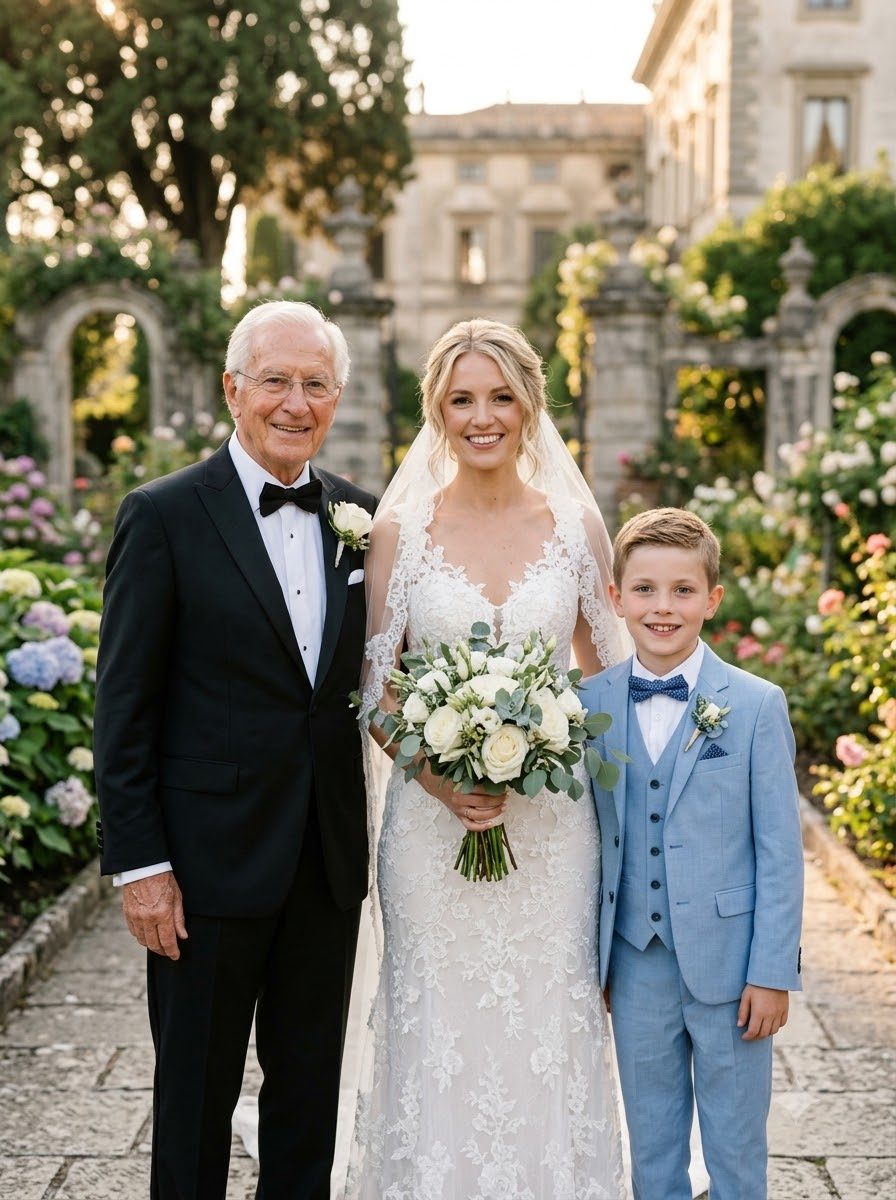
I remained on the bench while the stars slowly appeared in the twilight sky.
Caleb ran up the terrace steps, breathing hard, with Barnaby faithfully following behind him. He sat beside me, rested his head against my shoulder, and slipped his small, warm hand into mine.
“What are you looking at, Mom?” he asked softly, staring out toward the ocean.
“Just thinking about Arthur, sweetie,” I said, wrapping my arm around his shoulders and drawing him closer.
Caleb glanced at the marble inscription on the bench, then looked down at his own chest, where his heart beat strongly, steadily, and vibrantly beneath his shirt.
“Do you think he knows?” Caleb asked quietly. “Do you think he knows how happy we are?”
I looked toward the evening sky, feeling the cool ocean breeze move gently through my hair, carrying the soft, lasting peace of a house that had finally learned what it meant to become a home.
“I know he does, Caleb,” I whispered, kissing the top of his head. “He’s watching every single step you take.”
Caleb smiled, squeezed my hand, and rested his head against my arm as the stars shone brightly overhead—a mother and her son, safe, whole, and finally, beautifully home.
