

PART 2
“David Carter.”
The words were so quiet that for a moment I wondered whether I had imagined them.
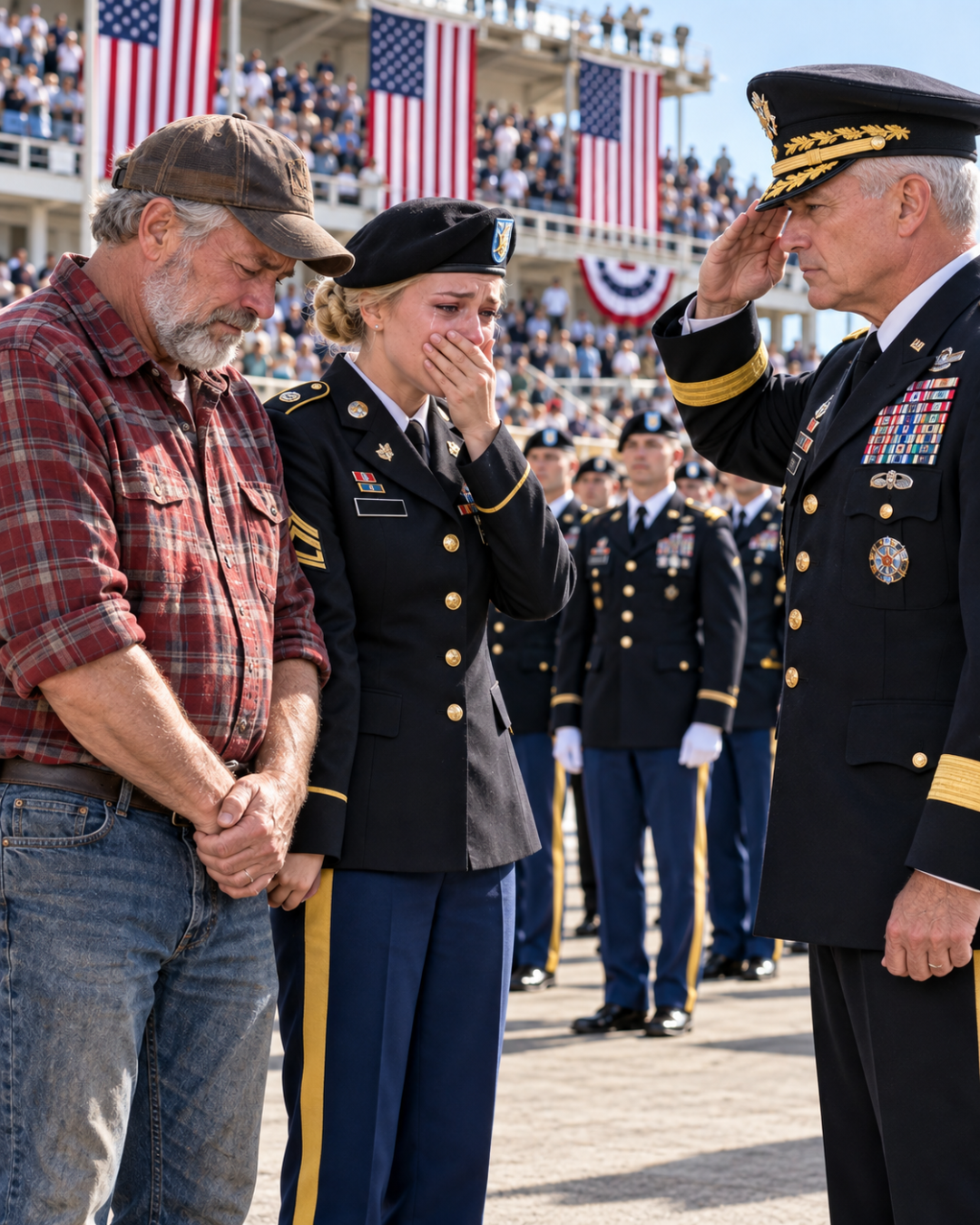
Mercer’s hand was still raised in salute.
Not the brief, formal gesture an officer might offer a veteran in passing. This was deliberate. Steady. Personal.
My throat tightened.
“General,” I managed.
His eyes remained on the bracelet.
“Where did you get that?”
I glanced down at my wrist. The leather had darkened with age and sweat, its edges softened from years of handling. A narrow strip of faded green thread was woven through the center. The brass clasp had been repaired twice, once with fishing line and once with a piece of copper wire.
“It was given to me,” I said.
“By whom?”
The stadium seemed to have disappeared around us. There were only Mercer, the bracelet, and the question he had asked as though the answer might alter the shape of his entire life.
I swallowed.
“A friend.”
Mercer’s jaw tightened.
“What friend?”
Behind me, Emma shifted. I could feel her staring at us, trying to understand why a general was questioning her father in front of thousands of people.
“Dad?”
Mercer finally looked at her.
For half a second, his expression softened.
Then he looked back at me.
“May I speak with you privately?”
The request was polite, but it carried the weight of an order. Not because of his rank. Because of the years hidden behind his eyes.
I glanced toward Emma.
She looked worried now, not impressed. Her proud, ceremony-ready posture had disappeared. She was my little girl again, even in the polished uniform and carefully pinned hair.
“Are you all right?” she asked me.
“I’m fine.”
It was the answer I had given her since she was old enough to ask difficult questions.
Mercer heard it. Something in his face suggested he understood exactly how often men used those words when they meant anything but.
“I’ll bring him back shortly,” he told her.
Emma did not move.
“General, what is this about?”
Mercer studied her for a moment, then removed his cap.
It was a small gesture, but the movement changed him. Without the cap, without the practiced expression of command, he seemed older. Less like a figure on a stage and more like a tired man who had carried a private burden for too long.
“It’s about something your father and I have been trying to remember differently,” he said.
Emma’s eyes moved between us.
“What does that mean?”
I felt the old instinct rise in me—the desire to step between my daughter and anything that might trouble her.
“Emma, wait here.”
“Dad—”
“Please.”
The word stopped her.
She had heard anger from me before. Disappointment. Exhaustion. But not that quiet request. Not the one that meant I needed her to trust me without explanation.
Her lips parted, then closed.
“All right,” she said.
Mercer motioned toward the side of the stadium. An aide approached, but the general dismissed him with a small nod. He led me through a gate and along a concrete corridor beneath the stands.
The noise of the ceremony faded behind us.
For several steps, neither of us spoke.
My knee had begun to ache from the long drive, the walk across the field, and the tension tightening every muscle in my body. Mercer noticed the unevenness in my stride.
“You should have had that looked at.”
“I have.”
“When?”
“Last time it complained.”
He almost smiled.
The expression vanished before it fully formed.
We stopped outside a small conference room. Mercer opened the door, waited for me to enter, and closed it behind us.
A folding table stood beneath a window. Two chairs. A pitcher of water. A row of framed photographs showing previous commissioning classes.
Mercer remained standing.
“So,” I said, “are you going to tell me why a three-star general interrupted his daughter’s commissioning ceremony to ask about an old bracelet?”
His gaze dropped to my wrist again.
“That bracelet belonged to Captain Daniel Mercer.”
I stared at him.
He took a breath.
“My father.”
The answer unsettled me more than I expected.
I had seen pictures of General Mercer’s father over the years. A stern man in an Army uniform from another era. There had been an article about him when Mercer received his second star—a decorated infantry officer, a teacher, a man who had believed in service as a lifelong responsibility.
I had never connected the photograph to the leather on my wrist.
“Your father gave it to me,” I said.
“No.”
The word came quickly.
“He gave it to someone else.”
I looked at the bracelet. “I’m not following.”
Mercer moved toward the table and placed both hands against its edge.
“My father made that band during the winter of 1978. He cut the leather from an old riding saddle and braided the thread through it himself. He made two.”
“Why?”
“One for him. One for my younger brother.”
“You had a brother?”
“His name was Michael.”
The name settled between us.
Mercer’s voice changed when he said it. The controlled authority remained, but beneath it was something fragile.
“Michael was nineteen when he joined the Army. He wasn’t interested in medals or speeches. He wanted to work with vehicles. He liked engines, tools, anything he could take apart and put back together.”
I looked at the bracelet.
“Your brother was a mechanic?”
“And a driver. Eventually, he became both.”
Mercer reached into the inside pocket of his uniform jacket and pulled out a small photograph. The corners were worn, though the image itself had been protected by a clear sleeve.
He placed it on the table.
The photograph showed two young men leaning against the hood of an Army truck. One was unmistakably Mercer, though he had been twenty years younger and far less composed. The other man had a broad grin, a crooked nose, and the same narrow leather band around his wrist.
“Michael,” I said.
Mercer nodded.
“What happened to him?”
For the first time since he had walked toward me, the general looked away.
“He died during a training exercise in Germany.”
I waited.
Mercer’s fingertips pressed flat against the photograph.
“The official report said it was an equipment failure. A brake line. The vehicle rolled before the crew could clear it.”
“And you were there?”
“No. I was stationed stateside. I was in officer training.”
He turned the photograph over.
On the back, someone had written a date and a sentence in blue ink.
He promised he’d come home before Christmas.
“He gave the bracelet to a soldier who had been with him that day,” Mercer said. “A young sergeant named David Carter.”
I felt the room tilt.
I did not sit down. My hand closed around the back of the chair.
Mercer watched my face.
“You remember now.”
I looked at the photograph again.
The young man beside him was not Michael Mercer.
It was me.
My hair had been longer then. My face thinner. I had the uncertain, watchful look of someone who had not yet learned how quickly a good day could turn bad.
The picture had been taken before I left for Germany.
Before the accident.
Before everything that came afterward.
“I never saw this,” I said.
“You weren’t supposed to.”
“Why?”
Mercer pulled out the other chair and sat. He looked suddenly exhausted.
“Because your file was sealed.”
I gave a short, disbelieving laugh.
“My file?”
“Your military medical and incident records.”
“I was discharged. I got the paperwork.”
“You got what someone wanted you to have.”
The ache in my knee had become distant. So had the stadium, Emma, the ceremony, the eighteen-hour drive.
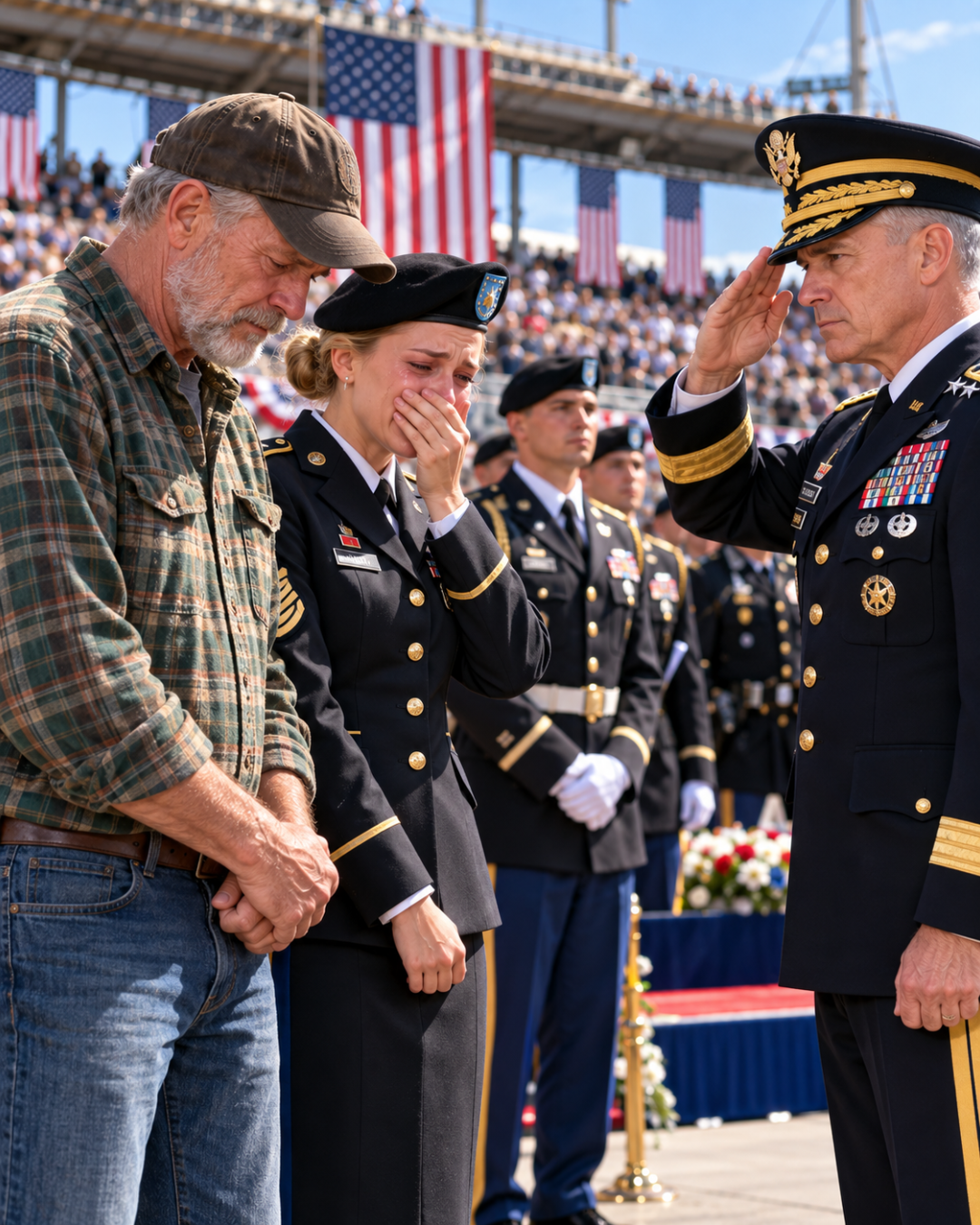
I sat across from him.
“General, I’m not sure what you think happened twenty-two years ago, but I remember it clearly.”
“Do you?”
The question was not accusing. That made it worse.
I remembered the cold.
The smell of diesel and wet earth.
The sound of metal groaning under strain.
I remembered Michael shouting something I could not make out. I remembered running toward the vehicle instead of away from it. I remembered pulling one soldier free, then another.
I remembered the crushing pain in my knee when the truck shifted.
I remembered waking in a hospital with a doctor telling me I was lucky.
After that, the details became scattered. An investigation. Interviews. A commanding officer who said I had followed procedure. A discharge offer. A flight home I could not afford, followed by a bus ride that lasted almost two days.
I had never asked too many questions.
At the time, I had believed questions were a luxury reserved for people who could afford to remain in one place.
“I was told the brake line failed,” I said.
“It did.”
“And Michael died.”
Mercer nodded.
“What else is there?”
He took a folder from beneath the table.
It was thin, gray, and secured by a plain metal clasp.
“I was told you caused the failure.”
I stared at him.
“Who told you that?”
“My commanding officer.”
“And you believed him?”
“I was twenty-six. I was a lieutenant with no combat experience and a brother who had just died in an accident. I believed the report because believing it was easier than believing someone had ignored a maintenance warning.”
My mouth went dry.
“I didn’t cause anything.”
“I know that now.”
“Now?”
Mercer opened the folder.
Inside were photocopies, typed reports, and a handwritten statement covered with corrections.
“The original investigation was rushed. The unit was preparing for a senior inspection. Several maintenance deficiencies had been recorded, but the records were altered afterward. The officers responsible were never prosecuted. One retired. One transferred. The third died years later.”
“And you think I knew?”
“No.”
“Then why seal my file?”
Mercer’s expression tightened.
“Because you signed a statement taking responsibility for the vehicle.”
“I did not.”
“You did.”
He slid the document across the table.
My signature stared back at me.
The writing was mine. The looping capital D. The sharp final stroke in Carter.
I accept responsibility for the vehicle and acknowledge that I failed to conduct a complete inspection before departure.
I read it twice.
Then a third time.
“That isn’t what happened.”
“I know.”
“Then why did I sign it?”
Mercer leaned back.
“Because someone told you the other crew members would lose their careers if you didn’t.”
The memory returned slowly, like a door opening in a dark hallway.
A captain in a tan office.
A paper cup of coffee untouched on the desk.
The captain telling me that the younger soldiers had families. That an investigation would ruin them. That if I accepted responsibility, the matter could be handled quietly.
I remembered thinking of Michael.
I remembered the other soldiers who had survived.
I remembered wanting everyone to go home.
“I thought I was protecting them,” I said.
“You were.”
“But the Army blamed me.”
“Not officially. Not in the final report.”
Mercer pushed another page toward me.
The final report stated that the accident was caused by an undetected mechanical defect. My name appeared only as a witness.
“Then what are you saying?”
Mercer looked at the bracelet.
“I’m saying somebody buried the truth so completely that even I didn’t find it until years later.”
“Why would you be looking?”
“Because Michael gave you the bracelet.”
I said nothing.
Mercer’s voice lowered.
“My father made two. Michael wore one. He gave the other to you after you pulled him out of a burning vehicle during a previous exercise.”
“I don’t remember that.”
“You wouldn’t. Michael told me about it in a letter. He said you had a habit of doing dangerous things quietly and then pretending they weren’t dangerous.”
Despite myself, I smiled faintly.
“That sounds like me.”
“It does.”
The smile disappeared.
“What does any of this have to do with Emma?”
Mercer’s face changed.
There it was—the reason beneath the reason.
He had not stopped the ceremony because of an old Army investigation. He had not crossed a field in front of thousands of people because he wanted to discuss a bracelet.
He had seen my daughter.
He had known her name.
“Your daughter,” he said carefully, “is the reason I requested the review of your record.”
I stood so quickly the chair legs scraped the floor.
“You requested what?”
“Last year, Emma applied for a commission through the regular process. Her application came across my desk because of her academic record and her selection for advanced leadership training.”
“That’s not unusual.”
“No.”
“Did you interfere with her application?”
“Absolutely not.”
“Did you know she was my daughter?”
“I knew after I saw the emergency contact information.”
My anger rose, hot and immediate. Not because he had looked at my record. Because he had come near the one part of my life I had worked hardest to keep untouched.
“Then you should have left it alone.”
“I tried.”
“Try harder.”
Mercer absorbed the words without flinching.
“I did not speak to the selection board. I did not alter her file. I did not tell them about you.”
“Then why are we here?”
He opened the folder to its final page.
It was not a report.
It was a letter.
The handwriting was unfamiliar, but the signature at the bottom was not.
Rachel Carter.
My breath caught.
I had not seen that name written in years.
Mercer kept one hand over the page.
“Your wife knew about the investigation,” he said.
“Rachel wasn’t my wife.”
“Emma’s mother, then.”
“Where did you get that?”
“She sent it to me.”
The room became very still.
Rachel had left when Emma was three. Not vanished. Not died. Left. There had been a separation, then lawyers, then long stretches of silence. She had moved west and eventually stopped answering my calls. I told Emma that her mother needed time. Later, when Emma stopped asking, I stopped explaining.
I had never told my daughter that Rachel had once been an Army lawyer.
I had never told her Rachel had been stationed in Germany.
I had never told her Rachel had been in the building when my discharge was processed.
Mercer removed his hand from the letter.
“She asked me to keep this until Emma received her commission.”
I stared at the envelope.
“My daughter’s ceremony is today.”
“Yes.”
“Why would she send it to you?”
“Because she believed I was the only person who could tell you what really happened.”
My fingers hovered over the paper but did not touch it.
“What does it say?”
Mercer’s eyes held mine.
“It says she knows who ordered the original report changed.”
A knock sounded at the door.
Neither of us answered.
A second knock followed, softer this time.
“Dad?” Emma called from the hallway. “Are you in there?”
Mercer looked at me.
The letter lay between us, sealed and waiting.
On the front, beneath my name, Rachel had written one sentence:
David, before you decide what to tell our daughter, you need to know that Michael Mercer did not die because of an equipment failure.
PART 3
“Dad?” Emma called again. “Are you in there?”
I looked at the sealed envelope.
For twenty-two years, I had made decisions by asking one question: What would protect Emma?
Sometimes the answer had been obvious. Sometimes it had meant working another week away from home, swallowing a truth, or pretending a promise could survive on silence alone.
But the letter in front of me belonged to a past I had kept separate from her life.
Now that past was standing outside the door.
“Come in,” I said.
The handle turned.
Emma stepped inside, still wearing her dress uniform. Her cap was tucked beneath one arm, and two loose strands of hair had escaped near her temple. She looked from me to General Mercer, then to the envelope on the table.
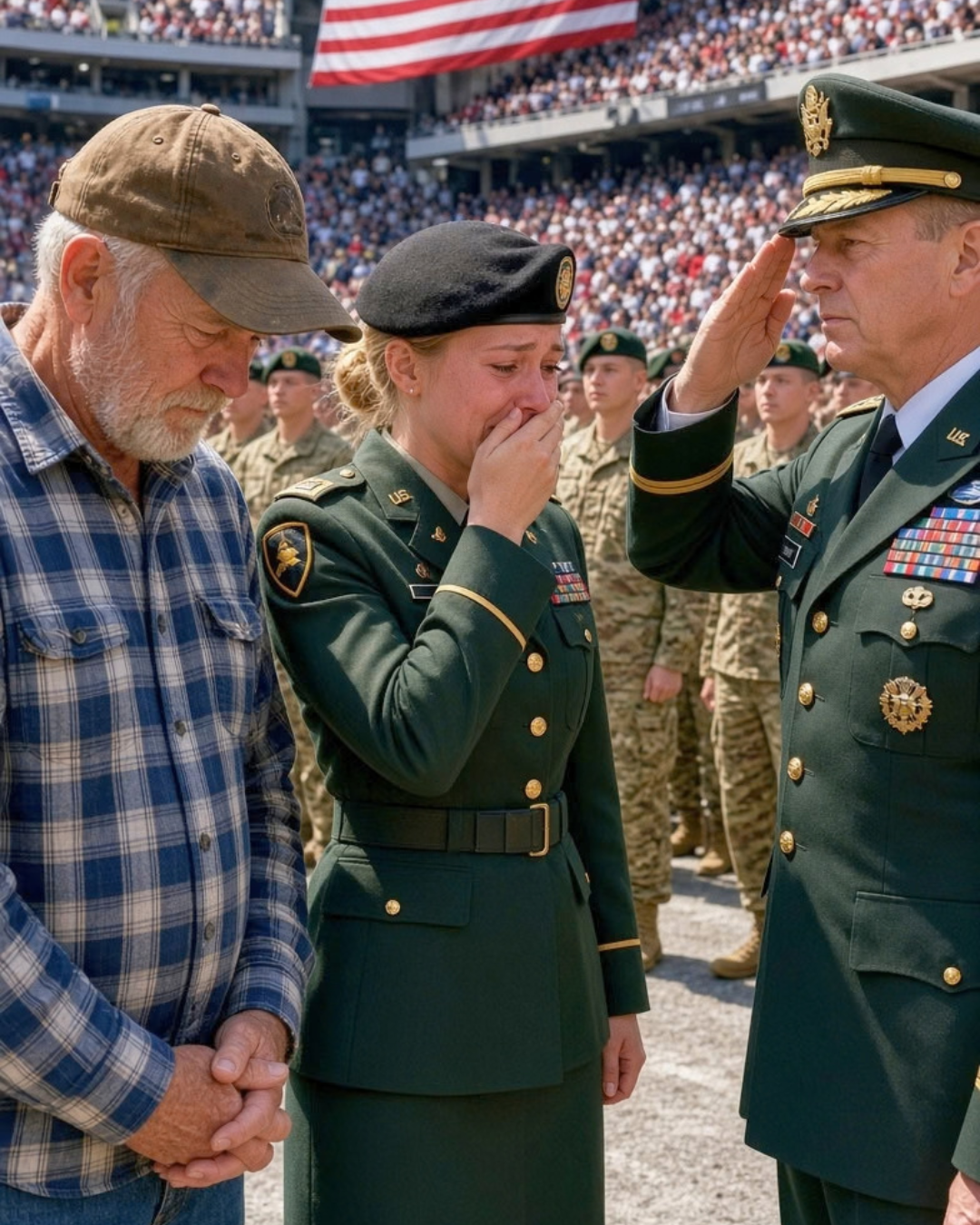
Neither of us spoke quickly enough.
“What is going on?” she asked.
I wanted to tell her nothing. I wanted to say the general had made a mistake, that the ceremony should continue, that we could discuss everything later over dinner somewhere quiet.
But she had spent her whole life watching me carry unanswered questions like stones in my pockets.
She deserved better than another one.
“Your mother sent a letter,” I said.
Emma’s expression changed, though only slightly. Rachel had been an absent presence in our home for so long that her name still seemed to alter the air.
“To you?”
“To me. Through General Mercer.”
She looked at him. “Why would my mother send something to him?”
Mercer rose from his chair.
“Because she believed I had a responsibility to correct what was left unresolved.”
Emma frowned. “What does that mean?”
I put my hand over the envelope. The paper was smooth beneath my palm.
“It concerns something that happened before you were born.”
“Does it concern you?”
“Yes.”
“Then it concerns me.”
There was no accusation in her voice. Only certainty.
I glanced at Mercer.
He gave me a quiet nod and stepped away from the table.
“I’ll leave you both alone.”
Emma turned toward him. “General, with respect, you brought my father here. I think you should stay.”
Mercer studied her, and I saw something like admiration pass across his face.
“Your father should decide what you hear.”
Emma looked at me.
“Then decide.”
The words were gentle, but they reached deeper than anger would have.
I pulled out the chair beside mine.
“Sit down.”
She did.
For a moment, I could hear the muffled sounds of the ceremony beyond the walls—the distant voice of another officer, applause rising and fading, the shuffle of people waiting for the program to resume.
I broke the seal.
The envelope opened with a soft tear that sounded louder than it should have.
Inside was a single sheet of paper, folded in thirds. The handwriting across the first page was neat and restrained.
I knew it immediately.
Rachel’s letters had always looked as though they were written in a hurry by someone who refused to make mistakes.
I read silently.
David,
If Daniel has given you this, then he has finally told you enough to make the rest impossible to ignore.
I do not know whether you will forgive me for waiting. I am not sure I deserve forgiveness. But I am asking you to read this before you decide what Emma should know.
Michael Mercer did not die because of an equipment failure.
My eyes moved to the next line.
The failure was real. The accident was preventable. Those are not the same thing.
I stopped reading.
Emma watched my face.
“What does it say?”
I handed her the page.
She read the first paragraph, then looked at General Mercer.
“What happened to Michael?”
Mercer answered carefully.
“My brother died in a vehicle accident during a training exercise. Your father was there.”
“Was he responsible?”
“No.”
Emma’s eyes returned to the letter.
I continued.
The maintenance records showed that the brake system had been reported twice before the exercise. The first report was signed by Staff Sergeant Harlan. The second was signed by your father.
The records disappeared from the unit file after Michael’s death.
Your father believed that accepting responsibility would protect the other soldiers involved. He did not understand that the statement would be used to bury the maintenance failures entirely.
Rachel’s handwriting became less even near the bottom of the page.
I was working in the legal office when the final report was prepared. I saw the original documents. I saw the changes. I should have stopped them.
Emma lowered the paper.
“You were in the Army?”
I nodded.
“I was a mechanic,” I said. “Not a lawyer. Your mother was working in the legal office.”
“Why didn’t you ever tell me?”
The question did not carry the sharpness I expected. That made it harder to answer.
“Because I didn’t know how to explain it.”
“That’s not an explanation.”
“No.” I looked at my hands. “It’s the truth.”
Mercer returned to his chair but did not sit.
Emma read the letter again.
“Why would Mom wait all these years?”
“She says she didn’t,” Mercer replied.
Emma looked up.
He motioned toward the page.
“Keep reading.”
She did.
I tried to report what I had seen. The commanding officer told me the records were under review and that I should not interfere. When I persisted, I was transferred to another post.
By the time I understood how deliberately the matter had been handled, David had already been discharged and returned home. I was told that contacting him would reopen an investigation and potentially damage the benefits he had received.
That was the official reason.
Emma’s eyes narrowed.
“What was the real reason?”
I had reached the same line.
Rachel had written:
The real reason was that I was afraid.
The words seemed almost too simple to contain so much time.
I was afraid of being wrong. Afraid of losing my position. Afraid that if I spoke without proof, I would make David’s life worse instead of better. When I left the Army, I told myself I would contact him once I had gathered enough evidence.
Then I met David.
Emma’s lips parted slightly.
“You knew Dad before me?”
I looked away.
“Your mother and I met after I came home.”
Rachel’s letter continued.
David was living in a small apartment outside Tacoma. He was working nights and taking every driving job he could find. He had the kind of silence people mistake for strength.
We became close slowly. He did not talk about Germany. I did not ask often enough.
When I became pregnant, I believed that starting a family would give me the courage to tell him everything. Instead, it made me more afraid. I thought the past might follow us. I thought someone might decide that David was a liability, or that my involvement would make him a target for an investigation neither of us could control.
I felt Emma’s eyes on me.
“Is that why she left?”
I swallowed.
“Partly.”
The truth was more complicated. Rachel had left after months of arguments I could now see differently. She wanted me to pursue the matter. I wanted to keep our lives steady. She believed I was burying myself in work. I believed she was asking me to reopen a wound that had finally stopped bleeding.
By then, Emma was three.
We had not been good at being young, frightened, and responsible for another person at the same time.
Rachel’s letter continued.
When Emma was born, I wanted to tell David. I wanted to tell him that I had found a retired records clerk who remembered the original maintenance logs. I wanted to tell him that I had copied portions of the investigation before leaving Germany.
But David had begun working over the road. He was building a life around Emma. Every time I saw him, I told myself I would speak after I had one more document, one more witness, one more certainty.
Then certainty became an excuse.
Emma put the page down.
“She knew all this when she left?”
“I don’t know,” I said.
“Did she ever tell you anything?”
“She told me she was tired of watching me pretend the past didn’t matter.”
Emma’s face tightened.
“And what did you say?”
“That I was tired of being treated like a case file.”
The memory came back with uncomfortable clarity. Rachel standing in our kitchen, one hand on the back of a chair, her coat already on. She had asked me to go with her to a meeting with a former investigator. I had said I had a load to deliver and couldn’t keep chasing ghosts.
She had replied that ghosts were all I had left because I refused to face the living.
I had not understood what she meant.
Or perhaps I had.
“Your mother and I both made mistakes,” I said. “She kept things from me. I shut down when she tried to bring them back.”
Emma lowered her gaze.
“Did she stop loving me?”
The question struck with more force than anything else.
I turned fully toward her.
“No.”
“How do you know?”
“Because she called on every birthday, even after you stopped answering. Because she kept your school pictures. Because when you were accepted to the academy, she sent me an email with the subject line ‘She did it.’”
Emma’s eyes filled, but she blinked the tears away.
“You never told me that.”
“I thought you didn’t want to hear about her.”
“I didn’t want to hear excuses.”
“She didn’t give any.”
Emma looked toward the window. Beyond it, the sunlight fell across the concrete walkway in a bright rectangle.
“Where is she now?”
“Colorado, I think.”
“You think?”
“She moved a few years ago.”
“Do you talk to her?”
“Not much.”
“Why?”
I searched for an answer that didn’t make me sound better than I was.
“Because talking to her reminded me of everything I couldn’t fix.”
Emma let out a slow breath.
“That sounds like something you would say.”
“What does that mean?”
“It means you’re very good at carrying things alone and calling it responsibility.”
Mercer lowered his eyes. I wondered how many times he had heard the same accusation in different words.
“She’s right,” he said.
I looked at him.
He moved to the table and placed a second document beside Rachel’s letter.
“I should have found this years ago.”
“What is it?”
“A copy of my brother’s personal effects inventory.”
Emma leaned closer.
Mercer slid the page toward me.
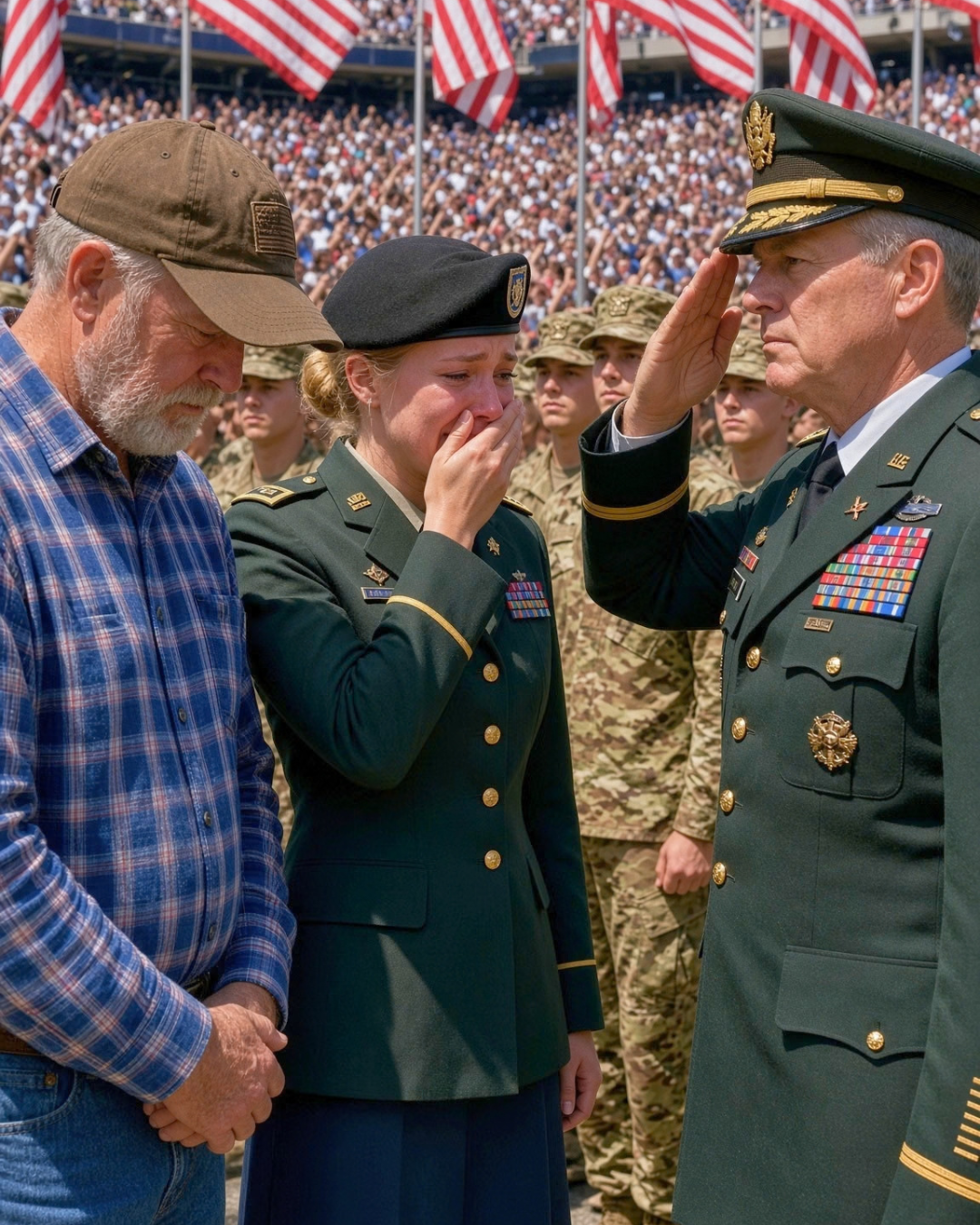
Most of it was ordinary: a watch, a wallet, a set of keys, a photograph, two letters. Near the bottom was a handwritten notation.
Leather wristband transferred to SSG David Carter at request of deceased.
I touched the line.
“I thought I was given this after the accident.”
“You were,” Mercer said. “But the inventory was altered. The original noted that Michael asked for the band to be given to you before the exercise.”
I looked up.
“Before?”
Mercer nodded.
“He knew the brake system was unsafe.”
The room seemed to grow smaller.
“Then why was he in the vehicle?”
“He was ordered to take it.”
“By whom?”
Mercer’s silence answered before his words did.
“Colonel Voss,” he said. “He was the commanding officer responsible for the inspection.”
I knew the name. Everyone in the unit knew it. Colonel Peter Voss had been admired for his efficiency and feared for his temper. He had spoken often about readiness, about never allowing maintenance delays to interfere with scheduled evaluations.
“Voss told us the issue had been cleared,” I said.
“He signed the clearance.”
“And then changed the records.”
“Yes.”
“Why?”
Mercer looked at the floor.
“The unit was being considered for a high-profile overseas assignment. A failed inspection could have ended that opportunity. Voss believed the problem was minor. He believed he could get the vehicle through one exercise and repair it afterward.”
Emma’s voice was quiet.
“And people died?”
“One person died,” Mercer said. “Two were injured. Your father was one of them.”
“I wasn’t going to die.”
“No,” I said. “Not that day.”
Mercer met my eyes.
“You spent the rest of your life with the damage.”
I did not answer.
The knee had never been the worst of it. The worst was the habit of questioning every decision. Every time a truck made an unfamiliar sound, I pulled over. Every time Emma coughed as a child, I checked her breathing twice during the night. I had spent years believing that carefulness could reverse an old failure.
Rachel’s letter had one final page.
I unfolded it.
Daniel will tell you about Voss. He may not tell you about the evidence I found.
After leaving the Army, I contacted Staff Sergeant Harlan. He had kept a copy of the original maintenance report because he was afraid someone would blame him. He gave me the copy in 2004.
The report was signed by Michael.
I looked at Mercer.
“Michael signed the warning?”
“He did.”
“What did it say?”
Mercer removed another paper from the folder. This one was a photocopy, grainy and faded.
At the top was the vehicle number.
Below it, in block letters, was a note:
Brake pressure drops after repeated use. Do not operate on incline until line is replaced.
At the bottom was Michael’s signature.
Beneath it, in another hand, someone had written:
Inspection completed. No further action required.
I recognized that handwriting.
Colonel Voss.
Emma read over my shoulder.
“Why didn’t this go to the investigators?”
“Because the original was removed,” Mercer said. “Harlan kept a carbon copy by accident.”
“By accident?”
“He was transferred two weeks after the accident. He thought keeping it might protect him.”
“And your mother had it?”
“Yes.”
I read the report again.
Michael had known.
He had tried to stop the vehicle from being used.
And before he died, he had given me the bracelet—not as a keepsake after the accident, but as though he had already decided I should carry something if he didn’t make it home.
A cold understanding moved through me.
“What did he say when he gave it to me?”
Mercer watched me.
“You don’t remember?”
I closed my eyes.
The memory was blurred, but not gone.
A maintenance bay. Late afternoon. Rain ticking against the metal roof. Michael sitting on the running board, turning the leather band around his fingers.
He had laughed when I asked where he got it.
Then he had said, “Keep this for me, Carter. You’re better at holding on to things.”
I had thought he meant until he returned from leave.
I opened my eyes.
“He knew.”
Mercer nodded.
“He knew the vehicle wasn’t safe.”
“And you let him go out in it?”
“I wasn’t there.”
“But you knew the unit had problems.”
“I knew there had been reports. I did not know Voss had ordered the vehicle out after the warning.”
His voice had lost its authority. He looked like the younger brother in the photograph again—someone who had spent decades replaying a day from which there was no escape.
“I was supposed to be in that vehicle,” he said. “Voss reassigned me the night before. He said he needed me for the inspection briefing.”
I had no answer for that.
The door opened slightly, and an aide appeared.
“General, the ceremony is ready to resume. The commandant is asking—”
Mercer raised a hand.
“Give us five minutes.”
The aide nodded and closed the door.
Emma looked at the general.
“Why bring this to my father today?”
Mercer glanced at her uniform.
“Because your commissioning marks the first time our families’ names have stood in the same room since Michael died.”
“That doesn’t answer the question.”
“No,” he said. “It doesn’t.”
He reached into the folder and removed a small flash drive.
“I asked the Army records office to review the sealed files after Rachel contacted me last year. We found additional material in an archived legal collection. Notes from your mother. A statement from Harlan. And a letter from Michael.”
My breath stopped.
“A letter?”
Mercer nodded.
“It was never delivered.”
He handed me a clear sleeve.
Inside was a single sheet of lined paper, folded once. The handwriting was broad and uneven.
I recognized it immediately.
Michael had written:
Danny,
If they make me take that truck tomorrow, I want you to know I didn’t ignore the problem. Carter saw it too. He says he’ll refuse the assignment if they don’t fix the line, but I know how these people work. They’ll call it insubordination and find someone else to drive.
If anything happens, don’t let them make Carter carry it. He’s the one person here who still believes doing the right thing matters even when nobody is watching.
Tell Dad I’m sorry about Christmas.
—Mike
My vision blurred.
Emma placed her hand over mine.
“He wrote that about you?”
I nodded.
For twenty-two years, I had believed Michael’s final memory of me was a shouted warning lost beneath the sound of twisting metal.
Now I knew he had thought of me before he left.
Mercer’s voice was unsteady.
“I found the letter three months ago. It had been misfiled with my father’s correspondence. Michael had mailed it to me, but it arrived after the accident. My father kept it and never told me.”
“Why?”
“He blamed himself for encouraging Michael to enlist. He couldn’t bear to give me another reason to hate the Army.”
Emma looked at the documents spread across the table.
“So what happens now?”
The question belonged to the future, not the past.
I folded Michael’s letter carefully.
“I don’t know.”
Mercer straightened.
“There will be a formal review. Voss is dead, but the record can still be corrected. Your discharge characterization can be amended. Your medical file can reflect the actual cause of your injury.”
“I don’t need a ceremony.”
“This isn’t about ceremony.”
“It’s been twenty-two years.”
“It’s about whether the truth is allowed to remain buried simply because the people who buried it are gone.”
I looked at Emma.
She had come to the ceremony expecting to become an officer. Instead, she had been handed a history she never knew existed.
“I don’t want this to affect her career.”
“It won’t.”
“People will say she received special treatment.”
“She didn’t. She earned her commission.”
“Then let her stand on her own.”
Emma turned to me.
“I can do both.”
I frowned.
“What?”
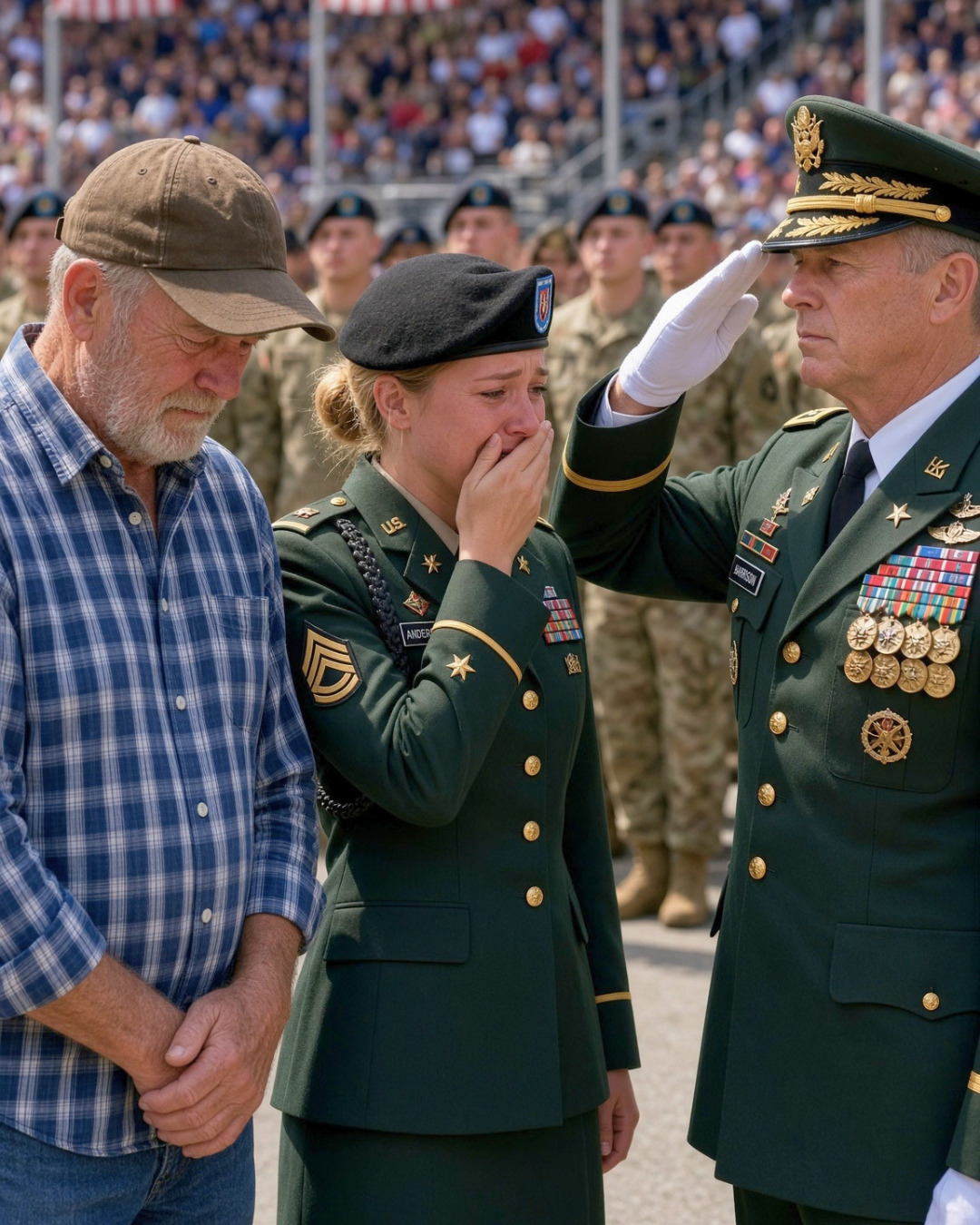
“I can stand on my own and still know what happened to you.”
Her hand remained over mine.
“I don’t want you protecting me from the truth, Dad. I want you to trust me with it.”
I looked down at the leather band.
The clasp was loose. The green thread had nearly faded away. I had repaired it because I could not imagine taking it off.
For years, I had believed keeping it meant keeping a promise to Michael.
Maybe the promise had never been to stay silent.
Maybe it had been to remember him accurately.
A knock came at the door again.
This time, the aide spoke through it.
“General, the class is waiting.”
Mercer looked at me.
“Will you come back out there?”
The question carried no order.
I stood, my knee protesting beneath me.
Emma rose beside me.
“Yes,” I said.
Mercer opened the door.
The sound of applause drifted through the corridor, growing louder as we approached the stadium entrance. Emma adjusted her cap and smoothed the front of her uniform. I touched the bracelet once, then let my hand fall.
At the gate, she stopped me.
“Dad?”
I turned.
“Do you want to meet Mom?”
The question entered the space between us without warning.
I thought of Rachel’s handwriting. Her fear. Her silence. The years she had missed. The years I had missed too.
“I don’t know,” I said.
Emma nodded.
“That’s honest.”
“It may take me a while.”
“Then take a while.”
She reached up and hugged me, careful of the papers in my hand.
When she pulled away, her eyes were bright but steady.
“After the ceremony,” she said, “we’ll call her together.”
I almost said no.
The old instinct rose—protect, delay, carry it alone until everyone else could be spared.
Then I looked at the letter from Michael in my hand.
“All right,” I said.
We stepped back into the sunlight.
The ceremony resumed with Emma’s name called among the others. She walked across the platform, received her bars, and saluted the reviewing officer with a confidence that made my chest ache.
But just before she turned to face the crowd, she glanced toward me.
Not at the general.
Not at the cameras.
At me.
And I understood that the truth waiting in Rachel’s letter was larger than Colonel Voss, larger than a buried report, and larger than the old guilt I had carried for half my life.
Because on the final line of the letter, beneath her signature, Rachel had written one additional sentence I had not noticed until then:
There is one thing Michael told me that no one else knows—he was not the only person who saw what happened that night.
PART 4 (THE END)
Emma’s name had barely left the announcer’s mouth when the memory returned.
Not as a complete scene. Just fragments.
A yellow security light trembling in rain.
The maintenance bay door half-open.
Michael standing beside the truck, speaking to someone I couldn’t see.
And another voice—older, calm, German-accented—saying, “The colonel knows. He told them to take it anyway.”
I gripped the edge of the chair in front of me.
Emma was still on the platform, receiving her commission. She accepted the certificate, saluted, and turned toward the audience.
Her eyes found mine.
I forced myself to stand.
After the final oath, the cadets tossed their caps into the air. Emma laughed when hers landed several rows away, and for a few minutes the stadium became what it had always intended to be: a place of pride, celebration, and beginnings.
People gathered around her afterward. Classmates hugged her. Professors shook her hand. Family members took photographs beneath banners bearing the Army crest.
General Mercer remained at a respectful distance.
He did not claim her moment.
When Emma finally reached us, she was still smiling, though her eyes carried the weight of everything she had learned.
“You did it,” I said.
“So did you.”
“I mostly stood near a folding table.”
“You stood there for the hardest part.”
Mercer approached then, holding a small envelope.
“This belongs to you,” he said.
Emma glanced at the envelope. “What is it?”
“Your father’s corrected service summary. It is not final yet, but the review board has accepted the initial findings. The formal amendment should be issued within sixty days.”
I took the envelope but did not open it.
“Thank you.”
Mercer gave a slow nod.
“I should have found the truth sooner.”
“You weren’t the one who hid it.”
“I benefited from not knowing.”
There was no easy answer to that.
Emma looked at him. “What happens to the records?”
“The original reports will be attached to the file. The false statement will be identified as coerced and incomplete. Your father’s medical discharge will be reviewed as service-connected.”
I felt an old reflex rise in me.
“I don’t want a payout.”
“It isn’t a payout,” Mercer said. “It is a correction. If benefits follow, they are part of correcting what was denied.”
I looked at the envelope again.
For years, I had believed the Army had forgotten me. The truth was more complicated. Some people had forgotten. Some had chosen not to remember. Others had kept pieces of the truth alive in folders, carbon copies, and letters no one knew how to deliver.
Emma touched my arm.
“Dad, what did you remember?”
I told them.
The maintenance bay. The voice. The sentence.
Mercer’s expression sharpened.
“Are you sure?”
“No.”
“That may be enough.”
“It may also be something I’ve invented because I want it to fit.”
“Then we verify it.”
He turned toward the stadium entrance and called for his aide. A young major approached with a notebook.
“Find the old German maintenance roster from December of 1978,” Mercer said. “All civilian contractors assigned to the motor pool. Cross-reference names with the archived legal notes.”
The major wrote it down.
Emma watched him go.
“You can do that?”
Mercer looked at her. “We can request it. The archive still exists.”
“And if the person is alive?”
“Then we ask whether he is willing to speak.”
No pressure. No promise of a dramatic confession. Just a question asked after all these years.
That evening, Emma and I stayed at a small hotel near the base. She had wanted to take me somewhere expensive, but I chose a quiet diner across from the truck stop. It had cracked red booths, coffee that tasted like boiled cardboard, and a waitress who called everyone honey.
It felt familiar.
Emma sat across from me, her commissioning certificate propped carefully against the sugar dispenser.
She had removed her jacket and loosened the collar of her uniform shirt. Without the polished insignia and platform lights, she looked more like the child who used to sleep against the passenger window while I drove through the night.
The waitress brought two plates of eggs and toast.
Emma waited until the woman left.
“Do you want to call Mom tonight?”
I looked at the phone beside my hand.
Rachel’s number had not changed. I had never deleted it. I had also never used it.
“I’m not sure what I would say.”
“Start with hello.”
“That sounds simple.”
“It usually isn’t.”
I almost smiled.
She reached across the table and touched the leather band.
“Was Michael really the first person who gave you that?”
“Yes.”
“Why did you keep it all these years?”
“I thought he asked me to.”
“Maybe he did.”
“I don’t remember the exact words.”
“You remember enough.”
I rubbed my thumb over the worn clasp.
“I used to think keeping it meant I had to carry everything that happened. His death. The accident. The report. The things I didn’t say to your mother.”
Emma’s gaze softened.
“What do you think now?”
“I think maybe he wanted me to remember that someone knew the truth.”
She nodded slowly.
“Then maybe you don’t have to carry it alone anymore.”
The call lasted less than ten minutes.
Rachel answered on the fourth ring.
“Hello?”
Her voice was older than I remembered, but not unfamiliar. I could hear wind moving through trees behind her.
I could not speak.
“David?”
“Hi, Rachel.”
There was a pause.
“I didn’t know if you would call.”
“Neither did I.”
Emma sat beside me in the booth, close enough that our shoulders touched. She did not take the phone. She didn’t need to.
“How was the ceremony?” Rachel asked.
“Emma received her commission.”
A breath caught on the other end.
“She did it.”
“She did.”
“I’m proud of her.”
“You should tell her.”
“I will.”
The silence that followed was not comfortable, but it was honest.
Finally, Rachel said, “Did Daniel give you the letter?”
“He did.”
“I’m sorry.”
“For the letter?”
“For waiting.”
I looked through the diner window at the parking lot. Trucks moved along the highway, their headlights sliding through the dark.
“I’m sorry too.”
“For what?”
“For making silence the only thing I knew how to offer.”
Rachel exhaled.
“I didn’t know how to come back.”
“Neither did I.”
Emma leaned closer.
“Mom?” she said.
Rachel went quiet.
“Emma?”
“Hi.”
The word held years inside it.
“Hi, sweetheart.”
Emma closed her eyes for a moment. “I got my commission.”
“I know.”
“Dad said you were proud.”
“I am.”
There was a tremor in Rachel’s voice, but she steadied it.
“I should have been there.”
“Yes,” Emma said.
It was not cruel. It was simply true.
“I know,” Rachel answered.
None of us tried to solve twenty years in a diner booth. We spoke about the ceremony, Emma’s assignment, the weather in Colorado, and Rachel’s garden. Small things. Safe things. The ordinary details from which trust sometimes had to be rebuilt.
Before they hung up, Rachel said, “There’s something else I need to tell you.”
I felt Emma look at me.
“What is it?”
“The witness was named Klaus Weber. He was a civilian mechanic assigned to the motor pool. Michael trusted him.”
I glanced at the leather band.
“What did Michael tell you?”
“He told me Klaus saw Colonel Voss in the maintenance bay the night before the exercise. Voss was angry because the brake line hadn’t been replaced. Klaus said he heard Voss order someone to change the inspection tag.”
“Someone?”
“An enlisted mechanic. Klaus didn’t know his name.”
“Did Klaus see the accident?”
“No. He saw what happened beforehand.”
That mattered.
Not because it could bring Michael back. Not because it would make a courtroom scene or give us a perfect ending.
It mattered because the truth was not an impression or a family story.
It had witnesses.
“What happened to Klaus?” I asked.
“Michael said he was afraid of losing his work permit. He left the base soon afterward. I found his name in an old contractor ledger, but I never located him.”
Mercer’s records search took three days.
Klaus Weber had died six years earlier, but his daughter, Anna, lived outside Stuttgart. She answered the Army’s inquiry cautiously. She had no statement from her father, she said, but she had his notebooks.
The records office arranged a secure video call.
Anna appeared on the screen from a bright kitchen with pale wooden cabinets. Behind her stood a framed photograph of an elderly man in a work jacket, one hand resting on the hood of a car.
“My father wrote everything down,” she said. “He believed memory was unreliable.”
“Your father worked at the American motor pool in 1978?” Mercer asked.
“Yes. He repaired trucks and generators. He spoke English well, but he disliked speaking it when he was nervous.”
Anna turned a page in a notebook.
“He wrote about a young American soldier named Michael. He said Michael warned him about a brake line. My father told him not to take the vehicle out.”
My hands tightened around the edge of the table.
“What else?” I asked.
Anna looked at the page.
“He wrote that a colonel came to the garage after midnight. The colonel said the inspection would proceed. He told my father to mark the truck as cleared.”
“Did he?”
“No. My father refused. The colonel told him the Army could find another mechanic.”
Mercer leaned forward.
“Why didn’t your father report it?”
“He was afraid. He had a family. He had just received his work authorization. He believed no one would listen to a civilian.”
Anna turned another page.
“There is one more note. He said a sergeant named Carter came into the bay. Michael told him the vehicle was unsafe. The sergeant wanted to report it.”
I closed my eyes.
I remembered that part now.
Not the exact conversation, but the feeling of it—the certainty that if I spoke up, I could stop something. Then Voss had appeared. He had asked whether I was refusing a direct order.
I had looked at Michael.
Michael had shaken his head once.
Not surrender.
A warning.
He had been telling me not to make myself the next problem they solved.
Anna continued.
“My father wrote that Mr. Mercer’s brother gave the sergeant a leather band before they left.”
I looked down at my wrist.
For years, I had imagined Michael giving it to me as a farewell after the accident. The truth was quieter and more painful.
He had known the danger before we climbed into the vehicle.
He had trusted me enough to remember.
Anna sent copies of the notebook pages to the review board. Her father’s notes could not rewrite the past, but together with the original maintenance report, Harlan’s statement, Rachel’s legal notes, and Michael’s letter, they established something the official file had avoided:
The accident had been foreseeable.
The warning had been documented.
The order to proceed had come from above.
And I had not caused it.
The board amended my record that summer.
The document arrived in a plain envelope, just as Mercer had promised. I opened it at the kitchen table while Emma watched from across the room during a video call.
The language was formal. It acknowledged the maintenance failure, the coercive circumstances surrounding my statement, and the service-connected nature of my injury.
At the bottom was a sentence that mattered more than the rest:
The record of Sergeant David Carter is corrected to reflect that he acted in good faith and without fault in the incident resulting in the death of Specialist Michael Mercer.
I read it twice.
Then I folded the paper and set it down.
Emma’s face appeared on the laptop screen.
“How does it feel?”
I searched for the answer.
“Smaller than I expected.”
“The correction?”
“The weight.”
She nodded.
A week later, General Mercer came to my house.
He wore civilian clothes—a dark jacket, plain shoes, no stars on his shoulders. He stood on the porch holding a narrow wooden box.
“I thought you might want this,” he said.
Inside was the second leather band.
The original had belonged to Michael.
Or, more accurately, it had belonged to their father and had been made for Michael. The leather was worn nearly smooth, but the clasp remained intact.
“I found it in my father’s things,” Mercer said. “He had kept it after Michael’s death.”
I held the box.
“You should keep it.”
“I kept everything else.”
He looked toward the driveway, where my Freightliner sat with its hood raised.
“I thought you might know what to do with it.”
I understood then.
Michael’s band had been passed from a father to a son, from a son to a friend, and from a friend through years of silence. It did not need to stay locked in a box to remain meaningful.
That evening, Emma visited before reporting to her first assignment. She wore civilian clothes and carried a small travel bag.
I gave her the wooden box.
She opened it carefully.
“What is this?”
“Michael’s.”
She looked at the band, then at the one around my wrist.
“Are you giving it to me?”
“If you want it.”
Emma lifted it from the box. The leather rested across her palm.
“I don’t want to carry your guilt.”
“You won’t.”
“Then what would I be carrying?”
I thought of Michael’s letter. Klaus’s notebooks. Rachel’s years of fear. Mercer’s regret. Emma standing beneath the ceremony lights with her shoulders straight.
“A reminder,” I said. “That doing the right thing isn’t always loud. Sometimes it’s a warning written down. Sometimes it’s telling the truth when nobody benefits from hearing it. Sometimes it’s asking for help before silence becomes a habit.”
Emma closed her fingers around the band.
“I’ll keep it.”
“You don’t have to wear it.”
“I know.”
She stepped forward and hugged me.
This time, I did not hold back. I let myself lean into her, let the years of missed birthdays and long highways and unsaid things exist without trying to excuse them.
When she pulled away, she touched the band on my wrist.
“You still keeping yours?”
“For now.”
“Good.”
The next morning, I drove toward the highway.
The Freightliner rattled as it always did. Coffee trembled in the cup holder. My knee complained when I climbed into the cab.
But the sound no longer felt like a warning.
At the first red light, I noticed the green thread in the leather band had nearly disappeared. I had planned to replace it many times. Somehow, I never had.
Now I understood why.
The thread was not proof that nothing changed.
It was proof that something could fray and still hold.
My phone rang through the cab speakers.
Rachel.
I answered.
“Good morning,” I said.
“Good morning,” she replied. “Where are you headed?”
“North.”
“Business or pleasure?”
“Little of both.”
She laughed softly.
We talked while the light changed and traffic moved around me. Not about the accident. Not at first. We discussed Emma’s assignment, Anna Weber’s letter, and the possibility of meeting in person when the road brought me near Colorado.
There were no promises we could not keep.
Only a plan to try.
As I merged onto the highway, the sun broke through the clouds and caught the brass clasp around my wrist.
For twenty-two years, I had believed the bracelet was a promise to remember a dead man.
Now I knew it was also a promise to the living.
To Emma, who deserved the truth.
To Rachel, who was still learning how to return.
To Daniel Mercer, who had finally stopped looking backward alone.
And to myself—the young sergeant who had done what he could with the courage and understanding he possessed.
I could not change the order that sent Michael into an unsafe vehicle.
I could not erase the years built around a lie.
But I could stop mistaking silence for strength.
The road stretched ahead, bright beneath the morning sky.
For the first time in a very long while, I did not feel as though I was running from the past.
I was carrying it honestly.
And that was different from being trapped by it.
