

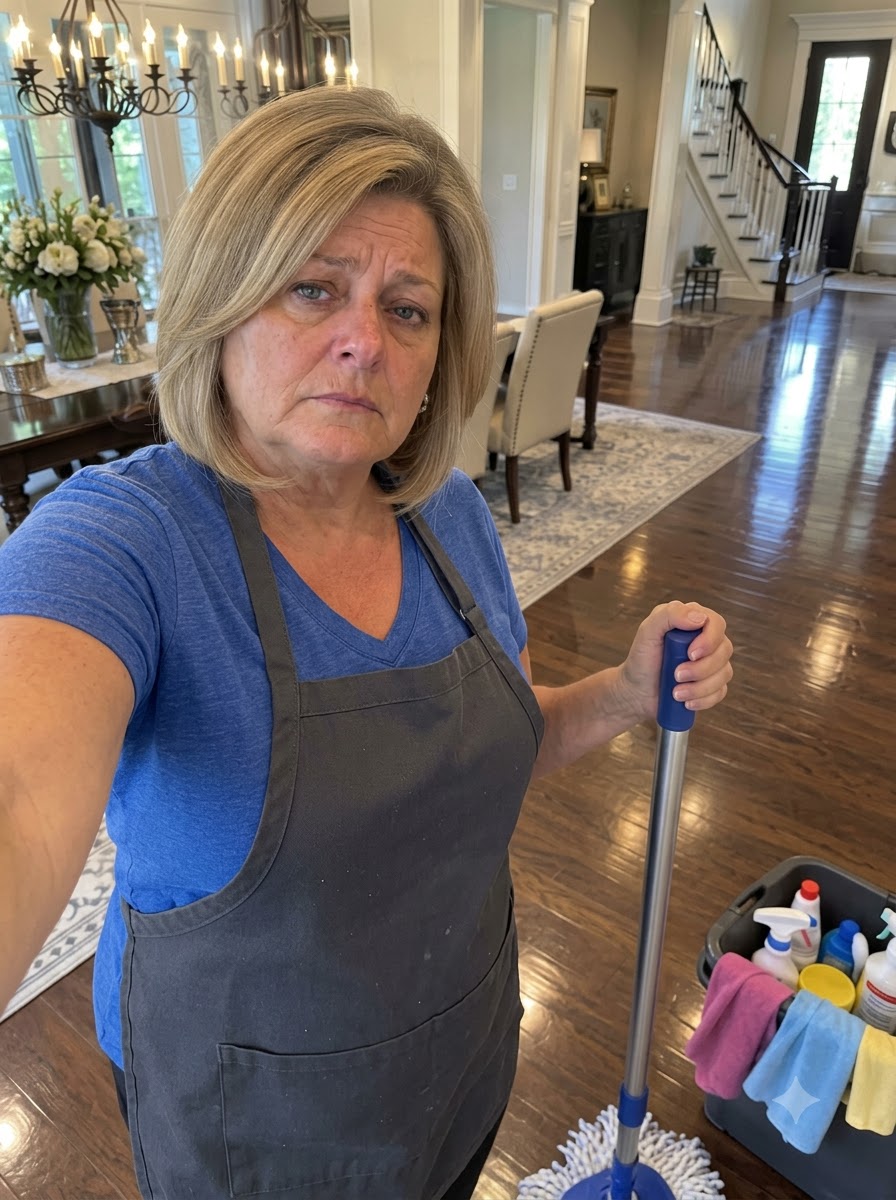
I cleaned the same woman’s home every Thursday for eight years. Then, shortly before she moved away, she asked me to return one last time. But she gave me one unusual instruction.
“Don’t bring your cleaning supplies.”
I assumed she planned to give me some dishes, furniture, or household items she no longer needed before the movers arrived.
Instead, she showed me something she had secretly been saving for eight years.
And it changed my daughter’s future.
The first time Margaret Whitaker called me, I was standing in a grocery-store parking lot in the rain, crying with a bag of frozen peas in my hands.
The peas weren’t the problem.
The problem was that I had forty-one dollars left in my checking account, a nine-year-old daughter waiting in the car, and a husband who had moved out three weeks earlier.
He had also taken our best vacuum cleaner.
Of all things.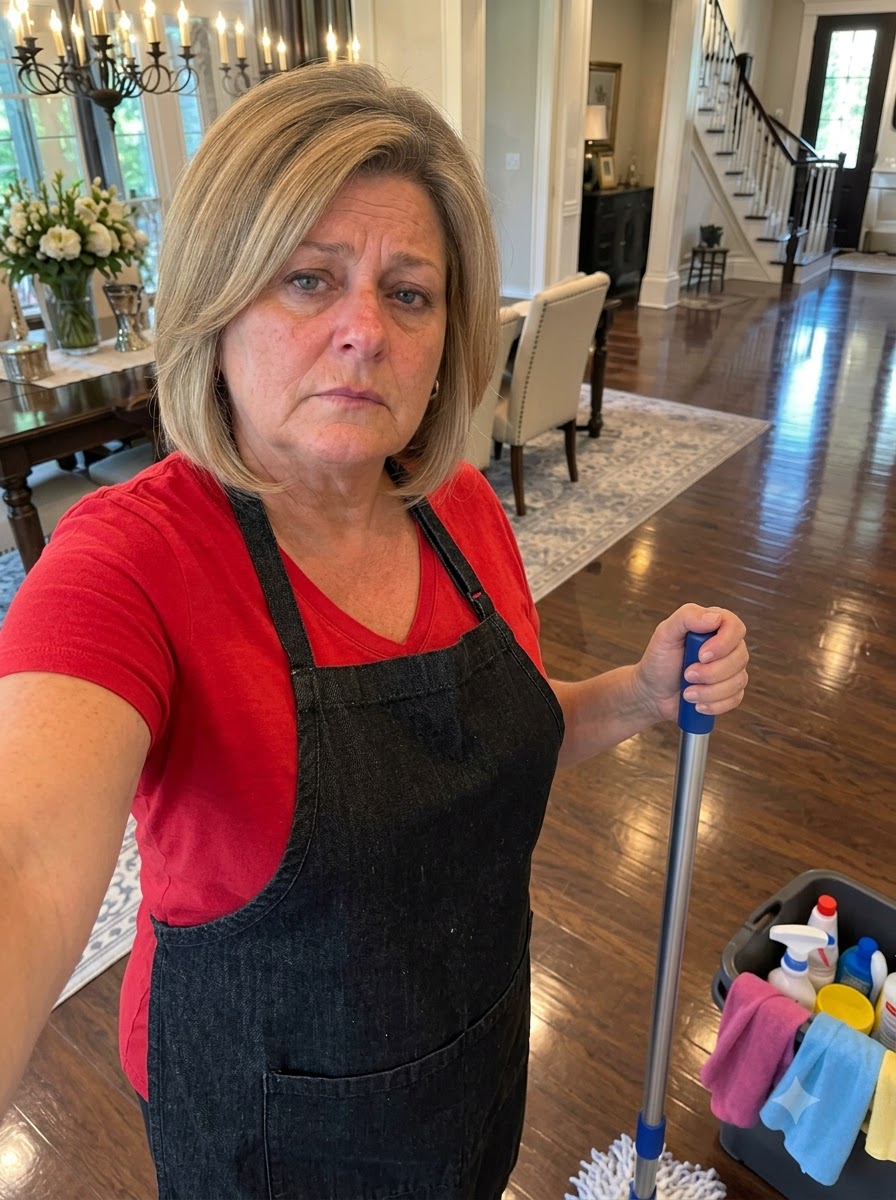
I was trying to build a cleaning business, and he knew it.
That afternoon, I had driven around town pinning handwritten cards to bulletin boards at the library, laundromat, coffee shop, and grocery store.
Each card read:
**HOUSE CLEANING. Honest. Reliable. Thorough. References available. Call Carly.**
My references were two neighbors and my former boss from the dental office where I had worked before my daughter Willa was born.
It wasn’t impressive, but it was truthful.
My phone rang as I loaded the groceries into the trunk.
I nearly ignored it before answering.
“Hello?”
“Is this Carly? The house cleaner?”
The voice belonged to an older woman.
Crisp, careful, confident.
“Yes.”
“My name is Margaret Whitaker. I saw your card at the library. I have a four-bedroom house on Linden Street. I need someone once a week. Are Thursdays available?”
At that point, every day was available.
I would have cleaned her house at three in the morning if she had asked me to, but I tried to sound professional.
“Let me check.”
Standing in the rain, I pretended to look through an imaginary calendar.
“Yes. Thursdays are open.”
“Good. Come tomorrow at ten.”
Then she paused.
“You’re crying.”
I froze.
“I’m sorry?”
“It’s raining too. I can hear it.”
Another pause.
“Ten tomorrow. 418 Linden Street. Blue door.”
Then she hung up.
When I climbed back into the car, Willa looked up from her library book.
“Who was that?”
“A woman who might give us our first real cleaning job.”
“Is she nice?”
I thought about Margaret’s voice and the way she had realized I was crying without embarrassing me by asking why.
“I don’t know yet. Maybe.”
The house on Linden Street was enormous compared with anything I had ever cleaned before.
Built in the 1920s, it had white columns, a wide porch, a blue front door with a brass pineapple knocker, and a huge oak tree standing in the yard.
Margaret opened the door before I had a chance to knock.
She was around seventy, small and straight-backed, with short white hair and reading glasses hanging from a silver chain.
She wore gray slacks and a navy cardigan with pearl buttons.
She looked like someone who had spent her entire life expecting people to arrive exactly when they said they would.
“Come in, Carly.”
She showed me through the house.
There was a long wooden hallway, a living room with an old piano, a formal dining room, an enormous kitchen with black-and-white tile, four bedrooms, three bathrooms, and a claw-foot bathtub.
“My husband and I bought this house in 1971. We raised our daughter Susan here. She lives in Oregon now.”
She stopped for a moment.
“My husband died two years ago.”
Then she continued walking.
“The house is too big for one person.”
“Are you planning to move?”
“No.”
She glanced toward me.
“I’m too stubborn.”
We eventually sat at the small round table beside the kitchen window.
Margaret sat down.
I remained standing.
“I’ll pay you one hundred dollars every Thursday. Nine until two. I’ll leave a check on the counter.”
One hundred dollars every week.
Four hundred dollars a month.
It wouldn’t solve all my problems, but it meant groceries, electricity, and perhaps part of the rent.
It was a beginning.
“That would be wonderful.”
She opened a drawer and pulled out a brass key.
“You’ll need this. I’m usually out on Thursdays. Bridge. Volunteer work. Errands.”
She extended the key toward me.
“Don’t lose it.”
I stared at it.
“You don’t know me.”
“I called your references.”
She looked at me over the top of her glasses.
“Your old boss said you once drove forty minutes to return a wallet a patient left in the waiting room. Your neighbor said you watched her dog for two weeks and refused payment.”
Then she added:
“And people who plan to steal from you generally don’t apologize for crying.”
I didn’t know how to respond.
“Thank you, Mrs. Whitaker.”
“Thursday. Nine o’clock.”
That first Thursday, I arrived at 8:40 and sat in my car for twenty minutes because I didn’t want to seem overeager.
When I entered, a note was waiting on the kitchen counter, written in perfect cursive on cream-colored paper.
**Carly — Supplies are under the sink. Do not use bleach on the kitchen floor. It’s original. Guest towels are white with blue stitching. Mine are plain gray. Please don’t move the photographs on the piano. — M.W.**
I treated those instructions like law.
I scrubbed the grout, baseboards, doorframes, bathrooms, and even the inside of the oven.
When I dusted the piano, I carefully lifted each photograph and returned it to the exact position indicated by the faint outline in the dust.
At noon, I sat inside my old Honda and ate a peanut-butter sandwich.
I could have eaten in the kitchen, but that didn’t feel appropriate.
It was her kitchen.
I was the cleaner.
So every Thursday, for eight years, I ate lunch in my car.
Margaret returned shortly after one that first afternoon.
She walked through the house, ran one finger across the piano, inspected the bathroom, and opened the oven.
She stared inside for several seconds before closing it.
“Thank you, Carly.”
That was all she said.
But I drove home sitting a little straighter.
For nearly a year, we hardly spoke.
Every Thursday, another note waited for me.
**The back window sticks. Don’t force it.**
**Susan is visiting. Please prepare the blue bedroom.**
**There’s soup in the refrigerator if you want some.**
I never ate the soup.
I assumed she was simply being polite.
Eventually, I began leaving notes of my own.
**Mrs. W — Out of dish soap. Bought more. Receipt under the salt shaker. — C.**
**Mrs. W — Kitchen faucet is dripping. Probably needs a washer. — C.**
**Mrs. W — Found a pearl earring under the sofa. It’s in the dish by the door. — C.**
Sometimes Margaret was home.
On those days, she would sit quietly reading while I worked.
Once, she asked:
“How is your daughter?”
“She’s good. Fourth grade now.”
“What does she like?”
“She draws houses.”
Margaret looked interested.
“Houses?”
“Floor plans mostly. Where the rooms should go. She says she wants to design houses one day.”
“That’s a good ambition.”
Then she went back to her book.
That first winter, Willa’s school closed because of snow.
I had no one who could watch her.
My mother lived hours away, my friends were working, and my ex-husband was, as usual, “busy.”
So I called Margaret.
“I’m sorry. Would it be all right if I brought Willa tomorrow? She’ll stay quiet. I promise.”
There was a pause.
“Bring her.”
The next morning, I seated Willa at the kitchen table with a book and her sketchpad.
She promised she wouldn’t move.
Margaret walked in and looked at her.
Willa pushed her glasses higher on her nose.
“I like your house. It has a lot of windows.”
“It does.”
“How many?”
Margaret thought for a moment.
“I honestly don’t know.”
Willa’s eyes widened.
“Can I count them?”
I immediately answered:
“No. You promised to stay in that chair.”
But Margaret looked at Willa and then at me.
“She can count them.” So Willa spent the day exploring the house with her sketchbook. She counted every window and sketched each room: the kitchen, the piano, the claw-foot bathtub.
When she finished, she set the drawing on the table.
“Forty-two windows.”
Margaret examined it carefully.
“And one attic window is broken. There’s a bird’s nest in it.”
Margaret continued studying the picture.
“You can keep it,” Willa said.
Margaret’s voice softened.
“I’d like that very much.”
I figured the drawing would eventually end up forgotten in a drawer.
I was wrong.
Life continued moving forward.
My cleaning business expanded. I picked up more clients, but Thursdays always remained Margaret’s.
She wasn’t my wealthiest client or the one who paid me the most, but she never canceled.
Not once.
Even when she traveled to Oregon to see Susan, she still left my weekly check behind.
Please come as usual. The plants need water and the house needs someone in it.
Back then, I assumed she simply wanted the house to appear occupied.
Years later, I understood what she really meant.
My divorce became final.
My ex-husband moved away.
Willa slowly stopped asking when he was coming to visit.
Then, during my third year working for Margaret, Willa suffered a serious asthma episode.
We spent the entire night in the emergency room.
Three weeks later, the medical bill arrived.
It was more than I earned in two months.
That Thursday, Margaret found me mopping the kitchen floor.
“Is Willa all right?”
I stopped.
“How did you know something happened?”
“You’ve mopped that same square three times.”
I glanced down.
She was right.
So I told her what had happened.
Margaret didn’t pity me or offer me money.
She simply said:
“I’m glad she’s okay.”
Then she added:
“Carly, you’ve worked here three years. You can call me Margaret.”
“I don’t think I can.”
For the first time, she almost smiled.
“All right. Mrs. Whitaker it is.”
The following Thursday, my check wasn’t $100 anymore.
It was $125.
Her note contained only three words:
Cost of living.
She never mentioned the raise again.
During our fourth year together, everything changed.
I arrived one February morning and saw Margaret’s car parked in the driveway.
Her purse was sitting on the hall table.
Her glasses rested on the kitchen counter, and beside them was a cup of cold tea.
The tea bag was still inside.
Margaret never left a tea bag sitting in her cup.
Immediately, something felt wrong.
“Mrs. Whitaker?”
No response.
I searched downstairs before heading upstairs.
Her bedroom was empty.
The bathroom door stood partly closed.
I pushed it open.
She was lying on the tile floor beside the claw-foot bathtub.
“Mrs. Whitaker!”
Her eyes opened slightly.
“Carly?”
“Yes. I’m here.”
Then she whispered something I have never forgotten.
“It’s Thursday.”
“Yes.”
“I knew you’d come.”
I called emergency services.
She had fallen Tuesday night and injured her hip.
Unable to reach the phone, she had spent more than a day lying on that bathroom floor, waiting.
At the hospital, a nurse asked me:
“Are you family?”
“No.”
“What’s your relationship?”
“I clean her house.”
The nurse looked surprised.
I called Susan.
She immediately booked a flight and begged me to stay with her mother until she arrived.
So I stayed.
When Margaret woke after surgery, she looked at me.
“You’re still here.”
“Susan lands in the morning.”
“You have Willa.”
“She’s fine.”
I showed her a picture Willa had drawn.
It was Margaret’s house with all forty-two windows, and Willa had colored a yellow light inside every one.
Across the top, she had written:
GET WELL SOON. THE HOUSE MISSES YOU.
Margaret stared at the picture.
Her chin trembled.
Then she turned toward the wall.
I held her hand without saying a word.
After that, our relationship changed.
Not dramatically.
Margaret continued leaving notes.
I continued cleaning.
I still called her Mrs. Whitaker.
But she began staying home on Thursdays more often.
She asked about Willa, school, books, braces, and science projects.
Then Willa grew up.
One day she was nine years old, drawing floor plans at Margaret’s kitchen table.
Suddenly, she was seventeen.
She still loved houses.
She studied drafting, geometry, and art, won a regional design competition, and decided she wanted to study architecture.
Her dream university cost thirty-two thousand dollars a year.
I was proud.
And terrified.
We completed scholarship applications and financial-aid forms.
Willa stayed up late writing essays.
I took additional cleaning jobs on Saturdays.
I never told Margaret about the financial pressure.
She was my client.
But one Thursday, she asked:
“Where is Willa applying?”
I told her.
“Architecture?”
“Yes.”
Margaret nodded.
“Of course.”
“What?”
“The windows.”
I smiled.
“The windows.”
Three weeks later, Margaret told me she was moving.
She was eighty now.
Susan wanted her closer.
Margaret had found an apartment in Oregon with an elevator, a dining room, a library, and a mountain view.
The Linden Street house already had a buyer—a young family with three boys.
I tried to seem happy.
And I truly was happy for her.
But when I drove home that afternoon, I sat in my driveway for twenty minutes before going inside.
I told myself I was upset about losing $125 every week.
But deep down, I knew that wasn’t why I was crying.
The final Thursday arrived just before Thanksgiving.
Almost all the furniture had disappeared.
There was no piano.
No dining-room table.
No rugs.
My footsteps echoed through the empty rooms.
I cleaned anyway.
Every room.
Every bathroom.
The claw-foot bathtub.
The black-and-white kitchen floor.
Pale rectangles remained on the walls where photographs had hung for decades.
At two o’clock, I packed my cleaning supplies.
Then I took out the brass key Margaret had given me eight years earlier and held it toward her.
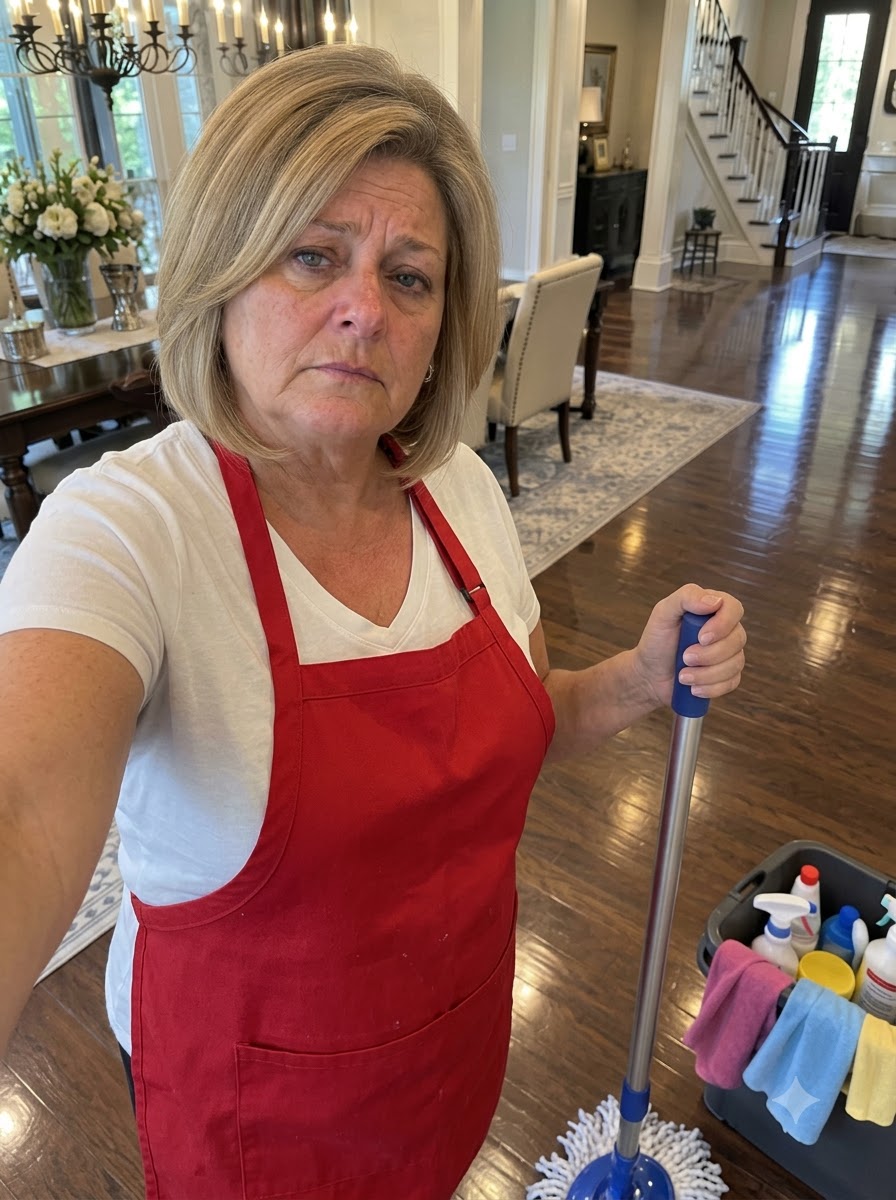
She didn’t take it.
Instead, she folded my fingers around it.
“Not yet.”
I looked at her.
“Come back Saturday. Eleven o’clock.”
“Do you need me to clean after the movers?”
“No.”
Then she added:
“Leave your cleaning supplies at home.”
I must have looked confused because she peered at me over her glasses.
“I’m asking you to visit, Carly.”
Saturday morning, I had no idea what to wear.
Nearly everything I owned seemed to have bleach stains somewhere.
Eventually, I chose dark jeans and a pale-blue blouse.
Willa insisted that I bring something, so together we made oatmeal chocolate-chip cookies.
At exactly eleven, I stood outside the blue door.
For the first time in eight years, I knocked.
I didn’t use my key.
Margaret opened the door.
“You look lovely, Carly.”
Inside, most of the house was empty.
But the small round kitchen table was still there.
It was covered with a white tablecloth and set with two china plates, two cloth napkins, a pitcher of iced tea, and chicken-salad sandwiches cut into triangles.
I simply stood there.
“Sit down,” she said.
Then she added:
“I know you usually eat lunch in your car.”
I stared at her.
“You knew?”
“Every Thursday for eight years.”
She pulled out my chair.
“Peanut butter most weeks. Sometimes turkey.” “You watched me?”
“From the upstairs window.”
“Why didn’t you ever ask me to eat inside?”
Margaret sighed.
“Because I’m a stubborn old woman who doesn’t know how to say things.”
We ate lunch together.
Actually together.
For the first time in eight years.
We talked about Oregon, Susan, the family purchasing the house, Willa, and her architecture applications.
“She’ll get in,” Margaret said.
“I hope so.”
“She’ll get in.”
After lunch, habit took over.
I began gathering the plates.
Margaret placed her hand over mine.
“Leave those.”
“I can wash—”
“Carly. Leave them.”
Then she walked over to a cabinet and returned carrying an old shoebox secured with two rubber bands.
She placed it in front of me.
“Open it.”
Inside were hundreds of pieces of paper.
At first, I didn’t understand what I was looking at.
Then I recognized my own handwriting.
Mrs. W — Fixed the sticky drawer. Soap on the runners. — C.
Another one.
Mrs. W — Your hydrangeas looked thirsty. I watered them. — C.
Another.
Found your pearl earring. Left it by the door.
I looked up at her.
“These are my notes.”
“Every single one.”
“Why?”
“Eight years. Four hundred and twelve Thursdays.”
Mixed among the notes were Willa’s drawings.
The original floor plan with all forty-two windows.
The hospital drawing.
Birthday cards.
And a tiny clay pineapple she had made in art class.
Then I reached the bottom.
There was a note written in my handwriting on a hospital napkin.
Mrs. W — Susan lands at six. I’m sleeping in the chair. I’m here if you need anything. You’re not alone. — C.
I couldn’t even remember writing it.
Margaret had saved it for four years.
My eyes filled with tears.
“Why did you save all this?”
Margaret took off her glasses.
“When my husband died, people visited for about a month. They brought food. Sent cards. Checked on me.”
She looked outside toward the oak tree.
“Then everyone went back to their own lives.”
She paused.
“And I was alone in a house with forty-two windows and nobody to look out of them with.”
She told me she had actually intended to sell the house years earlier.
Then she found my handwritten cleaning card.
“You came on Thursday. You cleaned my oven.”
I laughed through my tears.
“And you put every picture back exactly where it had been.”
She touched one of Willa’s drawings.
“Then your daughter came and counted the windows. I had lived here for forty years and had never counted them.”
Margaret smiled faintly.
“I called Susan that night. I told her, ‘My house has forty-two windows.’”
Susan had replied:
“Mom, you sound happy.”
Then Margaret’s expression shifted.
“When I fell in the bathroom, I was in terrible pain. But I kept thinking something.”
“What?”
“Tuesday.”
She paused.
“Then Wednesday.”
Her eyes filled with tears.
“And then I thought, Carly comes Thursday.”
She took both of my hands.
“You were the one thing in my life I knew would happen every week. You never canceled. You never arrived late. You never took anything. You ate lunch in your car because you were afraid of leaving crumbs.”
She squeezed my hands.
“You thought you were just my cleaner.”
Then she shook her head.
“You were never just my cleaner, Carly. Not for one Thursday.”
We both cried.
After a while, Margaret composed herself.
“There’s one more thing.”
She picked up the shoebox lid.
Taped beneath it was a white envelope.
On the front, written in her perfect cursive, were two words:
For Willa.
My heart began pounding.
“Open it.”
Inside was a bank statement.
I read the name:
Beneficiary: Willa Rose Brennan.
Then I saw the balance.
$58,340.17.
The page slipped from my hands.
“No.”
Margaret remained completely calm.
“No?”
“I can’t accept this.”
“It isn’t for you.”
“Mrs. Whitaker—”
“It belongs to Willa.”
“Where did this money come from?”
Margaret folded her hands together.
“The first Thursday you cleaned this house, I came home and opened my oven.”
I remembered.
“I thought about the woman crying in the grocery-store parking lot and her nine-year-old daughter sitting in the car.”
Margaret continued:
“That afternoon, I wrote two checks. One was your $100. The second was another $100.”
“For Willa?”
“Yes.”
I stared at her.
“Every Thursday?”
“Every Thursday.”
“For eight years?”
“Yes.”
“When I increased your pay to $125, I increased hers too.”
Over time, the money had grown.
Four hundred and twelve Thursdays.
“You cleaned my house,” Margaret said.
“And this house helped pay for your daughter’s future.”
I shook my head.
“This is too much.”
“No.”
“It is.”
“You’re misunderstanding. It isn’t charity.”
“Then what is it?”
“A debt.”
I frowned.
“You don’t owe me anything.”
“Not to you.”
Margaret stood and walked toward the window.
“To a woman named Alice Ashford.”
Then she told me something I had never known.
Margaret’s mother had cleaned houses.
Her name was Rose.
She had been a single mother after Margaret’s father left.
For thirty-one years, Rose cleaned other people’s homes.
Margaret had grown up watching her carry a gray metal bucket with a dent in its side.
“For years, I was ashamed of it,” Margaret admitted.
“I became a school principal. I wore pearls. I bought a house with forty-two windows.”
Her voice broke.
“And I spent years pretending my mother had never cleaned houses.”
She looked directly at me.
“That is the thing I am most ashamed of.”
One of Rose’s clients was a wealthy widow named Alice Ashford.
Rose cleaned her house every Thursday for twelve years.
When Margaret was seventeen, she was accepted into college.
Her family couldn’t afford the tuition, so Margaret had decided she would work at the telephone company instead.
Then a letter arrived from a bank.
Someone had established a scholarship in her name.
Four years of tuition.
The donor was anonymous.
It was Alice Ashford.
For years, Alice had quietly deposited money into an education account for Margaret.
Every Thursday.
The same amount she paid Rose for cleaning.
I couldn’t speak.
Margaret continued.
“My mother found out after I graduated. She tried to repay Alice.”
“But Alice refused?”
Margaret nodded.
Instead, Alice told Rose:
‘It isn’t charity. It’s a debt. And someday your daughter will owe it too.’
Margaret had spent decades promising herself she would pass that gift forward.
Someday.
To a student.
A friend’s child.
Someone.
But life kept moving.
Then, fifty years later, she found my handwritten advertisement.
“And I heard you crying on the phone.”
She smiled. “I thought, there it is. There’s someday.”
I cried for nearly half an hour and kept refusing.
Margaret simply waited.
Finally, she reached into her wallet and pulled out a small, yellowed piece of paper.
Her mother had written down something Alice had once told her:
The work of keeping a house is the work of keeping a life. Nobody notices until it stops. But it is never small. It is never nothing. And anyone who does it well deserves to see their children do anything they want.
I thought about those eight years.
Four hundred and twelve Thursdays.
The baseboards.
The grout.
The oven.
The sticky drawer.
The pearl earrings.
The hospital rooms.
The lunches eaten alone in my car.
Everything I had assumed nobody noticed.
Margaret had noticed every bit of it.
“Okay,” I whispered.
Her eyebrows lifted.
“Okay?”
“For Willa.”
Then I pointed at her.
“But I have a condition.”
“You’re negotiating with me?”
“I learned from the best.”
Margaret laughed.
A real laugh.
Loud and surprised.
“What condition?”
“You come back for Willa’s graduation. And when she goes to college, you visit her. And when she designs her first real building, you come see it.”
“That’s three conditions.”
“Take it or leave it.”
Margaret extended her hand as though we were finalizing a business agreement.
“Deal.”
Then she asked me for the brass key.
I pulled it from my pocket.
She studied it.
“The new family changes the locks Monday.”
“I know.”
“Keep it anyway.”
She folded my fingers around it.
“This was the first house that trusted you. Never forget that you were worth trusting.”
I drove home without furniture, old dishes, or boxes of books.
The only thing sitting on the passenger seat was a shoebox.
Willa was at the kitchen table working on scholarship applications.
“How was Mrs. Whitaker?”
I set the box in front of her.
“Open it.”
The first things she discovered were her childhood drawings.
“She kept these?”
“Every one.”
Then she found the white envelope.
For Willa.
She opened it, read the bank statement, and then read it again.
Her hands began trembling.
Finally, she covered her face and cried.
I sat down beside her.
“Every Thursday. For eight years. Every time she paid me, she put the same amount away for you.”
“Why?”
So I told her everything.
Rose.
Alice.
The cleaning bucket.
The scholarship.
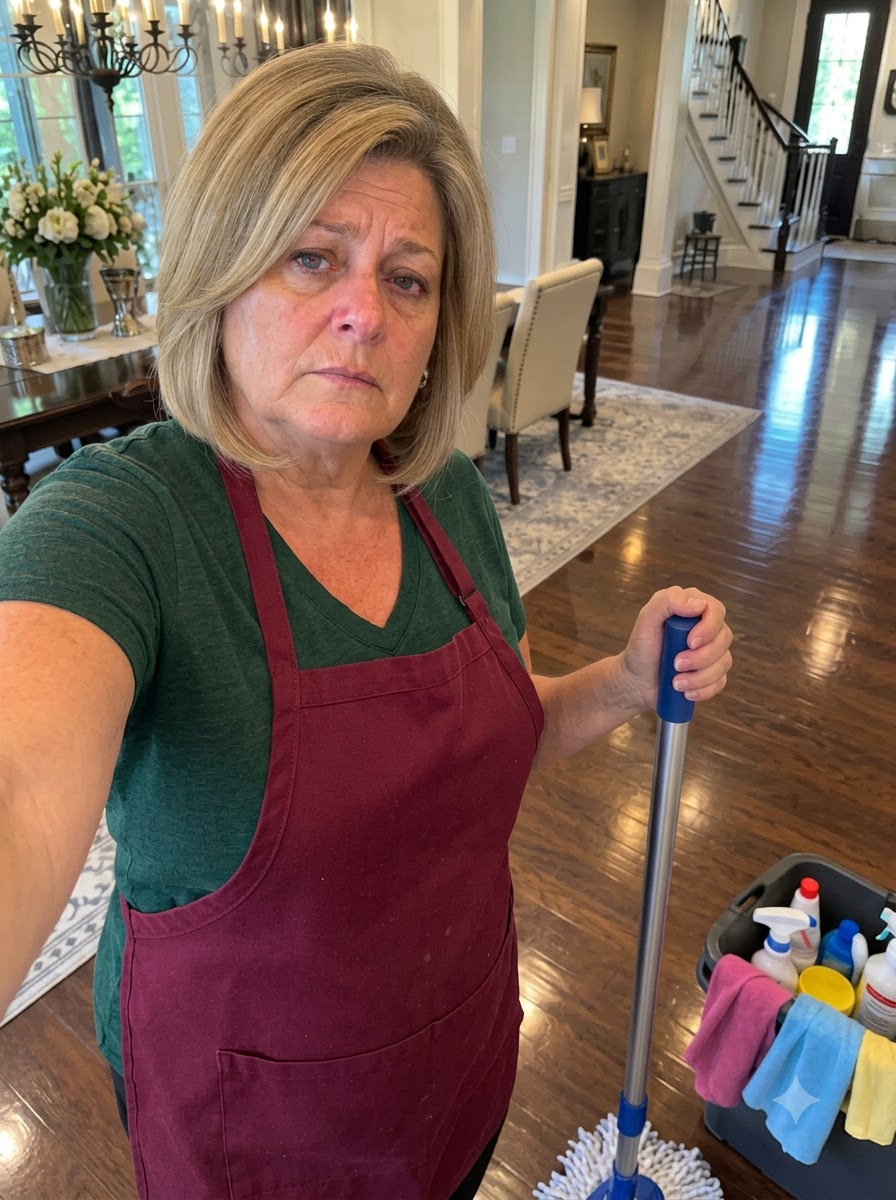
The promise.
The debt.
When I finished, Willa looked at me.
“Mom.”
“What?”
“My middle name is Rose.”
I nodded.
“So is yours.”
“I know.”
“And Great-Grandma’s.”
“I know.”
She looked down at the notes inside the box.
“You never told me about all the things you did for her.”
“It was just my job.”
Willa picked up the hospital napkin.
You’re not alone.
Then she looked at me.
“No, Mom. It was never just your job.”
Willa was accepted into the architecture program the following March.
The acceptance letter arrived on a Thursday.
Of course it did.
She called Margaret before calling her father.
“I got in!”
Margaret had already booked her flight for graduation.
And she honored every one of my conditions.
At Willa’s graduation, Margaret sat beside me on the metal bleachers.
When they announced:
Willa Rose Brennan
Margaret stood.
She didn’t cheer.
She wasn’t the cheering kind of woman.
Instead, she pressed one hand against her heart and watched Willa walk across the stage.
Then she reached over and took my hand.
Afterward, Willa hugged her.
“Thank you.”
Margaret pulled back.
“Don’t thank me. Thank Rose. And Alice. And your mother.”
Then she looked seriously at Willa.
“And don’t forget what you owe.”
“I won’t. Someday.”
Margaret shook her head.
“Not someday. Someday is how people wait fifty years. When the right person appears, you’ll know.”
That fall, Willa began college.
She calls me every Thursday night.
I don’t think she deliberately chose Thursday.
It simply happened.
Margaret calls every Sunday from Oregon.
I still clean houses.
Now I have eleven clients and one employee.
Her name is Dani.
She is twenty-three and has a four-year-old son.
When I met her, she was struggling badly.
I pay her more than anyone ever paid me when I was starting out.
On snow days, she brings her son along.
I still carry Margaret’s old brass key on my key ring.
It doesn’t unlock anything anymore.
But sometimes, when I’m nervous, I rub my thumb across it.
And now I have another Thursday client.
His name is Harold Dean.
He’s eighty-three.
His wife died last winter.
The first Thursday I cleaned his house, I noticed a cold cup of tea sitting on the counter.
For one terrifying second, I remembered Margaret.
I searched every room.
He was fine.
He had simply fallen asleep in his recliner.
But something became clear to me that day.
I finally understood what a Thursday could mean to someone who lived alone.
The following week, when noon came, I didn’t go outside to eat in my car.
Instead, I made two chicken-salad sandwiches with grapes and walnuts—Margaret’s recipe.
I placed them on real plates and folded two cloth napkins.
Then I walked into Mr. Dean’s den.
“Would you like to have lunch with me?”
He looked toward the table.
“My wife used to set the table like that. Even when it was only the two of us.”
“Then let’s eat like that.”
We sat together.
He told me about his wife.
How they had met at a roller rink in 1961.
How she had knocked him down on their very first lap.
He laughed as he told the story.
Then he admitted it was the first time he had laughed in months.
When lunch was over, he reached for the plates.
I placed my hand over his.
“Leave those.”
He looked at me.
“I have something I want to show you next Thursday.”
“What?”
“A shoebox. It has some old notes in it. Some drawings. And a story about a woman named Rose.”
He smiled back at me.
“Thursday?”
“Thursday.”
Before I left, I stopped beside his hall table.
I found a pen and wrote:
Mr. Dean — Your tomato plants looked thirsty. I watered them. See you Thursday.
I started walking away.
Then I turned back and added one final line.
Something I had once written on a hospital napkin without ever realizing someone would remember it.
You’re not alone.
