

Part 1 — His Final Request
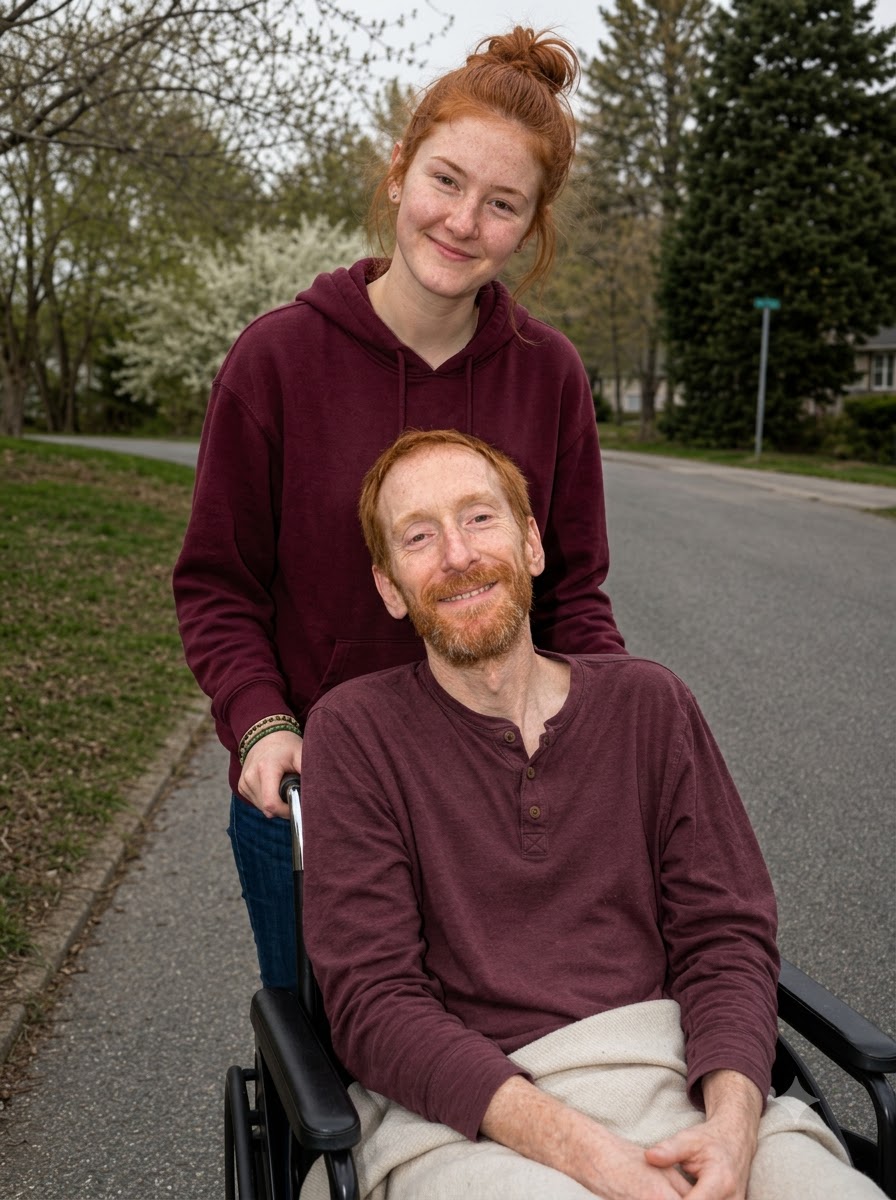
The morning the doctor told us David was dying, the house somehow felt quieter before we had even made it home.
Maybe grief comes before death.
Maybe it enters through the door ahead of you, settles among the furniture, and waits.
David sat beside me in the hospital consultation room, one hand holding mine as the doctor spoke in the soft, measured voice people use when there is no gentle way to deliver terrible news.
“Stage four,” he said. “At this point, treatment won’t cure it. Our focus should be on keeping him comfortable.”
I stared at him, convinced I had heard him wrong.
David was only forty-seven.
He had breakfast with me that morning.
He had reminded our son to take his science project to school.
He had complained that the coffee was too weak.
People who were dying were not supposed to worry about coffee.
“How much time?” I finally asked.
The doctor paused.
“A few weeks. Possibly a couple of months.”
David squeezed my hand.
I remember thinking how strange it was that he was the one comforting me.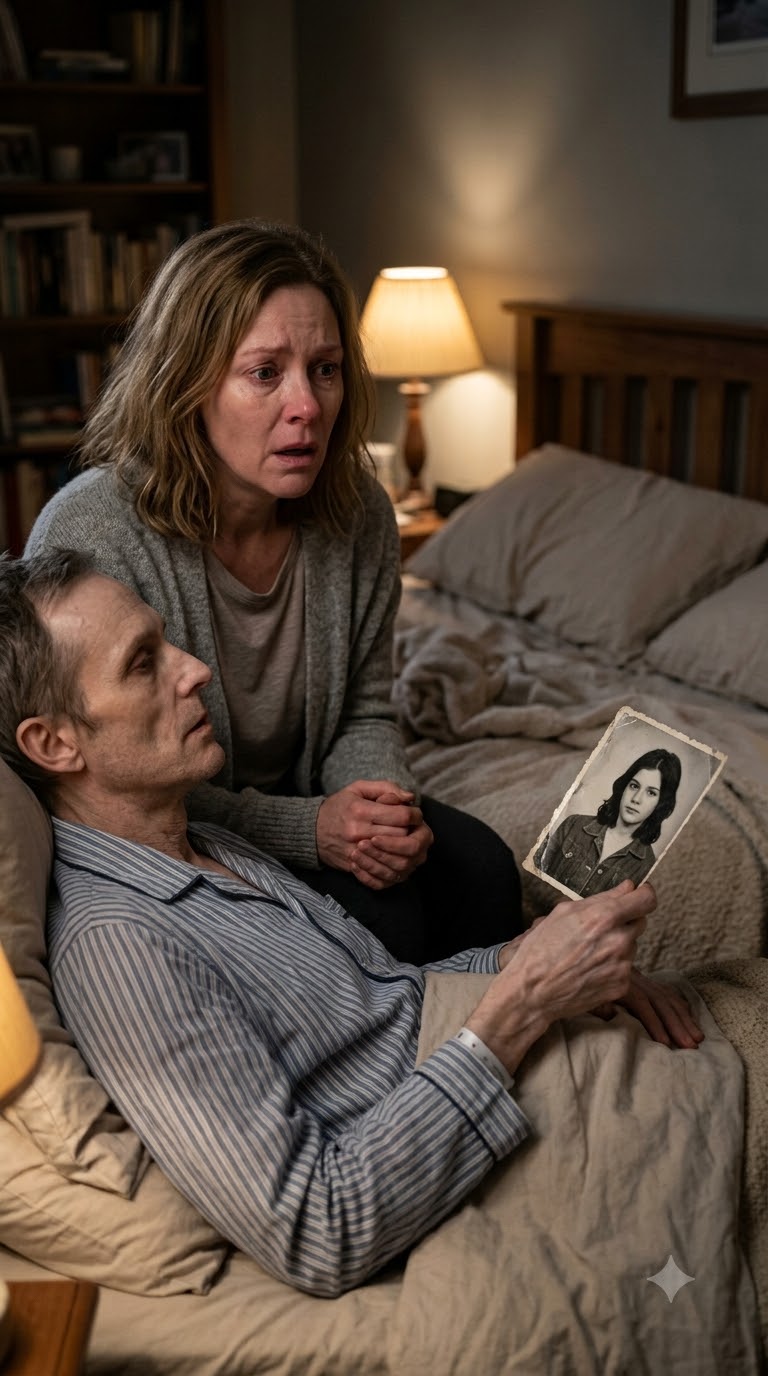
For fifteen years, David and I had created what I thought was an ordinary but beautiful life. We had two children, a comfortable home, years of private jokes, arguments over dishes, Sunday breakfasts, family vacations, and the kind of quiet routines you never value enough until someone tells you they are about to disappear.
When we got home, we told the children only that their father was very sick.
They held onto him.
He smiled.
I smiled.
We all pretended to be brave for each other.
But at night, after the children were asleep, I would lie beside David and listen to him breathe.
Sometimes his breathing was shallow.
Sometimes it was uneven.
And sometimes, when he believed I was asleep, I caught him staring into the darkness.
There was sadness in his expression, but it wasn’t only sadness.
There was guilt.
I noticed it long before I understood what it meant.
One evening, I rested my head against his increasingly thin shoulder.
“What aren’t you telling me?”
He went still.
“What do you mean?”
“You know exactly what I mean.”
He looked away.
“You’re dying, David. I hate saying those words, but they’re true. If there’s something you need to tell me, tell me now.”
His eyes filled with tears.
For one terrifying second, I thought he was about to confess to an affair.
Instead, he whispered, “I’m tired.”
“That isn’t an answer.”
“No.”
“Then give me one.”
He turned toward me and kissed my forehead.
“Not tonight. Please.”
I should have insisted.
For the rest of my life, there would be moments when I wondered what might have happened if I had.
Three weeks after David entered hospice care, he asked me to come into his bedroom.
By then, walking from one room to another left him exhausted. His cheeks had become hollow, and his hands looked older than the rest of him.
Yet that afternoon, there was an unusual alertness in his expression.
“Sit down,” he said.
I pulled the chair beside the bed.
He reached underneath his pillow and brought out a photograph.
The corners were worn, as though someone had held it countless times.
A teenage girl looked back at me.
She appeared about sixteen, with dark hair and serious eyes that seemed far too tired for someone her age.
“Who is she?” I asked.
David swallowed.
“Her name is Grace.”
I waited.
He said nothing more.
“And?”
“I need you to do something for me.”
Something about his voice made my stomach tighten.
“What?”
“I need you to adopt her.”
For several seconds, I could do nothing but stare at him.
“Adopt her?”
“Yes.”
“David, she’s practically grown.”
“I know.”
“Who is she?”
His eyes closed.
“Please.”
My heart began to race.
A terrible possibility entered my thoughts.
“Is she yours?”
David opened his eyes.
But he took too long to answer.
I stood.
“Oh my God.”
“No. It isn’t what you think.”
“Then tell me what it is.”
“I can’t.”
“You can’t?”
“I’m asking you to trust me.”
I almost laughed.
“Trust you? You just handed me a photograph of a sixteen-year-old girl I’ve never met and asked me to bring her into our family without telling me who she is.”
Tears gathered in his eyes.
“Please, Sarah.”
There are moments in life when love makes fools of us.
Or saints.
Sometimes both.
I looked at the man I had loved for fifteen years and saw how close he was to disappearing.
I wanted answers.
I deserved answers.
But refusing what might be his final wish felt unbearably cruel.
So despite every instinct screaming inside me, I agreed.
“I’ll meet her.”
David’s face crumpled with relief.
“Bring her home.”
I should have realized then that whatever secret tied David to Grace was not something small.
But nothing could have prepared me for the truth.
Part 2 — The Girl Who Already Knew My Husband
Grace arrived on a rainy Tuesday afternoon.
She climbed out of a social worker’s car carrying nearly everything she owned in two bags—a faded backpack and a plastic grocery sack packed with clothes.
That was it.
No suitcase.
No boxes.
No childhood keepsakes.
Only two bags.
She stood beneath our porch light with rain caught in her hair, looking like someone who had already learned not to expect anything to last.
“Hi,” I said softly. “You must be Grace.”
“Yes, ma’am.”
Her voice was barely more than a whisper.
I stepped aside.
“Come in.”
Our children were much less hesitant.
Within minutes, they were firing questions at her, giving her a tour of the house, and arguing over which board game they should play with her first.
For the first time since David had gotten sick, laughter returned to the living room.
Grace watched them with an expression I couldn’t quite understand.
Longing, perhaps.
Or disbelief.
When I showed her the spare bedroom, she put down her backpack and stood awkwardly by the doorway.
“Thank you,” she said.
“You don’t have to keep thanking me.”
“I know this is strange.”
That was putting it mildly.
Still, I managed a smile.
“You can call me Sarah.” She nodded.
Then, after a brief pause, she whispered, “David said you wanted me to call you Mom.”
I froze.
He had never mentioned that to me.
“I think that should be your decision,” I said quietly. “Not his.”
Grace looked relieved.
“Okay.”
That evening, something happened that made my uneasiness deepen.
David had barely spoken throughout the day.
He had been too weak to even finish dinner.
But when Grace entered his room, I heard laughter.
His laughter.
It stopped me in the hallway.
I hadn’t heard that sound in weeks.
I stepped closer to the doorway.
Grace was sitting beside him, holding his hand.
David looked at her with an affection so deep and familiar that my chest tightened.
It was not how a stranger looked at a child.
It was how someone looked at a person who carried part of his history.
Grace noticed me first.
Her smile disappeared.
David followed her gaze.
For a brief moment, the three of us simply stared at one another.
Then he said, “Everything okay?”
I nodded.
But it wasn’t.
Not even close.
Over the next several days, Grace gradually became part of our household.
She helped our daughter with her homework.
She washed the dishes without being asked.
She learned where we kept the cereal and which bathroom door stuck whenever the weather was humid.
Yet one thing never changed.
Every afternoon, she went into David’s room.
And every afternoon, the door closed.
They spoke quietly enough that I could rarely understand their words.
One afternoon, I stopped in the hallway.
I hated myself for listening.
But I listened anyway.
Grace’s voice came through the door.
“I don’t know if I can do this.”
“You have to,” David said.
“I hate lying to her.”
“You’re not lying.”
“I’m not telling her the truth either.”
Silence.
Then David whispered, “Just a little longer.”
I backed away before they could catch me.
That night, I placed a bowl of soup in front of David.
“What were you and Grace discussing today?”
His spoon stopped.
“Nothing important.”
My irritation finally broke through.
“Nothing important?”
He avoided looking at me.
“David, you can barely get out of bed, yet whenever Grace comes home, suddenly you have enough energy to spend an hour talking behind a closed door.”
“Sarah…”
“No. I agreed to bring her into this house because you asked me to trust you. I have done everything you asked. The least you can do is tell me why.”
His face tightened with pain.
Whether physical or emotional, I couldn’t tell.
“Later.”
I stared at him.
“Later?”
“I promise.”
That word became the one I hated most.
Later.
Every question received the same answer.
Who was Grace?
Later.
How did he know her?
Later.
Why did she cry after speaking with him?
Later.
How long had he known her?
Later.
David kept pushing the truth into a future he knew he would never have to face.
And I allowed him to.
Partly because I loved him.
Partly because he was dying.
And partly because I was terrified that once the truth came out, I would wish I had never asked.
image
For illustrative purposes only
PART 3 — THE PROMISE SHE WOULDN’T BREAK
About two weeks after Grace moved in, I found her crying in the laundry room.
She stood beside the dryer with one of David’s pajama shirts pressed against her face.
“Grace?”
She jumped.
The shirt slipped from her hands.
“I’m sorry.”
“For what?”
“I shouldn’t…”
Her voice broke.
I stepped closer.
“Why are you crying?”
“I’m okay.”
“No, you’re not.”
Neither of us was.
I closed the laundry-room door behind me.
“Grace, I’m asking you to please stop protecting him.”
Her eyes widened.
“I don’t know what you mean.”
“Yes, you do.”
She looked toward the floor.
“There is something going on between you and David. I hear the conversations. I see the way you look at each other. Every time I ask him, he tells me to wait.”
Grace’s chin trembled.
“Please.”
“Please what?”
“Don’t ask me.”
My frustration flared.
“You’re living in my house. I’m supposed to become your legal mother. My husband is dying, and the two of you are keeping a secret from me. Do you understand how that feels?”
Tears rolled down her cheeks.
“I promised him.”
“Promised him what?”
She pressed her lips together.
“Grace.”
“I can’t.”
“Why?”
“Because he made me promise.”
For a moment, I wanted to grab her shoulders and shake the truth out of her.
Instead, I stepped back.
She was a child.
Whatever David had done, she had been placed in the middle of it.
Still, understanding that didn’t make the secrecy hurt any less.
“Fine,” I whispered.
Grace wiped her eyes.
“I’m sorry.”
“So am I.” She slipped around me and rushed upstairs.
Three days later, David was rushed to the hospital.
He never returned home.
Our final conversation was painfully ordinary.
He was exhausted, drifting between wakefulness and sleep.
I sat beside him, holding his hand.
Our children had already said goodbye without knowing that was what they were doing.
Grace had come earlier and left the room in tears.
I leaned closer to him.
“David.”
His eyes opened.
“Yeah?”
“Is there anything you want to tell me?”
For one moment, I thought he would finally tell me.
I saw the struggle written across his face.
Then he gave the smallest shake of his head.
“I love you.”
Tears burned behind my eyes.
“That isn’t what I asked.”
“I know.”
“David…”
“I’m sorry.”
Those were almost the final words he ever said to me.
He died shortly before dawn.
PART 4 — THE BOX
The funeral passed in fragments.
Black clothing.
Flowers.
Hands resting on my shoulder.
People telling me David had been a good man.
Casseroles filling my refrigerator.
Our children crying when they thought I wasn’t watching.
Grace remained beside them throughout the service.
Several people quietly asked who she was.
“She’s family,” I said.
The words came automatically.
The terrible part was that I still had no idea how she was family.
That night, after everyone had gone, I climbed into the bed David and I had shared for fifteen years.
His side was empty.
Not temporarily empty.
Not because he had gotten up for a glass of water.
Not because he was sleeping on the couch after an argument.
Empty forever.
I lay there staring at the ceiling.
Anger slowly began pushing through the grief.
Every memory now seemed to hold another question.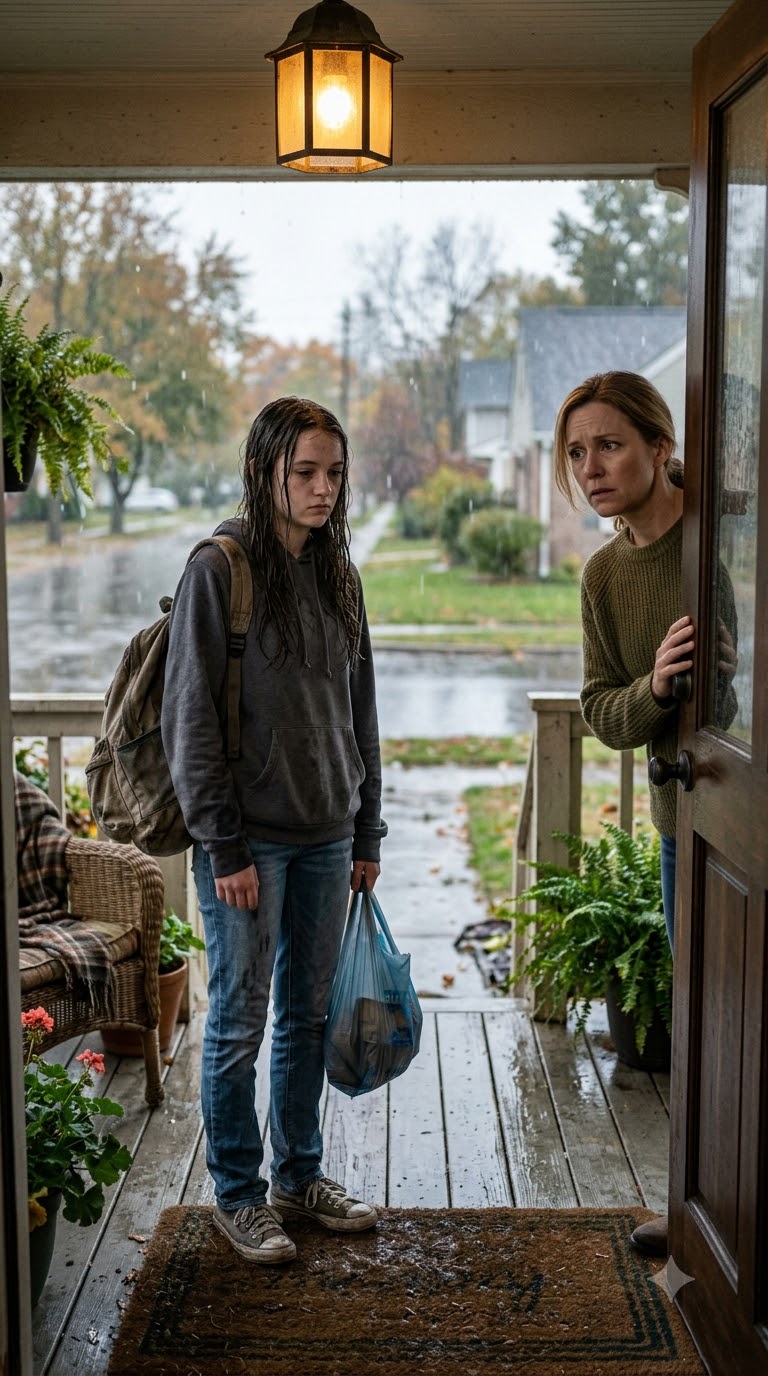
Had he lied to me on our wedding day?
Had he known Grace when our children were born?
How many times had he left the house saying he was running errands when he was actually seeing her?
Was she really his daughter?
The thought made me feel physically ill.
Around midnight, my bedroom door opened.
Grace stood there.
She was holding a small wooden box against her chest.
“I need to talk to you.”
I rubbed my face.
“Grace, please. Not tonight.”
“It has to be tonight.”
“Why?”
“Because he said the day after the funeral.”
My entire body went still.
“What?”
“He told me I couldn’t give this to you before then.”
She stepped inside and closed the door.
The box was roughly the size of a hardcover book.
“What’s inside?”
“I don’t know everything.”
“You haven’t opened it?”
“He made me promise I would only open it with you.”
My grief immediately turned into fury.
Even in death, David was still controlling when I could hear the truth.
“Of course he did.”
Grace flinched.
“I’m sorry.”
I looked at her.
Her hands were trembling.
She looked terrified.
Then she whispered something I would remember forever.
“I’ve spent my whole life being someone’s secret. I can’t do it anymore.”
My anger faltered.
She set the box down on the bed between us.
“He told me once you saw what was inside, I could finally tell you everything.”
I lifted the lid.
Inside were photographs.
Old letters.
Bank records.
And beneath them, several envelopes written in David’s handwriting.
I picked up the first photograph.
David wasn’t in it.
His father was.
He looked much younger than I remembered him, perhaps in his thirties.
Standing beside him was a beautiful young woman with dark hair.
The resemblance to Grace was unmistakable.
“Who is she?”
Grace inhaled shakily.
“My mother.”
I turned the photograph over.
A date had been written on the back.
Beneath it were two words.
Forgive me.
My pulse thundered.
“Grace, tell me what this means.”
She sat completely still.
Then she said, “David wasn’t my father.”
Relief came so quickly that I nearly laughed.
But Grace wasn’t finished.
“He was my brother.”
I stared at her.
“What?”
“My half-brother.”
The relief disappeared.
She pointed toward the photograph.
“David’s father was also my father.”
The room seemed to tilt beneath me.
I looked at the photograph again.
Then back at Grace. Then I looked back at the man I had known as my father-in-law.
“No.”
“My mother never married him,” Grace said. “She raised me alone.”
I struggled to make sense of it.
“But you’re sixteen.”
Grace nodded.
The dates gradually came together in my mind.
David’s father had been much older when Grace was born.
“Did David know?”
“Yes.”
“How long?”
Grace lowered her eyes.
“Before you married him.”
That answer hurt more than I expected.
“Before our wedding?”
“Yes.”
“Fifteen years?”
“He knew about me. He didn’t meet me until later.”
I rose abruptly.
“So my husband knew throughout our entire marriage that he had a teenage half-sister somewhere in the world, and he never thought I deserved to know?”
Grace’s eyes filled with tears.
“There’s more.”
“Of course there is.”
She handed me one of David’s letters.
I opened it.
His handwriting covered several pages.
David explained that years earlier, he had learned about his father’s relationship with Grace’s mother.
His father had begged him to keep it secret, terrified that David’s mother would discover the betrayal.
Then he made David promise on his deathbed never to reveal what had happened.
David kept that promise.
Even after his mother died.
Even after his father was buried.
Even after he married me.
Grace’s mother had quietly contacted David over the years.
He sent money whenever he could.
When she died two years earlier, David arranged for Grace to stay with a trusted woman named Marta Hensley.
He contributed toward her education.
Opened a bank account in her name.
Checked on her from a distance.
And never once told me.
I lowered the pages.
“He had another family.”
“No,” Grace said quickly.
“He had another life.”
“He was trying to help me.”
“In secret.”
“He thought he was protecting everyone.”
I gave a bitter laugh.
“From what? The truth?”
Grace had no answer.
Then I discovered the final letter.
It was addressed to me.
Sarah,
If you are reading this, I am gone, and I know you are angry.
You have every right to be.
I told myself for years that I was protecting my mother, protecting Grace, protecting you, but I understand now that much of what I called protection was fear.
I was afraid you would see my family differently.
I was afraid you would see me differently.
Most of all, I was afraid of disappointing everyone at once.
Grace has already lost more people than a girl her age should have to lose.
I could not leave knowing she had no permanent family.
I know asking you to adopt her without telling you everything was unfair.
I also know you well enough to believe that once your anger settles, you will see the girl before you see my mistakes.
Forgive me if you can.
David.
I read it twice.
Then I folded it carefully.
“He used me.”
Grace shook her head.
“He loved you.”
“He knew exactly what he was doing.”
“He thought—”
“I don’t care what he thought!”
My voice echoed through the bedroom.
Grace jumped.
I immediately lowered it, remembering the children were sleeping down the hall.
But once the anger started, I couldn’t stop it.
“He waited until he was dying. Until I couldn’t argue with him without feeling cruel. Then he made me promise to adopt you before telling me why.”
Tears slipped down Grace’s cheeks.
“He said you were the only person he trusted.”
“No. If he trusted me, he would have told me the truth.”
That silenced her.
“He decided what I could handle,” I continued. “He decided what I should know. He decided when I was allowed to learn it. And now he’s gone, so he never has to hear what I think about any of it.”
Grace started crying.
I knew none of this was her fault.
But in that moment, she was the living face of everything David had hidden.
And I couldn’t bear it.
image
For illustrative purposes only
PART 5 — “YOU CAN’T STAY HERE”
I walked into Grace’s bedroom.
Her clothes were neatly folded inside the dresser.
I started taking them out.
She stood in the doorway.
“What are you doing?”
“You have Marta.”
Grace went pale.
“What?”
“The woman you lived with before. David mentioned her in the letter.”
“She moved to care for her sister.”
“You have money in the account.” “I’m sixteen.”
“I know.”
“Then where am I supposed to go?”
I stopped.
That question should have reached my heart.
It didn’t.
Not yet.
“You can’t stay here.”
Grace stared at me as though I had struck her.
“Please.”
“I can’t do this.”
“I didn’t ask David to lie to you.”
“I know.”
“I didn’t ask him to bring me here.”
“I know that too.”
“Then why are you punishing me?”
The words cut deep.
“I’m not punishing you.”
“It feels like you are.”
I zipped her backpack.
My hands were strangely steady.
“I loved him for fifteen years, Grace. I believed I knew everything important about the man sleeping beside me. Now I find out he kept you hidden through our entire marriage.”
“I’m not a bad thing he did.”
“I didn’t say you were.”
“You don’t have to.”
She wiped at her face angrily.
“You look at me like I’m the lie.”
That stopped me.
For several seconds, neither of us moved.
Then I whispered, “Every time I look at you, I see what he refused to tell me.”
Grace picked up the backpack.
“He said this might happen.”
I stared at her.
“He said what?”
“He said you might hate me when you found out.”
“I don’t hate you.”
“He said you might send me away.”
The bitterness rose again.
“Then apparently he understood me better than I understood him.”
Grace turned and walked into the hallway.
The backpack dragged behind her, scraping softly against the floor.
I followed her.
At the top of the stairs, she stopped.
Then suddenly, her knees gave way.
Grace sank onto the step.
She covered her face with both hands and sobbed.
Not quietly.
Not politely.
She cried like a child who had spent years saving every tear because she never had anywhere safe enough to release them.
“I’m sorry,” she gasped.
I stood behind her.
“I’m sorry he lied.”
My throat tightened.
“I’m sorry I ruined him for you.”
That sentence broke through everything.
My anger.
My betrayal.
My grief.
All of it.
I looked at Grace and finally stopped seeing David’s secret.
I saw a sixteen-year-old girl.
Her mother was dead.
Her biological father had never publicly claimed her.
Her brother had loved her in secrecy.
And now that brother was dead too.
She had arrived at my house with everything she owned in two bags because there was nowhere else she truly belonged.
And I had just told her to leave.
“He wasn’t ruined because of you,” I said.
Grace lowered her hands.
Her face was red and wet.
“What?”
“You didn’t ruin anything.”
I sat down beside her.
For a while, neither of us spoke.
The house was silent.
My children slept behind closed doors.
David’s shoes were still beside the front entrance.
His coat still hung in the closet.
His coffee mug was still beside the sink.
He was everywhere.
And nowhere.
“He did this,” I whispered. “Not you.”
Grace stared at the floor.
“I think he was scared.”
“He was.”
“He loved you.”
“I know.”
“He loved me too.”
I nodded.
That was the hardest part.
David had loved us.
His secrecy had not come from hatred.
It had come from fear.
That didn’t make it right.
But grief rarely gives us the luxury of sorting people neatly into heroes and villains.
Sometimes the person who hurts you most is also the person who loved you deeply.
Sometimes both things are true.
“He was a coward,” I said.
Grace gave a watery laugh.
“He told me that once.”
“He did?”
“He said, ‘I’ve spent half my life convincing myself fear was the same thing as protecting people.’”
I closed my eyes.
That sounded exactly like David.
“He should have told me.”
“Yes.” “He should have trusted me.”
“Yes.”
“He should never have placed all of this on you.”
Grace nodded.
“I kept begging him to tell you.”
I looked at her.
“That was what I heard through the door?”
She nodded again.
“I told him it wasn’t fair. But he kept saying he wanted you to have your last weeks with him without everything changing.”
I swallowed.
“He didn’t understand that everything changes anyway.”
“I know.”
We sat together beneath the dim hallway light.
Two people mourning the same man.
Two people who had loved different sides of him.
Finally Grace whispered, “I don’t want to replace anyone.”
“You couldn’t.”
“I don’t need you to pretend I’m your daughter.”
“I know.”
“I just…”
Her voice disappeared.
“What?”
“I don’t want to be alone again.”
That was when I reached for her.
Grace hesitated for only a second before falling against me.
I held her as she cried.
Then I cried too.
For David.
For our marriage.
For the truth he had been too afraid to reveal.
For the girl in my arms.
And perhaps most of all, for all the years none of us could ever recover.
PART 6 — FAMILY ISN’T THE SAME AS FORGIVENESS
A bedroom door opened behind us.
My daughter appeared in the hallway, her hair tousled from sleep.
“Mom?”
I quickly brushed away my tears.
“What are you doing up?”
“I heard crying.”
Her eyes fell on Grace’s backpack.
“Is Grace leaving?”
Grace went rigid beside me.
My daughter looked worried.
“Is she?”
For a moment, I thought about the wooden box in my bedroom.
The letters.
The photographs.
Fifteen years of secrets.
The anger was still there.
So was the betrayal.
I didn’t forgive David that night.
In some ways, I never fully would.
But forgiveness and family were not the same choice.
I looked at Grace.
She waited for my answer as if her entire future rested on the next words I said.
Maybe it did.
“No,” I said.
Grace blinked.
My daughter looked relieved.
“No?”
I reached for Grace’s backpack and placed it beside me.
“She’s staying.”
My daughter smiled.
“Good.”
Then she disappeared into her room as casually as if the biggest decision of my life had just been made for me.
Grace stared at me.
“You mean it?”
“I do.”
“But what you said before…”
“I was angry.”
“You’re still angry.”
“Yes.”
“At me?”
I shook my head.
“At David.”
She lowered her gaze.
“I don’t know when that will change.”
“I understand.”
“And I don’t know what being your mother is going to look like.”
“You don’t have to—”
“I made a promise.”
“You made it before you knew.”
“Yes.”
I took her hand.
“But I’m keeping it now that I do.”
Grace started crying again.
This time, I didn’t hesitate before pulling her close.
The months that followed were not easy.
There was no magical morning when I woke up and no longer felt betrayed.
Some days I missed David so deeply I could barely breathe.
Other days I was furious with him.
I would find one of his shirts, catch the faint scent of his cologne, and want nothing more than to hear his voice again.
Then I would remember the box.
The letters.
The years.
And I would want to scream at him for dying before I could properly scream at him.
Grace carried her own complicated grief.
She had lost a brother she had never been allowed to openly call her brother.
Sometimes she referred to him simply as David.
Other times, she would say, “my brother,” and then look almost guilty for claiming him.
I never corrected her.
Eventually, we began talking about him.
Not the saint everyone described at the funeral.
Not the villain my anger had briefly made him.
The real David.
The man who loved deeply but feared confrontation.
The man who made terrible choices while believing he was protecting people.
The man who secretly paid for his sister’s education.
The man who adored our children.
The man who should have trusted his wife.
The man who didn’t.
Loving someone after they die does not mean turning them into perfection.
Sometimes love means accepting the entire uncomfortable truth.
Grace stayed.
She slowly became part of our family, awkwardly, gradually, honestly.
There were no more secrets.
That became our rule.
Sometimes painful truths were discussed at the dinner table.
Sometimes doors slammed.
Sometimes tears came.
But no one was allowed to hide something important simply because they had decided someone else was too fragile to hear it.
David had left us many things.
Memories.
Questions.
Regret.
Grace.
But perhaps the most important thing he left behind was a lesson about what secrecy can cost.
Years later, I still keep the wooden box.
The photographs are still inside.
So are David’s letters.
I have read them many times.
I still wish he had told me himself.
I wish he had sat across from me on an ordinary evening and said, “There is something about my family you need to know.”
I wish he had given me the chance to be angry while he was still alive.
I wish he had trusted my love enough to survive the truth.
But life rarely gives us the ending we would have chosen.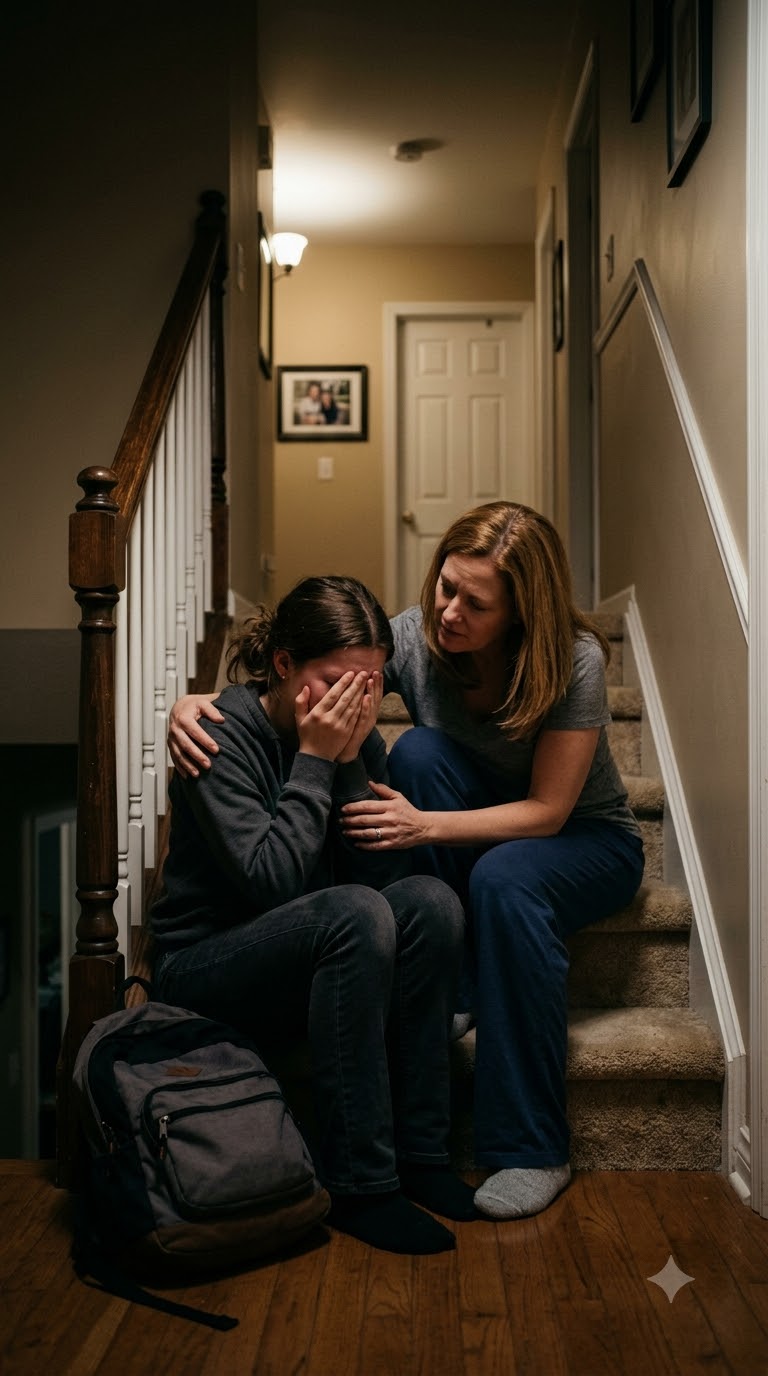
Sometimes all we can do is decide what to build from what remains.
That night on the stairs, with Grace crying against my shoulder, I understood something David had failed to understand for years.
Truth can hurt.
Truth can shatter the version of someone you once believed in.
Truth can make you question memories you thought were safe.
But secrets do something worse.
They steal people’s choices.
David stole mine when he decided I didn’t need to know.
I refused to do the same to Grace.
So she stayed.
Not because David had manipulated me into honoring his final wish.
Not because I had suddenly forgiven fifteen years of silence.
She stayed because once I knew the entire truth, I was finally able to make the choice myself.
And I chose her.
Not as David’s secret.
Not as his responsibility.
Not as proof of his father’s betrayal.
I chose Grace because she was sixteen years old, grieving, frightened, and standing in my hallway with nowhere she believed she belonged.
I chose her because family should never depend on a lie.
And I chose her because when my daughter asked whether Grace was staying, I looked at that frightened girl beside me and realized the answer had become surprisingly simple.
“Yes,” I said.
“She’s staying.”
“She’s family.”
And for the first time since she had entered our home carrying everything she owned in two small bags, Grace finally looked like she believed it.
