

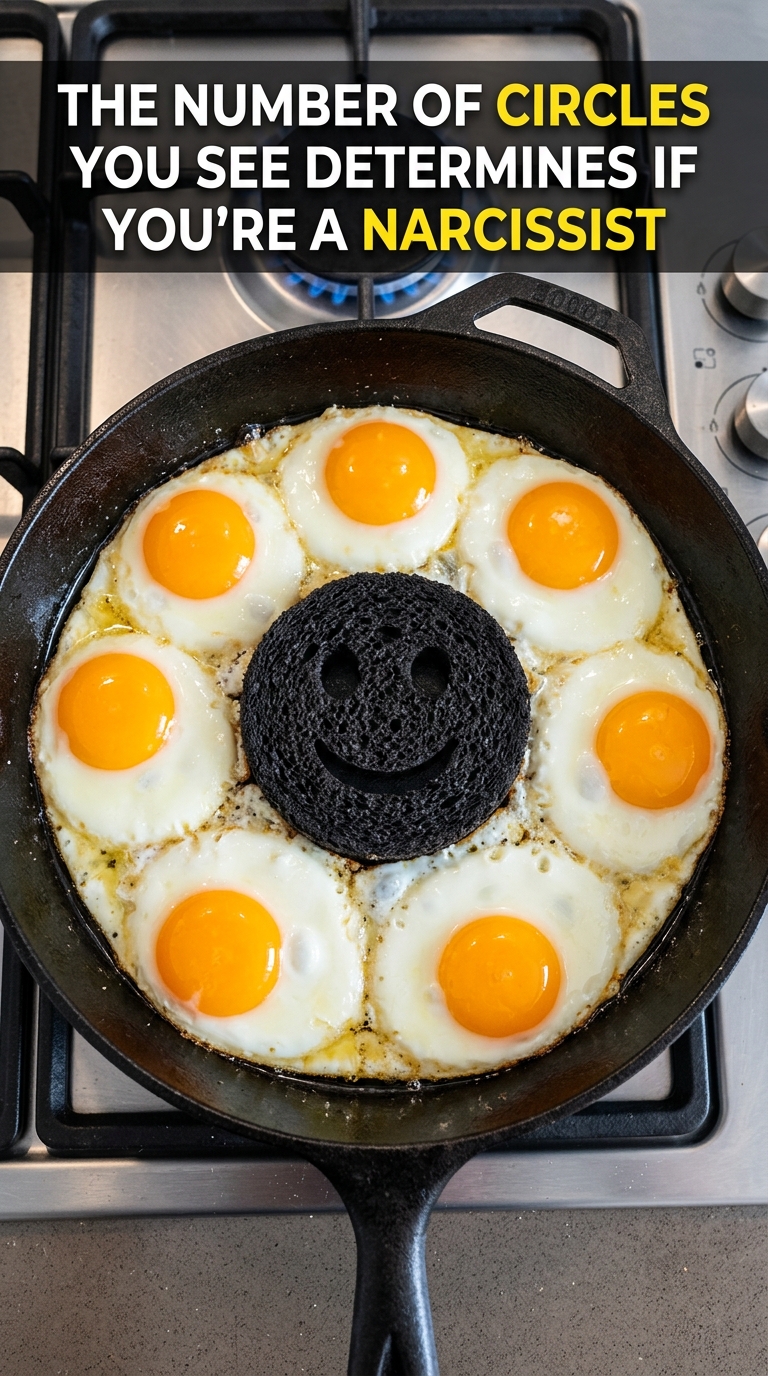
At first glance, the image seems incredibly simple — just a frying pan placed in the center with eggs featuring perfectly round sunny-side-up yolks. Above it sits a playful caption asking: “How many circles can you find?”
Most people take one quick look, pick a number, and move on. But then something strange happens. You look again, and suddenly the image feels completely different, with circular shapes appearing everywhere you turn. The longer you stare at it, the more your brain either invents or discovers circles hidden throughout the picture. Some are obvious, others are debatable, and many may simply be tricks your mind creates.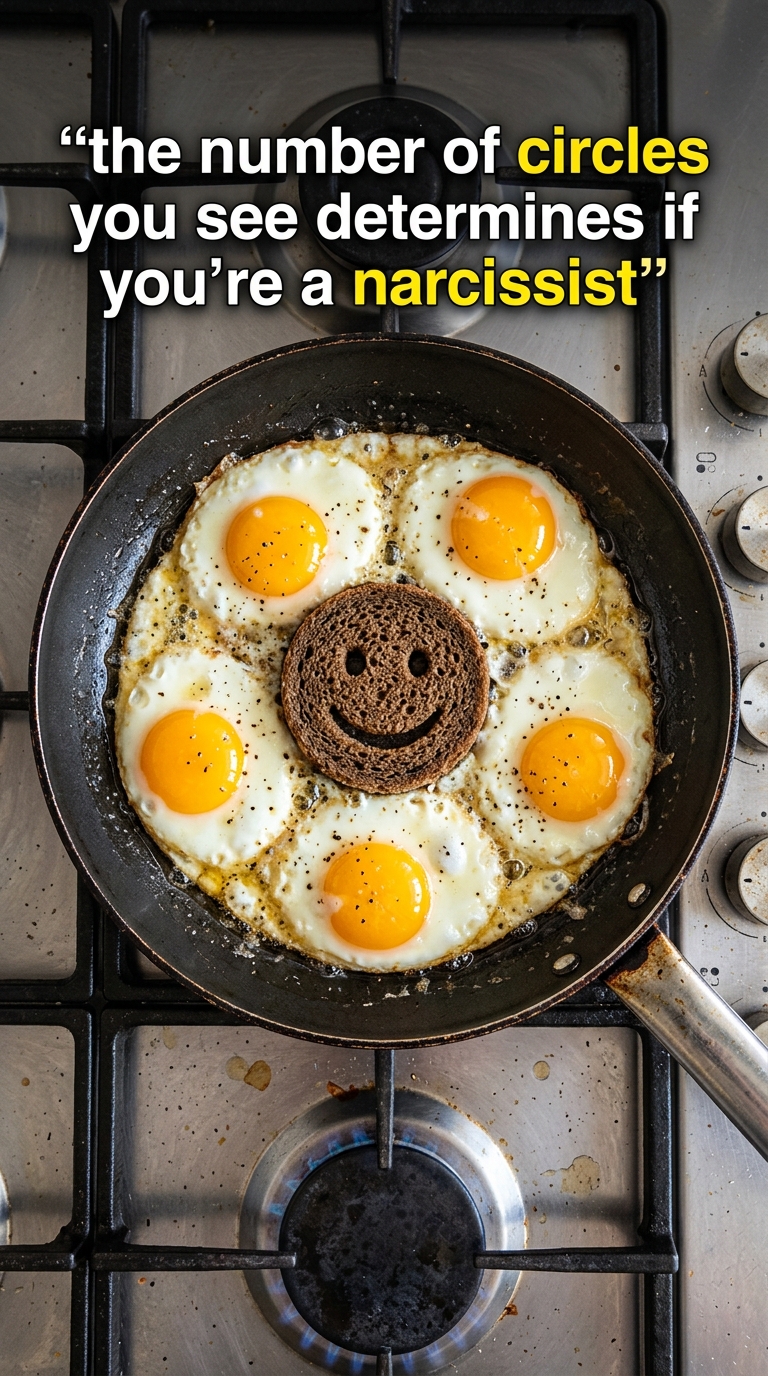
Before long, the comments section turns into complete chaos, with people arguing whether the answer is 8, 12, 16, or even far more.
That’s exactly why visual illusions like this work so well! They take an ordinary-looking image and transform it into something that completely confuses your perception, making you question your own eyesight. Everyone is staring at the same picture, yet not everyone sees the same thing.
What makes this even more interesting is that the creator of the image claimed the number of circles you notice supposedly reveals how narcissistic you are. Of course, narcissism is a deeply complicated psychological personality trait involving behavior patterns and emotional structures that cannot possibly be diagnosed through an online egg puzzle. Still, it’s entertaining to wonder whether our answers reveal something about the way our minds work.
So why does this image confuse so many people?
Naturally, the first thing most people notice is the eggs. Their bright yellow yolks instantly grab attention because human brains are wired to focus on contrast and vivid colors.
Almost everyone agrees on counting those circles right away.
Then people start adding the frying pan itself, which forms one giant circle around everything else. After that comes the outer edge of the pan, which many people count as another separate circle.
But then the real debate begins.
Are you only counting shapes that are perfectly complete? What about outlines or partial curves? That’s the moment this puzzle stops being about mathematics and starts becoming a reflection of personality and perception. Once people move past the obvious answers, they begin hunting for hidden details around the image. If there’s a smiling face in the graphic, suddenly everything becomes part of the investigation — the round eyes, the border around the face, even the empty space inside the smile. Once the easy shapes are counted, people start searching obsessively for hidden symbols. For example, if there’s a cartoon face in the image, every tiny feature gets analyzed in detail. The eyes become circles. The face outline becomes another circle. Some people even count the curved empty spaces inside the mouth.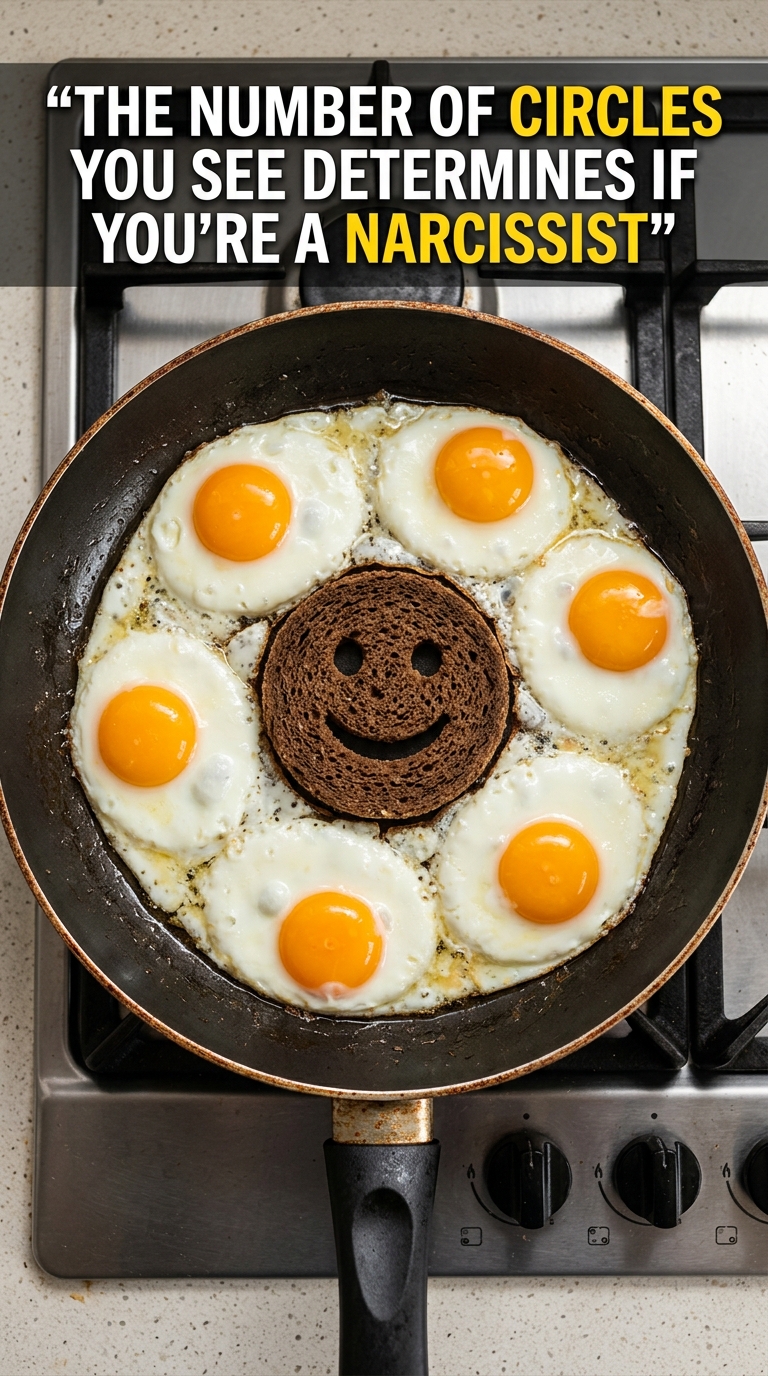
And that’s when total chaos begins.
People start counting the tiny white reflections shining off the egg yolks. Suddenly, those microscopic highlights become circles too. Even the uneven edges of the egg whites get interpreted as curved geometric shapes. Depending on how far someone stretches the definition, even the rivets attaching the frying pan handle can count. Eventually, the challenge stops being about counting altogether and becomes entirely about perception.
That’s why two completely intelligent and reasonable people can stare at the exact same image and walk away with completely different conclusions they fully believe are correct. Neither person is necessarily wrong — their brains are simply processing the visual information differently.
Some individuals naturally focus on the overall image first, while others immediately zoom in on tiny details. Psychologists even have names for these different visual thinking styles. Some people rely heavily on “global perception,” meaning their minds instantly recognize the image as a whole. Others lean toward “local perception,” where the brain automatically breaks the image into smaller components and details.
This silly online puzzle accidentally becomes a rough test for that exact mental divide. If you only noticed a few obvious circles and considered the puzzle solved, your brain probably values efficiency. Your natural instinct is to gather the most useful information without getting overwhelmed by unnecessary details. People who think this way are often decisive, trust their instincts, and prefer clean simplicity over endless overanalyzing.
That doesn’t mean you lack observation skills. In today’s world, where people are constantly flooded with information, the ability to filter out meaningless distractions is actually a powerful skill.
On the other hand, if you kept spotting more and more circles the longer you stared, you likely have a highly analytical mind. You probably excel at recognizing patterns, detecting inconsistencies, and questioning things that appear obvious at first glance. That kind of intense focus is incredibly valuable in areas like design, analysis, investigation, and any field requiring precision and attention to detail.
But none of this means you’re a narcissist.
That label exists mostly to make simple online quizzes more attention-grabbing. If the image didn’t suggest your answer reflected some kind of psychological flaw, most people probably wouldn’t look at it twice.
Suddenly, your mind fills with questions:
Am I secretly brilliant at analyzing details?
Am I self-absorbed without realizing it?
Am I completely overthinking this?
Why is my best friend counting five more circles than I am?
That curiosity is exactly why these images spread online like wildfire. They instantly create groups of people seeking validation for how they perceive reality.
Someone confidently comments, “It’s obviously 10, you guys are blind.”
Then someone else fires back, “Are you crazy? There are clearly at least 15.”
Moments later, another person jumps in claiming they discovered three extra circles hidden inside the artist’s watermark.
And suddenly, a poorly designed breakfast image becomes an internet battlefield.
But the most fascinating part of these viral trends isn’t the answer itself — it’s what they reveal about how subjective human perception really is.
Most of us move through life assuming reality is objective. We think when we look at a stop sign or any ordinary object, everyone else sees the exact same thing we do. In reality, our brains interpret and organize visual information in highly personalized ways.
What catches your attention first doesn’t measure intelligence; it simply reflects the unique neural patterns your brain uses to navigate the world.
Some people immediately search for structure.
Some instinctively notice patterns.
Others focus intensely on color.
Some are drawn toward symmetry.
And some become completely obsessed with tiny details no one else even notices.
That natural variation in human perception is exactly what makes these puzzles so addictive.
What they truly reveal, however, is how vulnerable we are to suggestion and peer influence. The second someone points out a highly subjective “hidden circle,” your brain suddenly starts seeing it too, even if you never noticed it before.
The longer you stare, the more your mind shifts from simple curiosity into an obsessive hunt for meaning. Straight lines begin looking like curves. Shadows become boundaries. Random imperfections start appearing intentional.
It becomes a battle between logic and imagination happening inside your own head.
So, how many circles did you see?
