

PART 1
The night a doctor confirmed that Jacinta Morales would never be able to get pregnant, her parents decided to set a price on her before dawn.
It was 1938 in a small village nestled among the coffee plantations of the Sierra Norte de Puebla. Jacinta was 22 years old, with hands hardened by working the fields and a simple dream: to marry a man who would respect her and build a family different from her own.
The doctor left the diagnosis on the table and explained that the condition was no one’s fault. Genaro, Jacinta’s father, crumpled the paper and threw it into the fire.
“You turned out useless. Who’s going to want a woman who can’t give him children?”
Jacinta turned to her mother, hoping for a hug. Candelaria continued making tortillas, as if they were talking about a sick hen.
“We’ve already spent too much raising you,” she said. “If you’re not good for getting a husband, at least you can pay off the debts.”
Jacinta begged them to let her work. She promised to wash other people’s clothes, sell tamales, and eat only once a day. Genaro pushed her aside with his foot and headed to the cantina.
Before midnight, he was already asking how much some landowner would pay for a strong, obedient young woman with no family to come looking for her.
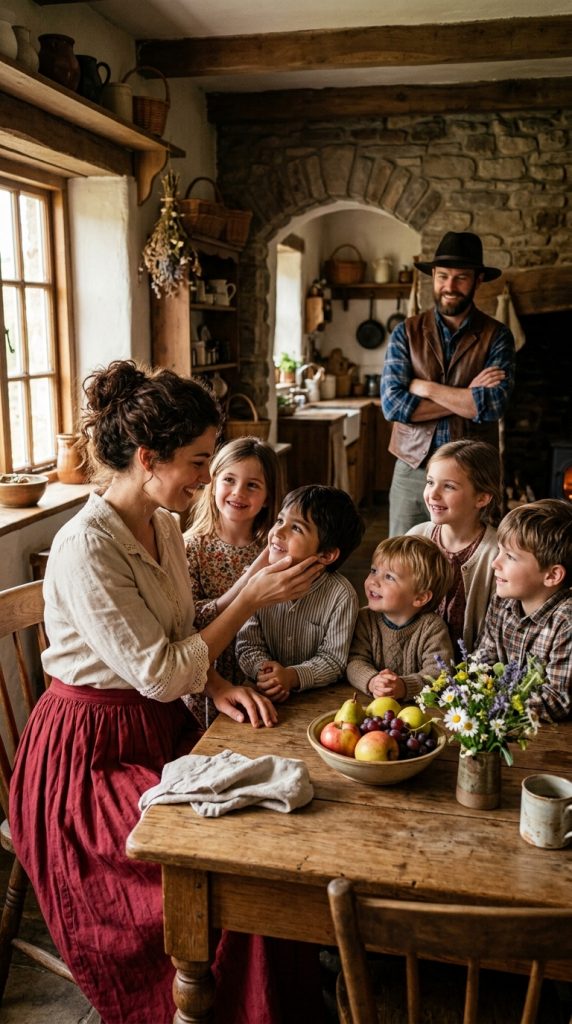
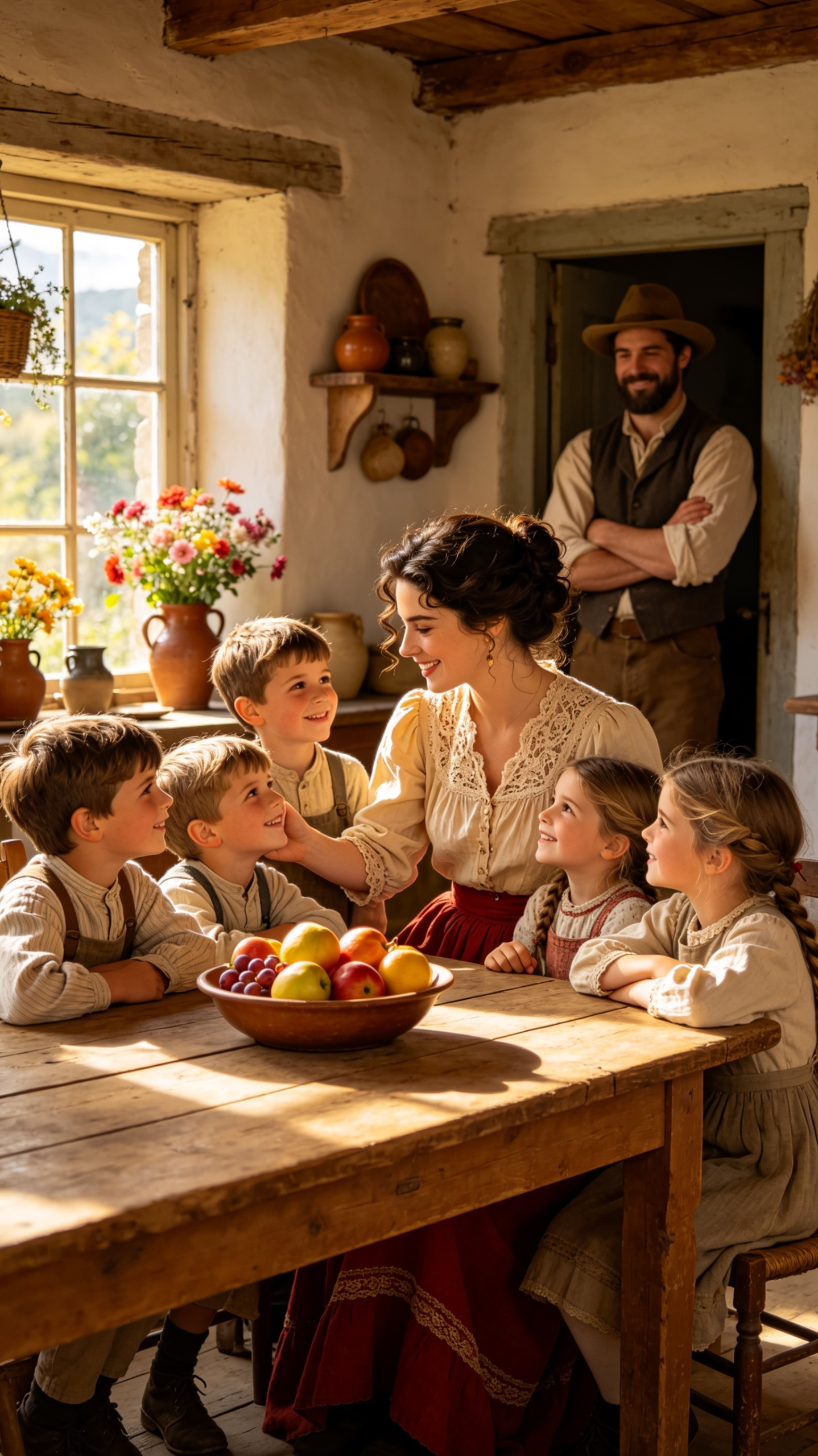
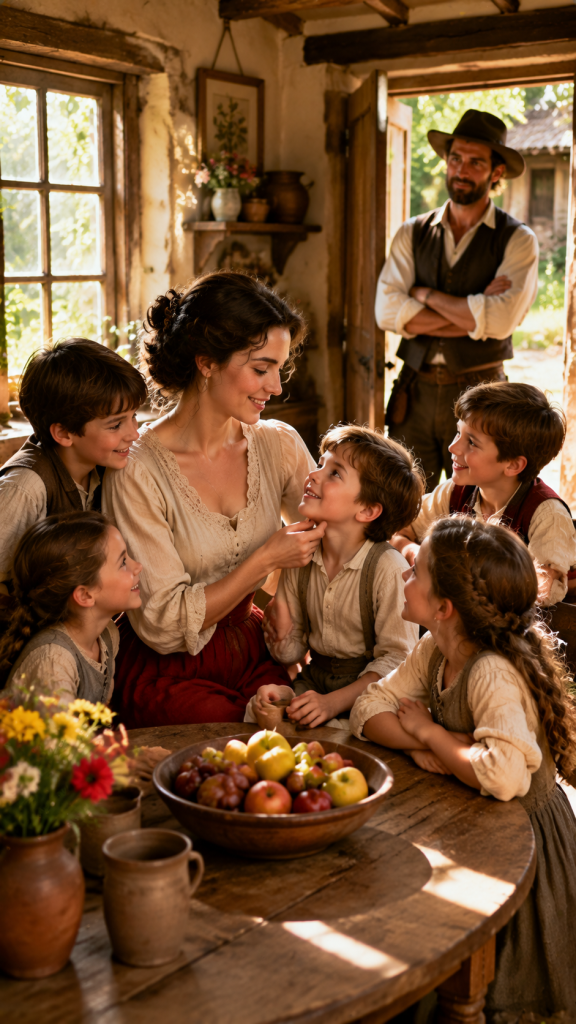
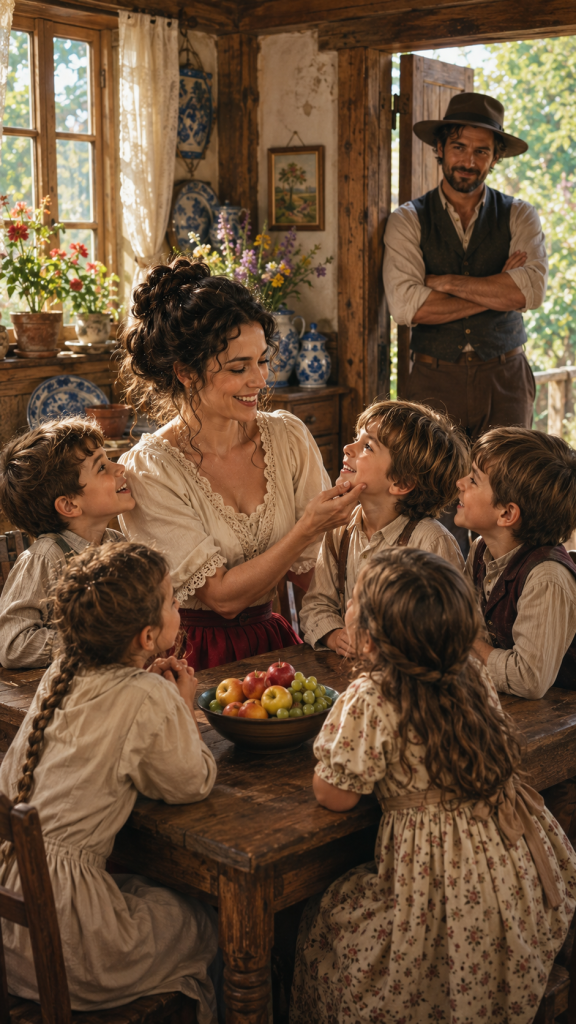
The news reached Don Aurelio Barragán, owner of the San Gabriel hacienda. He was a 41-year-old widower, serious and with a steady gaze. His wife had died two years earlier, leaving him with five children between the ages of 4 and 13 and a house where no one laughed anymore.
Aurelio arrived at dawn on a black horse.
Genaro described Jacinta as if he were offering a beast of burden. He spoke of her strength, how well she cooked, and how much she could work. He did not mention the diagnosis.
Aurelio already knew about it. The doctor, outraged by Genaro’s rumors, had told him the night before.
“How much do you want?” he asked.
Genaro demanded enough to pay off gambling debts, recover a plot of land, and buy two mules. Aurelio placed a bag of coins on the table without bargaining.
Candelaria opened it immediately.
“Take her today. We don’t accept returns later.”
Jacinta looked at her mother, searching for a tear or any sign of doubt. Candelaria simply kept counting the money.
During the ride to the hacienda, Aurelio said nothing. Jacinta clutched a cloth bag containing a shawl, a rosary, and a change of clothes, imagining confinement, punishments, and endless workdays.
When they arrived, five children came out onto the corridor. They were clean, well-dressed, and far too quiet.
Aurelio pointed to the house.
“From today, you will live here. I do not tolerate carelessness with my children.”
Then he left for the stables.
Jacinta believed her punishment was beginning. However, no one sent her to the fields. They gave her her own room, clean clothes, and a key to lock the door from the inside.
For two weeks, she cared for the children. She treated the eldest boy’s hands, combed the girls’ hair, helped Mateo with his reading, and every night carried little Luz until she stopped crying.
The house began to smell of coffee, piloncillo, and freshly made tortillas again. The laughter also returned.
On the night of the fifteenth day, Aurelio appeared in the kitchen. He closed the door and took out the diagnosis that Genaro had burned.
Jacinta turned pale.
Aurelio placed the paper next to a document signed by her parents and a second bag of coins.
“Sit down. Before sunrise, you will have to decide what to do with your life.”
PART 2
Jacinta felt the air tighten in her throat. She thought Aurelio had just discovered he had paid for a “defective” woman and was planning to send her back.
“Don’t send me back,” she pleaded. “I’ll work harder. I’ll take care of the children, cook for the workers, and never ask you for anything.”
Aurelio looked at her with a mixture of anger and sadness.
“Who told you I brought you here to make you my servant?”
Jacinta pointed to the bag of coins.
“My parents received money. You took me from their house. That means I belong to you.”
Aurelio’s jaw tightened.
“You don’t belong to anyone.”
He pushed the second bag toward her. Inside was more money than Jacinta had ever seen in her life.
“The first bag paid the debt your parents owed to a foreman from Veracruz,” he explained. “They were planning to hand you over to that man to work on a farm where several young women have disappeared. I paid to get you out of that deal.”
“And this other bag?”
“It’s yours. So you can go far away, rent a room, or start a business. I didn’t want to bring you here without giving you an escape.”
Aurelio opened the document. It was not a bill of sale, but a declaration signed by Genaro and Candelaria in front of two witnesses.
In it, they renounced any claim on Jacinta’s work, marriage, or future. A notary in Zacatlán kept a copy.
“I did it because I know people like your parents,” Aurelio said. “Today they sell. Tomorrow they come back demanding another bag.”
“Then why did you bring me here?”
Aurelio looked toward the hallway where his children slept.
“Because this house was dying. My children had a roof, food, and clothes, but no one comforted them when they woke up calling for their mother. I didn’t know how to help them. I became a man who only gave orders because I was afraid of breaking down in front of them.”
“And because when I learned they were planning to sell you like a mule, I couldn’t leave you there.”
Jacinta lowered her gaze. No one had ever spoken of her pain without turning it into a debt.
Aurelio took a deep breath.
“You have three options. You can leave now with that money. You can stay as the person in charge of the house, with a salary and freedom. Or you can stay for a while, and if affection grows between us one day, we can talk about marriage. But listen carefully: no one will touch your body or decide for you.”
Jacinta was about to respond when loud knocks shook the main door.
Genaro burst in, pushing the watchman. Candelaria and two men with rifles followed. They had spent almost all the money on gambling, new clothes, and a sick mule. Now they wanted another bag.
“You stole the girl from us,” Genaro shouted. “Either you pay more or we’ll say you kidnapped her.”
Candelaria saw Jacinta in a clean dress with her hair neatly braided. Instead of relief, her face showed bitter envy.
“Look at her, she already thinks she’s the lady of the house,” she mocked. “Don’t forget you’re a barren woman. You’ll never be a mother.”
Tomás appeared in the hallway with his siblings behind him. Luz ran barefoot and hugged Jacinta’s legs.
“She is my mom,” the little girl said. “Don’t take her away.”
Candelaria tried to pull her away with a yank.
Jacinta stepped between them.
“Don’t touch her again.”
Genaro raised his hand to strike her. Aurelio grabbed his wrist before he could.
At that moment, the administrator and several workers entered. The two armed men stepped back.
“No one in this house will ever hit Jacinta again,” Aurelio said. “Not even those who gave her life.”
Minutes later, the municipal commander and the notary from Zacatlán arrived, having been notified that afternoon by a messenger. The notary opened his portfolio and showed the certified copy.
“You declared that Miss Jacinta is free to decide where she lives, works, and marries,” he explained. “You also acknowledged receiving money. If you falsely accuse Mr. Barragán, you could both end up in prison.”
Cornered, Genaro changed his strategy.
“She’s our daughter. She has to obey. Blood is thicker than any paper.”
Jacinta looked at her parents. Then she looked at the five children huddled together.
She picked up the second bag and walked to the door.
Jacinta dropped the coins at their feet, but not to give them away. The bag remained closed.
“Look at it carefully,” she said. “This is what you think a person is worth.”
Then she picked it up again.
“I’m keeping my money because it is the beginning of my freedom. And I’m staying in this house because here they spoke to me like a human being.”
Genaro ordered her to come back.
Jacinta took Luz’s hand.
“You lost me the night you decided to sell me.”
The commander expelled Genaro and Candelaria with a warning that they would be arrested if they returned armed or tried to extort Aurelio.
Jacinta did not agree to marry immediately. For nine months she worked for a salary, managed the household accounts, and verified that Aurelio kept his promises.
He never entered her room without permission. He never used the money to demand obedience, and he began asking for her opinion on the children’s schooling, the workers’ food, and the management of the hacienda.
Affection grew without grand speeches.
Aurelio repaired the broken rosary that Jacinta had kept since childhood. She left hot coffee on his desk when he returned soaked from the rain.
Tomás stopped sleeping with a chair against the door. Mateo began reading aloud during dinner. The girls sang again while helping grind the cacao.
Luz started calling her mom.
“I didn’t come to replace her,” she told them one night. “I came to care for what she left alive in you.”
When Aurelio asked her to marry him, he brought no jewelry and spoke no words of gratitude. He placed on the table a contract for separate property, a bank account in Jacinta’s name, and the deed to a small house in Zacatlán.
“I want you to be able to leave even after marrying me,” he said. “Only then will I know you stay because you want to.”
Jacinta cried. Not because of the house, but because he had understood that love without freedom felt too much like a cage.
The wedding was held in the village chapel. The five children walked with her. Tomás escorted her to the altar and Luz held her veil with such seriousness that everyone smiled.
Over the next six years, the San Gabriel hacienda prospered. Jacinta organized a cooperative so that widows and abandoned women could sell embroidery, preserves, roasted coffee, and bread without depending on abusive men.
She also opened a school next to the chapel and convinced Aurelio to pay salaries directly to the female workers, not to their fathers or husbands.
She never had biological children.
However, she raised the five with firm tenderness. She taught them that blood could unite a family, but it could also become an excuse to control, humiliate, and hurt.
Meanwhile, Genaro and Candelaria lost everything. They spent the coins on liquor, gambling, and fake businesses. They sold the plot of land and ended up living on favors.
One rainy afternoon they appeared at the gate of San Gabriel. They were thin, covered in mud, and defeated.
They did not recognize Jacinta when she approached wearing a dark shawl with five young people behind her.
“A little charity, ma’am,” Genaro murmured. “We haven’t eaten for two days.”
Jacinta uncovered her face.
Candelaria let out a moan.
“Daughter… forgive us. Need drove us crazy. We are your blood.”
Aurelio stepped forward, but Jacinta touched his arm. This time she didn’t need anyone to speak for her.
“Need didn’t force you to sell me,” she replied. “Greed did.”
Genaro fell to his knees.
“Let us live here. We can serve you.”
Jacinta observed him for a long time.
“I also offered to serve you when I was afraid. You preferred the coins.”
Candelaria looked at the young people.
“Are they your children?”
Luz, who was now ten years old, approached and took Jacinta’s hand.
“Yes,” Jacinta answered. “They are my children. Motherhood did not begin in my body. It began the day I decided not to abandon those who needed me.”
She ordered that they be given food, blankets, and money for medicine. She also arranged a place for them in a house run by the parish.
But she did not allow them to enter the hacienda.
“I’m not going to let you die because I don’t want to become like you. But this house belongs to the family that built with me what you tried to destroy.”
Genaro and Candelaria walked away carrying the sacks. Their daughter’s mercy hurt them more than any revenge.
That night, Jacinta stored the old bag of coins in a trunk. Aurelio found her listening to the laughter of the boys in the corridor.
“Do you still hear the sound of the gold falling on the table?” he asked.
Jacinta closed the trunk.
Luz appeared in the doorway.
“Mom, come! Tomás is telling the story of when you faced Grandpa and no one believes your legs didn’t shake.”
Jacinta smiled and walked toward them.
For years they had told her that a woman without children was worth nothing. Yet she ended up raising five, saving dozens, and proving that family is not always those who share blood, but those who never put a price on your dignity.
