

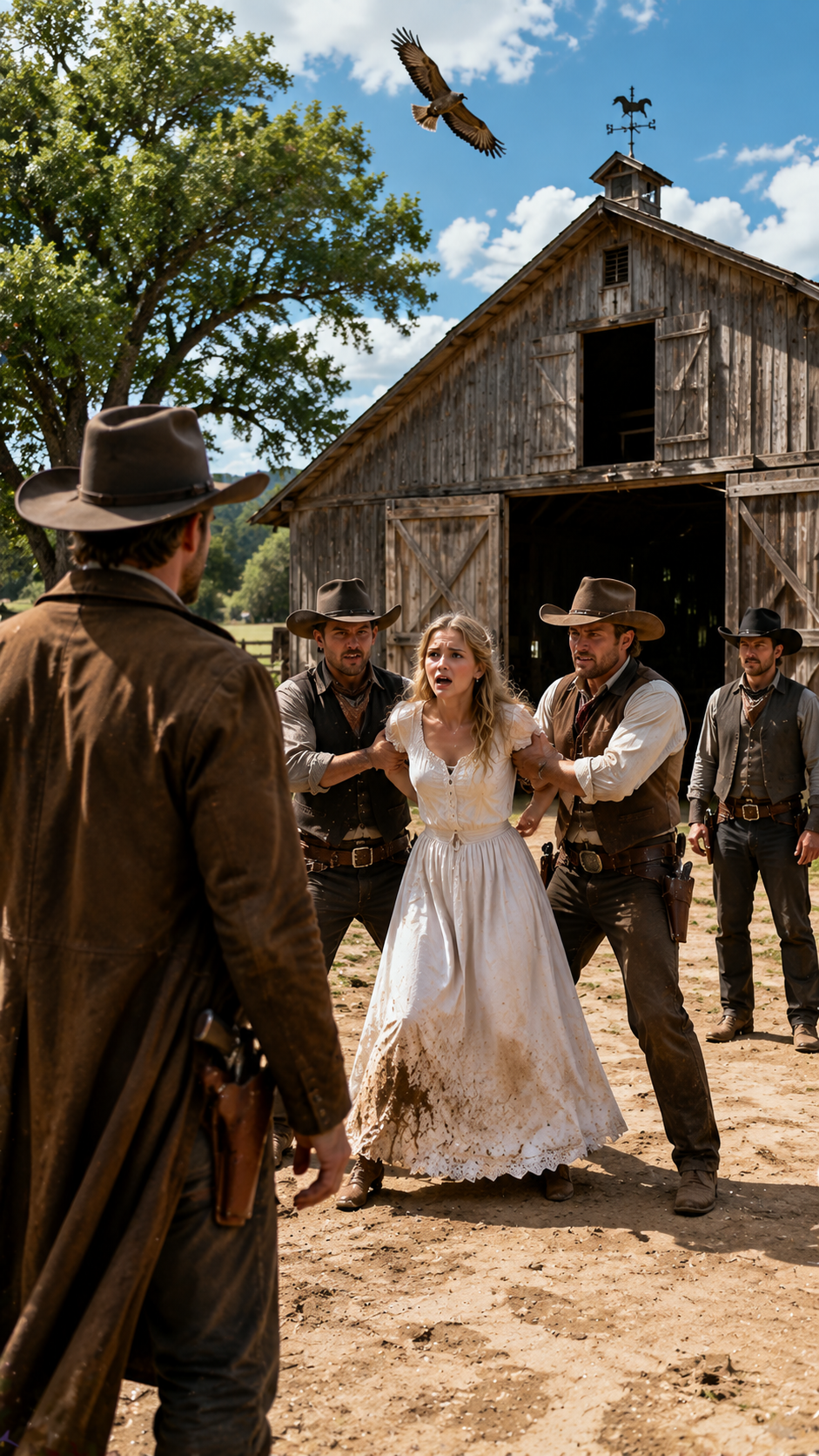
“Leave her alone.”
It was just three words. But every man gathered that morning by the La Esperanza spring would remember the sound of that voice until the last day of their lives.
The August sun of 1883 beat down on northern Chihuahua like a slab of fire. The earth was dry, the mesquite trees looked like skeletons, and dust hung in the air even when no one was walking. In the center of the Santa Rosalía ranch, among pale stones and cottonwood roots, a cold spring bubbled up that had never gone dry. Not in the years of frost, not during the long droughts, nor when other ranchers had to drive their animals four leagues to find mud.
That spring belonged to Lucía Valdés.
And that was why they wanted to take it from her.
Lucía was 23 years old and had just buried her father, Don Tomás Valdés, a stubborn rancher who had built Santa Rosalía with 30 years of work, one skinny yoke of oxen, 12 cows, and an immense faith in the water that came out of the rock. He always said that whoever controlled the water did not need to raise his voice. The land itself spoke for him.
When he died of a heart attack, many thought Lucía would sell. She was young, a woman, and alone. In the nearby towns, those three things together were almost an invitation to abuse.
The first to approach was Don Artemio Puente, owner of the Northern Cattle Company. He did not come in person. Men like him rarely dirtied their boots when they could dirty the hands of others. He sent letters, offers, and threats disguised as advice. He wanted the water because it was said that the railroad would pass through those lands in less than two years. Where there was water, there would be cattle, meat for the workers, contracts, money, and power.
Lucía always gave the same answer:
“Santa Rosalía is not for sale.”
Then Don Artemio stopped writing and started sending men.
That morning, five armed riders arrived. Leading them was Elías Randa, a hired gunman with a reputation for having killed three men in Sonora. Beside him, District Commander Teodoro Huerta kept his eyes down like a man who had already sold his conscience. Behind them, riding a mule, came Father Anselmo, the village priest, pretending his presence was to prevent violence, though everyone knew the new church bell had been paid for by Don Artemio.
Lucía was standing by the stone trough, filling the drinking basin. She had left her father’s rifle propped two steps away—not in her hands, but close enough to remind them she was not a defenseless girl.
Randa dismounted calmly.
“Miss Valdés, Don Artemio has been patient. He still offers a good price. But today we are going to end this conversation.”
“The conversation ended two months ago,” Lucía said. “My answer has not changed.”
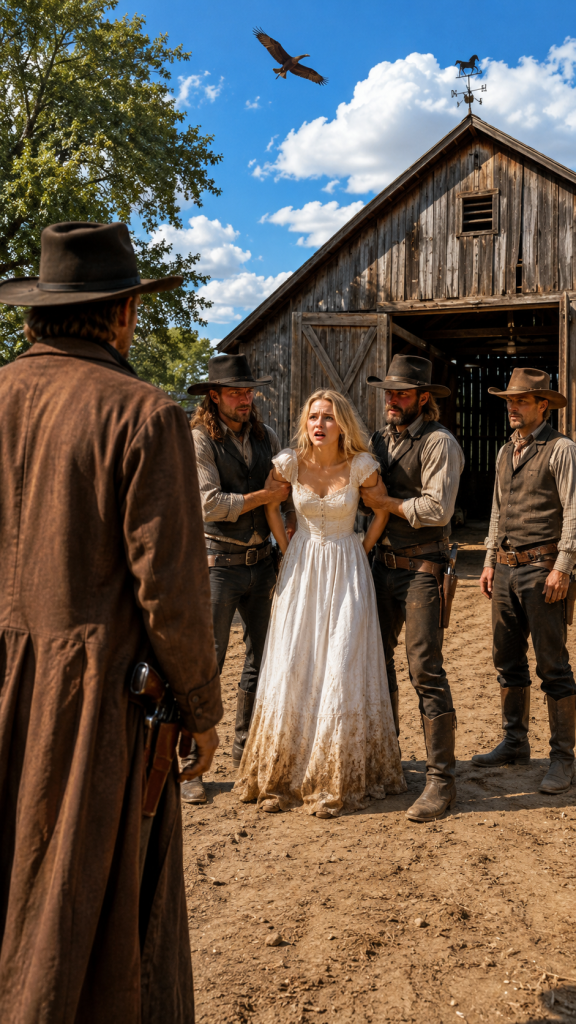
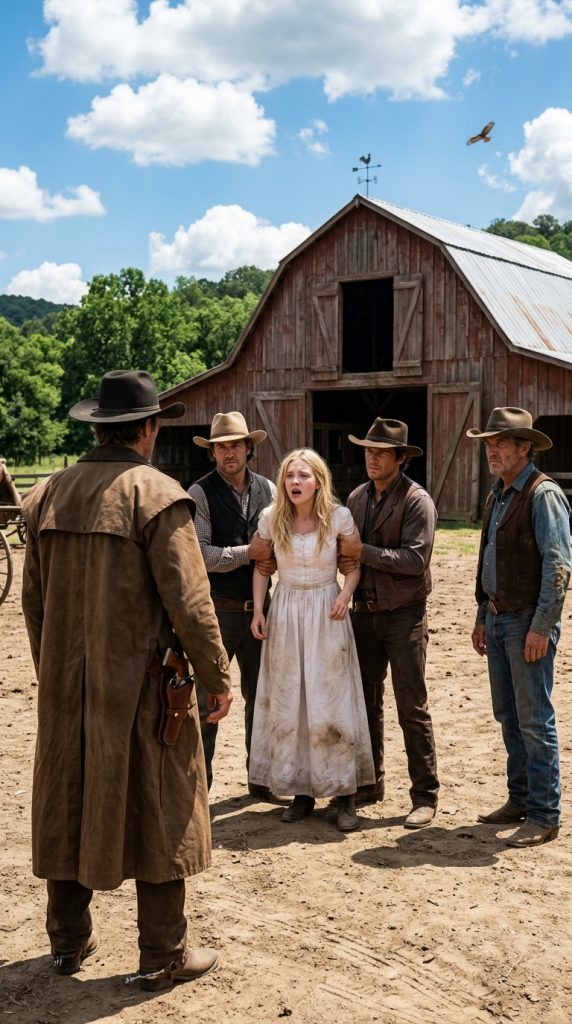
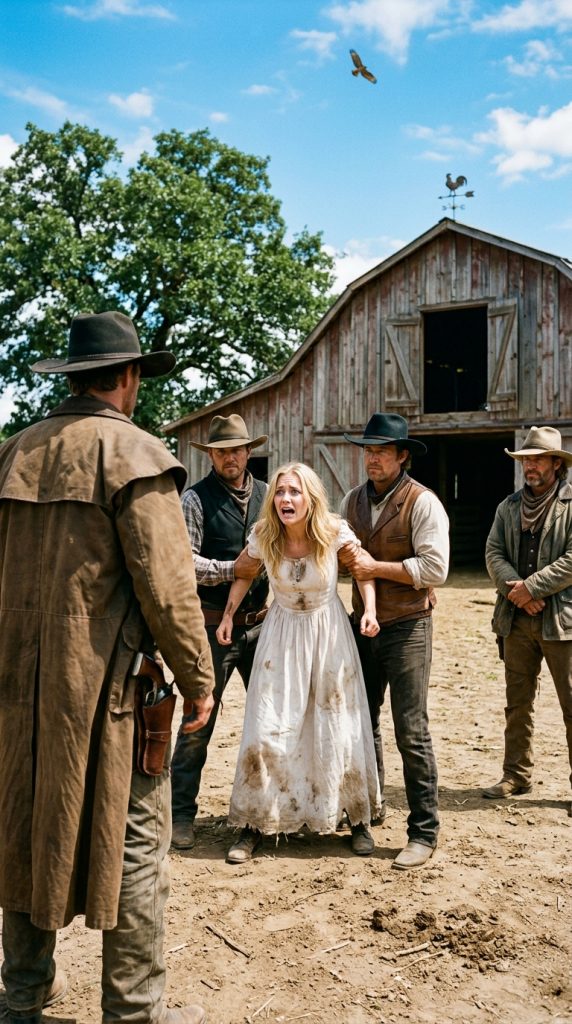
One of the riders, a broad man named Melitón, stepped forward and grabbed her wrist. He did not hit her. He simply squeezed hard enough to make it clear who he thought was in charge.
Then the sound of hooves came from the southern trail.
A rider appeared through the dust. He was riding an exhausted reddish mare with its neck lowered from thirst. The man wore a faded sarape, a wide-brimmed hat, several days’ worth of beard, and the face of someone who had learned not to waste expressions. He looked like just another cowboy, a traveler with no destination. But his black eyes scanned the scene with too much precision: Melitón’s hand on Lucía, the commander standing still, the priest looking at the ground, Randa with his hand near his revolver.
The stranger let his mare approach the drinking basin.
“Leave her alone.”
Randa smiled faintly.
“Keep riding, friend. This is a private matter.”
The man did not move.
“Let her go,” he said. “This is the last time I ask politely.”
The mare drank. No one else breathed.
Randa moved his hand toward his pistol.
No one could explain exactly what happened afterward. One moment the stranger was still, his hand on the saddle. The next, a shot split the air and Randa’s right hand exploded in blood. The revolver spun as it fell into the dust. Randa doubled over in the saddle, screaming.
Melitón released Lucía as if he had been burned.
The stranger holstered his weapon with the same calm another man might use to put away a letter.
“He’s still alive,” he said. “That was on purpose.”
He looked at Commander Huerta.
“Are you going to do your job, Commander, or will you keep doing Puente’s?”
Huerta turned pale.
Then he looked at Father Anselmo.
“You’re going to have a difficult night when you try to sleep.”
The priest closed his eyes.
The stranger turned back to the riders.
“Now get off this land.”
They left.
When the dust disappeared behind the hill, Lucía picked up her father’s rifle and looked at the man.
“That was Elías Randa.”
“I know.”
“You shot him in the hand.”
“Yes.”
“Who are you?”
He dismounted and stroked the wet neck of the animal.
“Mateo Calderón. I only needed water for my horse.”
Lucía did not entirely believe him, but she did not drive him away either.
That afternoon, Mateo stayed on the porch while the sky turned copper. Lucía sat in her father’s chair with the rifle across her knees. She was not a woman easily impressed. She had learned from Don Tomás to measure silences before words.
“They’ll come back,” she said.
“Yes.”
“With more men.”
“Yes.”
“You don’t have to stay.”
Mateo looked at her.
“No. I don’t.”
He stayed.
He slept in the tack room on a cot. Before dawn, he rode around the fences, the corrals, the hill behind the barn, and the dry creek bed that came in from the west. He identified every point from which a shooter could command the house. Lucía followed without asking questions. She knew the land better than he did: she showed him a second drinking basin hidden under reeds, a storeroom dug into the hill, and a narrow passage between mesquites that would slow any mounted attack.
At noon in the kitchen, Lucía pulled an old notebook from under the floorboards.
“My father kept this.”
Mateo opened it. There were dates, names, visits from Puente’s men, forced sales of neighboring ranches, suspicious fires, debts created by the very bank that financed the Northern Cattle Company. Don Tomás had been gathering evidence.
Mateo placed the notebook on the table and took a leather wallet from his sarape.
Inside were official credentials.
“I’m not just a passing rider,” he said. “I served six years with the federal rurales. For the past four months I’ve been following Don Artemio Puente for bribes linked to the railroad route. I have statements from his accountant who fled to Tucson and notes on a corrupt commissioner. But I was missing this: local proof of intimidation against property owners.”
Lucía felt the air change.
“Then my father wasn’t crazy.”
“Your father was building a case.”
For the first time since the burial, Lucía’s eyes filled with tears.
“He died thinking he hadn’t succeeded.”
“Maybe he succeeded more than he knew.”
They decided to hold out for 48 hours. After that, someone would take the evidence to Chihuahua city, to a federal judge.
That night they did not sleep. Mateo kept watch from the barn roof. Lucía prepared cartridges by the lamp. At dawn they drank unsweetened coffee in silence.
Near noon, Father Anselmo appeared alone, with his hands visible.
Lucía stepped out onto the porch with the rifle.
“I’ve come to warn you,” the priest said. “Puente is sending six men this afternoon. He no longer wants to buy. He wants to drive you out.”
“Why are you telling me now?”
The priest looked at his own hands.
“Because your father was a just man. And because I have called prudence what was really my cowardice for too long.”
Mateo handed him a sealed envelope and a copy of the notebook.
“Take the old trail and deliver this to the federal judge. Tell him Mateo Calderón requests urgent intervention.”
The priest swallowed.
“If I do this, Puente will know it was me.”
“Yes,” Mateo replied. “He will.”
Anselmo tucked the envelope into his cassock.
“Then I’d better ride fast.”
The men arrived at four in the afternoon. They came divided, three from the south and three from the west. Leading them was a new gunman, Silvano Cuéllar, colder than Randa and less theatrical. Mateo waited inside the barn. Lucía was in the hill storeroom with her father’s rifle and a clear view of the courtyard.
Cuéllar stopped.
“Calderón, I know you’re here. My boss offers 20,000 pesos for you and the girl to leave the district.”
Mateo stepped out with empty hands.
“I’m not for sale.”
“Everyone is.”
“I already paid too high a price to know that I’m not.”
Cuéllar understood there would be no deal. His hand dropped.
Mateo’s shot was faster. Once again, the gun hand. Once again, the revolver in the dust.
At the same time, two riders who tried to circle the barn got caught in the wire Mateo had strung between the mesquites. Their horses reared. From the storeroom, Lucía fired at the ground in front of the third man.
“The next shot goes to the horse’s knee,” she shouted. “The one after that, to you.”
Her voice did not tremble.
The men looked at each other. They had come to scare an orphan. They had found an owner.
Mateo walked toward Cuéllar.
“Tell Puente I have Don Tomás’s notebook, the accountant’s statement, and Father Anselmo on his way to the courthouse. Tell him it’s over.”
“He won’t accept it.”
“He will when the arrest warrants arrive.”
The riders left defeated.
Three days later, two federal agents and a rural captain named Ignacio Garza, Mateo’s former comrade, entered the ranch. They carried signed orders. That same afternoon they arrested Commander Huerta in his office. The next day, Don Artemio Puente was detained in his study, dressed in white linen, demanding lawyers and shouting that this was an abuse.
The Northern Cattle Company was placed under intervention. Several properties seized through threats were returned. Huerta lost his position. Puente was convicted of bribery, coercion, and corruption of authority. Father Anselmo testified, resigned from his parish, and years later ended up teaching reading at a mission in the sierra.
Mateo stayed at Santa Rosalía for twelve days after the arrests. He helped repair fences, reinforce the corral, and clean the spring. Every morning he drank coffee with Lucía on the porch. They talked about cattle, land, and the plans Don Tomás had written in the margins of his books.
On the thirteenth day, Mateo saddled his mare.
Lucía came out of the house with two cups. Seeing him with his sarape ready, she did not cry.
“You could stay,” she said.
It was not a plea. It was a truth offered with dignity.
Mateo looked at the trail. For years he had believed his life was chasing the guilty, arriving late to other people’s tragedies, and leaving before he wanted too much. But here was the water. The land. A woman who did not need to be saved, only accompanied.
“There’s a man in Durango I have to deliver,” he answered.
Lucía nodded, though pain crossed her face.
“Then go.”
Mateo mounted. The mare took two steps. Then he stopped.
He looked at the spring, the porch, Don Tomás’s notebook on the table visible through the window, and finally at Lucía.
“But after Durango,” he said, “I have no other place I want to return to.”
Lucía gripped the cup with both hands.
“There will be coffee here.”
“And water for my horse.”
“And work for you, if you don’t think you’re too important.”
Mateo smiled for the first time.
“I’ve never been so important that I would turn down honest work.”
He left at dawn. He returned three months later, with a thicker beard, a thinner mare, and a different kind of weariness in his eyes. Lucía saw him appear on the southern trail and dropped the water bucket.
This time, he did not ask permission to enter. He took off his hat in front of her.
“I delivered the man from Durango.”
“And now?”
“Now I want to stay, if the offer still stands.”
Lucía looked at him for a long time.
“The offer has changed.”
Mateo looked down, thinking he understood.
She stepped closer.
“I no longer need just a hired hand. I need a partner. And perhaps, in time, a husband who doesn’t run away every time he finds peace.”
Mateo let out a low laugh, broken by emotion.
“I can learn.”
They were married in the village chapel the following year. Lucía never sold the spring. When the railroad arrived in 1886, she leased the water on her own terms and used the profits to found a school in the valley and a small infirmary for the nearby ranches.
Every August, on the date when a dust-covered man appeared saying three words, Lucía placed two cups of coffee on the porch. One was for her. The other for Mateo, who now sat beside her while the water continued to flow, cold and clear, over the stone.
The village learned that courage does not always arrive in uniform or with speeches.
Sometimes it arrives riding a thirsty mare.
And it only says:
“Leave her alone.”
