

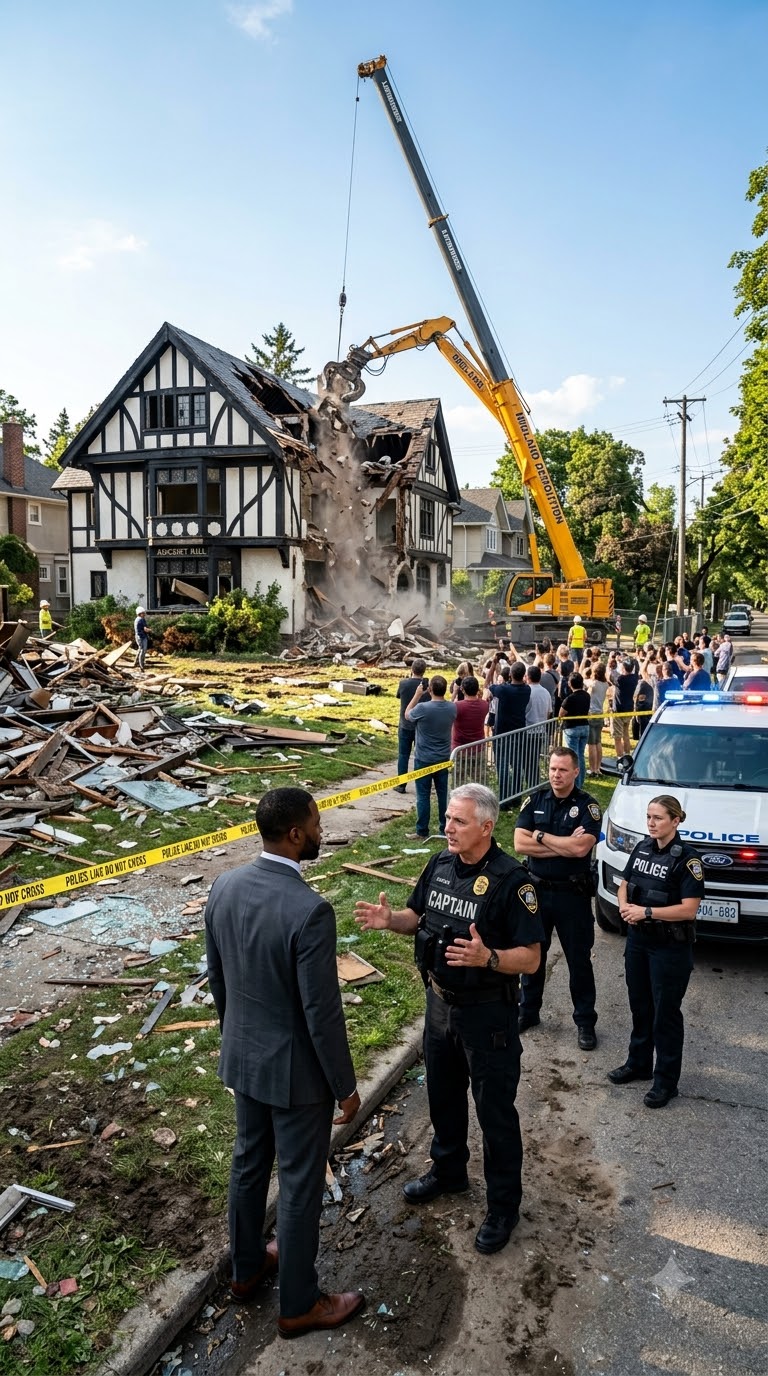
“This is my house. What gives you the right to do this?”
“You can complain later. Right now, stay out of our way.”
“You can’t just destroy someone’s home and tell them to stand aside.”
“Funny thing about a house like this is that guys like you don’t usually own something this nice unless you didn’t earn it clean.”
Without another word, the officers brushed him off and continued dismantling his home. “You’re destroying everything my wife and I own. At least tell me what you think you’re going to find.” “Whatever we’re looking for, we’ll find it. Now stay back.”
“But you know what? Maybe if you weren’t hiding something, you wouldn’t be so worried.” “I have nothing to hide, so I’m not worried, officer. I’m watching you all make a mistake you’ll never be able to undo.” The cops kept ripping his home apart, never suspecting that the man before them was the one who could hold them accountable.
Stella Waldridge was asleep when the first flashbang went off. It was 4:52 in the morning. Somerset Court was quiet, the kind of quiet you only get right before the sun comes up. Stella was alone in bed.
Her husband, Francis Waldridge, was still at the office, buried in case files the way he always was during trial season. Then the front door exploded inward. Stella didn’t have time to scream. One second she was asleep; the next she was staring up at a wall of black armor and rifles pointed at her chest.
Men in helmets poured through her bedroom door, shouting words that didn’t make sense yet. “Hands! Hands! Get your hands where I can see them!” Her whole body went cold before her brain caught up to what was happening. “On the ground, now!”
She hit the floor. A boot pressed into her back. Someone yanked her wrists behind her and zip-tied them so tightly the plastic bit into her skin. She was still in her robe, and she hadn’t even opened her eyes all the way yet.
Downstairs, Captain Roger Garvey stood in the wreckage of the front hallway, calling out orders like a man conducting an orchestra of destruction. “Clear it. Every room. He’s got a safe in here somewhere. Find it.”
Garvey was the kind of cop who liked the sound of his own boots on hardwood. Twenty-two years on the force, three commendations, and a jaw that never seemed to unclench. He’d been told this house belonged to a narcotics suspect with priors, a man who supposedly kept a floor safe stuffed with cash and product. He believed it the way he believed most things, completely and instantly, without a second look.
Officer Laurelai Oliver moved through the dining room behind two other officers, her rifle up and her heart hammering. She was eight months into the job. She’d trained for this, but nothing in training prepared her for the sound of a woman crying somewhere upstairs while men she worked with tore a house apart looking for something that didn’t seem to be there. They hauled Stella down the stairs and out onto the front lawn, still zip-tied and still in her robe.
They put her on her knees in the wet grass under floodlights bright enough to turn night into day. Inside, the search kept going and going. A young officer near the kitchen frowned at a folded printout in his hand, the warrant, and looked up at the house number stenciled beside the front door. He walked it over to Garvey.
“Captain, this says 44 Somerset. The warrant’s for number four.” Garvey barely looked at it. “Paperwork’s paperwork. Finish the sweep.”
“Sir, if the address is wrong, we shouldn’t be—” “I said finish it.” The officer backed off. Nobody argued with Garvey twice.
Oliver heard the exchange from the next room and felt something twist in her stomach. She looked at the address plaque by the door again. Forty-four, not four. Three blocks off.
A different house. A different family. A mistake. Instead of stopping, they kept going.
Nobody else seemed to care. The search only got louder. A sledgehammer went through drywall in the hallway, chasing a safe that had never existed in this house because this wasn’t the right house. Cabinets were emptied onto the kitchen floor.
A bookshelf was shoved over. In the living room, a framed family photo of Stella and Francis at their wedding sat in the path of the officers. They were smiling in it, unaware that 11 years later strangers would be standing on its broken glass. The picture was kicked across the floor and cracked beneath a boot.
Nobody picked it up. Outside, Stella knelt on the lawn, wrists burning, watching floodlights flash across her own shattered windows. Neighbors were starting to come out onto their porches now, phones already raised and recording. She could hear more furniture crashing inside.
She could hear men laughing. She didn’t understand yet how bad it was. She only knew her house, the one she and Francis had worked 15 years to afford, the one with the porch swing and the herb garden she was still learning to keep alive, was being destroyed room by room. Nobody inside cared enough to stop.
Above her, through a shattered upstairs window, she saw Garvey’s silhouette moving from room to room like he owned the place, like he had every right to tear it apart. The sun still hadn’t come up. The house didn’t stop breaking. Inside, Captain Roger Garvey moved room to room like a man hunting for buried treasure.
Every door that didn’t open fast enough got kicked in instead. Stella’s craft closet, the hallway linen cabinet, and a locked drawer in the study that turned out to hold nothing but old tax returns and a stack of birthday cards were all searched. None of it mattered to him. He wanted a safe, and until he found one, nothing in this house was safe from him.
“Behind the drywall,” he barked, pointing at the hallway wall near the staircase. “People hide safes in walls all the time.” Two officers grabbed sledgehammers from the entry team’s gear bags. The first swing cracked the plaster wide open, spraying white dust across the hardwood floor.
The second swing went clean through, punching a hole big enough to put an arm through. There was nothing behind it but insulation and old copper pipe. “Try the other wall,” Garvey said. Like this was normal.
Like this was just Tuesday. They tried the other wall too. In the kitchen, drawers were pulled out and dumped upside down onto the tile. Silverware, mail, rubber bands, and dead batteries from the junk drawer scattered across the floor like garbage.
A cabinet door was ripped clean off its hinges when it didn’t swing open fast enough for the officer checking it. Someone shoved the refrigerator away from the wall hard enough to crack the tile underneath. Officer Laurelai Oliver stood near the front hallway, watching all of it happen, and felt her stomach turn tighter with every crash. She’d checked the address plaque twice now.
Forty-four Somerset. She pulled the warrant paperwork from her vest pocket and read it again just to be sure she wasn’t imagining it. Four Somerset Court, not 44. A different house three blocks away.
She looked around at the destruction, the shattered wall, the gutted kitchen, and the broken picture frame still lying on the living room floor where nobody had bothered to move it. She felt sick with the certainty that none of this needed to happen. She should say something. She had said something, sort of, standing near the doorway when the younger officer brought it to Garvey’s attention.
But Garvey had shut it down in about four seconds flat. Nobody wanted to be the second person that morning to get that same look from him. So she stayed quiet. The house kept breaking around her.
Garvey worked his way up the stairs, boots heavy on each step, checking the bedrooms next. A dresser got tipped over. A mattress got flipped and slashed along one seam just in case something was sewn inside it. The bathroom mirror was knocked askew when an officer yanked open the cabinet behind it hard enough to crack the hinge.
By the time the sweep reached the master bedroom, the one Stella had been dragged out of only minutes before, there wasn’t much left untouched. Clothes had been pulled from the closet and thrown across the floor. A jewelry box had been knocked to the ground, its contents scattered under the bed. A framed photo of Stella’s mother lay cracked down the middle and propped crookedly against the baseboard where it had fallen.
Nobody had picked it back up. Oliver stepped into the doorway and looked at all of it. The destruction of a home that had never had anything to do with the warrant taped to Garvey’s vest made something in her chest go cold and heavy, like she’d swallowed a stone. This wasn’t a search, she thought.
This was just breaking things. Outside, gray light was starting to creep along the edge of the sky. Not sunrise yet, but close. The neighbors on their porches had multiplied.
More phones were raised now. More voices murmured to each other across lawns. Stella was still kneeling in the wet grass, wrists raw, staring at her house like she didn’t recognize it anymore. Inside, Garvey finally straightened up from the last closet.
He wiped drywall dust off his hands onto his pants and looked around at the wreckage with something close to satisfaction. No safe. No suspect. No drugs.
Nothing but broken walls, broken furniture, and broken glass in every room. He didn’t look bothered by any of it. He keyed his radio as he walked back toward the front door, stepping over the shattered wedding photo without glancing down. “Location secure,” he said, voice flat, like he was reporting the weather.
“Scene’s clear.” Behind him, the first real light of morning was starting to touch the top of the ruined roofline. Francis Waldridge’s phone had been buzzing for two minutes straight before he finally looked at it. He was still at his desk at the district attorney’s office, going over witness statements for a case that started in three days.
He saw the missed calls stacking up from Stella. Then came a text from his neighbor, then another. He read the words “police,” “your house,” and “hurry,” and was out the door before he finished reading the rest. He drove faster than he should have.
When he turned onto Somerset Court, his headlights swept across a scene that didn’t look real. Police cruisers were parked at angles across the street, floodlights were aimed at his own house, and his front door hung broken off its hinges. He barely got the car into park before he was running. “That’s my wife!” he shouted, seeing Stella on her knees in the grass, wrists bound behind her.
“That’s my—” He didn’t get to finish. Two officers hit him from the side and drove him to the ground. His shoulder cracked against the earth. Someone’s knee pressed into his back.
His arms were wrenched behind him and cuffed before he could get another word out. Garvey walked over unhurriedly, like he had all the time in the world. “Well, look who wants to be a hero,” Garvey said, standing over him. “You know how many guys try to run up on a scene like this?”
“You’re lucky you’re not eating pavement harder than you are.” “This is my house,” Francis said, voice tight against the grass. “That’s my wife.” Garvey crouched down, getting close enough that Francis could smell the coffee on his breath.
“Yeah, sure it is. Funny thing about a house like this. Guys like you don’t usually own something this nice unless you’re moving something you shouldn’t be.” He straightened back up, satisfied with himself.
“Get comfortable. This is going to take a while.” Across the yard, phones were still raised. A neighbor’s voice cut through the morning air, sharp and disbelieving. “That’s Francis! That man lives here! What are you doing to him?”
Garvey didn’t even glance her way. Francis lay there with his cheek against the wet grass, cuffs biting into his wrists, and felt something shift inside him. Not fear anymore. Something colder.
Something that had been sitting quietly in him through 20 years of doing this job the right way, watching men like Garvey do it the wrong way and walk away clean every single time. He turned his head just enough to look up at him. “I’m the district attorney,” Francis said. Flat and clear.
Not a threat. A fact. “Francis Waldridge, County District Attorney’s Office. You’re going to want to think very carefully about what you say to me next.”
The yard went quiet. Garvey’s mouth opened, then closed. For the first time all morning, he didn’t have anything ready to say. An officer standing behind him actually took a step back like the words carried physical weight.
Somewhere near the porch, a radio crackled, and nobody answered it. “You’re—” Garvey started. “District Attorney,” Francis said again, louder this time, making sure every officer on that lawn heard it.
“The man whose office decides whether cases like this one ever see a courtroom. You might want to remember that while you’re deciding whether to finally take these cuffs off me.” Nobody moved for a second. Then two officers scrambled toward him.
They fumbled with the cuffs, apologizing and stammering half sentences that Francis didn’t bother listening to. Off to the side near the shattered front window, Officer Laurelai Oliver watched the whole thing happen. She watched Garvey’s face drain of its certainty. She watched grown men in uniform suddenly move like they were walking on ice.
She thought about the body-cam footage still recording on her chest. Footage that would very likely disappear by morning if she didn’t do something about it. Quietly, without drawing attention, she stepped back toward the house. She pulled a small drive from her vest pocket and crouched by the porch step long enough to copy the file before anyone thought to stop her.
Nobody noticed. They were all still staring at Francis. He stood slowly, wrists finally free, and looked past Garvey toward Stella, still kneeling in the grass, tears cutting clean lines through the dust on her face. Behind him, his front door hung broken on its hinges, and beyond it his home lay in ruins.
Garvey was on the phone before Francis even made it to the porch. He walked away from the wreckage, passed the officers still standing around looking like they didn’t know what to do with their hands, and pressed the phone hard against his ear. “Chief, we got a problem.” Chief Diego Pauler was still in bed when the call came through.
He sat up fast when he heard the details. “Say that again,” Pauler said. “Wrong address. Forty-four Somerset instead of four.”
“We hit it anyway. Full sweep, full breach, and it turns out the homeowner’s the district attorney. Waldridge. He was just on his own front lawn telling me his job title like it was a loaded gun.”
Silence filled the line. Pauler rubbed a hand down his face. “Is anyone hurt?” “No, sir.”
“Just the house is pretty torn up.” “How torn up?” Garvey glanced back over his shoulder at the shattered windows, the broken door, and the drywall dust drifting out onto the porch. “Torn up,” he said again because there wasn’t really a better word for it.
Pauler was quiet for a long moment. Years on the force had taught him plenty of things, and one of them was that a problem like this could end careers if it was handled wrong, including his own. “Listen to me carefully,” Pauler said. “Don’t say anything else to him.”
“Don’t apologize. Don’t admit anything. Don’t make any statement beyond confirming the warrant was executed. I’ll handle it from here.”
“Yes, sir.” Pauler hung up and sat on the edge of his bed for a moment, staring at nothing. Then he made another call. By the time the sun was fully up, the story had already started changing shape inside police headquarters.
The incident report that would eventually get filed wouldn’t use words like demolished or destroyed. It would say “warrant execution,” “address discrepancy,” and “no misconduct identified.” Clean. Bureaucratic.
The kind of language that made a shattered house sound like a paperwork error instead of what it actually was. Pauler’s next call went to Mayor Peggy Howard. She picked up on the second ring, already awake and already working through her morning briefing notes for a campaign event later that week. “This better be good news,” she said.
“It’s not.” Pauler told her one of Garvey’s tactical raids had hit the wrong house that morning. Bad wrong. The homeowner turned out to be District Attorney Francis Waldridge.
There was a pause on the line long enough that Pauler wondered if the call had dropped. “Say that name again,” Howard said. “Waldridge. Our DA.”
Howard closed her eyes. She could already see the headlines. She could already feel the ground shifting under a reelection campaign that, until ten seconds ago, had been going exactly the way she wanted it. “Where does this stand right now?”
“Contained,” Pauler said. “For now. I’ve told Garvey to say nothing else. I’m reclassifying the incident report before it goes out.”
“Good.” Howard’s voice sharpened, businesslike now, the panic replaced by calculation. “Keep it that way. The police union’s endorsement is worth more to this campaign than one house.”
“Diego, I don’t care whose house it is. We contain this. We control the story. It goes away in a news cycle.”
“Understood.” “And Diego,” she added before he could hang up. “Garvey stays exactly where he is.”
“No suspension. No discipline. Nothing that makes it look like the department thinks it did something wrong. The second we blink, we’re admitting fault, and we are not admitting fault.”
Pauler sat with the phone against his ear for a moment after she hung up, staring at the wall of his bedroom. He weighed what he already knew against what he was about to do. He knew Garvey’s unit had a history. He’d seen the complaint files cross his desk before.
Three of them over the years. All quietly closed. All involving Black homeowners, wrong addresses, and doors kicked in over nothing. He’d signed off on every single one of those closures himself.
This was just the fourth. Except this time, the man on the other end of the mistake had the power to open every one of those old files back up. Pauler set the phone down on his nightstand. He exhaled slowly and told himself the same thing he’d told himself every time before.
It’ll blow over. Across town, at headquarters, he arrived an hour later and gathered his closest aide into his office, closing the door behind them. “This doesn’t leave the building,” Pauler said, voice low and final. “Not one word.”
Outside his window, the city was waking up, unaware that on a quiet street called Somerset Court, a fight was just beginning that none of them were going to be able to contain. By early afternoon, the police cars were gone, but the house still looked like a war had happened inside it. Francis walked through the rooms slowly. Stella was one step behind him.
Both of them were quiet in a way that felt heavier than any argument could have been. Drywall dust covered the hallway floor like a thin layer of snow. The kitchen cabinets hung open on broken hinges. In the living room, Francis crouched down and picked up the wedding photo from where it had been kicked across the floor.
The glass was shattered. The frame was bent at one corner. He held it for a moment, running his thumb along the crack that split right through the middle of Stella’s smiling face in the picture. “They didn’t even move it,” he said quietly.
“Just stepped over it and kept going.” Stella didn’t say anything. She sat down slowly on the arm of the couch, the only piece of furniture that hadn’t been flipped or torn open, and stared at the hole in the hallway wall where the sledgehammer had gone through. “I keep waiting to feel like this is real,” she said.
“It doesn’t feel real yet.” Francis set the broken frame down gently on the coffee table, careful with it now in a way the officers hadn’t been. “It’s real,” he said. “It’s going to feel a lot more real tomorrow when the insurance adjusters show up and tell us we can’t sleep here tonight.”
He wasn’t wrong. A city inspector had already come by an hour earlier, taped off part of the staircase where the structural wall had been opened up, and told them flatly that the house wasn’t safe to stay in until repairs were made. They’d be staying with Stella’s sister for a while. Nobody knew exactly how long.
Francis moved toward the staircase, stepping carefully around the caution tape, and knelt near the small closet tucked beneath it. He reached past a stack of old shoe boxes and ran his hand along the wall until his fingers found the edge of a small fireproof lockbox bolted into the floor joist, untouched by the search. Whatever the officers had been looking for, they’d never thought to look there. It didn’t look like a hiding place.
It looked like clutter. He didn’t open it. Not yet. He just rested his hand on top of it for a moment, feeling the cool metal.
Something settled behind his eyes. Not comfort exactly. The beginning of a plan he couldn’t fully see the shape of yet. Stella watched him from the couch.
“What is that?” “Something I’ve kept a long time,” Francis said. “It’s not important right now.” He stood back up and walked over to her.
He sat down beside her among the wreckage of their living room. For a long moment, neither of them said anything. Outside, a neighbor’s dog was barking at something. The sound of a car passing slowly on the street drifted through the broken front window.
“What are you going to do?” Stella finally asked. Francis looked around the room at the shattered glass, the gutted walls, and the family photo with the crack running through it like a scar. He thought about the look on Garvey’s face on the front lawn. The way it had drained the second Francis said his job title out loud.
He thought about how fast that fear had turned into silence, into officers scrambling to take the cuffs off him, like his badge mattered more than what had actually happened to his house. “They tore my house apart looking for something illegal,” he said slowly. “Something that was never here to begin with.” His voice became steadier.
“In the process, they handed my office a case with the district attorney himself as the victim. Now they’re going to have to explain publicly why they don’t think that changes anything.” Stella reached over and took his hand, the first time either of them had touched since officers had zip-tied her that morning. “You’re really going to do this?” she said.
It wasn’t a question. “I don’t have a choice,” Francis said. “If I let this go, they’ll do it to the next family and the family after that.”
“Nobody will stop them because nobody with any power ever gets hit.” He squeezed her hand once. “I got hit. That’s not luck.”
“That’s an opportunity, and I’m not wasting it.” He reached for his phone, still cracked in one corner from where it had hit the ground that morning, and dialed his office. Stella watched him stand. She watched the exhaustion in his shoulders straighten into something harder.
Something that looked a lot more like the man who’d built a career refusing to let power go unchecked. “Pull every file on Captain Roger Garvey’s unit,” Francis said into the phone, his voice carrying clean through the ruined house. “Today.” Three days passed since the raid, and the house on Somerset Court still sat behind caution tape.
It was waiting on contractors who couldn’t start until the insurance paperwork cleared. Francis and Stella were staying with her sister across town, sleeping in a guest room that didn’t feel like home and showering with someone else’s soap. Francis told himself it was temporary. He told himself that every morning right before he drove to the office and buried himself in the one thing he could actually control.
The review he’d ordered that first afternoon had been running quietly ever since. Two paralegals and a junior attorney were combing through department records, cross-referencing names, addresses, and warrant numbers tied to Garvey’s tactical unit going back six years. By Thursday afternoon, they had something. “You need to see this,” said Pepper, the junior attorney.
She set three thin folders on Francis’s desk like she was laying down evidence in a trial. In a way, she was. Francis opened the first folder. A complaint filed four years earlier from a homeowner named Wilbert Brooks.
Wrong address. Doors broken. No charges filed against the officers involved. Case closed.
Signed off by Chief Diego Pauler. Francis opened the second. A different name. A different street.
Same pattern. Same signature at the bottom. The third folder made his jaw tighten. Same unit, same excuse, same outcome.
“Three complaints,” Pepper said. “All in the last six years. All from Black homeowners. All involving Garvey’s tactical unit hitting a house that turned out to be the wrong one.”
“All closed without a single officer facing discipline.” Francis sat back slowly in his chair. The three folders spread across his desk next to his own incident report, the one describing his own front door, his own broken walls, and his own wife zip-tied on their own lawn. Four for four.
“Nobody looked into any of these?” he asked, though he already knew the answer. “Looks like they were reviewed internally and closed within a week each time,” Pepper said. “No outside prosecutor ever saw them. They never left the department.”
Francis picked up the Brooks file again and read it more carefully. The language matched almost word for word what he expected the report on his own house to eventually say. Address discrepancy. No misconduct identified.
The same phrase recycled like a rubber stamp used to bury four different families’ worth of damage. He thought about the young officer on his lawn who tried to flag the wrong address before the sledgehammers came out. He thought about how quickly Garvey had shut him down. It hadn’t been the first time somebody in that unit had noticed a mistake and been told to keep going anyway.
It had happened three times before, at least among the incidents anyone had bothered to write down. “This isn’t a mistake,” Francis said quietly, more to himself than to Pepper. “A mistake happens once. This is a method.”
He stood and walked to the window of his office. He looked out over the city he’d sworn to protect the same year Garvey had first pinned on his captain’s bars. Somewhere out there were three families who’d gone through exactly what Stella had gone through. Kneeling on their own lawns.
Watching strangers tear their homes apart. Nobody had ever answered for it. Nobody had ever even tried. “I want you to reach out to all three of them,” Francis said, turning back around.
“Brooks and the other two. Carefully. Let them know their cases are being reopened. Ask if they’re willing to talk about what happened.”
“Some of them might not want to relive it,” Pepper said gently. “I understand that,” Francis said. “But if they’re willing, their stories change everything.” He looked back down at the four folders spread across his desk.
“This isn’t just about my house anymore. It’s about a department that’s been doing this for years and burying it every single time.” His eyes moved across Brooks’s folder, the two other names he was already starting to memorize, and his own case sitting right alongside them. No different in the department’s eyes than any of the others until the moment he’d said his job title out loud on his own front lawn.
That was the difference. That was the only difference. Francis intended to use it. He gathered the folders together, squared the edges, and set them in a neat stack at the corner of his desk.
Not filed away. Not buried. Front and center, where he’d see them every single morning until this was finished. “Four for four,” he said again, quiet and certain.
“Now it’s a pattern, not an accident. Patterns are a lot harder to hide.” The following week, Francis’s office filed a formal subpoena demanding the original body-cam footage from every officer present during the raid on Somerset Court. It should have been simple. Body-cam footage was standard evidence.
Francis’s office requested it in cases like this all the time. He expected pushback, maybe some delay tactics, but not what actually landed on his desk two days later. A letter from the department’s records division, two sentences long. “Footage from the incident in question was corrupted during server upload and cannot be recovered. We regret the inconvenience.”
Francis read it twice. Then he set it down flat on his desk and stared at it for a long moment. “Corrupted,” he said out loud to no one. “All of it.”
“Every single officer’s camera at the exact same time.” Pepper, standing across from his desk, shook her head slowly. “That’s not how the system works. Even if one camera glitched, they wouldn’t all fail on the same call.”
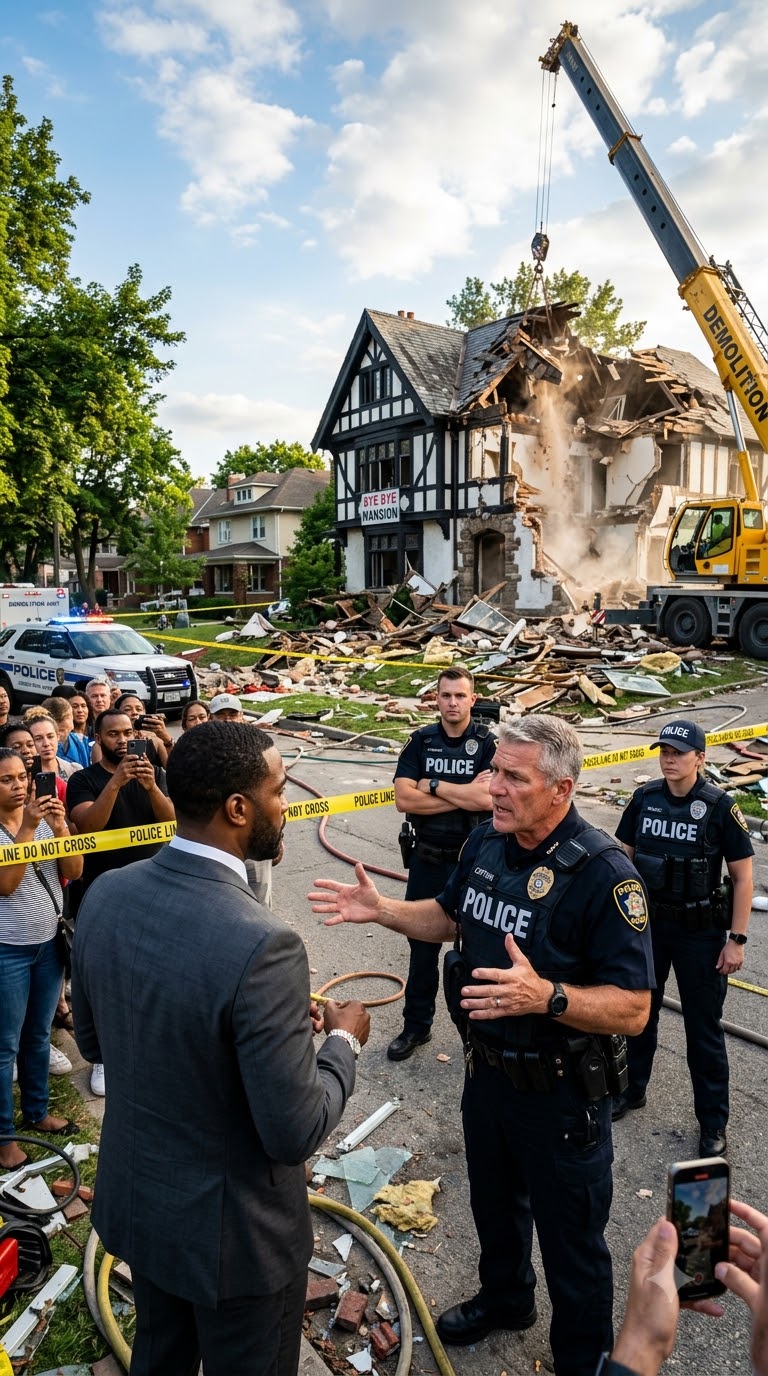
“I know,” Francis said. “That’s the point. It’s not a technical failure. It’s a decision.”
He picked up his phone and called the department’s records supervisor directly, keeping his voice level even as frustration built behind his ribs. The answer he got back was the same two sentences, read aloud this time instead of typed, like the supervisor had rehearsed them. Francis hung up. He sat with that for a while.
Pauler’s office had erased the one piece of evidence that would have shown beyond argument exactly what happened inside his house that morning. Without it, the case would come down to his word and Stella’s word against a department that had already decided to protect its own. He didn’t know yet that the footage wasn’t actually gone. Across town, reporter Teresa Anderson had been quietly working her own angle on the story since the morning it broke.
She’d covered Garvey’s tactical unit twice before, years apart, both times chasing complaints that had gone nowhere. She recognized the pattern the second she heard the raid on the district attorney’s house had been the wrong address. She’d been making calls all week. On Tuesday afternoon, one of them finally connected.
The message came through an encrypted line. No name attached. Just a file and four words. “You will want to see this.”
It was the body-cam footage. Every second of it. The breach. The shouting.
Stella on her knees in the grass. Garvey waving off the address correction. The sledgehammers going through drywall that had never needed to be touched. Anderson watched it twice before she believed what she was looking at.
She didn’t know it had come from Officer Laurelai Oliver. Oliver had copied the file onto a personal drive in the chaos of that morning and sat on it for days, terrified of what would happen to her career if anyone found out but unwilling to let it disappear either. She’d sent it anonymously, routing it through a source she trusted. She kept her own name as far from it as she could manage.
Anderson published the footage that Thursday evening alongside her article. Within hours, it was everywhere. Local news. Then regional.
Then it was picked up by outlets across the state. The video didn’t need much explanation. It spoke for itself. Officers tearing through a family’s home.
An officer pointing out the wrong address. Garvey’s flat voice saying, “Paperwork’s paperwork. Finish the sweep,” like the mistake didn’t matter at all. Public outrage moved fast.
By Friday morning, the department was facing calls for an independent audit from three different city council members. By Friday afternoon, under mounting pressure, the department announced it was launching an internal review and, as a direct result, suspending the tactical unit’s warrant authority until the review was complete. It wasn’t an arrest. It wasn’t a charge.
But it was the first real visible consequence to land on Garvey since the raid. Francis felt something loosen in his chest when he read the announcement. At headquarters, Garvey read the same announcement standing at his desk, his jaw working back and forth like he was chewing on something he couldn’t spit out. “Suspended,” he muttered over the paperwork.
He grabbed his badge off the desk and slammed it down hard enough that the metal clip snapped. Then he looked up at the officer standing nearby, waiting for orders that weren’t coming anymore. “Somebody’s going to pay for this,” Garvey said, low and cold. “This didn’t come from nowhere.”
“Somebody talked.” He didn’t know it was Oliver. Not yet. But the look on his face made it clear he intended to find out.
Whoever it was wouldn’t get away with it quietly. The suspension lasted four days before Garvey found a way to fight back. He couldn’t do it with a badge anymore, not with his authority frozen and the internal review crawling forward without him. But he still had a phone.
He still had friends who owed him favors. On Monday morning, one of those favors paid off in the form of a phone call to a reporter at a smaller, more sympathetic outlet, one that had run friendly pieces on the police union before and wasn’t shy about it. The story ran that afternoon under a headline built to spread. “Is the District Attorney Using His Office for Personal Revenge?”
It didn’t deny the raid happened. It didn’t deny the wrong address. Instead, it planted a different question in the reader’s mind. Was it really fair for Francis Waldridge, the victim of the raid, to also be the man deciding whether the officers involved faced charges?
Wasn’t that exactly the kind of conflict of interest the justice system was supposed to prevent? The article quoted an anonymous law-enforcement source, Garvey, though his name never appeared, describing Francis as a man who’d turned a paperwork mix-up into a personal crusade and was using his office to settle a private score. By Tuesday morning, the story had legs. Local talk radio picked it up.
A city council member sympathetic to the police union repeated the phrase “personal crusade” in a public statement. It stuck the way ugly phrases always seem to stick better than true ones. Mayor Peggy Howard watched it all unfold with quiet satisfaction from behind her desk at City Hall. She hadn’t started the story.
She didn’t need to slow it down either. A fractured public, split on whether to trust the district attorney or the police department, was exactly the kind of mess that let her stay above the fray. Sympathetic to everyone. Committed to no one.
Protecting the endorsement she needed for November. “Let it breathe,” she told her chief of staff when he asked if she wanted to issue a statement defending Francis. “The DA can defend himself. That’s not our job right now.”
It wasn’t subtle, and it wasn’t meant to be. Francis felt the shift almost immediately. Calls that used to come easily from other city officials started going to voicemail. A columnist who usually supported his office ran a piece questioning whether he should recuse himself from any case touching his own household.
Strangers online, and a few people he actually knew, began repeating the same line back to him in different words. Isn’t this a little convenient? Your house gets hit, and suddenly you’re going after the whole department. Francis sat in his office that evening watching a local news segment with the sound low.
The anchor’s voice was calm and measured as she laid out both sides of a story that, to Francis, only had one side that mattered. A family’s home had been destroyed. A department had buried three complaints just like it before this one. The segment ended with a chyron that made his stomach turn.
“DA’s Office Faces Conflict of Interest Questions.” His chief of staff, Roxanne, stood in the doorway watching it with him. “They’re better at this than we gave them credit for,” she said quietly. “They’ve had practice,” Francis said.
“This is exactly what they did to Brooks. To the other two families. Make it about them instead of what actually happened.” He clicked the television off and sat in the sudden quiet, jaw tight.
“It worked before because nobody with a platform was standing behind those families. It’s not going to work this time.” Roxanne crossed her arms. “So what do we do?”
Francis was already reaching for his phone. He was already thinking about the engineer’s report sitting in a folder on his desk, the demolition invoices, and the photographs Stella had taken of the wreckage before any repairs began. He thought about his wife, still displaced from her own home, still flinching at loud noises since that morning. “They want to talk about conflict of interest,” Francis said.
“Fine. Let’s give them something harder to argue with than an opinion piece.” He looked up at Roxanne, something hard and certain settling into his expression. “Set up a press conference in front of the house.”
“I want the cameras standing exactly where those officers were standing when they tore it apart.” “When?” “As soon as we can get it together,” Francis said. “They gave us a story built on doubt.”
“It’s time we gave them the receipts.” Two days later, cameras lined the sidewalk outside 44 Somerset Court. Francis stood on his own front lawn, the same patch of grass where Stella had knelt with her wrists zip-tied behind her. He looked out at a crowd of reporters that had grown far larger than his office anticipated.
Teresa Anderson stood near the front, notebook ready, having covered enough of this story already to know it wasn’t finished. Behind Francis, the house still wore its wounds openly. The plywood covering the broken windows hadn’t been removed. The hole in the hallway wall was visible through the open front door.
He’d insisted on it staying exactly as it was for this. Let people see it. Let them stop imagining and start looking. “Three days ago,” Francis began, voice steady and carrying clean across the yard, “a story ran suggesting I opened an investigation into this department out of personal revenge.”
“That I’m using my office to settle a score.” He paused, letting that sit in the air for a moment. “I want to show you exactly what score we’re talking about.” He held up a folder.
Then he handed pages to Roxanne, who passed copies down the row of reporters. “This is an independent structural engineer’s report commissioned by my office and reviewed by two separate contractors. It documents damage to load-bearing walls that no search for a safe or a suspect would ever require.” He turned a page.
“Walls opened up in five separate places. A support beam struck hard enough to compromise it structurally. None of it was necessary to execute a warrant, even the correct warrant for the correct house three blocks from here.” He let the engineer’s findings speak plainly, page by page.
Damage that went past search and turned into demolition. All of it documented with photographs taken within hours of the raid. “This isn’t what a mistake looks like,” Francis said. “A mistake is a wrong door.”
“What happened inside that door is a choice. Officers were told on record that the address didn’t match the warrant. They kept going anyway.” He nodded to Roxanne.
She stepped aside. Stella came forward to stand beside her husband. The yard went quiet. Stella hadn’t spoken publicly since the raid.
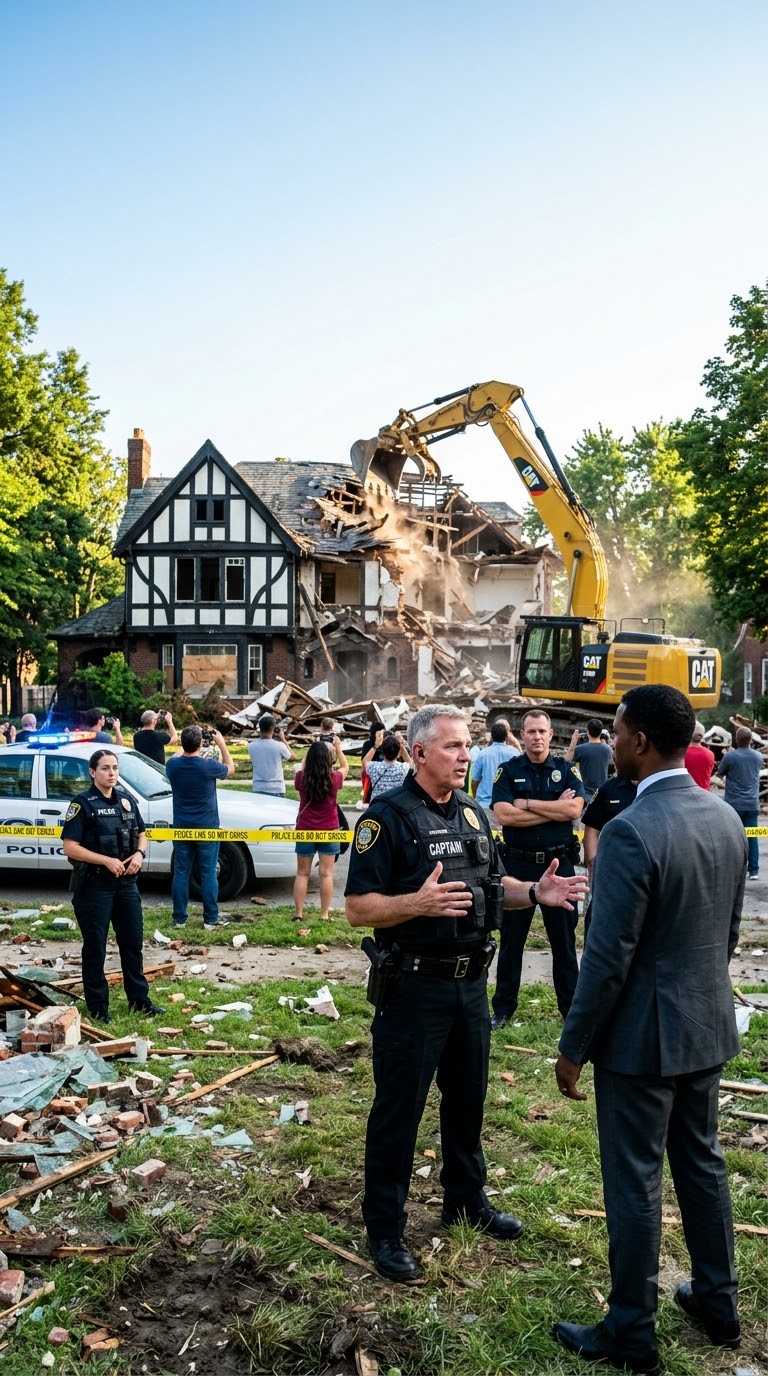
She wasn’t used to cameras, and it showed in the way she gripped the edge of the podium before she started talking. But her voice, when it came, didn’t shake. “I was asleep in my own bed,” she said. “I woke up with a rifle pointed at my face.”
“I didn’t do anything wrong. I didn’t have anywhere to run, and I didn’t need to because I hadn’t done anything.” She glanced back at the house behind her. “They put me on my knees in my own front yard, in my robe, in front of my neighbors.”
“Strangers tore apart 15 years of everything my husband and I built together. When it was over, nobody said sorry. Nobody even looked me in the eye.” She looked back out at the cameras.
“I keep hearing people ask if this is personal. Of course it’s personal. It happened to me. In my house.”
“In my body. But that doesn’t make it any less true. It doesn’t mean three other families who went through the exact same thing before me should keep getting ignored.” A murmur moved through the reporters.
Anderson was already writing fast. Francis stepped back up beside Stella. “This office isn’t pursuing anything out of revenge. We’re pursuing it because the evidence demands it.”
“Evidence that exists whether or not it happened to be my house that got hit this time. I’d be doing exactly this if it were any other family on any other street in this county.” He paused. “The only difference is most families don’t have a badge that makes people listen.”
He let that land, then closed the folder in his hands. “We’ll be taking questions.” The press conference ran long. Reporters pressed him on the engineer’s report, the timeline, the suspended tactical unit, and whether other complaints existed.
Francis answered every question directly. He didn’t flinch. He didn’t use the careful hedging his advisers usually recommended. By that evening, the story had flipped entirely.
Local coverage led with the engineer’s findings and Stella’s testimony instead of vague conflict-of-interest questions. A columnist who’d questioned Francis’s motives days earlier published a follow-up walking it back. Public sentiment, which had wobbled under Garvey’s smear, swung hard back in Francis’s direction. That night, sitting in Stella’s sister’s guest room, Francis’s phone buzzed with a message from Roxanne.
“Anderson says oversight board members are already talking about formal charges. This might actually be moving.” Francis read the message twice. Then he looked over at Stella, who was watching the news replay quietly on her phone beside him.
For the first time since the morning their door came down, it felt like the ground might finally be shifting under the right people. The oversight board meeting was scheduled for the following week. Inside police headquarters, that meant one thing to Captain Roger Garvey. Time was running out to find out who had leaked the footage that started all of this.
He’d been asking around quietly for days. Who had access to the raw files that morning? Who transferred data off department servers around the same time the footage surfaced? It didn’t take long.
Officer Laurelai Oliver had been the newest name on his unit for less than a year, and new officers made mistakes. She’d logged into the evidence server that morning under her own credentials at a timestamp that lined up close enough to the leak for Garvey to be certain. He found her alone in the equipment room on Wednesday afternoon, restocking her vest between shifts. He closed the door behind him.
“Funny thing about server logs,” Garvey said, leaning against the doorframe with his arms crossed. “They keep records of everything. Every login. Every file pulled.”
Oliver kept her eyes on the vest in her hands. She focused on the buckles and refused to look up at him. “I don’t know what you’re talking about, Captain.” “Sure you don’t.”
His voice stayed calm, almost friendly, which somehow made it worse. “Here’s the thing, Oliver. You’ve got what, eight months on this job? Less?”
“You’ve still got a lot of career left to lose.” He took a step closer. “A career that depends a whole lot on people trusting you’ve got their back when things get complicated.”
“Cops who talk to reporters instead of their own department don’t exactly build that kind of trust. Word travels.” “I never talked to a reporter,” Oliver said, which was technically true. She’d sent the file through an anonymous line.
She hadn’t spoken a single word to Anderson directly. “Doesn’t matter how it happened,” Garvey said. “Matters what people believe happened. Right now, a lot of people in this building believe it was you.”
He let that sit. “You’ve got a long career ahead of you, or you don’t. Depends on what happens next.” He moved a little closer.
“Depends on whether you keep opening your mouth to people who ask you questions about that morning.” He didn’t wait for her to respond. He walked out, leaving the door open behind him. Oliver stood alone with a half-buckled vest in her hands and her pulse hammering in her ears.
That night, Oliver sat in her car in her apartment building’s parking lot for almost an hour before she went inside. Her phone had three missed calls. One from Roxanne at the DA’s office. One from a colleague.
One from a blocked number she didn’t recognize and didn’t want to. She didn’t answer any of them. By the end of the week, she’d stopped responding entirely. Calls from Francis’s office went to voicemail.
A follow-up message from Anderson asking if she’d be willing to speak on record before the oversight hearing went unread for two days before Oliver finally opened it. She typed nothing back. She told herself it wasn’t cowardice. She told herself she just needed time.
Across town, at the same time Oliver was going quiet, Chief Pauler was making calls of his own. Quieter ones. More careful ones. Aimed at a different target entirely.
The county’s DA oversight board included five appointed members, three of whom had been placed there during Mayor Howard’s first term. Pauler reached out to two of them personally. He framed his concerns the way he’d learned to frame everything over 28 years, not as pressure, but as fairness. “I just think it’s worth asking,” he said to one board member over coffee.
“Whether it’s appropriate for the district attorney to personally direct an investigation into the same raid that happened at his own house. That’s not politics. That’s just basic conflict-of-interest procedure.” The seed took root fast.
By Friday, a formal complaint had been filed with the board questioning Francis’s standing to oversee any part of the case, citing his direct personal stake in the outcome. It cited no wrongdoing on Francis’s part. Just the appearance of it, which in board procedure was sometimes enough. The notice arrived at Francis’s office late Friday afternoon.
Official letterhead. Careful language. The kind of document built to look procedural instead of personal. Francis read it standing at his desk.
The momentum of the last week’s press conference was still fresh. The oversight board’s talk of formal charges against Garvey was still ringing in his ears from Roxanne’s message days earlier. He read the notice a second time, slower. He understood exactly what it was.
They weren’t attacking the evidence. They couldn’t. The evidence was solid, and everyone knew it. They were attacking his right to use it at all.
The oversight board convened the following Thursday morning in a small hearing room at City Hall. Five appointed members sat behind a long table, with Francis in the front row alongside Roxanne and a stack of files thick enough to answer any question they might ask. For nearly two hours, the board reviewed everything Francis’s office had assembled. The engineer’s report.
The recovered body-cam footage. The pattern of three prior complaints tied to Garvey’s unit. The timeline of the raid itself, laid out minute by minute. Board members asked pointed questions.
A few pushed back. But by the time the discussion wound down, the weight of the evidence was hard to argue with. At 11:40, the board voted four to one to move forward with formal criminal charges against Captain Roger Garvey for property destruction and civil-rights violations. Francis felt something in his chest finally loosen.
Weeks of pressure. Smear articles. Sleepless nights in a borrowed guest room. Here it was.
A real vote. A real step toward accountability. He allowed himself, for just a moment, to believe it might actually be over. It lasted less than 20 minutes.
Before the board could formally close the session, one of Mayor Howard’s appointees raised a procedural motion. The unresolved conflict-of-interest complaint filed against Francis the week before, she argued, needed to be addressed before the case could proceed any further under his office’s direction. Until that complaint was resolved, she said, the case should be reassigned to a special prosecutor to avoid any appearance of bias. Francis stood ready to object.
But the board chair was already nodding along. It sounded reasonable. It sounded fair. That was exactly the problem.
The motion passed three to two. By that afternoon, the case that had started on Francis’s own front lawn was formally reassigned to a special prosecutor named Gerald Archer, a man with a long, quiet history of ties to the police union. Francis knew him by reputation. He was someone who closed cases fast and closed them quietly.
It got worse before the day was over. Garvey’s attorneys, watching the reassignment happen in real time, filed their own motion within hours, arguing that Francis should be barred from providing any testimony in the case at all, given his position as both victim and the official who directed the original investigation. It was a bold move, almost insulting in how transparent it was. Francis understood exactly what it was built to do.
Box him out of the one case that mattered most to him, using the very evidence he’d fought to expose as the excuse to silence him. Officer Oliver, the one witness who could speak directly to what happened inside that house, still hadn’t answered a single call in over a week. By evening, Francis sat in his car outside the still-condemned house on Somerset Court. The engine was off.
He stared at the plywood covering the windows in the fading light. He hadn’t meant to drive there. He’d just found himself pulling onto the street out of habit, the way you keep reaching for a tooth that’s already gone. He walked inside past the caution tape.
His boots crunched over drywall dust that still hadn’t been swept away. He sat down on the stairs in the dim evening light. The house was quiet in a way that felt heavier than silence usually did, the kind of quiet that came after something had been taken and not yet given back. He thought about the vote that morning.
Four to one. A real win snatched back within the hour by people who’d never once set foot in this house. Using a system built to protect people exactly like him and turning it instead into a wall. His eyes drifted to the small closet tucked beneath the staircase where he was sitting.
He reached over without quite deciding to and pulled the door open. He ran his hand along the wall until his fingers found the cool metal edge of the lockbox bolted into the floor joist. The one thing the raid team had never thought to search because it didn’t look like anything worth searching. He didn’t open it.
Not yet. He just sat there in the dark, hand resting on the box, thinking about everything inside the department that had been buried and reburied for years before his own door ever came down. “They took my house apart looking for something illegal,” he said quietly. His voice was the only sound in the empty room.
“They never once looked for something legal.” Outside, the streetlights on Somerset Court flickered on one by one. Francis sat in the ruins of his own home. Finally, he understood what he needed to do next.
Francis sat on the stairs for a long moment before he finally pulled the lockbox free from its bracket and set it across his knees. The key was small, worn smooth from years of handling, kept on a ring he still carried out of habit even after he’d half-forgotten what it opened. He fitted it into the lock and turned it. The lid came up with a soft, familiar click.
Inside wasn’t much to look at. A few old documents. His father’s watch, stopped years ago. Underneath all of it was a thick spiral notebook, its cover worn soft at the corners and rubber-banded shut.
Francis pulled it out and slid the rubber band off carefully, like it might crumble. He’d started this notebook 11 years earlier, back when he was still a junior prosecutor working intake. It was the year the Brooks complaint had first crossed his desk before it ever went anywhere. He remembered reading that file back then.
A wrong address. A door kicked in. A family left with nothing but a closed case and no answers. He remembered feeling something he hadn’t known what to do with.
He hadn’t had the authority to reopen it. He hadn’t had the power to do anything but watch it get buried. So he’d started writing it down. Dates.
Names. Patterns he noticed in warrant executions that never quite lined up. He’d never planned on it becoming anything. It had just felt wrong to let it disappear completely, even if all he could do at the time was remember it.
Over the years, the notebook had grown. Entries on the second buried complaint. Four years later, entries on the third. Two years after that, small notes on Garvey’s name appearing again and again across different addresses and different families.
The same excuse every time. He hadn’t been building a case. He hadn’t known back then that he’d ever need one. He’d just been keeping a record because somebody had to, and nobody else seemed willing.
He flipped through page after page in the dim stairwell light. For the first time since the morning his own door came down, he felt something besides fury. He felt the pieces locking into place. This notebook predated everything.
It predated the raid on his own house by more than a decade. Nobody could argue this was revenge built after the fact to settle a personal score because half of it had been written back when Francis didn’t even know Garvey’s face, only his pattern. He called Stella before he even stood up from the stairs. “You need to see something,” he said when she picked up.
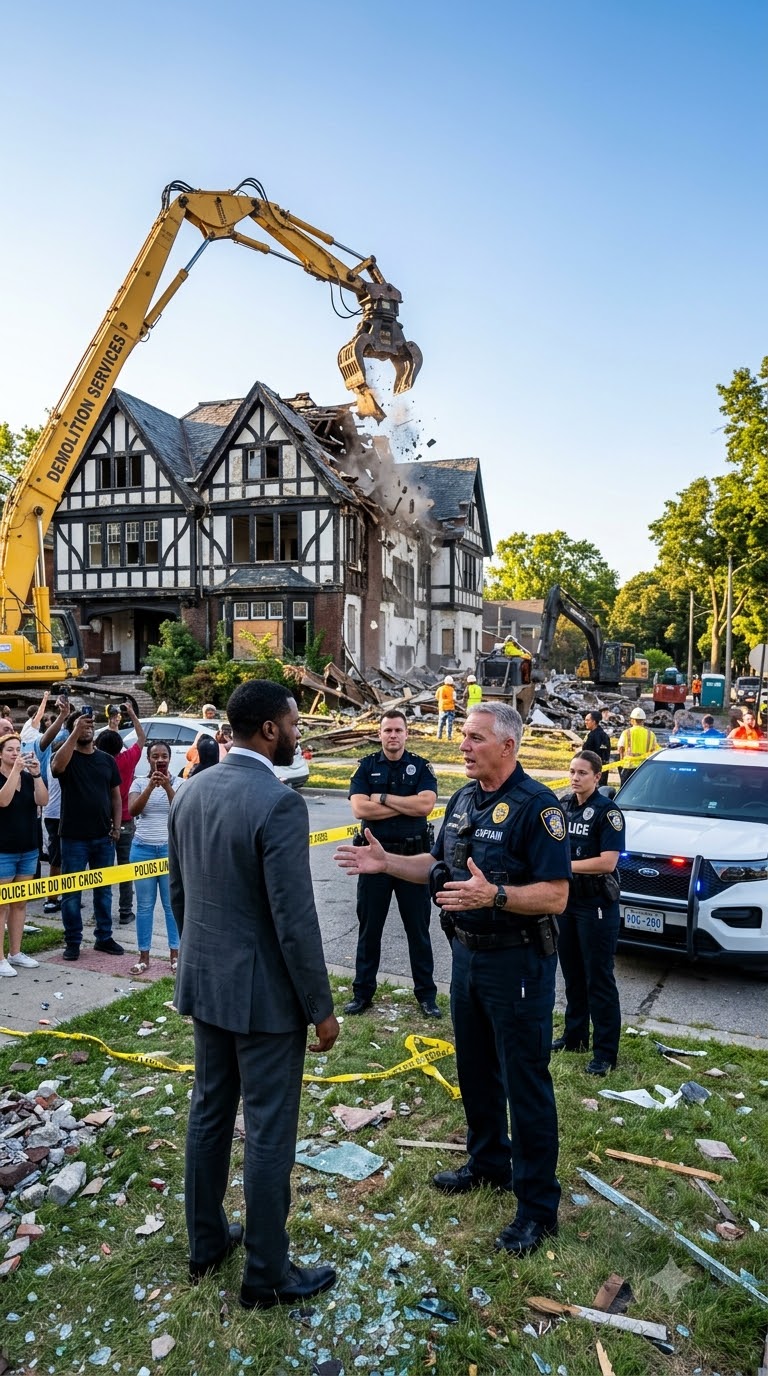
She met him at the house 20 minutes later. He showed her the notebook by flashlight, page by page, watching her expression shift as she understood what she was looking at. “This changes everything,” she said quietly. “This proves you saw this coming before it ever happened to us.”
“It proves more than that,” Francis said. “It proves the department knew. Pauler signed off on every one of these closures.” He tapped the notebook.
“He had this pattern in front of him for years and buried it every single time.” He closed the notebook carefully, holding it like it weighed more than paper should. “The conflict-of-interest argument only works if people think I started caring about this because it happened to me.”
“This proves I didn’t.” He sat with that for a moment, turning the notebook over in his hands. Something in him hardened into resolve. “I can’t prosecute this myself anymore.”
“Not with Archer running it. Not with the board’s ruling standing. But I don’t need to prosecute it.” Stella watched him.
“I just need everyone to see it at the same time. The notebook. The footage. Brooks and the others.”
“All of it together, before anyone in that building has a chance to bury it the way they buried everything else.” Stella looked at him steadily. “You’re going public with all of it.” “Tomorrow,” Francis said.
“Before Archer has time to quietly let this one disappear too.” He spent the rest of the night at the kitchen counter of Stella’s sister’s house, sorting the notebook alongside the engineer’s report, the recovered footage, and copies of the three old complaints. He built a single package meant to leave no room for the case to be buried a fourth time. By two in the morning, the folder sat finished in front of him.
Thick and undeniable. Stella stood in the doorway watching him work. Exhaustion was written across both their faces, but something steadier sat underneath it. “This isn’t over,” Francis told her, sliding the last page into place.
“It’s just starting for real.” By eight the next morning, Roxanne had made the calls Francis asked her to make. Reporters were already gathering on the steps outside City Hall when he arrived, the finished folder tucked under his arm like something he wasn’t willing to let out of his grip. He hadn’t slept more than two hours.
It didn’t show. He walked to the podium Roxanne had set up. Stella stood just behind his shoulder. Francis looked out at a crowd that had grown even larger than the one on his own front lawn two weeks earlier.
Teresa Anderson stood near the front again. A camera crew was beside her, ready to broadcast live. “Two weeks ago,” Francis began, “my house was destroyed by officers executing a warrant for an address that wasn’t mine.” His voice carried across the crowd.
“Since then, I’ve been accused of using my office for personal revenge, and my own oversight board voted to strip me of any role in this case because of that accusation.” He held up the folder. “I’m here to show you why that accusation was always false.” He opened it.
He began laying out its contents page by page for every camera in the crowd. “This is a notebook I started keeping 11 years ago, when the first complaint against Captain Roger Garvey’s unit crossed my desk as a junior prosecutor.” He held up several pages.
“It documents a pattern. Three prior raids. Three wrong addresses. Three families left with nothing.”
“All buried by the department without charges. I began tracking this more than a decade before it ever happened to my own home. This isn’t revenge.” He looked directly at the cameras.
“This is a record I kept because somebody had to, back when I had no power to stop it.” He handed copies to Anderson and the rest of the press, watching the pages move down the line of reporters. “Alongside this, we have the original body-cam footage from the raid on my house, recovered after the department claimed it was corrupted.”
“We have the structural engineer’s report proving the damage went far beyond anything a warrant required. We have three families, the Brooks family among them, who are here today, willing to speak for themselves about what happened to them years before anyone was watching.” A murmur rippled through the crowd. Wilbert Brooks stepped forward from where he’d been standing quietly to the side.
He was joined by the other two people Francis’s office had reached out to weeks earlier. One by one, they spoke. Brief, plain accounts of doors kicked in, walls torn open, complaints filed, and complaints forgotten. None of it was polished.
All of it was devastating. Francis was midway through explaining why the timeline of the notebook made any conflict-of-interest argument fall apart when a voice from the side of the crowd cut through. Hesitant, but clear. “I can confirm what he’s saying about the address.”
Every camera swung toward her. Officer Laurelai Oliver stood at the edge of the press area out of uniform, hands shaking slightly at her sides. She hadn’t told anyone she was coming. She’d sat in her car outside City Hall for almost 30 minutes that morning before finally walking in.
“I was on the entry team that morning,” she said, stepping closer to the podium. Her voice gained steadiness with each word. “Another officer flagged the address discrepancy to Captain Garvey before the search continued.” She looked toward the cameras.
“I heard him say it directly. That paperwork didn’t matter. To finish the sweep.” Her jaw tightened.
“I should have said something sooner. I’m saying it now.” The crowd erupted into a wave of shouted questions, but Oliver didn’t flinch this time. She’d spent two weeks being threatened into silence.
Watching Francis and Stella and three strangers stand in front of every camera in the city, refusing to disappear, had finally given her the nerve Garvey’s warning had taken away. Francis stepped aside slightly, letting her finish. Something close to relief crossed his face for the first time in days. Across town, inside police headquarters, the press conference played live on a television mounted in the break room.
Officers gathered around it in near silence. Oliver’s testimony aired. Brooks’s voice cracked as he described his own ruined kitchen years earlier. The notebook’s timeline was laid out in plain, undeniable language.
Garvey stood near the back of the room with his arms crossed, watching his own name repeated over and over on a screen he couldn’t turn off. He watched a case he’d believed was buried resurrect itself in real time in front of the entire city. The special prosecutor’s office would have no way to quietly close this. Not anymore.
Not with three victims speaking on camera. A witness confirming the cover-up under her own name. A notebook proving none of it had ever been about revenge. Garvey’s jaw worked silently as the broadcast cut to a wide shot of the crowd outside City Hall.
Cameras were still rolling. Questions were still coming. He didn’t say a word. He didn’t need to.
His face said everything. By early afternoon, the story had moved past anything Chief Pauler or Mayor Howard could contain. Special Prosecutor Gerald Archer had spent the morning fielding calls from his own office staff, all asking the same question in different ways. How do you sit on a case with this much public evidence attached to it?
Oliver’s testimony was already looping on every local news channel. The notebook’s timeline had been picked apart and confirmed by two independent legal analysts within hours, both agreeing publicly that it destroyed any real conflict-of-interest argument against Francis. The three families stood in front of cameras answering questions no one had bothered to ask them years earlier. Archer had built his reputation on cases that closed quietly.
This one wasn’t going to be one of them. By early afternoon, he knew it. At 2:15, his office issued a statement confirming that formal criminal charges were being filed against Captain Roger Garvey for criminal destruction of property and violation of civil rights. The statement cited the body-cam footage, the engineer’s report, and sworn testimony from Officer Laurelai Oliver.
It didn’t mention Francis by name. It didn’t need to. Every reporter covering the story already understood exactly whose work had made this moment unavoidable. Inside headquarters, Chief Pauler watched the announcement scroll across his phone.
He understood immediately that the ground had shifted beneath him too. He’d spent weeks protecting Garvey. Signing off on the reclassified report. Pressuring board members.
Letting the smear story run unchallenged. All of it had been built on the assumption that this case would eventually fade the way the other three had faded. It hadn’t faded. Now Pauler’s own name sat quietly beside Garvey’s in every document that had gone public that morning.
The same signature closing complaint after complaint for years was plainly visible in the notebook Francis had shared with the world. Pauler made the only move left available to him. That afternoon, he called a press conference of his own. He stood behind a podium at headquarters with a composure that didn’t quite reach his eyes.
“Effective immediately, Captain Roger Garvey is relieved of duty pending the outcome of criminal proceedings,” Pauler said, reading from prepared remarks. “I want to be clear that the actions described in these reports do not reflect the values of this department.” He looked down at the page.
“Where internal failures allowed this pattern to continue, those failures will be addressed.” It wasn’t an apology. It wasn’t close to one. But it was Pauler cutting Garvey loose in real time, sacrificing him publicly to save what was left of his own position.
It also confirmed on the record, finally, after weeks of denial, that the address correction had been ignored on the morning of the raid. Mayor Howard’s statement came less than an hour later. It was shorter than Pauler’s and carefully worded by her campaign staff to distance her from a story that had turned from a liability into a landmine. She withdrew her public support for Garvey in two sentences.
She made no mention of the police union endorsement she’d spent weeks protecting. By four o’clock, uniformed officers arrived at headquarters with an arrest warrant. Garvey was still in the building when they came for him, standing near the same equipment room where he’d cornered Oliver weeks earlier. He didn’t run.
He didn’t argue. He stood still while an officer read him his rights, his face blank in a way that looked less like calm and more like a man who hadn’t fully caught up to what was happening yet. They walked him out through the main hallway, past the officers he’d commanded for years. Past desks that went silent as he passed.
Nobody said anything to him. A few looked away entirely. Oliver wasn’t there to see it. She’d left headquarters hours earlier, unsure whether she’d ever be welcomed back.
Word of the arrest reached her within the hour. She sat alone in her apartment and read the news alert twice before she let herself believe it. Garvey was cuffed in the parking lot in uniform, in front of a small crowd of reporters who’d gathered the moment word spread that an arrest was coming. He said nothing to any of them.
He kept his eyes forward as he was placed in the back of a patrol car, the same kind of vehicle he’d once climbed out of on Somerset Court believing he had every right to be there. That evening, the department confirmed that the three older complaints, Brooks and the two others, would also be formally reopened for prosecution. More than a decade after they’d first been buried and forgotten. Francis watched footage of the arrest from Stella’s sister’s living room.
Her hand rested in his. Both of them were quiet as the patrol car pulled away from headquarters. It wasn’t relief exactly. It was something steadier than that.
Something that had been a long time coming, finally arriving. Six weeks passed before the last truck pulled away from Somerset Court. The city, under court order following the case’s resolution, had covered the full cost of restoring the house. New drywall went up where the sledgehammers had gone through.
A rebuilt support beam was certified by the same engineer who’d testified to its damage. New windows replaced the ones shattered that first morning. Francis had watched the work happen in pieces over those weeks, driving by after work some evenings just to see how far along it had gotten. The way you check on something healing.
Now, on a bright Saturday afternoon, he stood on the front porch with Stella beside him. They watched the final crew pack up their tools and load them into a truck idling at the curb. The house looked whole again. Not exactly the same.
A few details had changed in the rebuild. Small things neither of them had asked for but had come to appreciate, like the slightly wider porch steps and the reinforced front-door frame the contractor had insisted on. But it stood the way it was supposed to stand. Windows intact.
Walls solid. No plywood. No caution tape. No cracked glass catching morning light the wrong way.
Stella ran her hand along the new railing, testing its steadiness. “It’s strange,” she said. “Feeling glad about a door frame.” Francis looked at it.
“It’s not really about the door frame.” Garvey’s trial had been set for the following spring. The charges stood firm after a preliminary hearing that left little room for argument, with Oliver’s testimony and the recovered footage forming the backbone of the prosecution’s case. He was out on bail.
Stripped of his badge. Waiting now the way the families he’d once torn through neighborhoods to reach had once waited on him. Chief Pauler had resigned three weeks after the arrest, under continued scrutiny once reporters started asking harder questions about how many complaints had crossed his desk over the years and how many signatures at the bottom of those files belonged to him. He hadn’t been charged with anything.
But his name would follow the case for a long time. It was attached to every story about what the department had allowed to happen and buried four separate times. Wilbert Brooks and the other two families had their old cases formally reopened. Their cases were moving now through a system that was, for the first time, actually looking at them.
Francis’s office had connected them with attorneys willing to take the cases seriously, something none of them had believed possible when their doors first came down years earlier. It wouldn’t undo what happened to them. Nothing would. But it was more than silence, which was all they’d been given before.
Oliver had resigned from the department not long after her testimony, unsure whether she’d ever be trusted inside those walls again. But she’d started speaking with a police-accountability group about what she’d seen, turning what almost broke her into something that might help someone else avoid the same choice she’d faced too late. Francis thought about all of it, standing there on his porch. The pieces of a fight that had started with a broken door were finally settling into something like an ending.
The last truck pulled away from the curb. The street went quiet the way it had been quiet six weeks earlier, right before the first flashbang went off. Except now the quiet felt different. It felt earned.
Stella stepped past him into the front hallway, running her fingers along the new wall where the sledgehammer holes used to be. Nothing but smooth, solid drywall now, painted the same soft color it had been before. “Come inside,” she said. “It’s ours again.”
Francis lingered a moment longer on the porch. He looked out at the street, at the neighbors’ houses standing in the late-afternoon light, at the ordinary quiet of a Saturday that had once been the worst morning of his life. He thought about the notebook still sitting in the lockbox under the stairs. Eleven years of patience that had finally mattered.
He thought about Stella on her knees in this grass. He thought about every family before her who’d knelt on their own lawns and never gotten the chance to fight back the way she had. He rested his hand against the new front-door frame. Solid under his palm.
Built stronger than the one it replaced. “This one,” he said quietly, turning to follow Stella inside, “they don’t get to take again.” He stepped through the door and closed it gently behind him. The house on Somerset Court stood whole in the fading light, exactly the way it was always supposed to.
