

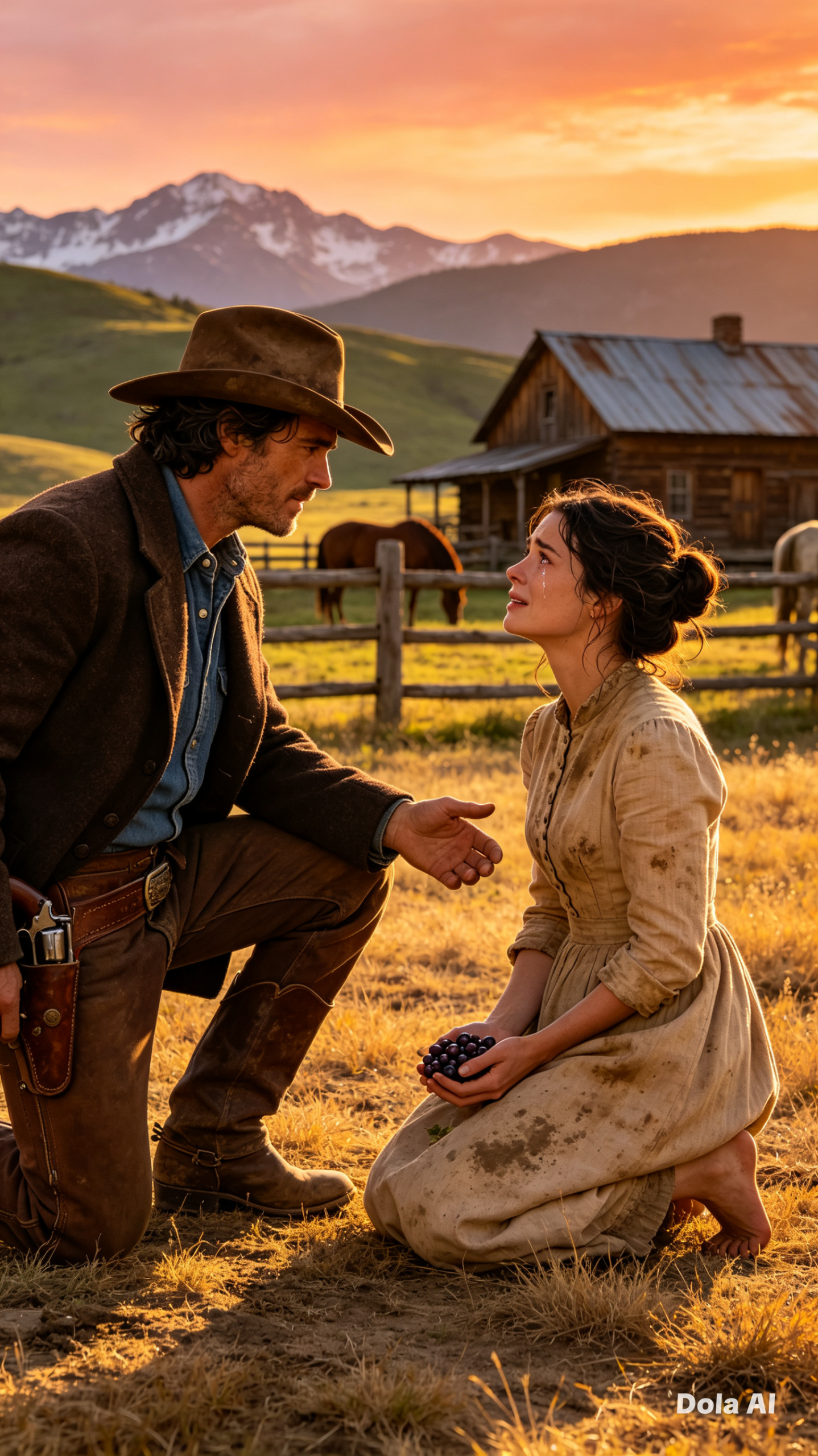
The prickly pears were small, shriveled by the sun, clinging to an old cactus at the edge of a dirt road that seemed to stretch on forever.
Elena Morán carefully picked one, blew away the invisible spines, and split it open with her fingernails. There was little flesh inside—coarse and warm—but it was food. And at that moment, after walking for 3 days from the town of Nombre de Dios, anything that could fool her stomach felt like a blessing.
She was 27 years old and felt 60.
Her husband had died, leaving her nothing but debts, shame, and a cloth suitcase that barely held 2 dresses, a photograph of her mother, and a notebook filled with recipes. The creditors took their little house, the sewing machine, and even the copper pots that had belonged to her grandmother. Her late husband’s family shut the door in her face with words that still burned inside her:
“A poor widow brings bad luck.”
That was how Elena ended up on that dry road in Durango, beneath a vast and merciless sky, eating bitter prickly pears just to keep from collapsing.
In the distance stood a well-kept fence with sturdy posts, fresh wire, and wide fields where thin but numerous cattle grazed. It spoke of ownership. Of hard work. Of a world that belonged to someone else.
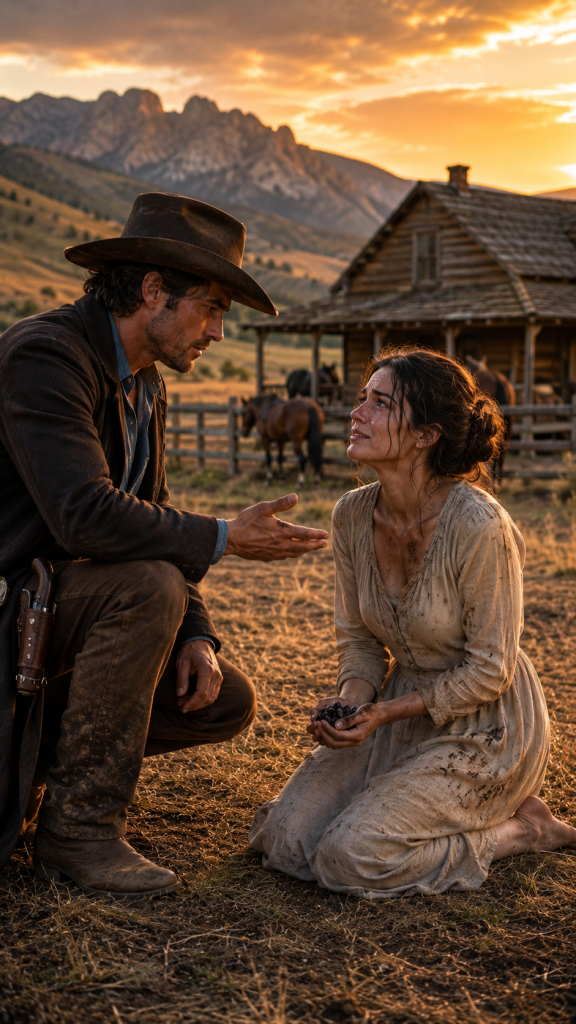
Elena heard the sound of hoofbeats first.
She did not lift her head immediately. Pride, however useless, was the only thing no one had managed to take from her.
The horse stopped in front of her.
A long silence settled over the road. The only sounds were the wind stirring the dry grass and the buzz of a fly.
At last, Elena looked up.
The man on horseback was tall and broad-shouldered, wearing a worn palm hat and a light-colored shirt stained with dust. He was not old, but he carried the solemn look of a man who had buried too many people and learned not to waste words. His light brown eyes, almost golden, studied her suitcase, then her torn shoes, then the prickly pear in her hand.
There was no mockery on his face.
Nor was there pity.
Only quiet attention, as though he needed to fully understand what he was seeing before deciding what to do.
“That won’t get you to the next town,” he said.
His voice was low, steady, without harshness.
Elena swallowed.
“It’s all I have.”
The man glanced toward the ranch a few hundred yards away: a large whitewashed adobe house, corrals, a barn, a water well, and an outdoor kitchen with a corrugated metal roof.
Then he looked back at her.
“Do you know how to cook?”
Elena blinked in confusion.
She had expected him to tell her to leave. To ask if she was a thief. To toss her a few coins just to make the problem disappear.
But not that question.
“Yes,” she answered, straightening her back.
“For 2?”
She let out a dry laugh, barely strong enough to be heard.
“For 20, if there are enough beans.”
For the first time, something resembling a smile crossed the man’s face.
“My name is Julián Cárdenas. This is El Encino Ranch. If you work well, you eat well. If not, I’ll take you to town tomorrow.”
Elena picked up her suitcase.
“If your kitchen is still standing, I work well.”
Julián did not ask about her past. She thanked him silently for that. Some pains grow heavier every time they are told.
The ranch house was large, but sad. It had thick walls, terracotta floors, and windows that let in beautiful light, though no one seemed to have appreciated it for years. In the living room stood furniture covered in dust, a crooked crucifix hanging on the wall, and old family portraits whose faces still seemed to rule from their frames.
The kitchen was even worse.
There were dirty dishes, dried grease coating the stove, poorly tied grain sacks, forgotten chilies in a basket, tortillas as hard as leather, and a sour smell that made Elena press her lips together.
Julián remained standing in the doorway, perhaps expecting her to turn around.
But Elena did not turn around.
She examined every corner with the eyes of a woman who knew how to turn ruin into a meal.
“I need water, soap, firewood, 2 buckets, and clean rags.”
“There’s a well out back.”
“I also need no one coming in while I clean.”
Julián nodded.
“No one will.”
He asked for no explanations. He did not apologize for the mess. He simply recognized someone who knew what she was doing and stepped aside.
That first day, Elena did not cook for the ranch hands.
She cooked to survive.
She cleaned until her arms burned. She scrubbed the stove, swept away years of dirt, washed the pots, threw out spoiled food, and organized the grains into sacks. Then she found pinto beans, a piece of bacon, 2 wrinkled tomatoes, and half an onion.
She made a pot of beans with bacon and dried chilies.
When she tasted the first spoonful, she closed her eyes.
It tasted like home.
It tasted like staying alive.
At dusk, Julián walked in and stood still when he saw the kitchen. It was not perfect, but it was alive again. It smelled of soap, firewood, and hot beans.
Elena served him a plate.
He sat down without saying a word. He ate slowly, as though every bite reminded him of something he had forgotten. When he finished, he washed his own plate.
Elena watched him in surprise.
“Do you always wash your own dishes?”
“My mother used to say that a man who can’t wash his own plate has no business criticizing the food.”
Elena smiled faintly.
The following day, 14 ranch hands arrived for the autumn cattle drive. They were tough men with cracked hands, sweat-soaked hats, and wary eyes. At first, they looked at her as though she were an outsider. They were used to burnt coffee, cold tortillas, and dried meat that had been poorly reheated.
That night, Elena served them beef soup with vegetables, Mexican red rice, and freshly made tortillas.
The dining room fell silent.
One of the ranch hands, a man named Chuy, looked up after finishing his third bowl.
“Doña Elena, if you leave, I’m leaving too.”
Laughter filled the table.
From then on, something changed at El Encino.
The men started cleaning their boots before coming inside. They stopped shouting at one another over every little thing. They worked with more energy because they knew that when they returned, there would be hot coffee, sweet bread on Sundays, and enough food to fill their bodies and soothe their souls.
Julián noticed everything.
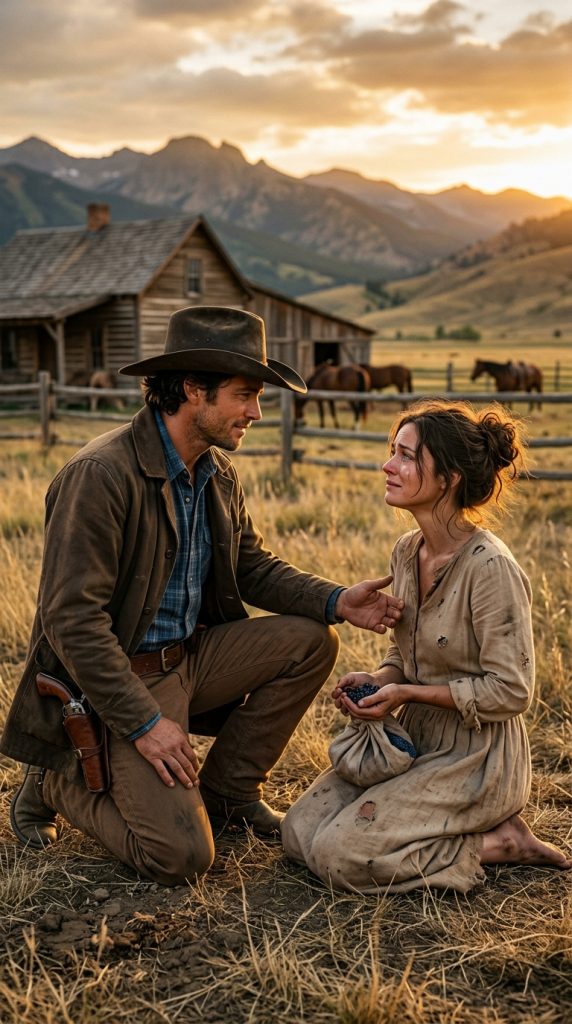
He watched Elena knead dough with determination, calculate portions without wasting anything, and save every peel, every stale tortilla, and every leftover vegetable in buckets she sent to the small corral by the creek.
“For the pigs?” he asked once.
“For whatever they’re needed for,” she replied.
Julián did not press the matter.
He had learned that Elena never did anything without a reason.
As the days passed, he began fixing the things she used. He repaired the pantry door. Sharpened the knives. Fixed a loose step by the back entrance. One afternoon, he left a sack of Canatlán apples beside the kitchen.
“They were starting to spoil,” he said without looking at her.
The next day, Elena baked an apple pie with cinnamon.
When Julián tasted it, he closed his eyes for 1 second.
His wife, Clara, had died of a fever 5 years earlier. Since then, the house had been nothing more than walls, a roof, and obligations. Julián had kept working, breathing, paying wages, and repairing fences.
But he had never truly lived again.
Until Elena arrived.
She did not fill the house with noise. She filled it with order. With bread. With coffee at dawn. With the certainty that someone cared about the little things, and because of that, everything big seemed a little less heavy.
The peace lasted until October.
A black pickup truck rolled into the ranch, kicking up clouds of dust. A man in a gray suit, polished shoes, and the smile of an office worker stepped out. Behind him came Arturo Cárdenas, Julián’s younger brother, wearing dark sunglasses and a brand-new shirt.
Elena saw them from the kitchen.
Arturo rarely came to the ranch, but he was always talking about selling it.
“The land doesn’t make money anymore,” he would say. “The modern way is to partner with developers.”
The man in the suit introduced himself as Attorney Mauro Salcedo, a representative of Banco del Norte.
Julián received him in the dining room.
Elena kept peeling potatoes, but she heard every word.
“The promissory note comes due at the end of the month,” Salcedo said, spreading documents across the table. “You borrowed money to buy breeding cattle and repair the well. But cattle prices have fallen. According to our calculations, you won’t be able to cover the debt.”
Arturo sighed, pretending to be saddened.
“Brother, I told you. There’s no point in holding on. There are interested buyers. We can sell before the bank auctions it off.”
Julián clenched his jaw.
“I’m not selling El Encino.”
Salcedo smiled.
“Then the bank will seize the collateral.”
Elena set the knife down on the cutting board.
The word “collateral” turned her blood cold. She knew that tune. That was how they had taken her house: with clean paperwork and dirty hands.
She entered the dining room, drying her hands on her apron.
Arturo grimaced.
“This is a family matter.”
Elena looked him straight in the eye.
“Then it’s a good thing I’m here, because this house has been functioning like a family for weeks thanks to my kitchen.”
Julián looked up. He did not stop her.
Salcedo gave a short laugh.
“Ma’am, this is about numbers, not recipes.”
“Numbers can burn too if you don’t watch them,” she replied.
She walked over to the desk where Julián kept the ranch ledgers. She opened the largest one and searched through the columns and dates. For weeks, she had seen those figures while cleaning, taking inventory, and calculating meals for the ranch hands.
“You’re counting 386 head of cattle for sale,” Elena said.
Julián frowned.
“That’s what’s going on the drive.”
“You’re not counting the 13 steers in the pasture by the creek.”
Arturo laughed.
“Those animals were skinny. They’re worth nothing.”
Elena turned slowly toward him.
“They were skinny 2 months ago.”
The dining room fell silent.
She picked up the pencil and wrote in the margin of the ledger.
“For 8 weeks, they’ve been eating kitchen scraps, peels, cracked corn, sour milk, and stale bread. I saw them this morning. They’re no longer culls. They’re prime steers.”
Salcedo’s smile disappeared.
Elena continued:
“At the Gómez Palacio market price, each one can sell for 48 pesos. 13 steers make 624 pesos. The promissory note is for 590. That leaves enough for transportation and commission.”
Julián stared at her as though he had just seen water spring from a stone.
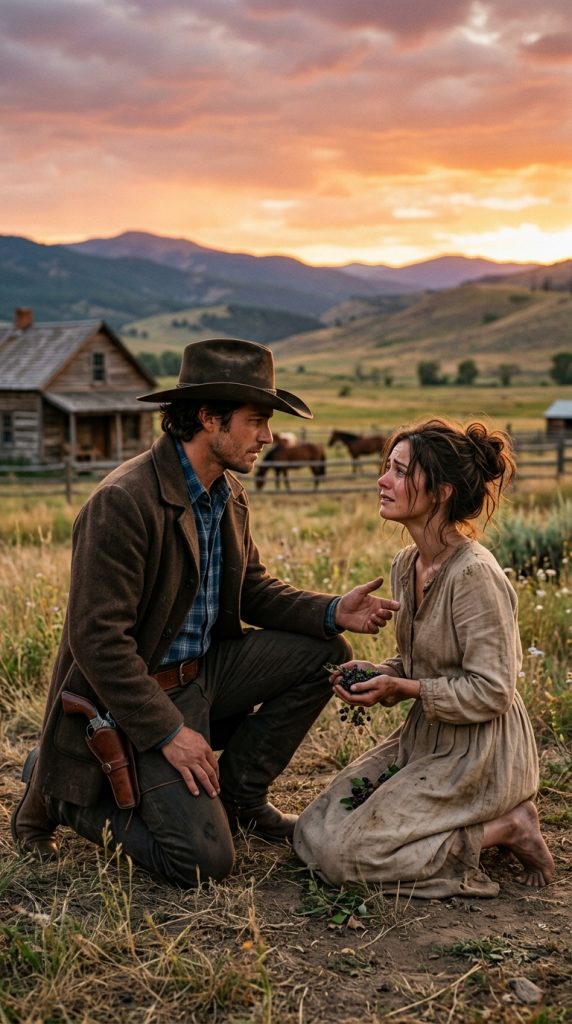
Arturo turned pale.
“That changes nothing. The bank can refuse…”
“The bank can collect,” Elena interrupted. “That’s what you came here to do, isn’t it?”
Salcedo gathered the papers with abrupt movements.
“We expect payment on Friday.”
“You’ll have it,” Julián said, rising to his feet.
But Elena was not finished yet.
“One more thing.”
Everyone looked at her.
She pulled a folded piece of paper from her apron.
“Yesterday, I found this in the office trash. It’s a purchase letter signed by a real estate company in Torreón. They’re offering to pay twice the amount of the debt for this land if the bank manages to take possession of it. It’s addressed to you, Attorney Salcedo… with a copy sent to Don Arturo.”
Arturo’s face collapsed.
Julián took the letter. He read it in silence. Every line seemed to strike him in the chest.
“You were going to sell Father’s land?” he asked without raising his voice.
Arturo swallowed.
“I only wanted to save something.”
“You wanted to collect something.”
Julián’s voice cracked slightly. That hurt more than a shout.
Salcedo tried to leave, but Chuy and 2 ranch hands were already standing in the doorway.
“The attorney can wait for the Rural Guard,” Elena said. “I assume they know how to read letters too.”
That day, El Encino did not merely save its cattle.
It saved its name.
The payment was made on Friday. Salcedo lost his position. Arturo was expelled from the family business and, some time later, had to answer to the law for the attempted fraud. Julián did not celebrate. A brother’s betrayal is not something to celebrate. It is something to survive.
That night, after the ranch hands had gone to the bunkhouse, Julián found Elena in the kitchen, mending a shirt beside the lamp.
“You saved my ranch,” he said.
She did not look up.
“The ranch already had what it needed to save itself. Someone just had to look closely.”
“I didn’t look.”
Elena set the needle down on the table.
“Sometimes pain makes people stop seeing what is right in front of them.”
Julián understood that she was not speaking only about him.
Winter passed.
The mornings arrived cold, with low mist over the pastures and the smell of firewood in the kitchen. Elena kept working. Julián kept fixing things no one had asked him to repair. Sometimes they walked together to the well. Sometimes they reviewed the accounts at night. Sometimes they said nothing, and yet the silence still felt full.
One January morning before dawn, a hard frost fell. Elena stepped onto the porch with a shawl over her shoulders and found Julián looking out over the white fields.
“It looks beautiful when the world goes still,” she said.
“Yes.”
He took a deep breath.
“Elena, I’m slow when it comes to many things.”
She smiled without looking at him.
“I already noticed.”
Julián let out a nervous laugh.
“But I don’t want to be so slow that I lose what God placed in front of me.”
Elena went still.
“When you arrived, this house was dead. So was I, even though I kept walking. You brought order, food, courage… and a different way of seeing things. I don’t want you to leave when the season ends.”
She lowered her gaze.
“Are you offering me permanent work?”
“I’m offering you my life.”
Elena looked at him then. There were tears in her eyes, but no sadness.
“Julián…”
“I want you to stay as my wife. Not out of gratitude. Not because you saved the ranch. Because whenever I think about the future, you are in every room of this house.”
Elena remained silent.
Then she picked up her cup of coffee and drank calmly, as though she needed to make him suffer a little.
“You are a good man, Julián Cárdenas,” she finally said. “But you really are very slow.”
He released the breath he had been holding.
“Is that a yes?”
“It’s a yes.”
They were married 1 month later in the village in a simple ceremony. Elena wore a blue dress that she had altered herself. Julián wore his old suit, carefully brushed. The ranch hands served as witnesses, holding their hats in their hands and wearing awkward smiles.
The wedding meal, of course, was prepared by Elena.
There was barbacoa, rice, beans, hot tortillas, spiced coffee, and apple pie. No one could remember ever eating better at a celebration.
Years later, at sunset, Elena would sit on the porch of El Encino with Julián beside her. The ranch was thriving. The fences were strong, the cattle healthy, and the kitchen always warm. A 3-year-old boy, with his father’s serious eyes and his mother’s stubbornness, ran across the yard dragging a wooden horse behind him.
Elena watched him and sometimes remembered that morning on the road, when she had eaten dried-out prickly pears to keep from collapsing.
Julián remembered it too.
“To think I almost rode right past you,” he said one afternoon.
Elena rested her head on his shoulder.
“But you didn’t.”
“It was the smartest decision of my life.”
She smiled.
“No. The smartest one was asking whether I knew how to cook.”
The boy tripped, landed on the ground, and paused as though deciding whether or not to cry. Then he got up, dusted off his hands, and kept running.
Julián laughed softly.
“He has your strength.”
“And your slowness,” Elena replied. “It took him quite a while to decide to get up.”
The sun sank behind the hills, painting the sky orange and pink. The smell of freshly baked bread drifted from the kitchen. In the corral, the cattle mooed peacefully. The house, the same house that had once seemed empty and sad, was now filled with life.
Elena took Julián’s hand.
She had not forgotten the hunger, the widowhood, or the humiliation of those who had thrown her into the street. But they no longer hurt in the same way. Because her happy ending had not arrived like it did in fairy tales, with expensive dresses or impossible promises.
It had arrived through work.
Through respect.
Through a clean table.
Through 13 steers no one had bothered to notice.
And through a good man who, though slow, had known enough to stop in time beside a hungry woman at the edge of the road.
“Welcome home,” Julián had told her on their wedding night.
Now, as Elena watched her son run beneath the Durango sky, she understood that she had been home long before then.
From the day someone had not offered her pity.
He had offered her an opportunity.
