

PART 1
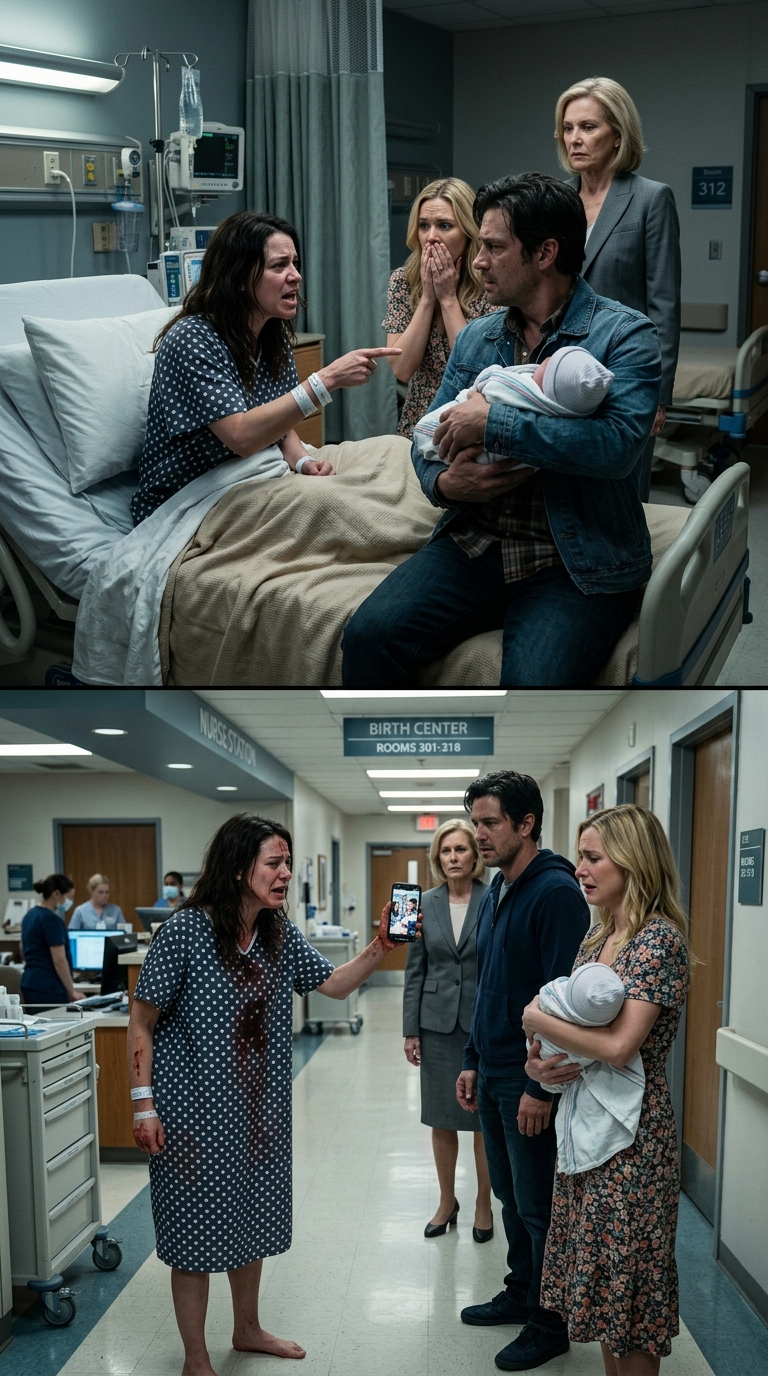
Blood marked the maternity ward floor behind me like a red trail. From the nursery doorway, I heard my husband murmur,
“Just take the baby quickly before she wakes up.” But I was already awake. I had stayed conscious through the tearing pain, the harsh surgical lights, the nurse pressing gauze between my legs, and the chilling realization that the man holding my hand hadn’t been praying for me—he had been waiting for me to black out.
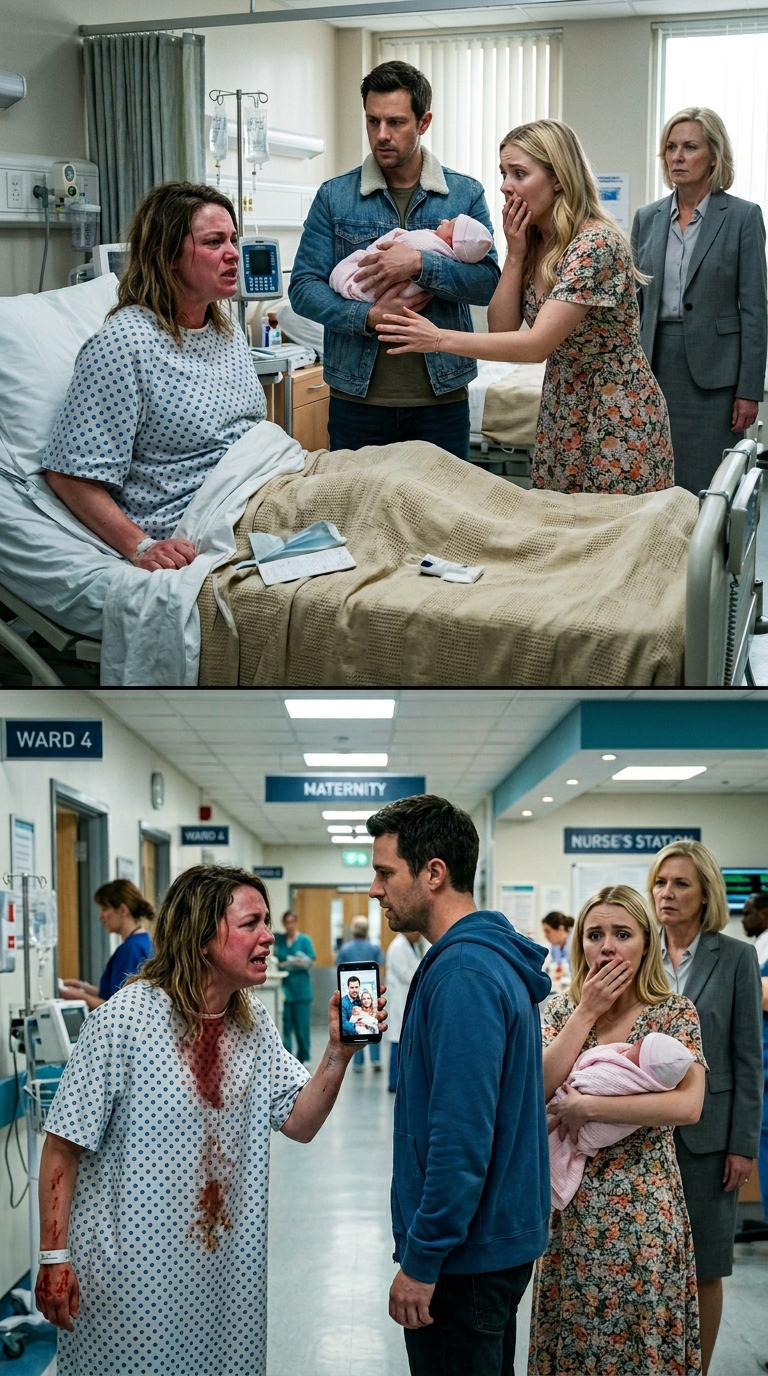
My daughter arrived at 2:17 a.m., six pounds of furious breath and clenched little fists. I named her Lily before they even finished cleaning her. My husband, Grant, smiled for the staff, kissed my forehead, and called her “our miracle.” Then my adopted younger sister, Celeste, entered in cream cashmere, crying without a single tear.
“She has everything,” Celeste said, staring at my newborn like Lily had taken a throne. “A mother. A name. A place in the family.”
Grant rested a hand on her shoulder. My mother looked away. I should have screamed, but I had long learned that silence was safer. Celeste had entered our family when I was ten—beautiful, fragile, always wounded at precisely the right moments. If I succeeded, she collapsed. If I celebrated, she wept. If I built something, she broke it and bled on the remains. Now I had built a child, and she wanted her.
“She can’t have children,” Grant said quietly, as though that explained everything.
I stared at him.
“What did you say?”
He leaned closer, handsome and hollow.
“Celeste needs this. You’re strong. You can have another.”
Celeste gave a small, satisfied sob. My mother murmured,
“Don’t make this ugly, Mara.”
I lay in the hospital bed, IV still in my arm, stitches burning under the sheet. Grant bent and kissed my hair.
“The adoption papers are nearly complete. You signed medical consent earlier. It will look voluntary.”
That was when I understood. The clipboard. The “nurse” who wasn’t mine. Grant guiding my shaking hand while I was drugged. They believed pain had broken me. They forgot what I did for a living. I was a family court attorney who had spent seven years dismantling men who thought paperwork could bury a woman. I gave them a faint smile. Grant smiled back. He believed I had surrendered.
PART 2
By dawn, they had become careless. Grant walked the corridor carrying my daughter while Celeste followed in a pale blue dress, already calling herself “Mama.” My mother carried a diaper bag stitched with Celeste’s initials. They had planned even the monogram. I pressed the call button. No one came. Of course no one came. Grant’s family funded the private hospital heavily. His father’s portrait hung in the lobby like a saint.
From the hallway, I heard laughter.
“She won’t fight,” Celeste said. “She never does.”
Grant chuckled. Then, passing my door, unaware I could hear him, he whispered,
“Don’t make me see your hands, Mara. You signed enough tonight.”
My hands trembled—not from fear, but rage. I pulled out my IV and stood. Warm blood slid down my leg. The room tilted, but I held the bedrail until it steadied. My phone sat untouched on the table. Grant hadn’t taken it because he believed women like me used phones to cry, not strike back. I opened the recording app. It had been running since midnight, ever since Celeste texted me:
“After tonight, everyone gets what they deserve.”
Grant called it paranoia. I called it evidence. Their voices filled the recording—Grant admitting he over-sedated me, Celeste laughing about forged consent, my mother saying,
“Mara was always selfish. This will teach her.”
Then came the final piece: Grant speaking on speakerphone with Dr. Vale.
“The birth certificate should list Celeste as the intended mother,” Grant said.
“As long as the donation clears, I can delay filing,” Dr. Vale replied.
I nearly laughed. They hadn’t chosen a fragile woman. They had chosen a lawyer on maternity leave. I called Judge Evelyn Ross, the one person Grant feared. She answered immediately.
“Mara?”
“My husband is attempting to traffic my newborn through a forged adoption.”
A pause.
“Where are you?”
“St. Aurelia’s. East maternity wing.”
“Stay visible. Say nothing you cannot prove.”
“I can prove all of it.”
“Good girl. Now bleed dramatically.”
So I did. I stepped into the hallway barefoot, gown open, blood marking every tile. A nurse gasped. Celeste turned first.
“Why are you up?”
Grant froze holding Lily. I lifted my phone.
“Because you forgot,” I said, shaking but steady, “I know how monsters lose custody.”
Elevator doors opened. Two officers stepped out. Behind them came Judge Ross in a dark coat over pajamas, followed by hospital board members pulled from sleep. Grant turned pale. Celeste clutched my baby tighter. And Lily screamed as if she knew the trial had begun.
PART 3
“Give me my daughter,” I said.
Celeste stepped back.
“She’s mine. You signed.”
“No,” Judge Ross said coldly. “She signed under sedation and duress, on invalid adoption documents.”
Grant tried to recover.
“This is a family misunderstanding.”
I played the recording. His voice echoed through the hall.
“She’ll be too weak to argue.”
Then Celeste:
“Once the baby is in my arms, no one takes her back.”
Then my mother:
“Let Mara bleed. She likes attention.”
A nurse covered her mouth. A board member whispered,
“Jesus Christ.”
Dr. Vale arrived, sweating through his suit.
“This is being handled internally.”
“No,” I said. “It’s being handled publicly.”
I sent the file to police, the hospital board, medical regulators, and my law partner, who had already prepared emergency filings after Celeste’s message. Grant lunged for my phone; an officer restrained him.
“Careful,” I said. “That hand is already evidence.”
Celeste broke.
“She has everything!” she screamed. “She always had everything!”
I looked at her fully.
“You could have asked me to love you. Instead, you tried to steal the only person who needed me more than you did.”
Her face collapsed. Grant shifted tactics.
“Mara, think about our marriage.”
“I am.”
I handed Judge Ross another folder.
“Our prenup,” I said. “You signed it thinking my assets were smaller.”
His expression changed.
“My grandmother’s estate transferred last month. House, accounts, clinic shares—mine. And the morality clause you mocked? Infidelity, coercion, and child endangerment void everything.”
Celeste whispered,
“Grant?”
I looked at her.
“He didn’t tell you?”
For the first time, Grant looked like himself.
“You’ll regret this.”
“No,” I said. “You will.”
Officers took Lily from Celeste. Her scream followed down the hall as if something breaking. When my daughter was placed in my arms, everything narrowed to warmth, breath, and her tiny grip around my finger. Grant was arrested before morning. Dr. Vale resigned by noon and later lost his license. Celeste faced charges for conspiracy, forgery, and custody interference. My mother sold her house for legal fees. I stopped answering her calls. Grant lost the divorce.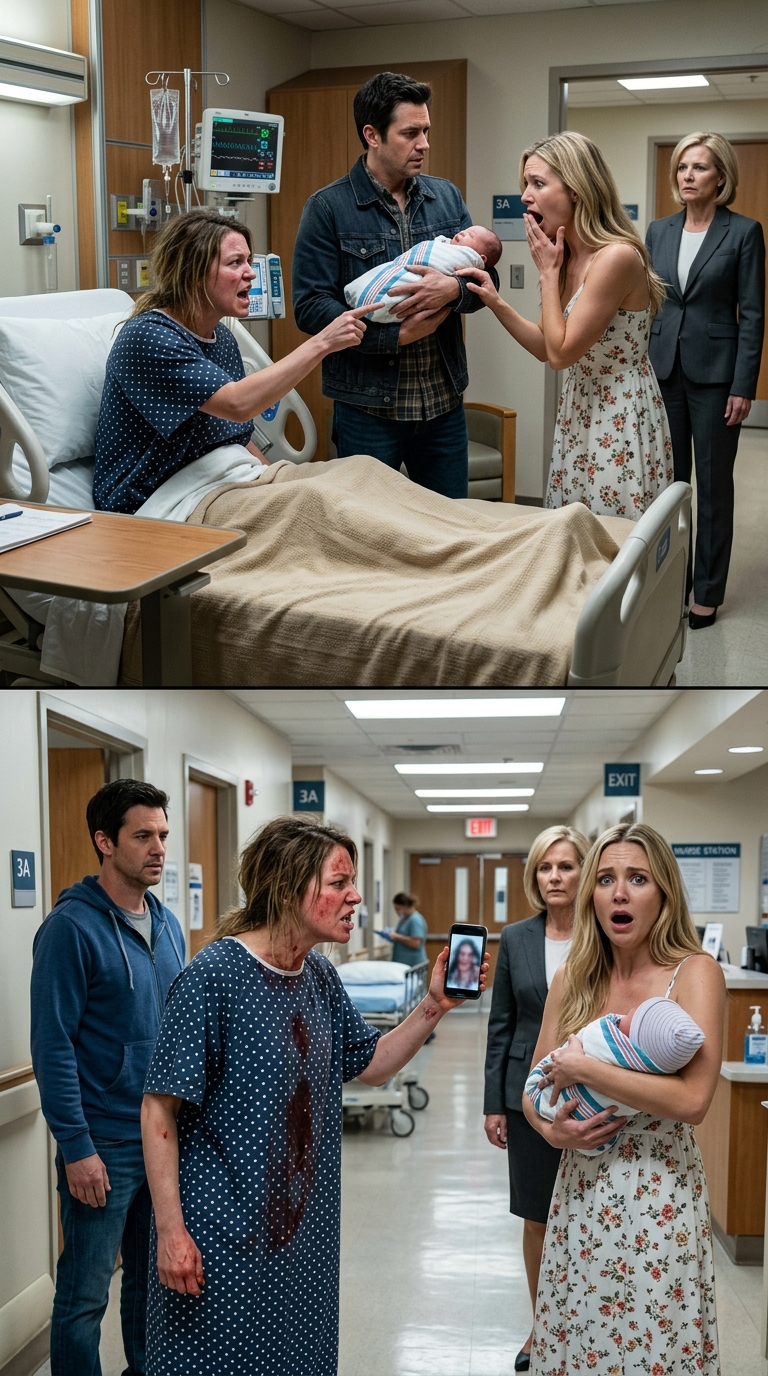
Six months later, I stood in my sunlit kitchen while Lily laughed in her high chair, covered in peach puree. The fear was gone. The blood was gone. The court order sat on the counter: sole custody, full asset protection, permanent restraining orders. I folded it and put it away. Then I held Lily close and whispered,
“Nobody gives you away.”
Outside, the morning was clean and open. And for the first time, nothing reached for what was mine.
