

PART 1
The beeping grew louder as Agent Ramirez unlocked the storage unit. The metal door rolled up with a reluctant groan, revealing a space no larger than a small bedroom. A single bare bulb flickered overhead, casting long shadows across stacks of plastic bins, a folding table, and a black metal case that pulsed with a steady red light. The air smelled of dust, old paper, and something metallic.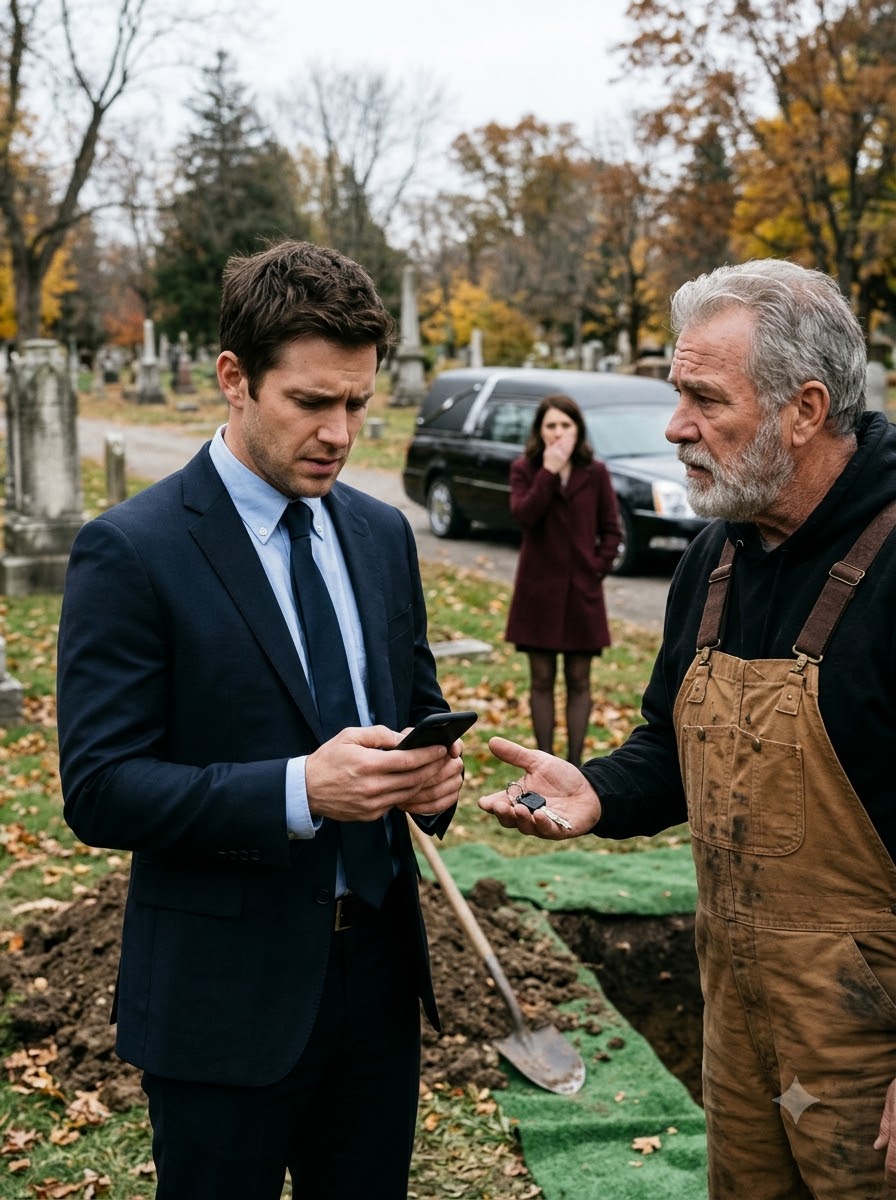
“Stay behind me,” Ramirez said, drawing her sidearm. She moved carefully toward the case. The beeping intensified, then stopped the moment she flipped the latch. Inside lay a satellite phone, a thick manila folder, and a small digital recorder. She exhaled and holstered her weapon. “It’s a dead-man’s switch. Your father set it to alert us if the unit was opened without the proper sequence. He wanted us here when you arrived.”
I stepped closer, the brass key still cold in my fist. “Is he alive?”
Ramirez met my eyes. “We don’t know. Three days ago, Raymond Mercer suffered what appeared to be a fatal cardiac event in his study. The medical examiner signed off. The body was released. Everything checked out on paper. But the Bureau has been monitoring certain financial irregularities connected to your father’s company for the past eighteen months. When the gravedigger contacted us this morning with the empty-coffin arrangement, we moved.”
She handed me the folder. My father’s handwriting covered the first page in neat, slanted script.
Julian—
If you are reading this, the plan is already in motion. I am sorry I could not tell you sooner. The people who want what I took will not stop at me. They will come for your mother, for Celeste, for the children. The coffin was the only way to buy you time. Trust Agent Ramirez. She has the rest of the files. Do not go home until she says it is safe. I love you. I have always loved you. —Dad
My throat tightened. I turned the page. Bank statements. Photographs of men I did not recognize. Shipping manifests from a subsidiary of Mercer Logistics that showed containers moving through Newark and then disappearing from official records. At the bottom of one page, circled in red ink, was a single name: Harlan Voss.
“Who is this?” I asked.
“Voss runs a private security firm that has been quietly acquiring port access and warehouse leases across three states,” Ramirez said. “Your father discovered that several of those leases were being used to move unregistered cargo—electronics, pharmaceuticals, and, more recently, materials that can be used in small-scale chemical weapons. He began collecting evidence two years ago. When he realized Voss had people inside his own company, he started preparing an exit. The heart-attack story was staged. The body the medical examiner examined was a John Doe from a morgue in Pennsylvania. Your father paid the gravedigger twenty years ago in case he ever needed the option. He activated the plan three days ago.”
A car door slammed somewhere beyond the chain-link fence. Ramirez stiffened and moved to the doorway. “We need to leave. Now.”
We drove in her unmarked sedan, the storage unit locked behind us, the folder on my lap. Route 9 blurred past under the sodium lights. My phone buzzed again. Another message from my mother: Please, Julian. The children are asking for you. Come home.
I showed Ramirez the screen. She shook her head. “They have her phone. Or they have her. Either way, you cannot go there.”
“Where is my family?”
“We pulled them out an hour ago. Celeste and the kids are at a safe house in Pennsylvania. Your mother refused to leave the house until she heard from you. That was before we knew the messages were being sent under duress. Local agents are en route now, but Voss’s people may already be inside.”
The rest of the drive passed in silence. When we reached the safe house—a nondescript colonial set back from a quiet road—Celeste met me at the door. Her face was pale, her eyes red. Our daughter, Emma, slept on the couch with her thumb in her mouth. Our son, Marcus, sat at the kitchen table coloring a picture of a house with too many windows. He looked up and smiled, the way he always did when he thought everything was still normal.
“Daddy,” he said. “Grandma said you had to talk to the police about Grandpa.”
I knelt and hugged him until he squirmed. Celeste’s hand found my shoulder. “They told us not to call anyone. Is it true? Is your father—”
“I don’t know,” I said. “I have the letter. I have the files. But I don’t know where he is.”
Ramirez set the satellite phone on the table and dialed. A voice answered on the second ring, low and tired. “Julian?”
I closed my eyes. “Dad.”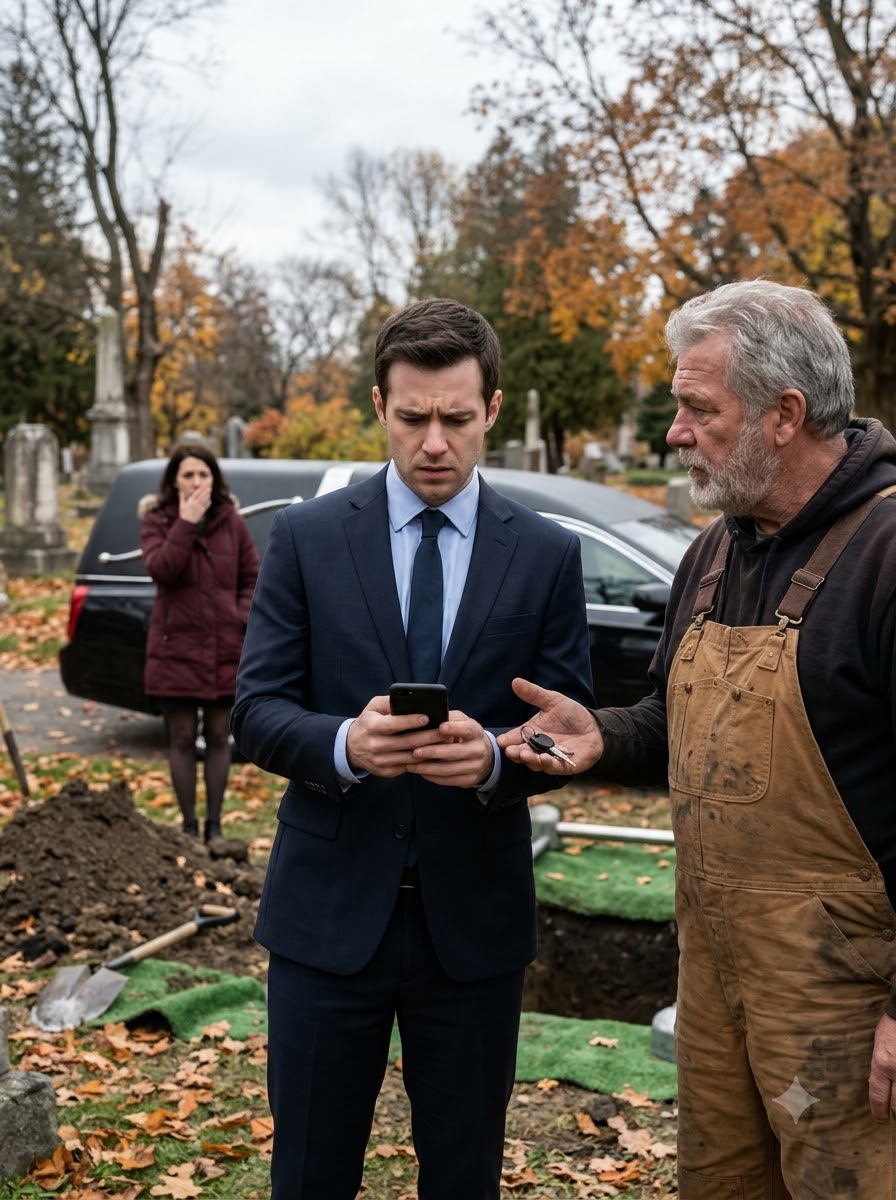
“I’m sorry,” he said. “I wanted to tell you. I couldn’t risk it. Voss has people who have been watching the house for weeks. If I had disappeared without the funeral, they would have taken your mother the same night. The empty coffin bought us seventy-two hours. That’s all.”
“Where are you?”
“Somewhere they won’t look. Ramirez has the coordinates for the drop. Everything I collected is already with the Bureau. Once the indictments are unsealed, Voss will have nowhere to run. But until then, you stay where you are. Do not go back to the house. Do not answer any more messages from your mother’s number.”
The line went quiet for a moment. I heard wind and the distant sound of water.
“I should have told you years ago,” he said. “About the company. About the shipments. I thought I could fix it without dragging you into it. I was wrong.”
“You’re alive,” I said. The words felt strange in my mouth. “That’s enough for now.”
He exhaled. “Take care of them, Julian. I’ll see you when this is finished.”
The call ended. Ramirez took the phone and powered it down. “We’ll move you again at first light. In the meantime, rest if you can.”
PART 2
I did not sleep. I sat at the kitchen table with the folder open and read every page while Celeste dozed on the couch with the children. The evidence was meticulous. Wire transfers. Photographs of meetings. Audio recordings of Voss discussing “quiet deliveries” and “people who ask too many questions.” My father had documented enough to put Voss and half a dozen of his lieutenants away for decades. He had also documented the moment he realized one of those lieutenants had been placed inside Mercer Logistics by Voss himself—a man my father had trusted for twelve years.
Near dawn, Ramirez received a call. She listened, then lowered the phone. “They found your mother. She’s safe. Bruised, shaken, but unharmed. Voss’s people left when they realized the house was empty of anything they wanted. They’re looking for the files now. They don’t know we already have them.”
I nodded. Relief and anger moved through me in equal measure. “And my father?”
“Still off-grid. He’ll surface when the warrants are executed. Until then, we keep you moving.”
Over the next three days we changed safe houses twice. I spoke with my mother once, on a secure line. Her voice was thin. She told me she had watched the men search the study and the bedroom and the garage. She had told them she did not know where I was. They had believed her, or they had decided she was no longer useful. Either way, they had left.
On the fourth morning, Ramirez showed me a news alert on her tablet. Federal agents had raided six properties linked to Harlan Voss. Voss himself had been taken into custody at a private airfield outside Atlantic City. The story made no mention of my father. It mentioned only “an anonymous tip and extensive financial records.”
That afternoon the satellite phone rang again. My father’s voice was quieter this time.
“It’s done,” he said. “Voss is in custody. The rest of his network is being rolled up. You can go home.”
“Where will you be?”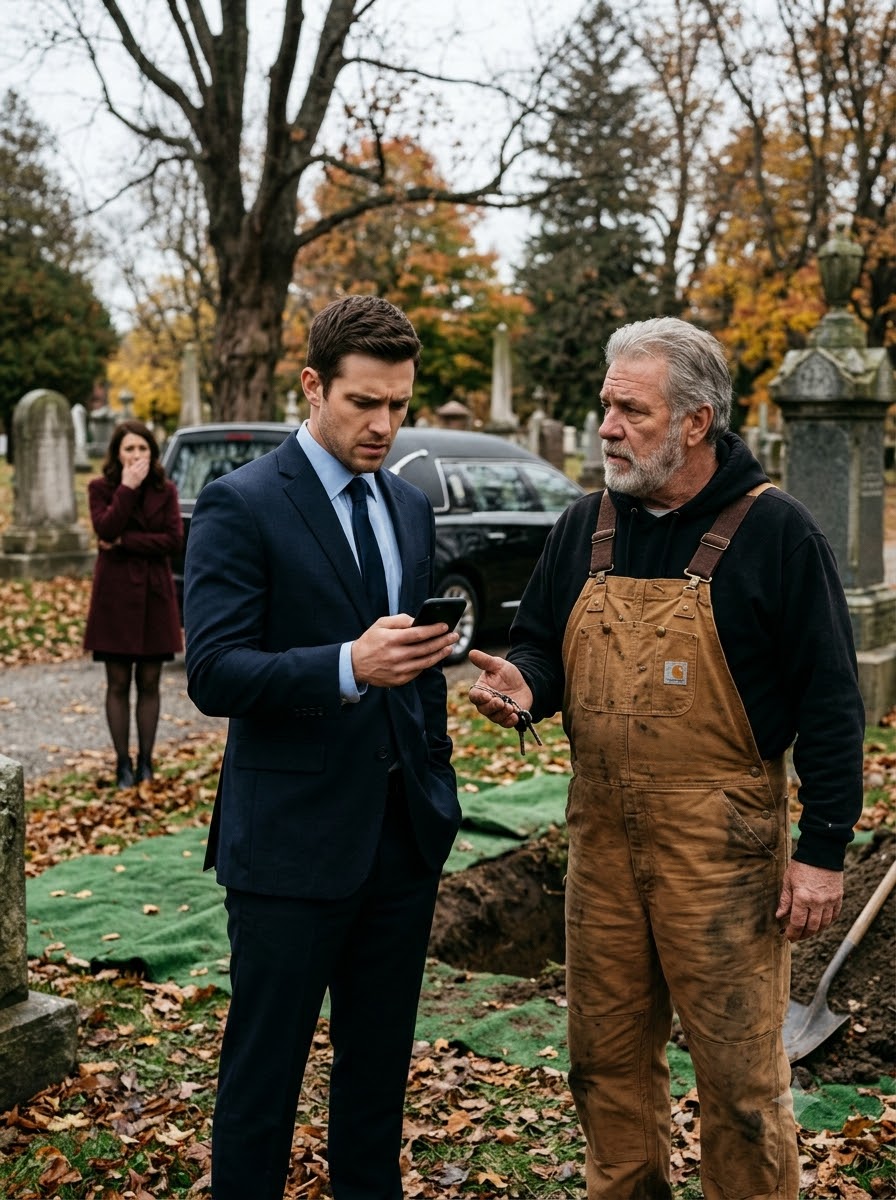
“I don’t know yet. The Bureau wants me in protective custody until the trial. After that… we’ll see. I never planned past the warrants.”
I looked at Celeste, who was helping Emma zip her coat. Marcus stood by the door with his backpack already on. They were ready to leave the last safe house. They were ready to go back to a life that would never quite be the same.
“Come home when you can,” I said. “We’ll figure out the rest.”
He was quiet for a long moment. “I will. Tell your mother I’m sorry I made her bury an empty box. Tell her I love her.”
“I will.”
The call ended. We drove back to New Jersey in the late afternoon light. The house looked the same from the outside. Inside, drawers had been left open and cushions had been moved, but nothing of value was missing. My mother met us at the door. She held me longer than she had in years. When she stepped back, her eyes were wet but steady.
“He called me,” she said. “Just before you arrived. He told me everything. I don’t know if I can forgive him for the way he did it. But I know why he did it.”
We stood together in the foyer while the children ran upstairs to their rooms. Celeste took my hand. Outside, the light was fading over the lawn where, only days earlier, we had stood beside a grave that held nothing.
My phone buzzed once more. A single message from an unknown number.
Unit 17 is empty now. The key is yours. When you’re ready, there are more files. Not about Voss. About the company your father built before any of this began. He wanted you to have them when the danger was gone. —R
I slipped the brass key into my pocket. The weight of it felt different now. Not a summons. Not a warning. Just a door that could wait until we were ready to open it again.
For the first time in days, the house was quiet. My mother made tea. Celeste sat with the children and listened to them talk about school and friends and ordinary things. I stood at the kitchen window and watched the last of the light leave the yard. Somewhere, my father was still moving, still alive, still carrying the weight of the choices he had made to keep us safe. The empty coffin had done its work. The rest, whatever it turned out to be, could wait until morning.
