

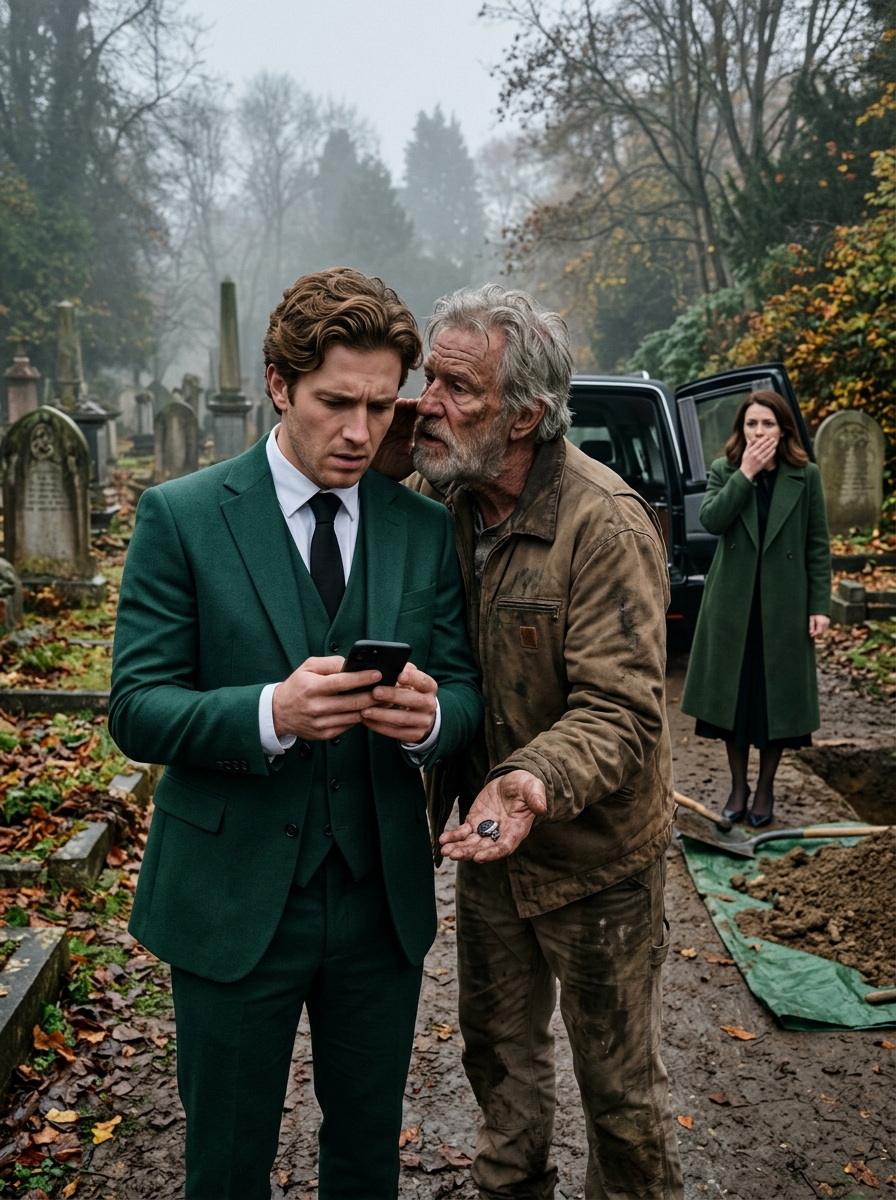
At my father’s graveside, the gravedigger grabbed my arm and whispered, “Sir, your father paid me to bury an empty coffin.” Before I could even reply, he slipped a brass key into my hand. “Don’t go home,” he warned.
PART 1
“No matter who calls, no matter what they say. Go to Unit 17 on Route 9. Right now.” Then my phone vibrated. A text from my mother appeared on the screen. Come home alone. My father had been buried less than five minutes earlier. Or so I thought.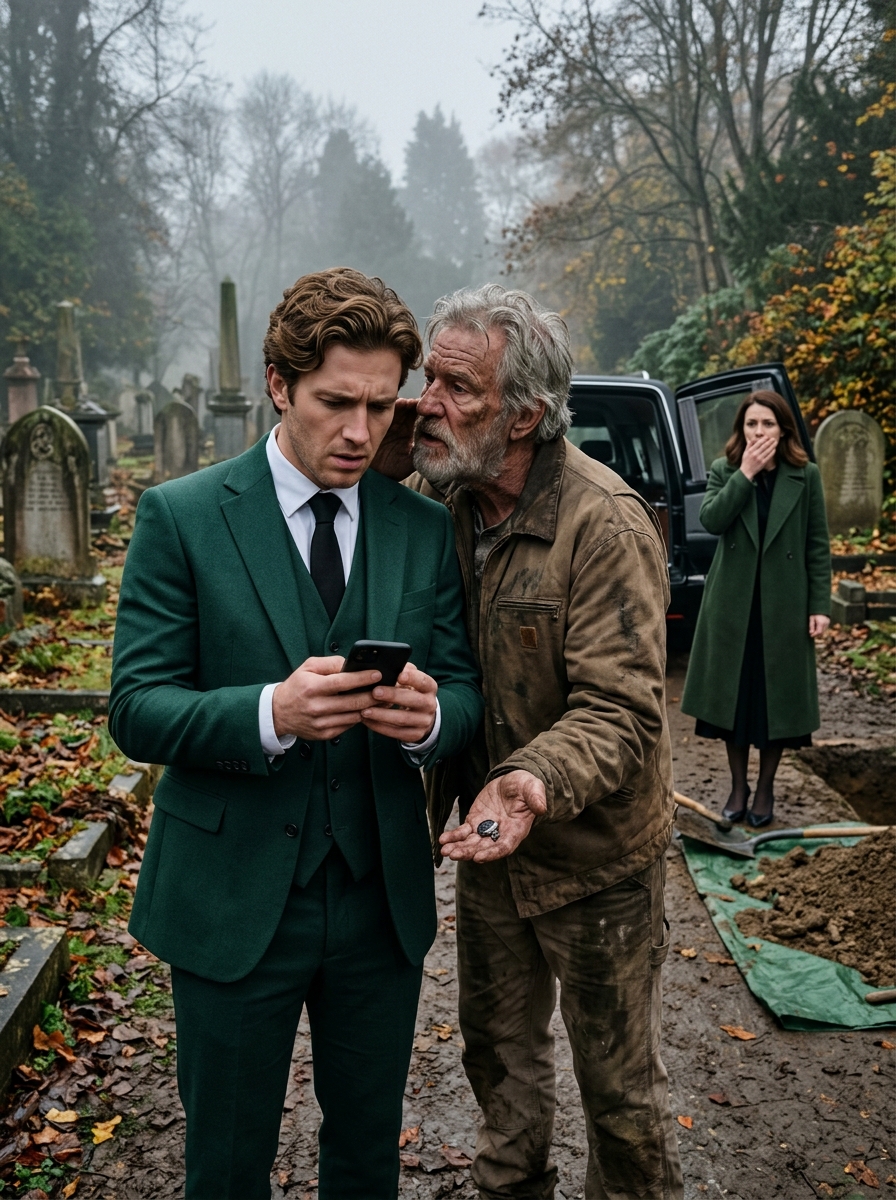
The final hymn still seemed to linger in the icy New Jersey air. Family members and neighbors drifted slowly across the cemetery lawn, speaking in hushed voices, promising meals, touching my shoulder, offering the kind of comfort people give when they know nothing can be made right.
My mother stood beside the black hearse with one hand covering her mouth.
My wife, Chloe, kept our two children near her.
And I stood there trying to be the son everyone expected me to be.
Strong.
Dependable.
Still standing.
My father, Gideon Vance, was sixty-six. They said he had suffered a heart attack in his study and passed away before paramedics arrived.
For three days, I had arranged flowers, signed paperwork, comforted my mother, and convinced myself that grief was the only thing taking place.
Then the gravedigger stopped me.
“Your father paid me,” he said.
I stared at him.
“Paid you for what?”
He glanced over his shoulder before stepping closer.
“To bury an empty coffin.”
For a moment, my mind refused to process the words.
“My father is dead,” I said. “I saw him.”
The man’s expression remained unchanged.
“You saw what he wanted you to see.”
I nearly stepped backward.
Some statements are so unbelievable that your mind rejects them before fear even has a chance to settle in.
Then he placed something cold into my hand.
A small brass key.
The number 17 was engraved on it.
“Don’t go home,” he repeated. “No matter who calls. No matter what they tell you. Go to Unit 17. Route 9 Storage. Your father left instructions.”
“My father died three days ago.”
That was when my phone vibrated.
I pulled it out without thinking.
The message was from my mother.
Come home alone.
Three words.
No period.
No “honey.”
No explanation.
My mother never texted like that. She wrote lengthy messages packed with commas and called me sweetheart even when she only needed me to grab milk.
Yet she was standing thirty yards away at her husband’s funeral, supposedly texting me as if I were a stranger.
The gravedigger noticed the screen.
The color drained from his face.
“Don’t,” he said. “Whatever you do, don’t go home yet.”
I looked at the grave.
Then at my mother.
Then at the key resting in my hand.
“What is happening?”
He reached into his coat and removed an old envelope.
My name was written across the front in my father’s handwriting.
Nathan.
“He gave me this twenty years ago,” the gravedigger said. “Told me I would know when to give it to you.”
Twenty years.
My father had set something in motion before I was even old enough to understand why anyone would need a plan like this.
Then the gravedigger turned and walked away between the headstones like a man who had finally fulfilled a promise he never wanted to keep.
I did not go home.
I sat in my car at the edge of the cemetery parking lot and opened the envelope with trembling hands.
Inside was a brief letter from my father.
No comfort.
No explanation.
Only one instruction.
Go to Unit 17. Trust the woman waiting there. Do not go home until you understand why.
By the time I arrived at Route 9 Storage, dusk had settled across the highway. The facility stood behind a chain-link fence, beyond a gas station, a shuttered diner, and a row of low warehouses with weathered signs.
A small American flag snapped sharply beside the office.
Security cameras monitored the gate.
And beneath the awning stood a woman in a dark coat, waiting as though she already recognized my vehicle.
Before I could ask who she was, she held up a badge.
Federal Bureau of Investigation.
My stomach dropped.
“Mr. Vance,” she said, “your father told us you would come alone.”
I looked at the key.
Then toward Unit 17.
The storage door stood only twenty feet away, yet suddenly the distance felt enormous.
“What’s inside?” I asked.
The agent’s expression hardened.
“Enough to explain why your father needed an empty coffin.”
Then my phone started ringing.
My mother again.
The agent glanced at the screen and then back at me.
“Do not answer that,” she said.
And behind her, inside Unit 17, something began to beep…
**PART 2**
My hands trembled so badly that I dropped the key twice, the metallic clang echoing unnaturally across the concrete floor.
The FBI agent remained motionless, one hand resting near her coat lapel, her eyes carefully scanning the dark facility’s perimeter.
When I finally shoved the key into the padlock, snapped it open, and rolled the heavy metal door upward, I stopped cold.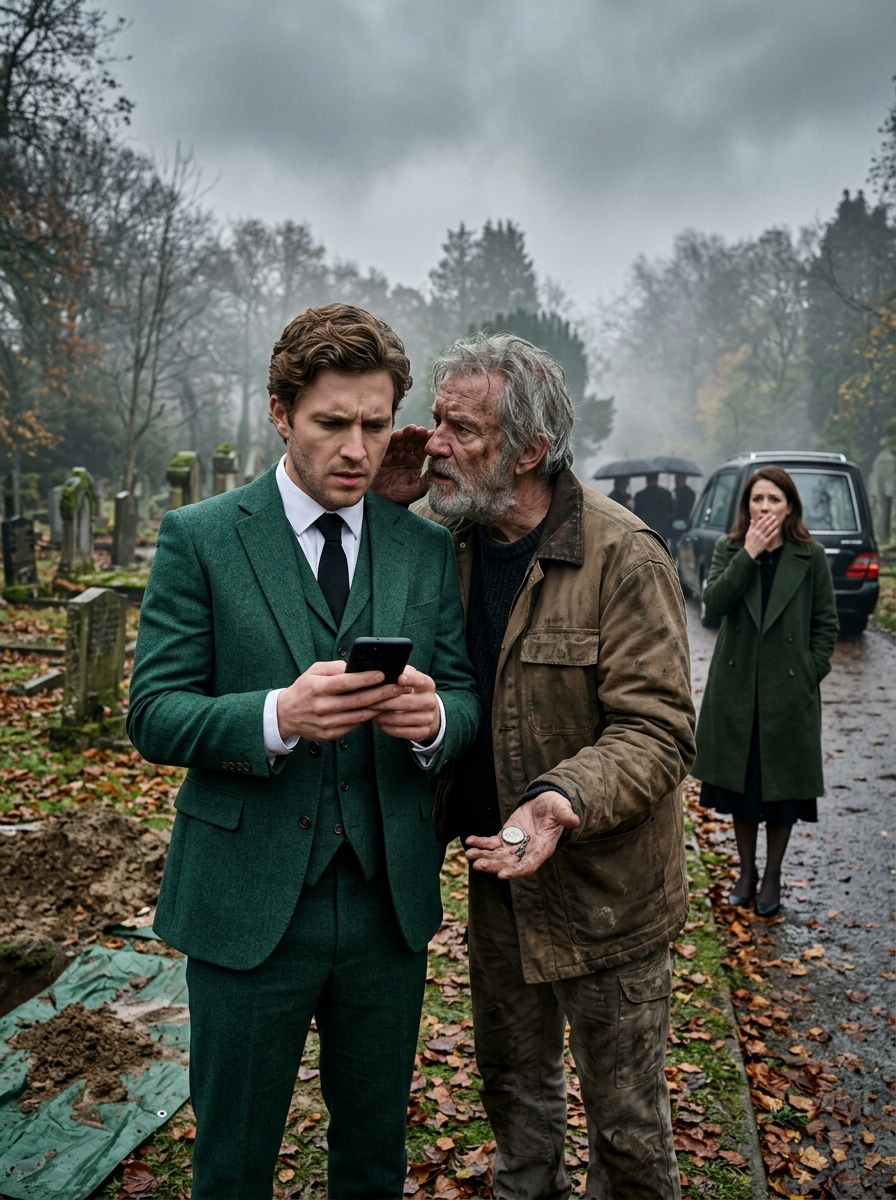
Inside, there was no furniture. No boxes filled with family keepsakes. No holiday decorations.
The concrete unit held only a folding chair, an LED camping lantern casting a harsh white light, three large water containers, a heavy steel legal file box, and one personal item that stole the air from my lungs.
It was my mother’s navy leather handbag. Its gold clasp reflected the lantern’s glow.
It was the exact handbag local police had told me was found inside my father’s study, resting on his desk beside his collapsed body.
An envelope had been taped to the strap. My name was written across the front in her neat, precise handwriting.
For Nathan. If you’re reading this, they lied to you first.
My chest tightened so sharply it felt as though my ribs might crack. They lied to you first. Who was “they”? My father? The police? My mother herself, who was supposedly waiting for me at home at that very moment?
The steady electronic beeping behind the file box grew louder and more urgent.
“Mr. Vance,” the agent whispered, her voice suddenly tense as she stepped into the unit beside me. “Grab the file box. We need to leave. Now.”
Before my hands could even reach the metal handles, the sharp crunch of tires over gravel exploded from the storage facility entrance. Bright high beams sliced through the deepening dusk, blinding us as a dark SUV sped down the narrow lane and skidded to a stop directly behind my vehicle.
Its engine roared, cutting off our only escape route.
**PART 3**
The blinding headlights flooded Unit 17, throwing long, frantic shadows across the concrete walls.
The FBI agent reacted instantly. She drew her weapon and stepped in front of me, shielding the open storage unit.
“Federal agent! Turn off the engine and step out of the vehicle with your hands visible!” she shouted.
The SUV doors burst open. Two men emerged, but they weren’t dressed like federal agents, and they definitely weren’t local police officers. They wore matching tactical jackets, their faces hidden beneath low-profile caps. One of them raised a compact suppressed handgun.
Thwip. Thwip.
Two muffled shots shattered the silence. The brick wall beside my head exploded into a cloud of red dust.
“Down!” the agent yelled, firing two thunderous rounds back toward the SUV.
I dove into the storage unit, my shoulder smashing into the concrete floor as I grabbed my mother’s navy handbag and hauled the heavy steel file box into my arms. The electronic beeping inside the box had accelerated now, a frantic rhythm that turned my blood cold.
The agent backed into the unit, weapon still raised, then grabbed the rolling door handle and yanked it downward with a piercing screech. She slammed the latch shut just as a barrage of bullets hammered the outside of the metal door like deadly hail.
“We have about thirty seconds before they pry that door open with a crowbar,” she panted, sweat glistening on her face in the lantern light. Her eyes dropped to the steel box in my arms. “The beeping. It’s a proximity tracker. Your phone triggered a geofence the moment you arrived. They knew you didn’t go home.”
My phone vibrated violently inside my pocket. I pulled it out with shaking hands.
Another text from my mother.
I stared at the screen, my thoughts spiraling. The agent was telling me to run, yet my mother’s message insisted the agent was the danger.
“Mr. Vance, listen to me,” the agent said, lifting the LED lantern and aiming it toward the back wall of the unit. The light revealed a small square maintenance hatch cut into the drywall, secured with a simple latch. “Your father didn’t build this place to store documents. He built it as an escape route. It leads directly to the drainage ditch behind the highway. We leave now, or we die in this box.”
Heavy metal scraped against the outside of the rolling door.
They were forcing it open.
I had no time left to think.
I slung my mother’s handbag over my shoulder, clutched the heavy file box against my chest, and crawled through the narrow maintenance hatch behind the agent.
We tumbled into the freezing, muddy drainage ditch just as a loud boom echoed from inside Unit 17—the sound of the front door being breached.
**FINAL PART**
We sprinted through the dense woods bordering Route 9, thorns tearing through my funeral suit, until we reached an ordinary-looking sedan parked half a mile down the highway. The agent threw open the doors, shoved me into the passenger seat, and slammed her foot on the accelerator, launching us into the dark New Jersey night.
Only after the highway lights blurred past in a steady stream did she finally speak.
“My name is Agent Miller,” she said, watching the rearview mirror. “Twenty years ago, your father, Gideon Vance, uncovered a massive asset-laundering operation inside the corporate firm he managed. The people behind it weren’t simply criminals; they were ghosts buried deep within local government, the police department, and yes, even certain rogue factions of federal intelligence.”
“And my mother?” I choked out, gripping the file box. “She’s at home. She texted me.”
“That isn’t your mother texting you, Nathan,” Agent Miller replied quietly, her voice carrying grim certainty. “Your mother has been inside a secure federal protection facility in Vermont for the last forty-eight hours. Your father staged his heart attack—and her disappearance—because the syndicates learned he was preparing to hand over physical evidence to the legitimate side of the Bureau.”
My shaking fingers tore open the envelope attached to my mother’s handbag. Inside was a letter written in her handwriting:
Nathan, if you are reading this, they lied to you first. They told you your father died of a heart attack to keep you compliant and quiet. The people monitoring our house are waiting for you to return so they can eliminate the last of the Vance bloodline. Trust Agent Miller. She is the only one who knows where we are truly hidden. Come to us.
At last, the impossible pieces locked together.
The empty coffin.
The cold text messages without affection.
The armed men at the storage facility.
My father hadn’t died.
He had orchestrated a flawless disappearance to save our lives.
“Open the box, Nathan,” Miller said.
I used the small brass key the gravedigger had given me and inserted it into the steel lock. It turned with a clean click. Inside were thick ledgers, encrypted flash drives, and original corporate documents detailing a multibillion-dollar shadow network. But resting on top was a smaller handwritten note in my father’s unmistakable script.
Nathan, I’m sorry I had to make you mourn me, even for a few days. It was the only way to make the funeral look real enough to fool them. You have the truth in your hands now. Deliver it to Miller, and then come join us. The gravedigger has your coordinates. — Dad
I stared down at the documents as the tracker finally went silent after Agent Miller activated a signal jammer. The chaotic, terrifying reality I had lived through for three days suddenly became clear.
I was no longer a grieving son attending a tragic funeral.
I was the final piece of my father’s twenty-year plan.
“Where are we going?” I asked, my voice steady as I closed the box.
Agent Miller offered a faint smile and turned the sedan north toward the interstate, away from New Jersey’s shadows and toward Vermont’s quiet hills.
“To see your parents, Mr. Vance,” she said. “Let’s go finish what your father started.”
