

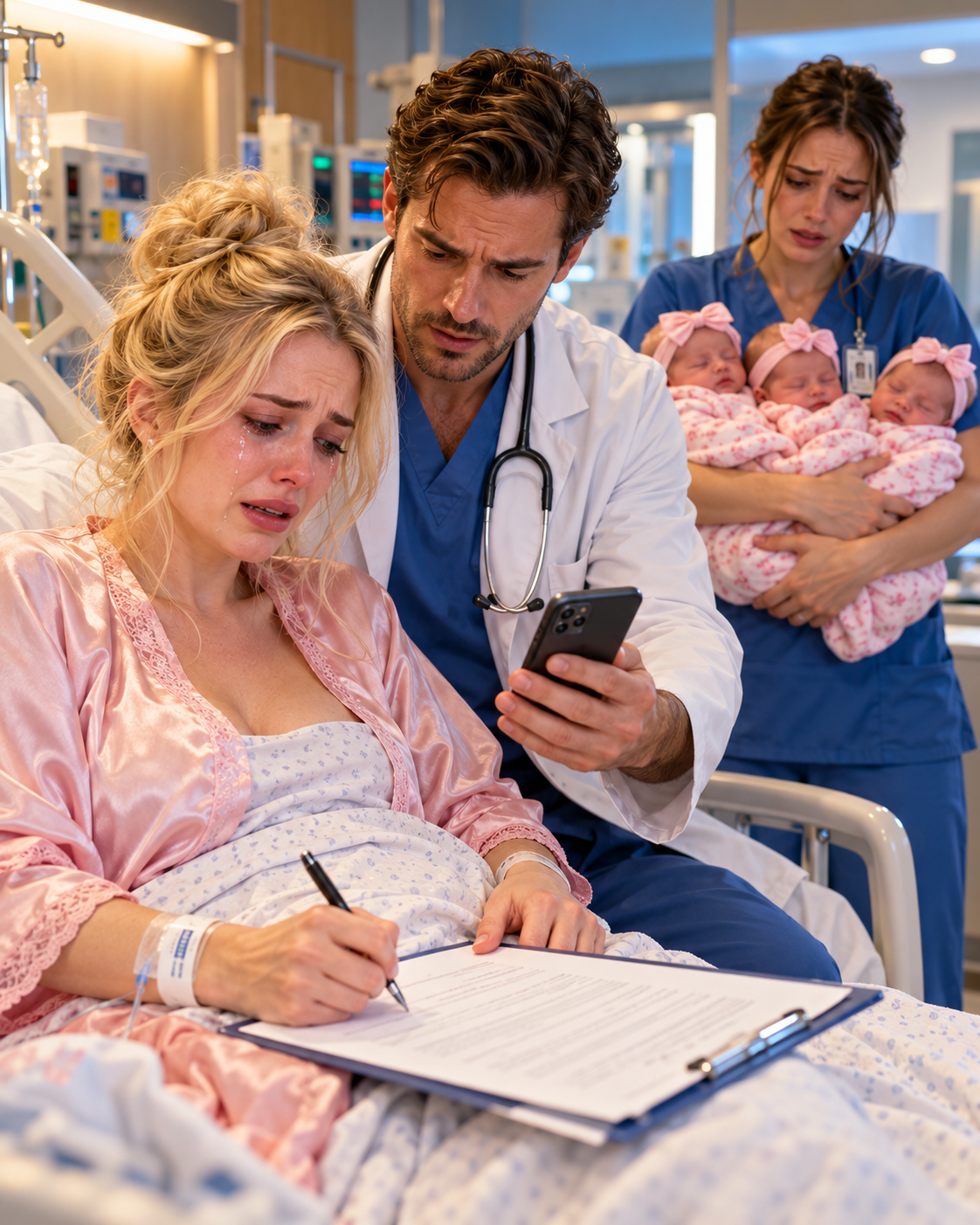
PART 2
The drive home took twenty-three minutes. The house looked exactly as he had left it: porch light on, mail stacked inside the screen door, the stroller still folded in the garage because Emily had insisted they wait until after the shower. He unlocked the front door. The air inside was cool and unused. No diaper bags. No hospital discharge papers on the kitchen counter. No tiny hats drying on the rack by the sink.
On the dining-room table sat a single envelope, his name written in Emily’s handwriting. He opened it standing up.
*Mark,*
*The babies are Grace, Lily, and Hope. Grace and Lily are breathing on their own. Hope is still on a ventilator. The doctors say her lungs are immature but she is fighting. I signed the papers alone because you were not there. I do not know where you were. I stopped asking the nurses to call you after the third day.*
*I am staying with my mother. Do not come to the house. If you want updates on the girls, call the NICU at Saint Jude’s and give them your name. They will tell you only what the privacy rules allow. I have already spoken to a lawyer. The papers will be served when the babies are stable enough to leave the hospital.*
*I folded their clothes alone. I chose their names alone. I signed the consent form alone. I listened for their cries alone. You do not get to arrive now and decide how any of this feels.*
*Emily*
He read it twice. The second time his hands shook hard enough that the paper tore at the crease. He sat down on the floor beside the table because his legs would not hold him. The house made small settling noises. Somewhere outside a neighbor started a lawnmower. Ordinary sounds. He stayed on the floor until the light outside turned blue.
At 7:14 p.m. he drove to Saint Jude’s. The NICU waiting room smelled of hand sanitizer and cold coffee. A volunteer at the desk asked for his identification and the babies’ names. When he said “Carter triplets,” she checked a list, then looked at him over her glasses.
“You’re listed as the father,” she said. “You may see them for fifteen minutes. No one else is here right now. Gown, mask, gloves. The nurse will walk you in.”
He scrubbed his hands until the skin stung. The unit was dim, filled with the low mechanical breathing of ventilators and the soft beeping of monitors. Three isolettes stood in a row. Grace was the largest, eyes closed, one tiny fist near her mouth. Lily’s skin looked thinner; a nasal cannula rested under her nose. Hope’s isolette was surrounded by more equipment. A tube ran from her mouth to a machine that rose and fell with a steady, artificial rhythm.
A nurse named Keisha stood beside him. “They’re doing better than we expected,” she said. “Hope came off the highest settings this afternoon. She still has a long road, but she’s stubborn.”
Mark put his gloved hand against the plastic of Hope’s isolette. He could not feel her through it. He watched the rise and fall of her chest and tried to remember the last thing he had said to Emily before he left the hospital. *One quick call.* He had not even made the call. He had walked straight to the parking garage, driven to the club, and met Madison in the private dining room she had reserved under her own name.
“Can I… hold any of them?” he asked.
Keisha shook her head. “Not tonight. Grace and Lily can come out tomorrow if their sats stay up. Hope will be a while. You can sit. Talk to them if you want. They know voices.”
He sat. He did not know what to say. After a minute he said, “I’m sorry,” to the plastic and the machines and the three small bodies. The words felt useless. He said them anyway.
Outside, in the parking lot, he called Madison. She answered on the second ring, voice bright.
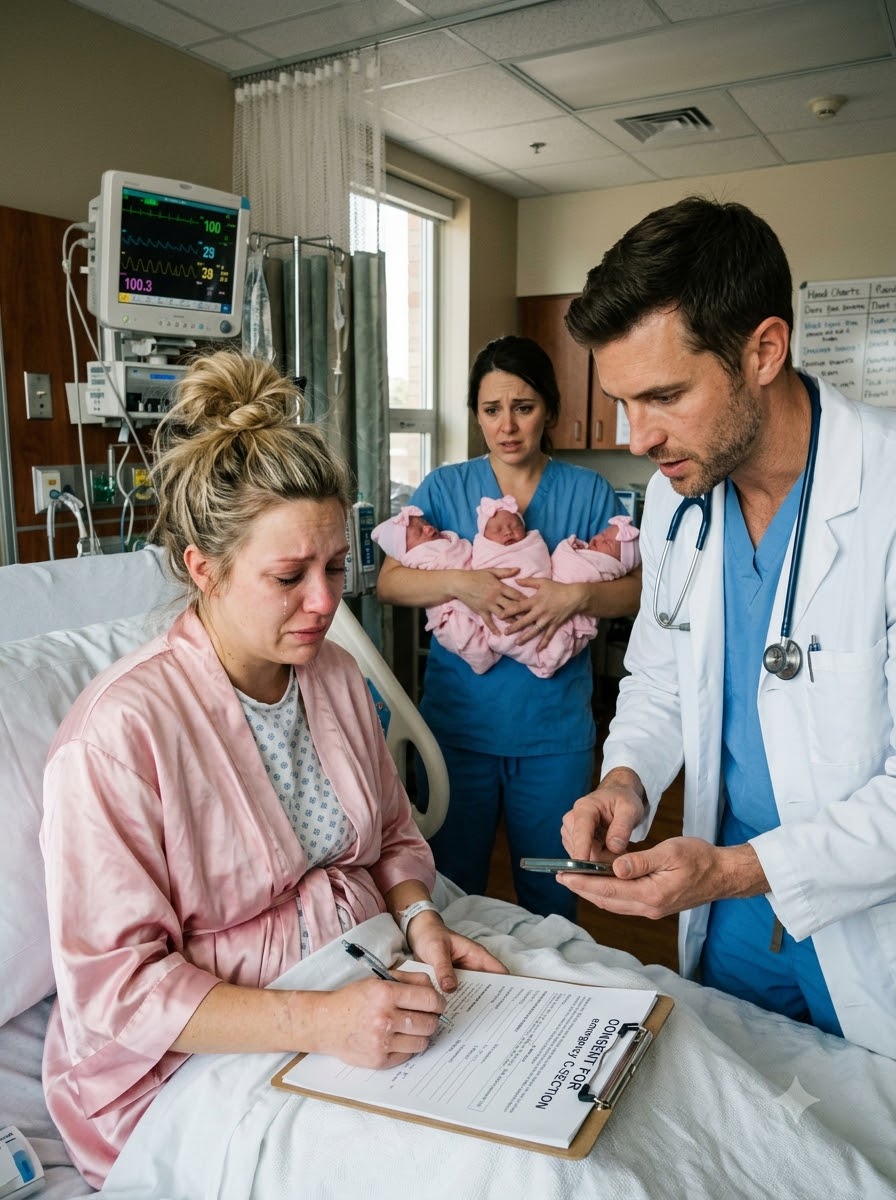
“Hey, stranger. I was starting to think you—”
“I can’t see you again,” he said.
A pause. “Okay. What’s going on?”
“Emily had the babies. Four days ago. I wasn’t there. One of them is still on a ventilator. She’s leaving me.”
Madison was quiet for a long moment. When she spoke again her tone had cooled. “I’m sorry that happened. But Mark, you turned your phone off. You chose to be there. I didn’t make you stay.”
“I know.”
“Then don’t call me looking for someone to tell you it wasn’t your fault. I liked you. I still do. But I’m not going to stand in the middle of whatever this is. Take care of your kids.”
She hung up. He sat in the car with the phone in his lap until the battery warning appeared.
The next morning he went back to the NICU at the start of visiting hours. Emily was already there. She sat in the rocking chair between Grace and Lily, a hospital gown over her clothes, hair pulled back, face pale and drawn. When she saw him she did not stand. She did not raise her voice. She simply looked at him the way she had looked at the empty chair four days earlier.
“You got the letter,” she said.
“Yes.”
“Then you know the rules. Fifteen minutes. No arguing in front of them. No promises you won’t keep. If you want to be in their lives, you will go through the lawyers. If you don’t, you can leave now and I will not come after you for anything except what the court requires.”
He stayed the full fifteen minutes. He watched her change Lily’s diaper with careful, exhausted hands. He listened while she told Grace, in a soft voice, that the sun was out and that her grandmother had bought yellow socks. When the nurse signaled that time was up, Emily kissed each baby’s forehead through the plastic and walked out without looking back at him.
He followed her as far as the elevator. “Emily.”
She pressed the button. “Don’t.”
“I need to know why you didn’t wait.”
The doors opened. She stepped inside and held them. “Because you weren’t coming. Because I already knew, somewhere under the drugs and the fear, that you had chosen something else. Because the girls needed a mother who could sign papers and make decisions and stay awake even when no one was holding her hand. I waited three days for you to turn your phone back on. That was longer than they could wait.”
The doors closed. He watched the numbers descend.
Over the next six weeks the pattern held. He came every day at the same hour. Emily came at different hours so their visits rarely overlapped. When they did, she spoke only about the babies. Grace came off oxygen first. Lily followed three days later. Hope’s tube was removed on a Tuesday afternoon; Mark was in the room when it happened. He heard her first real cry—thin, furious, alive—and felt something in his chest crack open. Emily stood on the other side of the isolette. For a moment their eyes met. She nodded once, as if acknowledging that he had been present for this single thing, then looked away.
The discharge papers listed both parents. Emily’s lawyer had already filed the temporary custody agreement: primary physical custody with Emily, supervised visitation for Mark until a full evaluation could be completed. He signed without argument. On the day the girls left the hospital, three car seats waited in Emily’s mother’s minivan. Mark stood on the curb with a diaper bag he had bought that morning. Emily took it from him, checked the contents, and handed it to her mother.
“Thank you,” she said. It was the first time she had thanked him for anything since the letter.
He watched the van pull away. The parking lot filled with ordinary afternoon light. He drove back to the empty house, sat at the dining-room table, and opened the folder the lawyer had sent. Inside were the dates for mediation, the list of documents he needed to provide, and a single photograph Emily had included: the three girls in their isolettes, side by side, monitors glowing. On the back she had written their full names and birth weights in careful print.
He placed the photograph on the refrigerator with a magnet shaped like a stork that someone from his office had given them months earlier. Then he called the NICU one last time, not because he needed information, but because he wanted to hear a stranger say the names out loud.
“Grace, Lily, and Hope Carter,” the nurse said. “All discharged today. Congratulations.”
“Thank you,” he answered, and hung up.
That night he walked through the rooms he and Emily had painted together. The nursery still held the crib they had assembled on a Sunday, the mobile still wrapped in plastic, the stack of onesies Emily had washed and folded alone. He sat on the floor beside the crib and stayed there until the streetlights came on. Somewhere across the city three small bodies were sleeping in a house that did not contain him. He had chosen a cake and a closed phone and a woman who had already told him she would not stand in the middle. The choice had been quiet. The consequence was not.
In the weeks that followed he learned the new shape of his days: work, then the drive to Emily’s mother’s neighborhood, then forty-five supervised minutes on the living-room floor while a social worker took notes. Grace learned to track his face. Lily gripped his finger hard enough to leave marks. Hope still needed oxygen at night; the soft hiss of the concentrator filled the room. Emily stayed in the kitchen or on the porch. She answered his questions about feeding schedules and pediatric appointments with short, factual sentences. She did not ask where he had been. She already knew.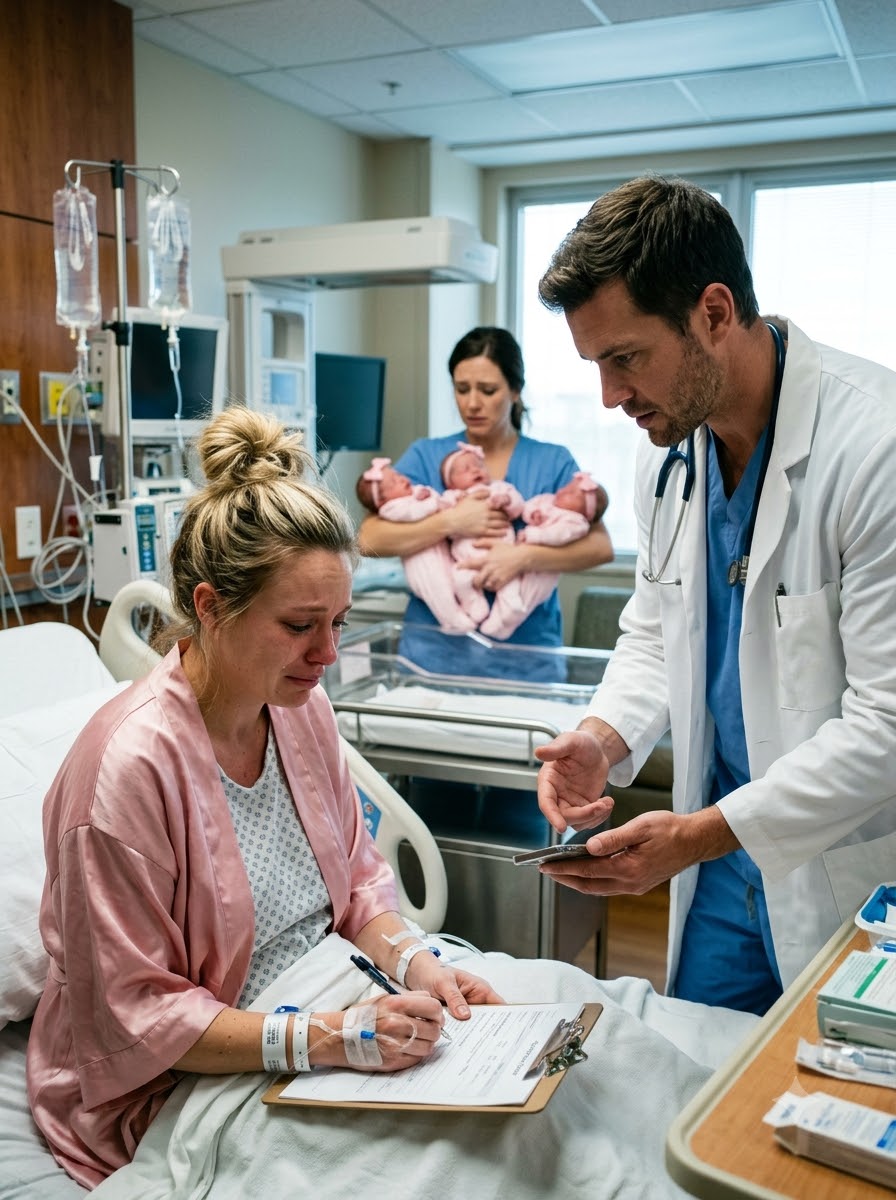
On the evening the temporary order became permanent, he drove home past the country club where the private dining room still existed, where the cake had been cut, where his phone had gone dark. He did not stop. At the house he stood in the nursery doorway and looked at the empty crib. He understood, finally and without drama, that the life he had expected to walk back into had ended on an ordinary afternoon when he chose not to answer. The girls would grow. He would be allowed to watch from a measured distance. Emily would build a life that did not require his presence to function. And the sentence the nurse had spoken in the hospital corridor—quiet, almost gentle—would remain the last true thing anyone said to him before the old world closed: *Isn’t she home?*
She was not. Neither were the babies. And the silence that followed was the one he had created when he turned the phone off and smiled.
