

PART 1
“YOUR FATHER DIED A YEAR AGO, FINNLEY, AND THIS HOUSE ISN’T YOURS ANYMORE,” REAGAN SAID WITHOUT EVEN LOOKING AT ME. “SO DON’T MAKE A SCENE AND JUST GET OUT.”
I had just been released from Oakwood Prison after spending three years behind bars for a robbery I never committed. My hands shook as I gripped the straps of an old backpack, and the clothes I wore had been borrowed from someone else. Finally, I was standing outside the house where I had grown up.
For 1,095 nights, I had pictured my father opening that door. In every version, he was sitting in his worn leather chair, looking at me and saying, “Hang in there, son. The truth always finds a way out.”
I needed to believe Camden Dennis was still alive.
But the moment I stepped into the Silver Lake neighborhood, nothing felt the same.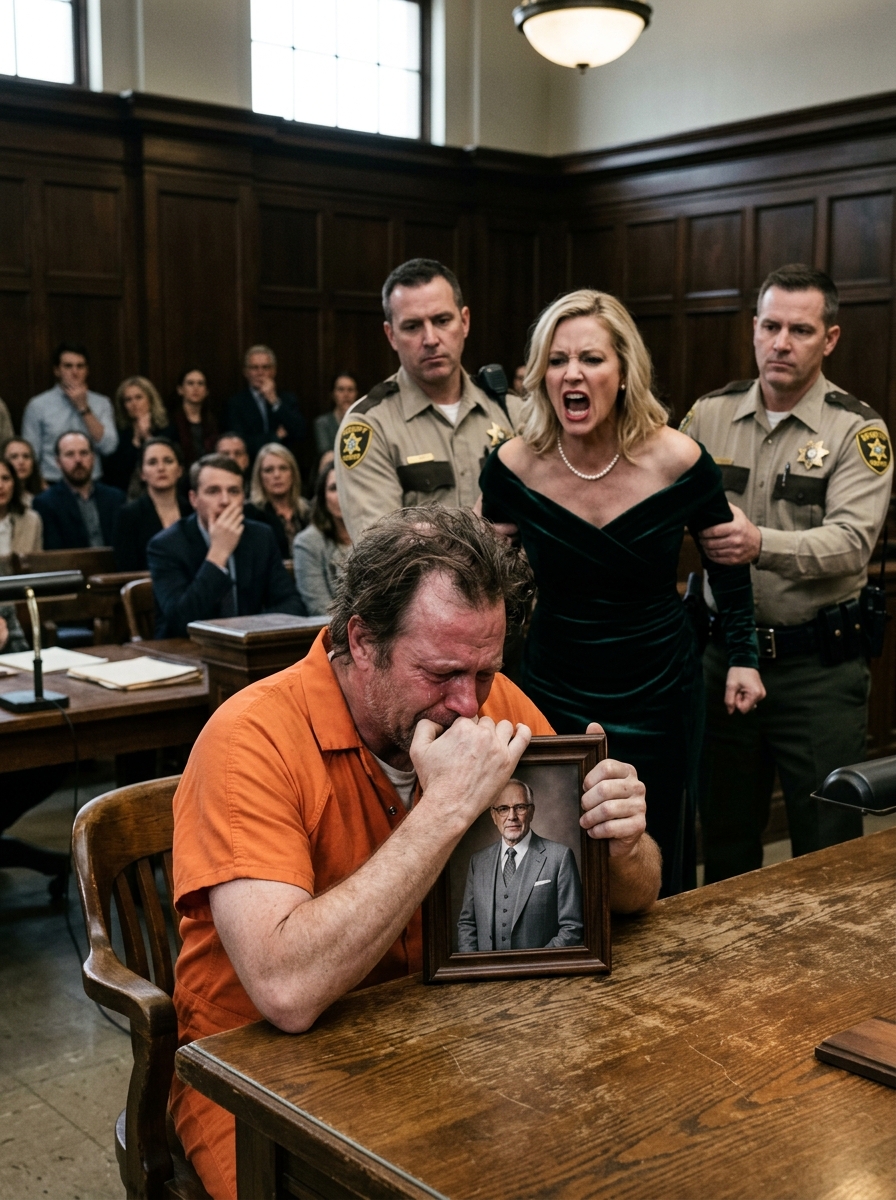
The house had been painted an expensive shade of gray, and my father’s treasured rose bushes had been removed. A large white luxury SUV and a shiny red car filled the driveway. Even the entrance was different. The old door had been replaced with a sleek black one equipped with a digital lock.
The home was still recognizable, but every sign of comfort and love had vanished.
I slammed my fist against the door.
Not like a stranger.
Like a son returning home.
Reagan opened the door wearing a green dress and pearl earrings. My stepmother looked at me as if I were dirt left behind on her newly polished floors.
“You got out earlier than I expected,” she said coldly.
“Where is my dad?” I asked.
She let out a slow breath.
“He died a year ago, Finnley. Cancer. It was fast and painful. It’s over now.”
The world seemed to shift beneath my feet.
“And nobody told me? Nobody asked the prison to let me see him?”
A small, cruel smile appeared on Reagan’s face.
“Finnley, you went to jail for stealing from your own father’s business. Do you really think he wanted you showing up and ruining his funeral?”
“I didn’t steal anything from him.”
“That’s what you kept saying at the trial, but nobody believed you.”
I tried looking beyond her into the hallway.
Every family photograph had disappeared. My mother’s portrait was gone. So was Dad’s old hat. The rooms were filled with expensive new furniture and the artificial smell of cheap air freshener.
“Let me in,” I begged. “I just want to see his room.”
“His room is gone, Finnley. I remodeled the whole thing.”
At that moment, Carter appeared at the top of the stairs and slowly walked down.
My stepbrother had spent years drowning in gambling debts, yet he smiled like he had been waiting his entire life for this exact moment.
“Well, look who it is,” Carter sneered. “The convict came back looking for his money.” I tried to step forward, but Reagan immediately moved in front of the doorway.
“If you ever step foot on this property again, I’m calling the police,” she warned. “With your record, you don’t want to mess around.”
The door shut hard in my face, followed by the unmistakable sound of the lock turning.
I did not yell.
I did not plead.
I turned around and walked all the way to Pinecrest Cemetery.
Dad had always told me he wanted to be buried beside my mother. I needed to see his name engraved on the stone before I could accept that he was truly gone.
Near a group of tall trees, an elderly gardener stopped me.
“Who are you looking for, young man?” he asked.
“Camden Dennis,” I answered. “His wife told me he’s buried here.”
The old man looked at me with sadness in his eyes.
“You’re Finnley, aren’t you?”
A chill moved through me.
“How do you know my name?”
The gardener glanced toward the cemetery entrance before speaking quietly.
“Because your dad asked me to give you this if you ever came looking for him.”
He reached into his jacket and pulled out a yellow envelope.
Inside was a letter and a small key marked with the words STORAGE UNIT 108.
“But where is my dad buried?” I asked.
The gardener swallowed.
“Not here, son. And if you want to know the truth, don’t go back to that woman yet.”
I opened the letter right away.
The first sentence said: Son, if you are reading this, it means Reagan has already started lying to you.
That was the moment I realized my father’s death was not the end of the nightmare.
It was the start of something much worse.
PART 2
My father’s letter was written in his familiar, heavy block handwriting. Reading it felt like hearing his voice speak to me from beyond the grave.
Son, I am so sorry I never came to visit you, the letter said. It wasn’t because I thought you were guilty. It was because by the time I finally realized what they did to you, I was already very sick and they were watching my every move.
I stopped.
The word “watching” felt heavy in my chest.
Reagan didn’t want me talking to you, and Carter kept me isolated, the letter continued. For months, they made me believe you stole money from our construction company. They showed me documents, but everything was fake.
A painful mix of anger and heartbreak rose inside me.
At first, my father had actually believed their lies.
I forced myself to keep reading.
I eventually found duplicate invoices, strange bank transfers, and papers signed on days when I was completely unconscious from chemotherapy. I found bank accounts in Carter’s name, and I found your work password written down in Reagan’s notebook.
The letter shook in my hands.
I placed all the evidence in storage unit 108 in Phoenix. Do not confront Reagan until you see it first. Do not trust anyone in that house.
The final words said: They made you take the blame for something you didn’t do. I love you, son. Dad.
Thomas, the gardener, gave me enough money for a bus ticket to the industrial district.
“Your dad used to come to the cemetery when he was very sick,” Thomas told me softly. “He said you needed to leave prison with the truth in your hands.” The storage facility was located among warehouses, garages, and auto repair shops in a rough area of the city.
The key unlocked unit 108 effortlessly.
When I lifted the metal door, a cloud of dust rushed toward me.
There was no furniture or abandoned household clutter inside.
The place looked more like a private evidence room.
White containers and folders were organized in rows, each one labeled with words like BANK STATEMENTS, FORGERY, CARTER, and REAGAN.
On a small table in the corner was a black USB drive placed beneath a note that said: Watch this first.
I took out the cheap phone I had received after my release. The screen was cracked, but the video still played.
My father appeared.
He looked painfully thin. His skin had a yellowish tone, and his eyes appeared exhausted. He sat inside his old workshop with his tools surrounding him and a picture of my mother behind his shoulder.
“Finnley,” he said, his voice trembling. “If you’re watching this, it means you’re free. Forgive me for not being there to give you a hug.”
I covered my mouth to stop myself from crying out.
“You didn’t take a single dime,” my dad said in the recording. “Carter was the one stealing from the company. He used fake suppliers to move money into hidden accounts. When the audit started, Reagan gave him your passwords and placed the fake files on your computer. Carter entered your apartment with a spare key. I found it in his bag.”
Everything I believed collapsed in that moment.
“They also forged my signature to withdraw cash and change my will while I was heavily medicated,” my dad continued, struggling for breath. “There are medical reports, emails, and receipts here. I didn’t go to the police because I didn’t know who I could trust. Reagan said she was protecting me, but she was only keeping me trapped.”
He stopped for a moment to breathe.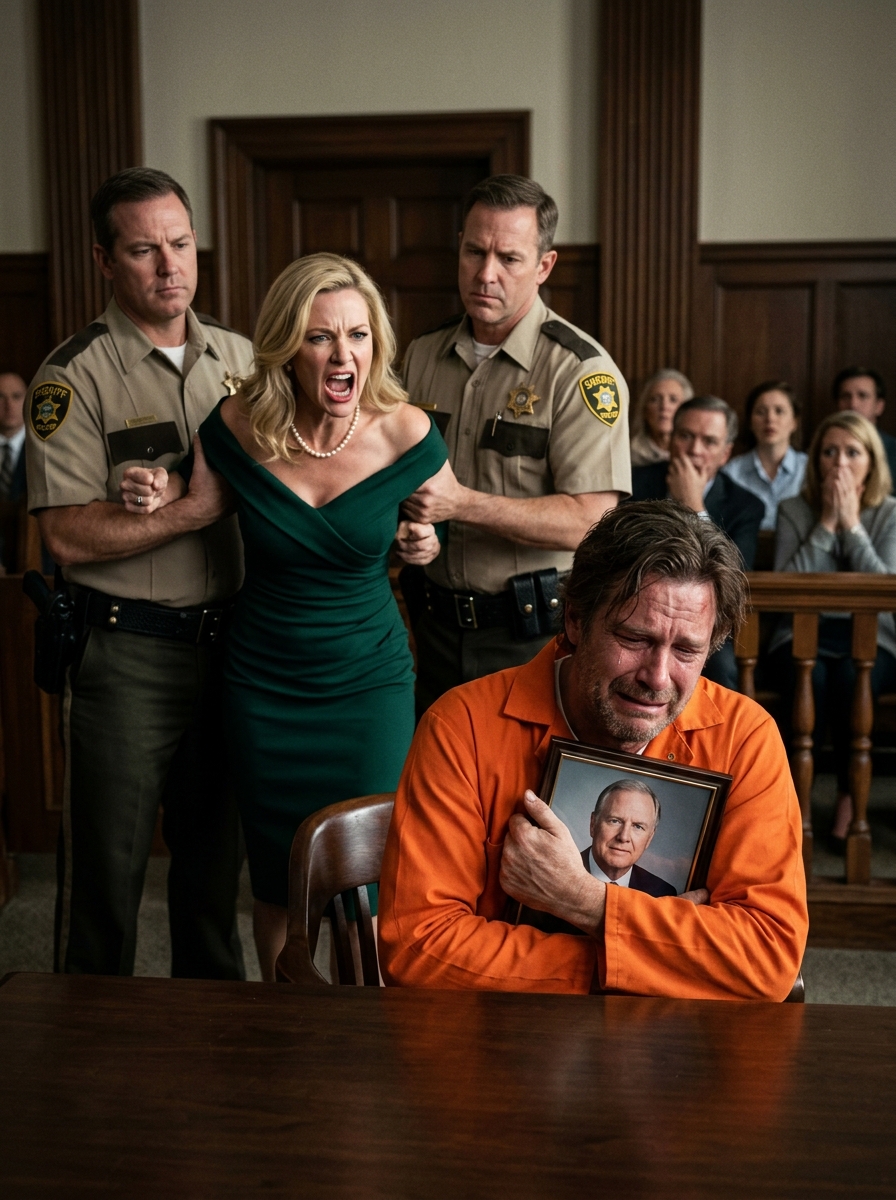
“And there is one more thing, Finnley. If she told you I’m buried next to your mother, she’s lying. Don’t let her decide where my story ends.”
The screen turned black.
I stayed inside the unit for hours, opening boxes and going through every piece of evidence.
There were transfers involving millions of dollars, conversations between Carter and a dishonest accountant, and pictures showing that someone had accessed my computer while I was away working at construction sites.
Eventually, I found a red folder labeled THE CONFESSION.
Inside was a signed statement from Carter admitting that he had used my login information to steal the money.
Below his signature, Dad had written: They took your freedom, Finnley. Don’t let them keep the truth.
At the bottom of the folder was a copy of the funeral home records.
When I saw the address, my breathing stopped.
Reagan and Carter had not only framed me for theft.
They had hidden my father’s body.
The address made one thing impossible to ignore.
Reagan had shown him no compassion, even after he was gone.
PART 3
I did not go back to Reagan’s house that night.
Three years earlier, I probably would have forced my way inside and screamed until the police came.
But that was exactly the reaction she wanted.
She wanted a reason to call me dangerous and prove that prison had not changed me. So I forced myself to stay calm.
I tucked the USB drive inside my sock, placed the most important documents into my backpack, and spent the night sleeping on the cold concrete floor of the storage unit.
The next morning, I went to a free legal clinic that helped people who had previously been incarcerated. That was where I met Nora.
She did not smile often, but she understood the law better than anyone I had ever met. As she examined the documents, her expression gradually shifted.
Two hours later, she took off her glasses and looked straight at me.
“Finnley, this isn’t just an appeal,” Nora said. “This is a massive setup. We are talking about fraud, identity theft, forgery, and hiding a body. If we do this right, we can clear your name, but they are going to fight dirty.”
“They already ruined my life once,” I told her. “I’m not running away this time.”
Nora nodded and shut the file.
“Alright. Let’s get to work.”
Eleven days later, the legal notices were delivered.
The judge immediately froze Carter’s accounts, requested records from his shell companies, and ordered an emergency review of my conviction.
That afternoon, Reagan called.
“Finnley, honey,” she said in a fake sweet voice that made my stomach turn. “I just got some crazy legal papers. I don’t know what people are telling you, but we should talk about this as a family.”
“Family members don’t frame innocent people and send them to prison, Reagan,” I replied.
Silence filled the line for a moment.
Then the sweetness disappeared.
“You don’t know who you’re messing with,” she whispered angrily. “You’re just a convict. Do you really think a judge is going to believe you?”
I looked at the USB drive sitting on the table.
“You don’t have to believe me, Reagan. You just have to listen to my dad.”
Then I ended the call.
The legal battle lasted eight months.
Carter was the first to break.
When prosecutors presented the financial records, messages, and his signed confession, sweat covered his face.
At first, he blamed his mother.
But the evidence proved that he had used the stolen money to pay gambling debts and purchase an expensive apartment in Denver.
Once he realized how much time he could face, he turned against Reagan.
In court, Carter admitted everything.
He confessed that Reagan had stolen my passwords and given him the spare key to my apartment. He revealed that she stopped Dad from contacting me by convincing him that I hated him. He also admitted that after Dad began questioning things, Reagan took away his phone and convinced the doctors that his concerns were simply confusion caused by medication.
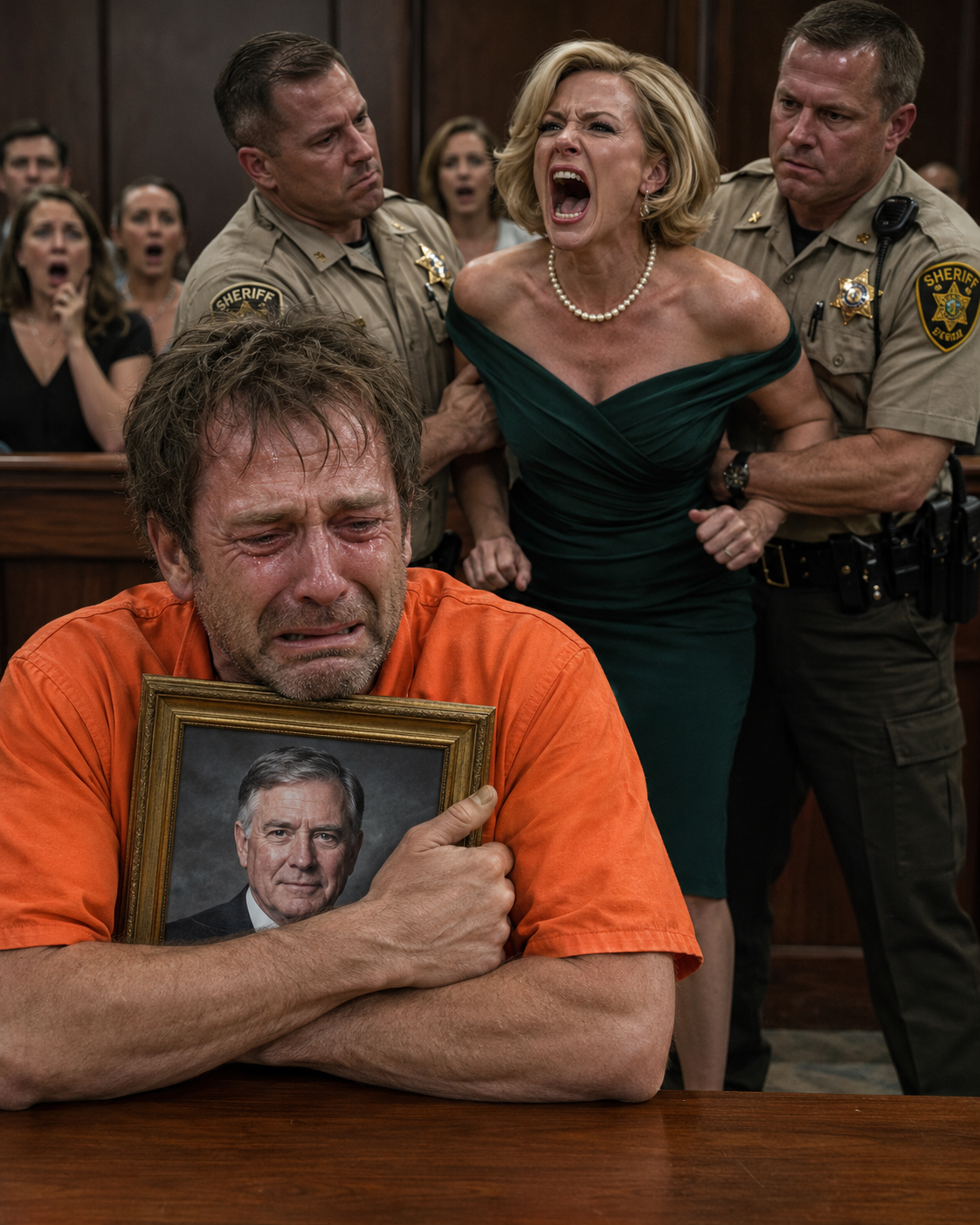
At the final hearing, Reagan arrived dressed completely in white, holding a rosary and shedding dramatic tears.
She spoke about how much she loved our family.
Then Nora played my father’s recording.
The courtroom became silent as his thin face appeared on the screen.
His voice was weak but steady as he explained how he discovered the fraudulent accounts, how he regretted doubting me, and how he realized Reagan had intentionally kept him isolated.
I refused to cry.
I pressed my lips together until I could barely hold myself together.
But when he said, “I love you, son,” something inside me finally shattered.
The judge overturned my conviction immediately.
My record was completely cleared.
But a court order cannot return three stolen years.
It cannot erase sleepless nights, the fear of prison, or the humiliation of seeing people look away when they recognize you.
It could not give me back another Christmas with my father. Even so, when I walked out of the courthouse, I was able to breathe freely for the first time in years.
Reagan and Carter were charged with conspiracy, fraud, and forgery.
Carter accepted a lighter sentence in exchange for his cooperation.
Reagan continued fighting until the very end.
She insisted that she was the real victim.
Then the funeral records destroyed the last piece of her defense.
Nora obtained the original documents from the funeral home.
Years earlier, Dad had paid completely for a double burial plot beside my mother at Pinecrest Cemetery.
But immediately after his death, Reagan canceled the arrangement, collected a cash refund, took the insurance money, and sent his body to a low-cost public cemetery outside Phoenix.
He had been buried beneath a small metal marker that did not even show his full name.
It only read: Camden D.
That choice was not about money.
Reagan made that decision to hurt him for uncovering the fraud before he died. She could not stop him from recording the video, so she tried to erase his resting place and make sure no one would ever find him.
When Nora gave me the location, I was left speechless by the anger inside me.
Thomas insisted on coming with me.
He said no son should have to search for his father alone.
The public cemetery was a lonely place far away from the wealthy area where Reagan lived.
There were no trees or carefully cared-for grass.
Only dry ground, damaged artificial flowers, and stray dogs moving between the graves.
A cemetery worker guided us toward the back.
“It’s this one right here,” he said, pointing at a rusty piece of metal buried in the dirt.
I fell to my knees.
Camden D.
My hand touched the damaged marker, and I finally cried like a child.
I cried for my mother.
For my father.
For the sick man who spent his final days collecting proof to save me.
“I’m here, Dad,” I whispered. “I found you. We won.”
Dust swirled around my shoes as the wind picked up.
Beside me, Thomas removed his hat.
Several weeks later, the court returned the family home to me.
I entered it only one time.
Reagan and Carter were gone.
Their expensive furniture seemed completely out of place in the living room where Dad had once spent Sunday afternoons listening to music. In his old bedroom, I found a loose panel inside the closet. Behind it was an old photograph of me as a child wearing a yellow toy construction helmet beside him at a work site.
On the back, he had written: My son Finnley, the only partner who will never betray me.
I sat on the floor holding that picture for hours.
Eventually, I sold the house.
There were too many painful memories trapped inside those walls.
I used the money from the sale to move my father’s remains and bury him beside my mother at Pinecrest, exactly where he had always wanted to be.
I also reopened the construction company under a new name: Dennis Restorations.
I hired men who had recently been released from prison and struggled to find work because I understood what it felt like to have the world see you as worthless when you were only trying to rebuild your life.
When we placed Dad’s new headstone, we kept the words simple.
Camden Dennis. Father, an honest man, a builder of truths.
Below it, I had his favorite words carved into the stone: The truth always finds a way out.
Reagan lost her fortune, the house, and her freedom. But prison was not the worst consequence she faced.
Her greatest punishment was sitting inside a courtroom full of witnesses and hearing the voice of the man she tried to erase, knowing he had still found a way to protect the son she wanted to ruin.
I lost three years of my life.
But Reagan lost the massive lie she had spent years building.
From that moment on, I learned that justice does not always arrive with noise or force its way through the door.
Sometimes, it arrives through an old key, a forgotten letter, and the love of a father who found a way to save his son from an unknown grave.
