

Part One: The Customer No One Expected to Matter
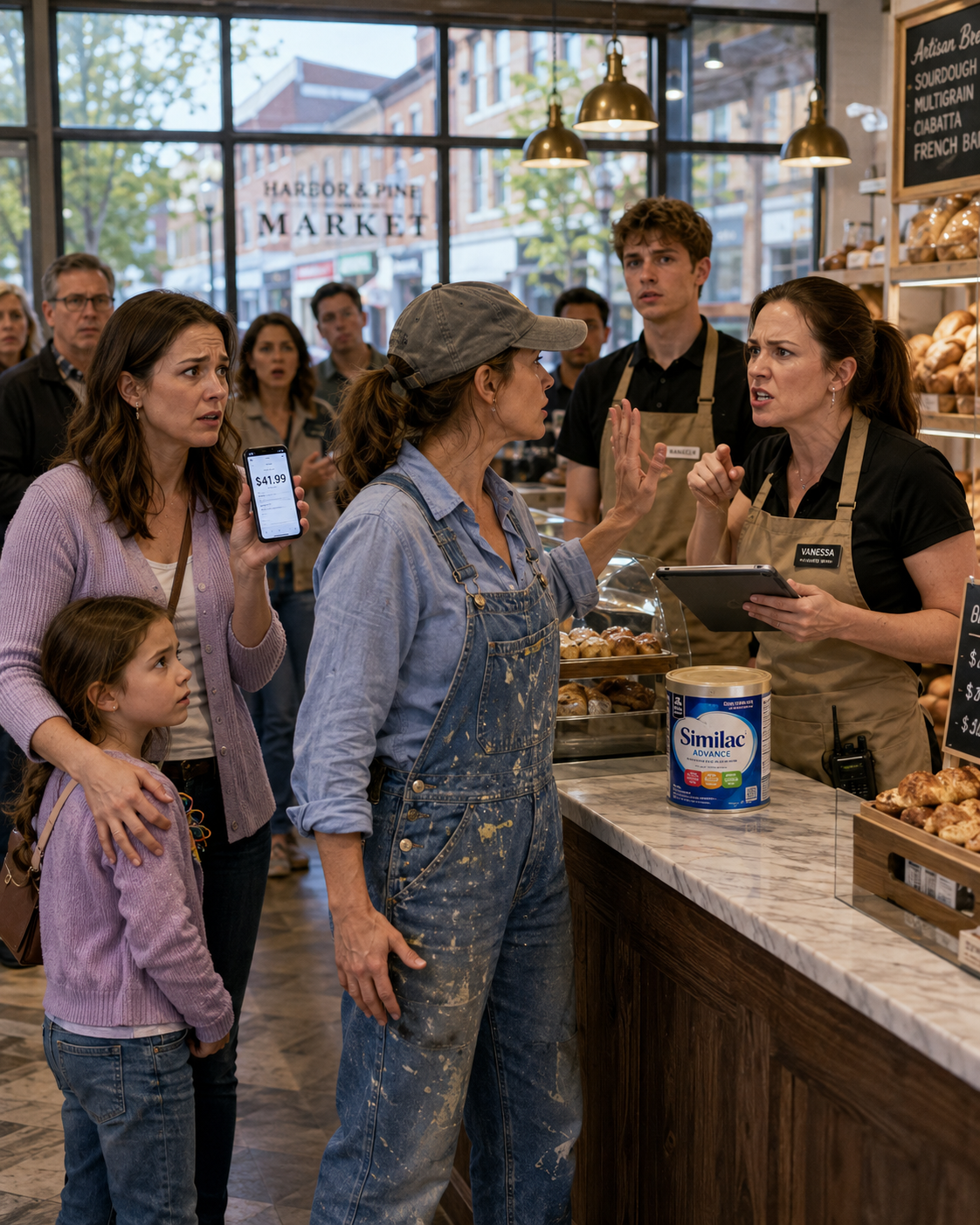
On a Thursday morning, I walked into Harbor & Pine Market dressed in paint-stained overalls, a worn Orioles cap, and borrowed work boots. No one recognized me as Natalie Rowan, the owner of the thirty-eight neighborhood markets that carried my grandmother’s name.
That anonymity was exactly why I was there.
My grandmother, Evelyn Rowan, had opened the first Harbor & Pine during the shipyard layoffs of 1987. She considered its lunch counter the moral heart of the business, and beside every entrance hung a brass plaque engraved with her favorite sentence: A person’s wallet may determine the purchase, but it never determines the welcome.
Three months earlier, customer complaints connected to our Fells Point branch had started disappearing from the corporate system. Sales remained unusually high, while refunds, employee turnover, and cash adjustments increased without any clear explanation. District manager Howard Pike repeatedly dismissed the irregularities as the result of tourism and inexperienced employees.
Before approving a formal audit, I decided to observe the branch myself.
Behind the bakery counter, shift supervisor Vanessa Cole looked over my clothes before she even acknowledged me.
“The day-old bread is on the rack beside the loading entrance,” she said. “Everything in this display costs the regular price.”
“I was looking for a breakfast sandwich and coffee.”
Without greeting me, Vanessa pointed toward a digital ordering kiosk.
“Use the screen, pay before ordering, and do not sit near the front windows unless you purchase something.”
The register beside her was open, but I followed her instructions. Company policy required employees to assist customers with the kiosks, yet Vanessa simply watched as I worked through the promotional pop-ups myself.
I ordered a six-dollar egg sandwich and a two-dollar coffee. When I reached the payment screen, the total showed eleven dollars and twenty-eight cents.
I asked for a printed receipt, and Vanessa rolled her eyes before handing it to me. Beneath the sales tax was an additional charge labeled Neighborhood Hospitality Contribution.
“What does this contribution support?” I asked.
“Community programs, employee assistance, neighborhood events, and whatever else headquarters approves.”
“Can customers decline it?”
“Not after the transaction closes, and holding up the line will not change anything.”
There was no one behind me.
I folded the receipt and sat at a table near the bakery, where I had a clear view of the registers, lunch counter, and service desk. Within fifteen minutes, it became obvious that a customer’s clothing influenced far more than Vanessa’s attitude.
An older man wearing a veterans’ hospital jacket presented a paper voucher from a local food-access program. Cashier Tyler Marsh held it beneath the light as though he were checking counterfeit money.
“We stopped accepting these last month,” he said.
The man pointed toward a decal on the window identifying Harbor & Pine as a participating market.
“The clinic gave me this yesterday and said your store remained enrolled.”
“Then the clinic gave you outdated information.”
Tyler refused to contact a supervisor. The man returned a carton of eggs and two cans of soup to the basket, leaving only the oatmeal he could afford to purchase with cash.
Five minutes later, a well-dressed tourist presented the exact same type of voucher after mentioning that her hotel concierge had recommended the program. Vanessa accepted it immediately and even gave her a complimentary pastry.
I wrote down the time and register number in a cracked notebook.
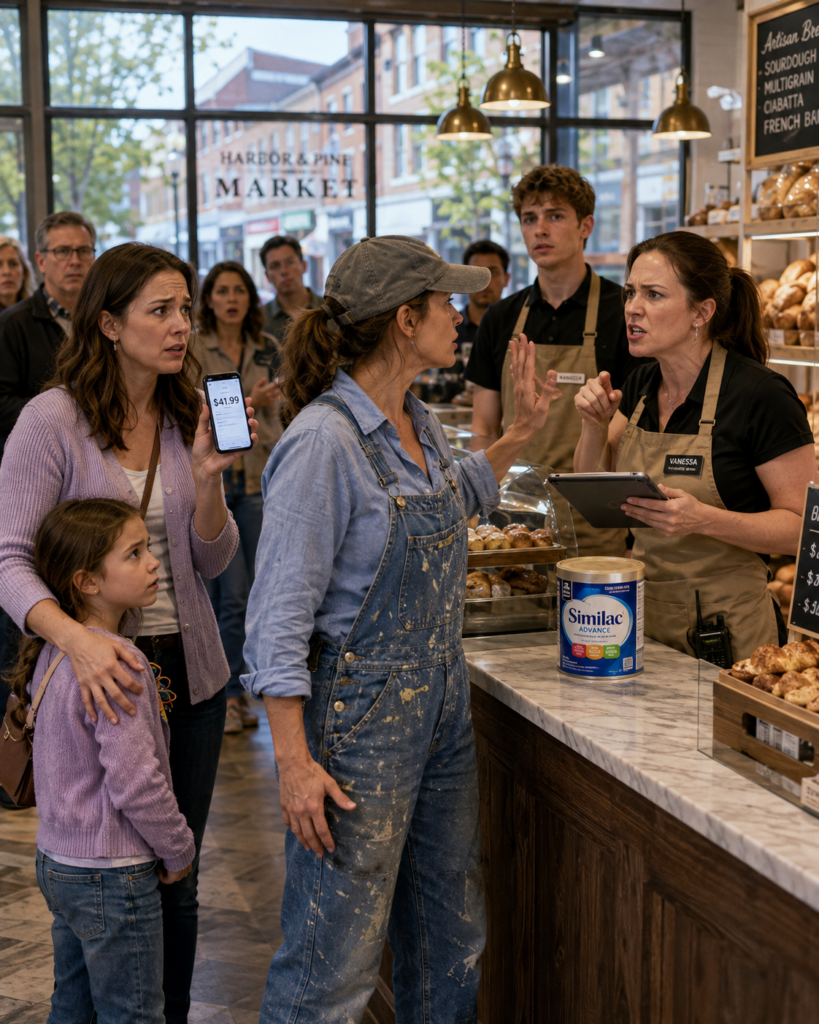
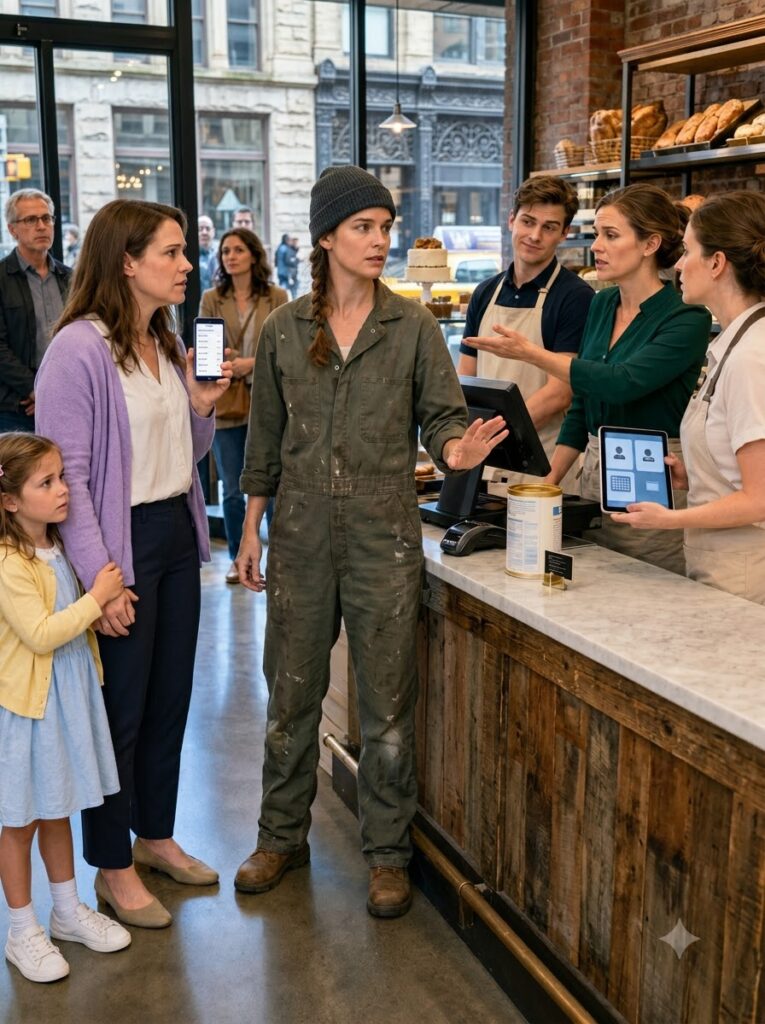
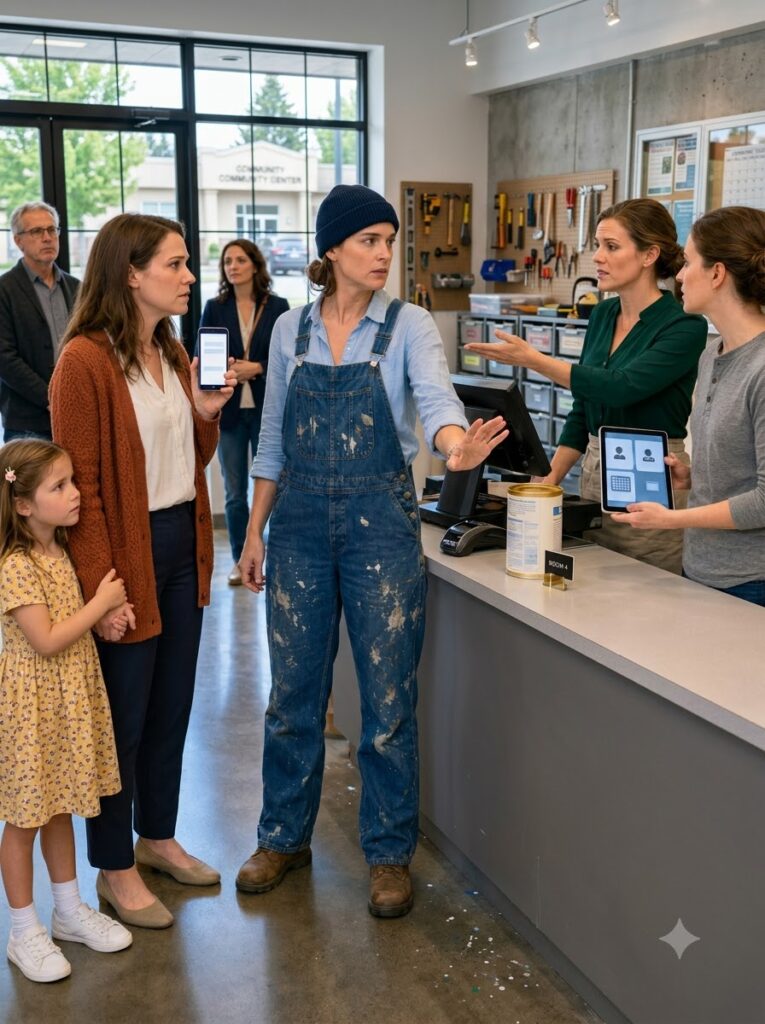
The next customer was a Deaf mother named Elena Brooks, who communicated through her phone while her daughter stood beside the cookie display. Company policy required staff members to use the translation tablet stored beneath every service counter.
Vanessa did not even reach for it.
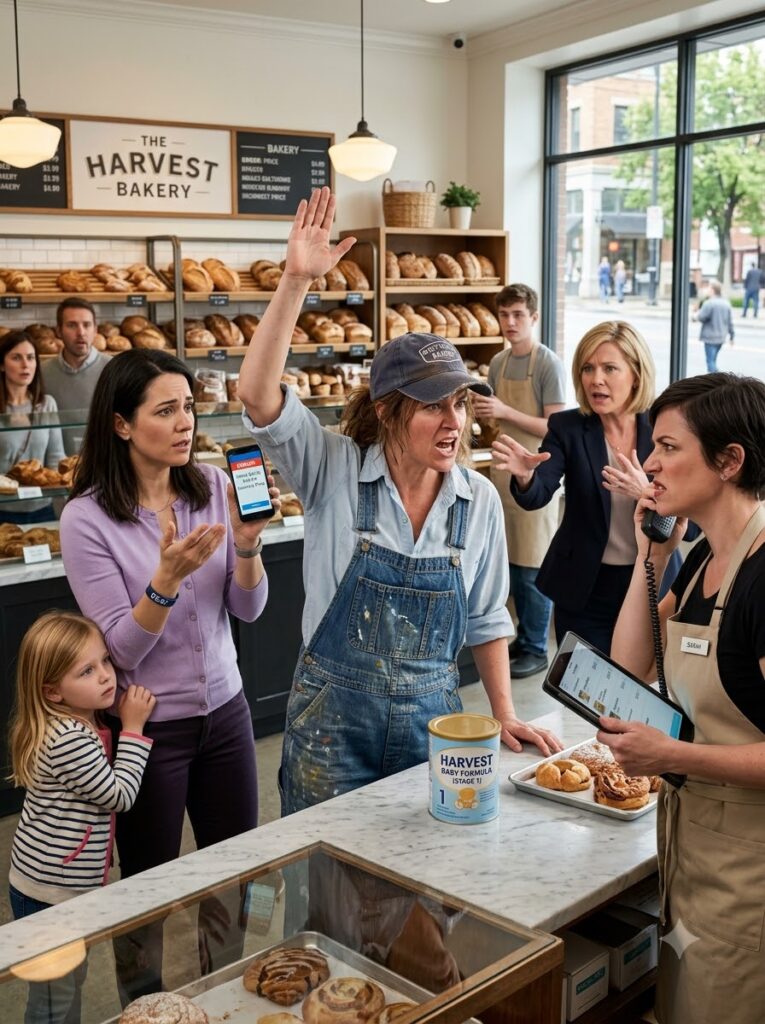
Elena displayed a message explaining that the shelf price for infant formula was four dollars lower than the amount shown at the register. Vanessa answered loudly and slowly, as though speaking louder could replace proper accommodation.
“THE PRICE IN THE COMPUTER IS FINAL.”
Elena typed another message and pointed toward the shelf.
Tyler laughed under his breath.
“Maybe she should bring somebody who understands shopping next time.”
The little girl understood every word. Her shoulders tightened as she lowered her eyes toward the floor.
I had already witnessed enough to justify stepping in immediately, but then a bakery employee named Simone Carter approached carrying a handheld translation tablet.
“I can help verify the shelf label and explain the adjustment,” Simone said.
Vanessa stepped in front of her.
“Return to production before I document another unauthorized break.”
“This is not a break, and the customer needs assistance.”
“The customer needs to pay the displayed total or shop somewhere else.”
Simone glanced toward Elena before looking at the security camera positioned above the counter.
“The shelf price is legally required when the label has not expired.”
Vanessa’s expression hardened.
“One more argument and you can leave with her.”
Simone removed her apron but kept it in her hands.
“Then perhaps today is the day someone finally reads the reports you keep deleting.”

Part Two: The Drawer Labeled Community
Vanessa ordered Simone into the manager’s office, but I stepped between them.
“Before you discipline her, I would like my community contribution refunded.”
Vanessa redirected her frustration toward me.
“I already explained that completed contributions cannot be reversed.”
“The payment screen presented it as mandatory, although your website describes all charitable contributions as optional.”
“If three dollars creates a financial emergency, you should make coffee at home.”
I placed my receipt on the counter.
“Please show me where these contributions are recorded and which community program received this one.”
Vanessa grabbed the store phone.
“Security assistance at the service desk, please.”
Security contractor Malcolm Reed arrived without hurrying, consistent with his reputation for careful de-escalation.
“Has anyone threatened an employee or customer?” he asked.
“This woman is interfering with operations and demanding confidential accounting information.”
Malcolm examined my receipt.
“She appears to be asking about a fee charged to her card.”
Vanessa still ordered him to remove me. Malcolm refused without evidence of a documented policy violation, which told me Howard had not managed to corrupt every level of management.
At the register beside us, a college student noticed his total rise after Tyler scanned a loaf of bread. He questioned a four-dollar hospitality contribution that had never appeared on the checkout screen.
Tyler canceled the transaction, entered another code, and discreetly handed three dollars back to the student while leaving one dollar inside an open cash drawer beneath the service counter.
The drawer was marked COMMUNITY OUTREACH.
I watched as Vanessa dropped my disputed receipt inside.
The scheme was becoming clear. Employees were adding unauthorized contributions, refunding part of the money whenever customers challenged the charge, and keeping the remainder. Customers they believed were unlikely to complain were charged automatically, while wealthier shoppers received discounts using those same adjustments.
But cash theft alone could not explain the branch’s inflated revenue figures. Someone had created a much larger system.
Simone moved closer while Vanessa continued arguing with Malcolm.
“The contribution code appears on hundreds of transactions every week,” she whispered. “I reported it to Howard Pike seven times, but each report disappeared after he visited the store.”
“Did you retain copies?”
She looked at me suspiciously.
“Why would a house painter ask that question?”
“Because disappearing reports rarely vanish without leaving another record.”
Before Simone could answer, a teenage employee came out from the bakery carrying two trays filled with packaged sandwiches. Vanessa pointed him toward a trash bin near the loading entrance.
“Those expired at eight o’clock, so scan them as donated and discard them.”
The employee hesitated.
“The shelter driver normally collects donations at ten.”
“The driver complained about missing labels, and I am finished accommodating ungrateful people.”
Scanning the sandwiches as donations before throwing them away created a false tax deduction while also depriving the shelter of meals.
I opened my phone and sent a message through an encrypted executive channel.
Fells Point branch. Activate evidence hold, remote register lock, and emergency compliance review. Bring legal counsel, accessibility officer, and nonprofit partnership director. Do not contact district management.
Vanessa noticed me sending the message but interpreted it as an act of desperation.
“Calling somebody will not change store policy.”
“You are correct,” I replied. “A phone call cannot change policy, although it can reveal who has been violating it.”
Once again, she ordered Malcolm to escort me outside.
Before he could respond, every register in the market suddenly displayed the same message:
TRANSACTIONS PAUSED BY CORPORATE COMPLIANCE.
Tyler tried to shut the community drawer, but the electronic lock had already activated.
Part Three: The Name Above the Door
Two company vehicles pulled up twelve minutes later. Chief compliance officer Priya Desai entered alongside labor counsel, a forensic accountant, our accessibility director, and the executive responsible for shelter partnerships.
Vanessa hurried toward them, her expression instantly transformed.
“Ms. Desai, nobody warned us about an inspection, but we are delighted to welcome corporate leadership.”
Priya walked straight past her and stopped beside me.
“Ms. Rowan, the transaction hold is active, security footage is preserved, and our audit team has isolated five years of adjustment records.”
Silence moved from the bakery all the way to the produce section.
I took off my faded cap.
“My name is Natalie Rowan, and I own the controlling interest in Harbor & Pine Markets.”
Tyler clutched the counter. Vanessa stared from me to the portrait of Evelyn Rowan above the lunch counter, finally noticing the resemblance she had failed to see beneath my inexpensive clothes.
“You deliberately deceived us,” she said.
“I entered as a paying customer, while you supplied every assumption yourself.”
Priya instructed Malcolm to secure the community drawer. Inside, they discovered $1,840 in cash, handwritten shift totals, refund receipts, and envelopes labeled with employee initials. Tyler immediately claimed that Vanessa had created the arrangement.
“She said the contributions covered team incentives because corporate bonuses were unfair.”
Vanessa pointed at him.
“You entered half those charges and kept your share willingly.”
I asked Elena to return to the service counter with our accessibility director, who communicated using American Sign Language. We apologized, corrected the formula price, and gave her written confirmation that the company would investigate every discriminatory incident associated with her account.
Malcolm found the veterans’ voucher customer in the parking lot, and Priya completed his purchase while explaining that his voucher had always remained valid. Neither apology could erase the humiliation they had experienced, but accountability had to begin by acknowledging exactly what had happened.
Simone handed labor counsel a flash drive containing photographs, schedules, emails, and copies of complaints that had been deleted. She had spent eight months documenting the misconduct after Howard repeatedly ignored her reports.
Her evidence showed that the community drawer was merely the most visible part of a much larger fraud.
Howard instructed branch supervisors to inflate charitable contributions, record discarded food as shelter donations, and deny legitimate discounts to customers they considered unlikely to complain. The false contributions boosted community-engagement figures used to determine management bonuses, while the stolen cash created weekly payments for supervisors who participated.

He also directed stores to mark complaints as resolved without ever contacting the customers involved. Branches with impressive scores received additional staffing and better rankings, creating pressure for honest managers to remain silent.
Vanessa had collected nearly twenty-two thousand dollars through the operation. Tyler had taken six thousand, while Howard’s estimated portion exceeded ninety thousand dollars across four branches.
“I never understood the full operation,” Vanessa said. “Howard told us these were unofficial incentive funds approved by ownership.”
“You understood the money came from customers who had not consented,” I replied. “You also understood that mistreating vulnerable people made them less likely to challenge the charge.”
Tears filled her eyes.
“I have a mortgage and a son depending on me.”
Elena’s daughter remained beside the cookie display, watching the adults determine whether her mother’s dignity mattered. I glanced toward the child before responding.
“Family responsibility should have taught you why other families deserved honesty.”
Labor counsel suspended Vanessa and Tyler while investigators referred the cash records to Baltimore authorities. Accountability did not require turning what happened inside the market into entertainment.
The branch shut down for the remainder of the day while auditors interviewed employees, and customers were assisted through neighboring stores or home delivery.
Howard arrived forty minutes later, furious that the compliance lock had interrupted sales. He came through the loading dock and walked directly into Priya’s evidence team.
The moment he saw me, his anger disappeared.
“Natalie, I can explain irregularities caused by inadequate training.”
“Begin with why seven reports from Simone Carter disappeared after reaching your office.”
He blamed a software migration until Priya produced forwarding records proving he had sent the reports to his private email before deleting them.
Next, he blamed Vanessa, despite weekly messages showing him assigning contribution targets and promising protection from audits.
Finally, he blamed me.
“Corporate leadership created impossible expectations for growth, margins, donation volume, and satisfaction. People adapt when executives demand contradictory results.”
There was enough truth in his accusation that I could not simply dismiss it.
“You chose fraud, but I approved a performance system that rewarded numbers without verifying how they were produced. You will answer for your choices, and I will answer for mine.”
Part Four: The Audit That Went Beyond One Store
The investigation expanded to every Harbor & Pine location. We disabled manual hospitality charges, suspended bonuses, preserved complaint records, and notified our banking processor that thousands of transactions might need to be reimbursed.
Four branches displayed patterns connected to Howard’s operation. Some managers pressured cashiers to request donations only after customers had already paid, while others discouraged voucher users because processing their transactions required extra time.
The board recommended issuing a carefully worded statement blaming a handful of rogue employees. I rejected that approach after remembering how easily Howard had hidden behind incentives our own company had created.
Three days later, I stood beneath my grandmother’s brass sentence at a press conference and accepted responsibility without pretending I had personally participated in every offense.
“Several employees stole from customers, falsified charitable records, and discriminated against people they believed possessed less power,” I said. “Their conduct violated our values, but our oversight allowed that conduct to continue after warnings were submitted. Removing individuals cannot substitute for repairing the system that ignored those warnings.”
Harbor & Pine reimbursed every unauthorized charge with interest and provided an additional fifty-dollar grocery credit. Our payment processor reconstructed affected transactions through register codes and loyalty records.
We compensated partner shelters and funded six months of independently monitored deliveries. Every donation now required photographic confirmation, acknowledgment from the recipient, and public monthly reporting.
Customer complaints were removed from district-manager control and transferred to an independent customer-protection office. Accessibility failures went directly to a specialist team, while employees reporting misconduct received protected case numbers visible to the board’s ethics committee.
We changed performance evaluations as well. Branches could no longer earn bonuses based on raw donation totals or suspiciously perfect satisfaction scores. Reviews now included verified complaint resolution, pricing accuracy, accessibility compliance, employee retention, and unannounced community audits.
Howard eventually pleaded guilty to theft and falsifying business records. Vanessa and Tyler entered restitution agreements after cooperating with investigators. Their individual circumstances affected sentencing, but neither hardship nor pressure from management erased the fact that they had selected customers they believed would be easy targets.
Simone accepted a promotion to branch manager only after negotiating for the authority to hire an accessibility coordinator and rebuild the shelter partnership. She rejected the company’s first offer because it treated her courage as a public-relations opportunity without giving her greater decision-making authority.
“If you want my face in the announcement, you also need my judgment in the budget,” she told me.
She was right, and the revised offer reflected that.
Part Five: What the Market Owed Its Community
Six months later, I returned without wearing a disguise. The market looked brighter, although Simone had refused cosmetic renovations until the company repaired its damaged relationships with the community.
The shelter area now featured refrigerated lockers and digital receipts. At the service desk were an accessibility tablet, clearly displayed pricing guarantees, and straightforward instructions explaining how customers could decline donations before payment.
Elena Brooks served as a paid consultant on the community advisory council. Her recommendations resulted in visual ordering screens, sign-language training, and mandatory accessible communication.
The veterans’ clinic renewed its voucher partnership after independent testing. The man I had watched put back his soup now came every Tuesday, though he still carefully inspected every receipt.
Near the bakery, Tyler’s old community drawer remained inside a glass case. Simone had converted it into a suggestion box, with every submitted note receiving a public tracking number.
“Keeping the drawer seemed strange at first,” she told me. “Then I decided the object should remember something better.”
I ordered an egg sandwich and coffee using the kiosk. The total matched the advertised prices, and the optional donation screen clearly displayed buttons marked YES, NO, and MORE INFORMATION.
A teenage employee delivered breakfast to the table where I had originally sat. Beside my plate was a receipt showing every charge clearly instead of hiding additional fees beneath vague wording.
Simone joined me while taking her break.
“Do you still conduct disguised inspections?”
“Occasionally, although I no longer pretend one secret visit can reveal an entire company.”
“Your grandmother probably knew that already.”
I glanced toward Evelyn Rowan’s portrait hanging above the lunch counter.
“She spent more time speaking with dishwashers than reading executive dashboards, so she understood information travels upward only when powerful people make the journey safe.”
At the service desk, Elena and her daughter arrived for an advisory meeting. The girl chose a chocolate croissant and then signed a practiced thank-you to the bakery employee. He replied in sign language before placing the pastry into a small paper bag.
I had once believed that protecting my grandmother’s legacy meant identifying employees who violated the principles she had established. The Fells Point investigation taught me that protecting a legacy also meant examining the systems carrying my own signature, especially when those systems turned human behavior into flattering numbers.
Before leaving, I unfolded the receipt from my first visit. The paper had faded slightly, but the unauthorized contribution was still visible beneath the coffee charge.
I placed it inside the glass suggestion box with a short message:
Never design a fee, target, or policy that depends upon a customer being too embarrassed to object.
Simone read the message before locking the box.
“Should I assign this one a tracking number?”
“Especially this one, because executives should never submit concerns that disappear.”
Outside, rain swept across Baltimore Harbor as customers entered beneath the brass plaque displaying my grandmother’s promise. Some wore tailored coats, while others arrived in hospital scrubs, construction jackets, school uniforms, or clothing marked by the evidence of difficult work.
The market owed every one of them the same honest price, the same patient assistance, and the same welcome.
That responsibility did not begin only when someone important entered the store.
It began by refusing to decide who looked important in the first place.
THE END
