

PART 1
“Stand up. You match a robbery suspect.”
Brennan Washington lifted his eyes from the bill lying beside his wallet. Across the booth, his seven-year-old daughter stopped coloring, her blue crayon frozen against the page.
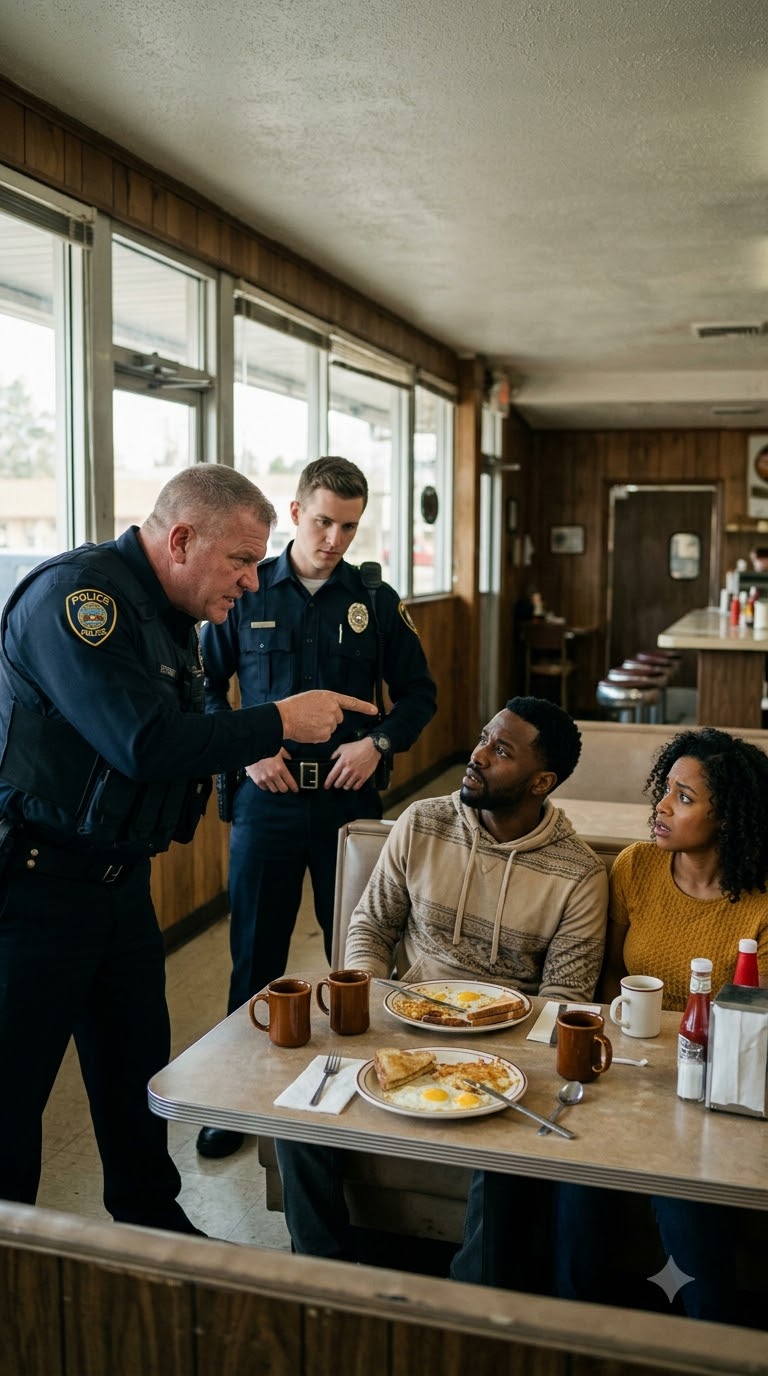
The man standing at the open end of the table wore sergeant’s stripes and an expression suggesting he had already decided how the encounter would end. Behind him, a younger officer shifted uneasily, one hand hovering near the Taser attached to his belt.
Brennan placed both palms flat on the table.
“What description are you comparing me to?”
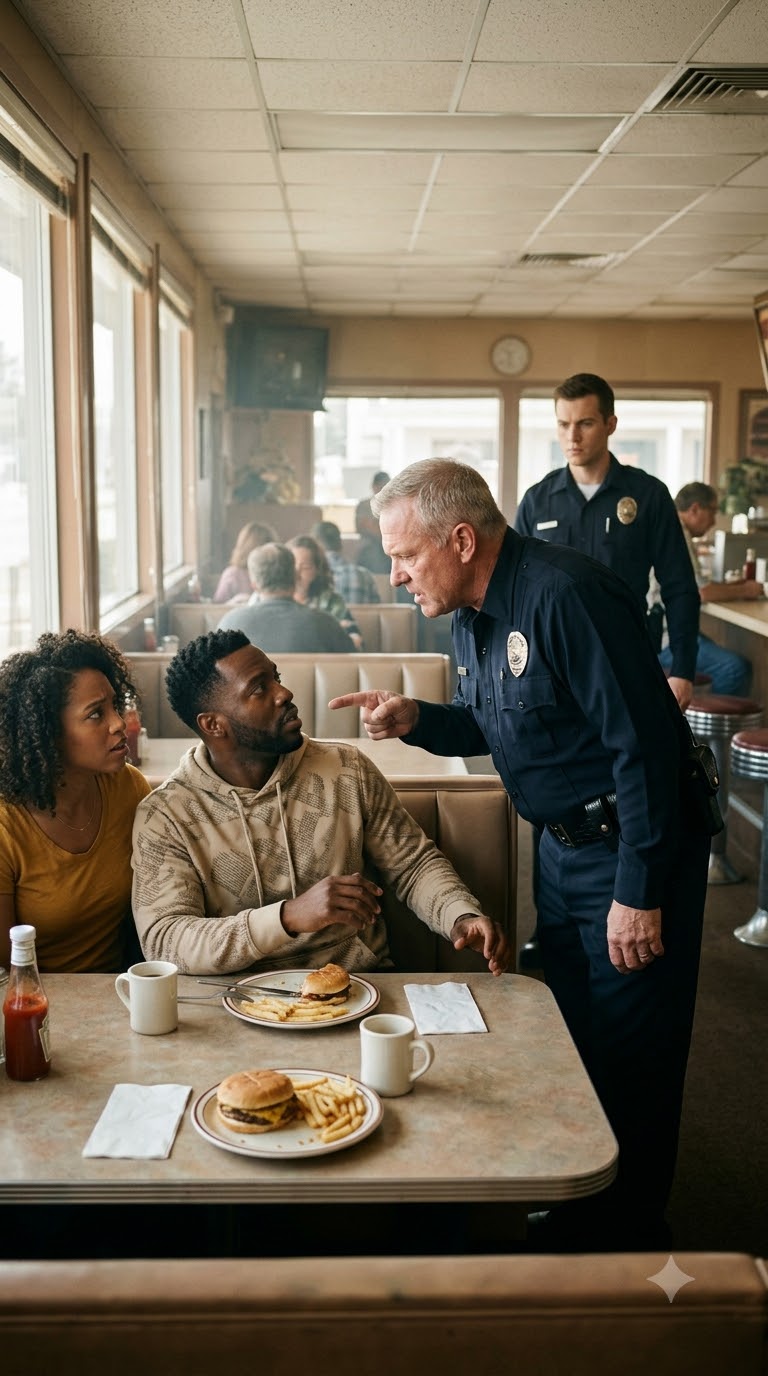
Sergeant Derek Graves leaned forward.
“Male and Black. Now stop making this difficult.”
The waitress at the neighboring table stopped pouring coffee.
For a moment, the diner’s ordinary sounds continued around them: a fork tapping against a plate, the refrigerator humming quietly behind the counter, and someone turning a newspaper page.
Then Brennan’s daughter looked up at him.
“Daddy?”
He had promised her they would finish lunch before he checked his phone again.
That was how the afternoon had begun—with a simple promise that meant more to her than he had realized until she asked him to keep it.
They had been driving through Virginia beneath a clear sky when she leaned forward from the back seat and announced that she was hungry enough to eat two lunches. Blanche turned around and asked whether she meant two separate meals or whether she had forgotten the crackers she had eaten less than an hour earlier.
Their daughter considered the distinction.
“Two little lunches.”
Brennan chuckled.
“That sounds like one regular lunch with extra paperwork.”
She told him that wasn’t funny, although she smiled as she said it.
They chose the roadside diner because it had a hand-painted sign, several cars parked outside, and a wide front window through which they could see people eating. Blanche remarked that those were better recommendations than whatever review Brennan had been trying to find on his phone.
He put the phone away.
Inside, the air smelled of coffee, warm bread, and something sweet cooling near the register. The tables stood close enough for conversations to overlap, but the room had the relaxed atmosphere of people taking a break rather than rushing through their meals.
Their daughter spotted a booth beside the window.
“That one.”
Brennan glanced at Blanche.
She shrugged.
“The reservation specialist has spoken.”
The waitress arrived with menus and asked whether they wanted a children’s menu. Their daughter shook her head solemnly, then reconsidered when she learned that the children’s lunch came with a smaller grilled cheese sandwich.
The waitress smiled without making her feel silly.
“I’ll bring both. You can compare.”
Brennan appreciated the gesture.
Some adults spoke to children as though every decision had to become a performance for everyone around them. This woman simply treated the question as something worth answering.
Blanche slid into the booth beside their daughter, leaving Brennan the opposite bench. Sunlight stretched across the tabletop, warming the loose cuff of his faded olive hoodie.
He had broad shoulders, closely cropped hair, and a neatly trimmed beard his daughter had once called “scratchy but friendly.” His brown boots rested beneath the table, and his blue jeans were creased at the knees.
He looked like a father taking his family out for lunch because that was precisely what he was doing.
Before the menus arrived, his daughter placed her coloring book on the table. The spine had already swollen from being opened flat, and several pages bore stray crayon marks along their edges.
Brennan moved his water glass away from the book.
“Protecting the art.”
“It’s not art yet.”
“What is it now?”
“Planning.”
Blanche laughed into her coffee.
Their daughter chose a picture of a house with a tree beside it. She decided that the house would be yellow, the roof purple, and the tree blue.
Brennan asked whether blue trees needed special water.
“No. They’re just blue.”
He nodded.
“Understood.”
That answer appeared to please her more than his earlier joke.
Blanche briefly removed her burgundy cardigan, then slipped it back on when she noticed the cool air blowing from a vent. Sunlight caught her shoulder-length curls as she leaned closer to the page.
“You want me to hold the book?”
Their daughter nodded.
Blanche held down the corner with two fingers, keeping her other hand free to stir her coffee. Brennan watched the little scene across from him: his wife steadying the page while their daughter carefully colored around the outline of a window.
He had been distracted that morning.
Nothing extraordinary had happened. There had merely been messages to answer, things to remember, and the familiar habit of reaching for a screen whenever a quiet moment presented itself.
His daughter had noticed.
When his phone vibrated against his leg, she looked up before he could reach for it.
“Can you wait until we’re done?”
Brennan paused.
“Of course.”
“Even if it does it again?”
“Even then.”
She studied him closely, trying to determine whether he meant it or whether this was another adult promise that would soon come with an exception.
He took the phone from his pocket and tucked it inside the booth, beyond immediate reach.
Then he returned his attention to her drawing.
For the next twenty minutes, lunch unfolded exactly as he had hoped. Their daughter compared the two grilled cheese sandwiches, decided the smaller one tasted better, and announced that her blue tree needed a bird.
Blanche suggested a red bird.
Their daughter considered the proposal before rejecting it in favor of purple.
Brennan pretended to be offended by the decision.
“You asked for our opinions and ignored every one of them.”
“It’s my tree.”
“That’s a strong argument.”
She grinned and returned to coloring.
When the food was nearly gone, Brennan reached for the bill. He checked the total, placed his wallet beside it, and began calculating the tip.
That was when Sergeant Derek Graves approached the booth.
“Stand up. You match a robbery suspect.”
Brennan looked up, initially expecting that the officer might be speaking to someone behind him.
Then he realized Graves was staring directly at him.
He set the bill down.
“What description are you comparing me to?”
Graves leaned closer.
“Male and Black. Now stop making this difficult.”
Brennan glanced briefly at the younger officer standing behind the sergeant. The rookie looked to be in his mid-twenties, with short brown hair and a clean-shaven face. His nameplate read MILLER.
Officer Miller’s gaze moved from Brennan to the little girl sitting opposite him.
The child’s blue crayon remained motionless in her hand.
Brennan deliberately kept his voice level.
“I’m happy to cooperate with a legitimate investigation. But I need you to explain what you’re asking me to do.”
Graves straightened.
“I already told you. You match a robbery suspect.”
“Then tell me the description beyond race and gender.”
Graves’s jaw tightened.
“Are you refusing a lawful order?”
“No. I’m asking what the order is based on.”
The waitress stood a few feet away, holding a coffee pot. She slowly lowered it onto a nearby counter.
Blanche placed a protective hand on their daughter’s shoulder.
“Daddy, what’s happening?” the little girl whispered.
Brennan turned toward her.
“It’s okay, sweetheart. Stay beside Mommy.”
He looked back at Graves.
“My daughter is frightened. If you need to speak with me, you can do that without frightening her.”
Graves ignored the request.
“Stand up. Keep your hands where I can see them.”
Brennan remained seated for another second, looking directly at the sergeant.
He had no desire to provoke an unnecessary confrontation. He also understood that sudden movements could be misinterpreted when an officer had already approached him with hostility.
Slowly, he pushed the bill away, placed his hands on the table, and began rising from the booth.
Blanche drew their daughter closer.
The little girl clutched her mother’s cardigan.
“Daddy, don’t go.”
Brennan’s expression softened.
“I’m right here, sweetheart.”
Graves stepped closer.
“Turn around.”
Brennan complied, moving carefully and keeping his hands visible.
Officer Miller watched the interaction with growing discomfort. Something about the encounter troubled him, though he had not yet identified exactly what had changed his expression.
The sergeant had approached with confidence, announced a possible robbery investigation, and issued commands.
But he had not explained the specific circumstances that connected this father to the reported crime.
Miller had heard the initial radio transmission while they were nearby. The dispatch had described a robbery suspect as a Black man wearing a dark jacket and light-colored trousers, last seen leaving a convenience store several miles away.
The man standing before him wore an olive hoodie and blue jeans.
That alone did not establish that Brennan was uninvolved. Clothing descriptions could be incomplete or inaccurate, and suspects could change garments.
But the officer knew that a description consisting of little more than race and gender was insufficient to justify treating every person who shared those characteristics as a suspect.
He glanced toward the sergeant.
“Sir, can we confirm the full description with dispatch?”
Graves turned his head sharply.
“I’ve got it under control, Miller.”
The rookie fell silent.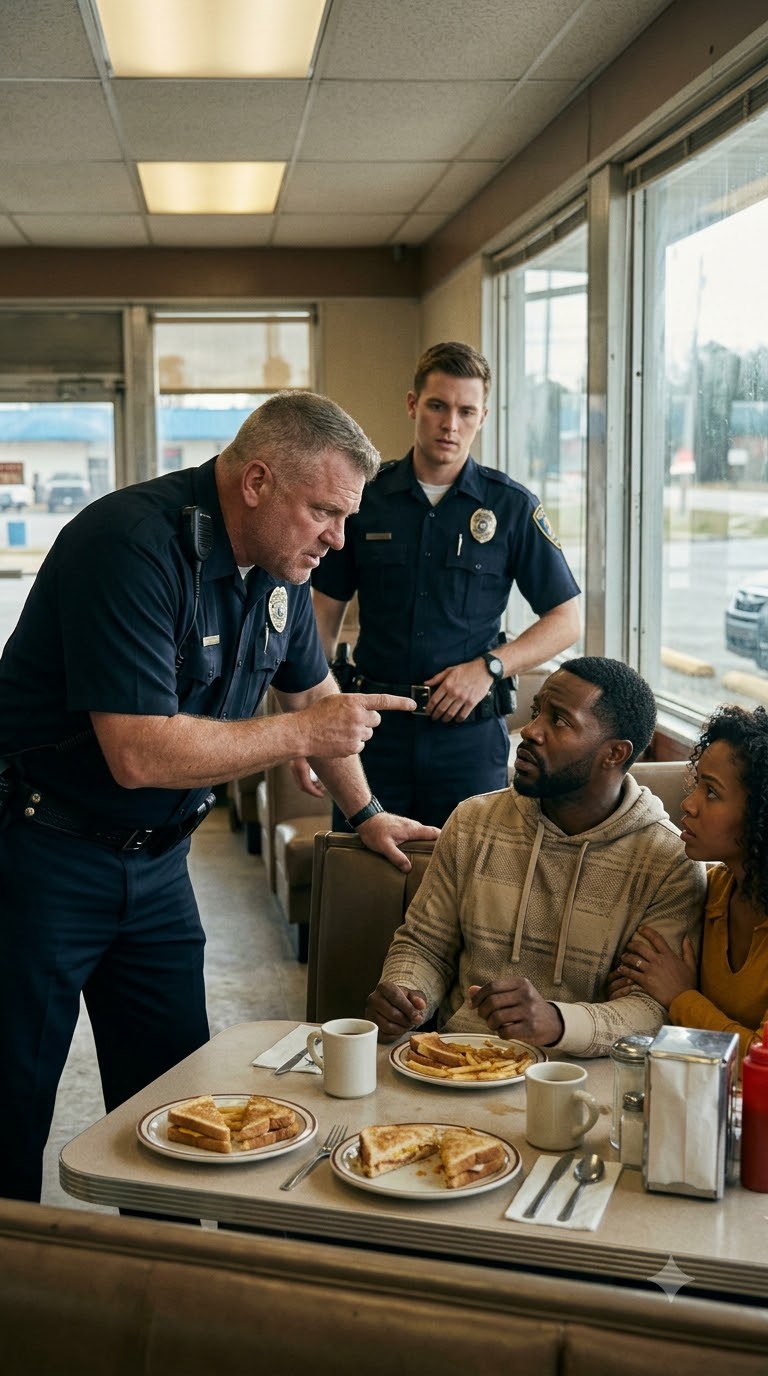
Graves directed Brennan toward the space beside the booth.
“Do you have identification?”
“Yes. It’s in my wallet on the table.”
“Don’t reach for it.”
“I won’t.”
Graves looked at the wallet, then back at Brennan.
“What’s your name?”
“Brennan Washington.”
“Where are you coming from?”
“I’m traveling with my family. We stopped here for lunch.”
“Where were you before that?”
“On the road. We’ve been driving.”
Graves gave a humorless laugh.
“That isn’t much of an answer.”
“It’s an accurate one. If you have a specific question, I’ll answer it.”
The sergeant’s expression darkened.
“I’m not here to play twenty questions.”
“And I’m not trying to play games. I’m asking you to explain why you believe I’m the person you’re looking for.”
At the booth, Brennan’s daughter had begun to cry quietly.
Blanche bent down and whispered to her, but the little girl kept looking at her father.
The waitress approached cautiously.
“Officer, may I ask what’s going on? They’ve been here having lunch.”
Graves turned toward her.
“Stay out of this.”
She stopped.
Brennan looked at the waitress.
“Thank you. Please just give my daughter a little space.”
He then turned back to the officers.
“Sergeant, I want to cooperate. But I don’t want my daughter frightened any more than she already is.”
Graves ignored him and looked at Miller.
“Check him.”
The rookie hesitated.
“Sergeant, before we go any further, I’d like to clarify the description.”
Graves’s eyes narrowed.
“I gave you an instruction.”
Miller swallowed.
“Yes, sir.”
But he didn’t move toward Brennan.
Instead, he looked at the man’s face more carefully.
Something had just occurred to him.
It wasn’t Brennan’s clothing, his name, or the way he spoke.
It was the small, deliberate movement he had made when he first rose from the booth: the way he had shifted his body to avoid knocking over his daughter’s water glass, then paused to make sure she was safely beside her mother.
Miller had seen that movement before.
Not in a diner.
Not in a police station.
On a screen.
He remembered a photograph attached to a departmental briefing he had reviewed during training. It showed a man in civilian clothes standing beside a group of law enforcement officials at a formal event.
The caption had identified the man as a federal investigator who had assisted with a multi-agency case involving organized robbery and interstate trafficking.
The name had been Brennan Washington.
Miller’s expression changed.
He looked again at the man standing beside the booth.
The close-cropped hair. The neatly trimmed beard. The steady gaze.
Then he looked toward the wallet on the table.
“Sergeant,” he said carefully, “I think we need to pause.”
Graves turned toward him.
“What?”
“I’d like to confirm the identification before proceeding.”
Graves stared at the rookie.
PART 2
“You suddenly know something I don’t?”
“I recognize his name from a departmental briefing.”
Brennan heard the exchange but said nothing.
He had not identified himself as an investigator because he had no reason to introduce his professional life into an ordinary lunch with his family. He was not on duty, had not been working on a case, and had been trying to keep a promise to his daughter.
Miller looked at Brennan.
“Sir, have you ever worked with federal law enforcement?”
Brennan’s expression remained composed.
“I’ve worked on joint investigations before. But that isn’t relevant to whether I’m the person you’re looking for.”
Miller nodded slowly.
“No, sir. It isn’t.”
Graves’s face hardened.
“What’s going on, Miller?”
The rookie took a breath.
“Dispatch described a man wearing a dark jacket and light trousers. Mr. Washington’s clothing doesn’t match that description, and we haven’t established any additional identifying details.”
“He matches the general description.”
“So might a lot of people in this county.”
The words escaped before Miller could soften them.
For a moment, the entire booth area seemed to go silent.
Graves stared at his subordinate.
“Watch your tone.”
“Yes, Sergeant.”
Miller looked at Brennan again.
“Sir, I apologize for the way this is being handled. I’d like to confirm the information with dispatch.”
Graves stepped between them.
“I’ll handle dispatch.”
He pulled out his radio and requested an update.
A burst of static came through the speaker, followed by a dispatcher asking for clarification about the location and the officers’ progress.
Graves gave the diner’s address and stated that they had contacted a possible suspect.
The dispatcher asked whether the subject matched the reported clothing and whether any additional identifying characteristics had been established.
Graves hesitated.
“Negative on the clothing. We’re checking identity.”
The response came quickly.
“Copy. The reporting witness described a dark jacket, light trousers, and a distinctive red backpack. No weapon was reported. The suspect was last seen heading north on foot.”
Graves glanced toward Brennan.
Brennan wore no backpack.
There was no indication that he had come from the convenience store, and the diner was not along the reported direction of travel.
Graves lowered the radio.
Miller spoke quietly.
“Sergeant, I think we should release him unless additional facts emerge.”
Graves ignored him.
“Mr. Washington, do you have any connection to the convenience store robbery?”
“No.”
“Were you near the store today?”
“Not that I know of. We were traveling on the highway and stopped here for lunch.”
“Can anyone verify that?”
Blanche answered from the booth.
“I can. We were together the entire time.”
Graves looked at her.
“Ma’am, I’m speaking to him.”
“And I’m answering your question,” she replied.
Her voice was steady, though her arm remained wrapped around their daughter.
Brennan turned slightly toward his wife.
“It’s okay, Blanche.”
Then he faced Graves again.
“You have my name. You have my answer. You have the description from dispatch, which does not match my clothing. What specific evidence connects me to the robbery?”
Graves said nothing.
For the first time, the sergeant appeared to understand that his original assumption was no longer enough to carry the encounter forward.
But rather than acknowledge that fact, he stiffened.
“I’m still investigating.”
“Then investigate the facts,” Brennan replied. “Don’t treat me as guilty because I fit two broad characteristics.”
Miller looked toward the sergeant.
“Sir, we should confirm the witness’s description and let Mr. Washington return to his family.”
Graves’s eyes flashed.
“You’re going to tell me how to do my job?”
“No, sir. I’m asking that we follow the information we have.”
The diner remained quiet.
Several customers had turned in their seats. The waitress stood near the counter, watching without moving closer.
Graves looked at Brennan again.
“Do you have identification?”
“Yes. My wallet is on the table. You’ve already been told where it is.”
Graves hesitated before gesturing toward the wallet.
“Retrieve it slowly.”
Brennan turned toward the table.
He moved carefully, picked up the wallet, and opened it.
His driver’s license was visible in the clear sleeve.
He held it out.
Graves took it and examined the photograph, name, and address.
Miller stood beside him, maintaining a respectful distance.
The sergeant checked the license against the information available to him, then handed it back.
“Your identity is confirmed.”
Brennan returned the license to his wallet.
“Thank you.”
Graves looked as though he wanted to say more.
Instead, he glanced toward Miller.
“Let’s go.”
The rookie didn’t move immediately.
“Sergeant, I believe we should make clear that Mr. Washington is not being detained any further.”
Graves’s expression became rigid.
“I said let’s go.”
Miller looked at Brennan.
“Sir, based on the information we’ve confirmed, you are free to remain here and continue your lunch. I’m sorry for the disruption.”
Brennan nodded.
“Thank you for clarifying that.”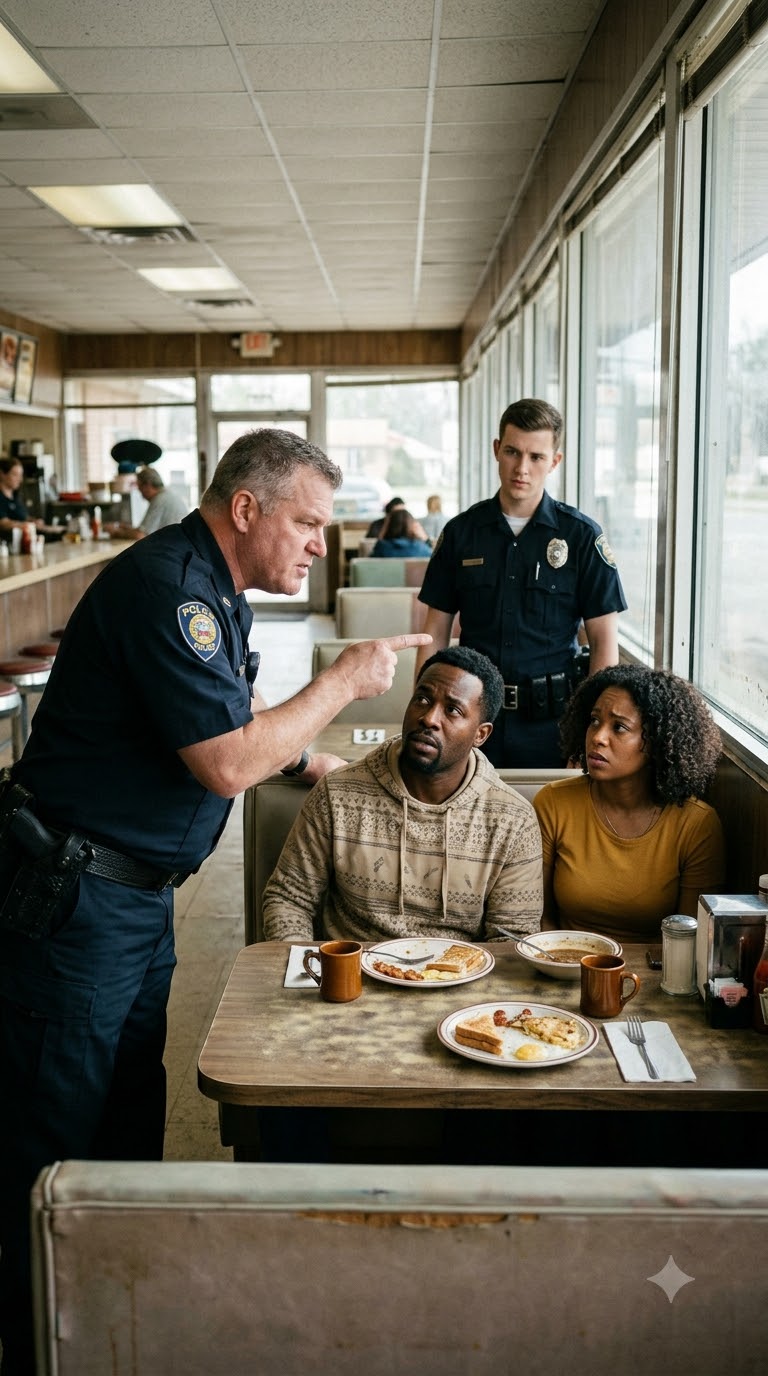
Graves turned toward the exit.
Miller followed, but before leaving the diner, he looked back once more.
Brennan had already returned to the booth.
His daughter was holding his hand with both of hers.
The rookie’s expression changed again.
He had seen people questioned during investigations before. He had seen officers make mistakes, correct them, and move on. He had also seen how quickly a person could become a case number rather than a human being.
But watching a frightened child cling to her father had made the consequences impossible to ignore.
He knew that the encounter would stay with him.
He also knew that an apology alone would not necessarily be enough.
Inside the diner, Brennan slid back into the booth beside his daughter.
She immediately leaned against him.
“Daddy, are they coming back?”
Brennan wrapped an arm around her shoulders.
“No, sweetheart. We’re going to finish our lunch.”
She looked at him closely.
“Did you do something bad?”
His heart tightened.
“No. I didn’t do anything bad.”
“Then why were they talking to you like that?”
Brennan glanced at Blanche.
She watched him with an expression that held both concern and anger.
He took a breath.
“Sometimes people make decisions before they understand what’s happening. That doesn’t make those decisions right.”
His daughter considered the answer.
“Did they know you were my daddy?”
Brennan looked down at her.
“They knew I was a father. They could see you sitting right here.”
She frowned.
“Then why did they make me scared?”
He had no easy answer that would satisfy a seven-year-old.
So he gave her the truth he believed she could understand.
“They should have been more careful with their words and their actions. You were right to ask questions when something didn’t make sense.”
She leaned into his side.
Blanche reached across the table and rested her hand over his.
For several moments, nobody spoke.
Then Brennan’s daughter looked at her coloring book.
“My tree is still blue.”
Brennan smiled faintly.
“It certainly is.”
“Do you think blue trees are real somewhere?”
“Probably somewhere.”
She thought about it.
“Then I want to see one.”
“Maybe we can look for one someday.”
She picked up her crayon and resumed coloring.
Brennan stayed beside her, keeping his promise not to reach for his phone.
But his mind remained on what had happened.
He was familiar with investigations. He understood why officers needed to ask questions and why descriptions sometimes led to mistaken encounters.
What troubled him was not that an officer had approached him.
It was the manner in which the encounter had begun, the absence of a specific explanation, and the assumption that questioning the basis of an accusation meant he was being difficult.
The fact that he had professional experience with law enforcement did not make the treatment acceptable.
Someone without his experience might have been more frightened, less confident about asking questions, or uncertain how to respond.
And a child watching her father being treated as a suspect could carry that fear long after the officers had left.
Blanche squeezed his hand.
“You okay?”
Brennan nodded, though the answer wasn’t entirely true.
“I’m thinking.”
“About what?”
“About how differently this could have gone.”
Blanche glanced toward the entrance.
“So am I.”
Their daughter finished coloring the tree and began adding small purple birds to its branches.
Brennan stayed with her until she declared the picture complete.
Then he paid the bill, thanked the waitress, and carried the coloring book to the car.
The family continued their journey, but the lunch no longer felt like an ordinary stop along the highway.
Officer Miller said little during the drive back toward the station.
Sergeant Graves kept his eyes on the road.
After several minutes, the sergeant finally spoke.
“You undermined me in there.”
Miller sat straighter.
“I wasn’t trying to undermine you, sir.”
“You questioned my judgment in front of civilians.”
“I questioned whether the information supported what we were doing.”
Graves gave him a sharp look.
“Those are the same thing when you’re working under my command.”
Miller swallowed.
He was still new enough to understand how much his career depended on evaluations, recommendations, and the judgment of senior officers. He had worked hard to reach this point, and he knew that challenging a sergeant could carry consequences.
But the memory of Brennan’s daughter kept returning to him.
“Sir, the description didn’t match him. We had no specific information connecting him to the robbery.”
“We were checking.”
“I understand that. But the encounter became confrontational before we had established those details.”
Graves’s hands tightened around the steering wheel.
“You’re young. You don’t understand how quickly situations can change.”
“That’s true, sir. I have a lot to learn.”
Miller paused.
PART 3
“But I also think we have to be careful about how we treat people when the evidence is incomplete.”
Graves said nothing for the remainder of the drive.
At the station, Miller returned to his desk and reviewed the incident notes.
He documented the information he had personally observed, including the original description, the discrepancy in clothing, the identity verification, and the point at which the available information no longer supported treating Brennan as a suspect.
He did not embellish the account.
He did not assign motives he could not prove.
He recorded the facts.
Then he asked a supervising officer about the proper procedure for raising concerns regarding an encounter.
The supervising officer listened and explained the available reporting channels.
Miller followed the procedure.
He understood that doing so might create tension with Graves. He also understood that the purpose of documentation was not to win an argument with his superior.
It was to ensure that what had happened could be reviewed accurately.
Graves, meanwhile, submitted his own account of the encounter.
He described the initial complaint, the decision to approach Brennan, and the subsequent identity verification.
The two accounts did not use identical language.
That was precisely why a review mattered.
The department’s supervisor requested the available dispatch records and asked whether the diner had surveillance footage. The restaurant was contacted through the appropriate process, and its management confirmed that the relevant footage could be preserved for review.
The purpose was to establish the sequence of events, not to assume misconduct before the evidence had been examined.
Over the following days, the department reviewed the initial report, the radio communications, and the officers’ accounts.
The review confirmed that the original description had been broad and that Brennan’s clothing did not match the details supplied by the witness.
It also examined how the officers had communicated with him and whether their actions had been proportionate to the information available at the time.
The department’s supervisor spoke separately with both officers.
Miller answered the questions directly.
Graves defended his decision to investigate, explaining that officers sometimes had to act quickly when a suspect might still be nearby.
The supervisor acknowledged that prompt investigation was sometimes necessary.
But the review also emphasized a distinction that mattered: the need to investigate a report did not eliminate the responsibility to evaluate the facts as they emerged.
The information available during the encounter had changed.
The officers had received a more specific description, learned that Brennan did not match important details, and confirmed his identity.
Those facts had to influence their decisions.
The supervisor also noted Miller’s efforts to clarify the description and his request to resolve the encounter once the available evidence no longer supported further action.
No one treated the rookie as a hero for asking reasonable questions.
Nor was he punished merely for respectfully raising a concern.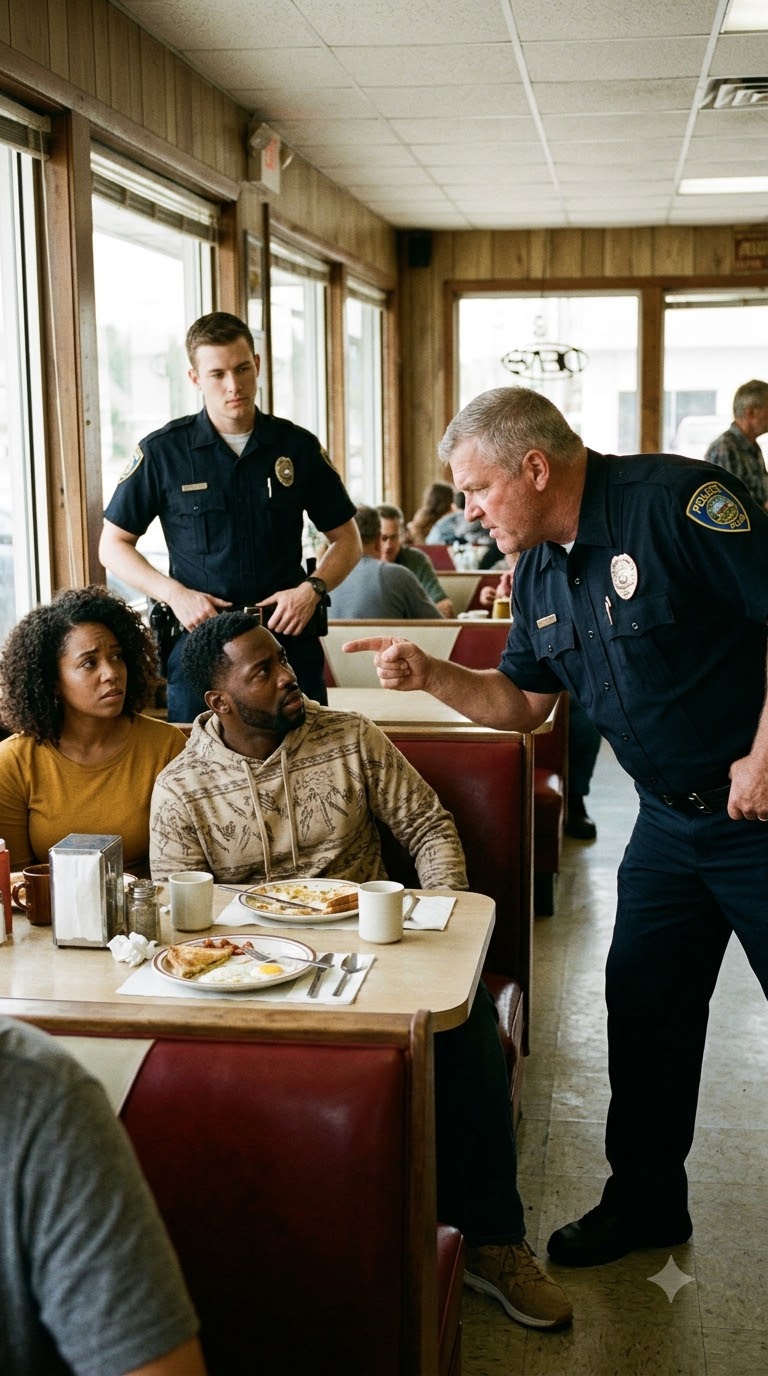
Instead, the department used the encounter as an opportunity to examine its procedures and reinforce expectations for handling uncertain identifications.
Graves was instructed to participate in additional supervisory review and training concerning investigative contacts, communication, and the documentation of reasonable grounds for suspicion.
Miller received guidance on how to raise concerns through the chain of command while continuing to meet his responsibilities as a patrol officer.
The department also contacted Brennan to explain that the incident had been reviewed and to provide information about the findings and the process for submitting any further concerns.
Brennan listened carefully.
He appreciated receiving a response, but he did not confuse a completed review with a guarantee that no similar encounter would happen again.
When asked whether he wished to provide additional feedback, he agreed.
He explained that his concern was not simply the inconvenience of being questioned during lunch.
It was the effect of the encounter on his daughter and the way the officers had initially treated his request for an explanation as resistance.
“I understand that police officers sometimes have to investigate situations that turn out to be innocent,” he said. “I’m not asking anyone to stop asking questions. I’m asking that the questions be grounded in facts and that people be treated with dignity while those facts are established.”
The supervisor thanked him for explaining his concerns.
Brennan ended the call without demanding a dramatic public apology or a special exception for himself.
He wanted the department to understand what had happened and to take appropriate steps to address it.
That was enough for the moment.
Several weeks later, Miller encountered a similar situation during a routine patrol.
A shop owner had reported seeing a man lingering near a row of parked vehicles. The initial description was incomplete, and the report raised a legitimate question about whether someone might be attempting to enter the cars.
Miller approached the area and saw a man standing beside a vehicle, speaking on his phone.
For a split second, the memory of the diner returned.
He reminded himself that a report was a reason to gather information, not proof of wrongdoing.
He introduced himself, explained why he was there, and asked the man whether he could clarify what he was doing.
The man explained that he was waiting for his sister, who had gone into a nearby store.
Miller asked whether the vehicle belonged to either of them.
The man pointed toward the driver’s seat and offered to show his registration.
Miller checked the available information, confirmed that there was no additional reason to suspect a crime, and thanked him for his cooperation.
The interaction ended without unnecessary confrontation.
As Miller returned to his patrol vehicle, he thought about the diner again.
He had not become a different person overnight. He was still a rookie, still learning, and still capable of making mistakes.
But he had learned that the smallest decisions could change the direction of an encounter.
Whether an officer explained a question.
Whether a person was given time to answer.
Whether uncertainty was treated as a reason to gather information or an excuse to assume the worst.
Those decisions mattered.
They mattered to the person being questioned, to the family watching nearby, and to the officers responsible for ensuring that an investigation remained fair.
Brennan did not hear about Miller’s later patrol encounter.
He returned to the routines that had occupied his life before the lunch at the diner.
He worked, spent time with Blanche, and took his daughter on weekend outings.
The blue-tree drawing found a place on the refrigerator.
A few days after their lunch, his daughter brought it to him while he was preparing breakfast.
“Daddy, I fixed it.”
Brennan looked at the picture.
The house remained yellow, the roof purple, and the tree blue. Three purple birds perched along the branches.
“What did you fix?”
She pointed to a small figure standing beside the house.
“That’s you.”
He smiled.
“And who’s that?”
“Me.”
She pointed to a taller figure beside the yellow house.
“Mommy.”
Brennan studied the drawing.
The figures had oversized heads, uneven arms, and feet that looked more like squares than shoes.
But they were standing together.
He looked at his daughter.
“I love it.”
She seemed satisfied.
“Can we put it where everyone can see?”
“Absolutely.”
He helped her secure the drawing to the refrigerator with a magnet.
Then he crouched beside her.
“Sweetheart, I want you to remember something about what happened at lunch.”
She looked up.
“What?”
“Sometimes people make mistakes. Sometimes they make assumptions without knowing enough. When that happens, you can ask questions, and you can tell a trusted adult when something doesn’t seem right.”
She listened carefully.
“But you don’t have to argue with everyone,” he continued. “You don’t have to prove that you’re a good person every time someone misunderstands you. You deserve to be treated fairly, and other people deserve that, too.”
She considered his words.
“Even if they don’t know us?”
“Even then.”
She glanced at the drawing.
“Even if our tree is blue?”
Brennan laughed.
“Especially then.”
She giggled and wrapped her arms around his neck.
He held her close for a moment longer than usual.
The encounter at the diner had not changed the facts of his life. He was still a father who wanted to keep his promises, a husband who wanted his family to feel safe, and a man who expected ordinary interactions to be handled with basic respect.
But the experience had reinforced something he already believed.
Fairness was not a reward for having the right job, the right connections, or the ability to recognize someone in a photograph.
It was not something a person had to earn by being unusually patient or exceptionally articulate.
It was a standard that should apply before anyone knew a person’s professional history, financial circumstances, or reputation.
Brennan had been an ordinary customer that afternoon.
He had been paying a bill, sitting beside his wife, and watching his daughter color a tree.
Nothing about his work history should have been necessary to establish that he deserved to be heard.
And Officer Miller’s recognition of his name, while important to the rookie’s understanding of the situation, was not what made the original treatment wrong.
The problem had existed before the recognition.
The solution had to begin with the facts.
A few weeks after the incident, Brennan and his family passed through the same stretch of Virginia on another trip.
Blanche suggested they stop somewhere for lunch.
Their daughter immediately asked whether they could return to the diner.
Brennan glanced at his wife.
She raised her eyebrows.
“Are you sure?”
Their daughter nodded enthusiastically.
“I want the little grilled cheese.”
Brennan considered the request.
He had no desire to let one unpleasant encounter determine every place his family could enjoy. But he also didn’t want to pretend that the experience had meant nothing.
After a moment, he nodded.
“All right. We can stop there.”
They entered the diner shortly after noon.
The waitress recognized them and greeted them warmly.
“Back for another lunch?”
Their daughter smiled.
“I’m comparing.”
The waitress laughed.
“Then I’ll bring both sandwiches again.”
They returned to the booth beside the window.
Sunlight crossed the table, just as it had before.
Blanche removed her cardigan and settled beside their daughter. Brennan placed his wallet near the bill and checked his phone once before putting it away.
His daughter noticed.
“You’re not going to look at it?”
“Not until we’re finished.”
She nodded approvingly.
“Good.”
Brennan smiled.
The memory of the previous visit remained, but it no longer occupied every corner of his thoughts.
He was not there to make a point or prove that he could return.
He was there because his family wanted lunch.
And this time, that was all the afternoon needed to be.
As their daughter began coloring another picture, Brennan looked around the room.
The waitress poured coffee.
A man near the counter laughed at something his companion said.
Someone opened the front door, letting in a brief gust of warm air.
Ordinary life continued.
Brennan knew that one difficult encounter would not resolve every question about fairness, authority, or the assumptions people made about strangers.
But he also knew that meaningful change did not always begin with dramatic speeches or extraordinary acts.
Sometimes it began when someone asked for the facts instead of accepting an assumption.
Sometimes it began when a rookie decided that following an instruction did not mean abandoning his judgment.
And sometimes it began when a father, after a frightening experience with his daughter watching, chose to explain the importance of dignity rather than teach her to expect hostility everywhere she went.
The lesson was not that every officer would behave like Sergeant Graves.
Nor was it that every officer would respond like Miller.
The lesson was that authority carried responsibility, and that responsibility did not disappear when an encounter became uncomfortable.
A uniform did not make an assumption true.
A broad description did not make every person who shared it a suspect.
And a request for an explanation was not automatically an act of defiance.
Brennan looked across the table at his daughter.
She had finished coloring another blue tree.
This one had a yellow bird.
“That’s a new idea,” he said.
She smiled.
“Trees can have different things.”
He nodded.
“That’s true.”
She pushed the drawing toward him.
“Do you like it?”
Brennan took a moment to study it before answering.
“I do. I like that you made it your own.”
She beamed and returned to her crayons.
Blanche reached across the table and squeezed his hand.
Brennan squeezed hers in return.
The bill could wait another minute.
His phone could remain untouched.
And for the moment, the most important thing in front of him was not an investigation, a report, or a conversation about what should have happened differently.
It was his family, safe beside him, sharing a meal in the sunlight.
He had promised his daughter that he would be present.
This time, as before, he intended to keep that promise.
