

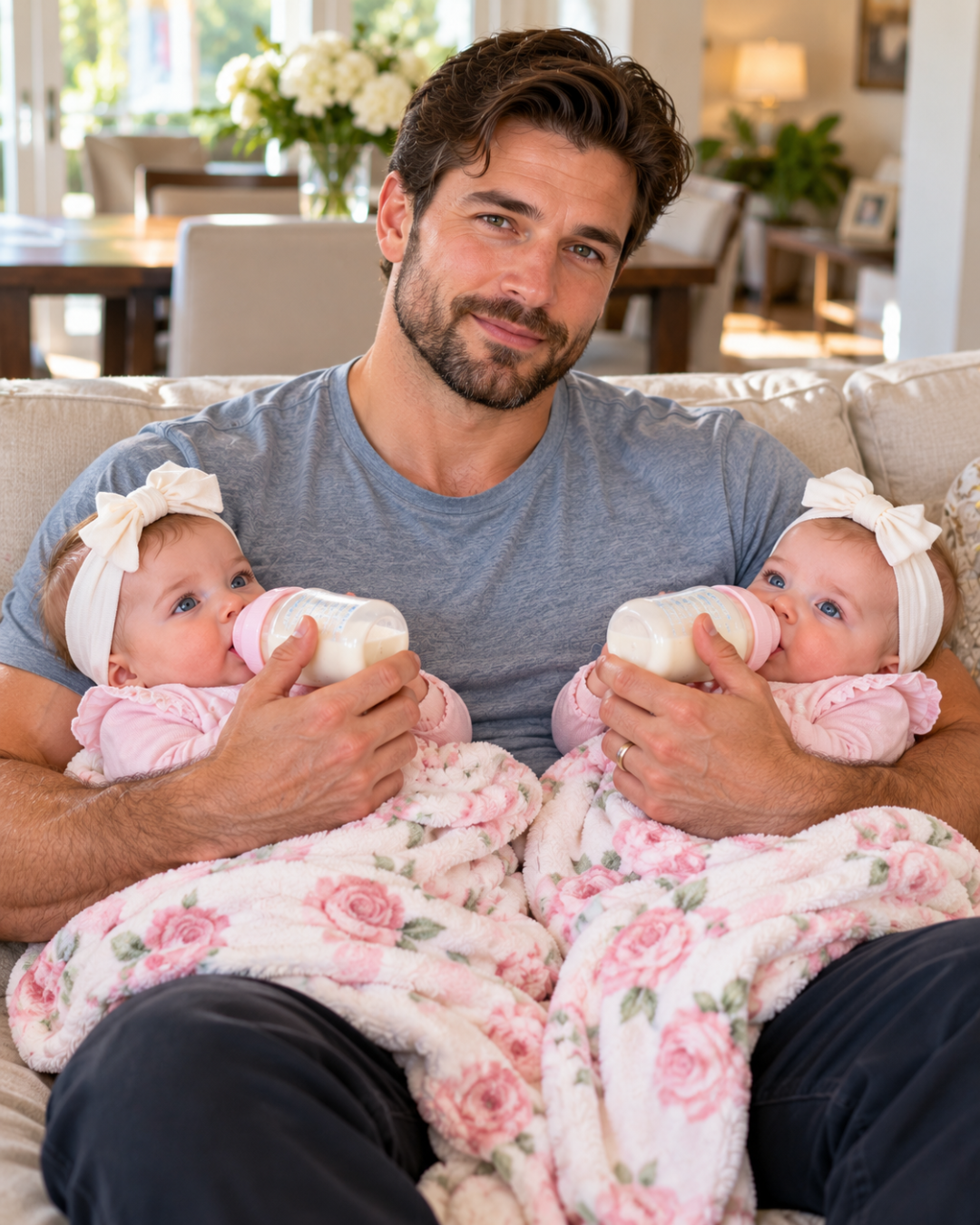
Part 1: The Decision That Haunted Me
For three months after my wife died giving birth to our twin daughters, her mother barely spoke to me.
I believed she blamed me for the decision that had saved the babies but cost Mary her life.
Every time I sent photographs of the girls, her response was identical.
“Thank you,” she’d reply.
Two words.
No questions about how the babies were doing. No offer to visit. No indication that she wanted to be part of their lives.
At first, I told myself she simply needed time.
Then the weeks became months, and I began wondering whether she could even bear to look at me.
I thought I understood why.
Because there was one sentence I couldn’t stop hearing.
“Save the babies.”
I’d said it in a hospital room while my wife lay beside me, fighting for her life.
And by the following morning, Mary was gone.
Before everything happened, we’d been looking forward to bringing our daughters home.
Mary’s pregnancy hadn’t been easy. There had been complications, frightening appointments, and moments when neither of us knew what to expect.
But during our final appointment, the doctors reassured us that both babies were healthy.
For the first time in months, we allowed ourselves to relax.
That morning at the hospital, we were still joking about names.
Mary insisted that twins didn’t need matching names.
I argued that perhaps we should have settled the matter months earlier.
She laughed and asked me to pass her water.
I remembered that laugh more clearly than almost anything else.
Because only hours later, the room was filled with doctors speaking urgently about complications neither of us had expected.
The delivery had become dangerous.
The doctors warned us that saving all three might not be possible.
I looked at Mary, desperately hoping someone would offer another solution.
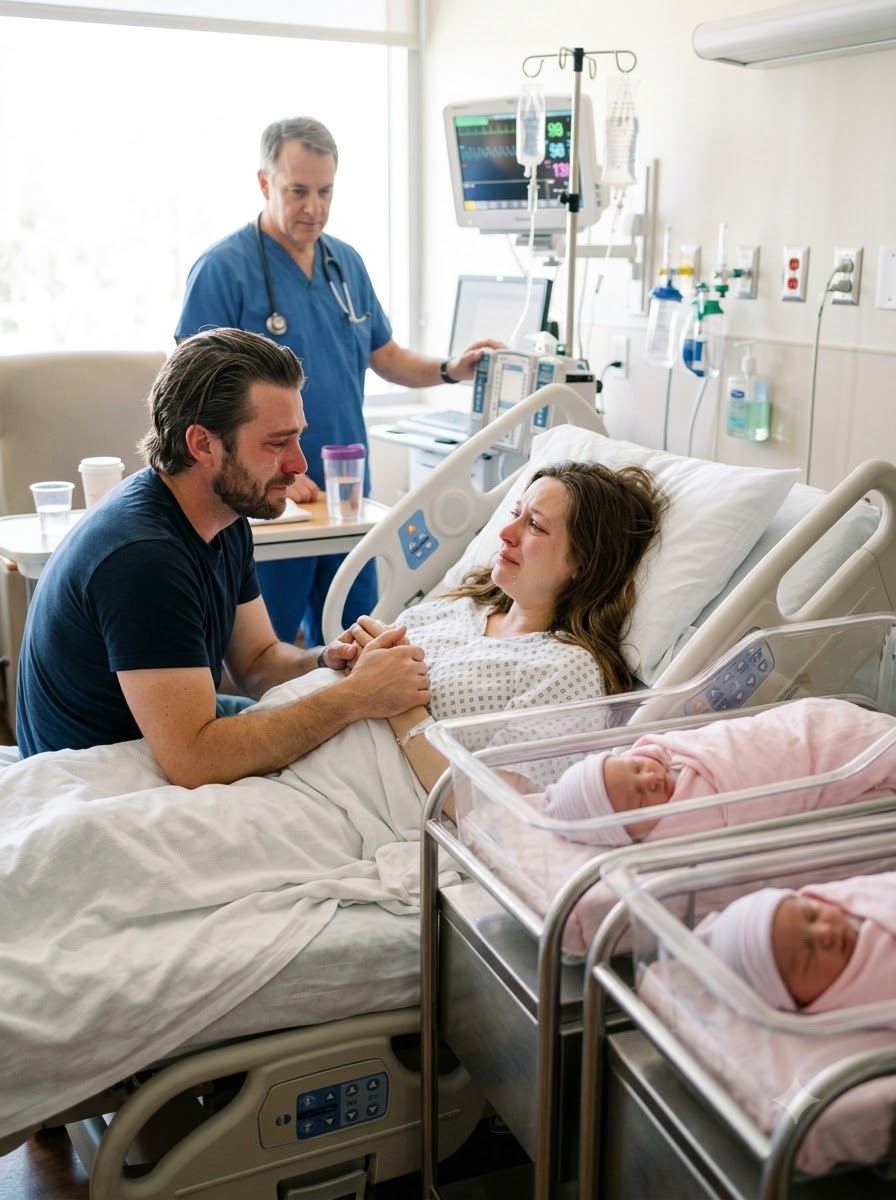
She gripped my fingers.
“The girls. Obviously the girls.”
I wanted to argue.
I wanted to tell her that we couldn’t make a decision like that, that there had to be another way, that someone needed to find one.
But she squeezed my hand again.
And finally, I said the words that would haunt me for months.
“Save the babies.”
By morning, Mary was dead.
I went home carrying two newborn daughters and a hospital bag filled with the belongings she’d brought with her.
Her sweatshirt was still inside.
I couldn’t bring myself to wash it.
For weeks, I couldn’t even take it out.
Everyone told me I needed to stay strong for the girls.
So I tried.
I prepared bottles and recorded every feeding because exhaustion had made my memory unreliable.
I checked the cribs over and over, sometimes standing beside them long after both babies had fallen asleep, watching their tiny chests rise and fall.
My sister brought meals.
Most of them remained untouched.
I lost weight.
Sleep became something I dreaded because whenever the house grew quiet, I heard myself speaking in that hospital room.
Save the babies.
Could I have said something different?
Could I have demanded another doctor, another treatment, another chance?
Would Mary still be alive if I’d refused to answer?
I knew she had made the decision herself.
I knew what she’d asked of me.
But knowing didn’t stop the guilt.
I couldn’t shake the feeling that I’d failed the person I loved most.
Then, last Thursday, the doorbell rang.
Mary’s mother was standing on my porch.
She was trembling, holding an envelope against her chest.
The moment I saw her, I began apologizing.
“I didn’t want to lose her. She asked me to, and I agreed. I should have done something.”
“I know.”
“No. You don’t understand.”
She glanced down at the envelope.
“Do you think I stayed away because I blame you?”
I couldn’t answer.
“Mary asked me not to tell you something. I promised her. I thought she’d have time to tell you herself.”
From the nursery, one of the babies made a soft cooing sound.
Her grandmother turned toward the hallway.
“Can we sit down?”
We went into the kitchen.
I pulled out a chair at the same table where Mary had once spread sheets of paper covered in possible baby names.
Her mother sat across from me, keeping the envelope on her lap.
For a moment, she simply stared at it.
Then she looked up.
“There’s something about Mary’s childhood you never knew.”
“I knew her for nine years.”
“I know.”
“She told me everything.”
Her mother met my eyes.
“She didn’t tell you what happened after her father died.”
I knew Mary’s father had suffered a heart attack when she was eight years old.
She’d told me about the ambulance.
About the fear.
About remembering her mother’s shoes beside the front door.
But she’d never spoken much about the years that followed.
“After the funeral,” her mother said.
She stopped, struggling to continue.
“I kept her fed. I got her to school. But I stopped being there.”
“What does that mean?”
“She had his eyes. Sometimes she’d smile, and I’d have to leave the room.”
I pictured Mary’s smile.
“Why?”
“Because I missed him so much I couldn’t stand it.”
Her thumb moved back and forth across the envelope.
“One night she found me crying over his picture.”
Mary had been only eight.
She’d climbed onto the sofa beside her mother and asked a question.
“Do you wish Daddy was here?”
“More than anything,” her mother answered.
Then little Mary had asked something no child should ever have to wonder.
“More than you want me?”
My chest tightened.
“What did you say?”
Her mother shook her head.
“I didn’t answer.”
“She was eight.”
“I know.”
“She thought you didn’t want her?”
“For years.”
I leaned back in my chair.
Suddenly, pieces of Mary’s personality began falling into place.
She hated asking people for favors.
Even when she wanted something as simple as a glass of water, she sometimes apologized for needing help.
She worried about being a burden.
I’d always believed that was simply how she was.
Now I wondered how much of it had begun with a frightened eight-year-old girl sitting beside her grieving mother.
“She stopped bringing me his pictures,” her mother continued.
“Stopped asking about him. I thought she was getting better.”
“She was trying not to upset you.”
“Yes.”
A cry came from the nursery.
I excused myself and went to pick up our smaller daughter.
She settled against my chest almost immediately.
Her sister slept in the neighboring crib, one tiny fist resting beside her cheek.
Neither of them knew what had happened in the hospital.
Someday, they would ask why their mother wasn’t there.
That conversation frightened me more than anything.
When I returned to the kitchen, Mary’s mother was studying a photograph attached to the refrigerator.
Mary was laughing in the picture, holding a pair of tiny shoes she’d purchased before we learned we were expecting twins.
“She was so happy,” her mother whispered.
“She was.”
Her eyes lowered.
“Before your wedding, Mary finally told me what that night had done to her.”
“Did you apologize?”
“Of course.”
“Did she forgive you?”
“She said she knew I loved her. She just wished she’d known it when she was little.”
I sat down again.
“When she became pregnant, she brought it up again,” her mother continued. “She said she couldn’t bear the thought of her girls feeling unwanted if anything happened.”
“What did you tell her?”
“I promised I’d be there. Whatever happened.”
I looked at the envelope in her hands.
“And then you disappeared.”
She flinched.
“Yes.”
Then a memory returned so suddenly that I almost stopped breathing.
A few weeks before the delivery, Mary and I had been lying in bed.
One of the babies kicked hard enough to make her stomach move visibly.
I’d laughed.
Mary hadn’t.
She’d turned toward me with an expression I hadn’t understood.
“If something happened to me, would you ever wish we’d never had them?”
“What kind of question is that?”
“Please. Just answer.”
“Of course not.”
“Even if you missed me?”
I’d turned to face her.
“I’d miss you every day. But I’d still love them every day.”
Mary had begun crying.
I kissed her forehead, told her she was exhausted, and promised everything would be fine.
I’d assumed she was simply frightened by the pregnancy.
Now I understood that she’d been asking something much deeper.
“She asked me something,” I told her mother.
I described that evening.
Her face changed.
“She asked you that?”
“Yes.”
“And you told her you’d still want them?”
“Of course.”
She covered her mouth with one hand.
“That’s what I should have told her when she was eight.”
I looked toward the nursery.
“She never told me why she asked.”
“She was going to. After the girls came.”
“Why wait?”
“She was ashamed that one unanswered question still frightened her.”
“She didn’t need to be ashamed with me.”
“I know.”
For a moment, I felt angry with Mary.
Not because she’d chosen our daughters.
Not because she’d been frightened.
But because she’d carried that pain while I was right beside her.
Then I remembered her tears that night.
Maybe she’d tried to explain.
Maybe I’d been so busy reassuring her that I’d forgotten to listen.
Her mother pushed the envelope across the table.
“She wrote this for me. She said I could show you if anything ever happened to her. I couldn’t bring myself to do it until now.”
“What was she afraid of?”
She moved it closer.
“Read it.”
I carefully unfolded the paper.
Mary’s handwriting filled the page.
Even the tiny hearts she sometimes drew above letters were there.
I touched the writing with my fingertips.
Then I began reading.
And the first words made my eyes fill with tears.
Part 2: The Letter Mary Never Meant Me to Read
The letter began simply.
“Mom,”
“I know you loved me.”
“I know that now.”
“But when I was little, I thought you would have traded every day with me to have Dad back.”
“I know you never meant that.”
“Still, I spent years trying to be quiet enough not to make you sad.”
I stopped reading.
I could almost see Mary as a little girl, carefully watching her mother’s face before deciding whether it was safe to speak.
For years, she’d tried not to upset anyone.
She’d carried that habit into adulthood.
And I had never known why.
I looked back at the page.
“Now I’m going to have two daughters.”
“I already love them more than I know how to say.”
“And I’m scared.”
“Not of them.”
“Of what grief can make people believe.”
My hands began shaking.
“He will love them.”
“I know that.”
“He doesn’t know how much he’s already healed in me.”
“Someday I’ll tell him.”
“I know I’m probably worrying about nothing.”
“But if something happens to me, he’ll blame himself.”
“He’ll think there was something else he should have said or done.”
“Please don’t let the girls grow up thinking their mother was someone they cost him.”
“Tell him I trusted him.”
“Tell him I wanted them.”
“And please, Mom.”
“Don’t disappear.”
“You promised.”
“I want my girls to know they were wanted.”
“Always.”
I reached the bottom of the page.
Then I went back and read it again.
One sentence held me there.
He doesn’t know how much he’s already healed in me.
For three months, I’d replayed the decision in the delivery room.
I’d believed that agreeing with Mary meant I’d failed her.
But when she’d written this letter, she’d been thinking about something else entirely.
An evening in our bedroom.
A question I hadn’t understood.
And an answer I’d almost forgotten.
Without realizing it, I’d helped Mary believe something she’d struggled with since childhood.
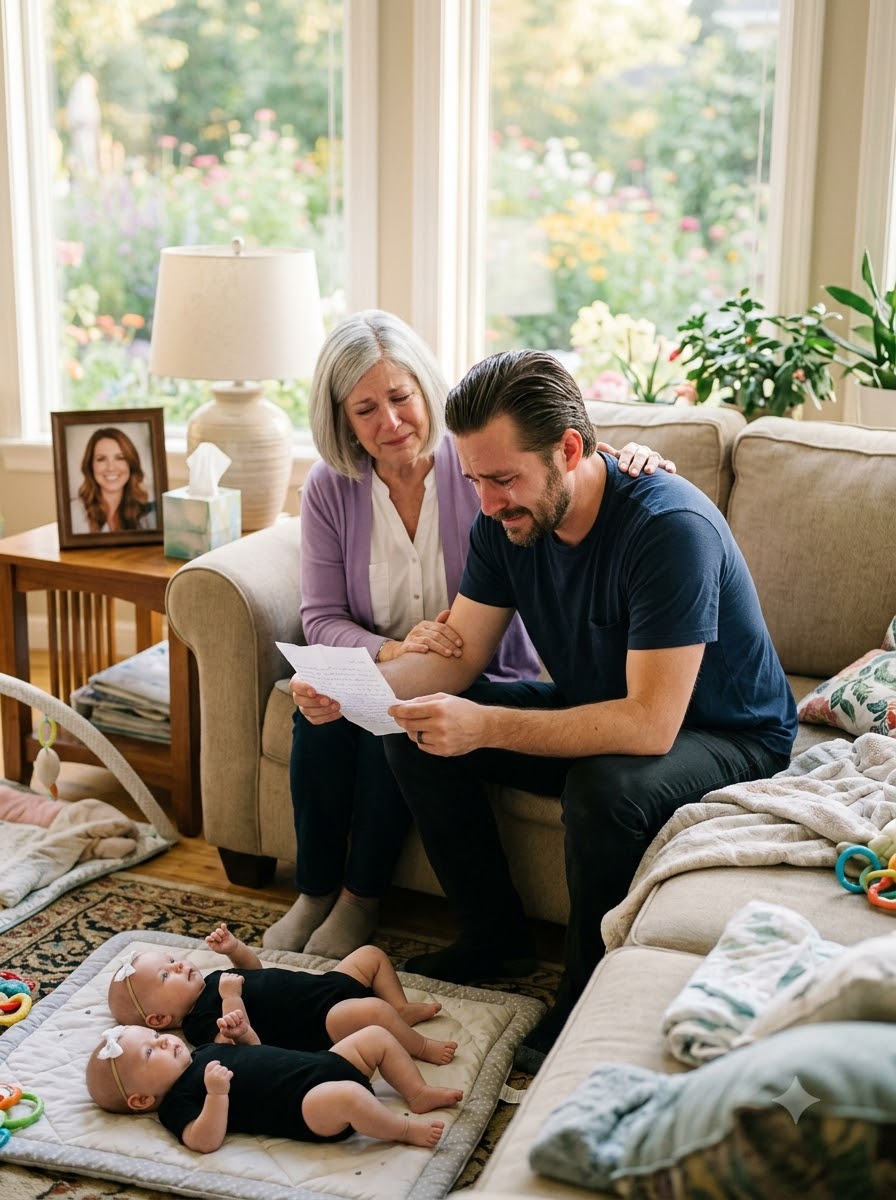
That grief didn’t have to erase love.
That missing someone didn’t mean regretting the people who remained.
That our daughters could be wanted even if their mother wasn’t there to raise them.
I looked at Mary’s mother.
“She trusted me?”
She nodded.
“Even knowing what might happen?”
“She wasn’t expecting to die. She was afraid because she knew what it was like to grow up around grief.”
I read the words again.
Tell him I trusted him.
In the hospital, Mary had squeezed my hand while the doctors waited for an answer.
“The girls. Obviously the girls.”
I’d always remembered that touch as the beginning of our goodbye.
Now I wondered whether she’d also been asking me to trust the choice she had already made.
I flattened the letter on the kitchen table.
“She told you not to disappear.”
“I know.”
“You promised her.”
“Yes.”
“And when I sent you pictures of her daughters, you wrote two words.”
I looked directly at her.
“That’s all you had for them?”
She began crying.
I didn’t move to comfort her.
“I saw Mary every time I looked at them,” she said. “And all I could think was that she should be holding them.”
“They’re here.”
“I know.”
“Mary isn’t. But they are.”
“I know.”
“You knew what your silence did to her.”
She nodded.
“And you left us alone anyway.”
“Yes.”
I wanted her to argue.
To insist that I didn’t understand.
To offer some excuse that I could challenge.
Instead, she lowered her head.
“Mary spent her childhood waiting for me to come back. And I’ve made her daughters wait for me, too.”
I stood and walked to the kitchen sink.
Four bottles were drying on a towel.
Mary had teased me during the pregnancy about how organized I’d become.
Now I wrote down every feeding because there were nights when I couldn’t remember which daughter I’d just fed.
I stared at the bottles.
“I thought you hated me,” I said.
Her mother looked up.
“I thought you hated yourself for saying yes.”
I turned away.
“I did.”
Then I faced her.
“But why didn’t you come?”
She wiped her cheeks.
“I was afraid I’d look at those girls and wish Mary were here instead. I was ashamed of the thought. So I stayed away.”
“The very thing Mary asked you not to do.”
“I know.”
I gripped the edge of the counter.
“Why come today?”
“Yesterday you sent a photograph.”
I remembered taking it.
Both girls had been lying together on their blanket.
One was smiling.
The other had grabbed her sister’s sleeve.
I’d sent the photograph with a short message.
“They’ve started smiling when I sing.”
“I read that message,” her mother said. “And I remembered how Mary used to sing when she was little.”
She paused.
“Then I realized I couldn’t remember the last time I’d sung with her.”
She explained that she’d taken out Mary’s letter again.
She’d read every word.
Then she’d found two little dresses she’d bought before the twins were born.
The dresses were still unopened.
That morning, she’d driven to our house.
She’d remained outside for nearly an hour, trying to find the courage to ring the bell.
“I almost left.”
“What stopped you?”
“I imagined them getting old enough to ask why Grandma never came.”
I glanced toward the nursery.
“And what would you have said?”
She shook her head.
“Nothing that wouldn’t have hurt them.”
For a while, neither of us spoke.
The house was quiet except for the faint sounds coming from the nursery.
Then I admitted something I hadn’t told anyone.
“Sometimes I wish Mary were here so badly I feel guilty looking at the girls.”
Her mother listened.
“I’ll be holding one, and I’ll think Mary should be doing this. She should be here for the first smiles. She should know which one hates a cold bottle.”
My throat tightened.
“And then I think about what I said at the hospital.”
“Mary asked you.”
“I agreed.”
“Because you trusted her.”
I shook my head.
“I keep thinking I traded her for them.”
She reached across the table.
I pulled my hand away.
Not because I hated her.
But because I needed to say the rest.
“I’ve never wished they weren’t born. Not once.”
“I believe you.”
“But I wish she hadn’t died.”
“Of course you do.”
I looked at her tear-streaked face.
“Those aren’t the same wish,” she said.
The words settled between us.
I thought about Mary’s question that night.
Even if you missed me?
I’d told her I would miss her every day and still love our daughters every day.
She’d believed me.
And now her mother was telling me that I was allowed to feel both things.
I could love the girls with everything I had.
And still wish desperately that Mary were alive.
One feeling didn’t cancel out the other.
A baby began crying.
I went into the nursery and lifted her from the crib.
In the process, I accidentally woke her sister.
Within moments, I had one daughter resting against each shoulder.
Their grandmother appeared in the doorway.
“Mary would’ve laughed at this,” I said.
“Why?”
“She said I couldn’t hold a grocery bag without dropping something.”
Her mother laughed softly.
Then she looked at the babies.
“Could I hold one?”
I hesitated.
She lowered her gaze.
“I understand.”
I looked at her.
“These girls can’t spend their lives waiting for you to be ready.”
“I know.”
“I won’t tell them you’ll come if you might disappear.”
She nodded.
“I’ll earn it. If you’ll let me.”
I stood there for another moment.
Then I carefully placed our smaller daughter into her grandmother’s arms.
She held the baby close.
“Hello, sweetheart,” she whispered. “I’m your grandma.”
The baby’s tiny fingers caught the collar of her blouse.
Mary’s mother smiled through tears.
I watched her holding my daughter.
Part of me was still angry.
Part of me wanted to ask why she’d waited so long.
Why she’d left me alone with two newborn babies when she’d promised Mary she would be there.
But I could also see that she was finally trying to do what her daughter had asked.
And I knew that if she meant to remain in their lives, it would have to begin somewhere.
Still, one afternoon couldn’t repair three months of silence.
A few tears couldn’t erase years of hurt.
And a promise meant very little unless someone was willing to keep it.
I didn’t know whether she would return.
But the next morning, the doorbell rang again.
And this time, she had come to see her granddaughters.
Part 3: The Love Mary Wanted Her Daughters to Know
Mary’s mother returned the following morning.
Then she came back the day after that.
At first, I didn’t know what to make of it.
I’d spent three months expecting silence from her.
Now she was standing in my kitchen, washing bottles, learning the twins’ routines, and asking what needed to be done.
She began recognizing the differences between their cries.
She learned which daughter settled more quickly when held against someone’s shoulder.
She watched the girls so I could finally sleep.
I was grateful.
But I didn’t pretend everything had been repaired.
There were still moments when I remembered the unanswered photographs.
The weeks when I hadn’t known whether she blamed me for Mary’s death.
The nights I’d spent wondering how I was supposed to raise two babies without the woman who had wanted them so much.
Those memories didn’t disappear simply because their grandmother had returned.
But I began noticing something else.
She was staying.
One afternoon, while feeding our smaller daughter, the baby curled her tiny fingers around her grandmother’s thumb.
Mary’s mother suddenly went still.
“Mary used to do that,” she whispered.
Her eyes filled with tears.
Then she glanced toward the doorway.
I recognized that expression.
It was the same impulse she’d described from Mary’s childhood.
The urge to leave the room when grief became too overwhelming.
I watched her carefully.
For a moment, I thought she might hand me the baby and walk away.
Then my daughter made a small, impatient sound.
Her grandmother looked down.
“I’m here,” she whispered.
She wiped her cheeks.
Then she continued feeding her.
This time, she stayed.
I didn’t say anything.
I didn’t need to.
For the first time, I could see her choosing differently.
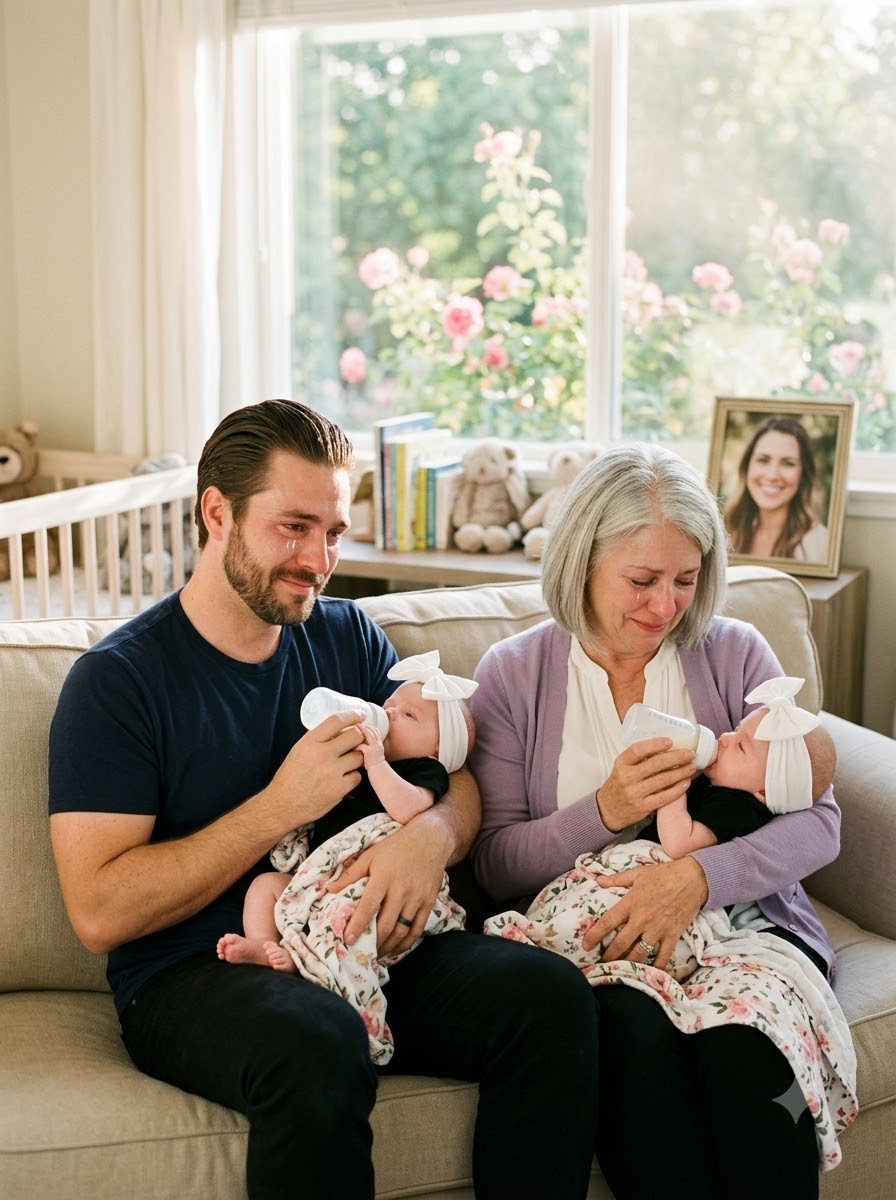
A week later, she arrived carrying an old photograph album.
We sat together and turned the pages.
There was Mary as a little girl, smiling with her front teeth missing.
Mary wearing a crooked birthday hat.
Mary sitting on her father’s shoulders.
Her mother rested her fingertips on that last photograph.
“I couldn’t look at this for years.”
Then she began telling me about the day it was taken.
Mary had insisted on another ride while her father pretended his legs were too tired to carry her.
Her mother remembered the way she’d laughed.
The way she’d demanded he keep going.
And the way he’d pretended to be exhausted even though he was clearly enjoying every moment.
We laughed together.
It surprised me.
Since Mary’s death, laughter had felt almost impossible.
Sometimes I’d smiled when one of the girls made a funny expression.
Sometimes my sister had said something that briefly distracted me.
But laughter had always been followed by guilt.
As though enjoying a moment without Mary meant forgetting her.
That afternoon, looking through photographs of her childhood, I realized something.
We could remember Mary without speaking only about the day she died.
We could tell stories about the years she’d lived.
About the things she’d loved.
About the person she’d been long before she became my wife or the mother of our daughters.
There were memories I didn’t have.
Stories from her childhood that only her mother could tell.
And someday, those stories would belong to our girls.
Later that day, I opened the hospital bag I’d been avoiding for three months.
Mary’s sweatshirt was still inside.
I carefully lifted it out.
There was a faint trace of her soap in the fabric.
I held it for a long time.
I’d been afraid to touch her belongings.
Afraid that washing them or moving them would somehow make her absence more permanent.
I’d told myself that leaving everything untouched was a way of keeping her close.
But the sweatshirt had spent three months hidden inside a bag.
And the girls had never seen it.
Eventually, I folded it and placed it beside the photograph album.
No longer hidden away.
When Mary’s mother noticed it, she stopped.
“She wore that the day she went in,” she said.
I nodded.
“She bought it on our first trip together. It rained that weekend. She insisted the weather made everything romantic.”
Her mother smiled.
“She did that. Found something good in whatever went wrong.”
I looked at the sleeves.
Mary had always pulled them over her hands, stretching the fabric slightly.
I could picture her doing it.
I could almost hear her laugh.
“I thought taking it out of the bag meant I was letting her go.”
Her mother looked at me.
“No,” she said. “It means the girls can know her.”
I glanced toward the nursery.
For months, I’d been frightened by the thought of our daughters growing up without their mother.
I’d imagined all the questions they would eventually ask.
Why wasn’t she there?
What had happened at the hospital?
Had she wanted them?
Would their lives have been different if they hadn’t been born?
Those questions terrified me because I knew how easily grief could become something a child misunderstood.
Mary had known it too.
That was why she’d written the letter.
That was why she’d asked her mother not to disappear.
She hadn’t wanted our daughters to grow up believing they were responsible for the sadness around them.
And she’d trusted me to make sure they knew the truth.
That evening, after their grandmother went home, I sat on the floor between the cribs.
Both girls were awake.
I began telling them about Mary.
I told them how she’d argued that twins didn’t need matching names.
How she’d laughed when I suggested we should have made those decisions earlier.
How she’d always sung terribly but never seemed embarrassed about it.
I told them about the morning at the hospital, when I couldn’t find her water and she’d laughed at me.
One baby waved her little fist.
Her sister watched my face.
I knew they couldn’t understand the words yet.
But I wanted to begin telling them anyway.
“Your mother wanted you,” I whispered. “Both of you.”
I reached into the cribs and touched their tiny hands.
“And I do too.”
My throat tightened.
For months, I’d believed that the most important part of Mary’s story was the terrible decision we’d faced during delivery.
I’d replayed those moments so often that sometimes I could barely remember anything else.
But Mary had been so much more than the way she’d died.
She’d been a little girl who loved her father.
A daughter who’d spent years afraid of upsetting her mother.
A woman who hated asking for favors.
A wife who could make a rainy weekend feel romantic.
And a mother who’d loved her daughters before she ever saw their faces.
She’d wanted them.
She’d trusted me.
And she’d believed that even if I missed her every day, I would never wish our girls hadn’t been born.
I wanted to spend the rest of my life proving that she had been right.
In the days that followed, Mary’s mother continued coming over.
She washed bottles.
Helped with feedings.
Learned the girls’ different cries.
And sometimes, when I was too exhausted to think clearly, she took over long enough for me to rest.
We didn’t talk about the letter every day.
We didn’t pretend the past had been erased.
There were still difficult conversations waiting for us.
There were apologies that would need to be supported by more than words.
And there would be moments when grief made everything feel overwhelming again.
But something had changed.
When her granddaughters needed her, she stayed.
When memories of Mary brought tears, she didn’t immediately leave the room.
She began doing the thing she’d once been unable to do for her own daughter.
She allowed herself to miss someone while still being present for the people who remained.
I began learning to do the same.
There were still mornings when I woke and reached toward the empty side of the bed.
There were moments when one of the babies smiled and I felt a sudden ache because Mary wasn’t there to see it.
Sometimes I still heard the doctors speaking in the hospital.
Sometimes I still heard my own voice.
“Save the babies.”
I couldn’t change what had happened.
I couldn’t go back and demand another outcome.
I couldn’t bring Mary home.
But I could remember that she had made her wishes clear.
And I could remember the words she’d written before the girls were born.
“Tell him I trusted him.”
“Tell him I wanted them.”
Those words didn’t erase my grief.
They didn’t make the loss easier.
But they reminded me that Mary hadn’t wanted our daughters to carry the weight of what happened.
She wanted them to grow up knowing they were loved.
I knew the day would eventually come when our daughters asked about their mother.
Perhaps they’d see her photograph and wonder why she wasn’t there.
Perhaps they’d ask why other children had mothers waiting for them at school while theirs did not.
Perhaps they’d want to know what happened when they were born.
I couldn’t protect them from every painful truth.
But I could make sure they never mistook that truth for blame.
I wouldn’t tell them they had cost me Mary’s life.
I wouldn’t allow my sadness to make them feel unwanted.
I’d tell them their mother loved them before she ever held them.
I’d tell them about her laughter.
About her terrible singing.
About the way she found something beautiful in a rainy weekend.
I’d tell them how much she’d wanted to meet them.
And when they were old enough to understand, I’d tell them that their mother had trusted me with the decision she’d made.
I would tell them that I trusted her too.
Their grandmother would have stories of her own.
Stories about Mary as a little girl.
About the crooked birthday hat.
About riding on her father’s shoulders.
About the songs she’d sung and the things she’d done long before I knew her.
Together, we could give our daughters memories of their mother through the people who had loved her.
Not memories of the hospital alone.
Not a story defined only by tragedy.
But the story of an entire life.
That night, I stood beside the cribs for a long time.
The girls were growing so quickly.
Already, I could recognize little differences between them.
One disliked a cold bottle.
The other sometimes reached toward her sister.
They were beginning to smile when I sang.
Mary should have been there to see all of it.
I would always wish she were.
But that wish didn’t mean I loved our daughters any less.
For the first time, I understood the difference.
I could miss Mary with everything in me and still be grateful for the two little girls sleeping in front of me.
I could grieve the life we’d lost without regretting the lives we’d brought into the world.
I could tell them their mother was gone without ever making them feel that they were the reason I was unhappy.
I leaned over the first crib and kissed our daughter’s forehead.
Then I kissed her sister.
The house was quiet.
But it no longer felt quite as empty as it had before.
Mary’s photograph album was nearby.
Her sweatshirt was no longer hidden inside the hospital bag.
And her letter was something I could return to whenever the guilt threatened to overwhelm me.
I thought about the words she’d written to her mother.
“Don’t disappear.”
“You promised.”
“I want my girls to know they were wanted.”
“Always.”
Her mother had finally begun keeping that promise.
And I intended to keep mine.
I would still have difficult nights.
There would still be moments when I missed Mary so badly that I could barely breathe.
There would still be questions I couldn’t answer.
But tomorrow morning, the girls would wake up hungry.
I’d prepare their bottles.
Their grandmother would come back.
And we’d continue learning how to live with Mary’s absence without allowing that absence to define everything.
I looked at our daughters one last time before turning off the light.
Their mother had loved them.
I loved them.
And as they grew, they would never have to wonder whether that love was real.
Because whatever grief the years might bring, they would know that they had been wanted from the very beginning.
And together, we would keep telling them about Mary.
