

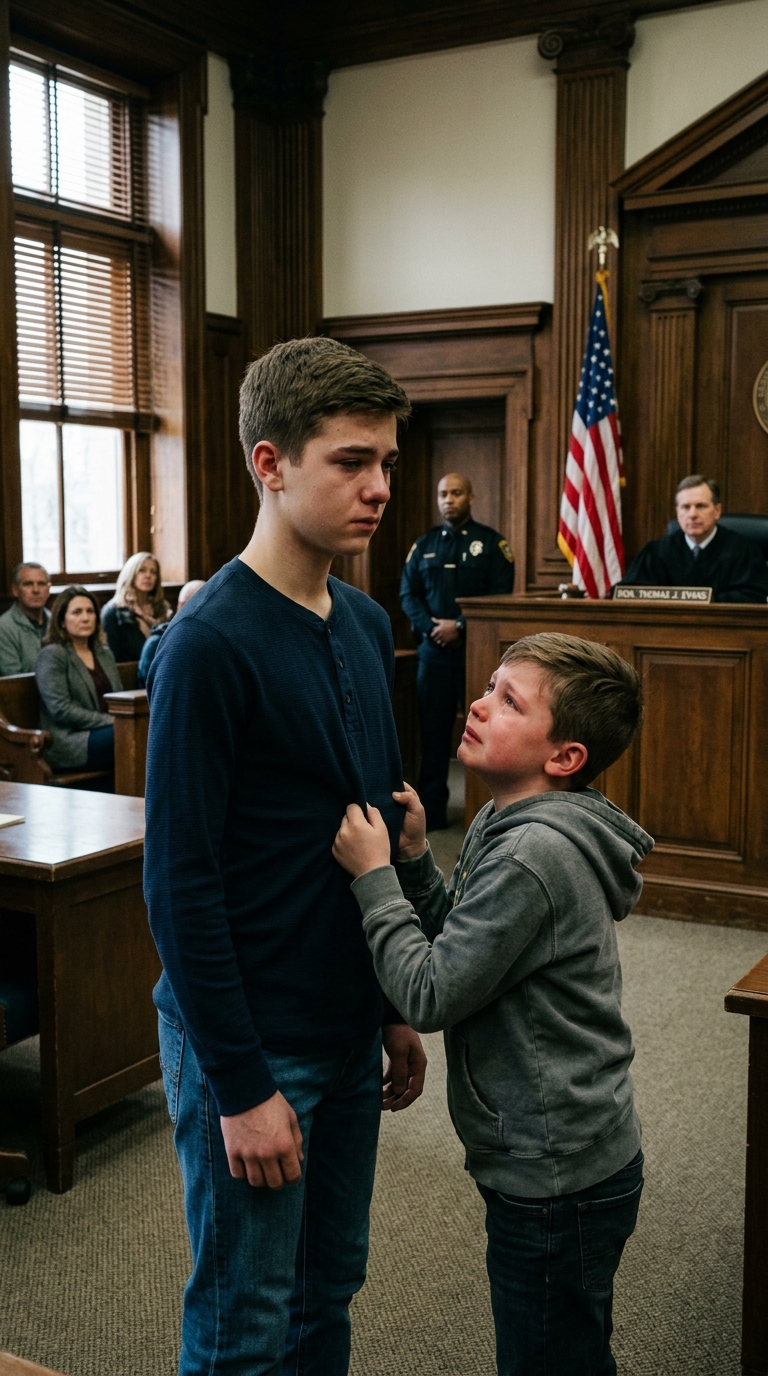
The Promise I Made Outside the Courthouse
When Mason Reed was fourteen, he made a promise to his little brother Caleb that he had no idea how he would ever keep. Caleb was only six at the time, small enough to carry a stuffed bear everywhere, but old enough to understand when adults were whispering about things children should never have to hear.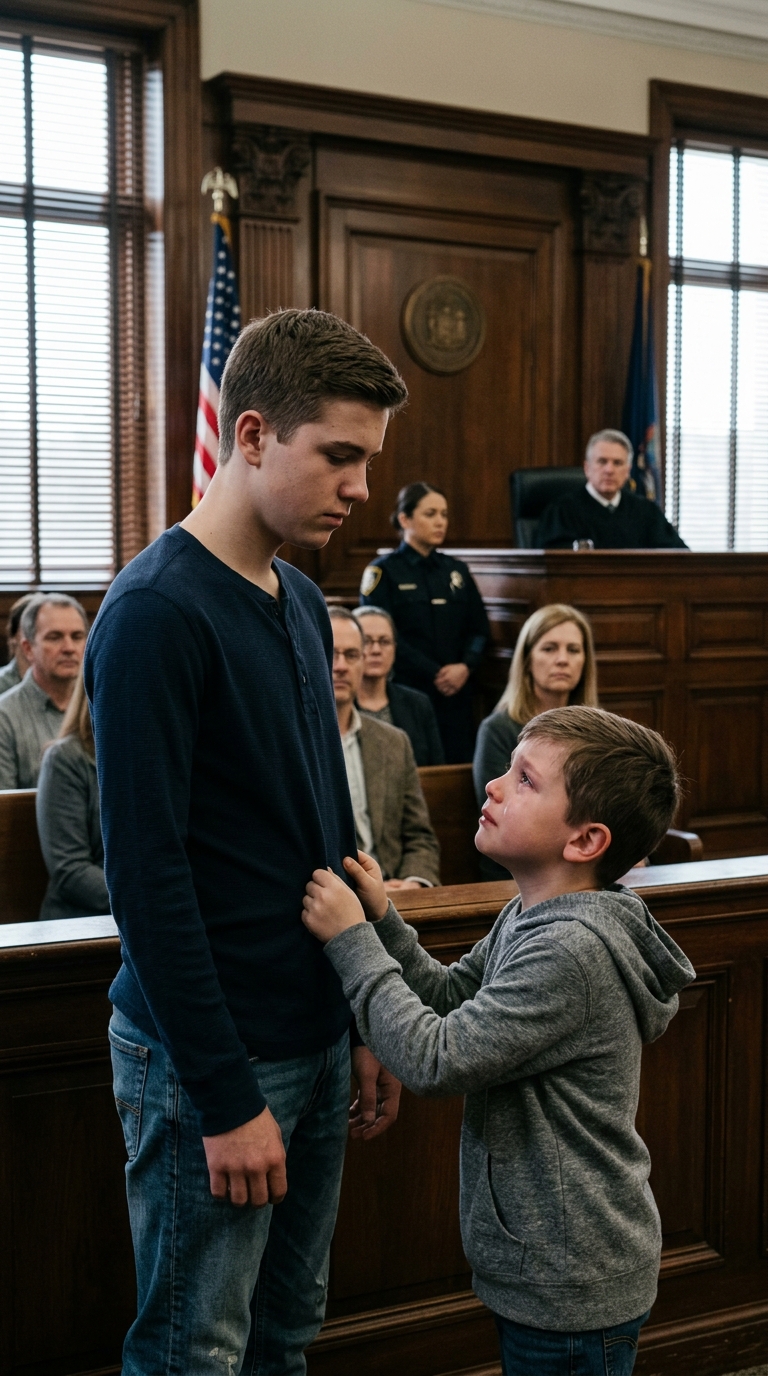
The day they were separated, Caleb stood beside a caseworker’s car, both hands clutching Mason’s jacket.
“You’re coming too, right?” Caleb asked.
Mason wanted to say yes.
Instead, he knelt down, forced a smile, and said, “This isn’t forever. I’m going to bring you home.”
That sentence became the only thing keeping him going.
Growing Up Too Fast
Their mother had struggled for years. Some days she was warm, funny, full of stories. Other days, she disappeared into silence, leaving Mason to cook dinner, help Caleb get ready, and act like everything was normal.
By high school, Mason already knew how to stretch money, calm nightmares, and explain situations no child should ever have to explain.
But love wasn’t enough for the system.
One winter evening in Cedar Rapids, Iowa, two social workers came to their apartment. Mason remembered Caleb’s crying more than anything else.
After that, Caleb moved between foster homes while Mason stayed behind—too young to be a guardian, too old to be treated like a child.
But he kept going.
Every Dollar Had a Purpose
Mason worked anywhere he could.
He stocked shelves before sunrise, cleaned after school, and took night classes to finish his GED. He bought used furniture, saved coupons, and kept an envelope labeled “Caleb’s Room” hidden under his mattress.
Inside were folded bills, coins, and a small photo of Caleb holding his dinosaur blanket.
He never spent anything without asking himself one question:
Would this bring Caleb home?
During visits, Caleb always asked the same thing.
“When can I live with you again?”
And Mason always answered, “Soon.”
Even when it felt heavier each time.
The Room Upstairs
Mason’s basement apartment was clean, but too small. According to the reports, it wasn’t enough.
Caleb needed his own room.
Mason knew that. He just didn’t know how to afford it.
His landlady, Mrs. Whitaker, lived upstairs. A retired school secretary with sharp eyes and a quiet habit of caring more than she admitted.
One evening, she knocked with a plate of cookies.
“Court again?” she asked.
Mason nodded.
“They said the place isn’t enough,” he admitted. “They keep saying I’m improving, but not enough.”
Mrs. Whitaker looked around the small space, then sighed.
“There’s an empty room upstairs. Needs paint, closet sticks, but it’s a real bedroom.”
Mason froze.
“I can’t afford more rent.”
“I didn’t ask you to,” she said. “Just don’t ruin my floors.”
For the first time in months, Mason laughed.
That night, he bought blue paint because Caleb once said blue made him feel safe.
Proving He Could Stay
The room wasn’t fancy.
A secondhand bedframe. A scratched dresser. Mismatched curtains.
But Mason washed Caleb’s dinosaur sheets, placed the stuffed bear on the pillow, and stuck glow-in-the-dark stars on the ceiling.
When social worker Denise Warren came to inspect it, Mason stood by the door with paint still under his nails.
“You did all this yourself?” she asked.
“Yes, ma’am.”
She ran her hand along the desk, checked the closet, then turned to him.
“Mason, this matters. But stability is more than a room.”
Mason swallowed.
“I know.”
“It means steady income, planning, childcare, healthcare, transportation, emotional support.”
“I know,” he said again, softer. “But I’ve been taking care of him my whole life. I just need the court to see that.”
Denise’s expression softened, but she gave no promises.
The Letter No One Expected
Three weeks before the final hearing, Mason barely slept.
He worked, studied, organized documents, printed pay stubs, collected references, and met with legal aid attorney Mr. Coleman.
Mr. Coleman was calm and honest.
“This won’t be easy,” he said. “But you have something many people don’t.”
“What?”
“A record of showing up.”
The night before court, Mason received a call from Caleb’s foster mother, Mrs. Hanley.
Her voice was gentle.
“Caleb wrote something for the judge,” she said. “He asked me to help spell the hard words.”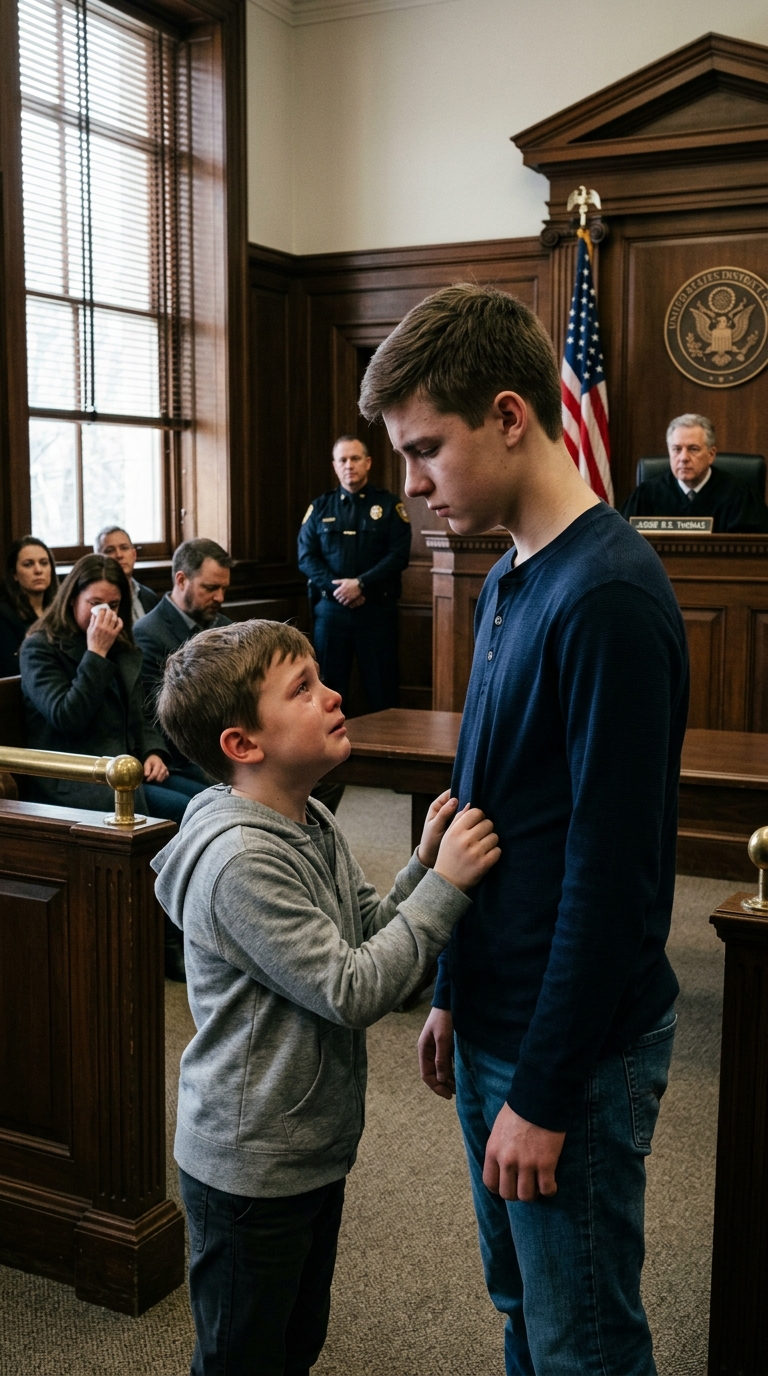
Mason tightened his grip on the phone.
“What did he write?”
She paused.
“He wrote that he sleeps better when he knows you’re nearby.”
Mason had to sit down.
For a moment, he was fourteen again, beside a car, making a promise he was too young to fully understand.
The Final Hearing
The courtroom was quiet.
Caleb sat beside Mrs. Hanley in a button-up shirt slightly too big. His hair was neatly combed, except for one stubborn piece sticking up.
Mason noticed it and almost smiled.
Then the judge entered.
Judge Alan Pierce reviewed the files with a serious expression. Denise testified first about Mason’s progress, struggles, and effort.
Then Mr. Coleman spoke.
Mason had met every requirement: stable work, a suitable home with a separate room, support from his landlady, and a plan for Caleb’s education and care.
Still, the judge’s face gave nothing away.
Finally, Mason was asked to speak.
He stood slowly.
His hands shook, but his voice did not.
“Your Honor, I know I’m young. I know I don’t have everything figured out. But Caleb isn’t just my responsibility. He’s my brother. He’s family. I know what scares him. I know what makes him laugh. I know he likes sandwiches cut into triangles and pretends not to like bedtime stories, but he listens to every word.”
Caleb looked down.
Mason continued.
“I’m not asking you to ignore the hard parts. I’m asking you to see that I’ve never walked away. Not once.”
The room fell silent.
The Judge’s Decision
Judge Pierce removed his glasses and looked at Caleb.
“Caleb, do you understand why we are here today?”
“Yes, sir.”
“Is there anything you want to say?”
Caleb looked at Mrs. Hanley, then at Mason.
His small voice filled the room.
“Mason told me he would come back for me. He always does.”
Mason closed his eyes for a moment.
The judge was silent for what felt like forever.
Then he spoke.
“This court has reviewed the reports, testimony, and progress. While Mr. Reed is young, the evidence shows commitment, preparation, and a strong family bond.”
Mason held his breath.
“The court finds that Caleb’s best placement is with his brother.”
For a moment, Mason didn’t move.
Then Caleb ran.
Mason dropped to his knees as his little brother wrapped his arms around his neck.
“You said it wasn’t forever,” Caleb cried.
Mason held him tighter.
“I meant it.”
Home at Last
Outside the courthouse, the air felt different.
Not warmer. Not brighter.
Just lighter.
Mrs. Whitaker waited on the steps, proud and teary-eyed.
“Well?” she asked.
Caleb answered first.
“I’m going home.”
Mrs. Whitaker laughed through tears.
That evening, Caleb stepped into the blue room and stopped.
Dinosaur sheets. Stuffed bear. Stars on the ceiling.
“You remembered?”
Mason leaned in the doorway.
“I remembered everything.”
Caleb climbed onto the bed and hugged the bear.
“Can we have pizza?”
Mason smiled.
“Pizza, root beer, and the worst movie we can find.”
Caleb grinned.
For the first time in years, Mason wasn’t fighting the world.
He was home.
With his brother.
And that was enough.
Sometimes family isn’t defined by perfect conditions, but by who keeps showing up when it’s hardest.
Young people may lack money or experience, but consistent love can carry a strength no report can measure.
Children remember who stayed, who listened, and who kept promises when everything changed.
Mason’s story shows that growing up too fast can be painful—but it can also build resilience strong enough to protect someone else.
Even a small room with secondhand furniture can feel like a home when it’s filled with love and intention.
Not every victory is loud; some come through paperwork, long nights, and one judge finally seeing the truth.
Caleb didn’t need perfection—he needed the brother who never stopped trying.
One kind neighbor, one fair attorney, or one understanding foster parent can change a child’s entire future.
Broken promises are easy; kept promises become healing.
And in the end, home isn’t just a place—it’s the person who says, “I’m coming back for you,” and means it.
