

The suffocating heat of the humble kitchen stood in stark contrast to the perpetual cold that lived in Elena’s heart. At nineteen years old, her hands — which should have been soft and full of youth — were cracked, red, and marked by endless labor. That afternoon, while she stirred a lamb stew she rarely got to taste, her back reminded her of the dull ache from a day that had begun long before the sun dared to rise. Behind her, the shadow of her older sister, Sofía, loomed like an approaching storm. Sofía was the jewel of the family, beautiful but with a soul poisoned by vanity. With calculated malice, Sofía took her delicate silk handkerchief — part of her precious wedding trousseau — and deliberately dropped it into the boiling pot. Before Elena could fish it out, the fabric turned deep red from the broth.
Sofía’s scream tore through the air. She faked tears and accused Elena of ruining her embroidery out of pure envy. Their mother, Carmen, burst in like a hurricane. There were no questions, no benefit of the doubt. Carmen’s open hand flew across the space and slammed into Elena’s cheek with brutal force. The metallic taste of blood filled the young woman’s mouth as she fell to the floor, listening to the insults from the woman who had given her life. Minutes later, her father, Ramiro, dragged her mercilessly through the mud of the courtyard and threw her into the dark, freezing animal shed. There, curled up on the damp straw, with an empty stomach and her face burning, Elena sought warmth against the wooden wall. It was then, through a crack, that she overheard the conversation that would finally murder what remained of her innocence. Her father, suffocated by gambling debts, had struck a deal with “El Zorro,” the owner of the most sordid tavern in the village. They were going to sell her. They were going to hand her over as a slave to settle the debt, condemning her to a life of abuse from which no woman emerged with her soul intact.
The cold of the shed vanished, replaced by a terrifying ice that froze her veins. The last thread of hope that her parents might feel any love for her snapped in two. With a determination born from pure desperation, Elena waited until the house fell into complete silence. She stole a crust of bread from the kitchen and fled. She ran into the darkness of the night, swallowed by a fierce storm that began to lash the fields. The mud clung to her ankles, the freezing rain soaked her thin clothes, and fear nipped at her heels. She ran aimlessly until her foot caught on a thick root. The sharp crack of her ankle twisting echoed with a flash of lightning, and Elena fell heavily onto the wet earth. Unable to take another step, she dragged her broken body under the canopy of a massive oak tree. There, trembling uncontrollably, she hugged her knees. She closed her eyes, letting the rain wash away her tears, and surrendered, murmuring a silent prayer to the wind, hoping death would be kinder than her own family.
What this young woman with a shattered soul could not imagine was that the echo of the storm was about to be silenced by the creak of a carriage in the darkness. A carriage that brought not only temporary shelter, but a man whose stone heart was about to collide violently with hers, unleashing a spark of hope so powerful it would shake the foundations of everything they knew, dragging them into a whirlwind of secrets, revenge, and a passion that would change their destinies forever.
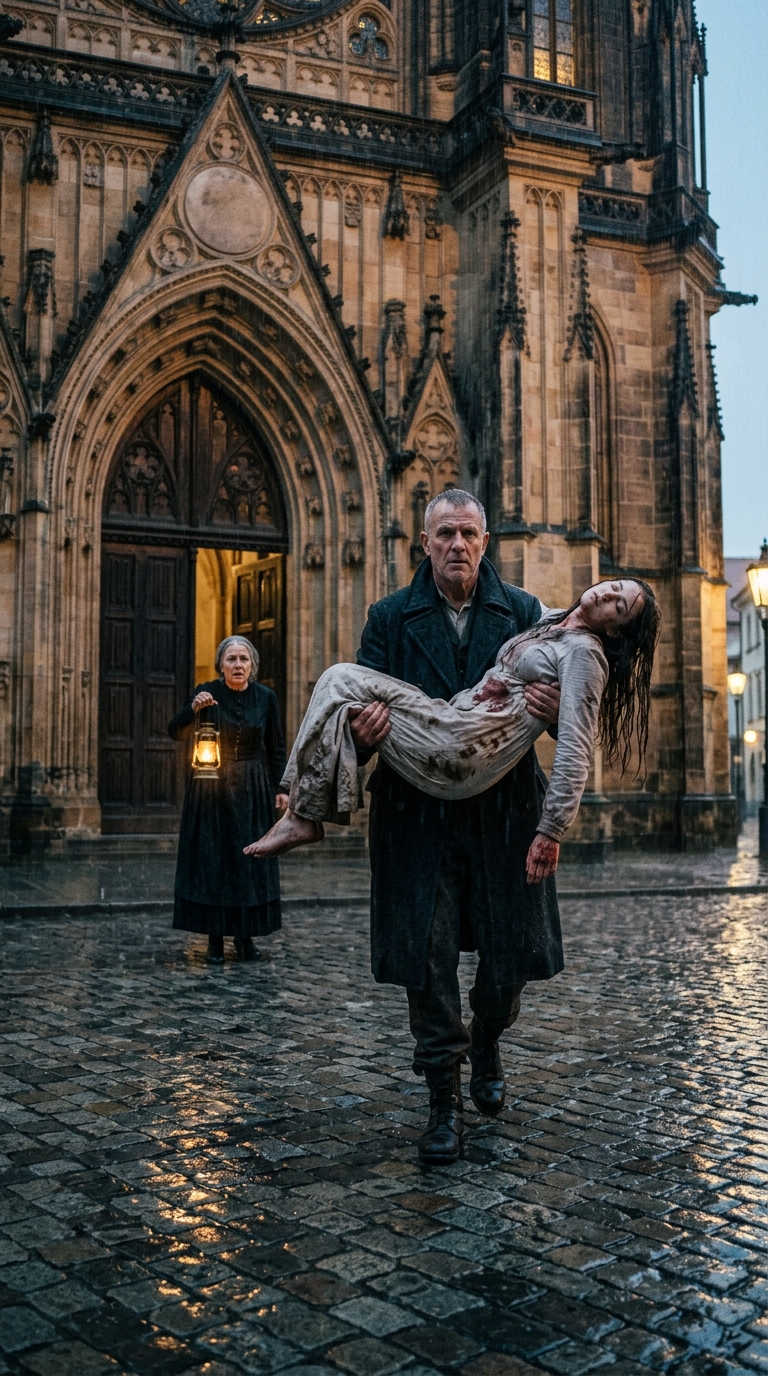
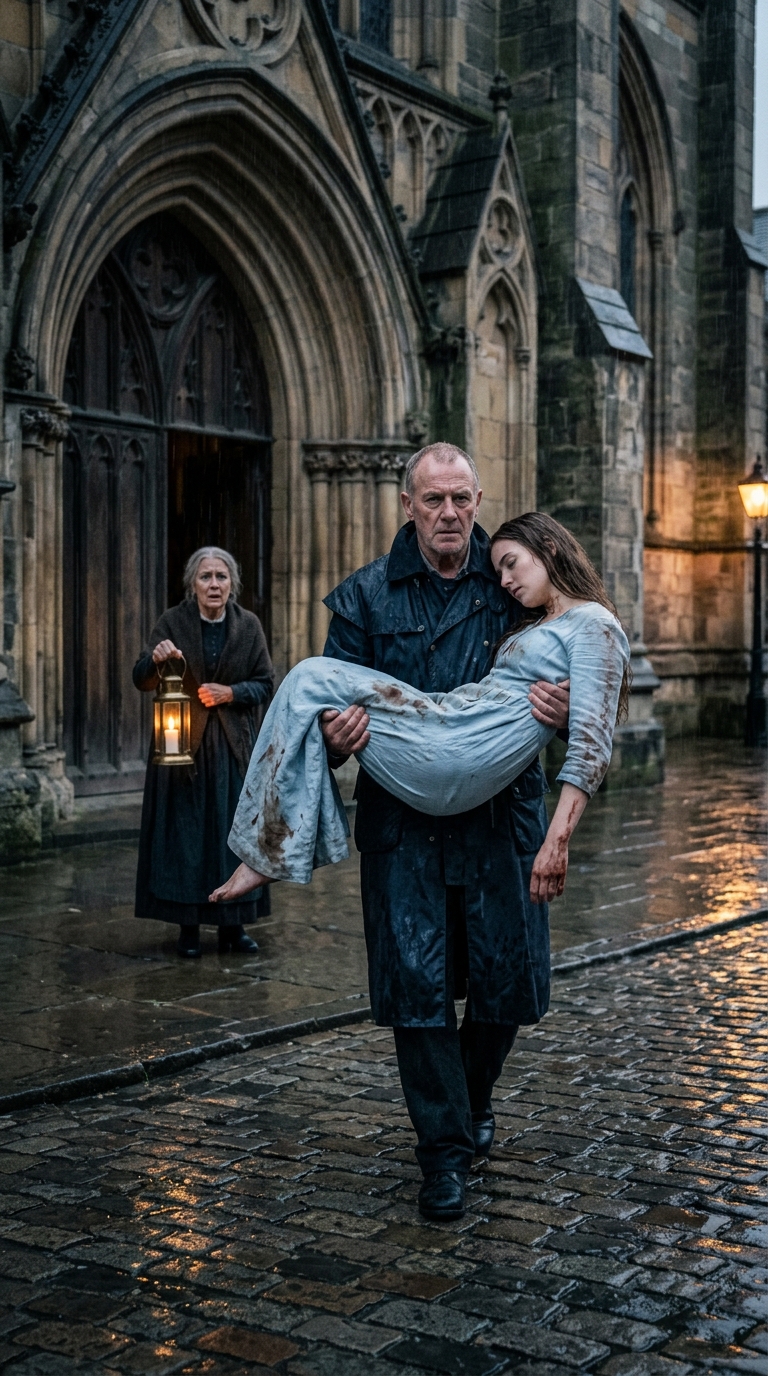
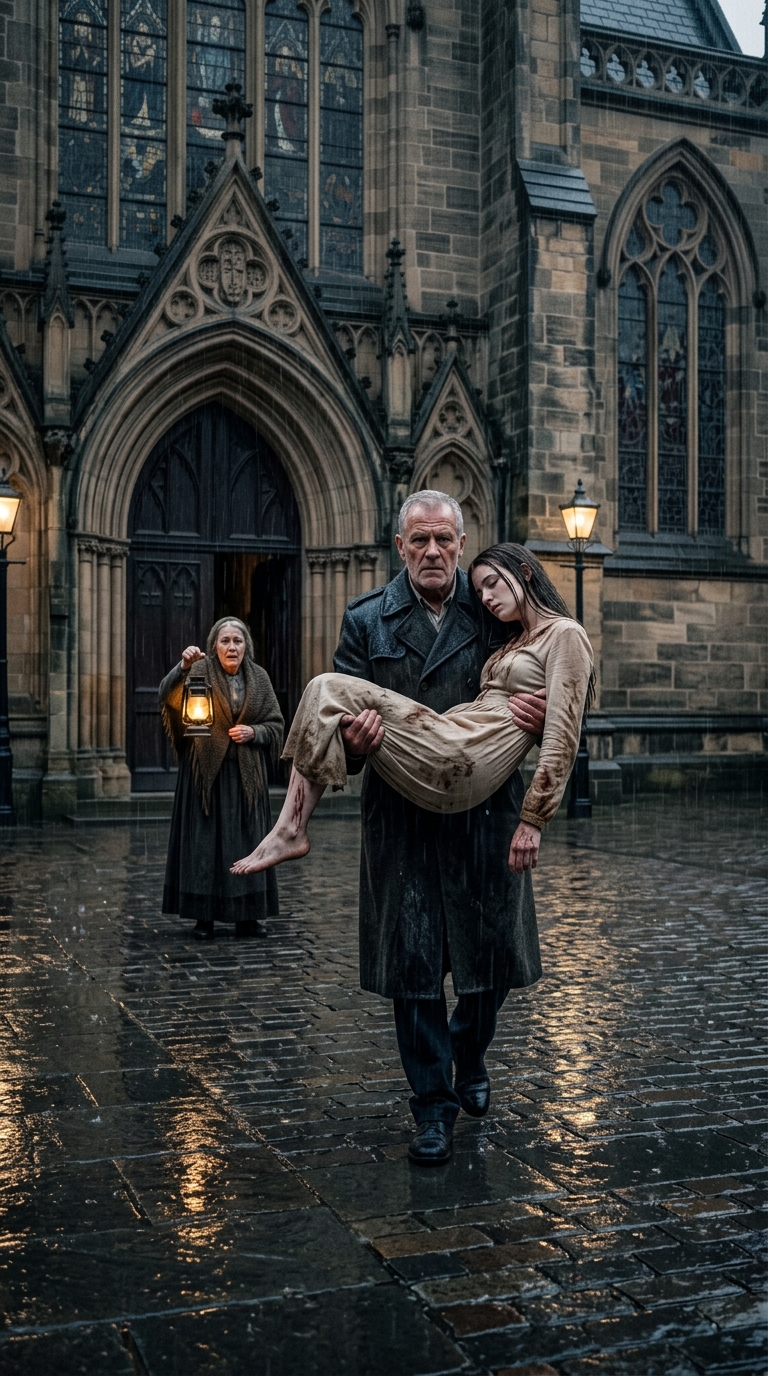
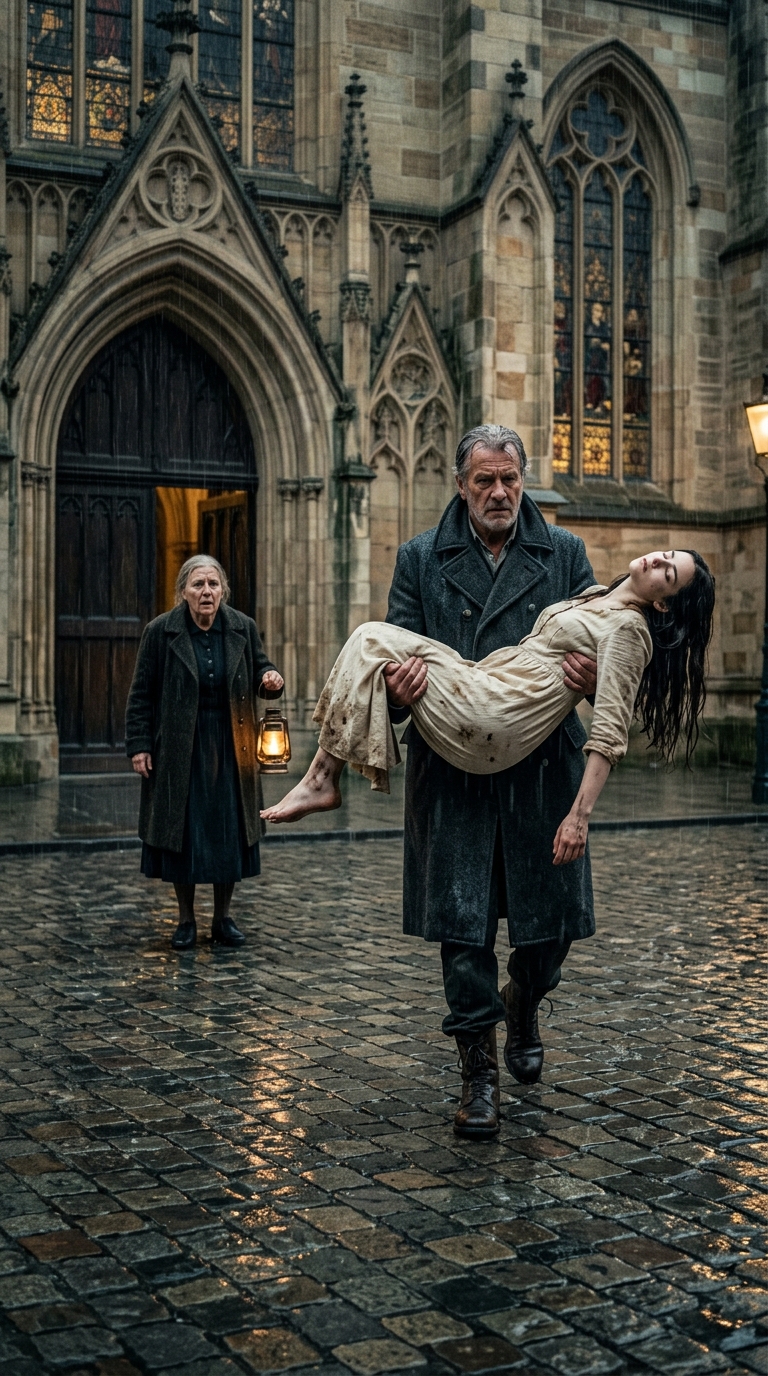
The golden light of a lantern cut through the blackness of the night. A tall man wrapped in a heavy black cape stepped down from the carriage. It was Don Alejandro de la Vega, the richest, most powerful, and most feared landowner in the entire region. Since the tragic death of his wife ten years earlier, Don Alejandro had become a ghost in his own vast fortress — a man with a stern face and empty eyes who ruled his lands with an iron hand, but who inside was completely dead. However, when he saw that small, trembling, soaked creature at the foot of the tree, something stirred within him. In Elena’s absolute vulnerability, Alejandro recognized an echo of his own deep pain. Without a word, he removed his wool coat, wrapped her with a gentleness that contradicted his imposing appearance, took her in his strong arms, and carried her away.
Elena woke up the next morning in a bed whose white sheets, scented with lavender, felt like an impossible dream. Inés, the kind housekeeper, had tended to her sprained ankle and dressed her in clean clothes. When she finally stood before Don Alejandro in his imposing study, he did not judge her or pressure her to speak about the invisible wounds that marked her face. Instead, he offered her a deal: shelter, food, and respect, in exchange for a task no one else had managed to accomplish. He led her to the back of the grand house, to an immense and melancholic garden choked by weeds and neglect. It was the sacred garden of his late wife. “Bring this place back to life,” he asked in a hoarse voice.
For Elena, sinking her hands into the fertile soil became her salvation. Every weed she pulled seemed to release a sorrow from her own chest. With the passing weeks, the rose bushes began to awaken, unfurling vibrant buds that perfumed the entire estate. And while the garden bloomed, so did the young woman. Her back straightened, the constant terror left her eyes, and a soft smile settled on her lips. From the window of his study, Alejandro watched her. The sight of Elena humming among the flowers acted like a ray of sunlight piercing the eternal winter of his soul. Soon, he began finding excuses to walk through the garden, to hear her voice, to accidentally brush against her dirt-covered hands. When he discovered she had never had the privilege of learning to read, Alejandro opened the doors of his enormous library. Afternoon after afternoon, his large, calloused hands guided Elena’s delicate fingers over the letters in the books, sharing glances charged with silent electricity, healing each other in the sanctuary of those pages.
But the light radiating from the estate soon awakened demons from the outside world. In the village, Elena’s family burned with humiliation and envy. Her father, terrified by El Zorro’s threats, and her sister Sofía, furious at losing her personal slave, began spreading poisonous rumors. They claimed Elena was a social climber, a witch who had seduced the wealthy widower with dirty tricks to steal his fortune. The slander spread like wildfire, and when Elena went to the village market, she felt the crushing weight of social contempt. Sofía cornered her in the middle of the square, screaming insults and trying to drag her back into the mud. However, the thunder of hooves from a powerful black horse silenced the crowd. Don Alejandro appeared like a protective guardian. In front of everyone, he placed his hand on Elena’s shoulder and publicly destroyed Sofía, warning that anyone who dared tarnish the young woman’s name would know true ruin.
The public humiliation pushed Elena’s family to cross the final line of morality. That same night, in desperation, they made a macabre deal with El Zorro: kidnap Elena and demand an astronomical ransom from Don Alejandro. The next day, a fake messenger lured Elena away from the safety of the estate by claiming that the housekeeper Inés had suffered a serious accident on a remote road. The young woman’s kind heart became her trap. When she arrived at the location, El Zorro’s men ambushed her. A rough sack covered her head, muffling her terrified screams, and she was thrown into a cart that dragged her back toward the hell she thought she had escaped.
When Alejandro discovered the deception, the world seemed to stop. The fury that erupted inside him was volcanic. In that moment of absolute panic, he realized that what he felt for the young gardener was not just protection or gratitude — it was a deep, wild, and absolute love. Armed with an old pistol and accompanied by his most loyal men, Alejandro rode like a demon toward the village, straight to El Zorro’s tavern. While his men created an explosive distraction at the main entrance, Alejandro kicked down the door of the old back warehouse.
The scene he found froze his blood. Elena was tied to a wooden post in the dim light, and El Zorro, cornered, held the sharp blade of a knife against the young woman’s throat. “One more step and I’ll kill her,” the criminal hissed. But Alejandro was no ordinary man; he was a force of nature defending the woman he loved. In a split-second distraction, one of his men threw an object that struck El Zorro’s arm. The weapon fell. With a guttural roar, Alejandro lunged at him, landing a devastating blow that left the kidnapper unconscious on the dirt floor. With trembling hands, Alejandro cut the ropes that bound Elena. She collapsed against his chest, sobbing, as he wrapped her in an embrace so tight it seemed he wanted to merge their souls. “You’re safe, Elena. I’m here,” he whispered into her hair.
That same night, under the silver moonlight in the safety of the estate, Alejandro fell to his knees before her. He confessed that for ten years he had been a dead man walking among shadows, and that she, with her sweetness and resilience, had taught his heart to beat again. With his voice broken by emotion and his eyes shining with unshed tears, he asked the question that would change the course of their lives: “Will you marry me, Elena?” She, finally understanding that he had not only rescued her, but that she had also saved him, accepted with tears of immense happiness.
The wedding was held in the small, idyllic chapel of the estate, adorned with hundreds of white roses from the garden she herself had brought back to life. Elena walked down the aisle wrapped in ivory silk, looking like a true angel before the man who gazed at her with absolute devotion. But just before they exchanged vows, the heavy wooden doors burst open violently. Ramiro, Sofía, and Carmen stormed into the chapel, screaming insults, determined to stop the ceremony and destroy Elena in front of all of society, accusing her of being a thief and a manipulator.
However, Alejandro remained calm. With a gesture of his hand, he had the constables bring in El Zorro, chained. In front of the stunned guests, Alejandro pulled out a signed confession. He read aloud how Elena’s own family had first sold her as a slave to pay gambling debts and how, when that failed, they had orchestrated her kidnapping to extort him. The silence in the chapel was graveyard-like. The family’s mask shattered completely. Sofía’s fiancé, disgusted by the monstrosity he had just heard, broke off the engagement on the spot. The constables handcuffed Ramiro and Sofía for conspiracy, while the mother, cowardly to the end, turned and fled to face a life of loneliness and absolute misery.
Finally free from the shadows of the past, Alejandro and Elena spoke their vows with unbreakable strength, sealing their love with a kiss that celebrated the triumph of light over darkness. One year later, the estate garden was blooming like never before. Sitting under the great white rosebush, Elena held their baby daughter, Isabela, in her arms, reading her a children’s story while Alejandro embraced them from behind. They had walked through the embers of contempt and the deepest pain, but at the end of the journey, those two broken souls had built an indestructible paradise. Elena had finally found her true home, proving that even the most trampled flowers can become the most beautiful garden when watered with the right kind of love.
