

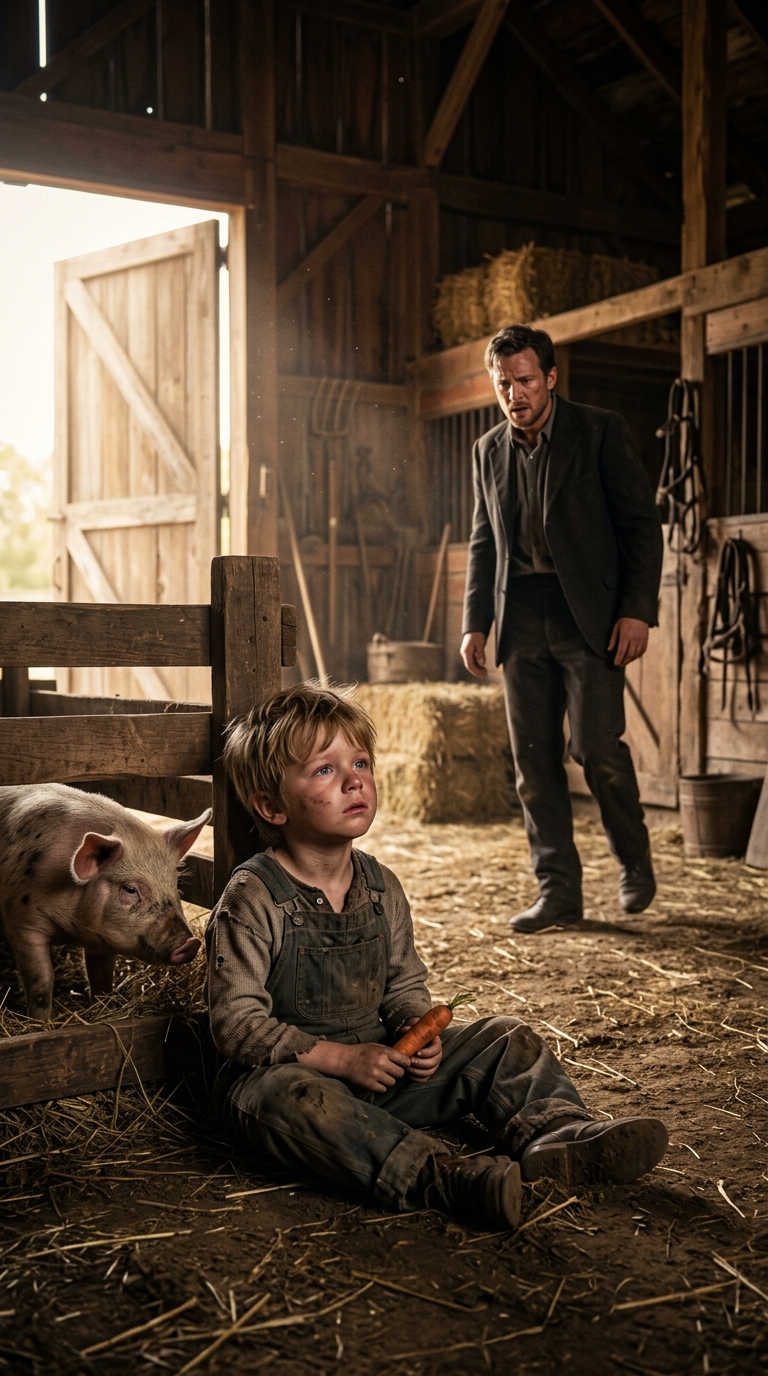
Alexander Blackwood turned off the engine of his gleaming black Mercedes, and the silence that followed was broken only by the sound of his expensive leather shoes stepping onto the cracked, dirty asphalt of Maple Street. The neighborhood looked nothing like he remembered from eight years ago. The houses, small and worn, seemed to suffocate under a gray sky, and the smell of stagnant trash and despair lingered in the heavy afternoon air. Alexander had come for one crucial reason: to see his son, Gabriel. In his thirties, Alexander had built a technological empire that made him a man worth more than fifty million dollars. He had everything money could buy, but his wealth could not fill the enormous void in his chest—a hollow shaped exactly like his little boy.
For eight long and agonizing years, he had faithfully sent child support checks to his ex-wife, Natasha. The amounts were exorbitant, more than enough for Gabriel to live like a prince. Yet every time Alexander tried to visit him, Natasha built an impenetrable wall of excuses: “Gabriel is sick,” “Gabriel is at summer camp,” “Gabriel doesn’t want to see you.” Each rejection felt like a dagger stabbing into his heart, feeding a guilt and frustration that wouldn’t let him sleep. But that Tuesday was different. Alexander had hired the best investigators and lawyers in the city. He had promised himself he would not leave that street without seeing his son’s face.
He walked toward the small blue house at the end of the street. The paint was peeling, and one of the windows was broken, poorly patched with cardboard. Alexander frowned. With the money he sent every month, Natasha could have been living in a mansion on the most exclusive side of the city. Where was all that money going? He raised his fist and knocked on the door with a firmness that demanded an answer. After a few moments of tense silence, the door slowly opened.
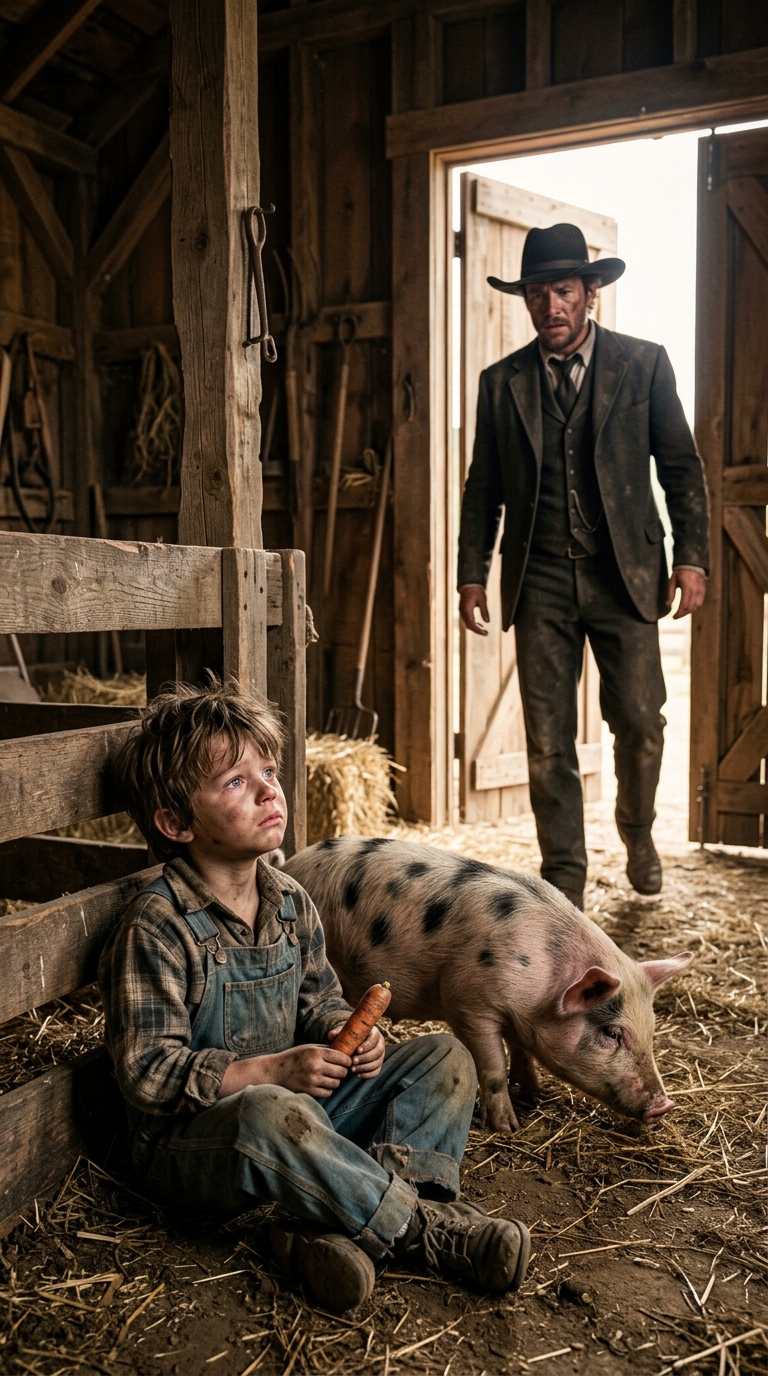
There stood Natasha. But she was not the woman he remembered. She looked gaunt, extremely thin, with deep dark circles marking her pale face. Her blonde hair was tangled and unkempt, and she wore old clothes that looked like they hadn’t been washed in days.
“Alexander…” she whispered, her voice trembling as she clung to the doorframe for support. “What are you doing here?”
“I came to see Gabriel,” he replied, his voice deep and unyielding. “I called you yesterday. I told you I was coming.”
The little color left in Natasha’s face drained away. She glanced nervously over her shoulder into the dark interior of the house.
“This… this isn’t a good time. Gabriel isn’t here.”
“Where is he?” Alexander demanded, trying to look past her, searching for any sign of a child.
“He’s at a friend’s house,” she said quickly, stumbling over her words. “He stayed there overnight.”
Alexander clenched his jaw. It was Tuesday afternoon. What kind of eight-year-old had a sleepover in the middle of a school week?
“Then I’ll wait,” he said, stepping forward.
“No!” Natasha shouted—too loudly—then immediately lowered her voice. “I mean… he won’t be back for hours. You should come tomorrow.”
At that exact moment, Alexander heard it.
A muffled sound—barely noticeable—but enough to freeze the blood in his veins and stop his heart mid-beat. It was a soft, fragile moan, like the cry of an injured animal—or worse, the weak sob of a small child. And it wasn’t coming from inside the house, but from the back, from the yard. Alexander locked his eyes on Natasha, noticing how her hands had begun to tremble uncontrollably. He knew that behind that house was hiding something monstrous—a pulsing darkness that was about to change his life forever and unleash a storm no one in that cursed neighborhood would escape. He was just one step away from discovering the rawest nightmare of his existence.
Heavy, threatening footsteps echoed from the hallway inside the house, and a massive man appeared behind Natasha. He had small, cruel eyes and thick arms covered in faded tattoos. Alexander immediately knew this was Marcus, the new husband his investigators had mentioned.
“Who is this?” Marcus growled, his voice rough like crushed gravel.
“It’s Alexander,” Natasha whispered, shrinking slightly. “Gabriel’s father.”
Marcus looked Alexander up and down, taking in his tailored suit and the gold watch peeking from his cuff. A mocking smile spread across his face.
“So you’re the rich boy, huh? Well, you can turn around and get back into your fancy car. The brat doesn’t want to see you.”
“I want to hear that from Gabriel himself,” Alexander replied, feeling anger begin to replace the confusion in his chest. “Where is my son?”
Once again, that soft, painful sound drifted from the back of the property. Alexander’s paternal instinct roared like a caged lion. He had spent eight years being patient, eight years accepting excuses and playing by the rules. Not today.
“Look, buddy,” Marcus said, stepping forward and trying to use his size to intimidate him. “The kid isn’t here, so get lost.”
“I’m not leaving until I see Gabriel,” Alexander cut him off, not moving an inch.
Natasha and Marcus exchanged a quick glance, heavy with guilty panic. It was the look of people hiding a corpse.
“Fine,” Marcus spat with a twisted, ugly smile. “But don’t say we didn’t warn you. Some kids just turn out to be a disappointment.”
They led him down a narrow side path overgrown with weeds toward the backyard. The place was a dump. Trash bags were piled up, broken toys scattered across the dead grass, and rusted pieces of metal lay everywhere. But what caught Alexander’s attention was an old wooden structure in the far corner, pressed against the fence. It looked like a collapsing shed, and the stench coming from it hit him like a physical blow. It was an unbearable mix of waste, rotting food, dampness—and something much deeper: the smell of fear and absolute misery.
“What is that?” Alexander asked, pointing at the structure with a trembling finger.
“An old pigsty,” Marcus replied with chilling indifference. “The previous owners used to raise animals.”
The moan came again. It was coming from inside that rotting wooden box. Alexander’s world stopped spinning. His lungs forgot how to breathe.
“No…” he whispered, taking blind steps forward. “No… you didn’t…”
“Didn’t what?” Natasha asked, but her voice broke completely.
Alexander ran toward the pigsty. The splintered wooden door was secured with a thick rusted chain and a padlock. Through the gaps, in the suffocating darkness, he saw movement.
“Gabriel!” he screamed, his voice tearing apart.
From deep inside the darkness, a weak little voice—barely a raspy whisper—answered:
“Dad? Dad… is that you?”
The ground vanished beneath Alexander’s feet. His son—his eight-year-old boy—was locked inside a pig pen, treated like an animal meant for slaughter. He spun around, his eyes bloodshot, facing the two monsters behind him.
“Open this damn chain right now!” he roared, his voice so powerful it echoed through the neighboring houses.
“Hey, calm down…” Marcus tried, raising his hands.
“Open it now or I swear I will burn this place to the ground with you inside!” Alexander exploded, losing every trace of civility.
With trembling hands, terrified by the father’s fury, Marcus pulled out a key and unlocked the padlock. The door creaked open, and the stench became overwhelming—but Alexander didn’t care. He dropped to his knees at the entrance.
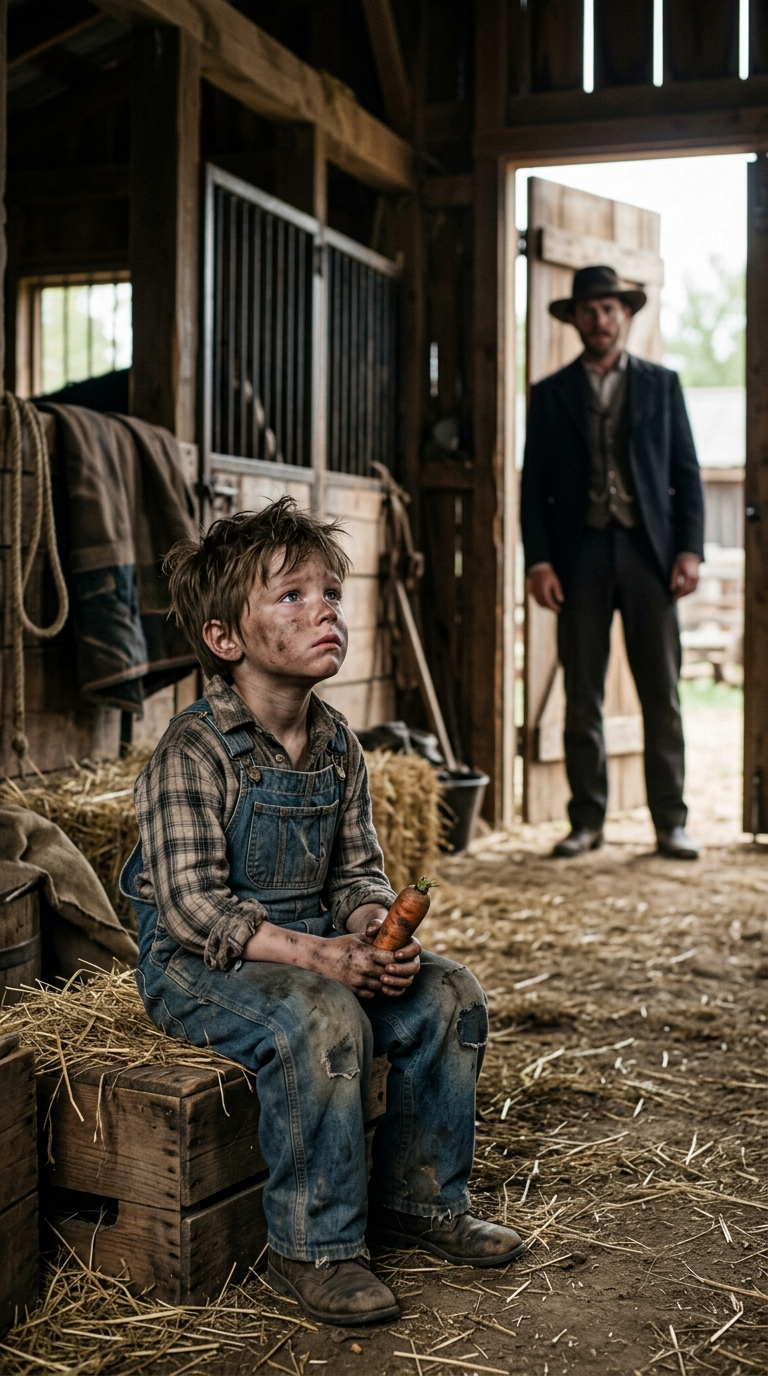
There, curled up in a corner on damp dirt and filth, was a tiny child. He was so skeletal that Alexander could count every rib through the holes in his tattered shirt. His hair, long and tangled, was stiff with grime. His bare feet were covered in festering sores. And in his trembling little hands, Gabriel clutched half a rotten carrot to his chest, guarding it like the most precious treasure in the world.
The boy looked up, and beneath layers of dirt, Alexander saw his own green eyes staring back at him—filled with a mixture of fear and devotion.
“Dad… you came…” Gabriel whispered with a broken smile. “I knew you would.”
Alexander wanted to rush forward and hold him, but as he took a step, the child flinched violently, squeezing his eyes shut and raising his arms to shield himself from a blow. Gabriel was terrified of human touch. Alexander’s heart shattered into a million irreparable pieces.
“How long?” Alexander asked, turning his head toward Natasha and Marcus. His voice was now a deadly whisper. “How long has he been living like this?”
“It’s not what it looks like!” Natasha whimpered, stepping back. “He used to run away… we had to keep him safe…”
“Safe?” Alexander exploded, jumping to his feet. “He’s living in a pigsty! He’s eating rotten garbage! He’s skin and bones!”
“He’s a difficult child,” Marcus shrugged, trying to regain his false bravado. “Some kids need firm discipline.”
Alexander took a threatening step toward the man. He wanted to kill him with his bare hands. But his ex-wife’s voice stopped him cold.
“He’s not even mine,” Natasha suddenly spat, her eyes filled with resentment. “I never wanted him. If you want him so badly, take him.”
The words hit like ice water. His own mother had just discarded him like a piece of old furniture. Alexander swallowed the knot of rage in his throat, knelt down again, and slowly extended his open hands into the pen.
“Gabriel, sweetheart…” he said, using the gentlest voice he could find. “Dad is here. It’s over. We’re going home.”
Tears filled Gabriel’s eyes, cutting clean lines through the dirt on his face.
“Are you sure you won’t leave me again?”
“Never,” Alexander promised, crying openly. “Never, ever again.”
Slowly, Gabriel let go of the carrot and took his father’s hand. It was cold and fragile like glass. Alexander lifted him into his arms—the child weighed almost nothing.
As he walked back toward the car, Marcus shouted from behind him:
“You can’t take him! We have custody! It’s your word against ours, rich boy!”
Alexander stopped beside his car, gently settling Gabriel into the leather seat, then turned around. He pulled his phone from his suit pocket.
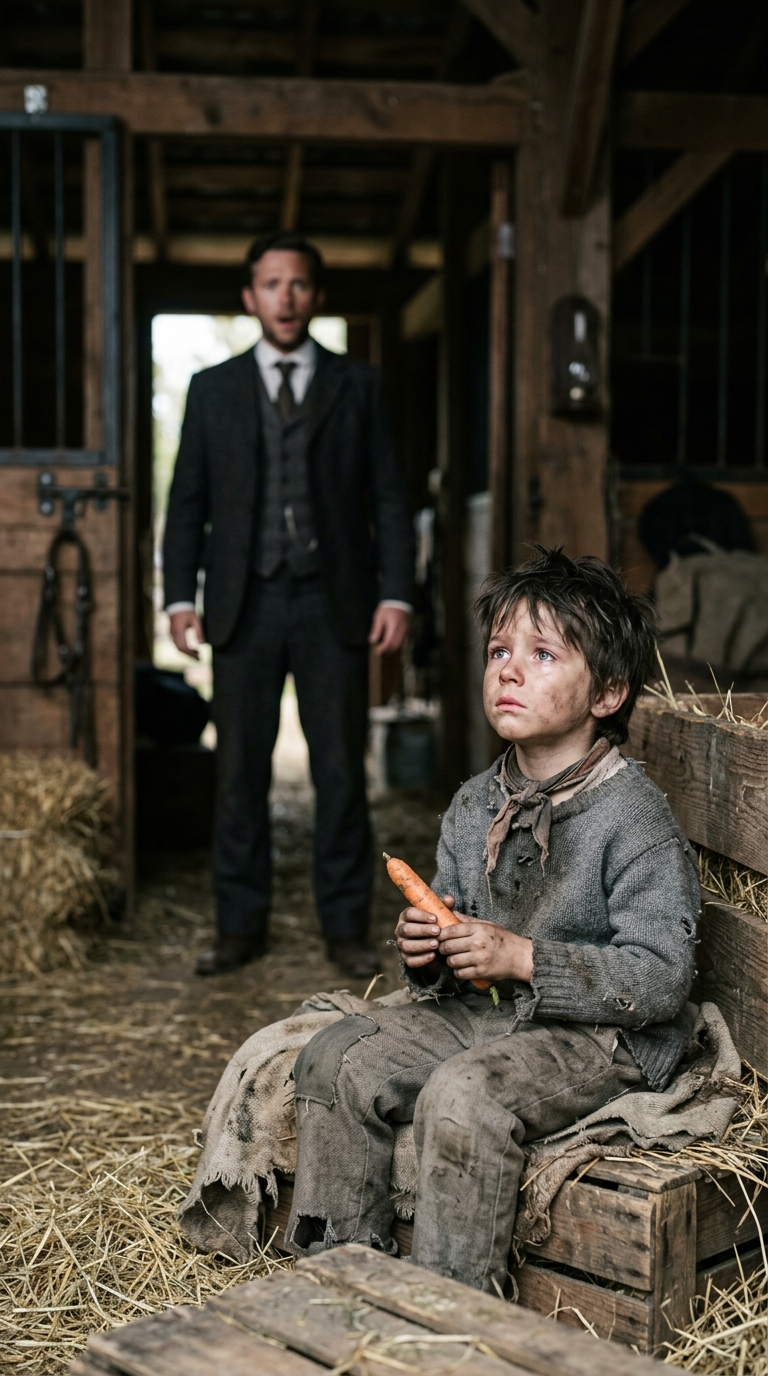
“You’re right,” he said calmly, with something terrifying beneath it. “It’s your word against mine. But it’s also your word against this.”
On his phone screen, a continuous video was playing. Alexander had recorded every second—from the moment he walked down the path to the backyard. The cage, the lock, Natasha’s confession, Marcus’s cruelty—everything was documented.
“I’m rich, Marcus. But I’m also smart—and I came prepared. Tomorrow, my lawyers, the police, child services, and every major news network in this country will be knocking on your door.”
He closed the car door and drove off. As they pulled away, Gabriel, sinking into the large seat, looked at his father.
“Dad…” he whispered, pulling something from his torn pocket. It was half of the rotten carrot. “I saved this for you. I thought… I thought if I saved food, maybe you would come back sooner.”
Alexander had to pull the car over for a moment because tears blinded him. His child—hungry, tortured, and freezing—had been saving spoiled food for his father, keeping hope alive.
“You’ll never have to save food again, my love,” Alexander sobbed, kissing his son’s dirty forehead. “We’re going to the hospital, and then I’ll give you the biggest, most delicious dinner in the world.”
That night at the children’s hospital, the truth came out in its full, heartbreaking magnitude. Dr. Hayes confirmed that Gabriel was suffering from severe malnutrition, dehydration, and multiple infections. Based on the level of psychological trauma, she estimated that the boy had been living in that pen for at least two or three years. He hoarded the food they gave him at the hospital, hiding bread under his pillow, terrified it would be taken away. At the same time, Alexander’s legal team, led by the formidable attorney William Sterling, went into action.
Three days later, in a packed courtroom, justice fell like a hammer on Natasha and Marcus. The video was played before Judge Morrison, causing gasps of horror among those present. But the most outrageous moment came with the testimony of Mrs. Carter, an elderly neighbor who broke down in tears as she confessed that she—and the entire neighborhood—had heard the child crying every night but remained silent out of fear of Marcus. An entire community had become complicit in the torture of an innocent child out of sheer cowardice. The judge, her voice trembling with anger, stripped Natasha and Marcus of all parental rights and ordered their immediate arrest without bail, charging them with crimes that would send them to prison for more than a decade.
Six months later, life had taken a turn that felt like a miracle. In the vast garden of Alexander’s mansion, Gabriel ran freely under the sun. He had gained weight, his hair was clean and shining, and most importantly, his smile had returned to light up his face. Ongoing therapy with Dr. Patel had helped heal the deep wounds in his soul. He no longer hid food, no longer flinched at sudden movements, and had become best friends with Mrs. Eleanor, the housekeeper, who spoiled him by baking cookies every day.
Gabriel had even found the strength in his heart to forgive. After hearing his story in the news, Mrs. Carter came forward to apologize. Gabriel, with a wisdom born of pain, invited her to sit with him. Since then, she visited him every Sunday, reading him stories under the shade of an oak tree, easing her own guilt as she became the boy’s adopted grandmother.
On a sunny spring morning, Alexander and Gabriel walked out of family court for the last time, hand in hand, with the final adoption papers signed and sealed.
“Dad,” Gabriel said, stopping on the courthouse steps to look him in the eyes, “thank you for not giving up and coming to find me.”
Alexander knelt down to his level and gently touched his rosy cheek.
“Listen to me, champ. No matter how much time passes, no matter how dark the night gets, parents who truly love their children never—ever—give up.”
They embraced tightly under the warm sunlight. The nightmare was over. Unconditional love had won the most important battle of their lives, proving that from the darkest ruins, the brightest and most redeeming hope can grow.
