

THE CAST THAT SHOULD HAVE NEVER BEEN THERE
I had been working as a pediatric emergency nurse in a mid-sized hospital outside Chicago for nearly thirteen years. That kind of time teaches you how fear shows up in children—but every so often, something slips past experience and settles somewhere deeper, somewhere harder to explain.

That evening had already run longer than it should have. The waiting room had been full since late afternoon, and the steady cycle of intake, assessment, and treatment had blurred into something automatic—the kind of rhythm where your hands keep moving even when your mind begins to drift.
When the chart reached me, it seemed routine. A five-year-old boy with a recent arm injury, a mild fever, and discomfort that had worsened overnight. Usually, that meant a quick check, maybe an adjustment or antibiotics—nothing that would follow you home after your shift.
His name was Mason Hale.
But the moment I stepped into Room 6, something felt off.
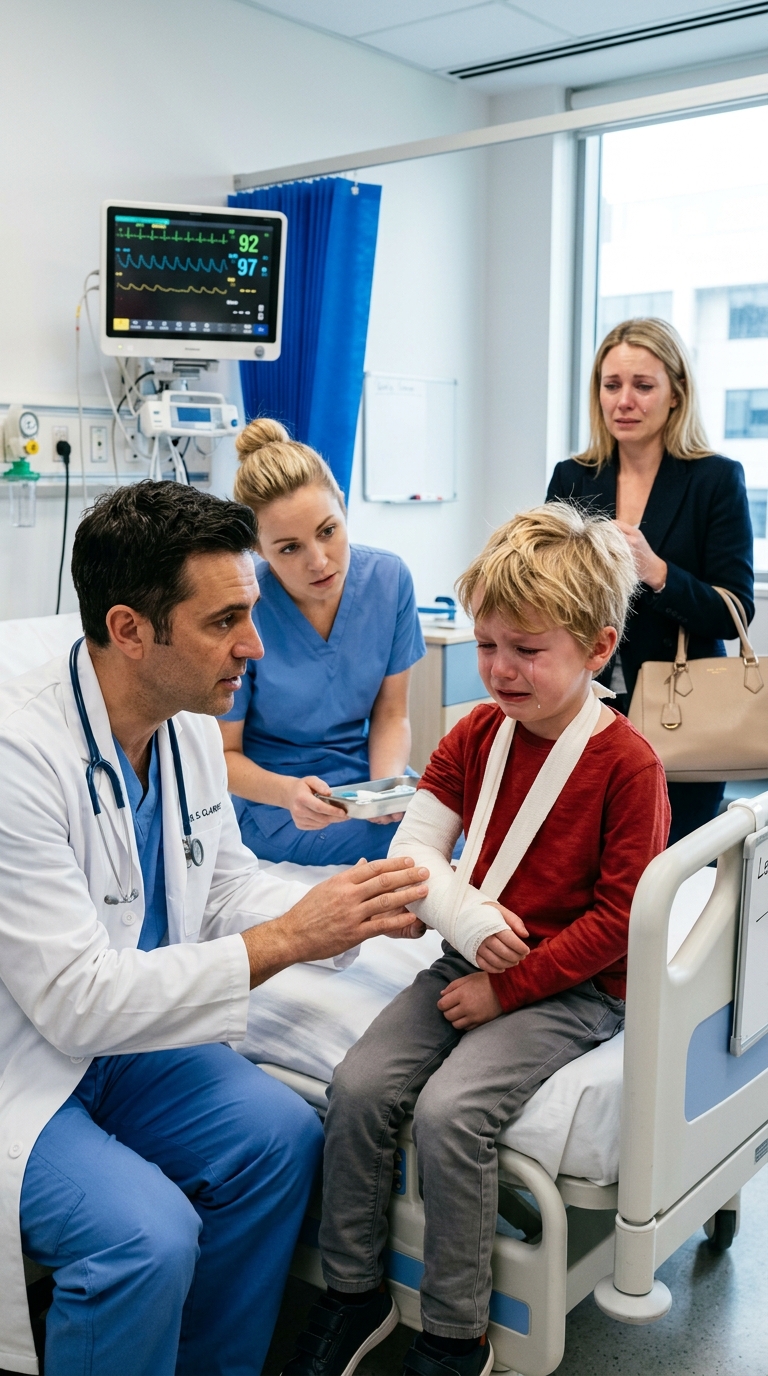
He lay small against the oversized bed, his pale face tilted toward the ceiling, his breathing uneven—not fast enough to signal panic, but not calm enough to suggest comfort. His left arm rested stiffly on a pillow, wrapped in a thick white cast that immediately drew my attention, though I couldn’t yet explain why.
His mother stood near the wall, not close enough to comfort him. Her posture was rigid, her fingers tightening repeatedly around her handbag strap as if she were holding herself together.
I stepped closer with a gentle smile.
“Hey there, Mason, I’m Nurse Emily. I’m just going to take a quick look at your arm, okay?”
He didn’t respond.
His eyes stayed fixed upward, wide and still. There was something in them that didn’t match ordinary fear—not confusion, not resistance, but something quieter, heavier… like he understood something we didn’t.
As I reached toward the cast, everything changed.
Before I even touched it, Mason recoiled violently, pulling his arm back with surprising strength. His body twisted away as his voice broke through the room.
“No… please, don’t touch it!”
Tears spilled instantly as he curled inward, guarding the cast like it was something dangerous rather than something meant to help him.
The reaction didn’t match the situation.
That was when instinct took over.
The door opened quickly as two staff members rushed in, drawn by the distress.
“Hey, hey, it’s okay, buddy, you’re safe,” one said softly, trying to steady him.
His mother stepped forward—but not with comfort.
“He’s just scared,” she said sharply. “Please, just give him something for the fever and let us go home.”
But by then, my focus had shifted.
To the cast.
Because something about it wasn’t right.
The surface looked uneven, thicker than it should have been. The texture seemed layered, almost unnatural. And there was a faint chemical smell that didn’t belong in any proper medical setting.
That was when Dr. Rowan Pierce entered.
Calm. Observant. The kind of doctor who didn’t rush unless something truly demanded it.
He crouched slightly, studying the cast from different angles. Then he tapped it gently with his pen, listening closely.
The sound was wrong.
Too dense. Too solid.
He stood slowly.
“Everyone, step back for a moment.”
The room shifted instantly.
He turned to the mother.
“You said this was done at a clinic?”
A pause.
“Yes,” she said—but without conviction.
He shook his head.
“No… it wasn’t.”
Then he looked at me.
“Emily, call security.”
Silence filled the room.
“This isn’t standard medical material,” he said quietly. “And whatever is inside it… isn’t there for treatment.”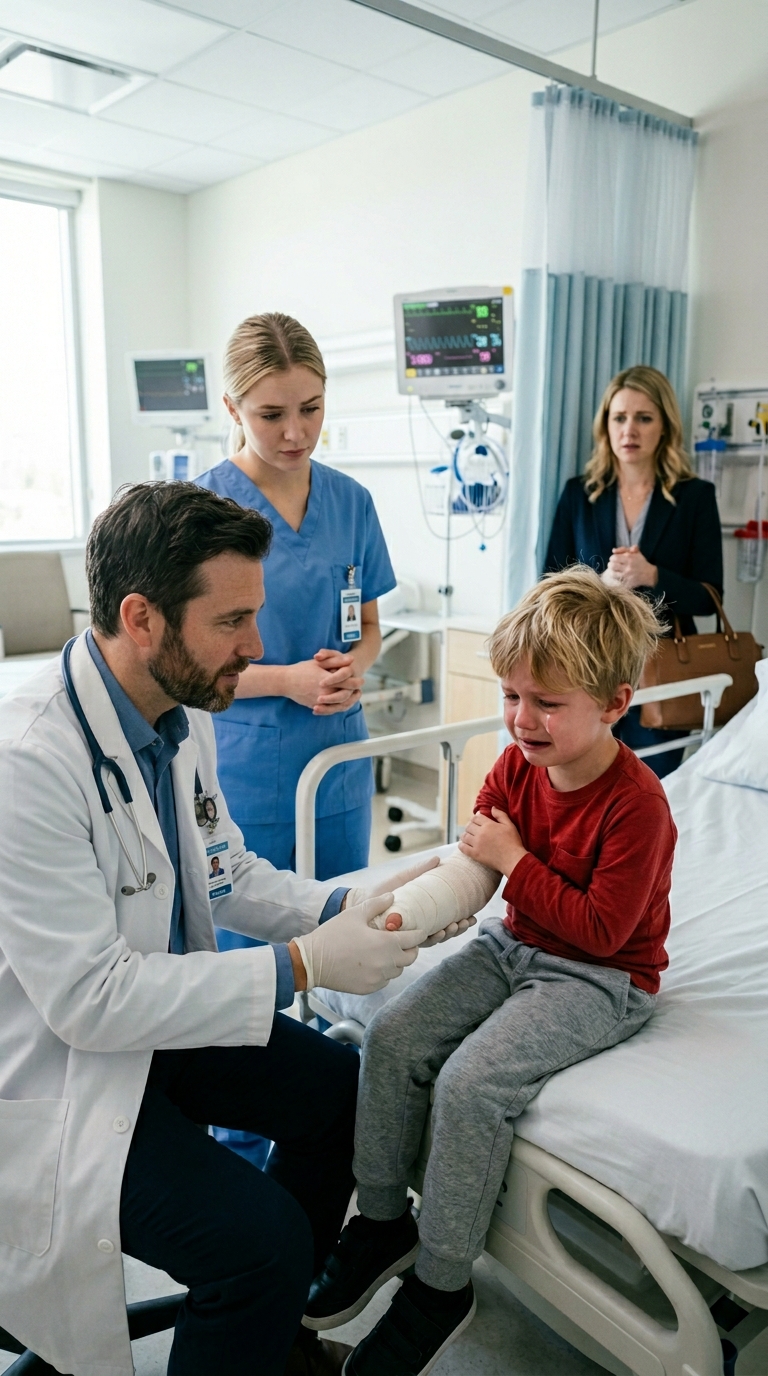
WHAT WE SHOULD NEVER HAVE FOUND
Security arrived quickly, filling the doorway as tension thickened in the room.
Mason had quieted slightly, though his breathing remained uneven. His eyes moved between us and his mother, as if he were measuring something we couldn’t yet see.
She stood closer to the wall now, her composure beginning to crack.
“You don’t understand,” she said softly. “You shouldn’t open it here.”
Dr. Pierce didn’t respond. He had already decided.
He prepared the removal tool—heavier than usual, meant for resistance rather than routine.
The moment the blade touched the cast, resistance pushed back. The chemical smell sharpened.
Mason whimpered, gripping the blanket tightly.
I leaned closer.
“It’s okay, Mason. We’re right here.”
Layer by layer, the outer shell broke away.
But instead of soft padding underneath, there was more hardened material. Compact. Deliberate.
Then—
A sound.
Faint. Subtle.
Something shifting inside.
Dr. Pierce paused, then continued more carefully.
And then we saw it.
Not bone.
Not bandaging.
Objects.
Small, tightly packed items pressed against his skin.
A compact data drive.
A heavy engraved ring.
A sealed container that clearly didn’t belong there.
No one spoke.
Because there are moments when words don’t exist.
Mason looked at his arm. Then at his mother.
And in his eyes was not fear.
Recognition.
THE MOMENT EVERYTHING SHIFTED
Security stepped closer, radios crackling softly.
The air changed—no longer medical, but something else entirely.
His mother’s voice broke.
“You think you helped him,” she said. “But you just took away the only thing keeping him safe.”
The words didn’t make sense. Not yet.
Mason reached for my hand.
“Is it out?” he asked quietly.
I swallowed.
“Yes,” I said gently. “It’s out now.”
His shoulders relaxed slightly.
But nothing else did.
Because whatever had been hidden there…
was never meant to stay hidden.
WHAT LINGERS AFTER
By the end of my shift, the hospital had returned to its usual rhythm.
Because emergencies don’t pause for reflection.
Mason had been moved to observation. He rested more peacefully now, but the room felt different—watchful.
His mother was gone.
And whatever came next was already beyond us.
Handled by people whose roles extended far past hospital walls.
I stood outside his room for a moment, watching his chest rise and fall steadily.
And I couldn’t shake the feeling in my chest.
Because things like that don’t happen by accident.
They are planned.
Hidden.
Protected.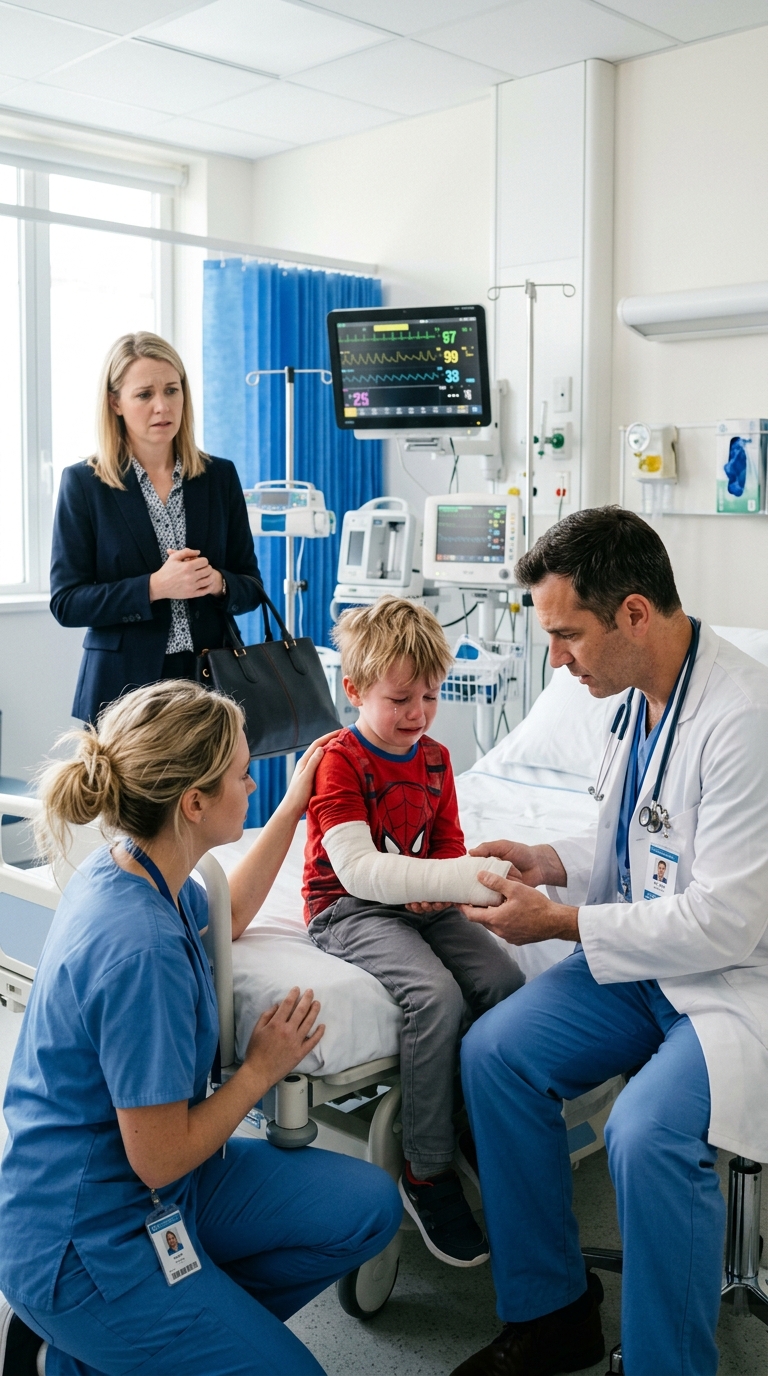
We had uncovered it. Removed it. Seen it clearly.
But it didn’t feel like an ending.
It felt like a beginning.
I rested my hand lightly against the glass, my reflection faint beside his.
And the thought that stayed with me long after I walked away wasn’t about what we found—
but what it meant.
Because whatever came next…
was not going to stay hidden for long.
