

PART 1
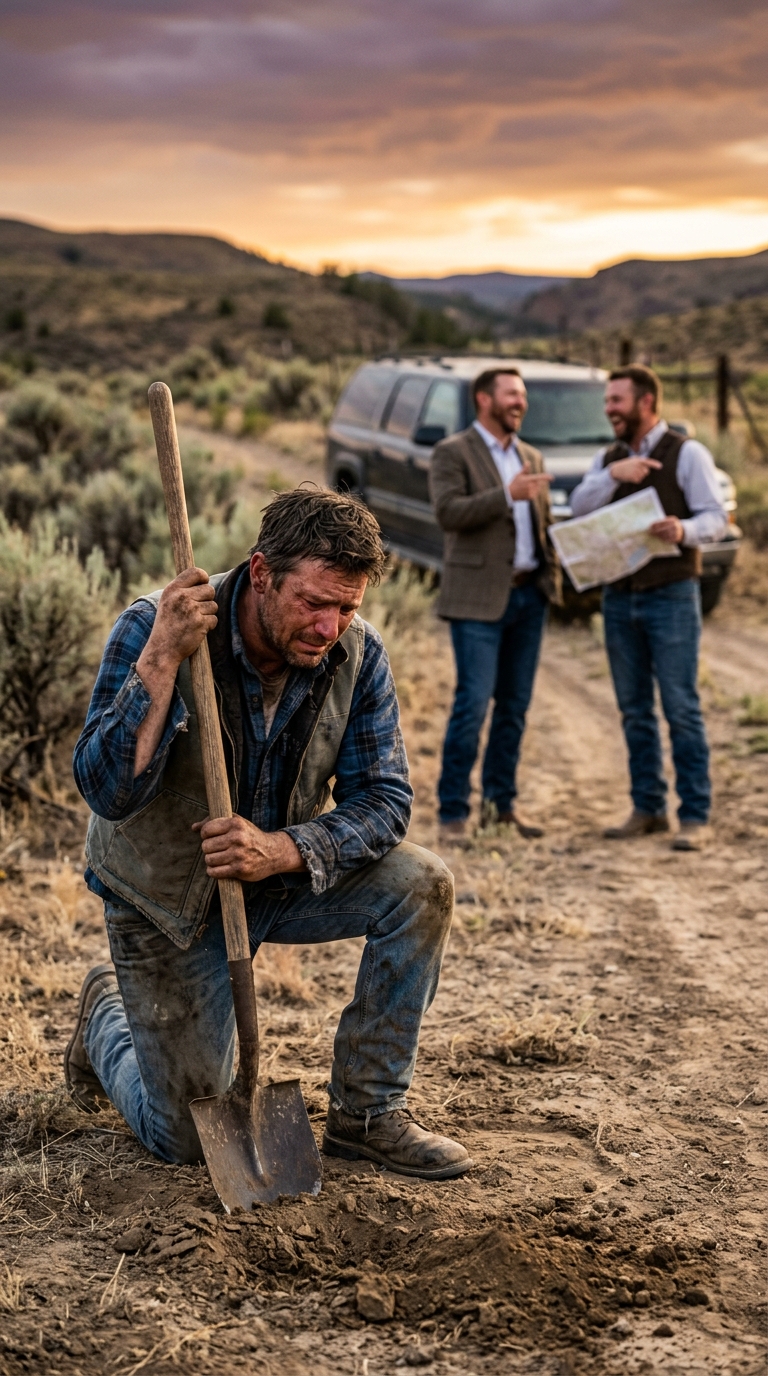
“Clear that brush, Mateo. It’ll teach you what real work is,” Santiago said, flashing a crooked smile. It wasn’t the smile of a generous man, but of a businessman used to making money from his office in Mexico City without breaking a single sweat.
Mateo stood in the center of Public Notary Office Number 4 in Zacatecas. He wore a worn flannel shirt and dusty work boots that clashed completely with the elegant glass table and leather-upholstered chairs. In front of him lay the topographic map that would seal his family’s fate. The plan showed the division of the 76 hectares his father, Don Arturo, had spent 40 years acquiring—piece by piece—under the scorching sun of northern Mexico.
The red-ink lines marked the parcels. Santiago’s share consisted of 32 hectares of perfectly flat land, with direct access to the main road and crossed by a steady stream that never ran dry. Diego, the youngest brother, received 28 hectares of fine pastureland, with steel corrals already built and fattening cattle grazing peacefully.
Finally, there was Mateo’s portion: 16 hectares in the most remote and forgotten corner of the estate. It was land that had been completely abandoned for over 20 years. There were only thorny mesquite trees, dried cacti, impenetrable brush, and cracked earth. Not a single structure, not a well, not one sign that the land could produce anything other than dust and misery.
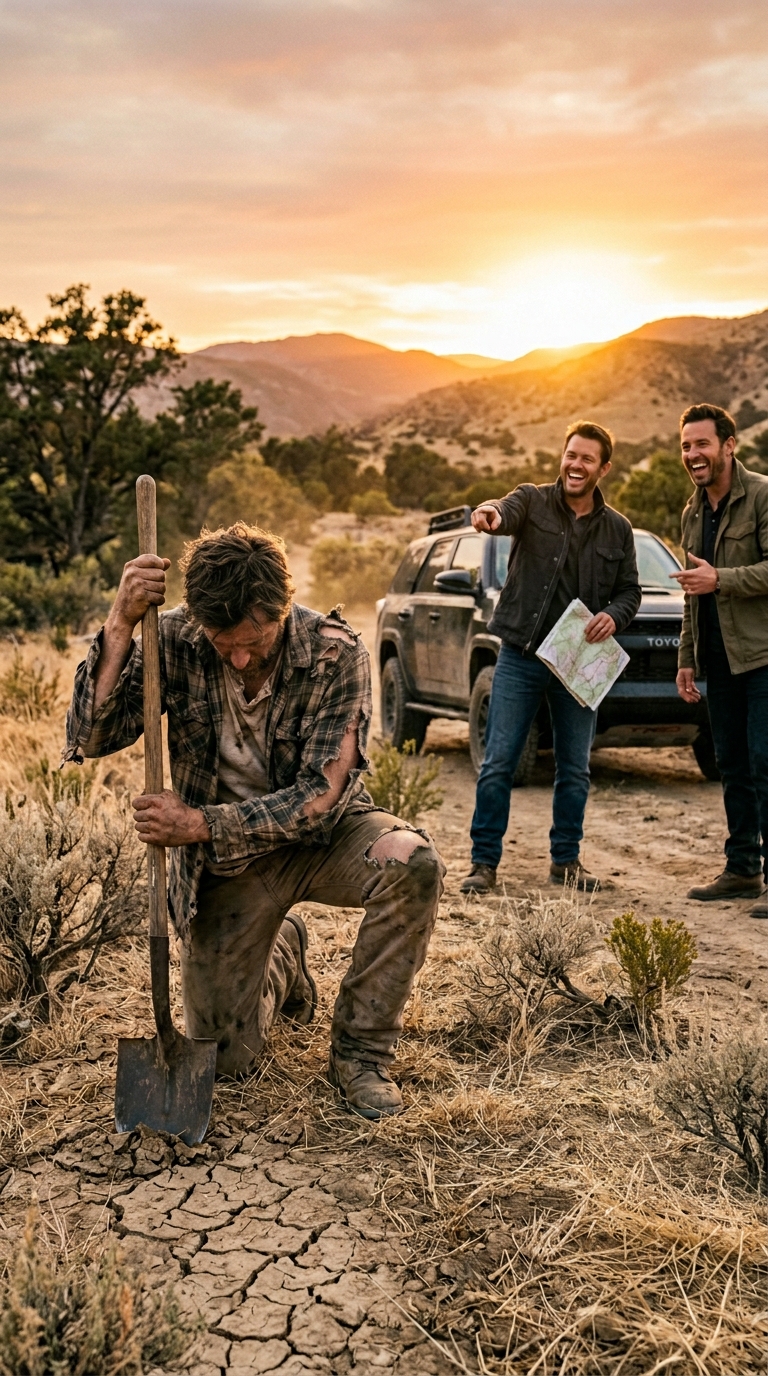
Santiago looked at his brother with the superiority of someone who knew he had just committed the perfect legal theft.
“Good luck with the wasteland, brother,” he murmured, adjusting his gold watch.
Diego, meanwhile, said nothing. He lowered his gaze, unable to meet Mateo’s eyes, signed the notarial document in a hurry, and folded his copy nervously. Diego had always been a coward—a man who married the daughter of a wealthy rancher from Sonora and preferred to look the other way when injustice happened, as long as his comfort remained intact.
Mateo stood silently, staring at the map for a long moment. He studied that miserable rectangle of brush his own brothers were handing him—as if tossing him the bones after devouring all the meat. Don Arturo had died just eight months earlier, and without leaving a will, he had believed that blood and honor among his three sons would be enough to ensure a fair division. The old man had been completely wrong.
Without a single complaint, Mateo picked up the metal pen and signed the paper.
As he stepped out of the notary office, the merciless Zacatecan desert sun struck his face with its dry, unforgiving heat. Behind him, through the glass, he could hear Santiago and Diego’s restrained laughter as they embraced, celebrating their victory. They believed they had condemned him to ruin—that they had stripped him of the family legacy to keep the wealth for themselves. They were convinced they knew exactly what they had left him in that thorn-filled wasteland.
But the arrogant brothers had no idea what was hidden beneath those dead shrubs.
You won’t believe what’s about to happen…
PART 2
It was Thursday morning, two days after the signing at the notary office. Mateo arrived at his land in an old pickup truck. He stood in front of the rotting fence that marked the beginning of his 16 hectares. The brush was so dense it blocked the view just ten meters in. The air smelled like sun-scorched earth. From the road, anyone passing by would swear that this piece of land was dead.
But Mateo wasn’t an office worker or a spoiled man. He was the only one of the three brothers who truly knew the land—because he woke up every day at 5 a.m. to work it. He grabbed his machete and began cutting his way through the mesquite. It took him three full days to reach the back of the property—three days of cuts, scratches, and sweat.
At sunset on the third day, he noticed something strange—something only the eyes of a real Mexican farmer could detect. The vegetation at the far end was different. The leaves were a deeper shade of green, and ferns were growing from the ground—plants that should not exist in the heart of an arid region.
Mateo dropped to his knees. The soil beneath his boots was damp. He dug about ten centimeters with his bare hands, and cold mud slipped between his fingers. He drove the machete into the ground and, when he pulled it out, the hole filled with clear water in less than a minute. It was icy, with a strong mineral scent.
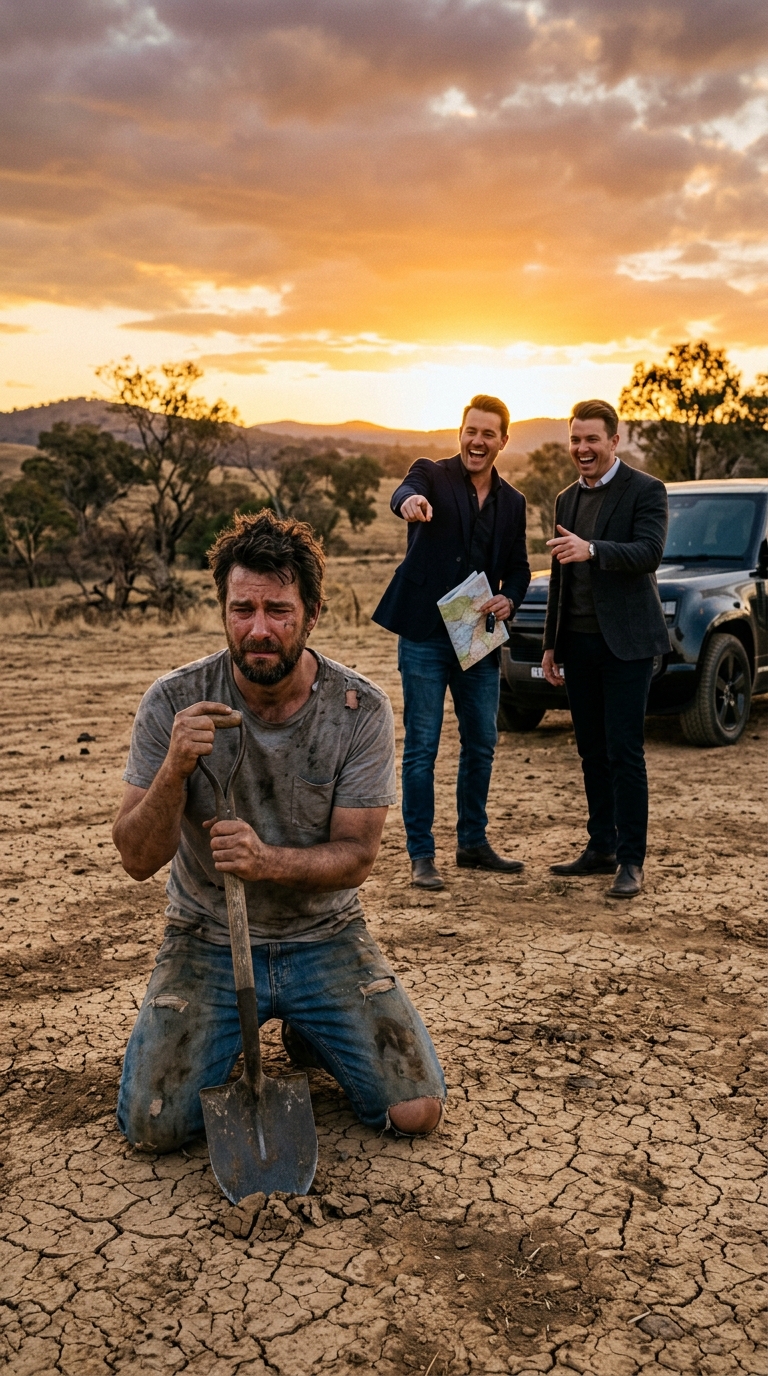
Mateo’s heart began to race. He remembered something his father had told him years ago: “That corner hides a great secret, son.”
To confirm his suspicion, Mateo secretly brought in Engineer Vargas, a water resources expert. The engineer spent four hours measuring pressure and analyzing the soil. When he finished, he sat down on a dry log, pale with astonishment.
“Mateo,” the engineer said, wiping his forehead, “what you have here isn’t a small puddle. This is a massive underground aquifer. The volume of water trapped beneath these rocks could supply every ranch within a five-kilometer radius. In times of drought, this is worth a hundred times more than any crop or livestock.”
He looked straight at Mateo.
“You own the water.”
Mateo kept the secret. During the first year, he worked like an animal. He hired two local laborers, Don Chencho and Lalo, paying them a fair wage. He built a small cabin of wood and sheet metal, put up new fences, and—with the government permit already in his hands—constructed a massive masonry cistern at the highest point of the land. Using gravity, he installed a drip irrigation system that flowed down to four strategic points. He began planting tomatoes, jalapeño peppers, and agave.
Meanwhile, his brothers ignored him. Santiago, from his luxurious office, mocked him over the phone to his partners: “My brother is playing farmer in a dump.” Diego kept selling his father-in-law’s cattle, wasting the money on brand-new trucks.
But in the second year, nature demanded its price. The drought arrived—not just any dry season, but the worst northern Mexico had seen in fifteen years. The sun scorched the region. By July, Santiago’s once-mighty stream—his greatest pride and source of wealth—began to weaken. By August, it had become a thin thread of murky water. By September, the riverbed was nothing but a scar of cracked mud. His crops withered into dust.
Diego fared even worse. Without water, his 28 hectares of fine pasture turned ash-yellow. The cattle grew desperate, wandering in circles under the brutal heat. The cows lost weight rapidly, and Diego was forced to sell half his herd at laughable prices because every rancher in the region was in crisis. The wealth of the two older brothers evaporated in just six months.
Then, in January of the third year, the unthinkable happened.
One afternoon, a luxury black SUV—now coated in a thick layer of dust—pulled up in front of Mateo’s land. Santiago stepped out. His once-impeccable suit was wrinkled. When he looked up, he froze.
Where there had once been dead brush, there was now a green paradise. Perfect rows of vibrant crops stretched across the land, sprinklers casting arcs of crystal-clear water into the sunlight, and a ranch operating in complete harmony. It was the only green patch for miles around.
Mateo stepped out to greet him. He wore a palm hat and held a cup of coffee.
“Do you have water?” Santiago asked, his voice trembling as he stared at the fields like they were a mirage.
“I do,” Mateo replied coldly. “From the back of the property. An entire aquifer.”
Santiago swallowed hard. He knew exactly what that meant. “You knew. From the very first day at the notary… you knew what was under this land.”
“You made your calculations to leave me in ruin, Santiago. I let the land speak to me,” Mateo said.
Stripped of his arrogance, Santiago clenched his fists. “Mateo, my stream is gone. Diego’s pastures are dust—he’s about to lose what’s left of his herd. We need access to your water. I’ll pay whatever you want. I still have money in my accounts—I’ll buy access at whatever price you set.”
Mateo looked at him steadily. The man who had humiliated him and treated him like a servant was now begging for his financial survival.
Mateo could have said no.
He could have let the banks seize Santiago’s company and watched Diego end up working as a ranch hand for his father-in-law.
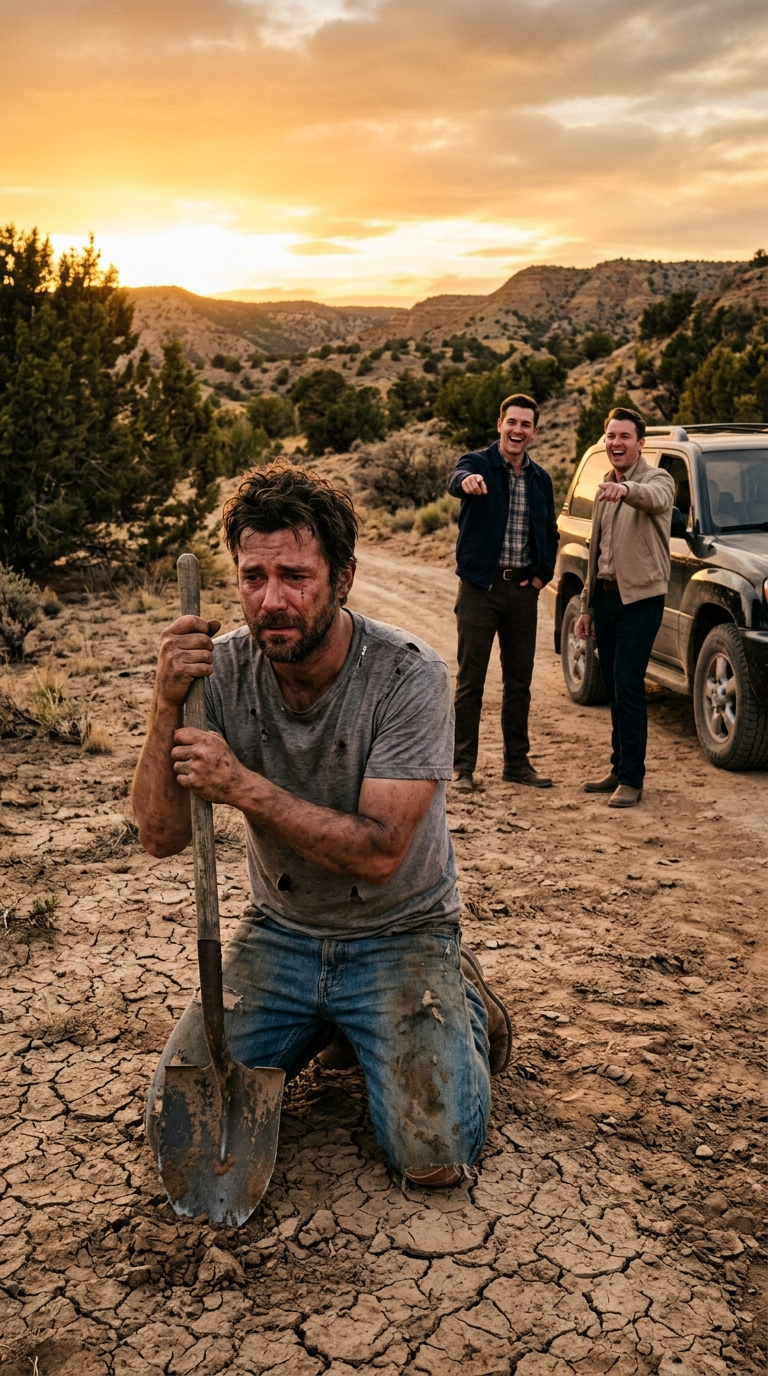
It was the perfect moment for absolute revenge.
“Bring Diego next week,” was all Mateo said, turning away to continue working.
Seven days later, the three brothers sat at the simple wooden table in Mateo’s ranch. Diego arrived with his head down, without his usual arrogance, hat in hand and tears of frustration in his eyes.
“I was a coward, brother,” Diego confessed, his voice breaking. “I knew what Santiago was doing with the map was theft, and I stayed silent out of convenience. I don’t deserve your help.”
Mateo poured three cups of traditional coffee. He looked at the two men in front of him—broken, humbled by their own greed.
“I could charge you millions. I could leave you out there to dry in the sun, just like you did to me,” Mateo began, his firm tone making the table seem to tremble. “But our father spent forty years bringing this land together with his sweat so the family would stay united. Water is not something you sell between blood. And water that divides families tastes like poison.”
Santiago looked up, stunned. “You’re going to give us the water for free?”
“No,” Mateo cut in. “We’re going to connect all three properties to my irrigation system. But starting today, the 76 hectares will operate as one agricultural cooperative. And I will be in charge of the entire operation. You will contribute your land and work under my direction. I’ll make the decisions about planting and management—because I’m the only one who didn’t abandon the land when things got tough.”
Silence filled the room. Santiago, the high-powered executive, and Diego, the proud rancher, were now being placed under the authority of the brother they once thought foolish. But they had no other choice. They accepted the terms and sealed the agreement right there—not with notaries or lawyers, but with a handshake, just as Don Arturo would have wanted.
The emotional impact was overwhelming.
Over the following year, the three brothers worked side by side. Santiago had to dirty his designer shoes stepping into the mud to fix irrigation lines. Diego rediscovered the value of hard work, tending the cattle under Mateo’s strict guidance. The land flourished again, and the cooperative’s profits multiplied tenfold—thanks to Santiago’s business skills and Mateo’s endless water supply.
One Sunday afternoon, the three men sat on the cabin porch, watching the sun set over the deep green agave fields. Diego had brought a fine cut of grilled meat, and Santiago poured tequila.
“Do you think the old man knew?” Santiago suddenly asked, watching the water flow through the channels.
“I think he knew who the three of us were,” Mateo replied, taking a sip of his coffee. “He knew greed would blind you. He knew you’d fight over what sparkled, while I would keep what looked like trash. He knew that in the end, we’d need a life-or-death reason to become brothers again.”
The drought took their money, but the hidden water gave them back their family.
Sometimes, the hardest lesson life gives you is this: never underestimate the one who works in silence. While the arrogant fight over the glitter on the surface, the humble dig deep until they find the real treasure.
What would you have done in Mateo’s place? Would you have left them in ruin for revenge, or forgiven them to honor your family? Share your thoughts in the comments—and pass this story along if you believe true justice always arrives right on time.
