

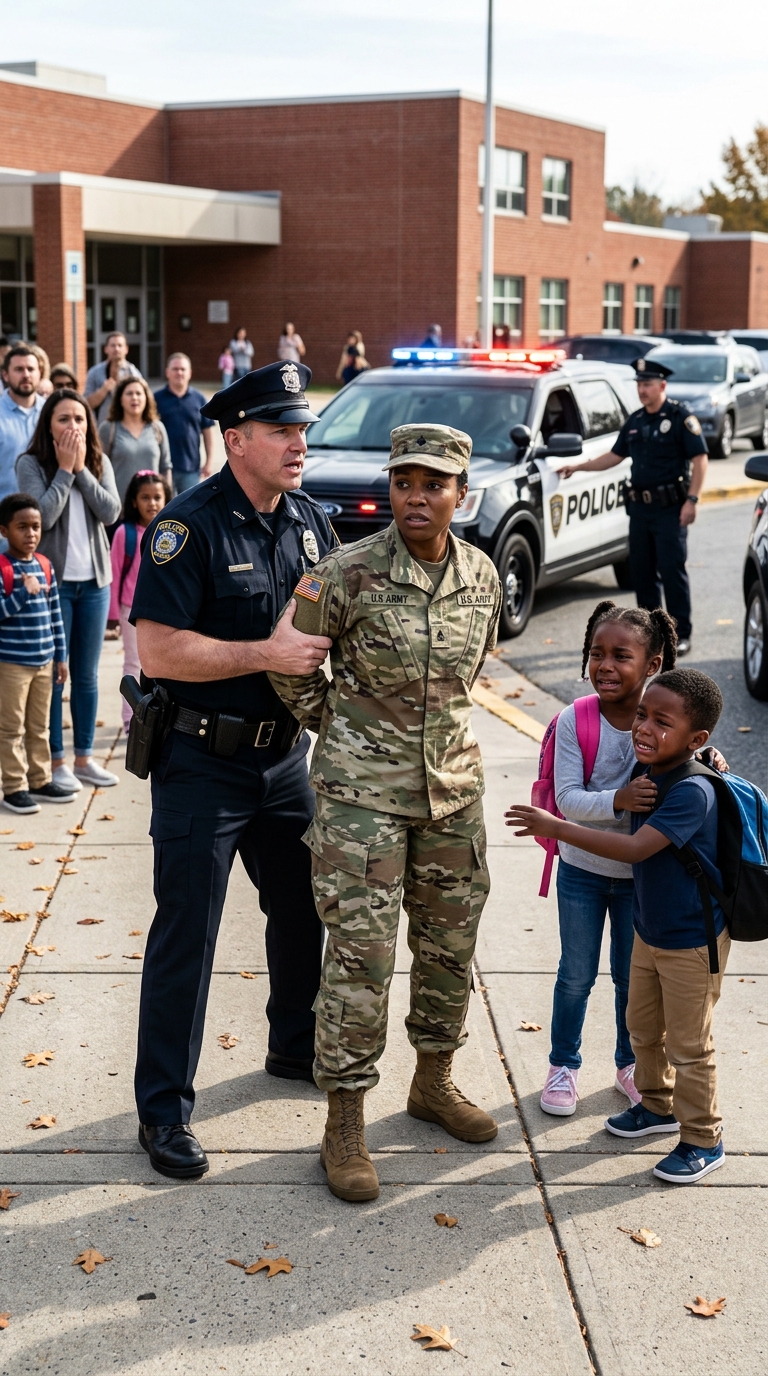
The afternoon bell released a surge of children and chatter onto the sidewalk outside Canyon Ridge Elementary in suburban San Diego. Parents gathered in small groups—coffee in hand, phones out, exchanging quick smiles—while teachers guided students toward the curb like traffic officers.
Commander Naomi Pierce stood near the crosswalk in jeans and a worn hoodie, her hair tucked beneath a baseball cap. No uniform. No insignia. After fifteen years in Naval Special Warfare, blending in wasn’t something she practiced—it was instinct. Today, she wanted only one thing: her twin boys.
She saw them first—Eli and Owen—backpacks bouncing as they ran toward her. They crashed into her legs, laughing. Naomi crouched, wrapped them in a tight embrace, and took in that simple moment: a normal school day ending safely.
Then a patrol car pulled up—too close.
Officer Jared Kline stepped out, one hand resting on his belt out of habit. He studied Naomi a moment longer than necessary before speaking.
“Ma’am, step away from the children.”
The twins pressed closer to her. Naomi stood slowly, keeping her hands visible. “Is there a problem, officer?”
Kline gestured toward her cap as if it were evidence. “We’ve had reports of stolen valor around here. Someone tried to claim military benefits at a gate last week. You match the description.”
Naomi blinked once. “I didn’t claim anything. I’m picking up my kids.”
Kline asked for identification. Naomi handed over her driver’s license. He examined it, then looked back at her face like he expected her to slip.
“You’re saying you’re a Navy officer?” he asked.
“Yes,” Naomi answered evenly. “You can verify me. Call it in.”
Kline didn’t. He smirked. “You don’t look like one.”
The words landed harder than expected—not because of doubt, but because of what they implied: a judgment already made about who belonged and who didn’t.
Naomi kept her tone steady. “Officer, please verify my identity through dispatch.”
Kline stepped closer. “Turn around.”
Naomi’s jaw tightened. “You’re making a mistake.”
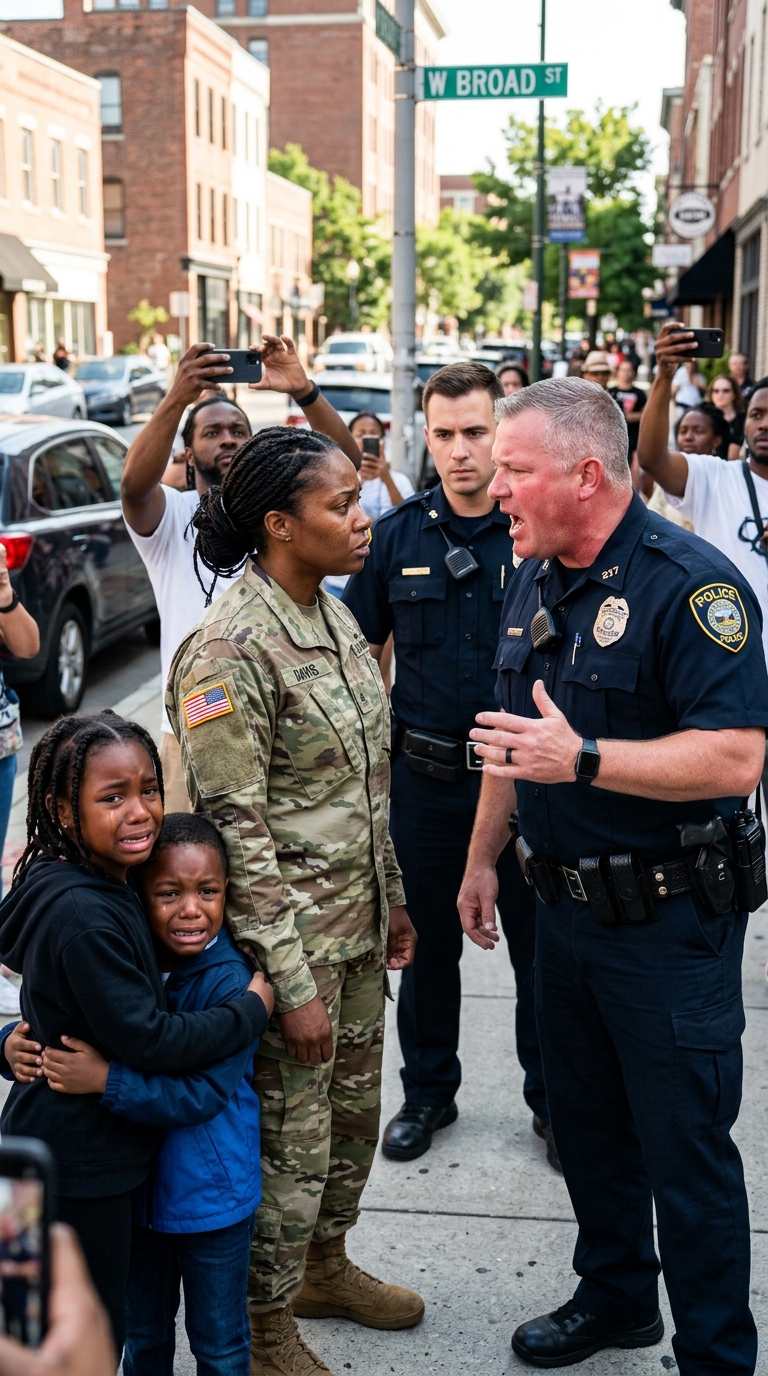
The cuffs snapped around her wrists. Cold metal pressed into her skin. A teacher stepped forward, then stopped when Kline raised a hand in warning. Parents gasped. Phones lifted. The twins began to cry.
“I’m arresting you for impersonation and obstruction,” Kline announced, as if saying it louder made it lawful.
Naomi didn’t resist. She looked at her sons and spoke gently, “Eyes on me. Breathe. You’re safe.”
Kline pulled her toward the cruiser, tightening the cuffs slightly.
Then three black SUVs screeched to a stop at the curb—one, two, three—arriving too fast to be coincidence. Doors opened. Men and women stepped out, calm and coordinated, scanning the scene with quiet authority.
One woman approached Kline, her voice firm. “Officer, remove those cuffs.”
Kline scoffed. “Back off.”
The woman held up her credentials. “You’ve just detained Commander Naomi Pierce, United States Navy.”
The crowd went still.
And as distant sirens began to rise, the woman added, “And we have reason to believe you’ve done this before.”
What did they already know about Officer Jared Kline—and why did Naomi realize this wasn’t just about her?
Part 2
Officer Jared Kline’s confidence didn’t disappear all at once. It fractured first—like glass beginning to crack under pressure.
“This is my stop,” he snapped, shifting his gaze between the arriving team and the parents recording everything. “You can’t interfere.”
The woman who had spoken didn’t raise her voice. She didn’t need to. “I’m Agent Marisol Grant,” she said, presenting her credentials again, this time closer. “This is a federal personnel verification response. Remove the cuffs.”
Kline’s eyes flicked toward the phones, then back to Naomi. She remained still, breathing evenly, her posture controlled even as the metal pressed into her wrists. A teacher now held her boys, both crying, staring at their mother as if something in their world had just broken.
Naomi spoke calmly. “Officer, comply.”
That should have ended it—but Kline pushed further, driven by stubborn fear. “She resisted,” he said, already shaping his version of events. “She refused to identify herself.”
Agent Grant didn’t argue. She turned to a nearby parent holding a phone. “Ma’am, did you record the entire interaction?”
The parent nodded. “Yes.”
“Do not delete it,” Grant said. “We’ll collect statements.”
Kline’s face flushed. “This is ridiculous.”
Grant met his gaze with professional indifference. “What’s ridiculous is detaining a military commander in front of her children over a claim you refused to verify.”
Behind her, two more agents took position—not aggressive, just present—forming a quiet perimeter. Another agent approached Naomi’s twins, speaking gently, introducing himself as “a friend,” assuring them their mom was safe and no one would take her away.
Kline’s hand hovered near his radio. He finally called it in, his voice tight and defensive. “Dispatch, confirm ID. Possible impersonation.”
The response came almost immediately—and the dispatcher’s tone shifted mid-sentence. “Unit—stand by. That name is verified. Commander Naomi Pierce. Naval Special Warfare… confirm you have her detained?”
Kline swallowed. Silence stretched.
Agent Grant stepped closer. “Remove the cuffs.”
Kline unlocked them reluctantly. The click of metal releasing seemed louder than the school bell. Naomi rubbed her wrists once, then turned toward her boys.
“I’m okay,” she said. “Come here.”
Eli and Owen ran straight to her, clutching her hoodie. Naomi held them close, steadying their shaking with her own calm.
Agent Grant faced Kline. “Officer, step aside. You are not leaving.”
Kline stiffened. “On what grounds?”
Grant’s voice remained level. “Probable cause for unlawful detention, civil rights violation under color of law, and attempted false reporting—based on witness video and your own dispatch call.”
Now Kline’s confidence finally broke into panic. “This was a misunderstanding.”
Grant didn’t blink. “Misunderstandings don’t involve mocking someone’s identity and refusing verification. Misunderstandings don’t end with children watching their mother in handcuffs.”
A local school resource officer arrived, out of breath. He saw Naomi, recognized her instantly, and went pale. “Commander Pierce—ma’am—”
Naomi raised a hand slightly. “Not now.”
Because Agent Grant’s team hadn’t come just for Naomi.
While one agent took Naomi’s statement, another quietly requested access to the school’s exterior cameras from the principal. A third gathered names from parents who had witnessed earlier “stops” during pickup—because it turned out several had already raised concerns about Officer Kline’s behavior: aggressive questioning, selective enforcement, and a pattern of targeting parents who “didn’t look like they belonged.”
Agent Grant led Naomi aside near the administrative office. “Commander, we didn’t just arrive by chance,” she said.
Naomi narrowed her eyes. “Then why were you here?”
Grant chose her words with care. “We’ve been building a case. Kline’s name appeared in multiple complaints—two involving detained veterans, one involving a foster teen, and another tied to a school pickup last month. But witnesses were afraid to formally come forward.”
Naomi’s expression hardened. “So today he did it again—just to the wrong person.”
Grant nodded. “And you handled it exactly right: calm, compliant, documented.”
Naomi’s jaw tightened. “My kids saw it.”
Grant’s voice softened. “I know. That’s why we’re moving quickly.”
Kline was escorted aside by local supervisors, but Agent Grant made sure his bodycam was secured immediately. When a local captain suggested the footage would be “reviewed internally,” Grant responded without hesitation: “No. It will be preserved under federal chain of custody.”
Then the situation escalated again—like a second siren cutting through the noise.
A detective from Internal Affairs arrived—Det. Paul Brenner—carrying a folder, his expression strained. He spoke quietly with Grant, but Naomi caught fragments.
“…missing bodycam segments…”
“…complaints marked ‘unfounded’…”
“…same supervisor signed off…”
Agent Grant turned back to Naomi. “Commander, are you willing to file a formal complaint and provide testimony?”
Naomi didn’t hesitate. “Yes. But I want my sons protected from retaliation.”
Grant nodded. “We’ll make sure of it.”
As Naomi signed the initial statement, Kline’s voice rose from the sidewalk. “This is a setup! She staged this!”
Naomi looked at him steadily. “No, officer. You did it on camera.”
But when Agent Grant showed her a screenshot on her phone—an internal message sent minutes earlier to Kline’s unit—Naomi felt her stomach drop.
It read: “DO NOT VERIFY—DETAIN FIRST. CALL SUPERVISOR.”
That wasn’t Kline acting alone.
Who sent that message—and how far did this pattern of targeted detentions actually reach in Part 3?
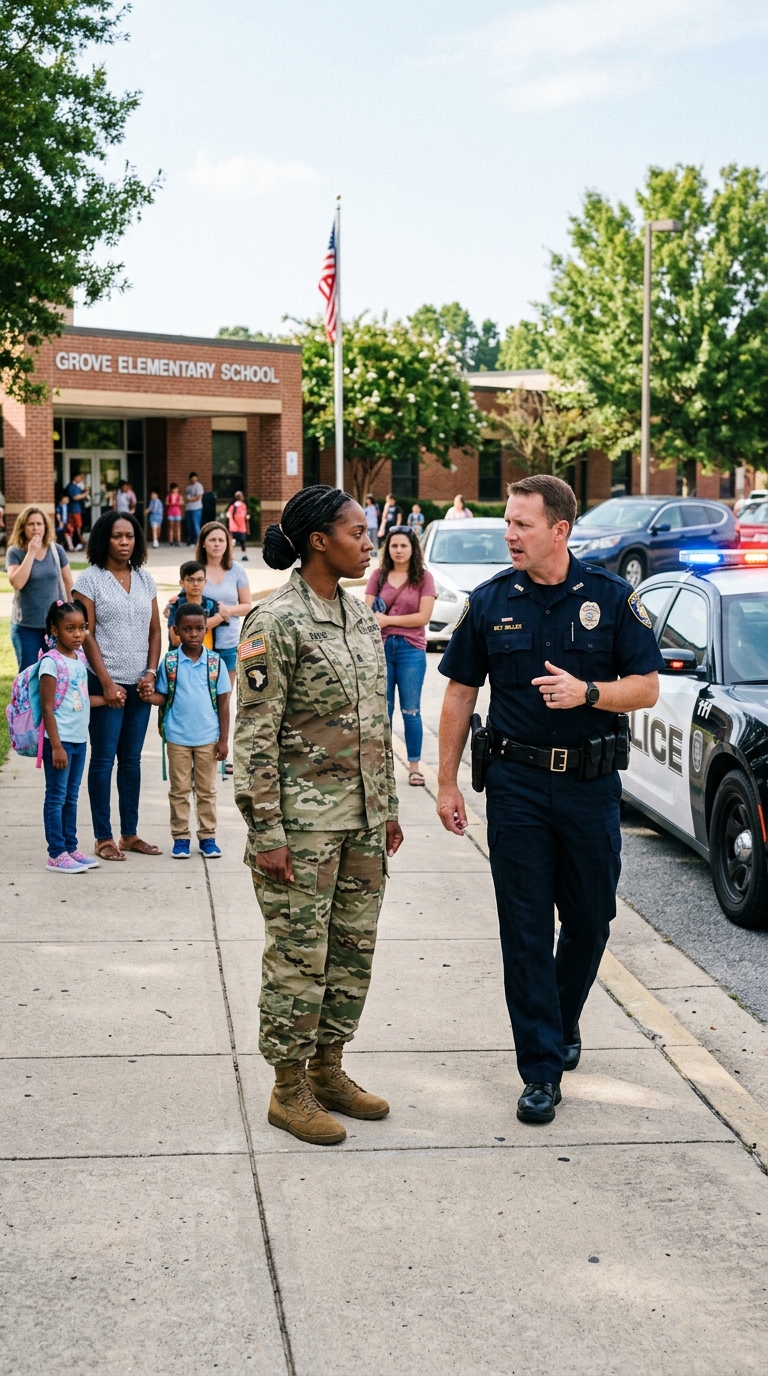
Part 3
The message changed everything.
Naomi Pierce had expected bias. She had not expected a written directive that read like a playbook: detain first, verify later—because the detention itself became the punishment.
Agent Marisol Grant treated the screenshot as evidence, not speculation. Within an hour, she requested the department’s internal dispatch logs and supervisor communications under a preservation order. Local leadership pushed back. Grant didn’t argue; she cited federal authority and documented every attempt to delay.
That night, Naomi didn’t return home with a sense of relief. She returned with a safety plan.
A victim services coordinator sat down with her and Mark—Naomi’s husband—laying out the basics of retaliation prevention: adjusted school pickup routines, secure lines of communication, and how to report any suspicious contact immediately. Naomi hated that it was necessary, but she understood the reality. When power feels threatened, it looks for vulnerable points—and children are always the most vulnerable.
Naomi then faced the hardest part: explaining it to her twins.
She sat with Eli and Owen on the couch and spoke in the simplest way she could. “A police officer made a wrong choice. He assumed something about me. He used cuffs to scare me. But people came to stop him, and the truth is recorded.”
Eli asked the question that comes when a child’s sense of safety is shaken: “Are we bad?”
Naomi pulled them close. “No. You are loved. You are safe. And sometimes adults make harmful mistakes. We tell the truth about them.”
The investigation moved faster than the city was used to.
Within a week, federal investigators and Internal Affairs began mapping a pattern using the same principle Naomi had relied on in Special Warfare: track behavior, then trace the system behind it.
They compared stop reports filed by Officer Kline, bodycam activation logs and repeated “malfunctions,” supervisor sign-offs, and internal messages like the one ordering detain-first verification.
One name surfaced again and again: Sergeant Wade Hargrove—a field supervisor described as “proactive,” a label that often masked aggressive tactics framed as productivity.
When investigators reviewed Hargrove’s message history, they uncovered repeated variations of the same directive sent to multiple officers over months. Sometimes it read “verify later.” Sometimes “don’t verify in the field.” Other times “hold until I arrive.”
This wasn’t a single officer making a bad decision. It was a pattern embedded in how things were being done.
At the next city council meeting, the police chief offered a public apology. “We’re reviewing the incident,” he said. “We take concerns seriously.”
The following morning, Agent Grant’s office released a statement: “This matter is under active investigation. Evidence preservation orders have been issued. Witnesses are protected.”
The tone shifted—and the city noticed.
Parents began coming forward once they believed they would be protected. One mother described being questioned aggressively during pickup because she “didn’t look like” she belonged there. A veteran shared how he was stopped near the school and mocked for “claiming benefits.” A foster teen recounted being searched and threatened with “child endangerment” charges simply for waiting at the wrong curb.
Individually, each account might have been dismissed.
Together, they revealed a pattern.
When Sergeant Hargrove was questioned, he attempted to frame it as standard procedure. “We verify at the station for safety,” he said.
Investigators asked a single question that unraveled that claim: “Why did the message say ‘do not verify’ instead of ‘verify through dispatch’—which is both safer and faster?”
Hargrove had no answer.
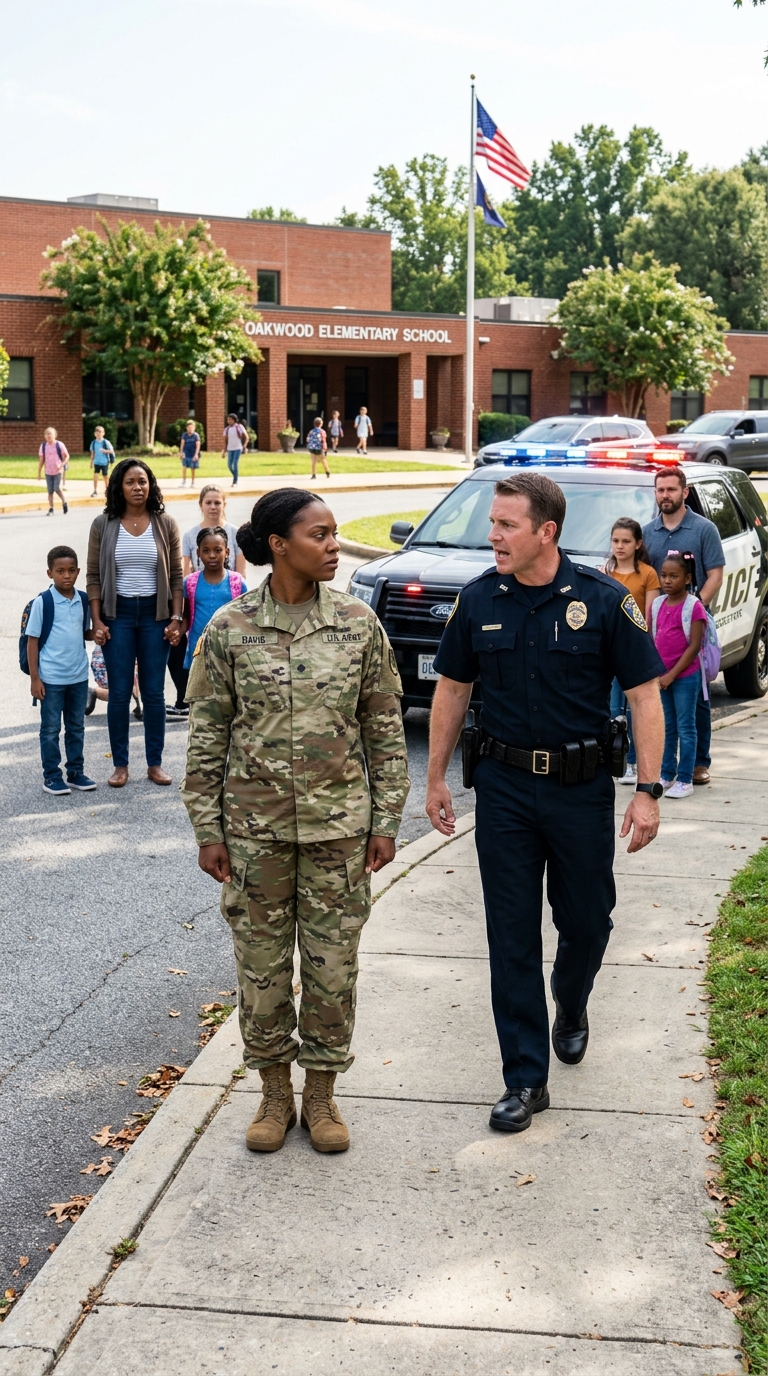
The case escalated from administrative to criminal when investigators uncovered that several detentions coincided with missing property—phones, cash, personal documents—items reported as “misplaced” during searches and never entered into evidence. The pattern suggested more than bias. It suggested exploitation.
A multi-agency task force executed search warrants at dawn: officer lockers, supervisor offices, and department servers. Evidence was seized under strict chain of custody, leaving no room for internal handling or quiet revisions.
Officer Jared Kline was suspended and later charged with unlawful detention and false reporting. Sergeant Wade Hargrove was arrested for conspiracy and civil rights violations, with additional charges pending tied to missing property and evidence discrepancies.
The department entered a consent agreement with oversight measures: independent complaint intake, stronger bodycam protections, limits on school-zone policing, and mandatory verification protocols designed to eliminate “detain first” practices.
For Naomi, the most meaningful outcome wasn’t the arrests. It was what unfolded at Canyon Ridge Elementary a month later.
The principal invited her to a parent safety meeting—not as a spectacle, but as part of a real community discussion. Naomi arrived in civilian clothes again, but this time the room didn’t look at her with doubt. It welcomed her as part of the neighborhood.
She spoke with clarity. “Your children shouldn’t have to witness adults misuse authority. If something feels wrong, record it safely, report it, and support each other.”
A teacher raised a hand. “How do we teach kids to trust police after this?”
Naomi didn’t soften the answer. “We teach them to trust truth. We teach them that good officers follow procedure, and bad officers rely on fear. We teach them they have the right to ask questions.”
After the meeting, Eli and Owen stood beside her in the hallway, calmer than they had been that day. Owen tugged her sleeve and whispered, “Are we going to be okay now?”
Naomi knelt to their level. “We’re already okay. And we’re making it better.”
Weeks later, Naomi received a letter from Agent Grant: “Charges filed. Oversight measures implemented. Witness statements preserved. Thank you for staying calm and standing firm.”
Naomi placed the letter in a drawer—not as a trophy, but as a reminder that ordinary moments can become turning points when people choose not to look away.
Her sons returned to being children again—soccer practice, homework, small arguments over snacks—simple routines that now felt like quiet victories.
And the city learned something as well: stopping abuse doesn’t depend on rank, luck, or even a viral video alone.
It depends on evidence, witnesses, and a community willing to say, “Not here.”
