

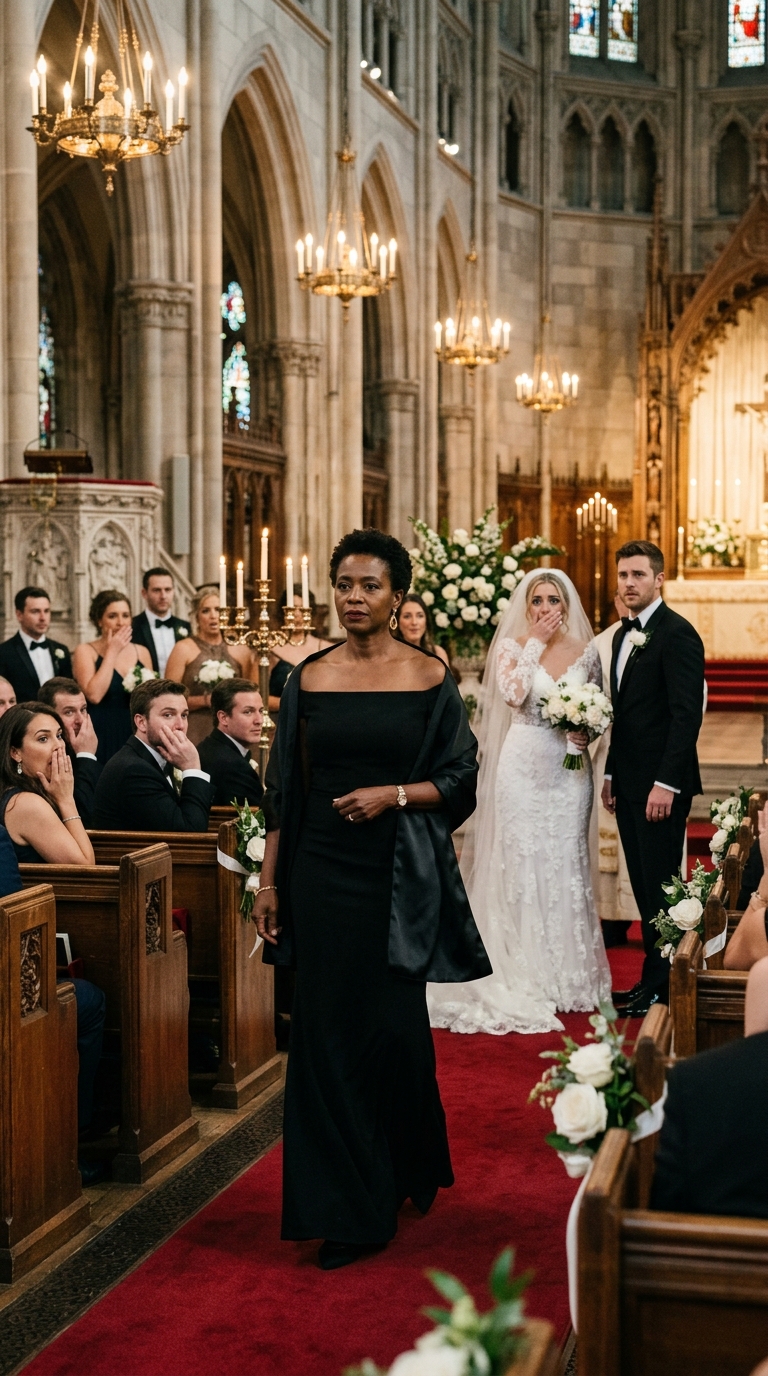
Most people moved through Meridian Tower without ever truly noticing it.
They saw the lobby screens glowing with market data, the glass elevators gliding like quiet promises, the marble floors reflecting their own success back at them.
What they didn’t see was the woman who made all of it possible before sunrise ever touched the sky.
Lillian Parker arrived each morning while the city still slept. She took the first bus from her neighborhood, stepped into the building with her access badge, and inhaled the familiar scent of disinfectant and polished stone.
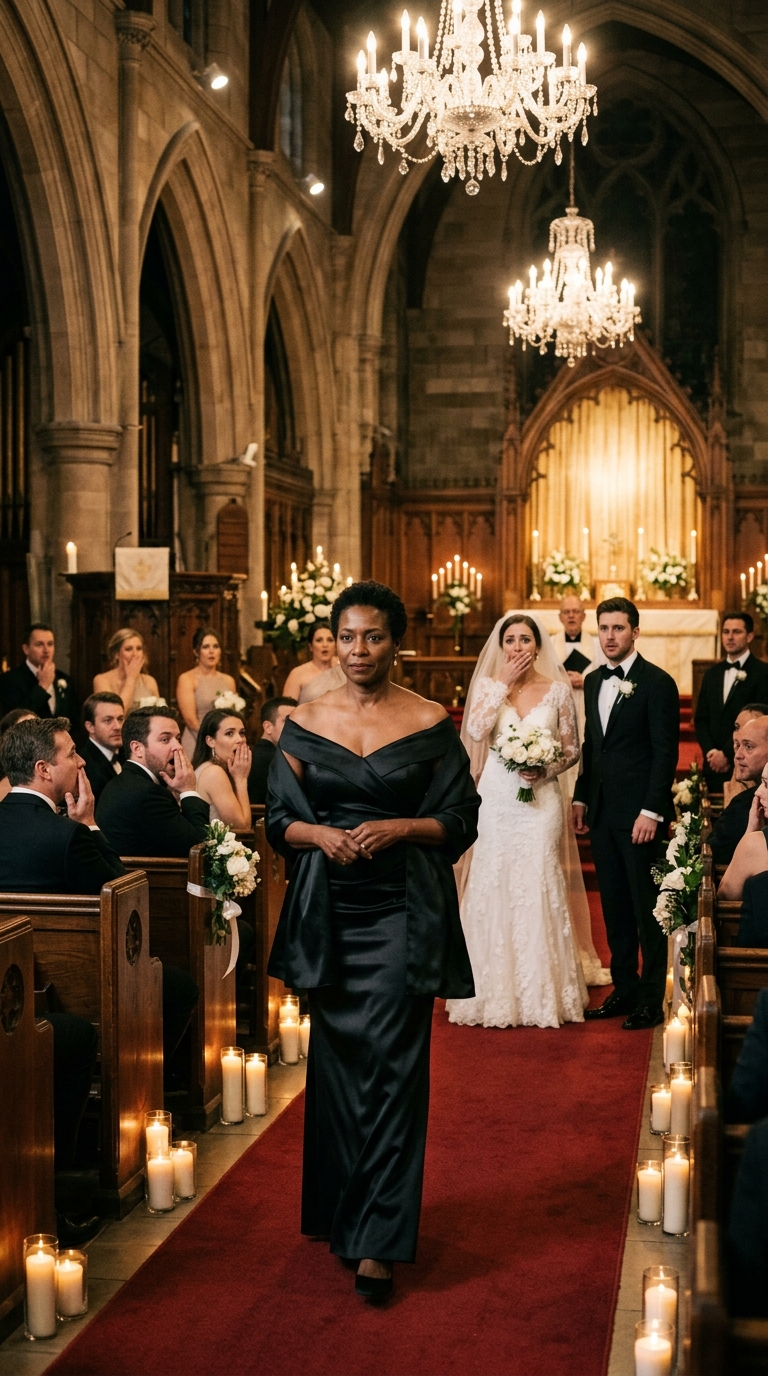
Her canvas bag rested at her side—inside, neatly folded, were her cleaning gloves, a simple lunch wrapped in brown paper, and a paperback novel worn soft from years of rereading. She preferred stories with endings that made survival feel meaningful.
By the time executives entered with tailored coats and expensive coffee, the tower already gleamed. Windows were spotless. Floors reflected light like water. Trash bins were empty. And Lillian had already heard things she was never meant to hear.
She didn’t hate her work.
What wore her down was the slow erosion of being seen as human. People spoke around her, above her, sometimes through her. They talked freely near her cart, assuming her ears didn’t matter. She learned who would be fired before HR sent the notice. She learned which marriages were falling apart long before the paperwork was filed. She learned how easily powerful people revealed themselves when they believed no one important was listening.
Invisibility, she had come to understand, was a skill forced on the powerless—and a privilege enjoyed by the powerful. On the twenty-third floor, that truth was sharpened daily by Penelope Crane.
Penelope Crane did not shout. She did not insult. She did not threaten. Her cruelty was precise, polished, and wrapped in flawless manners that left no trace behind.
She was the fiancée of Douglas Archer, the CEO of a fast-growing investment firm that occupied the entire floor. Penelope moved through the space as though she owned not just the office, but the air itself. Her dresses were always pale—ivory, champagne, soft gray—and her heels clicked with the quiet authority of someone used to being obeyed.
She never spoke to Lillian.
She spoke at her.
One evening, as Lillian polished the marble outside the conference room, Penelope paused mid-step, her two friends beside her like accessories. The scent of expensive perfume drifted down, sharp and intentional.
“Careful,” Penelope said lightly, gesturing toward the floor with a manicured finger. “That surface costs more than most people earn in a year.”
Her friends smiled and laughed together, their voices soft and controlled.
Lillian kept her gaze lowered, her hands steady on the buffer. She didn’t apologize. She didn’t explain. She simply kept working, because she had learned that humiliation feeds on reaction—and she refused to provide it.
Silence, in moments like that, was not surrender.
It was control.
The next afternoon, Penelope approached again—this time alone. She carried a thick envelope sealed with wax, its cream paper heavy, as if it held more than just an invitation. She extended it between two fingers, smiling as though offering generosity.
“I’m getting married this Saturday,” Penelope said smoothly. “The ceremony will be at Seabrook Estate. Very formal.”
She paused just long enough for the words to settle.
“I thought it might be… educational for you to attend.”
Her eyes briefly scanned Lillian’s uniform, her practical shoes, the faint scar on her wrist.
“And do be careful,” Penelope added, lowering her voice. “I’d hate for anyone to confuse you with the catering staff.”
The cruelty was subtle. Precise. Delivered with a smile.
Lillian took the envelope without speaking. Her fingers trembled slightly, but her face remained unchanged. She understood immediately what it was.
Not an invitation.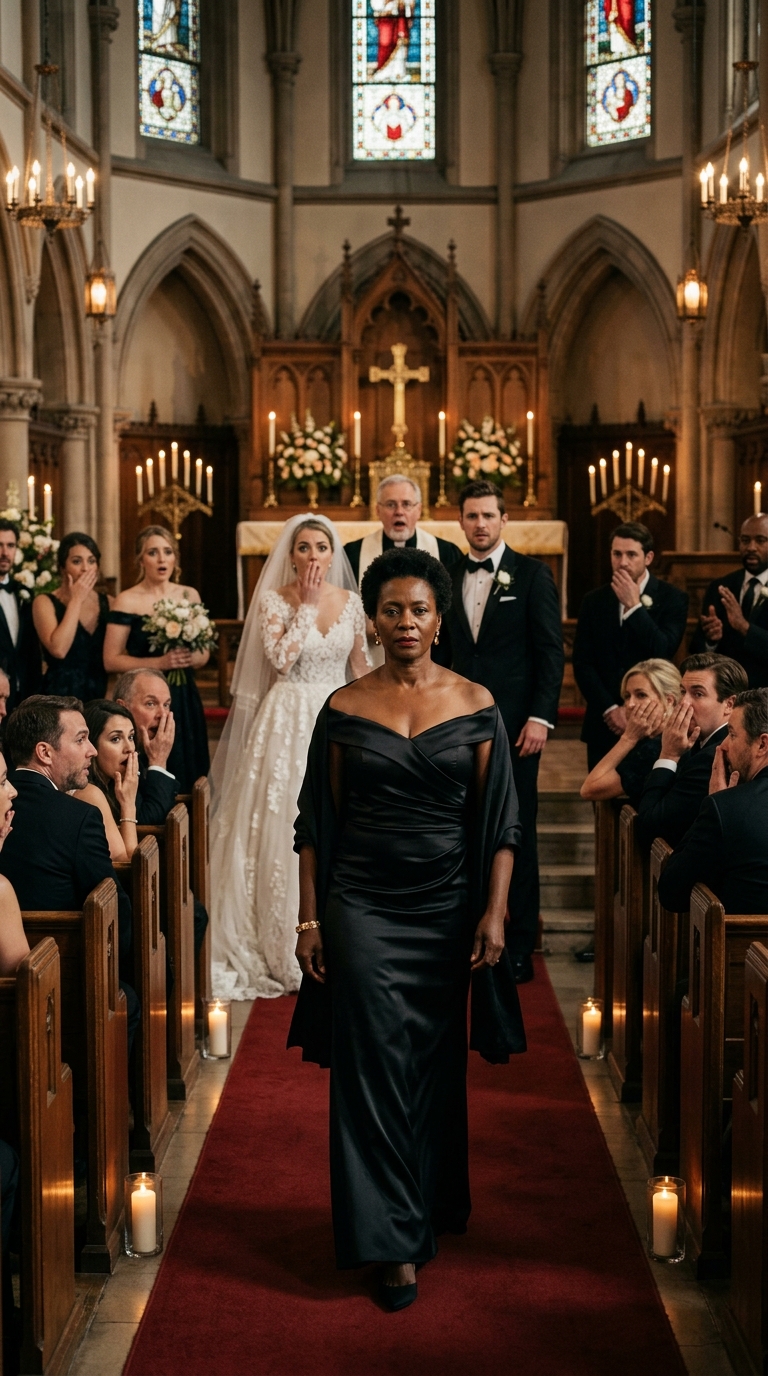
A performance.
Penelope wanted her there—to be seen, judged, whispered about. To watch discomfort spread beneath chandeliers. To turn class into spectacle and call it tradition.
As Penelope walked away, heels clicking with satisfaction, Lillian stood still for a moment longer than necessary. Then she slipped the envelope into her bag, finished her shift, and took the bus home as the sun dipped behind the skyline.
That night, she placed the envelope on her small kitchen table and stared at it for a long time.
Some doors are opened to welcome you.
Others are opened to watch you fall.
And sometimes, the only power you have…
is choosing how you walk through.
That evening, in her modest apartment overlooking a busy street, Lillian studied the invitation again. She thought about throwing it away.
She thought about staying home and protecting her peace.
Then her eyes fell on a framed photograph beside her bed. It showed her years earlier standing beside her mother at a community fundraiser, both dressed elegantly, both smiling with the quiet confidence of women who believed in their work.
That life felt far away—but it wasn’t gone. Before scandal and loss pushed her into the background, Lillian had founded a nonprofit that supported education for underprivileged students. A financial crime she didn’t commit had been tied to her organization, and although the truth eventually came out, the damage had already been done.
Donors disappeared. Partnerships collapsed. Her mother passed away during the legal battle, and grief hollowed what remained of her public life. Survival required silence, so she accepted work that asked only for endurance.
Lillian picked up her phone and called an old friend she hadn’t spoken to in years.
“Naomi,” she said when the line connected, her voice unsteady. “I need help. I need to remember who I was before I started hiding.”
On the other end, Naomi Brooks—now a wardrobe consultant for theater productions in Los Angeles—listened without interrupting. When Lillian finished, Naomi replied simply.
“I will be there tomorrow,” she said. “And we are not hiding anymore.”
Naomi arrived like a storm—decisive and clear. She listened as Lillian described the wedding, the intention behind the invitation, and the fear that came with it. Together, they sorted through old clothes, photos, and memories, creating not a disguise, but a statement. The dress they chose was simple yet powerful, tailored perfectly, its dark fabric emphasizing presence over decoration.
“This is not about impressing them,” Naomi said, adjusting the final seam. “This is about standing where you belong and letting silence speak.”
Saturday arrived under clear skies and soft coastal light. Seabrook Estate was surrounded by manicured gardens, white tents, and music drifting gently through the air. Guests arrived in waves, exchanging compliments and gossip while servers moved among them.
Penelope stood near the entrance, radiant and composed, greeting each guest with practiced ease.
“She will not come,” Penelope said quietly to Douglas, glancing toward the path. “People like her know better.”
At that moment, a black sedan pulled up.
The driver stepped out and opened the door.
Lillian emerged.
The conversations around them slowed—then stopped.
Her presence shifted the entire atmosphere, not because she demanded attention, but because she carried a calm confidence that couldn’t be ignored.
Penelope turned, her smile faltering as recognition struck. She stepped forward quickly, trying to regain control.
“Well,” she said, forcing a laugh, “you cleaned up nicely.”
Lillian met her eyes calmly.
“And you rehearsed kindness,” she replied evenly. “It is unfortunate that manners cannot be purchased.”
A murmur moved through the crowd. Douglas stared at Lillian, his expression shifting from confusion to recognition.
“Are you Lillian Parker from the Beacon Initiative,” an older guest asked, stepping closer. “You funded my granddaughter’s scholarship.”
Others leaned in. Stories surfaced. Lives touched. Opportunities remembered. Penelope’s composure began to crack as the truth settled in.
She had not invited someone to mock.
She had invited someone remarkable.
Lillian lifted her voice gently—not to command, but to clarify.
“I did not come here to disrupt your celebration,” she said. “I came because I was invited. And because dignity does not disappear when circumstances change. It only waits.”
Applause began softly, then grew—not loud, but genuine.
Penelope turned away, her face pale, retreating toward the house. Douglas remained still, confronted by a reality he could not ignore.
Lillian left soon after, walking the same path she had entered—but this time, the crowd parted for her.
As she reached the car, she caught her reflection in the window and smiled—not in victory, but in relief.
She was no longer invisible.
And she had never needed to raise her voice to be seen.
