

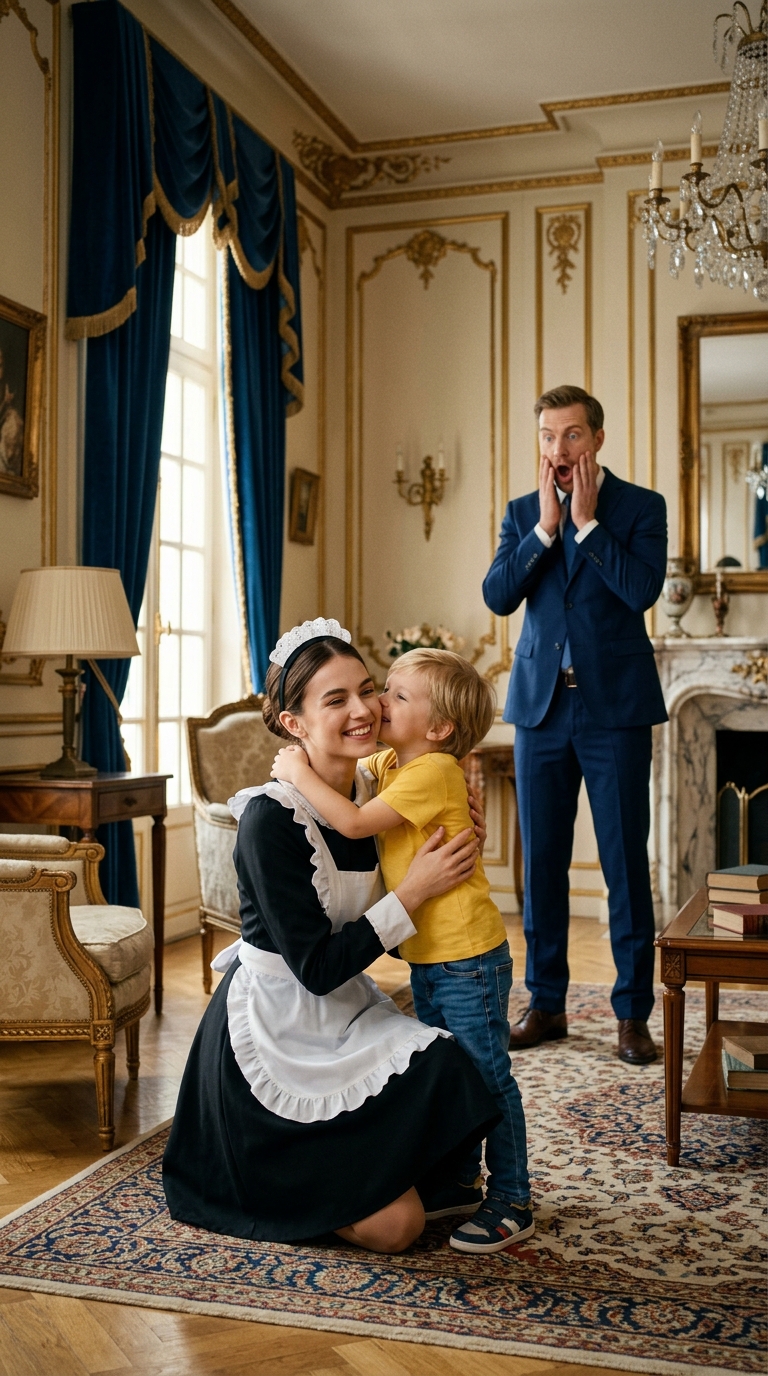
High on rolling green hills, a grand mansion stood behind black iron gates, its manicured gardens and marble fountains concealing a deep, unsettling silence.
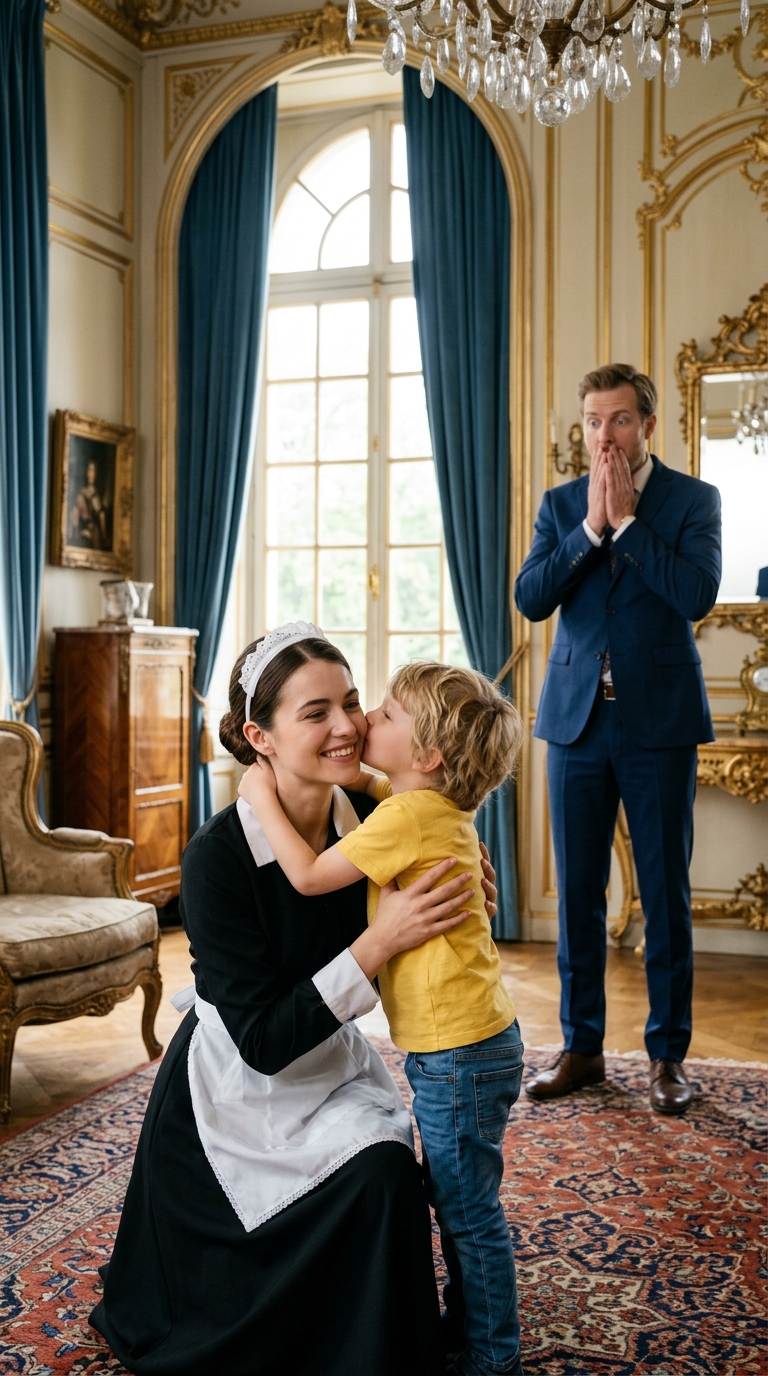
Adrián Valverde, nine years old and known as “the millionaire boy,” had not spoken since his mother died.
He avoided everyone, flinched at the slightest sound, and even his father, Esteban, could not reach him.
Specialists, expensive treatments, and therapists had all failed, leaving behind only frustration and helplessness.
One morning, Clara arrived. A modest maid, she carried no certificates or titles—only quiet strength and a gentle heart, shaped by caring for her own ill daughter.
Assigned to Adrián’s wing, she moved softly, cleaned carefully, and spoke only in whispers.
She began humming a lullaby her mother once sang to her, letting calm fill the silence. Slowly, Adrián lifted his head to listen.
Days passed. Clara spoke to him about her daughter, her small village, and the simple beauty of ordinary life.
Adrián stayed withdrawn, but each day he moved a little closer. One afternoon, a small ball rolled toward him. Clara left it near him. He picked it up and whispered, “Thank you.”
Their bond grew in silence. Clara read stories aloud, left warm milk by his bed, and sang softly each night.
Adrián began to draw—first simple scribbles, then stars, trees, and eventually a woman in a long dress. One day, he drew two figures holding hands, a quiet sign of trust and connection.
On a rainy afternoon, he said, “That’s what my mother used to say,” bridging past and present in a fragile moment.
Slowly, he began waiting for Clara, leaving crooked flowers from the garden, and standing a little taller in her presence.
Esteban watched everything, both moved and confused.
One morning, Esteban rushed into Adrián’s room. The boy froze and stepped back. Frustrated, Esteban demanded, “What have you done to him?”
Clara remained calm. “I didn’t do anything. I just listen. I let him be.” Then Adrián did the impossible—he ran to her and held her tightly, clinging to her as if she were the only safe place left.
Shocked, Esteban left in silence, realizing that money had never been able to give what Clara had: patience, trust, and love.
The next day, Esteban apologized and begged Clara to stay. She agreed, but only on one condition: Adrián must heal at his own pace.
Slowly, he began to emerge from fear. He walked in the gardens, played with dogs, whispered words again, and even smiled.
Clara read to him, sang to him, baked bread—filling the mansion with warmth.
Esteban learned patience and humility, even helping Clara care for her daughter, Martina.
One day, a horse suddenly charged toward Adrián. Clara pushed him out of the way and was injured. As Adrián cried, he called her name, breaking the long silence of the mansion.
She survived, and their bond deepened even further. Adrián began speaking more, reading aloud, and humming the lullaby that first reached him.
Life slowly returned to the mansion: laughter, music, and warmth filled every room.
Clara became family, Martina joined them, and Esteban’s home finally learned how to breathe again.
Years later, Adrián grew into a kind, thoughtful young man. When asked what changed his life, he said, “The day a woman came into my room and chose to stay. She saw me as someone worth loving.”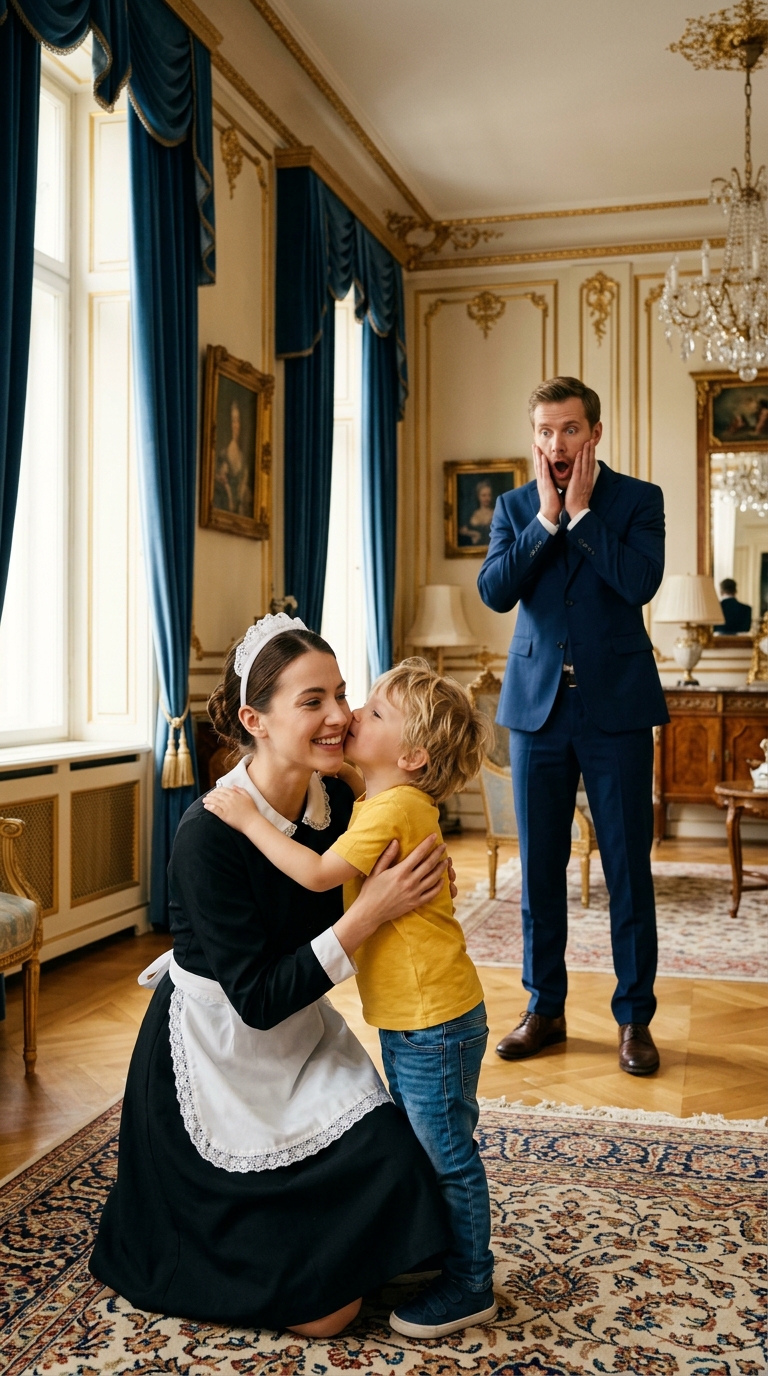
Clara remained humble, never seeking recognition. When she passed away, Adrián held her hand and hummed the same lullaby they once shared.
The mansion, once silent, was filled with music.
He carried her light within him, understanding that sometimes the simplest acts—staying, listening, loving without conditions—become the greatest miracles of all.
