


PART 1
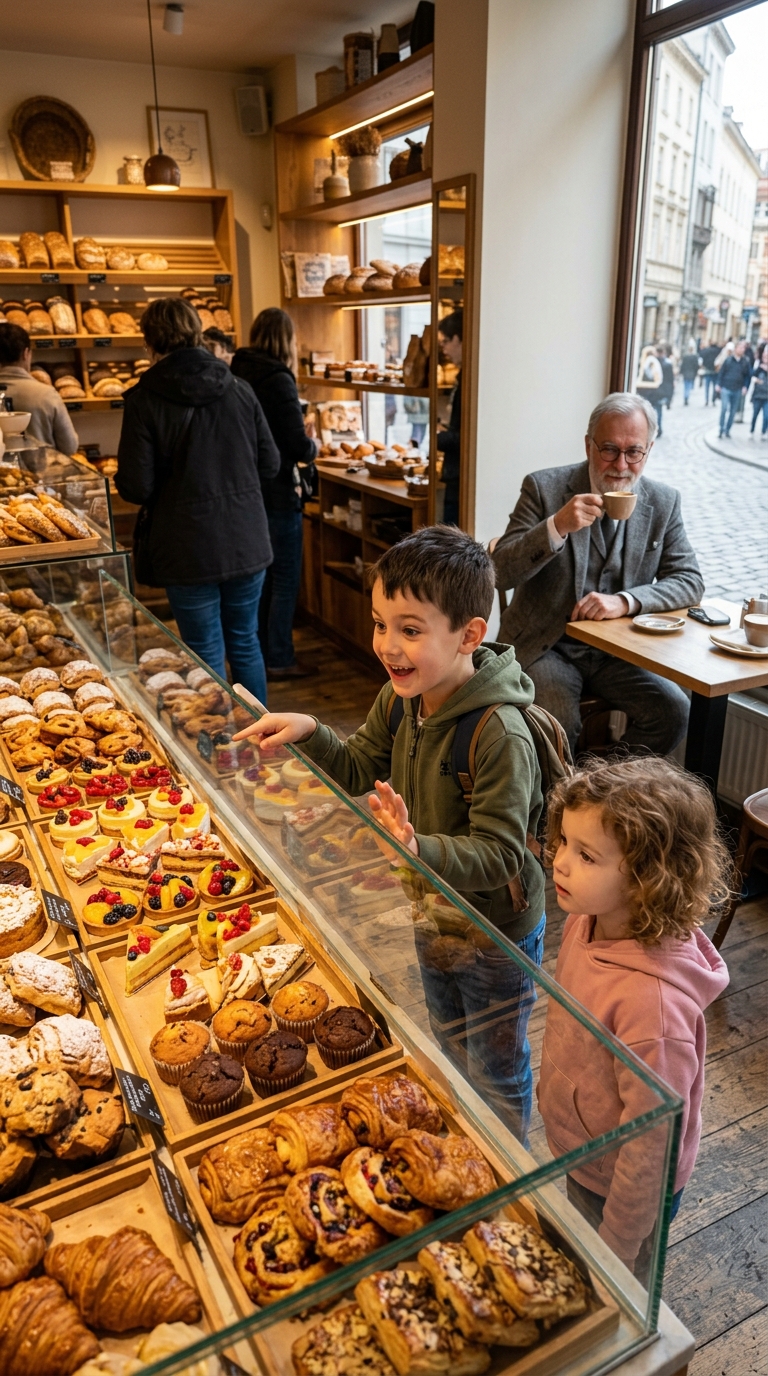
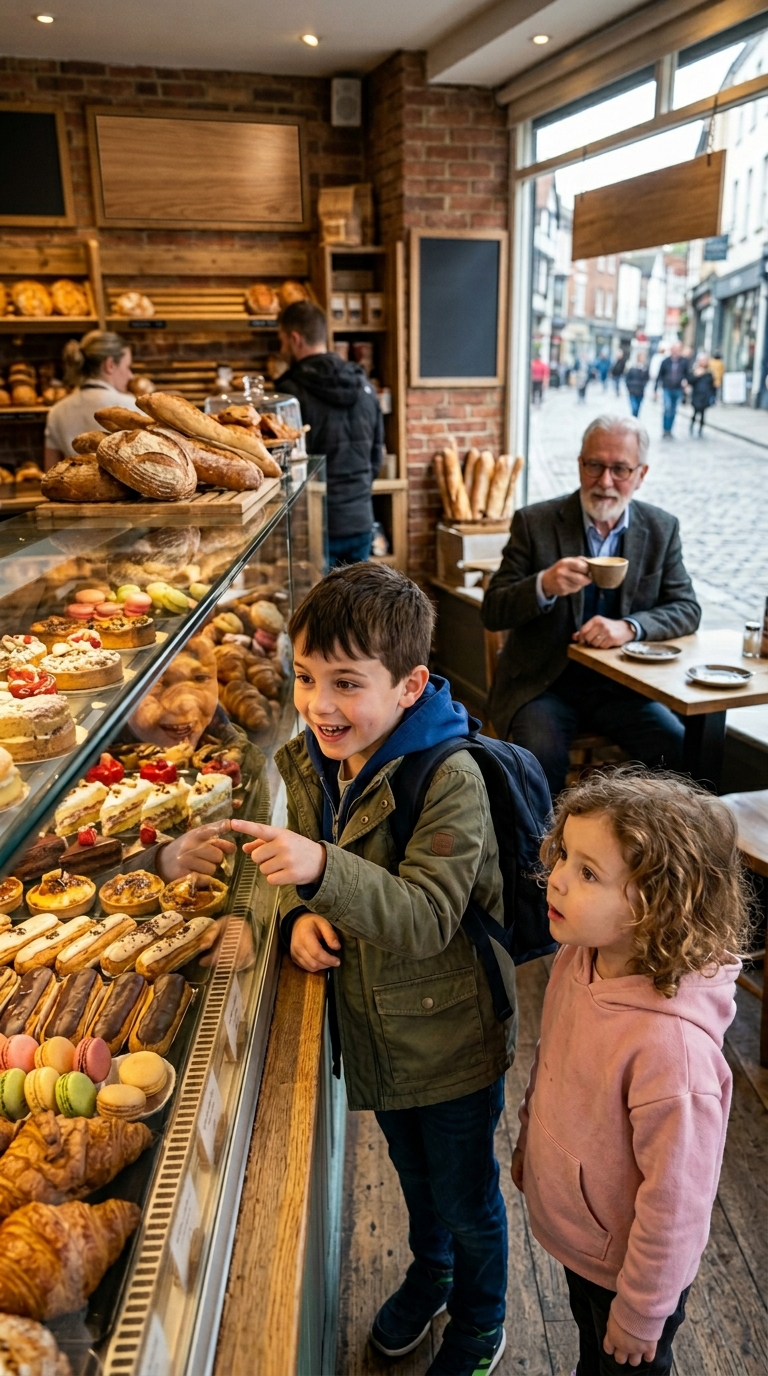
When little Mateo walked into the most exclusive bakery in Polanco, in the heart of Mexico City, carrying his three-year-old sister on his back, the contrast was heartbreaking. His torn shoes left dusty footprints across the pristine marble floor. He walked up to the elegant cashier and, with a trembling yet steady voice, asked if they had any bread from the previous day that they sold at a lower price. He did not expect that someone was watching him closely.
The man in the dark gray suit, seated at the most discreet corner table, sipping his mid-morning café de olla, froze with his porcelain cup suspended in midair when he heard that unusual question.
There was something deeply moving in the boy’s voice. It carried an absolute dignity that did not beg for charity or compassion, but simply asked for a fair chance to survive. That tone reminded him of someone he himself had once been decades ago, when he was just a poor child in the alleys of Tepito, staring at the windows of luxury bakeries, knowing that his fate seemed to condemn him to never afford what shone inside. What Mateo did not know, and what he would discover in the dramatic minutes that followed when that stranger stood up from his table, was that the man in the gray suit was Don Arturo Garza, one of the richest and most feared real estate and tequila magnates in all of Mexico. That innocent question about leftover bread was about to unleash a storm that would change the fate of two orphaned children who had only each other.

The bakery, “El Rincón de los Ángeles,” had been on the same corner of Avenida Presidente Masaryk for more than 40 years. Its walls were decorated with Talavera poblana tiles that told the story of high-end Mexican pastry craftsmanship. Its glass display cases showcased sweets that looked like works of art: vanilla conchas with perfect toppings, tres leches cakes decorated with fresh strawberries, garibaldis coated in white sprinkles, and churros filled with cajeta that spread an irresistible aroma throughout the street. It was the kind of place where businessmen closed deals worth millions of pesos and high-society ladies gathered for five o’clock tea. For them, that abundance was ordinary. For Mateo and his little sister Sofía, it was a completely unreachable dream.
Mateo was eight years old. His dark hair was messy from the cold November wind, and he carried a faded school backpack with torn seams. Sofía clung tightly to his neck. The little girl wore an oversized pink sweater, clearly donated. They had come in because it was Sofía’s third birthday, and Mateo had decided he could not let the day pass without giving her something sweet. However, the twelve pesos he had earned cleaning windshields at traffic lights were not enough for anything in that place.
Arturo Garza was 65 years old. His wife had passed away two years earlier, and his only biological son, Roberto, was an arrogant young man who only sought him out to ask for money and squander the family fortune. Arturo felt empty, living in a massive mansion in Lomas de Chapultepec that felt like a tomb. When he saw Mateo, memories hit him hard. He remembered a baker who, 55 years earlier, had given him fresh bread for his sick mother instead of leftovers.
Suddenly, the scene at the counter turned violent. The cashier looked at Mateo with disgust and called the security guard.
“Get these brats out of here, they are scaring the customers,” she ordered with contempt.
The guard, a burly man, grabbed Mateo by the collar of his thin shirt and shoved him roughly toward the door. Sofía let out a terrified scream and began to cry as she watched her brother being attacked.
That was when Don Arturo stood up abruptly, knocking his chair to the floor. His piercing gaze froze everyone in the room. He demanded that they release the boy immediately and, to everyone’s astonishment, ordered the most expensive cakes in the display case to be packed.
He decided to take the children to his mansion so they could eat with dignity. But when they arrived at the luxurious property and he opened the front door, his son Roberto was coming down the stairs.
The moment Roberto saw Mateo’s face, he turned pale as if he had seen a ghost. His hands began to tremble. He stepped back, tripping on a step, and shouted desperately for someone to call the police to have those children arrested.
No one in that room, not even the powerful magnate, could have imagined the dark and macabre secret that was about to unleash the greatest tragedy in the Garza family. It is impossible to believe what was about to happen…
PART 2
The tension in the entrance hall of the mansion in Lomas de Chapultepec was so thick it could almost be cut with a knife. Roberto, 35 years old, was sweating cold as he pointed at Mateo with a trembling finger.
“Get them out of here, Dad! They are thieves, I know them from the streets, they must have come to rob you!” Roberto shouted, completely losing the composure he always tried to maintain in front of high society.
Don Arturo, with the wisdom that came from his 65 years, remained unfazed by his son’s shouting. Instead, he narrowed his eyes. He knew Roberto perfectly—he knew his arrogance and his contempt for the less fortunate—but this level of panic was something entirely new and irrational. The magnate stepped between his son and the two children, forming a protective barrier. He led Mateo and Sofía into the grand mahogany dining room, served them the cakes they had bought, and sat across from them, ignoring Roberto’s furious protests as he paced back and forth, whispering nervously into his phone.
As Sofía devoured a slice of tres leches cake, smearing cream across her cheeks, Arturo asked Mateo about his story. The boy, clutching his backpack as if it were his only treasure, recounted a tragedy that sent a chill through the old businessman’s blood. His parents had died exactly one year earlier, on a rainy night on the Autopista del Sol, returning from Cuernavaca. A speeding driver in a luxury black SUV had crashed into their old car and fled the scene, leaving them to die on the asphalt. Mateo and Sofía had stayed home that night. After the tragedy, the system of the National System for Integral Family Development had cruelly separated them. Mateo had escaped from the orphanage in Ecatepec three times to search for his little sister in Iztapalapa, walking for days, sleeping on the cold streets of the city, and surviving on leftovers from markets.
Arturo listened with a knot tightening in his throat, but a dark and terrible seed of doubt began to grow in his mind. Exactly one year earlier, in November, Roberto had arrived home late at night, covered in mud and in an extreme state of drunkenness, claiming that his luxury black SUV had been stolen on the road to Cuernavaca. Arturo, blinded by a father’s love, had used his influence to silence the matter and bought him a new car the very next day.
The coincidence was too macabre. Without saying a word to anyone, Arturo stood up and locked himself in his study. He made a single call to his head of security, a former intelligence commander. He gave him exactly 24 hours to dig up the classified police file on the Autopista del Sol accident and cross-reference it with the report of his son’s “stolen” vehicle.
The next day, the report lay on Arturo’s desk. The photographs of the crash scene, the concealed forensic reports, and the bribes paid to local authorities were clear. Paint traces and fragments found on the parents’ car matched perfectly with the exclusive model Roberto had been driving. His own son—the heir to his empire—was a cowardly killer who had destroyed a family to save himself and continue enjoying his privileges. The pain Arturo felt in his chest was sharper than a heart attack. He had failed as a father by raising a monster, but life was giving him one last chance to restore balance to the universe.
That very afternoon, Arturo summoned Roberto to his study. When the young man entered, once again complaining about the “beggar children” still in the house, he found two Public Prosecutor’s Office officers standing there and his father holding the file.
“You disgust me,” were Arturo’s first words, his voice echoing with an authority that made the windows tremble. Roberto tried to deny everything, then tried to justify himself, and finally, in a supreme act of cowardice, begged his father to use his money to save him from prison.
“For 35 years, I gave you everything money could buy, except values,” Arturo said, tears of disappointment streaming down his wrinkled face. “You took everything from those children through your negligence. I will not use a single peso of my fortune to protect a murderer. You are disinherited, and today you will face the consequences of your actions.”
Roberto was handcuffed and taken out of the mansion while shouting insults and threats. It became an unprecedented media scandal. News outlets and social media exploded with the story of the millionaire who had turned in his own son to seek justice for two orphaned children. There were debates, controversies, and national outrage over corruption, but above all, there was deep admiration for the unbreakable ethics of Don Arturo Garza.
The process that followed was not easy. Arturo hired an army of the best family law attorneys in Mexico to fight against the system’s bureaucracy. There were judges who tried to block the adoption, arguing the businessman’s advanced age, but Arturo did not give up. Every time despair threatened him, he looked at Mateo helping Sofía with her homework or listened to the little girl’s laughter echoing through the once-silent halls of the house, and he found the strength to overcome every legal obstacle.
Five years passed. On the same corner in Polanco, in the renovated bakery “El Rincón de los Ángeles,” Arturo celebrated Sofía’s eighth birthday. The table was filled with every cake she could wish for, including a monumental three-tier vanilla concha. Mateo, now 13 years old, was one of the brightest students in his school and dreamed of studying medicine at university to help the most vulnerable.
Roberto was serving a long prison sentence, a punishment that finally brought peace to the memory of Mateo’s parents. The mansion, once a cold mausoleum of solitude, was now alive. Arturo had learned to braid hair with colorful ties, to help with school projects, and to tell stories of his days in Tepito before bedtime. The magnate had sold half of his companies to found “Pan de Ayer,” the largest foundation in the country dedicated to ensuring education, hot meals, and legal support for thousands of children in orphanages, making sure none would ever be ignored or separated from their siblings again.
Mateo blew out the candles alongside his sister, embracing Arturo with a strength that healed every wound from the past. It had all begun with twelve pesos and a simple question about leftover bread, but it ended by proving that sometimes justice and true love are born in the most unexpected places, and that blood does not make a family—courage, kindness, and the actions we take when no one is watching do.
