

PART 1
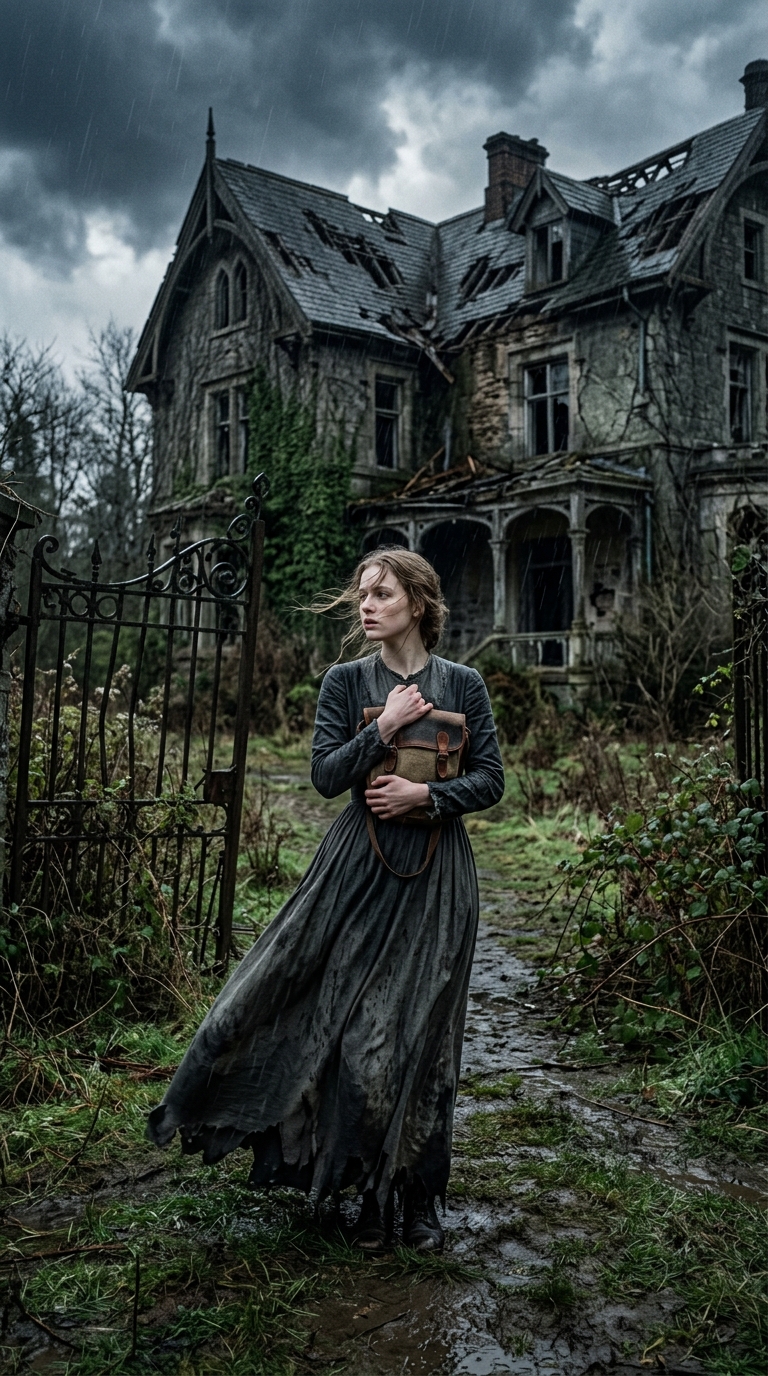
Alba arrived in the village with a worn leather suitcase and a soul so empty she barely felt the weight of her own steps on the red earth. She was twenty-six years old and had just buried not only her husband—but every illusion that life could ever be kind to her.
A sudden and mysterious respiratory illness had taken him in the dead of winter, leaving him coughing blood until his final breath. Instead of comfort, her in-laws—led by her ruthless mother-in-law, Doña Rosa—made one thing painfully clear: a childless widow had no place in their home.
Without a single kind word, only cold contempt, they threw her out.
When the notary’s letter arrived at the gloomy boarding house where Alba shared a tiny room with other seamstresses, she assumed it was an unpaid debt.
It wasn’t.
It was an inheritance.
The land had been left to her by Consuelo—an aunt she barely remembered. The property was located in a remote village deep in the Mexican countryside, hidden among hills and agave fields.
She had fifteen days to claim it.
Or lose everything.
Alba sold her only possession—her wedding ring—and endured a two-day journey on dusty, suffocating buses.
The village appeared at sunset.
Small. Dry. Forgotten.
Faded adobe houses circled a silent plaza.
The notary, Licenciado Morales, greeted her with bureaucratic coldness. He explained that the estate—ten kilometers away—had been abandoned for exactly sixty years.
The original family had been wiped out by a strange cholera outbreak in a single week.
Consuelo had survived only because she had been away at the time.
And she never returned.
The notary adjusted his glasses and made her an offer.
Don Eladio—the most powerful landowner in the region—wanted to buy the ruins for 200,000 pesos.
Cash.
Far below its real value.
But enough for Alba to return to the city… and rebuild her life.
It was the logical choice.
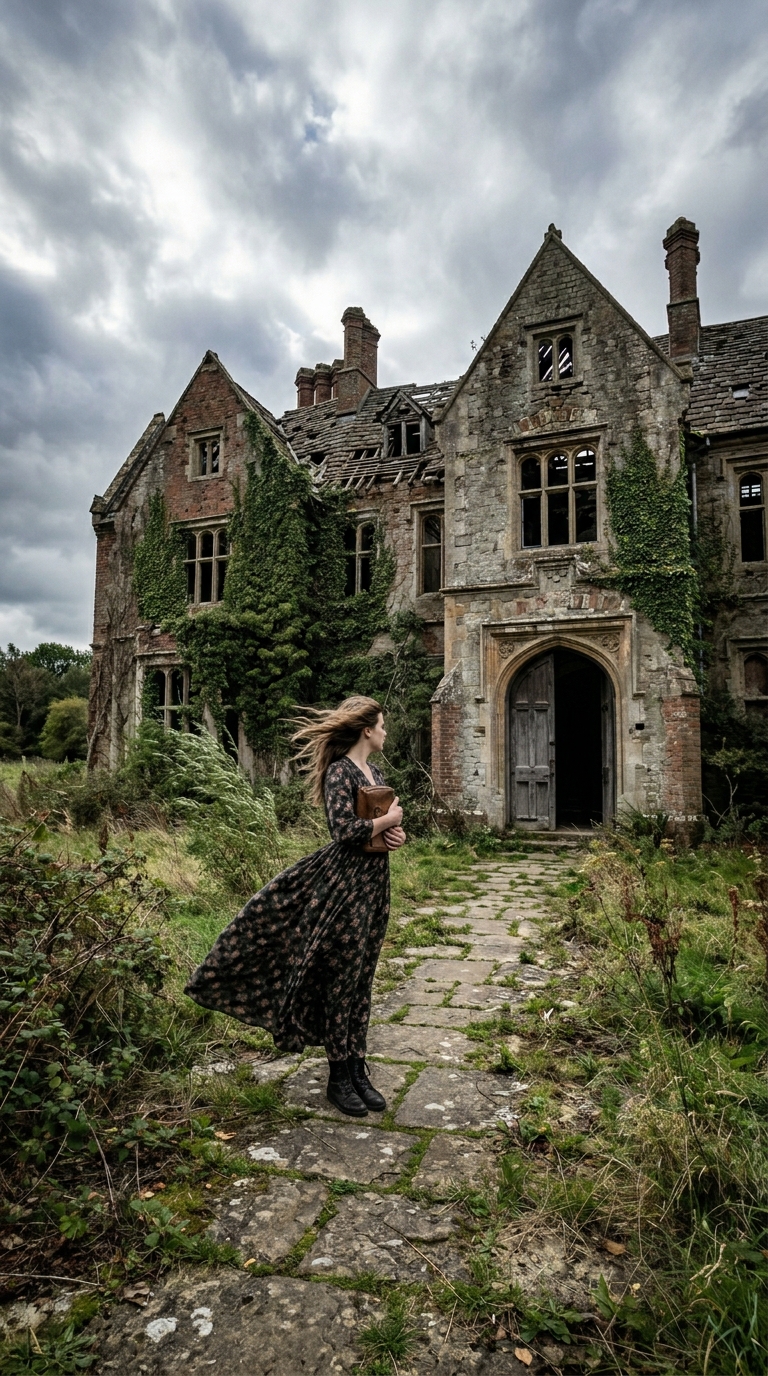
But something deep inside her refused.
She needed to see what belonged to her.
Guided by a local teenager named Pedrito, Alba walked beneath the burning sun until she reached the property.
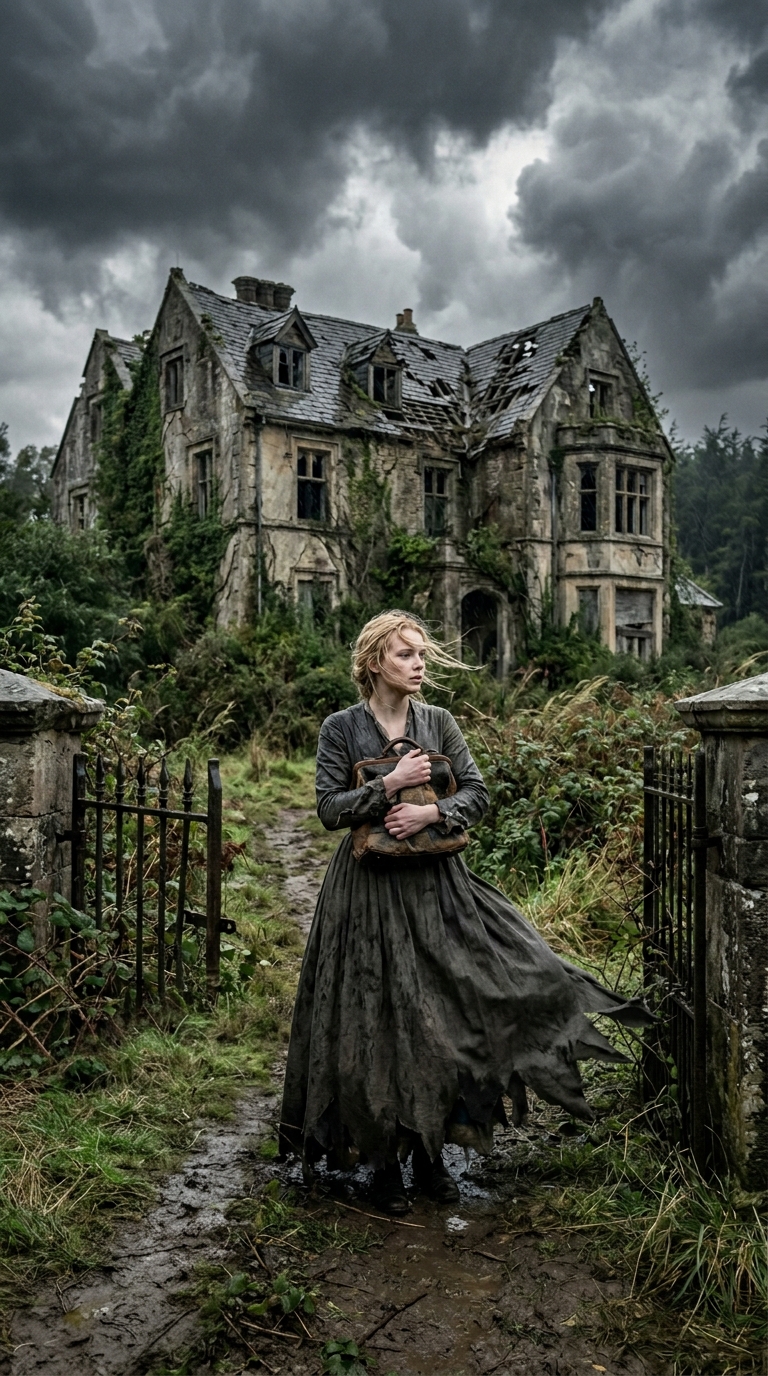
The structure was nearly swallowed by wild vegetation.
The roof had collapsed.
But the adobe walls still stood.
Strong.
Defiant.
Behind the ruins, Alba found something that stole her breath.
A natural spring.
Crystal-clear water flowing from the rocks… forming a small, gentle waterfall.
She drank it.
Cold.
Pure.
Alive.
And in that moment—
she made her decision.
She would stay.
The days that followed were brutal.
Dust. Sweat. Exhaustion.
But also…
peace.
For the first time since her husband’s death, Alba felt something close to hope.
Until one afternoon—
the silence shattered.
Three trucks roared onto the property, crushing the fragile wooden gate.
From the first vehicle stepped Don Eladio, surrounded by armed men.
But what truly froze Alba’s blood…
was the person stepping out of the passenger seat.
Doña Rosa.
Her mother-in-law.
The woman stared at her with a smile dripping in hatred and handed a folder of documents to the landowner.
“My son died with debts,” she hissed. “Debts that now belong to Don Eladio.”
The man raised his hand, slowly scanning the adobe walls—
Then gave an order so cold it made the air stop:
“Burn the house. Everything inside it. Let’s see if she understands who’s in charge.”
It was impossible to believe the nightmare about to unfold…
PART 2
The fire erupted almost instantly.
Dry brush ignited, flames climbing hungrily up the old wooden beams.
Alba screamed, trying to rush forward—to save what little she had managed to recover from the ruins.
But two of Don Eladio’s men slammed her violently to the ground.
Doña Rosa watched from the comfort of the truck, her eyes glowing with cruel satisfaction—convinced she had finally broken her daughter-in-law.
But the thick smoke rising into the sky became an unintended signal.
Help was coming.
Suddenly, a group of villagers appeared, running down the path.
Mateo—a strong young carpenter.
Carmen—the brave shopkeeper’s daughter.
And five others behind them, armed with shovels, pickaxes, and heavy buckets.
Seeing the entire village mobilizing—
Don Eladio cursed under his breath.
He didn’t want witnesses.
Not in broad daylight.
Not with an angry crowd forming.
“Get in the trucks!” he barked.
Within seconds, the vehicles roared back to life.
They sped away—leaving behind a final, silent threat hanging in the air.
But the war…
had only just begun.
The neighbors, together with Alba, battled the flames for nearly two endless hours. Using dirt and water from the spring, they finally managed to contain the fire. The porch was reduced to blackened ashes, but the thick adobe walls—true to their ancient strength—stood firm. The main house had survived.
Alba, her face smeared with soot and tears streaking down her cheeks, felt something new rise inside her.
Not grief.
Not fear.
Something heavier.
A burning, relentless hunger for justice.
That very night, as she sifted through the charred remains in the backyard under the pale moonlight, her shovel struck something metallic.
Half a meter underground, she uncovered a rusted iron box.
Inside—no gold. No jewels.
But something far more powerful.
Dozens of small cloth sacks, tied carefully with thread.
Seeds.
Ancient varieties of corn, beans, squash, and chili peppers—preserved for sixty years, protected from time itself.
Alba understood instantly.
This was no accident.
This was a message from the past.
A weapon of survival.
At dawn, with blistered hands and aching muscles, she began working the soil.
The following weeks became a test of endurance.
Mateo, inspired by her unbreakable will, helped rebuild the damaged roof in exchange for Alba sewing a beautiful dress for Carmen’s upcoming wedding.
And the land…
answered.
Within days, green shoots pushed through the earth—strong, vibrant, undeniable.
Proof that the land was never cursed.
It had simply been waiting…
for someone to love it.
Three months later, Alba harvested her first crops.
She began selling at the village market.
Slowly—
silently—
she earned respect.
But Don Eladio and Doña Rosa were not finished.
The fire hadn’t broken her.
So they escalated.
One morning, Alba discovered the spring—her lifeline—had been deliberately sabotaged.
Blocked.
Polluted with mud… and dead animals.
The water was foul.
Unusable.
It took her two full days of exhausting labor to clean it, to bring the water back to life.
But in that moment, she realized something:
She couldn’t keep defending.
She needed answers.
Driven by instinct, Alba went to the local church.
Father Agustín—the most respected man in the village—listened carefully as she pleaded for access to the old parish records.
Mateo stood beside her.
They spent three hours digging through dusty books and yellowed pages.
And what they found…
stopped them cold.
The death records of Consuelo’s family were filled with inconsistencies.
There was no official cholera outbreak recorded in the region that year.
A handwritten note in the margin, left by a previous priest, mentioned something chilling:
Suspected poisoning of the water supply.
But the real truth—
was hidden somewhere else.
From a locked box, Father Agustín retrieved a sealed letter.
It had been given to him just one month earlier by a stranger, with strict instructions:
Open it only if something serious happened.
Alba’s knees nearly gave out the moment she saw the handwriting.
She knew it instantly.
It was her husband’s.
Her hands trembled as she opened the letter.
And read.
Inside, her husband confessed everything.
He had found an old diary belonging to Don Eladio’s father.
It revealed the truth:
Sixty years ago, the cacique’s family had poisoned the water—
killing the original landowners—
to seize control of the spring…
the largest and most valuable source of fresh water in the entire region.
But the real horror…
was in the final lines.
“I confronted my mother,” the letter said.
“I showed her the evidence. I told her I would go to the authorities and return the land to Aunt Consuelo.”
“My mother chose greed over her own blood.”
“I discovered she made a deal with Don Eladio. They offered her 500,000 pesos to keep me silent… and destroy the proof.”
“I fear for my life, Alba.”
“They’ve been forcing me to drink a dark syrup for a ‘cough.’ Every day I grow weaker. I cough blood.”
“If you’re reading this… it means my own mother has killed me for money.”
“And Eladio will come for you next.”
The words blurred through Alba’s tears.
Her chest tightened.
Her world shattered again.
Her husband hadn’t died from illness.
He had been poisoned.
By his own mother.
And now…
they were coming for her.
At the bottom of the letter, one final line remained:
“Run… or fight.”
It had never been a respiratory illness.
Her husband had been slowly and cruelly poisoned… by the very woman who gave him life—just to cover up a landowner’s crimes and line her own pockets.
In that instant, Alba’s grief hardened into something else.
Cold. Focused. Unstoppable.
Sunday arrived.
The village church was packed.
Alba walked through the heavy wooden doors, moving down the center aisle with her head held high. At her side were Mateo, Carmen, and dozens of farmers who had sworn to stand with her.
In the front row, dressed in their finest clothes, sat Don Eladio and Doña Rosa—pretending devotion.
Father Agustín stepped onto the pulpit.
He didn’t read the gospel.
Instead—
he read the letter.
And the parish records from sixty years ago.
Silence swallowed the church.
Every eye turned.
Fixing on the two people in the front row.
Doña Rosa turned pale—like a corpse.
She tried to stand, to scream that it was all lies.
But then—
she saw Alba.
Those eyes.
Filled with pain… and fire.
And something inside her broke.
She collapsed to her knees in the middle of the aisle.
Crying. Shaking. Tearing at her clothes.
Confessing.
Everything.
“I did it!” she screamed.
“He gave me the poison—Don Eladio! I gave it to my son… every drop… for the money… for 500,000 pesos!”
The church erupted.
Don Eladio, cornered, reached for the gun hidden at his waist.
But the village had endured enough.
Mateo and ten other men lunged at him—disarming him, slamming him to the stone floor.
Outside, the authorities were already waiting.
Licenciado Morales had made sure of that.
Both criminals were dragged out in handcuffs—
under the roar of a furious town.
Justice had finally arrived.
Late.
Painful.
But absolute.
Doña Rosa was sentenced to spend the rest of her life behind cold prison walls—haunted forever by the son she betrayed.
Don Eladio lost everything.
His land.
His power.
His empire.
All seized to compensate the families he had crushed for decades.
That same afternoon, Alba returned to her land.
She sat beneath the shade of an old tree beside the spring.
And for the first time in a long time…
she breathed.
Deeply.
Freely.
Years passed.
And the land…
flourished.
The ancient seeds produced abundant harvests—feeding the entire region.
Alba didn’t keep the water for herself.
She built a public reservoir at the edge of her property—
ensuring no one would ever have to pay for water again.
No one would ever be controlled.
No one would ever be owned.
Exactly one year after the fire…
another woman arrived.
Teresa.
Bruised. Afraid. Escaping violence.
She stood at the edge of the ranch—
just like Alba once had.
And Alba didn’t hesitate.
She opened her arms.
Gave her shelter.
Taught her how to work the land.
How to stand on her own.
The abandoned estate was no longer cursed.
The villagers gave it a new name:
“The Ranch of Reborn Souls.”
A place of refuge.
A sanctuary built on truth, courage, and community.
A living proof that even the most broken land…
and the most shattered hearts…
can grow something beautiful again.
Alba didn’t just reclaim her inheritance.
She honored her ancestors.
She brought justice to her husband’s blood.
And from the ashes of betrayal…
she built a family of her own choosing.
Have you ever felt completely alone facing an injustice that seemed impossible to defeat?
Do you believe karma always finds its way back to those who betray their own blood?
Share your thoughts below—and pass this story on if you believe that truth… always rises in the end.
