

PART 1
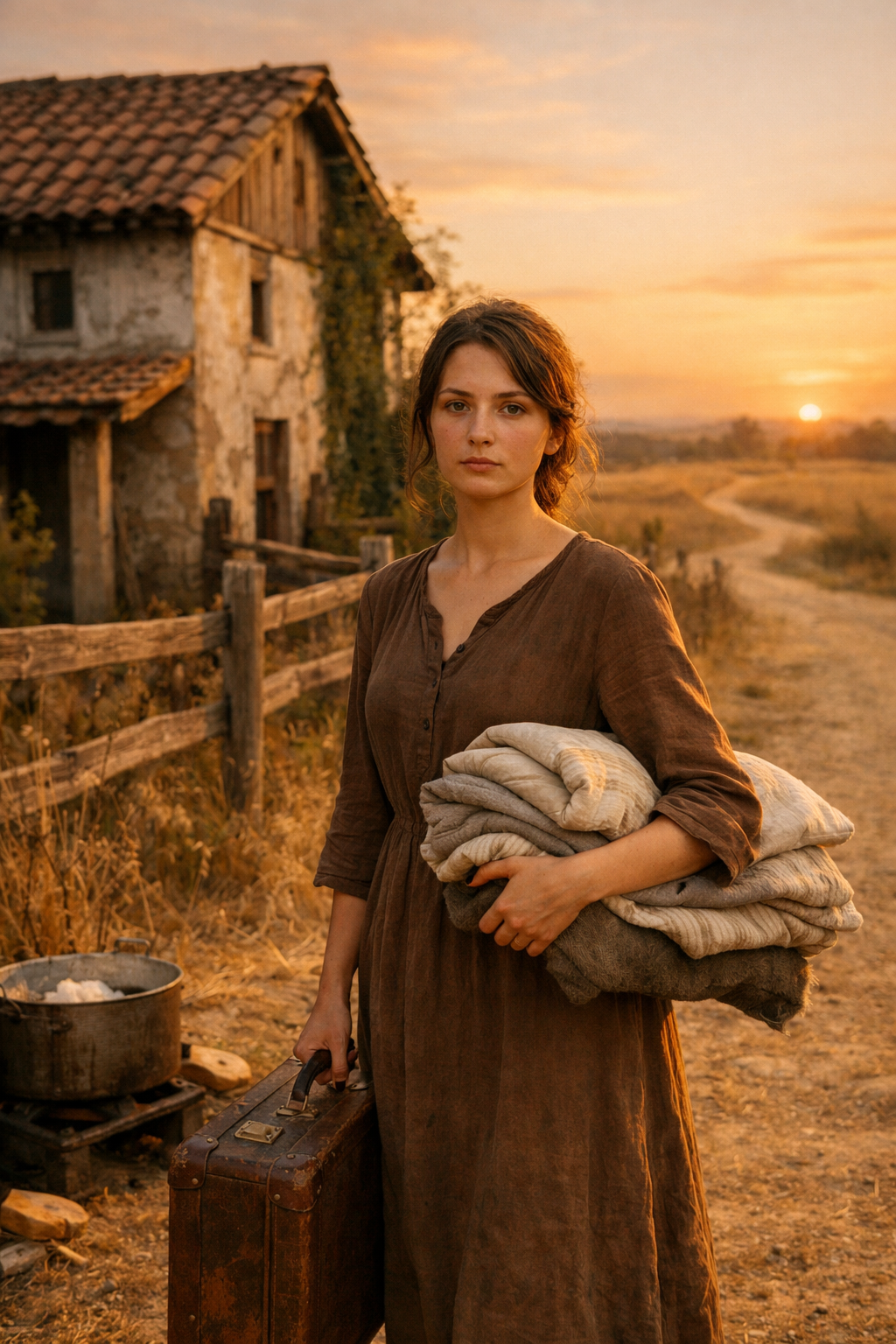
Alba arrived in the village with a worn leather suitcase and a soul so empty she could barely feel the weight of her own steps on the red earth. She was 26 and had just buried not only her husband, but every hope that life might still be kind to her.
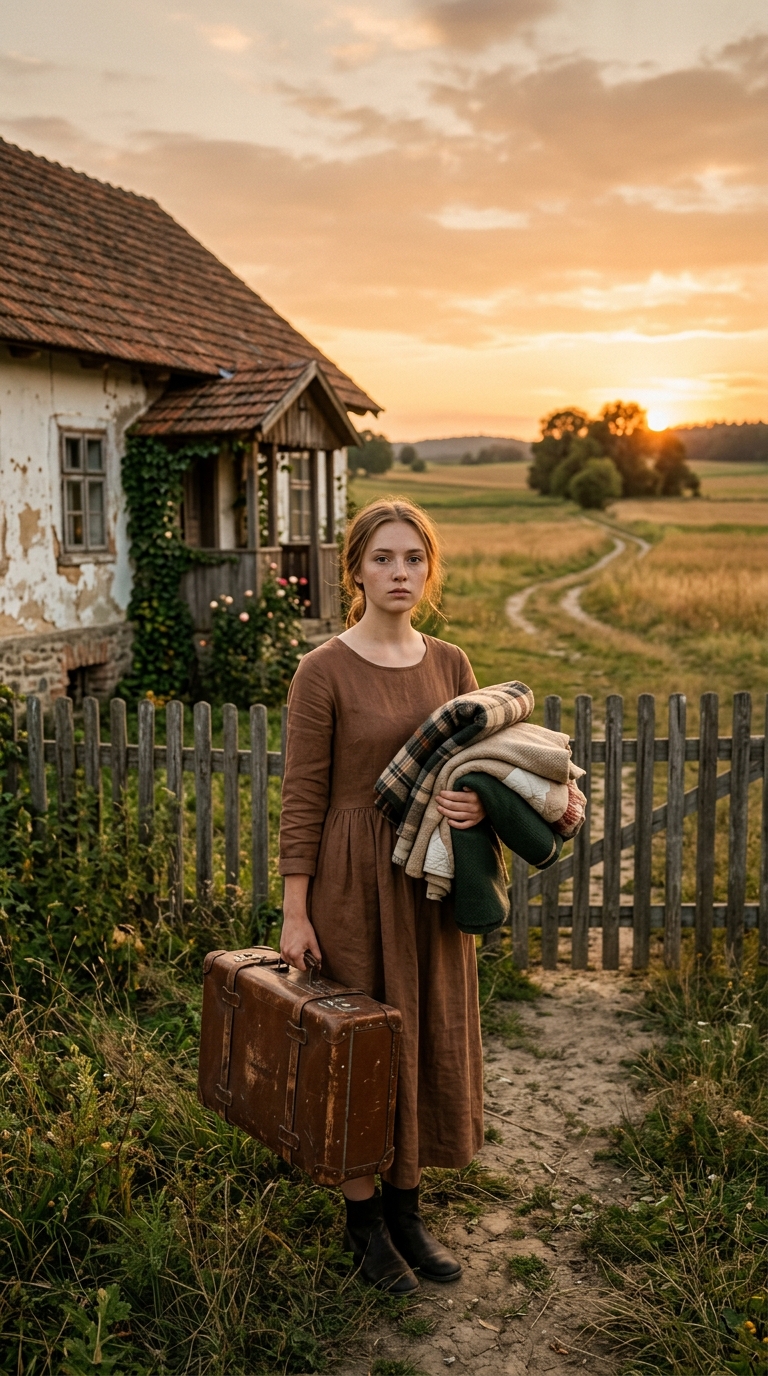
A sudden and mysterious respiratory illness had taken him in the middle of winter, making him cough blood until his final breath. Instead of comfort, her in-laws—led by her ruthless mother-in-law Doña Rosa—made it painfully clear that a childless widow had no place in their home. With no kind words, only cold rejection, they cast her out.
When a letter from the notary arrived at the gloomy boarding house where Alba shared a tiny room with other seamstresses, she assumed it was an old debt. But it wasn’t a debt—it was a will. The land had been left to her by Consuelo, a great-aunt she barely remembered from childhood. The property was located in a remote village in the heart of Mexico, hidden among hills and agave fields. The notary gave her exactly 15 days to appear and sign, or the land would be auctioned off.
Alba sold her only wedding ring and traveled for two full days on dusty, suffocating buses. The village appeared at sunset—small, dry, and surrounded by faded adobe homes around a central square. Licenciado Morales received her with cold professionalism. He explained that the estate, located 10 kilometers away, had been abandoned for exactly 60 years. The original family had been wiped out by a strange cholera outbreak in a single week. Her aunt Consuelo survived only because she had been visiting another region at the time, but she never returned.
The notary paused, adjusted his glasses, and offered her an easy way out: Don Eladio, the most powerful landowner in the area, wanted to buy the ruins for 200,000 pesos. It was cash—far below the true value, but enough for Alba to return to the city and start her own sewing workshop. It was the sensible choice. But something stubborn deep inside her refused to sell without first seeing what her bloodline had left behind.
Guided by a local teenager named Pedrito, Alba walked under the scorching sun until they reached the property. Overgrown weeds had swallowed the old adobe structure, and the roof had collapsed, but the walls still stood strong. While exploring the back of the land, she discovered something that took her breath away: a spring of clear, pure water flowing from the rocks, forming a small waterfall. When she tasted it—cold and sweet—Alba made her decision. She would reject the 200,000 pesos. She would stay.
The first days were filled with exhausting work, clearing debris and dust. But the peace of that forgotten sanctuary didn’t last long. One afternoon, the violent roar of three trucks shattered the silence of the estate. Smashing through the fragile wooden gate, the vehicles stormed into the yard. Don Eladio stepped out of the first truck, surrounded by armed men—but what froze Alba’s blood completely was the person who stepped out of the passenger seat.
It was Doña Rosa, her own mother-in-law.
The woman looked at her with a hateful smile and handed a folder of documents to the landowner. “My son accumulated large debts before he died, debts that now belong to Don Eladio,” the mother-in-law hissed maliciously. The landowner raised his hand, glanced at the adobe walls, and gave a chilling order to his men: “Burn the house with everything inside. Let’s see if she learns who’s in charge here.”
It was impossible to believe the nightmare that was about to unfold…
PART 2
The fire roared almost instantly, devouring the dry brush and licking at the old wooden beams of the porch. Alba screamed in desperation, trying to run into the flames to save the few belongings and family memories she had managed to recover, but two of Don Eladio’s men shoved her violently to the ground. Doña Rosa watched from the comfort of the truck, her eyes gleaming with dark satisfaction, convinced she had finally broken her daughter-in-law’s spirit.
But the thick smoke rising into the sky became an unintentional cry for help. Suddenly, a group of villagers came running down the path at full speed. It was Mateo, a strong young carpenter, and Carmen, the brave shopkeeper’s daughter, followed by five more neighbors armed with shovels, picks, and heavy buckets. Seeing the entire village mobilizing, Don Eladio muttered a curse. He didn’t want witnesses to arson or trouble with an angry crowd in broad daylight. He ordered his men back into the trucks, and they sped away—leaving behind one final veiled threat.
The villagers, together with Alba, fought the flames for nearly two endless hours. Using dirt and water from the spring, they managed to extinguish the fire. The porch was reduced to blackened ashes, but the thick adobe walls stood firm. The main house was saved. Alba, her face smeared with soot and tears of frustration streaming down her cheeks, felt a burning rage rise within her. It was no longer just grief—it was a deep hunger for justice.
That same night, while clearing the burned remains in the backyard under the moonlight, Alba’s shovel struck something metallic. Half a meter underground, she uncovered a heavy rusted iron box. Forcing it open, she didn’t find gold or jewels, but dozens of small cloth sacks tied with thread. They were seeds—native varieties of corn, beans, squash, and chili peppers that had been buried for 60 years, perfectly preserved. Alba immediately understood this was no accident; it was a gift from the past—a tool for survival.
At dawn, with blistered hands, she began preparing the soil. The following weeks became a routine of relentless effort. Mateo, impressed by her unbreakable determination, rebuilt the damaged roof in exchange for Alba sewing a beautiful dress for Carmen’s upcoming wedding. Miraculously, the land responded. Within days, dozens of strong green shoots broke through the dark soil. It was undeniable proof that the land wasn’t cursed—it had simply been waiting for loving hands. After three months, Alba harvested her first crop and began selling her produce at the village market, quietly earning respect and admiration.
But Don Eladio and Doña Rosa had no intention of letting a simple seamstress ruin their plans. When the fire failed to stop her, they escalated their sabotage. One morning, Alba discovered the clear spring had been deliberately blocked and polluted with dead animals and foul mud. It took her two exhausting days to clean it and restore the flow of pure water. She knew she couldn’t keep reacting—she needed to uncover why the land was so valuable and what role her mother-in-law truly played.
Driven by instinct, Alba went to the local church to seek help from Father Agustín, the most respected man in the area. Mateo accompanied her. She asked the priest for access to old parish records to understand what had really happened at the estate 60 years ago. After three hours of searching through worn leather books and yellowed pages, they uncovered a truth that left them stunned.
The death records of Consuelo’s family showed serious inconsistencies. There had been no official cholera outbreak in nearby areas that year. A marginal note written by a previous priest mentioned suspicion of poisoned water. But the key piece wasn’t in the old records—it was in a recent document Father Agustín retrieved from his personal safe. It was a sealed letter, delivered just one month earlier by a stranger, with instructions to open it only if something serious happened.
The handwriting on the envelope made Alba’s knees buckle. It was unmistakably her late husband’s.
With trembling hands, she read his final words. In the letter, he confessed that he had found an old diary belonging to Don Eladio’s father. The diary proved that the landowner’s family had deliberately poisoned the water 60 years earlier to wipe out the original owners and seize control of the spring—the largest and most valuable freshwater source in the region. But the most devastating truth came in the final lines.
Her husband described how, in a moment of innocence, he confronted his own mother, Doña Rosa, presenting the evidence and declaring he would go to the authorities to return the land to Aunt Consuelo. “My mother chose greed over her own blood,” the letter read. “I discovered she made a deal with Don Eladio. They promised her 500,000 pesos if I stayed silent and destroyed the evidence. I fear for my life, Alba. They’ve been forcing me to take a dark syrup for a supposed cough, and each day I grow weaker. I cough blood. If you’re reading this, it means my own mother killed me for money, and Eladio will try to steal your inheritance. Run, or fight.”
It had not been a respiratory illness. Her husband had been slowly and cruelly poisoned by the very woman who gave him life, all to cover up a crime and profit from it. Alba’s grief instantly hardened into cold, calculated fury.
Sunday arrived. The village church was filled to capacity. Alba walked through the heavy wooden doors down the central aisle, head held high, eyes fixed forward, flanked by Mateo, Carmen, and dozens of villagers who had sworn to protect her. In the front row, dressed in their finest, sat Don Eladio and Doña Rosa, pretending perfect devotion.
Father Agustín stepped to the pulpit and halted the service. In a thunderous voice that echoed through the church, he did not read the day’s gospel—instead, he read the husband’s letter and the records from 60 years ago. The silence in the church was suffocating. Every eye turned toward the landowner and the mother-in-law.
Doña Rosa turned pale as death. She tried to stand and shout that it was all lies, but when she met Alba’s gaze—eyes filled with restrained tears and unrelenting fire—the crushing guilt finally broke her. She collapsed to her knees in the aisle, sobbing hysterically, tearing at her clothes, and confessing everything. She admitted receiving the poison from Don Eladio and giving it to her son, drop by drop, in exchange for 500,000 pesos.
Cornered and exposed, Don Eladio tried to pull a hidden weapon from his belt to force his way out. But the village had endured enough. Mateo and ten other men rushed him, disarmed him, and pinned him to the cold stone floor of the church. Licenciado Morales, secretly contacted the night before, already had authorities waiting outside. Both criminals were arrested and taken away as the villagers shouted in outrage.
Justice—late and born from deep pain—finally swept away the landowner’s empire of terror. Doña Rosa was sentenced to spend the rest of her life in prison, haunted by the son she betrayed. Don Eladio lost all his properties, which were seized to compensate the families he had exploited for decades.
That same afternoon, Alba returned to her land and sat beneath an old tree by the spring. For the first time in a long while, she breathed deeply and felt a true, unshakable peace.
Over the years, the place flourished beyond imagination. The ancient seeds produced abundant harvests that fed the region. Alba channeled the spring water not only to irrigate her fields but also to build a free public reservoir on her land, ensuring no villager would ever go thirsty or pay a tyrant to survive again.
Exactly one year after the storm, a young woman named Teresa—bruised, frightened, and fleeing a violent home—appeared at the ranch seeking refuge. Alba, remembering her own fear and loneliness, welcomed her with open arms. She gave her a home and taught her how to work the land and build independence.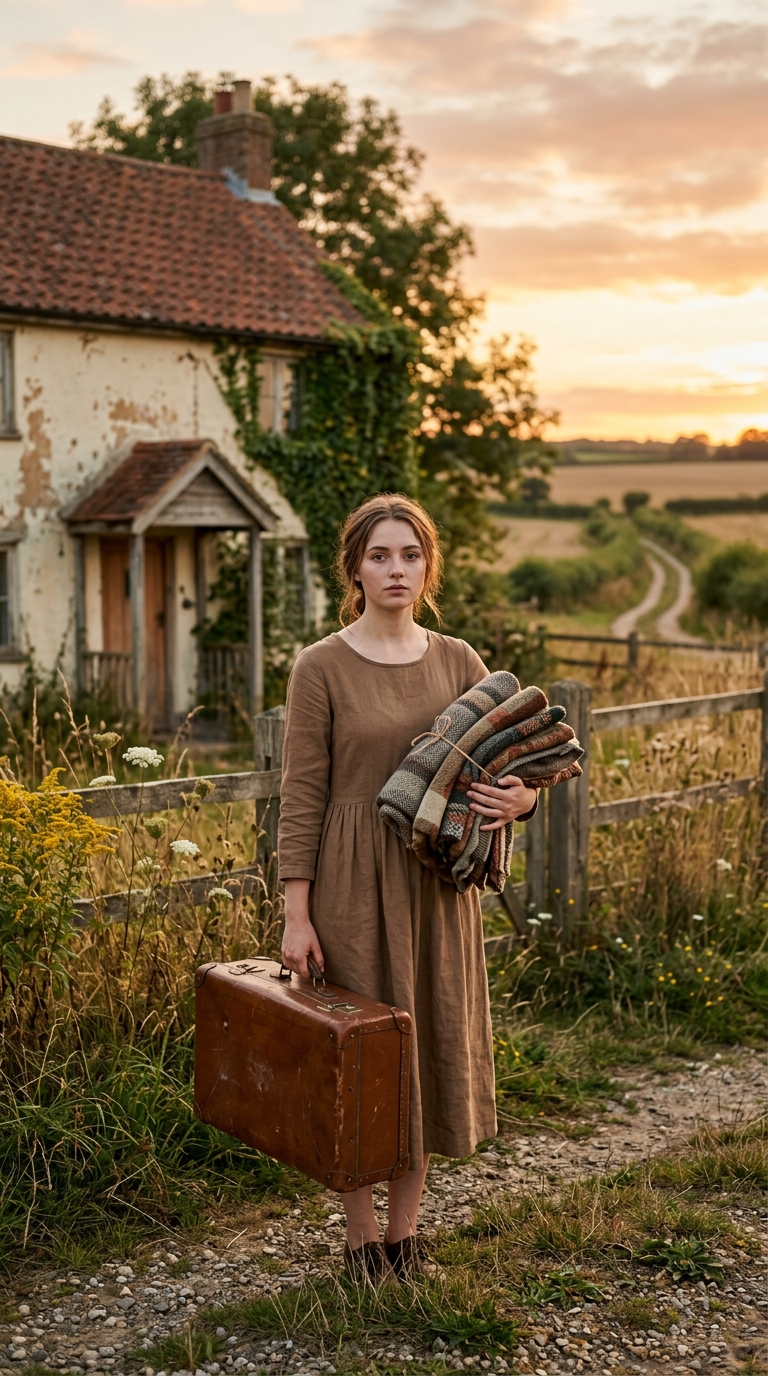
The once-abandoned estate was renamed by locals as the “Ranch of the Reborn Soul.” It became a refuge, a sanctuary of hope and hard work, proving that even the most trampled land and the most broken heart can yield the sweetest fruits when nurtured with courage, truth, and community. Alba not only restored her family’s legacy, but also brought justice for her husband and built, from the ashes of tragedy, a new and chosen family.
Have you ever felt completely alone facing an injustice that seemed impossible to overcome? Do you believe karma always finds a way to make those who betray their own blood pay? Share your thoughts in the comments and spread this powerful story if you believe the truth always comes to light, sooner or later.
