

Michael Harris woke at exactly 6:00 a.m., just like every morning, in a glass-walled penthouse overlooking downtown Chicago. The air carried the scent of fresh cleaning solution and old silence. Floor-to-ceiling windows welcomed a perfect sunrise—the city gleaming as if it had something to prove.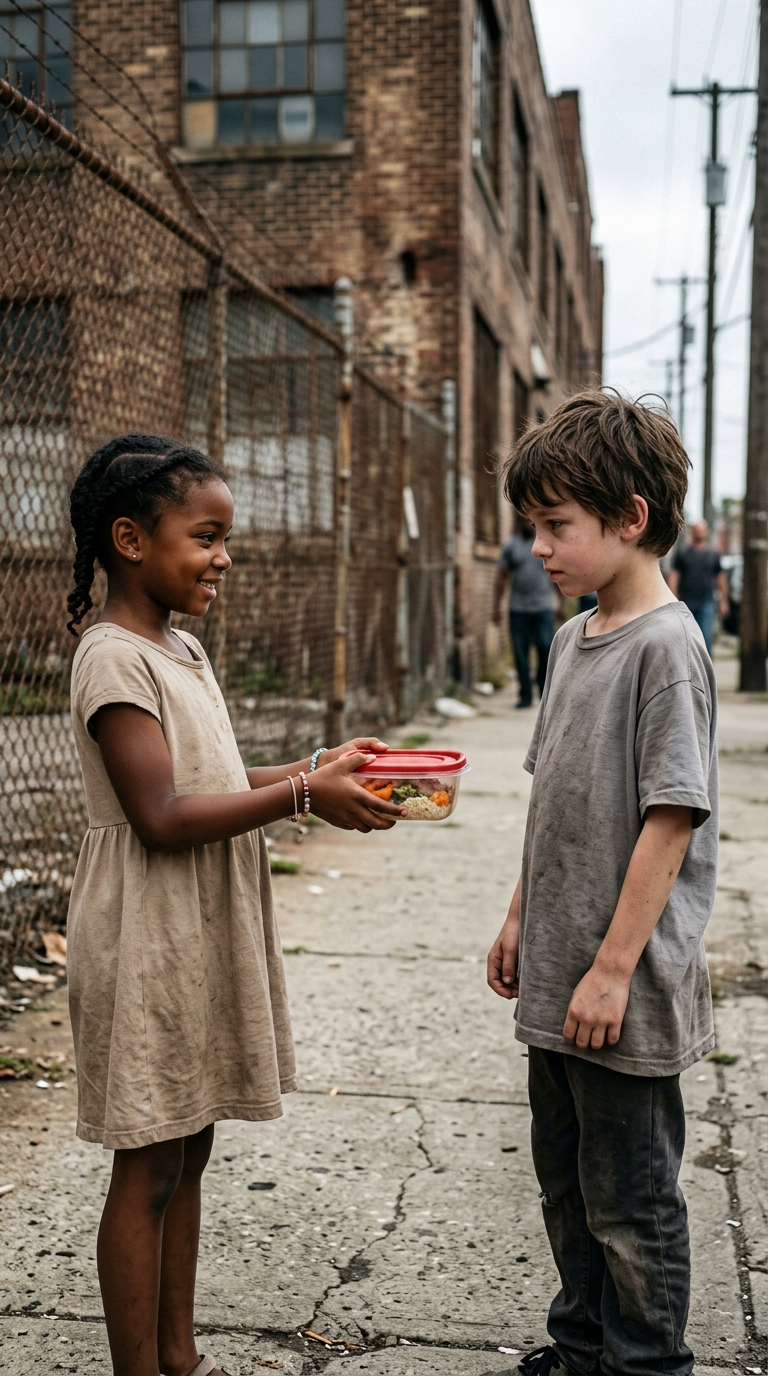
He didn’t look.
He never did.
The espresso machine hummed—Italian, outrageously expensive. Michael pressed a button and walked away before it finished brewing. He opened his closet: dark suits, crisp shirts, ties arranged with surgical precision. He picked one at random. It didn’t matter. Looking flawless had long been his way of hiding the emptiness beneath.
In his private office, the walls were bare. No photos. No art. Just blank white space.
Except for one locked drawer.
He opened it the way someone reopens a scar.
Inside, sealed under glass, lay half of a faded red ribbon—frayed, fragile, barely holding together.
His most worthless possession.
His only truth.
He brushed it lightly with his fingers, as if it might still carry warmth.
“Where are you, Valerie?” he whispered, not realizing he had spoken aloud.
His phone buzzed.
Assistant: “9 a.m. meeting confirmed. Twelve-million-dollar deal finalized.”
Michael replied: “Good.”
Twelve million meant nothing.
Didn’t stir his chest. His face. His soul.
But that ribbon did.
Because it was the last piece of the boy he used to be.
Twenty-two years earlier…
Michael wasn’t “Mr. Harris” or “the developer.” He was a thin, blond ten-year-old with scraped knees and eyes that had already learned too much pain.
His mother died in a rented room, coughing through an illness no one could cure, the smell of cheap medicine forever burned into his memory.
Then came the system.
Shelters. Waiting lists. “We’ll see.” “No space.”
After two weeks on the street—sleeping wherever he could, eating whenever luck allowed—hunger made him dizzy. The world tilted.
One day, he followed laughter. And the smell of food.
That’s how he ended up outside Lincoln Elementary, on the South Side of Chicago, sitting by the fence during recess.
He didn’t beg.
He just watched.
As if watching might fill him.
A teacher noticed him and frowned.
“You can’t stay here. You’re scaring the kids.”
Michael tried to stand. His legs wouldn’t respond.
The teacher walked away.
And then he saw her.
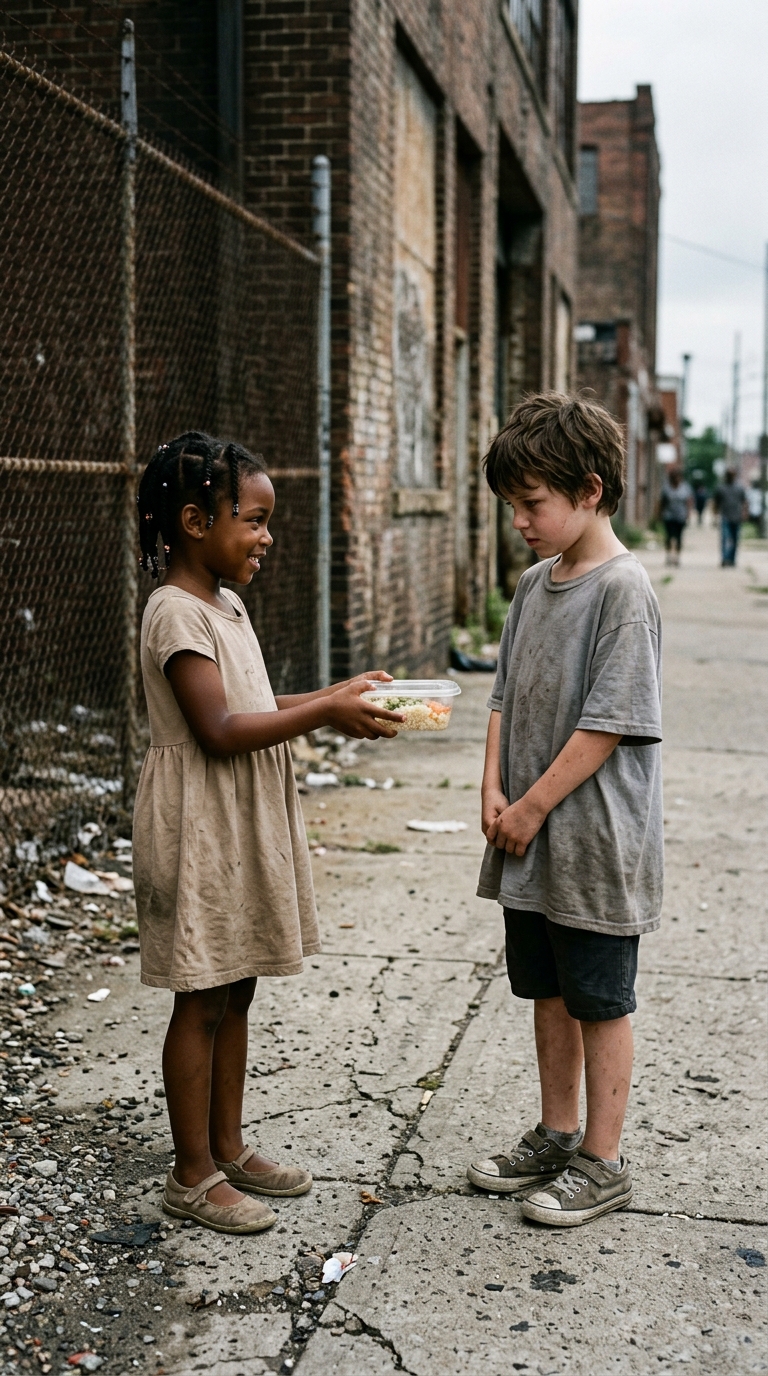
On the other side of the fence stood a Black girl with tight braids and wide, expressive eyes. She wasn’t afraid.
She looked sad.
Her name was Valerie Johnson—Vale to her family.
She lived three blocks away in a worn apartment with her grandmother, Ms. Ruth, who held everything together. Her parents worked whatever jobs they could find. Some days there was enough. Some days there wasn’t.
But her grandmother always said,
“We don’t have much—but what we do have, we share.”
That morning, Valerie had a simple lunch: a bean-and-cheese sandwich, an apple, and a juice box.
Her friends tugged at her sleeve.
“Vale, come on!”
She didn’t move.
“That kid’s weird,” someone whispered. “He’s always there.”
“He’s not weird,” Valerie said softly. “He’s hungry.”
She looked at her lunchbox.
And heard her grandmother’s voice.
We share.
So she did something no one asked for. No one praised. No one understood.
She walked to the fence.
“Hi,” she said gently. “I’m Valerie. You look really hungry.”
Michael tried to speak. Nothing came out.
She slid her lunch through the gap.
“It’s okay,” she said. “Really.”
He ate like someone afraid the food might disappear. Tears ran down his face. When he finished, he looked up—ashamed, grateful, broken.
“Thank you,” he whispered. “I’m Michael.”
“Are you okay, Michael?”
He shook his head.
Valerie’s eyes filled with tears.
“I’ll bring you lunch tomorrow,” she said, as if it were the simplest promise in the world.
And she did.
For six months.
One hundred and twenty lunches.
Her grandmother noticed. Said nothing. Just woke up earlier. Added more beans. Made miracles.
That winter, Valerie gave Michael a sweater, gloves, and a scarf—things she didn’t have to spare.
She got sick. Still came.
The day social services finally took Michael to a group home, he cried harder than he had when his mother died.
“I’ll come back for you,” he said, desperate.
“When I’m rich… I’ll find you. And I’ll marry you.”
Valerie laughed through her tears.
She untied the red ribbon from her braid, bit it in half, and tied one piece around his wrist.
“So you don’t forget,” she said. “So you remember someone cared.”
“I’ll never take it off,” he promised.
Twenty-two years passed.
Michael survived. Slowly. Painfully. Shelters. Jobs. Night school. A small business. Then another.
One day, his name appeared in business magazines.
Net worth: $47 million.
Every morning, he touched the ribbon.
He searched for Valerie for five years. Nothing.
So he returned to the place where she had once been herself.
That night, he attended a community meeting at a center near Lincoln Elementary.
And then he heard her voice.
Strong. Tired. Warm.
“How do we know you won’t push people out little by little?” she asked. “I work with kids who have nowhere else to go.”
Michael turned.
And the world stopped.
“Valerie Johnson,” she said.
He pulled out his keychain.
The other half of the ribbon.
“I came back,” he said, his voice soft—like he was ten again.
They stared.
Then they embraced.
Long. Awkward. Necessary.
They didn’t fix everything overnight.
But together, they built something real.
The Red Ribbon Initiative—housing, support, and hope for kids aging out of foster care.
A year later, they married quietly—by the same school fence.
And when a little girl asked for food that evening, Valerie knelt and smiled.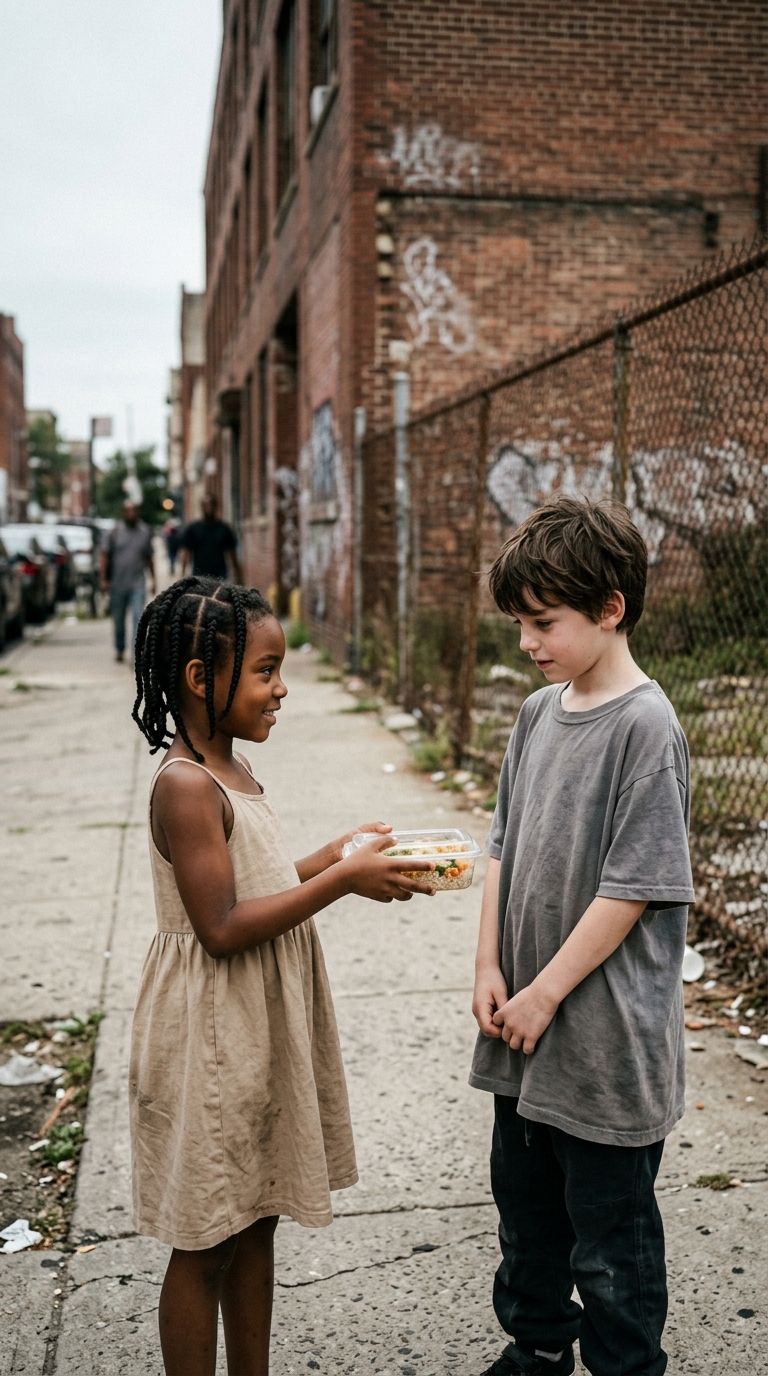
“Yes, sweetheart. Come here.”
Michael tied a red ribbon around her wrist.
“So you remember,” he said gently.
“Someone believes in you.”
And the story continued.
Not ending.
Just beginning.
