

I only wanted to lift the spirits of sick children with homemade marshmallows. But the moment a nurse heard my name, she went pale and whispered, “I’ve been looking for you for 16 years.” What came next shattered everything I believed about my past.
Every day after school, I went straight to the hospital. My grandmother had recently become ill, and the thought of losing her terrified me. As far back as I could remember, it had always been just the two of us. She made my lunches, braided my hair, stayed up with me when I was sick, and never missed a school performance.
I had no memory of my parents. Grandma told me my mother passed away when I was a baby and that my father had never been part of my life. I never questioned it.
When I stepped into her hospital room, she smiled. “There’s my girl,” she said.
I smiled back, holding up a paperback. “I think you’ll like this one. It sounds adventurous.”
I read until her eyes kept drifting closed. When she finally fell asleep, I tucked the blanket around her and slipped out quietly.
Instead of heading home, I wandered down the hall. The pediatric wing was bright in a forced kind of way—cartoon animals on the walls, paper suns taped to doors, and a cart filled with books and puzzles. I only went that way because the vending machines there had the granola bars Grandma liked.
A few kids stood nearby: a boy in dinosaur pajamas pressing his hands to the glass, a bald girl in a wheelchair staring at the candy, and another child with an IV pole who looked too exhausted to ask for anything. None of them were crying. They just looked… stuck.
I understood that feeling. Not from being sick, but from all the times I sat in waiting rooms pretending I was fine so Grandma wouldn’t see how scared I was.
I couldn’t bring myself to buy granola bars in front of them, so I turned away. Then an idea came to me. I loved making sweets—especially marshmallows. Maybe something homemade could make their day a little brighter.
I approached a doctor at the nurse’s station. “Excuse me, would it be okay if I brought some treats for the kids?” I nodded toward the group by the vending machines.
The doctor looked at them, then at a nurse. “None of them have dietary restrictions,” she confirmed.
The doctor smiled. “There’s your answer, young lady. I’m sure they’d appreciate something to cheer them up.”
That night, I stood in the kitchen with powdered sugar in my hair and sticky syrup on my hands, cutting marshmallows into stars, hearts, and uneven little animals. I dusted them white and packed them into clear bags tied with old craft ribbons.
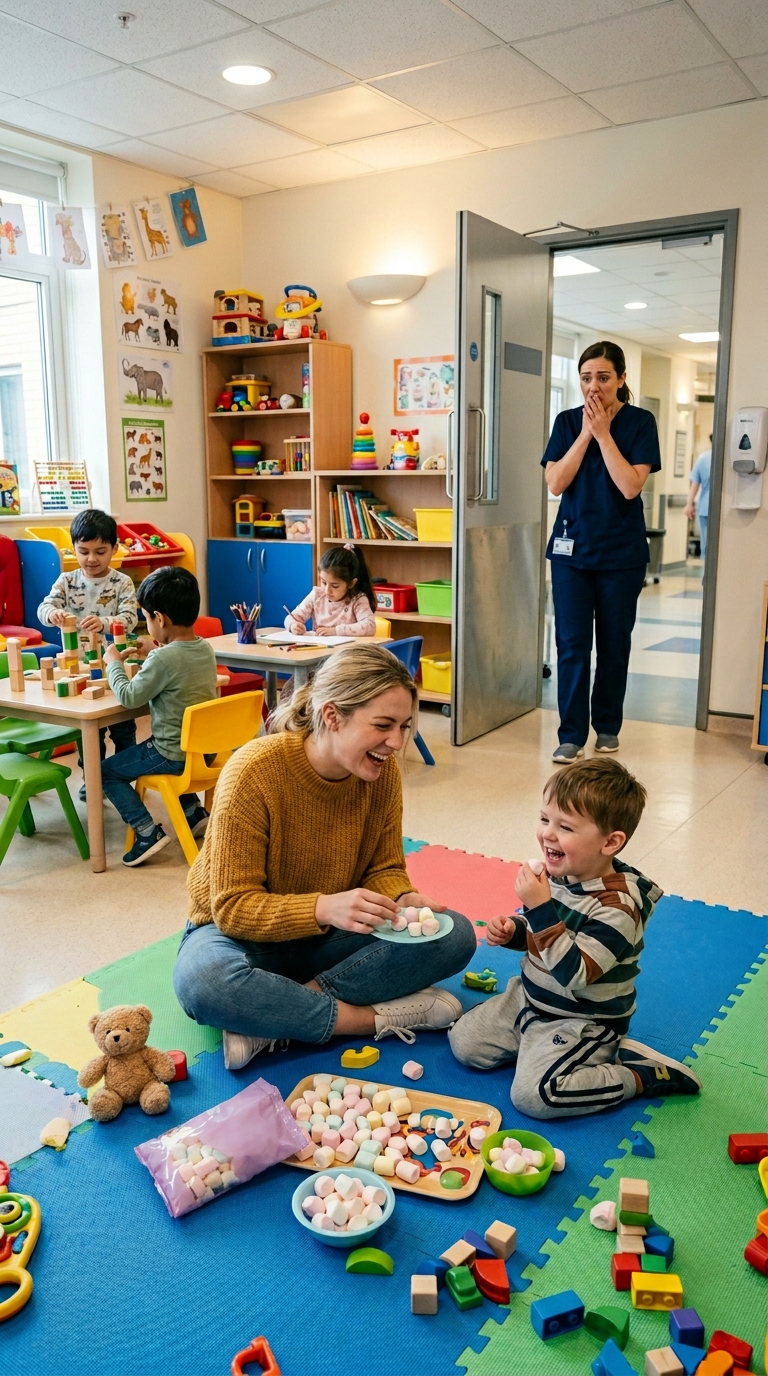
The next afternoon, I handed them out nervously. The first little girl gasped. “Is this a bunny?”
“It was supposed to be,” I laughed. “It might also be a very confused cloud.”
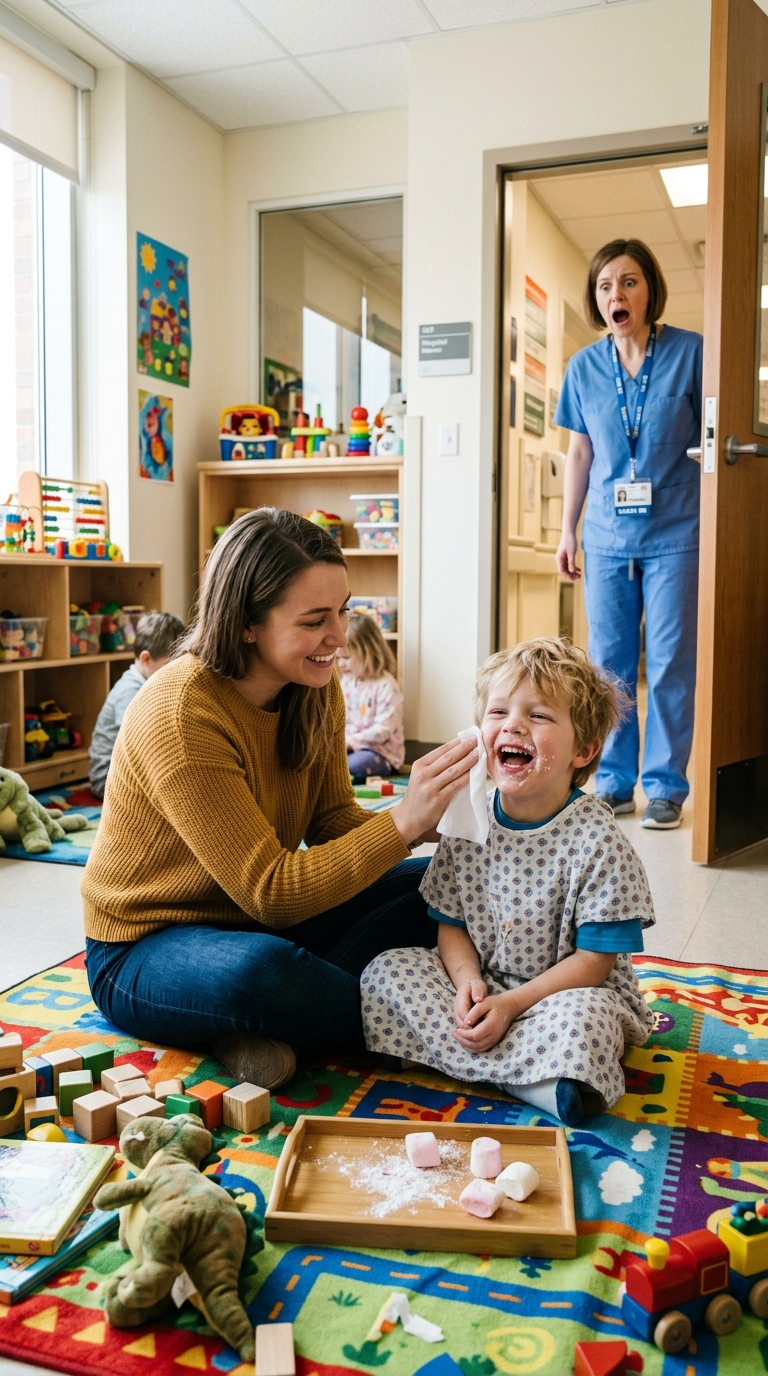
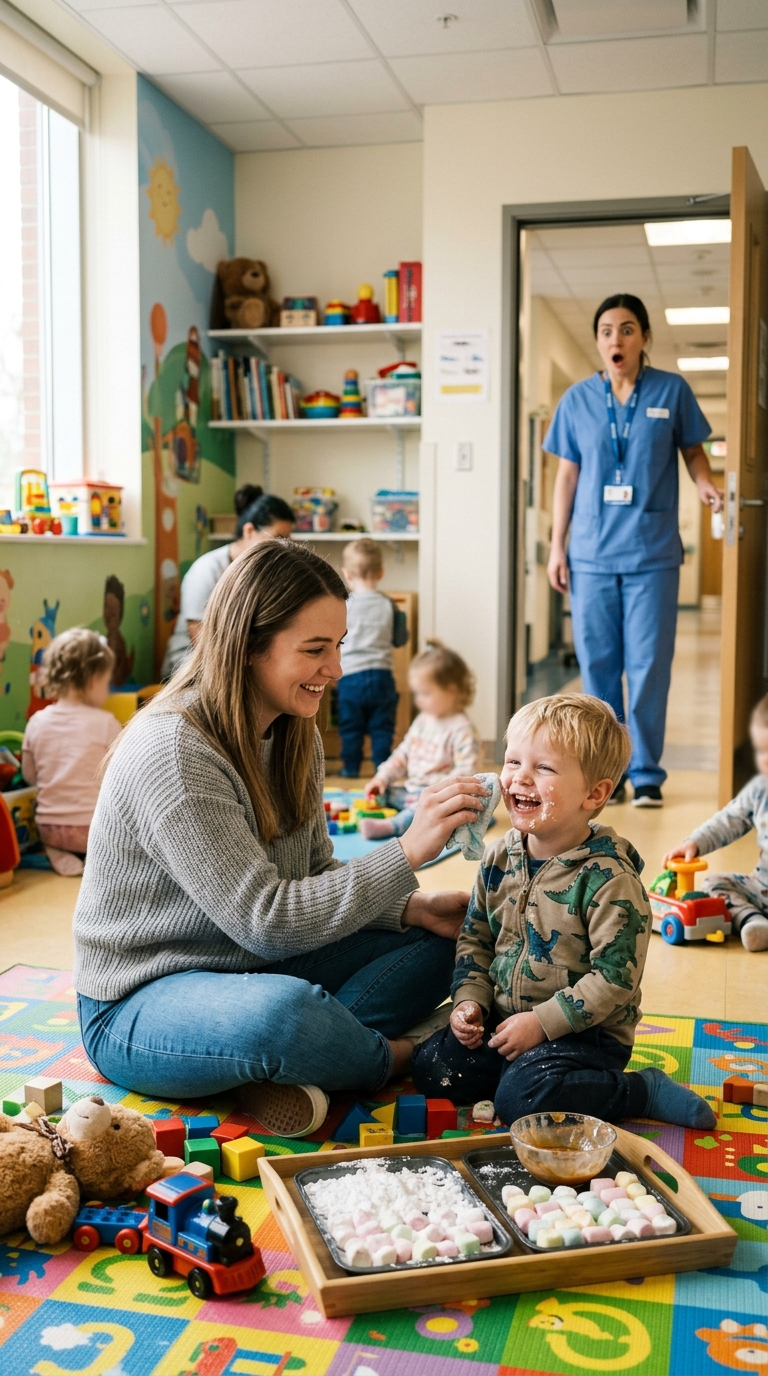
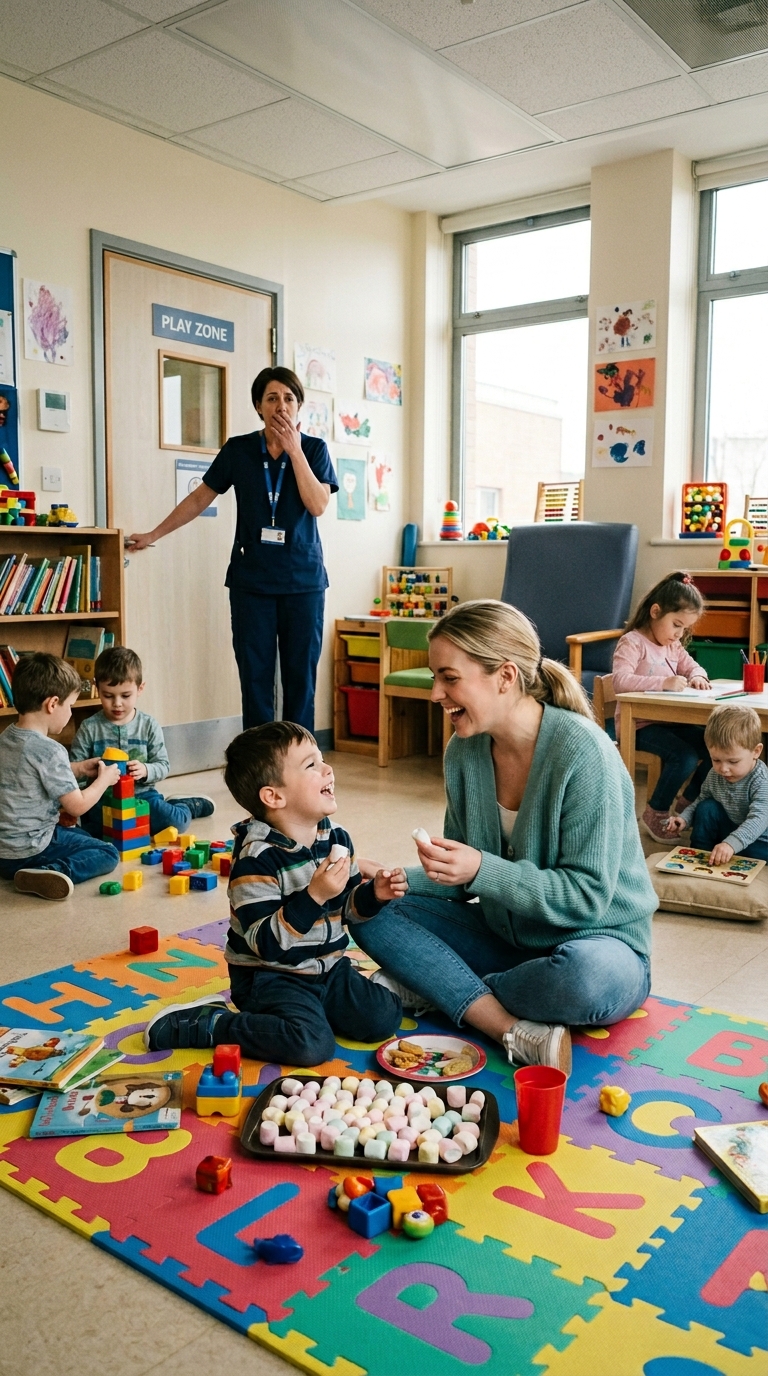
Soon I was sitting on the playroom floor, helping one boy build a marshmallow zoo while another insisted the star-shaped ones tasted better—even though they were exactly the same. I was wiping sugar off a boy’s face when a nurse in her 40s walked in holding a chart.
“So you’re the one who brought all this excitement,” she said. “The children are so happy. Sweetheart, what’s your name? Will you come see us again?”
“I’ll definitely return!” I told her my full name. Her smile disappeared instantly.
“Ma’am, what happened? Are you okay?” I asked.
She steadied herself against the desk, shaking. “Oh my God, it’s you. I’ve been looking for you for 16 years.”
Confused, I gave a nervous laugh. “What?”
“I checked the system more than once over the years… but your records vanished.”
She pulled out an old photograph: a woman holding a baby wrapped in a hospital blanket. “That’s you and your mom. My name is Diane. I worked in neonatal care here years ago. You were born early, very small, and we monitored you constantly.”
I stared at the picture. “Why were you looking for me?”
Diane hesitated. “Because your case never felt right to me.”
“What case?”
She studied me carefully. “You don’t know?”
“Know what?”
She took a breath. “Ava, who raised you?”
“My grandma did. She told me my mother died when I was a baby, and my father was never part of my life.”
Diane pressed her lips together. “Then you should ask your grandmother. Ask her what happened when your mother came back for you.”
“Came back for me? My mom died…”
But Diane had already turned and walked away.
Shaken, I went back to Grandma’s room. My chest was tight, my hands trembling. She was awake, watching TV.
“Ava? What’s wrong?” she asked.
I stood at the foot of her bed. “Grandma… My mom didn’t die, did she?”
She froze, then forced a smile. “Sweetheart… where is this coming from?”
“A nurse talked to me. Diane. She said my mom came back for me… what does that mean?”
“It means nothing because it’s not true,” she said quickly. “Your mother died after you were born.”
I shook my head. “Grandma, you raised me. You always said you could tell when I was lying—but it works both ways. I know you’re not telling the truth now. Why? What have you been hiding from me all this time?”
Her hand gripped the bedrail. “Ava—”
A knock cut her off. The doctor stepped in with Diane behind her. Grandma saw her and went pale.
I turned back. “Tell me the truth. Now. What happened to my mother? Where did she go, and when did she come back for me?”
The room fell silent. Finally, Grandma’s shoulders dropped. “She didn’t die.”
The words hit harder than I expected.
“Then why would you tell me that?”
“Because the truth would have hurt you more. I was protecting you, Ava.”
“No. Maybe that made sense when I was little, but I’m 16 now. No matter how painful it is, I deserve to know.”
Tears filled her eyes. “You were fragile when you were born, and she couldn’t handle it. One night she said, ‘I can’t do this anymore,’ and walked out.”
“Did she come back for me?”
Grandma hesitated. “Yes. Right before you were discharged. I hadn’t heard from her until then. I left a voicemail saying I’d spoken to a lawyer about adopting you. Suddenly, she showed up, saying she had made a mistake.”
I stared at her. “Then why didn’t I go with her?”
Her face crumpled. “Because I didn’t let her take you.”
The ground seemed to fall away beneath me. “What does that mean? What did you do?”
“I wasn’t going to let you grow up in chaos. I loved my daughter, but she was never stable. She couldn’t keep a job or a relationship, and she barely held onto her apartment. I hoped motherhood would change her, but when she walked out, I knew it wouldn’t.”
“So you kept me from her?”
“I told the state she couldn’t care for you. I said I could give you a better life. None of that was a lie.”
Diane spoke softly. “But it wasn’t the full truth. I spoke to your mother several times. She wanted to turn her life around for you. She asked you for help so she could become stable, and you turned her away.”
Grandma flinched. “You don’t know what she was like! She always promised she’d do better, but she never did. She would’ve tried, failed, and left again in a cycle. I stopped that before it could begin.”
“Then why didn’t you tell me?” I demanded.
Her voice broke. “I thought it would be easier for you. If you believed she was gone, you wouldn’t spend your life wondering why she didn’t want you.”
“But she did want me,” I said.
Grandma didn’t respond.
I stepped back, shaking but steady. “You didn’t protect me. You let me live a lie because it was easier for you.”
Tears streamed down her face.
I turned to Diane. “Can you help me find her?”
Grandma let out a wounded sound. I looked back at her.
“I love you,” I said softly. “You took care of me. But I’m not living inside your version of the truth anymore. I want to meet her. I want to see the truth for myself.”
I walked out. The hallway felt too bright, almost overwhelming. Diane gently placed a hand on my shoulder. “We’ll start with the old records. I can’t promise anything, but I’ll do everything I can to help you.”
I nodded, my thoughts spinning. For years, my life had been built on something I never questioned. Every memory, every belief about who I was, had been shaped by Grandma’s version of the truth.
Now, for the first time, the truth belonged to me.
