

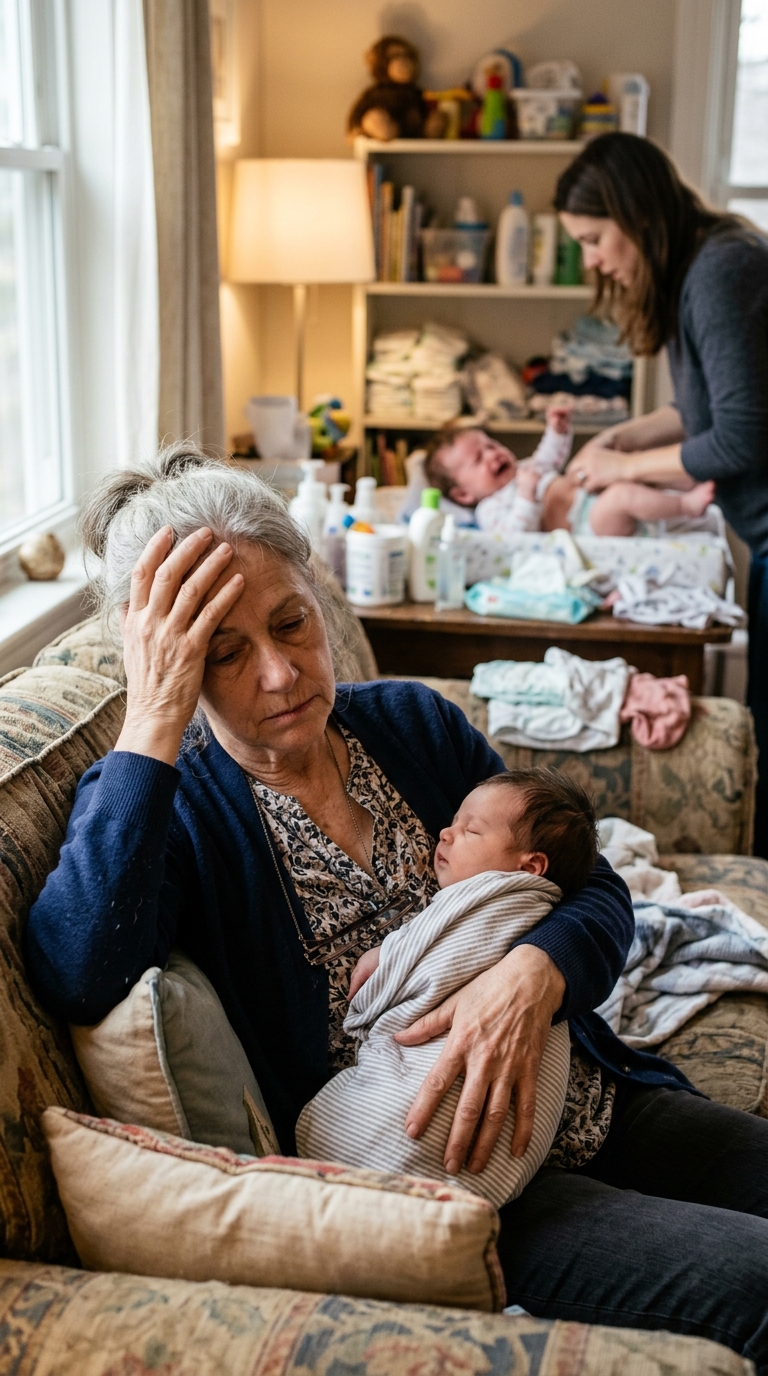
When my daughter-in-law gave birth to twins last year, I was filled with joy. Becoming a grandmother had always been a quiet dream of mine—something I carried through long workdays and an even longer marriage. I pictured tiny hands wrapping around my fingers, soft laughter filling the house, and weekends spent reading stories while cookies cooled on the counter.
What I never imagined were sleepless nights soothing crying babies at sixty-two. Or aching knees from constant diaper changes. Or slowly being seen as the “built-in free babysitter.”
At first, I didn’t mind at all. My son and his wife were overwhelmed, and I remembered those early years clearly—the exhaustion, the doubt, the feeling that nothing you do is right. So I offered to help. A few afternoons each week became most evenings. I cooked, cleaned, rocked one baby while the other cried. I told myself this was love. This was what family meant.
But I learned something important—love can quietly turn into obligation if you’re not careful.
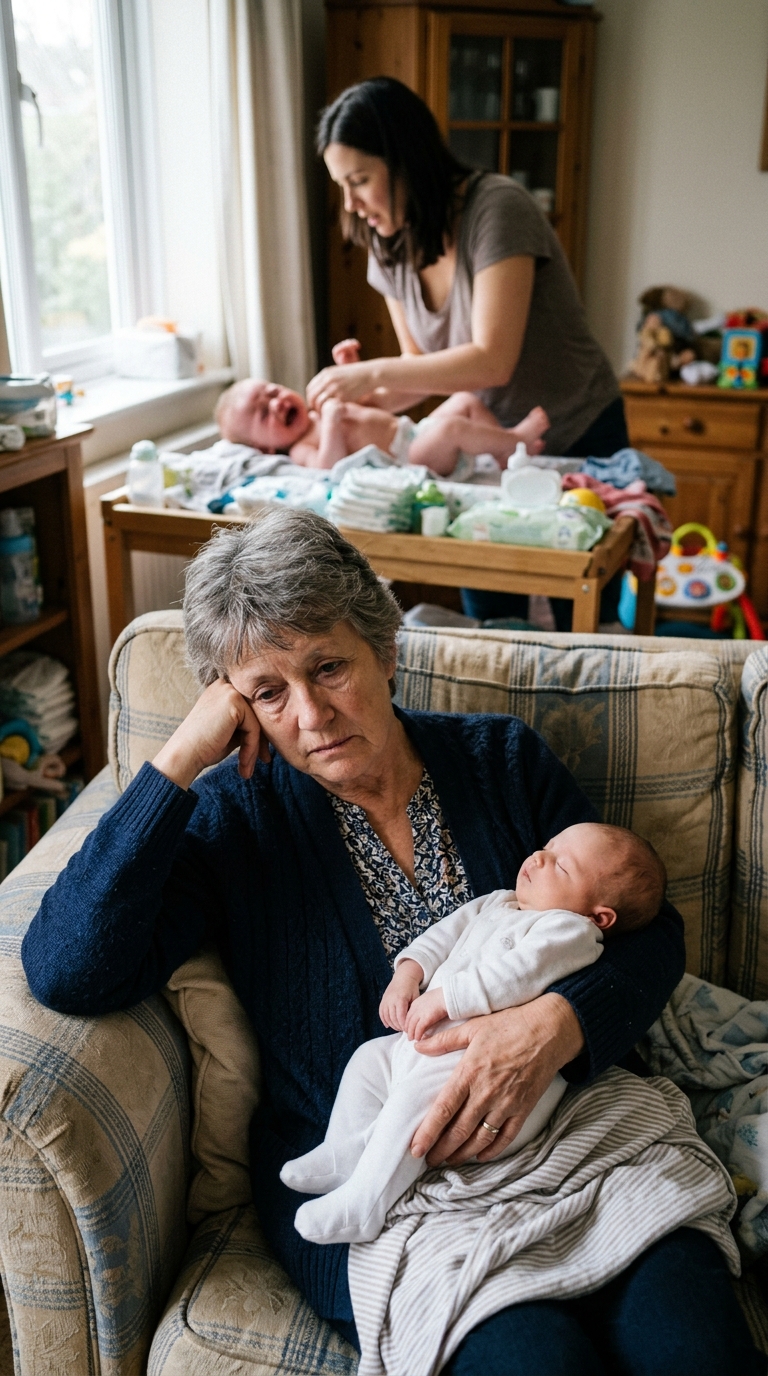
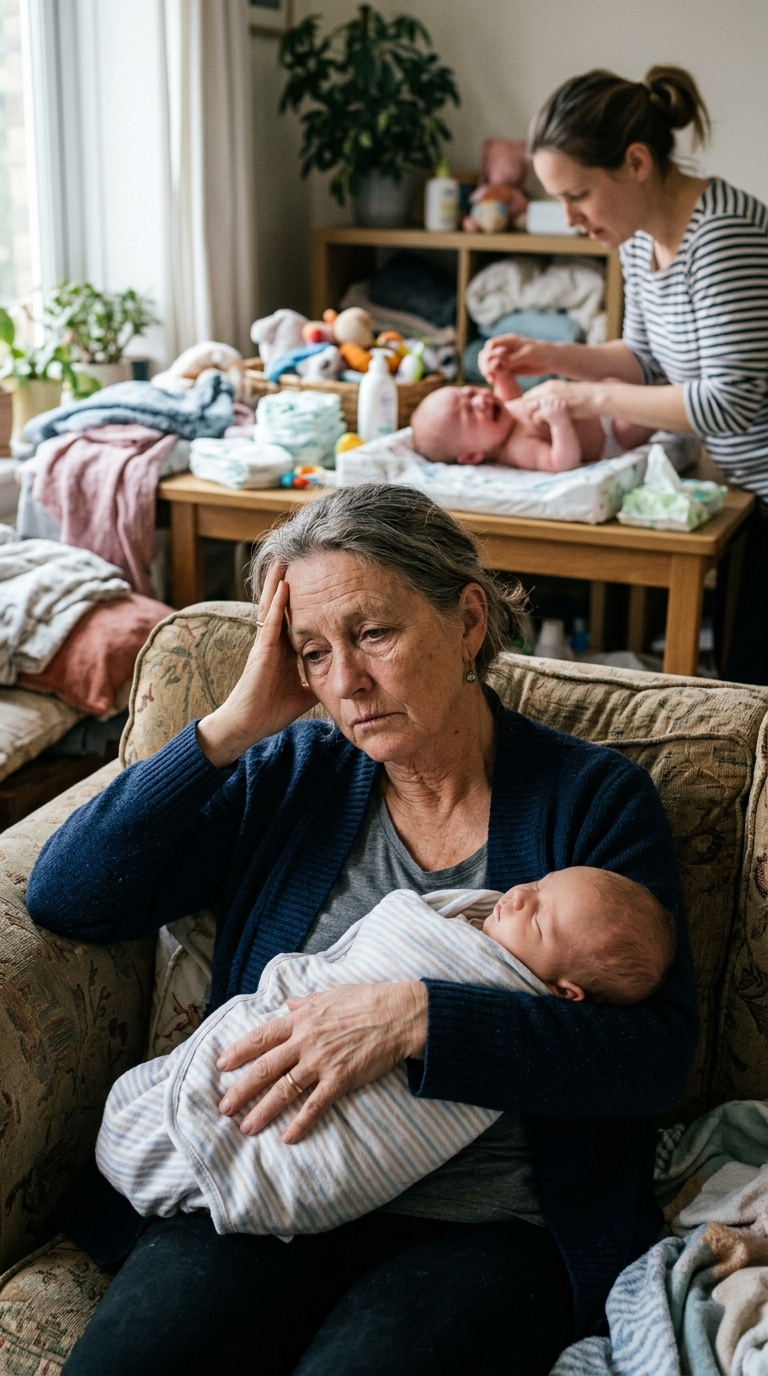
Before long, it felt less like visiting my grandchildren and more like showing up for a shift. No one asked if I was available anymore. I’d walk in, purse still on my shoulder, and my daughter-in-law would casually say, “Here’s one baby, the other’s on the changing table. Can you handle that?”
No greeting. No thanks. Just instructions.
Whenever I tried to slow things down, to say I was tired or had plans, the answer was always the same. “You’re their grandma. This is what grandmas do.”
But is it?
To me, being a grandmother meant love without pressure. Joy without exhaustion. Support, yes—but not giving up my entire life. I had already raised my children. I never expected to start over during my retirement years.
I tried speaking to my son, gently at first. He was always “too busy,” always saying we’d talk later. Later never came.
The moment everything changed came quietly, disguised as a casual conversation.
A friend from my social club leaned in one afternoon and asked, almost hesitantly, “Are you really babysitting every day? For free?”
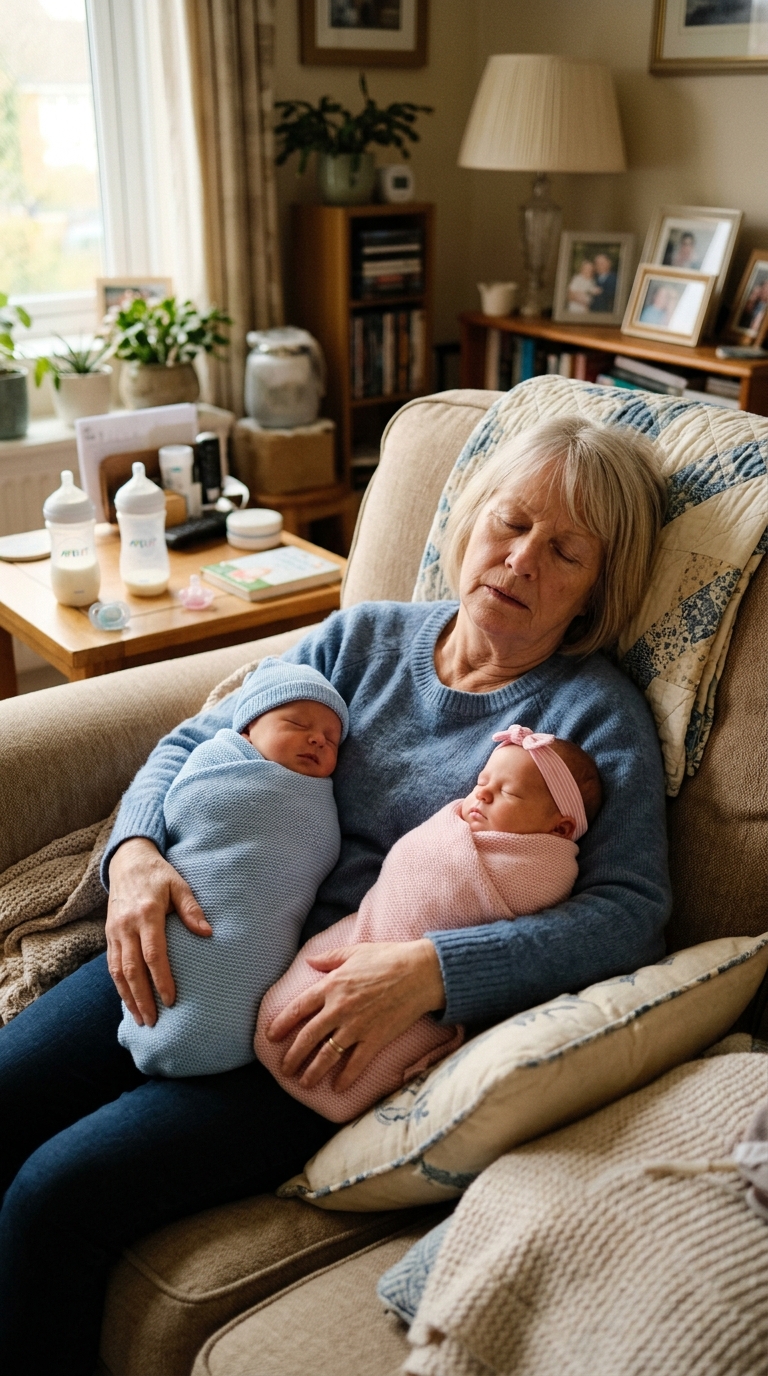
She showed me her phone. There it was—a Facebook post from my daughter-in-law. A photo of me slumped on the couch, both twins asleep in my arms. I must have dozed off. A diaper still rested on my shoulder.
The caption read: “Here is my built-in free babysitter. This is the woman who makes weekend outings with my gals possible. Love you ❤️💩.”
Built-in. Free. Babysitter.
I stared at the screen, my chest tightening. I don’t think she meant to hurt me. I truly don’t. But in that moment, I understood how she saw me—not as a grandmother, not as family, but as something convenient. Something to rely on without question.
That night, I asked her to sit down with me.
“I love you,” I began, my voice shaking despite myself. “And I adore the twins. But I’m your mother-in-law, not your employee. I’m a grandma—not a free nanny.”
She looked genuinely surprised. She said she thought I enjoyed being there. That I was just helping.
“I do love them,” I said. “But I want to help on my own terms. Not out of guilt. Not because it’s expected.”
I told her I would still visit, still be present—but only when we planned it ahead of time. No nightly routines. No unexpected overnight stays. No assumptions.
Her expression hardened. She called me selfish. Cold. Said I was abandoning family.
For the first time, I didn’t give in.
Instead of setting aside money for them like I had planned, I booked a trip for myself. A quiet vacation I had been putting off for years. Now I wake up to ocean air instead of crying babies. I read. I walk. I breathe.
I haven’t answered her messages asking for help. Some days, guilt creeps in, whispering that maybe I should have done more. But then I remember that photo. That caption. And the relief returns.
I love my grandchildren. That will never change.
But loving them shouldn’t mean losing myself.
So I ask myself, honestly and without resentment—does this make me a bad mother-in-law… or simply a woman who finally chose herself?
